




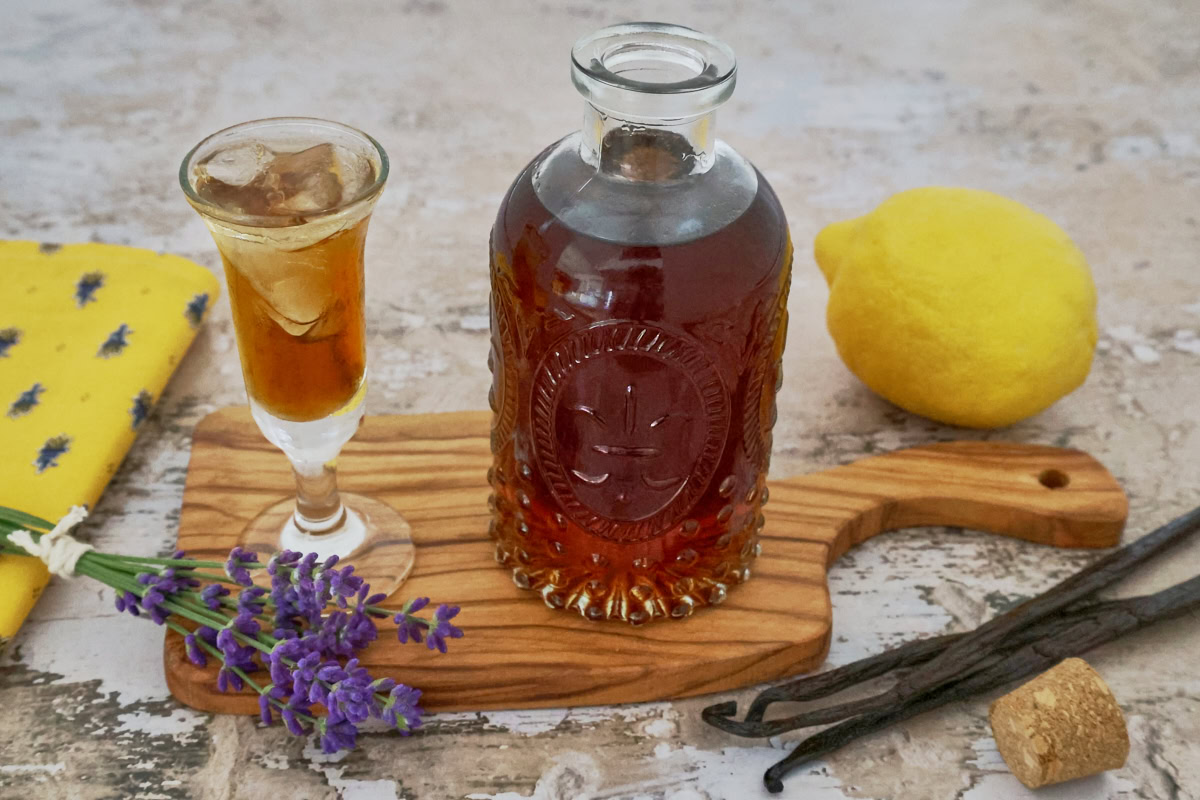
Lavender is a gorgeously aromatic herb with stunning violet flowers and an intoxicatingly captivating fragrance. It's easy and so rewarding to capture this delightful floral aroma into a sweet homemade lavender liqueur (liqueur de lavande in France) that you can enjoy all year. This luxurious, naturally vegan drink has been made in Provence for generations, and it's so fulfilling to make and enjoy your own homemade version. You can use lavender blossoms from your garden, dried culinary-grade blossoms that you can buy, or a combination of the two. It's a really special fragrant and botanical drink that's easy to make. It's perfect as an apéritif, digestif (after-dinner drink), or in cocktails.
Plus, I'm hoping this recipe and my herb garden photos below will convince you to grow your own lavender. It's so worth it! Homemade lavender liqueur is sweet and floral, lush and botanical, and captures the spirit of summer in a glass. I hope you'll try making this luscious Lavender Liqueur Recipe - Liqueur de Lavande Recette!
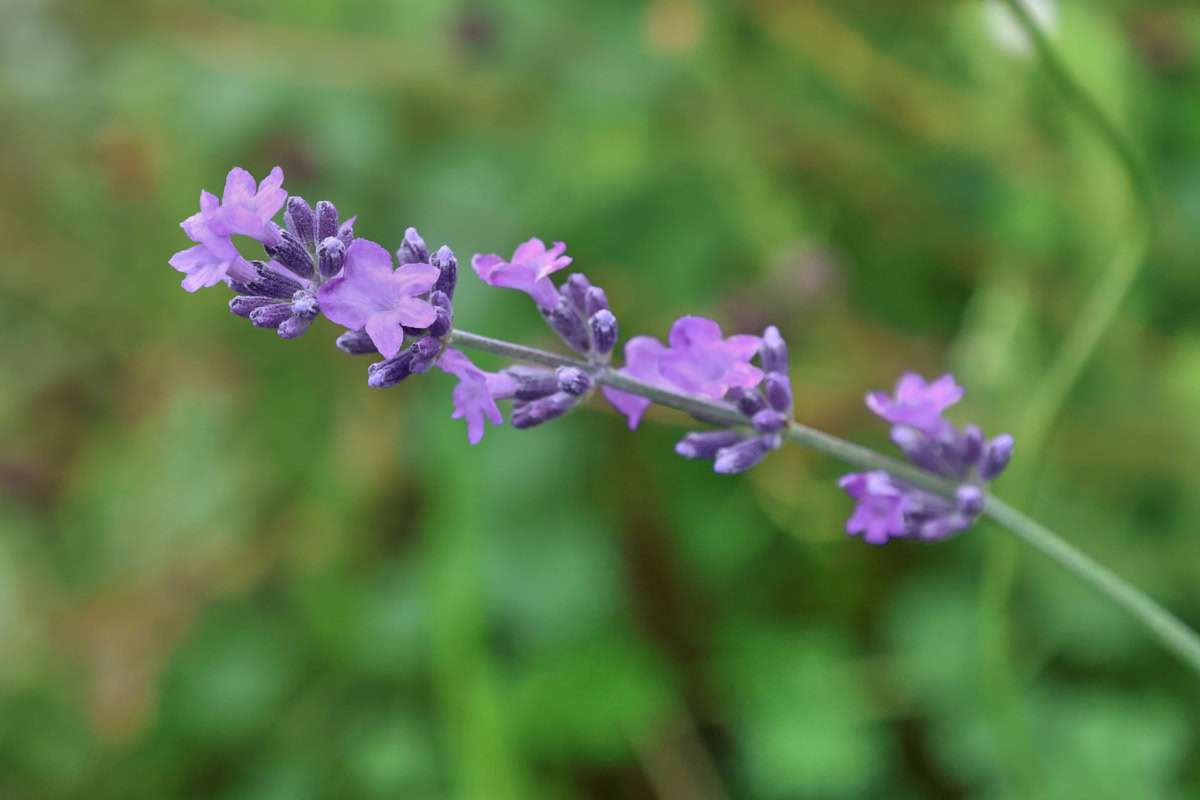
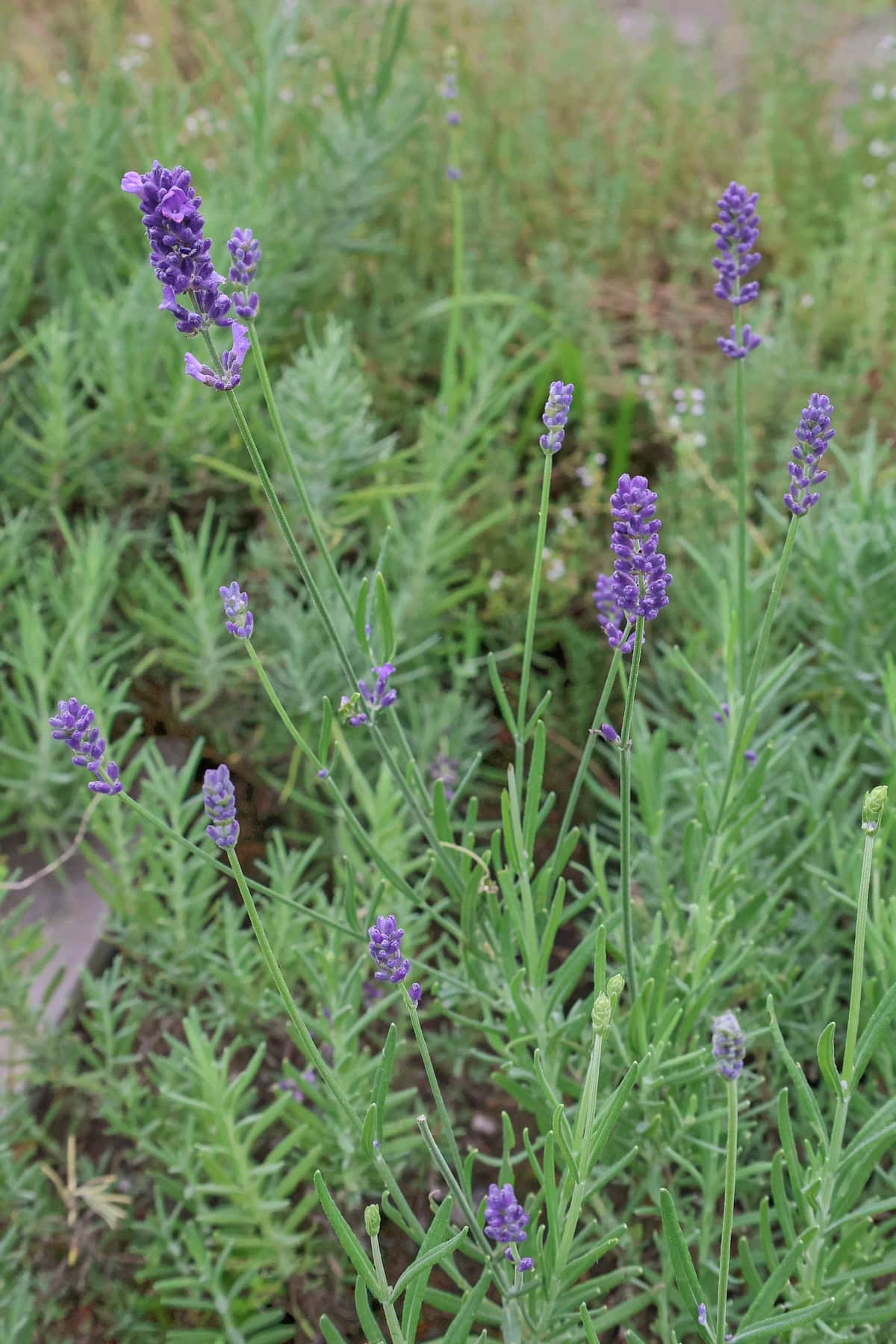
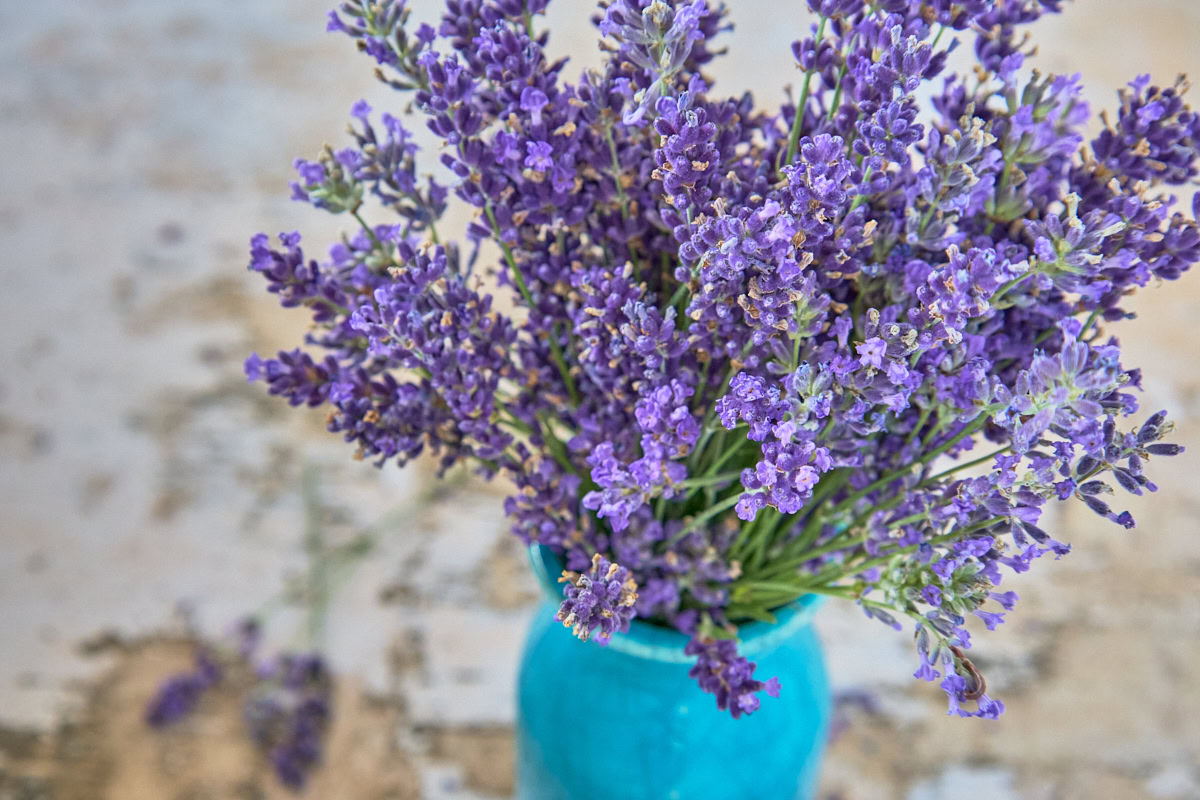
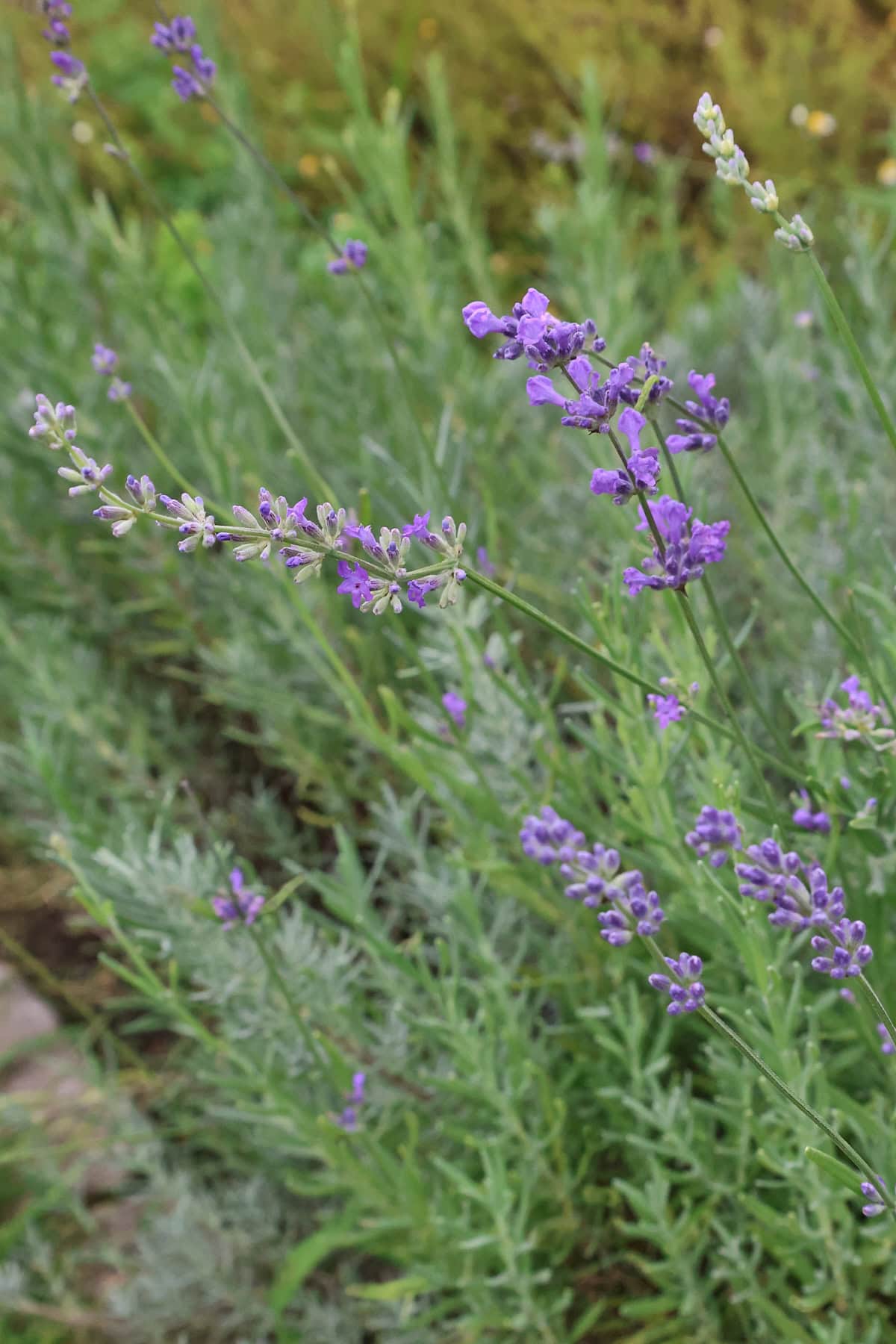
I've just gone out into my herb garden and smelled the leaves and flowers of my deliciously-scented Lavandula angustifolia (English or "true" lavender) varieties, munstead (on the left in the photo below) and hidcote (on the right) that I use to make this liqueur. These varieties are perfect for culinary use, and especially good in this recipe.
Some other varieties, such as hybrid lavandins (e.g. grosso or Provence) contain higher levels of camphor, which can impart a sharp, woody flavor. So it's important to use culinary-grade lavender types for food or drink.
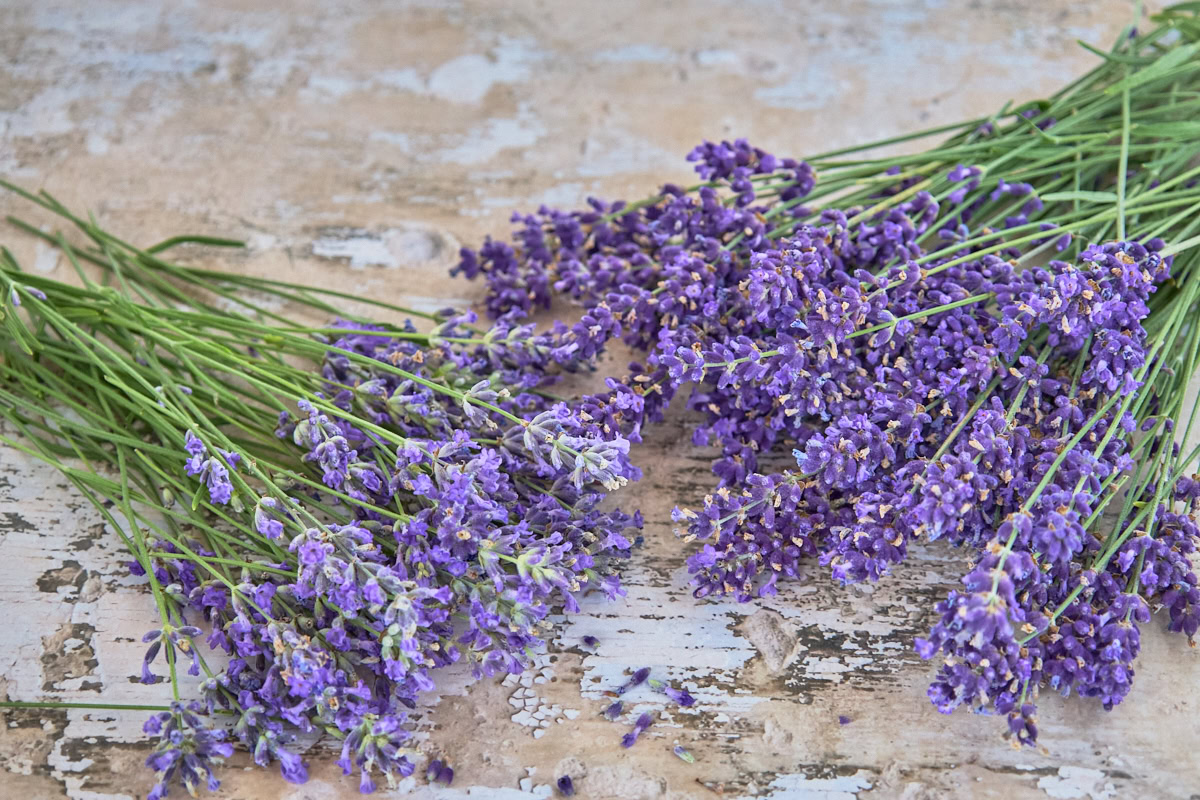
My lavender plants are currently in their second flush of flowering, the first round (here in US hardiness zone 6A) late June to early July, and the second in mid-late August. Lavender leaves and blooms have a perfumed, herbaceous and deeply floral scent, with notes of lemon, musk, damp grass, rosemary, spring breezes, and bright outdoor freshness.
This fresh green botanical flavor is perfect to preserve and enjoy long after the harvest. You can bottle up this lively aroma and sip it by the fire on the chilliest of winter nights. It'll make you even more excited to await your lavender plants coming joyfully back to life in the bright days of spring.
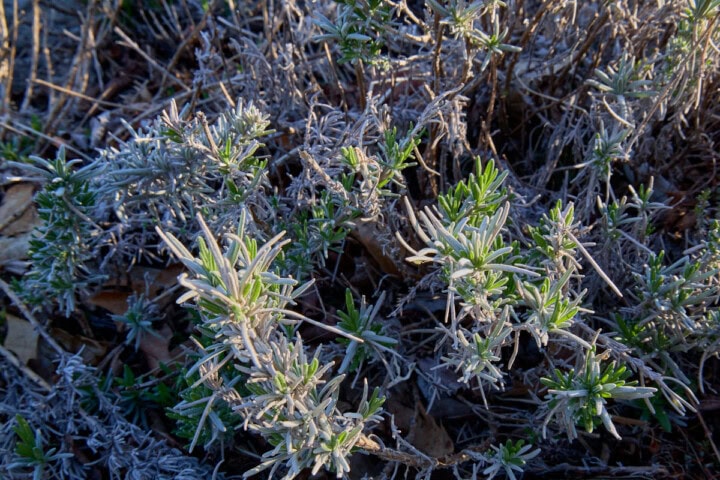
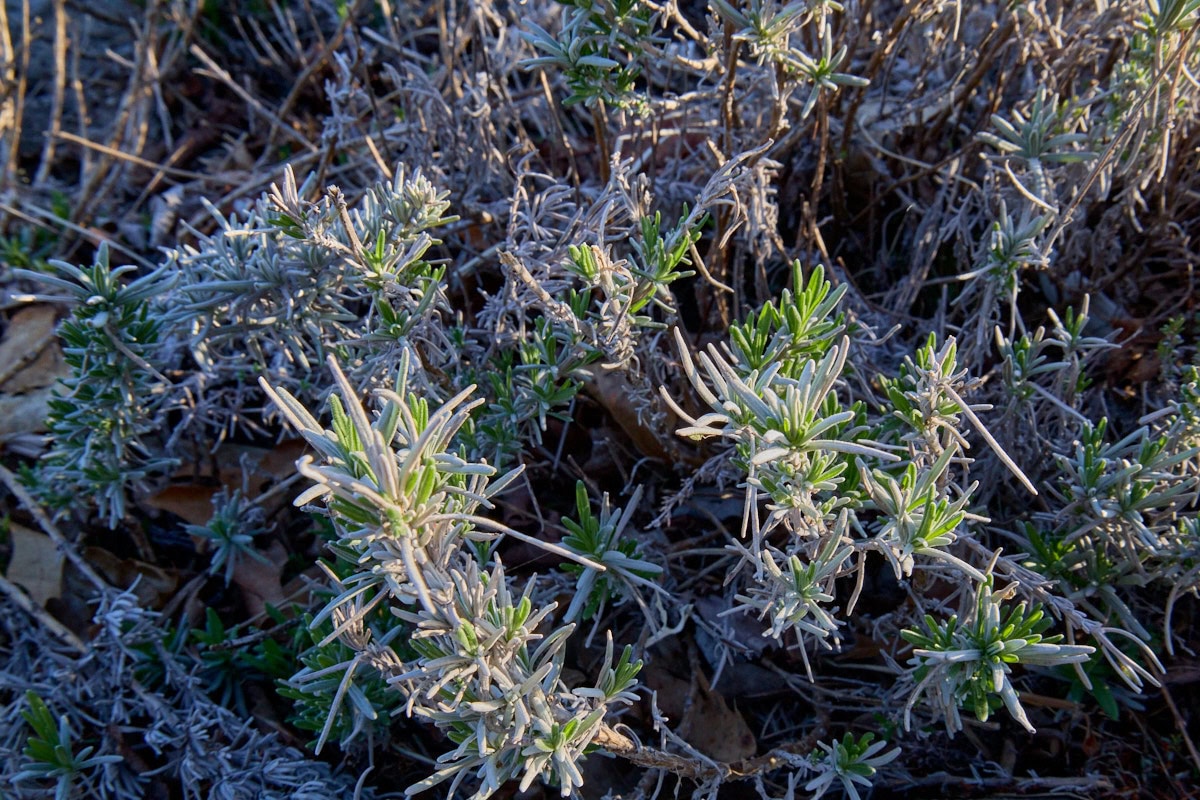
Below is a photo of my lavender plants awakening in the spring after their winter slumber. This is such a heartwarming promise of warm, sunny days to come. All of the photos of fresh lavender plants and flowers in this post are from my garden.
Jump to:
- 💕Why this recipe is special
- 🪻Sourcing lavender
- 📓Ingredient notes for
- 📒Step by step instructions & photos
- 💡Tips for success
- 🔀Substitutions
- 🍶Variations
- 🥣Equipment
- ⏲Make ahead and storage
- 🍲Serving suggestions
- ❓FAQ
- ✨More recipes you'll love
- ✏️Did you make this recipe?
- Lavender Liqueur Recipe - Liqueur de Lavande Recette
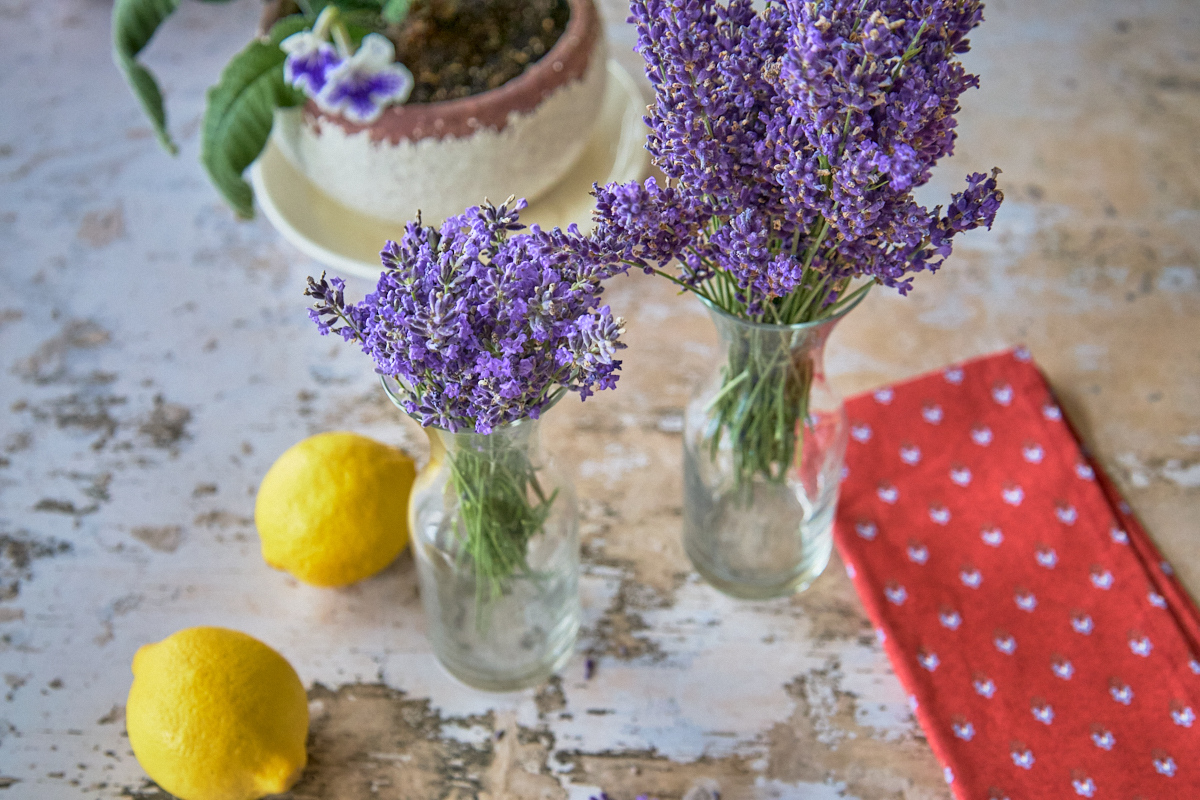
💕Why this recipe is special
A historical tradition
In Provence, France, people have been distilling lavender into a rustic liqueur de lavande for hundreds of years. It's still made there today. And elisir lavanda is made in Piedmont, in the Italian Alps. In more recent years, small-batch producers in England and the US have also been making artisanal garden lavender infusions and cocktail bitters.
No fresh lavender on hand? Dried store-bought flowers work too!
In the past few years, I haven't had enough lavender plants in my herb garden to make this liqueur with just my own fresh blossoms. This year, I've started more plants from seed so that next year I'll have enough of my own fresh flowers to use.
But in the meantime, I'm supplementing my fresh lavender blooms for this liqueur with some additional high-quality dried flowers. I buy Anthony's French Lavender, and it's worked really well for me in this homemade lavender liqueur.
Delightful year-round
Making this enchanting botanical drink will allow you to enjoy the flavor of summer all year round. I'm looking forward to sipping some on the coldest of winter nights with friends and family.
A wide range of sipping opportunities
In France, liqueur de lavande is often enjoyed as an apéritif before dinner, often served neat over ice or in white wine as a lavender kir. This sweet ray of herbaceous sunshine is also fantastic in desserts and in cocktails. I've developed an intensely delicious cocktail with this homemade liqueur that I'll be posting for you soon!
You can also enjoy this lavender liqueur as a digestif, or after-dinner drink. It's a lovely, sweetly aromatic way to conclude a fulfilling meal.
Flexibility in flavor and potency
I have two batches of this homemade liqueur de lavande at the moment. One is just over a year old, and for this one I've allowed the aromatics (lavender flowers, vanilla beans, and lemon zest) to steep and lend their flavor to the liqueur for a full 12 months before straining them out.
And I have a second batch that I made about 4 weeks ago. The aromatics are still steeping, and the liqueur is already at full flavor. (It was probably ready even sooner. I've just tasted it for the first time this week. (Real life has a great way of making this drink ready before you know it!) I love to experiment with different steeping times for various drink applications. Some may find the flavor of a stronger version to be too strong to enjoy on its own. But this is when it really shines for lending its distinctive flavor to cocktails.
So feel free to customize the steeping time to your liking for however you'd like to enjoy it. It's a really fun process to bottle up your garden and enjoy it whenever the need for some summer sun should strike.
🪻Sourcing lavender
Grow it yourself from seed
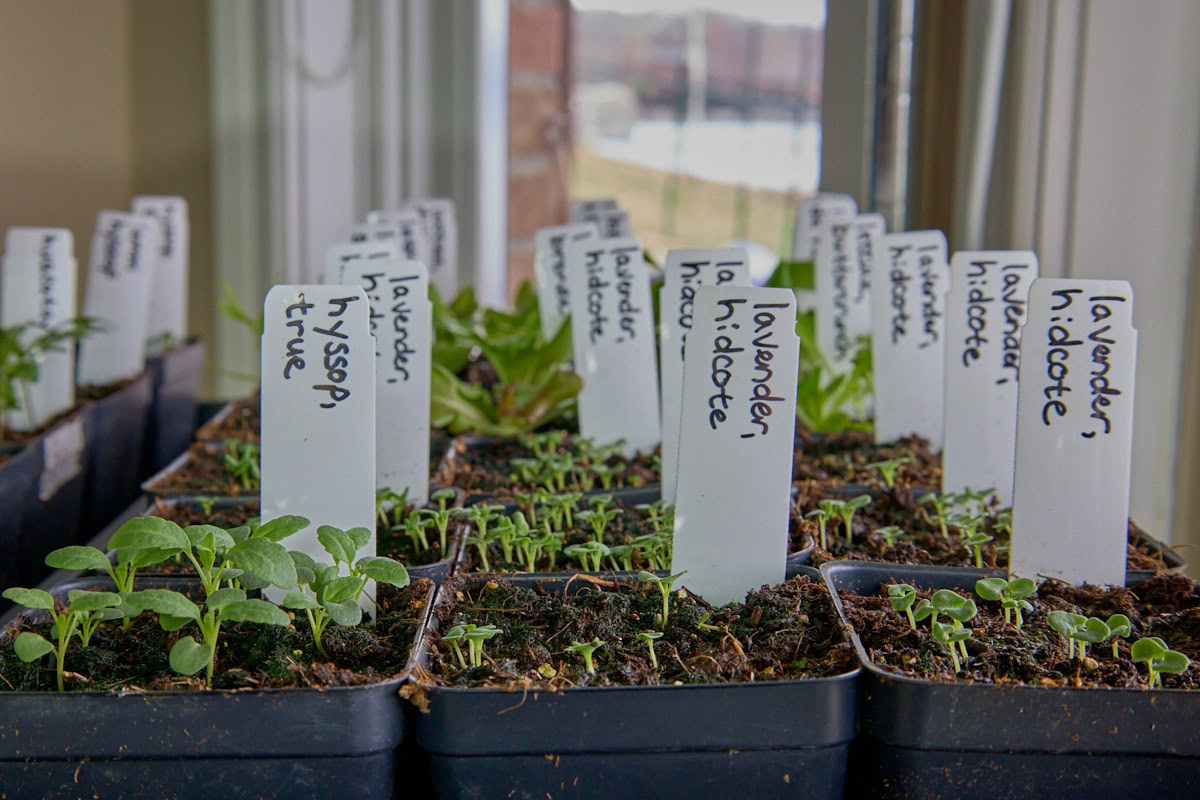
As in the photo above, I've grown lavender from seed under my grow lights for years. It's a really satisfying venture, but it takes a little patience. Germination can be slow and erratic. The seeds sprout much more consistently if you subject them to cold stratification to simulate the outdoors in winter. But for me it's worked well, and it's been really economical to grow the plants yourself from seed.
I planted my most recent batch of seeds above in mid-March here in my cold climate in US hardiness zone 6A. And the plants were still tiny when I planted them outside in May. In late August, they're about the size of garden center seedlings. Next year I'll start them earlier to give them more time to achieve some good growth over their first summer.
However, I need to offset this earlier timing with the economical considerations of electricity for my plant lights. I don't yet have the new, really energy-efficient LED grow lights. I have a system of T5 fixtures that I bought in 2014. So until I replace my current ones, I need to balance how early I plant the seeds with the overall energy costs for doing this. So I may start them next year in February to split the difference, when I'd really rather get them started in January.

Buy plants at a farmer's market
I also tend to supplement my homegrown lavender plants with some that I buy at a reasonable price at the farmer's market. Finding them here is often more economical than buying them at a garden store. And you won't have access at the farmer's market to some of the rarest varieties like you would when starting seeds. But it's a good way to find the commonly-available culinary-grade English varieties like hidcote and munstead that are perfect for making this liqueur.
Propogate your existing plants to make more
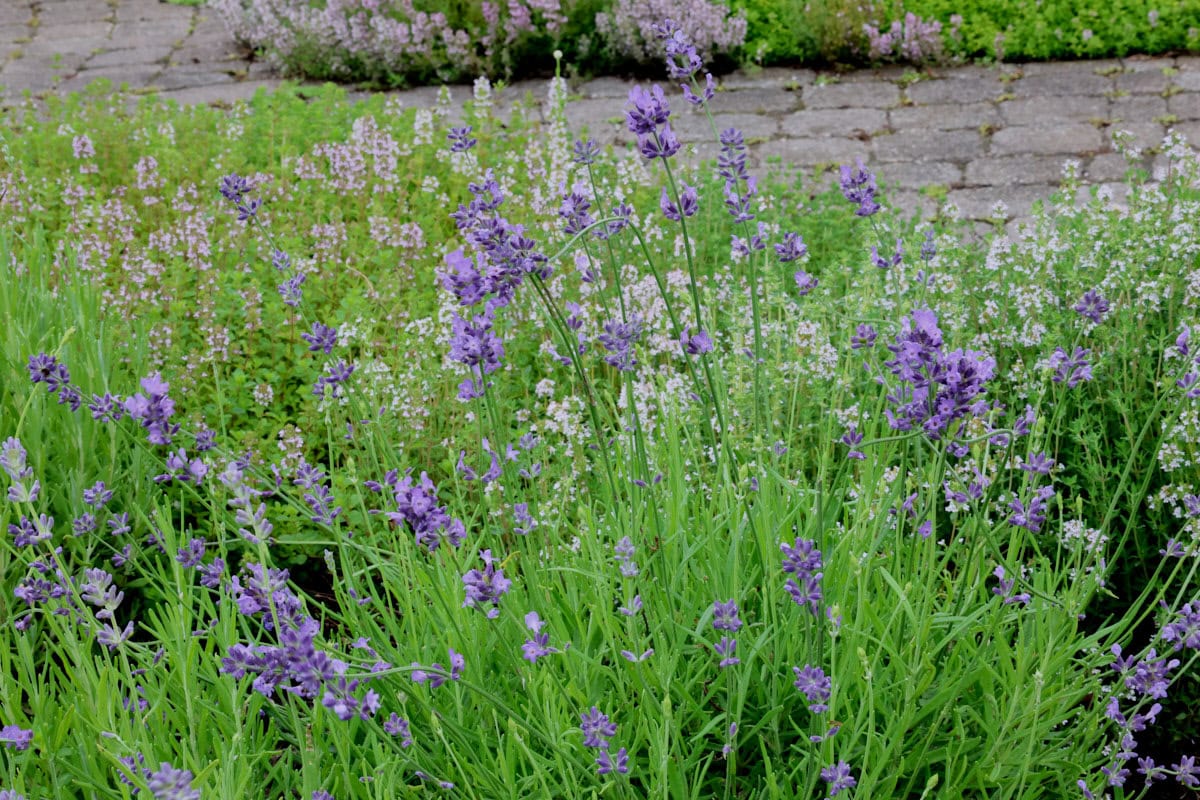
It's easy and cost-effective to make more lavender plants through propogation. You can do this by taking cuttings or by layering, the latter of which involves bending down a branch and covering it with soil. There are some great resources online for both of these techniques. It's so fulfilling to encourage the plants you already have to make more of them for no additional cost!
Enjoy the visits from pollinators
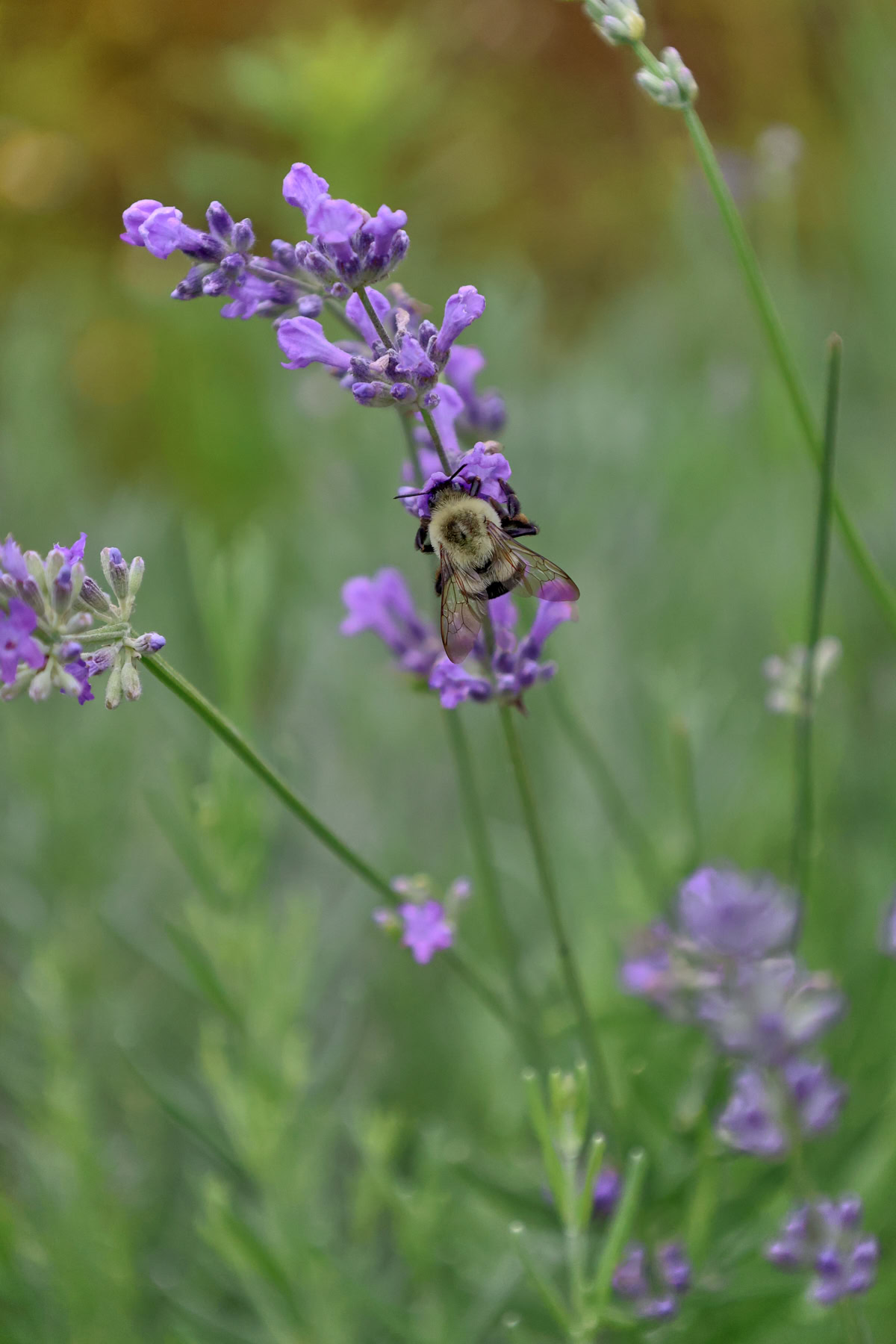
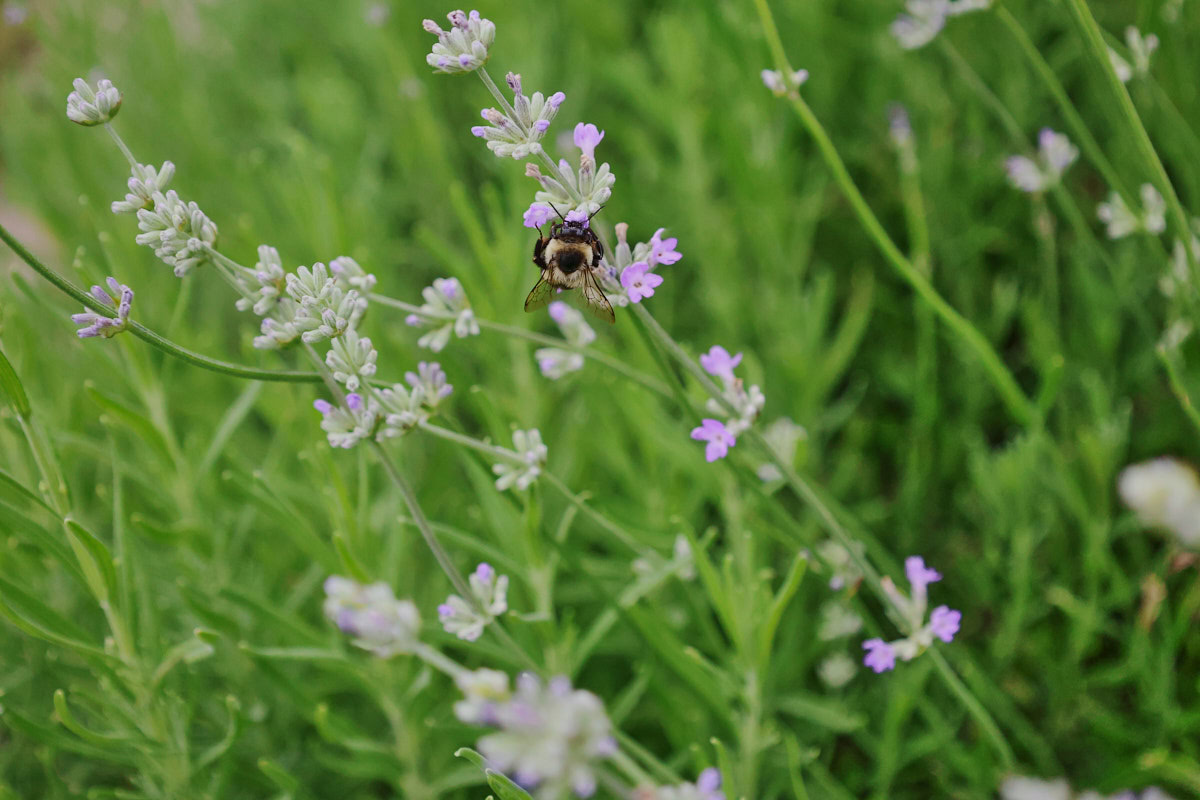
I love to hear the steady hum of bees as I visit my lavender in bloom. And it's so satisfying to provide some beautiful organic blooms for the pollinators to enjoy. It's mesmerizing to watch the bees fly from one flower to another. And I also love to catch them in deep sleep on a flower! It's absolutely adorable.
Plant lavender once, enjoy for years to come
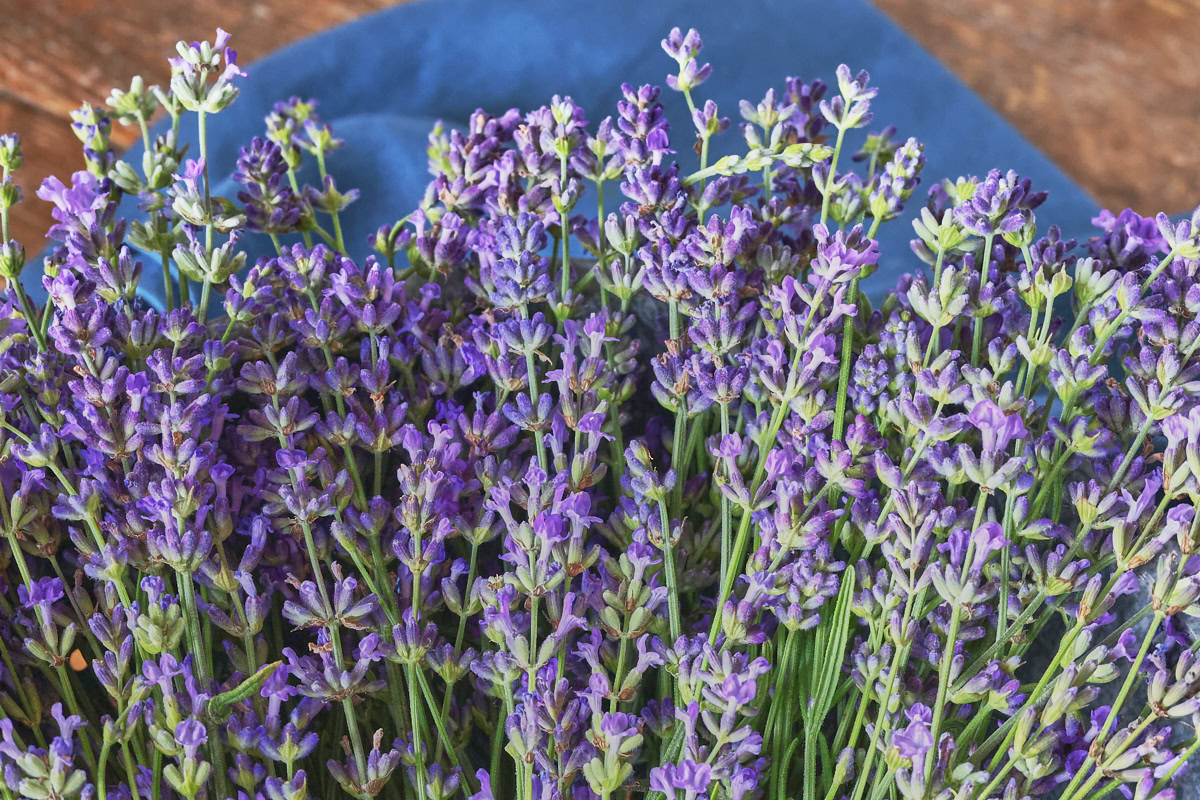
Lavender is a perennial in many zones, even cold ones like mine in US hardiness zone 6A. It's such a fantastic plant to add to your garden once and then have it for years. You'll need to grow it in full sun, and prune it twice per year. This doesn't take much time at all. Plus, my English varieties, hidcote and munstead, give me two flushes of flowering each summer, in July and August. It's so worth growing your own! And it's so gorgeously fragrant. This is a really special herb.
And lavender doesn't require much fertilizer to grow well. I like to use some Down to Earth Vegan Mix in the spring and again about halfway through the growing season. But even in years (like this one) when I haven't managed to feed my lavender at all, the plants are still thriving!
No time to grow your own? Buy the flowers dried!
There's no shame in using dried lavender! I'm doing it myself in part, since I don't currently have enough of my own blooms for the large batches I like to make of this liqueur. I've planted a huge new hedge of them this year from plants I've grown from seed. So next year I'll have more.
And anyway, I don't want to harvest all of my flowers every year. I like to leave some of them on the plant to watch them bloom and let the pollinators enjoy them.
So dried lavender blooms are really useful and helpful in this recipe if you don't have enough fresh blooms to use just those. Even if you only use dried flowers, your liqueur will taste great. (Just make sure to follow the notes at the bottom of the recipe card for the ratio of whichever combination of fresh and/or dried blossoms you have on hand to use.) I like to buy Anthony's French Lavender, which is imported from France, culinary grade, highly-reviewed, and of high quality.
📓Ingredient notes for
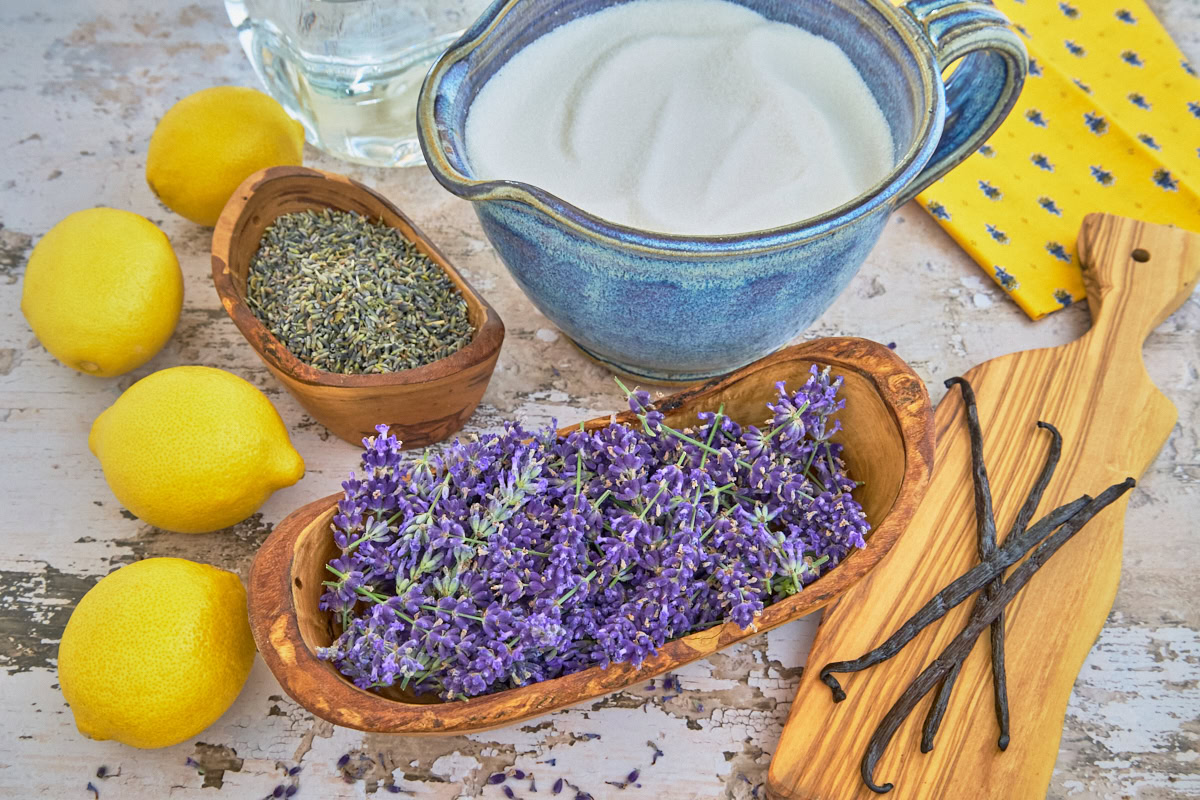
- Vanilla beans: I really like the FitNClean brand. I use their grade A organic beans from Madagascar. They're incredibly fragrant, flavorful, and packed with vanilla seeds. They're available in varying quantities to fit your needs.
- Lemon zest: Please make sure to grate your lemons just before adding them. I like to use organic lemons, and to grate them using a shallow lemon zester that will avoid using any of the bitter white pith behind the zest.
- Vodka: You don't need a really high-quality vodka here. The flavorful aromatics in this liqueur may mask the nuances in a top shelf vodka. So use whichever type you have on hand. I recommend using 80-proof vodka, or 40% ABV.
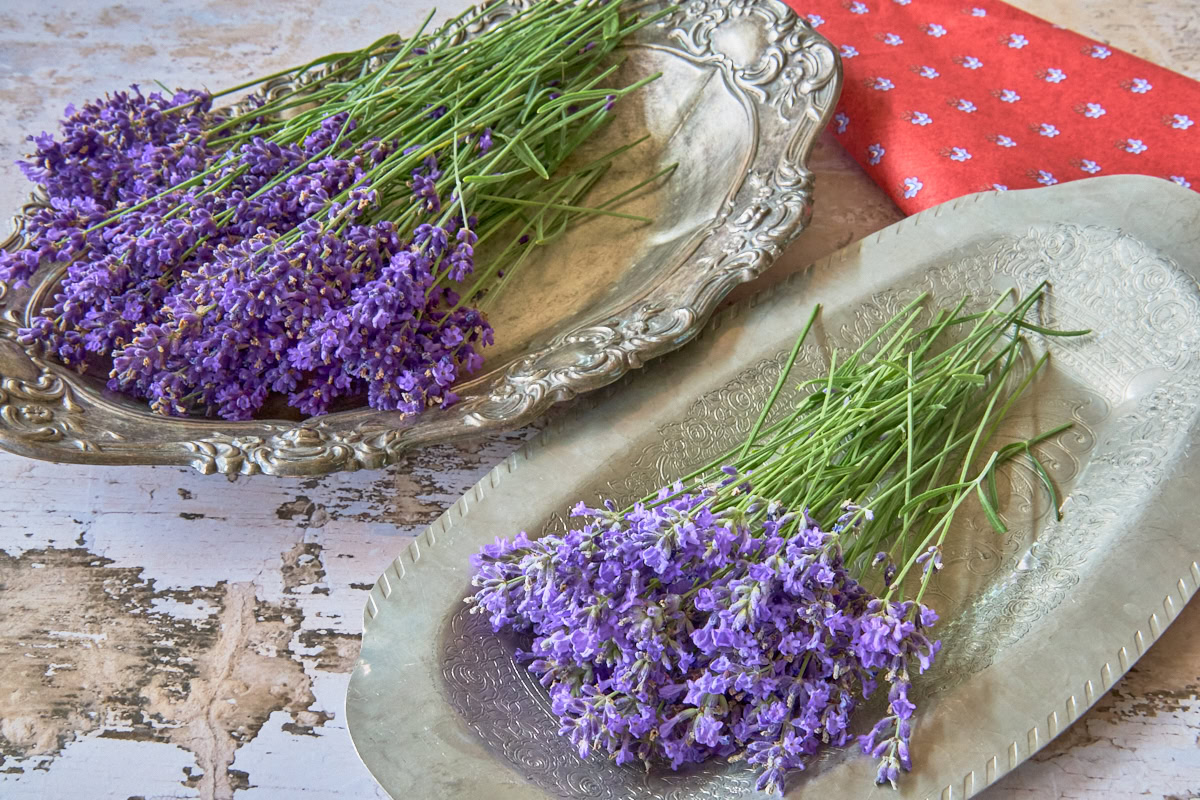
- Lavender flowers (dried or fresh): You can use either fresh flowers, dried, or a combination of the two. Here's a guide:
- Fresh lavender flowers only: Use 24 - 36 g (about 1½ - 2 cups, loosely- packed). Note: Fresh flowers are milder, requiring more volume to achieve the same strength as with dried flowers.
- Dried lavender flowers only: Use 8 - 12 g (about ½ - ¾ cup loosely-packed). Note: Dried flowers have a concentrated flavor. Start with the lower end of this range if you find floral flavors to be a bit strong for you.
- Ratio for blends of dried and fresh lavender flowers: Use about 3 parts fresh to 1 part dried flowers by weight or volume. Fresh lavender is about 3 times bulkier than dried.
- Granulated sugar: I'm using Pioneer Sugar, which is from near my hometown, and it's plant-based and made from sugar beets.
See recipe card for quantities.
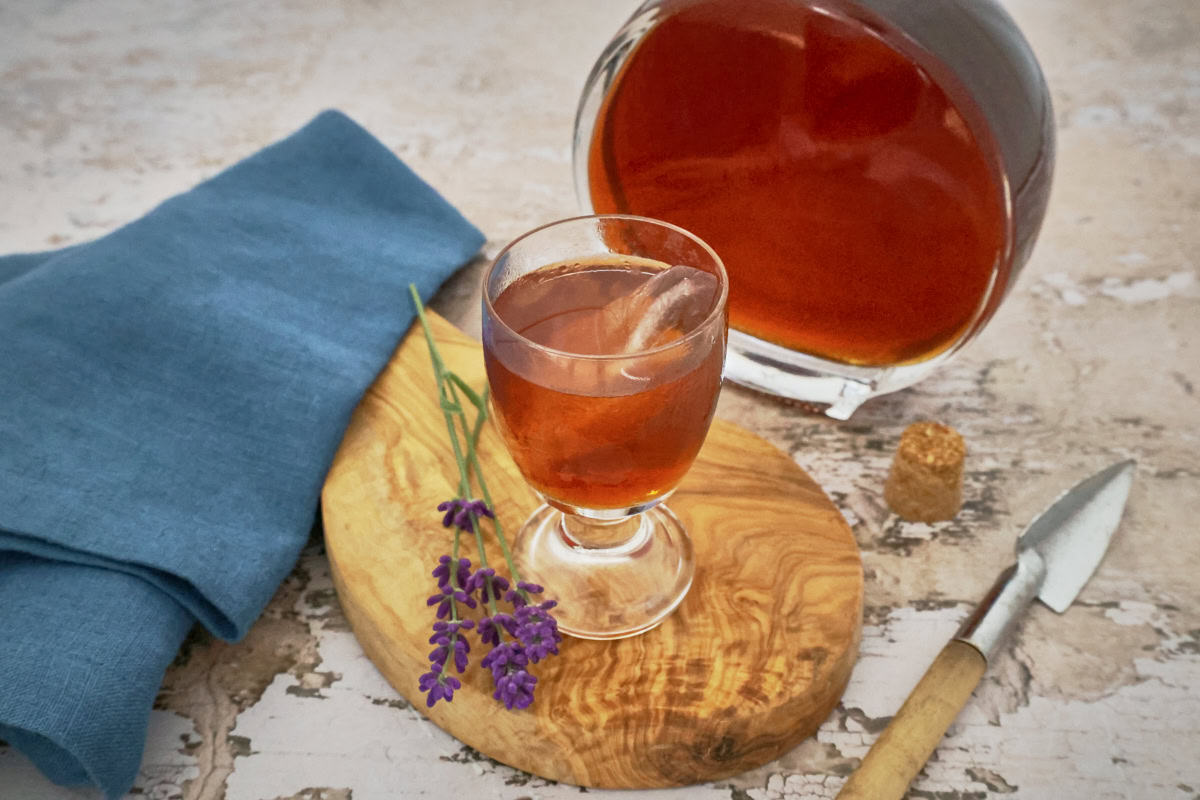
📒Step by step instructions & photos
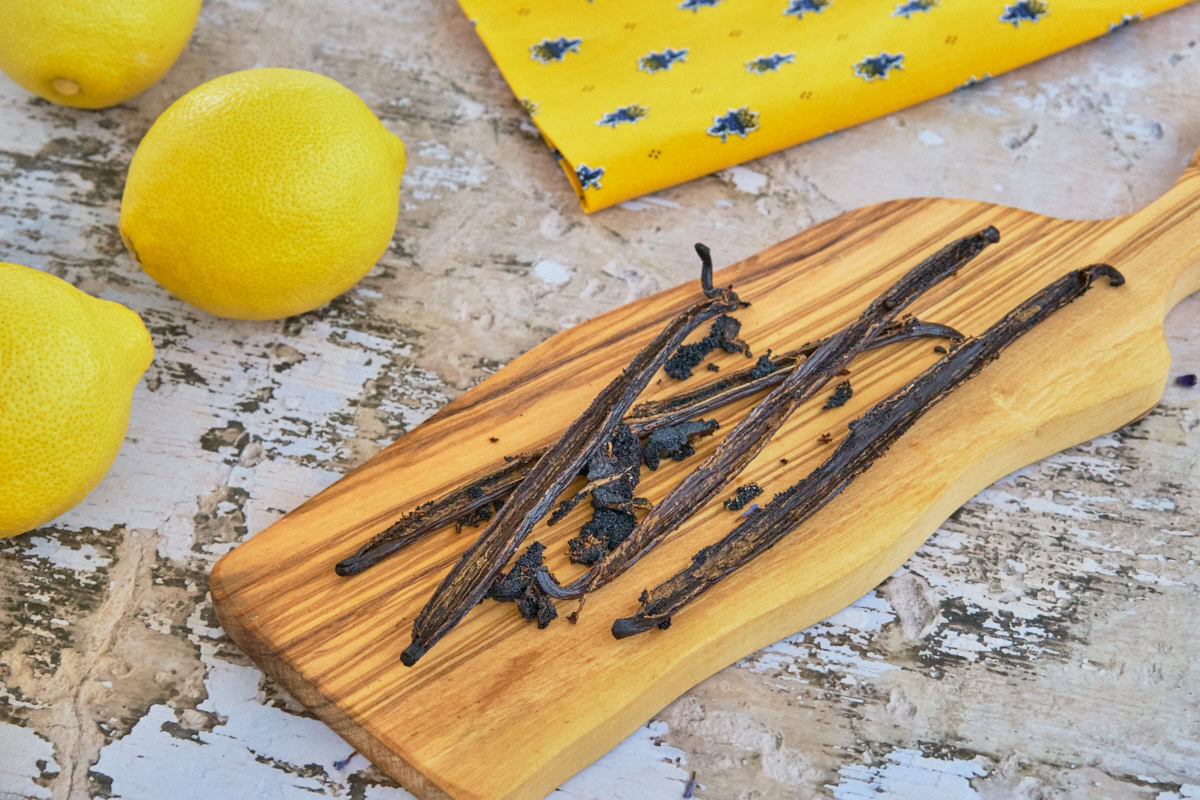
- Step 1: Split the vanilla bean lengthwise and scrape out the seeds. Set aside both the beans and pod. (Please note that the ingredient quantities in these photos are higher than in the recipe below, from a scaled-up batch that I made.)
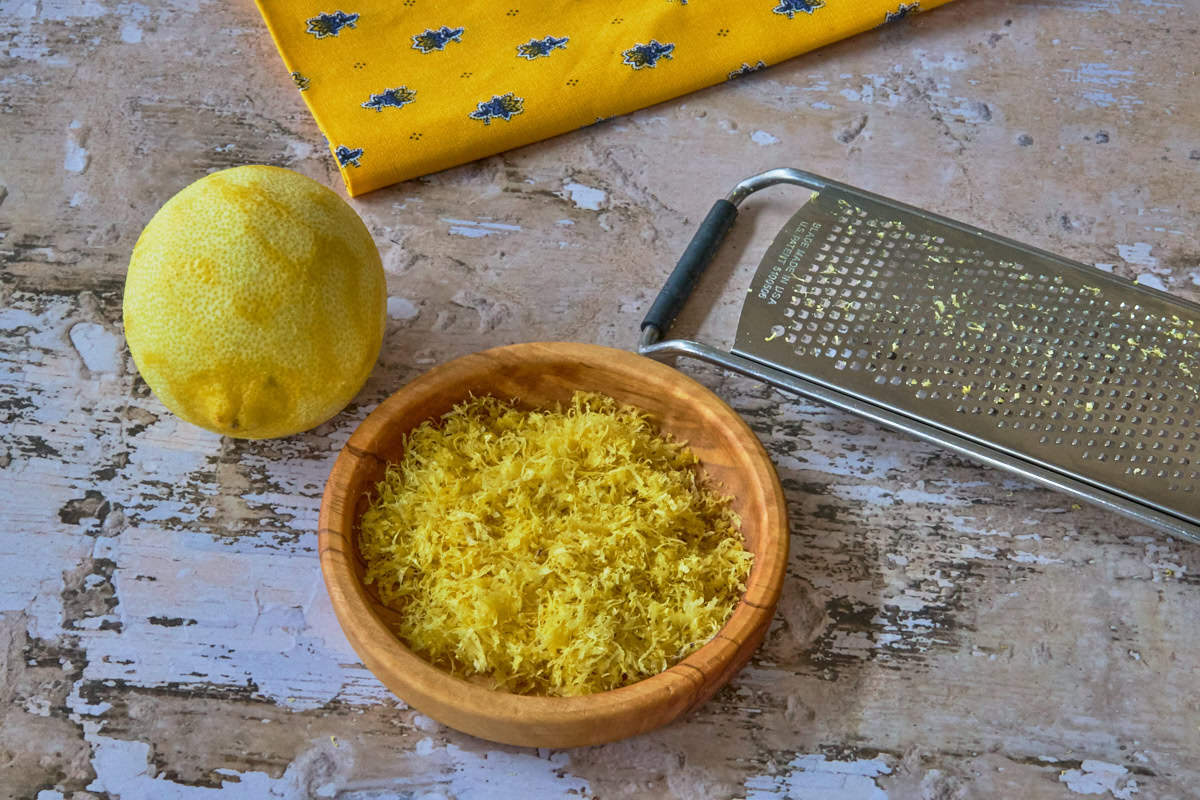
- Step 2: Using a fine zester or peeler, grate the zest shallowly to avoid using the bitter white pith beneath it.
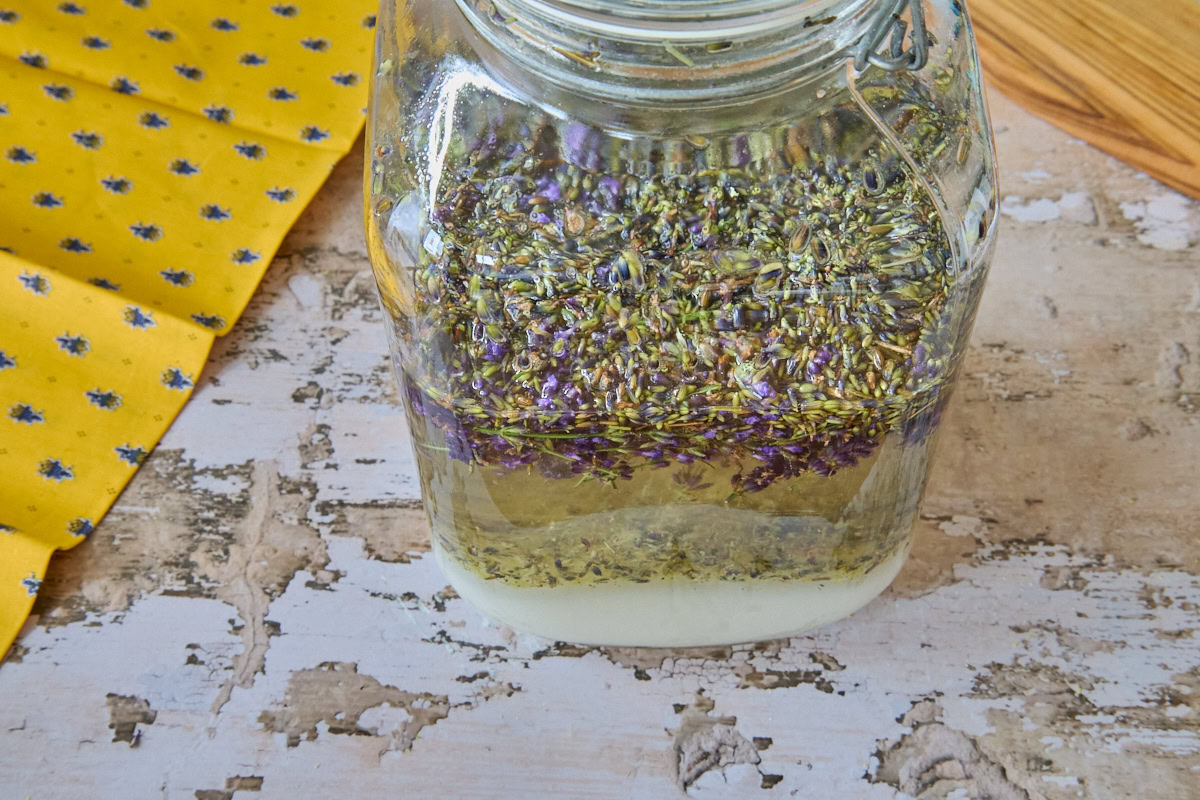
- Step 3: Add the vodka to a clean 1-liter jar. Place the vanilla seeds, pods, and zest in the jar. Add the lavender flowers (dried, fresh, or a blend, per the ratios in the recipe card notes) and the sugar to the jar. Stir until the sugar begins to dissolve.
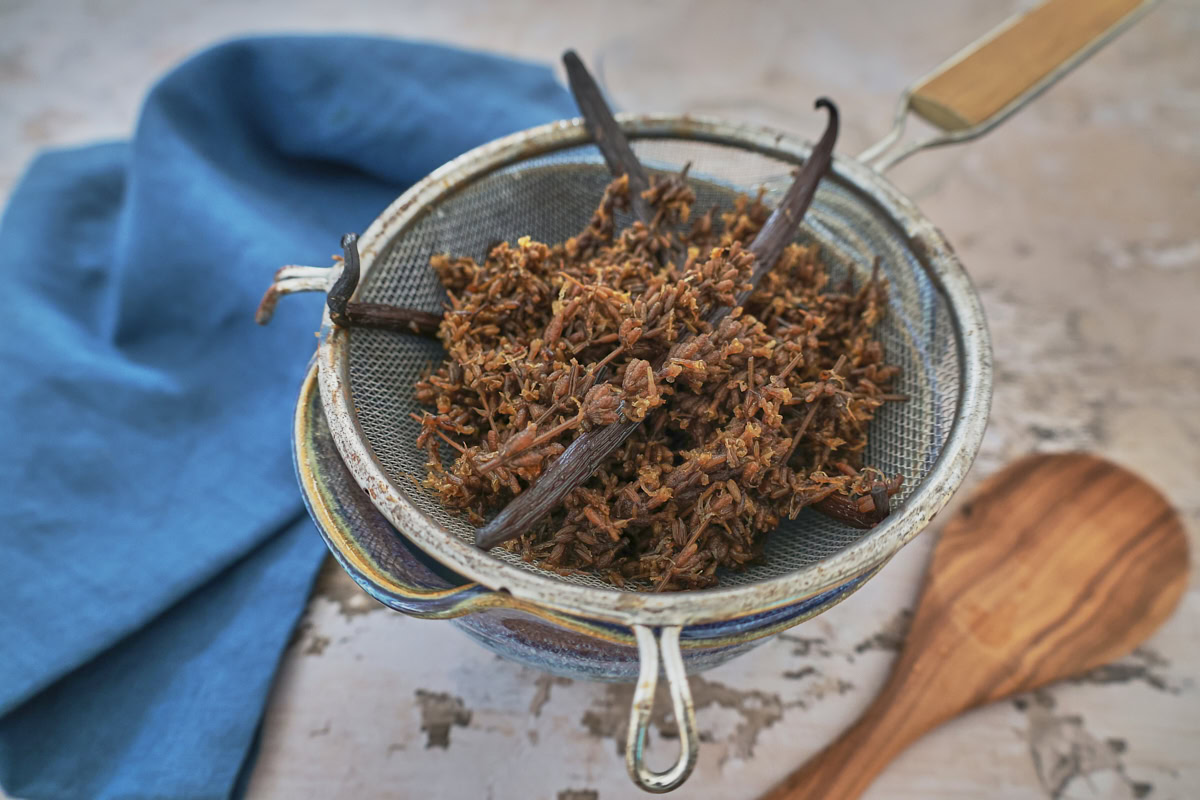
- Step 4: Seal the jar and store it in a cool, dark place. Shake gently every day for 1 week to dissolve sugar and distribute flavors. Seal the jar and store it in a cool, dark place. Steep for 1 more week or longer, tasting until it reaches your preferred level of smoothness and strength. Strain the liqueur to remove the solids.
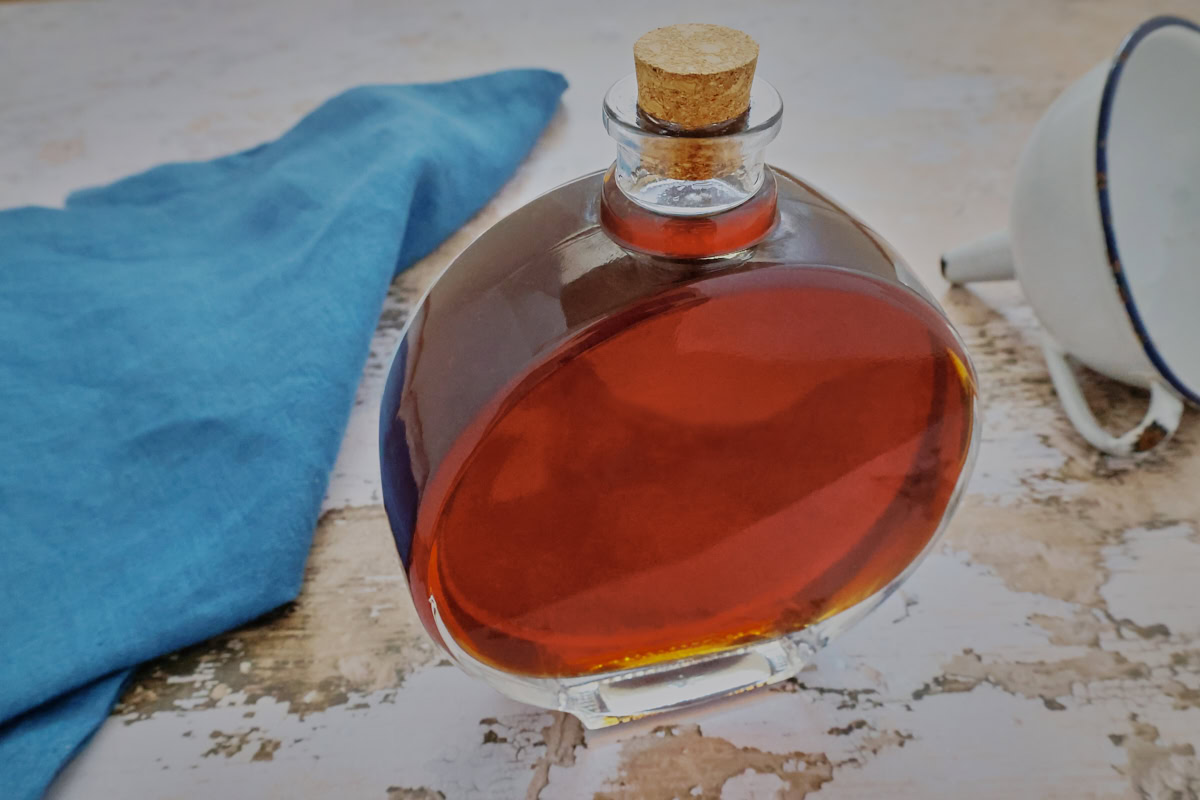
- Step 5: Strain the liqueur through a fine-mesh sieve or cheesecloth to remove the solids. Use a funnel to transfer the filtered liqueur into a clean 1-liter bottle. Enjoy! Store in an airtight container at room temperature in a cool, dark place, or refrigerator, or freezer.
Hint
💡Tips for success
Make sure to use culinary-grade lavender
Use a "true" English or other culinary-grade fresh and/or dried lavender for this liqueur. Hybrid varieties often contain a higher level of camphor, which would impart a stronger, woody flavor to your liqueur.
Steep until you reach your preferred flavor
You can start tasting your steeping liqueur as early as 1 week after combining. Let it steep until you reach your preferred smoothness and strength. I've let mine steep from 4 weeks to 1 year, depending on the strength I'd like. But even a week or 2 may be enough.

🔀Substitutions
Leave out vanilla and lemon zest if desired
For a more rustic version of this liqueur, you can omit the vanilla beans and lemon zest. I haven't tried this, but it would give you a more distinctive lavender flavor in the resulting liqueur.
Granulated sugar
If you'd like to introduce a deeper, richer flavor to this liqueur, you can try adding raw or brown sugar in place of granulated sugar.
🍶Variations
Other herb and spice combinations
Feel free to experiment! You can try other aromatics in this liqueur in place of or in addition to the vanilla beans and lemon zest. Maybe you can try herbs like mint, anise hyssop, lemon verbena, thyme, lemon balm, or any herb that sounds good to you.
And you could also try spices or other aromatics like cinnamon, cardamom, or tea leaves. If you do try different flavor combinations, please let me know how it turns out in the comments below!
🥣Equipment
- Digital scale: This is really important for measuring the accurate quantity of ingredients, especially in this case the lavender flowers. And while optional, I also use a smaller digital scale for measuring tea leaves or small quantities of herbs or spices. This would work well for the lemon zest in this recipe, but measuring spoons will work too. Digital scales are also inexpensive, and they reduce the amount of dishes you'll need to do!
- Cutting board, kitchen scissors and knife: For trimming the lavender flowers from the stems, and splitting and seeding the vanilla beans.
- Measuring cups and spoons: For measuring small and liquid quantities.
- 1-liter airtight jar: Make sure the seal is airtight for steeping.
- Wooden mixing spoon: To stir the ingredients in the jar.
- Strainer: You can use a fine-mesh strainer or cheesecloth to strain out the solids.
- Funnel: This is really helpful for transferring the liqueur from the original jar to your bottle for serving.
- 1-liter airtight bottle: I like to use swingtop bottles, so I won't misplace the top.

⏲Make ahead and storage
Make ahead
If you like a lighter lavender flavor, this liqueur can be ready after steeping for as little as 2 weeks. Just plan on waiting until it has the level of smoothness and strength that you prefer. I've steeped my first batch for 1 year to be nice and strong, and another batch for 4 weeks for a lighter blend. (Although it may have been ready sooner; I've just tasted for the first time after 4 weeks.) It's satisfying to experiment making it to your taste.
Room temperature
This lavender liqueur should keep for at least 12 months at room temperature if stored in a cool, dark place.
Refrigerate
If you have room in your fridge, it'll keep for at least 12-18 months. And it'll always be chilled and ready to serve.
Freeze
I love to keep my homemade liqueurs. in the freezer. They'll keep essentially indefinitely here, with the freshest flavor within 2 years. But since you'll likely drink it before then, this shouldn't be an issue! I also like the thicker, more viscous quality that my homemade liqueurs have when stored in the freezer. And I love to serve them ice cold.
🍲Serving suggestions
Apéritif (before-dinner drink)
Serve neat over ice in small glasses, or added to white wine for a kir de lavande.
Digestif (after-dinner-drink)
This is a delightful way to finish a special meal among friends and family. You can serve it near over ice as above, or combined with my Homemade Lemon Verbena Liqueur (Liqueur de Verveine for a really special botanical garden sipper.
In cocktails
Soon I'll be posting a luxurious cocktail that I've created with this liqueur de lavande. I'm excited to share it with you! You can also experiment with adding this liqueur to drinks with cognac, gin, vermouth, Chartreuse, bitters, sparkling water or wine, etc. If you find your favorite cocktail for enjoying it, please let me know in the comments below!
More cocktail ideas
If you're looking for more irresistibly captivating liqueurs and cocktails to serve, please try my lemon verbena liqueur above, as well as these others below, also from my posts. If you try these or the homemade lavender liqueur in this post, please let me know what you think in the comments below!
9 Homemade Vin d'Orange Versions with Herbs, 30 Taste Tests
Homemade Crème de Menthe Guide: 6 Versions Reviewed
Sunrise à la Plage - Frozen Mango Pineapple Rum Cocktail
Peruvian Chirulín Spritz Cocktail
❓FAQ
Both will work well. Please make sure to use culinary-grade fresh or dried lavender flowers. And follow the ratio in the recipe card notes to use the optimal quantities, depending on which one(s) you're using.
The deep violet shade of the lavender blooms fades during infusion, and this is completely natural. You can either leave your liqueur in this rich, rustic shade as I do, or color it as in the answer below.
Yes, you can make this liqueur a vibrant purple color. In this post, I've left the color natural, so you can see the rustic, rich amber hue. But if you'd like to add some vibrancy, please feel free to add some food coloring (natural and organic, if possible) to spruce it up.
You can steep it for as little as 2 weeks, or even as long as a year. It all depends how you'd like to use this liqueur, and your preferred level of smoothness and strength. I recommend tasting it as it steeps until it reaches your ideal flavor.
It should last for at least 12 months in an airtight bottle at room temperature in a cool, dark place. Or for longer in the fridge or freezer. I love to keep mine in the freezer and serve it ice cold.
Yes, this lavender liqueur has all plant-based ingredients (just make sure that your granulated sugar is plant-based), and is naturally vegan.
I like to use a vodka that's 80-proof (or 40% ABV). There's no need to use a high-end brand with this liqueur, as the finer nuances of its flavor may be lost among all of the botanical aromatics. Feel free to use whichever vodka you have on hand.
✨More recipes you'll love
Looking for other recipes like this? Try these:
✏️Did you make this recipe?
Please let me know in the reviews and comments below!
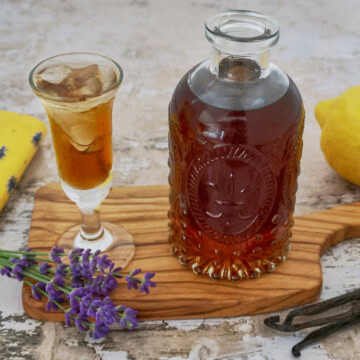
Lavender Liqueur Recipe - Liqueur de Lavande Recette
Ingredients
- 1 large (5 g) vanilla bean
- 1 large lemon, yielding about 5 g or 2½ - 3 teaspoons of zest
- 750 mL (3 cups) vodka, 80 proof, 40% ABV
- 24-36 g fresh lavender flowers, about 1½ cups, loosely packed
- or 8-12 g dried lavender flowers, about ½ - ¾ cup, loosely packed
- or a blend dried and fresh lavender flowers, keeping 3 parts fresh to 1 part dried by weight and volume
- 200 g (1 cup) granulated sugar
Instructions
- Prepare the vanilla bean: Split the vanilla bean lengthwise and scrape out the seeds. Set aside both the beans and pod.
- Zest the lemon: Using a fine zester or peeler, grate the zest shallowly to avoid using the bitter white pith beneath it.
- Add lavender and sugar: Add the lavender flowers (dried, fresh, or a blend, per the quantities in the notes below) and the sugar to the jar. Stir until the sugar begins to dissolve.
- Infuse the blend: Seal the jar and store it in a cool, dark place. Shake gently every day for 1 week to dissolve sugar and distribute flavors.
- Strain and bottle the liqueur: Strain the liqueur through a fine-mesh sieve or cheesecloth to remove the solids. Use a funnel to transfer the filtered liqueur into a clean 1-liter bottle.
- Enjoy! Store in an airtight container at room temperature in a cool, dark place, or refrigerator, or freezer.
Notes
-
Fresh lavender flowers only: Use 24 - 36 g (about 1½ - 2 cups, loosely- packed). Note: Fresh flowers are milder, requiring more volume to achieve the same strength as with dried flowers.
-
Dried lavender flowers only: Use 8 - 12 g (about ½ - ¾ cup loosely-packed). Note: Dried flowers have a concentrated flavor. Start with the lower end of this range if you find floral flavors to be a bit strong for you.
-
Ratio for blends of dried and fresh lavender flowers: Use about 3 parts fresh to 1 part dried flowers by weight or volume. Fresh lavender is about 3 times bulkier than dried.
Leave a Reply