
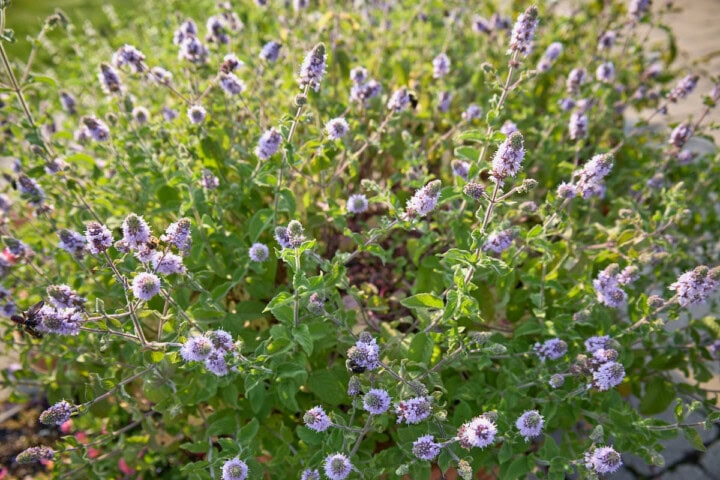
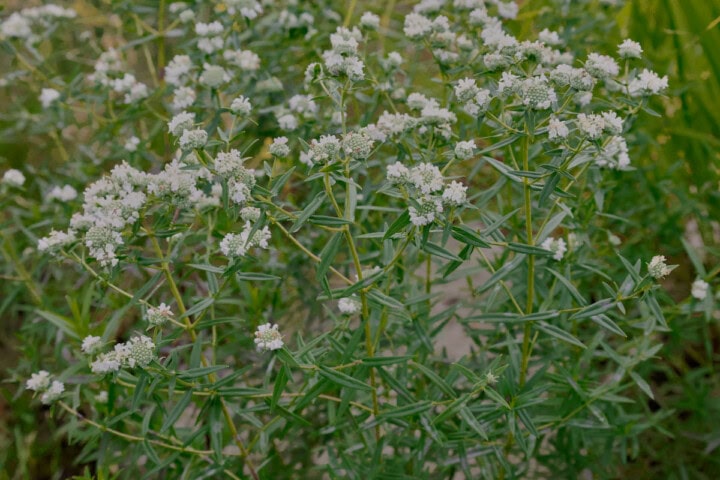

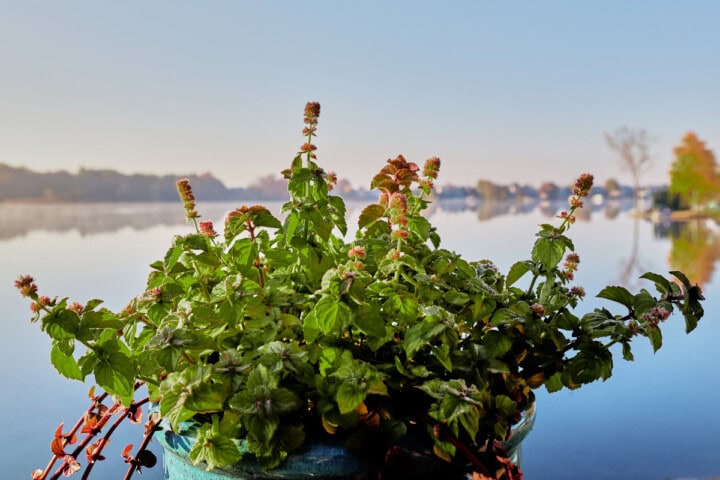
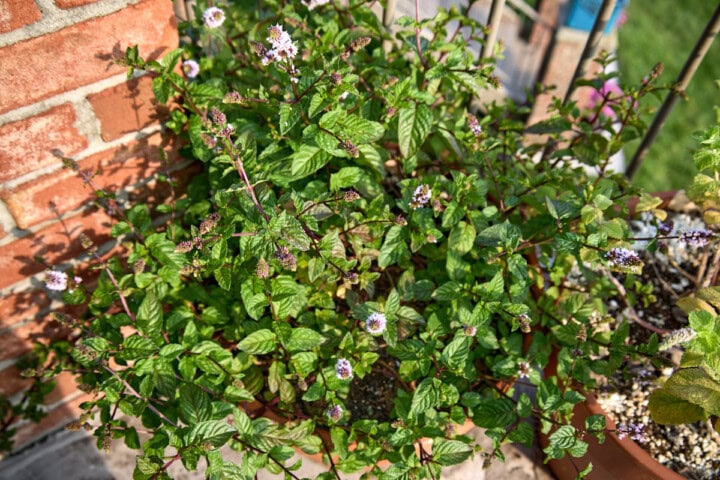

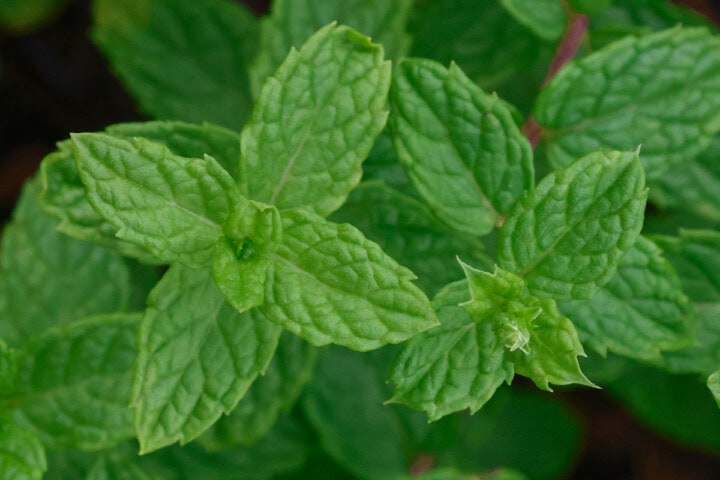


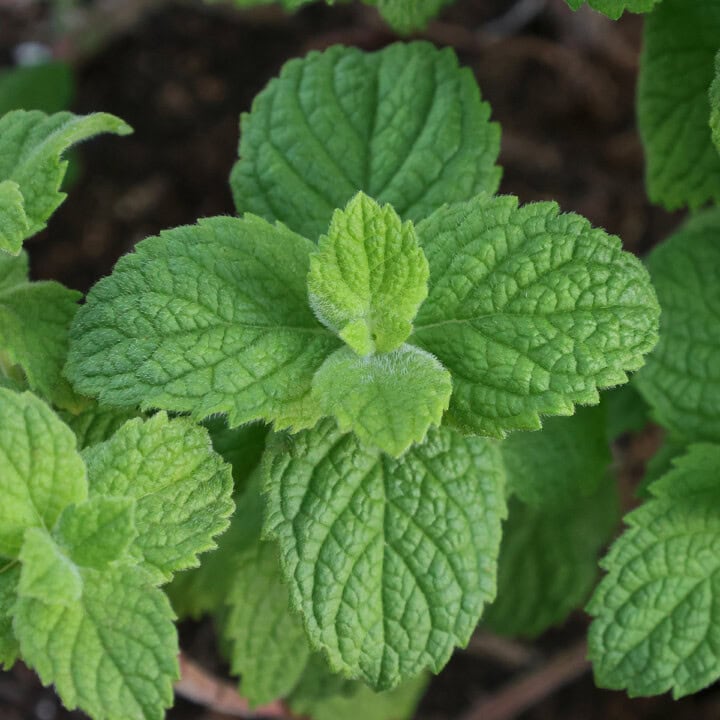
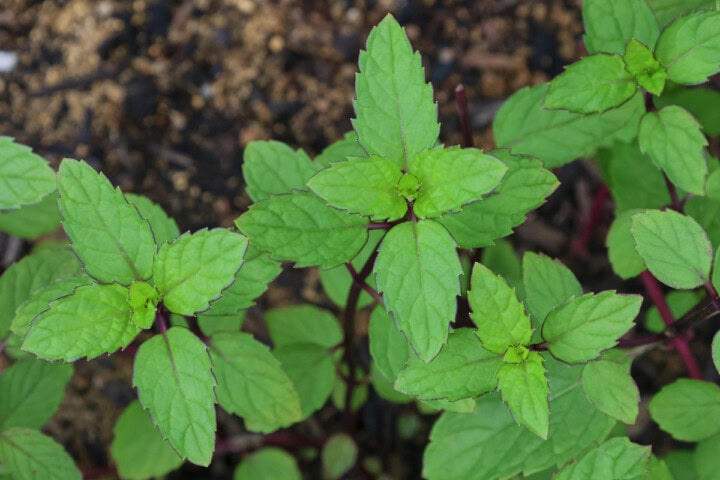
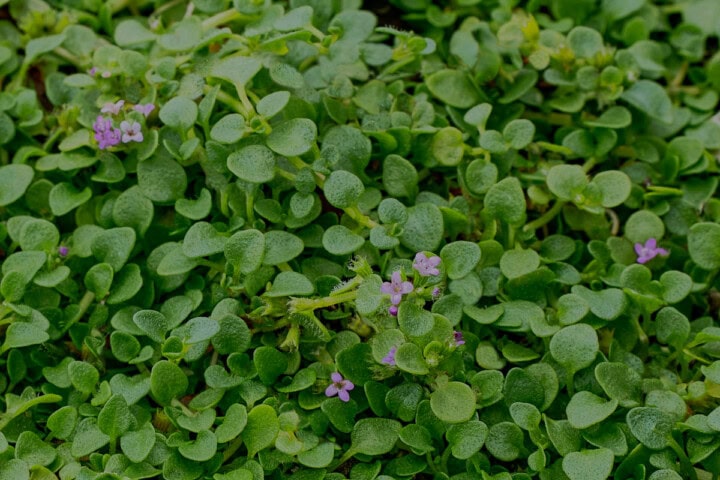

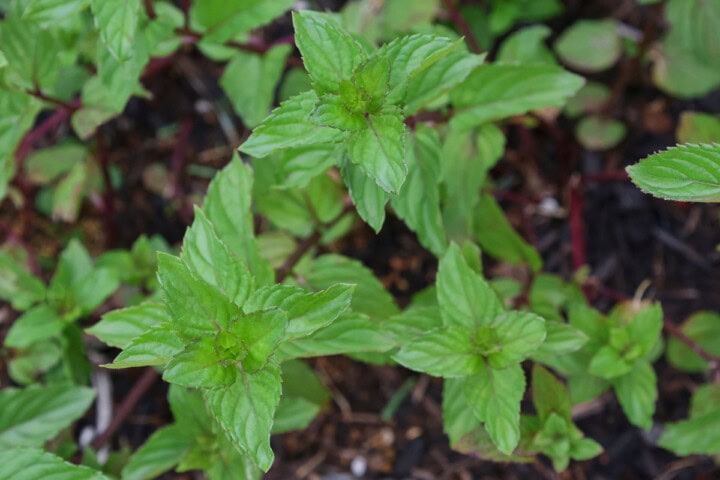
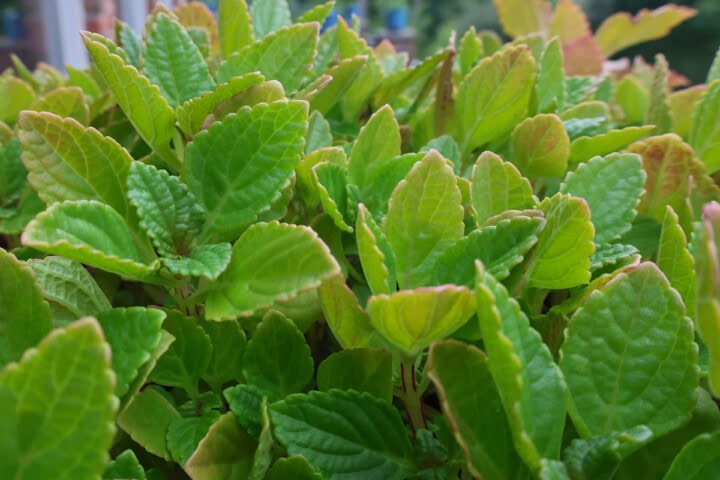

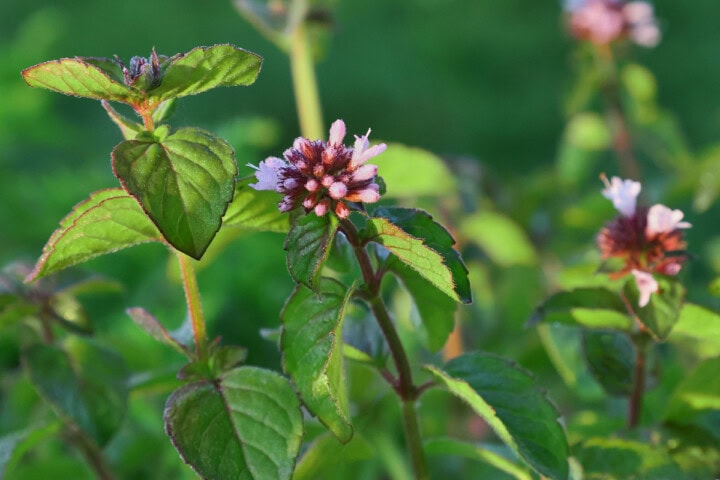

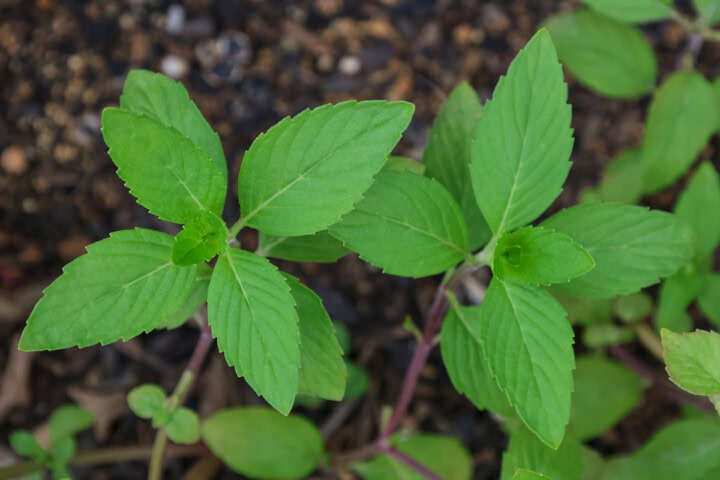
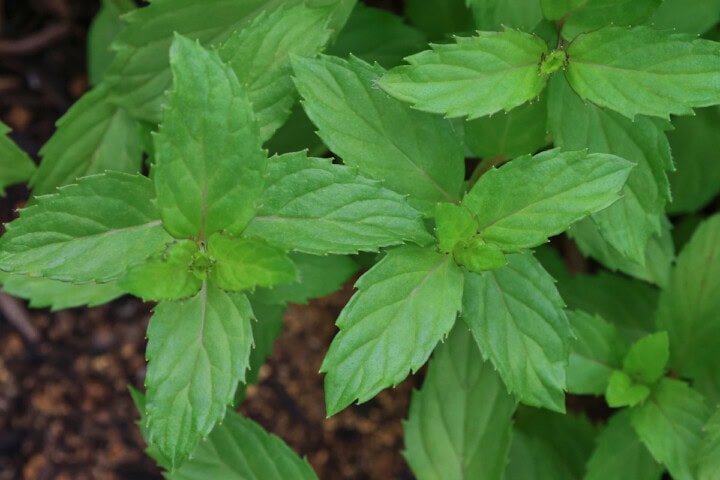


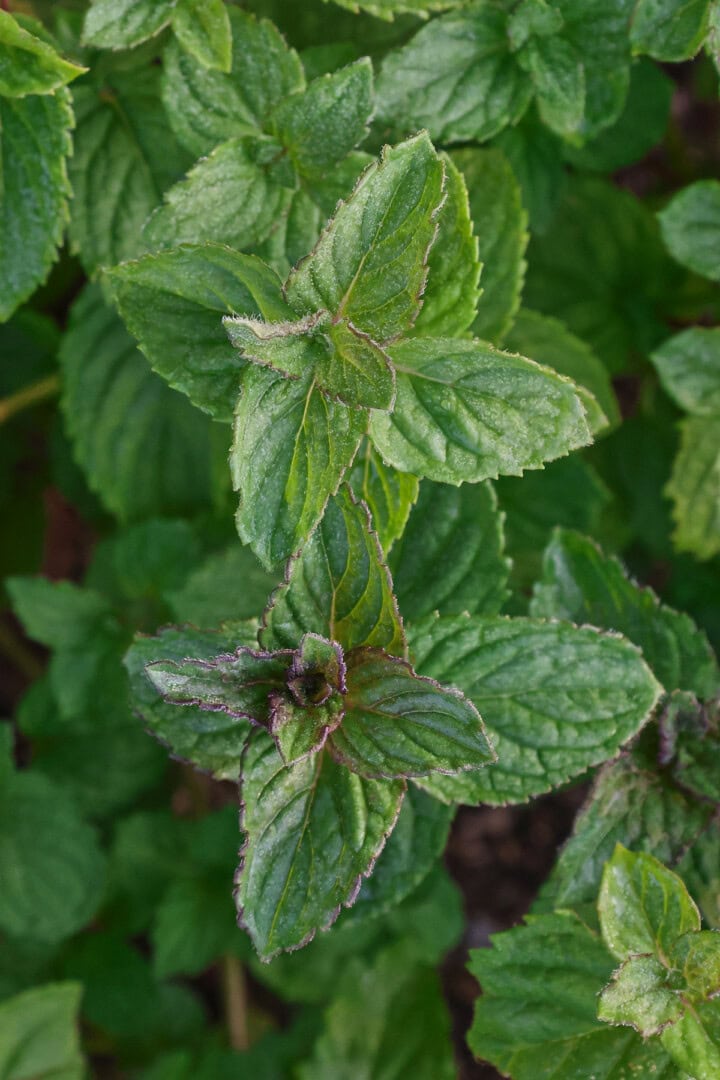
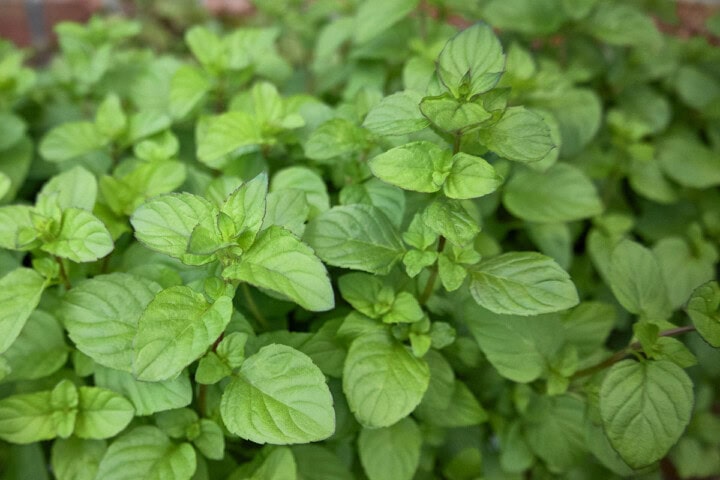
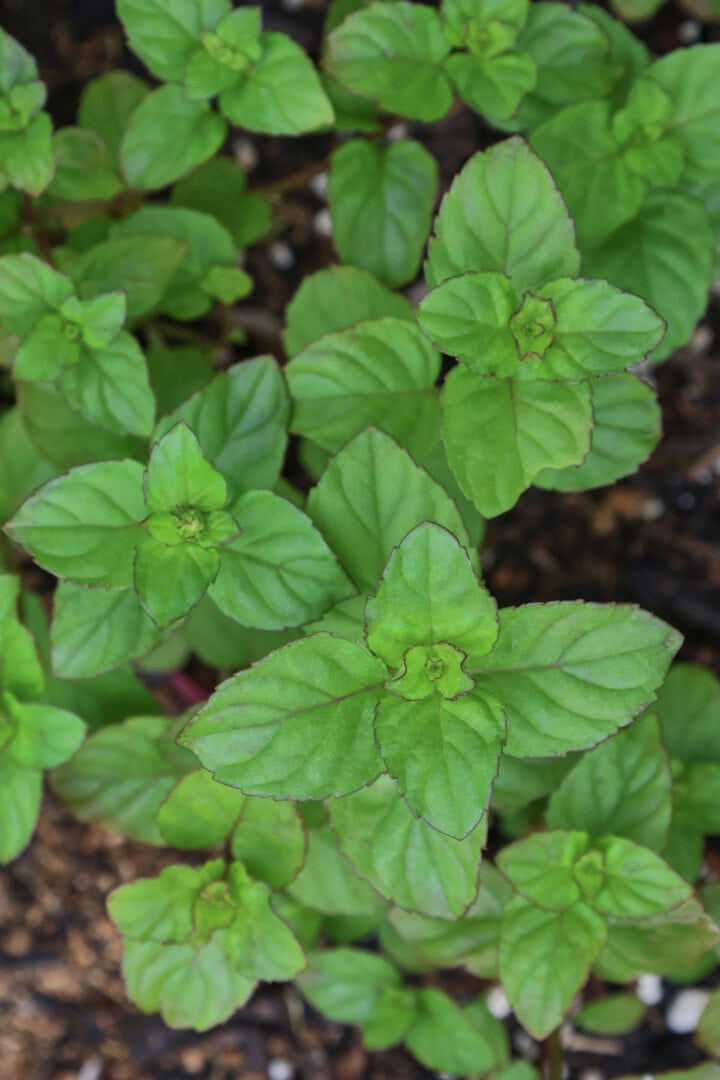

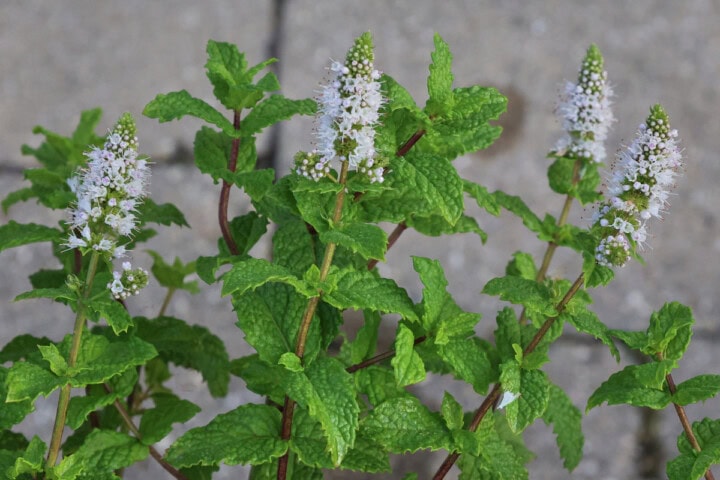
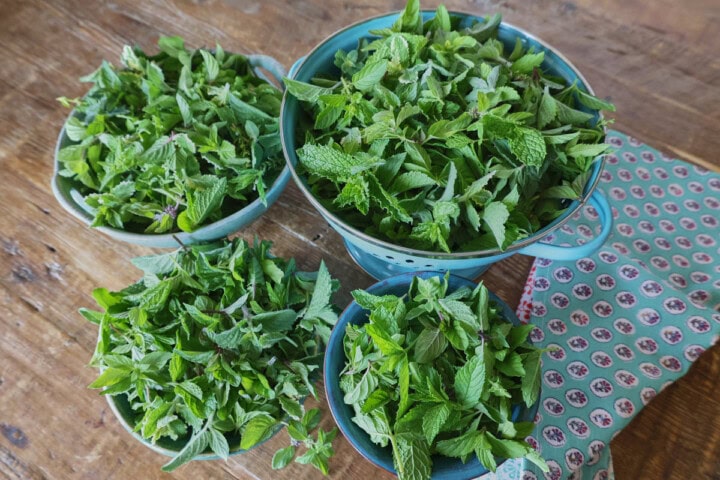

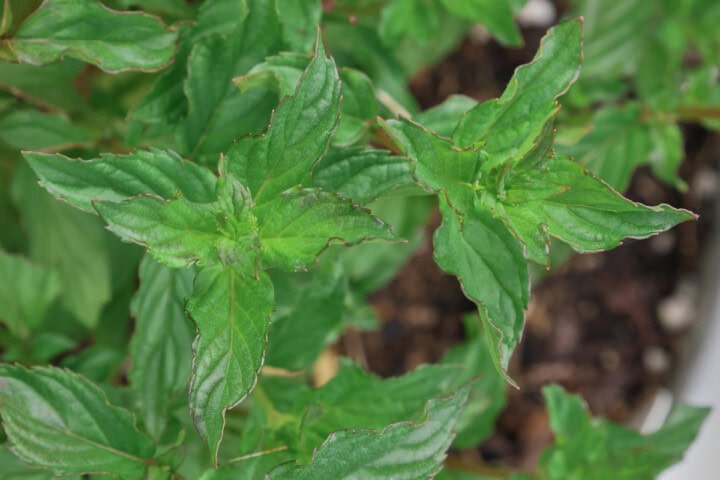
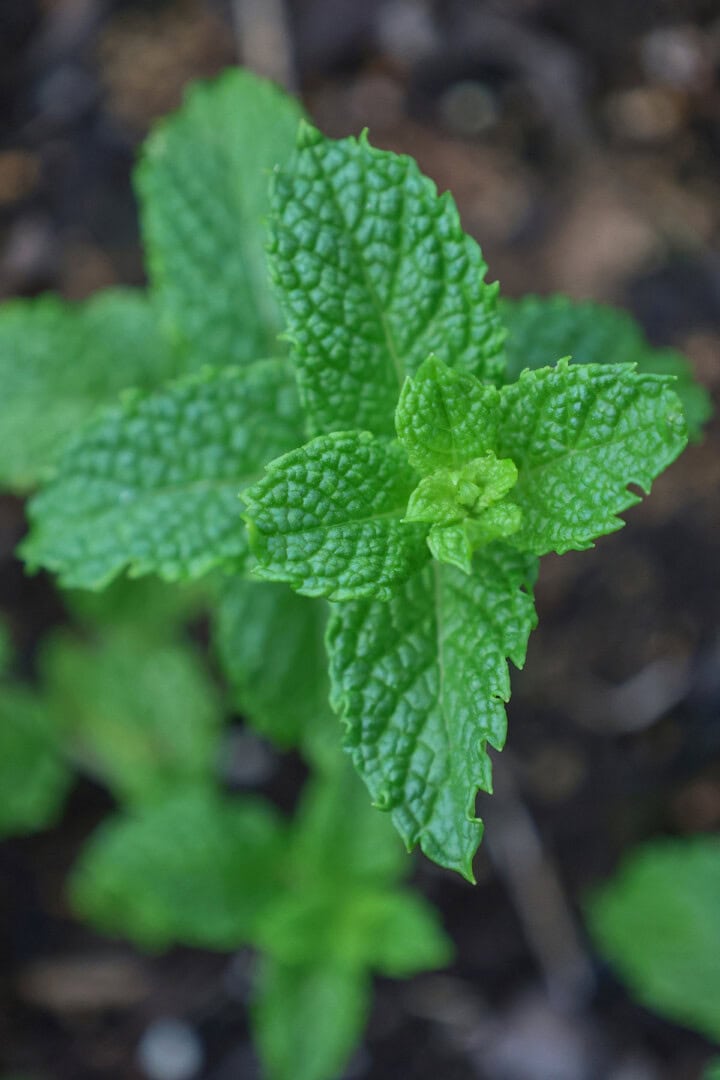
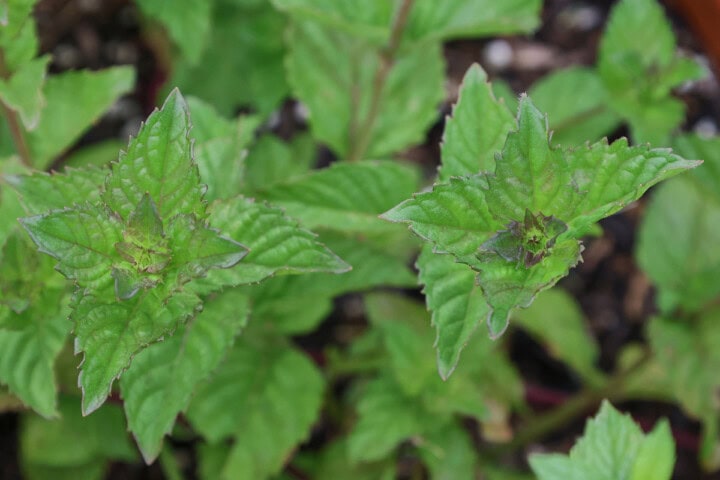
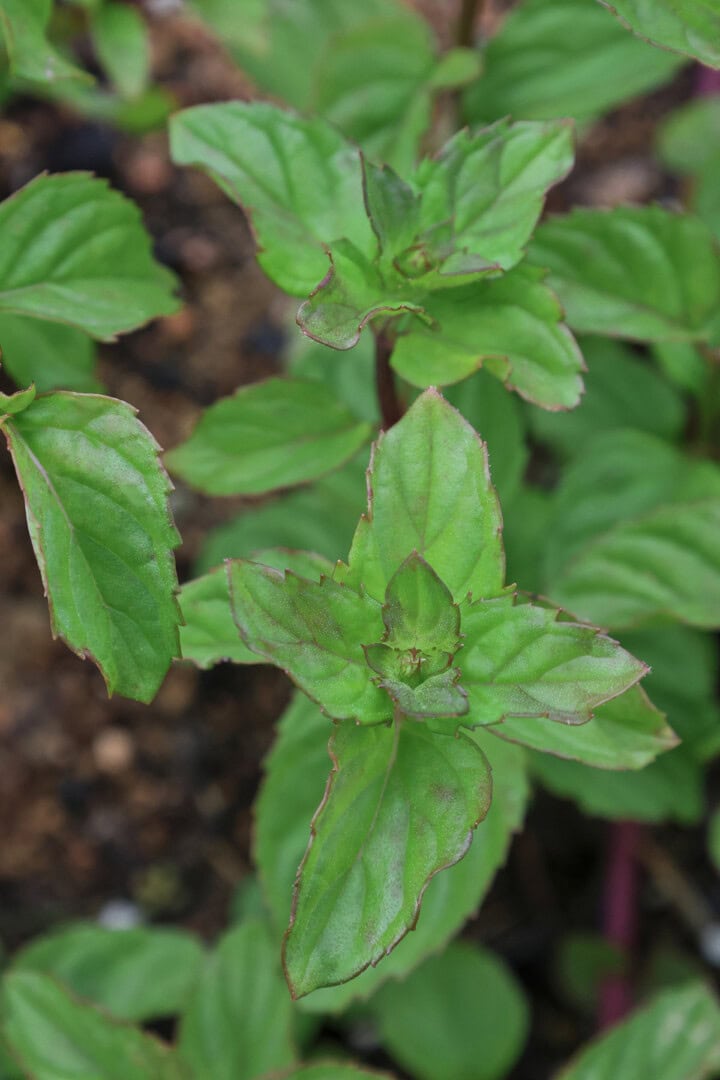

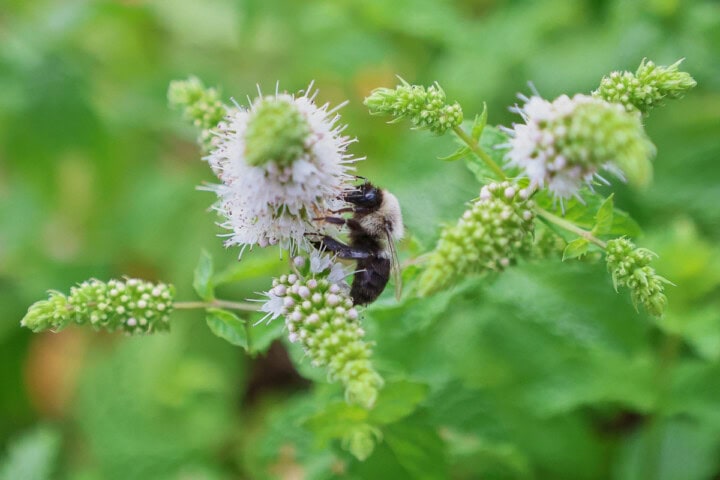
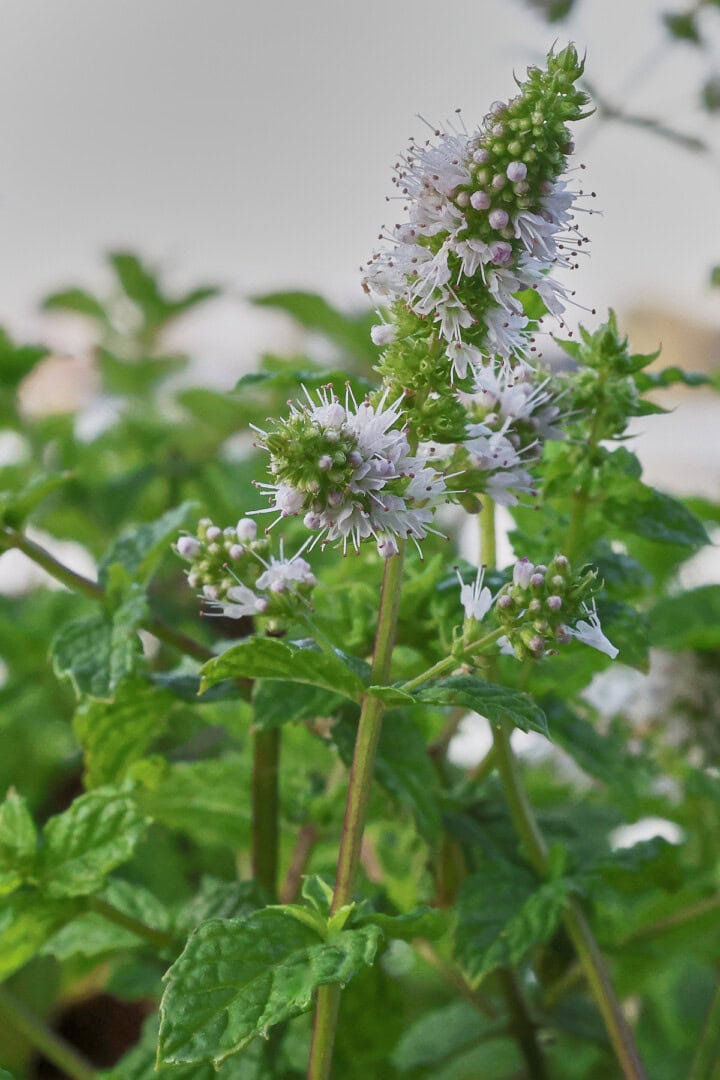
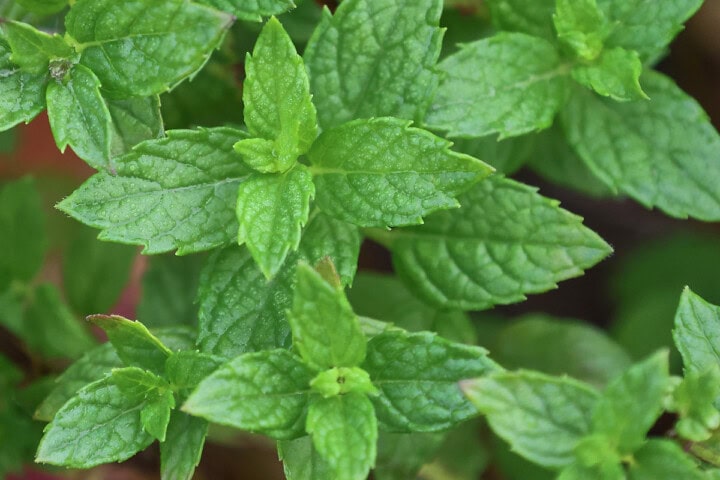


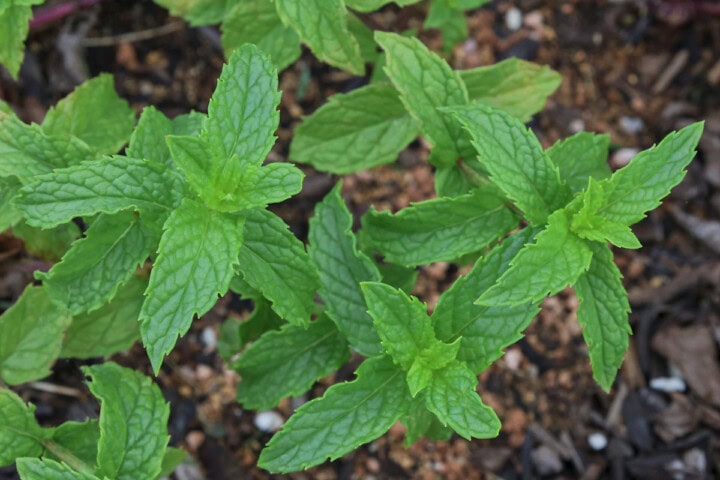
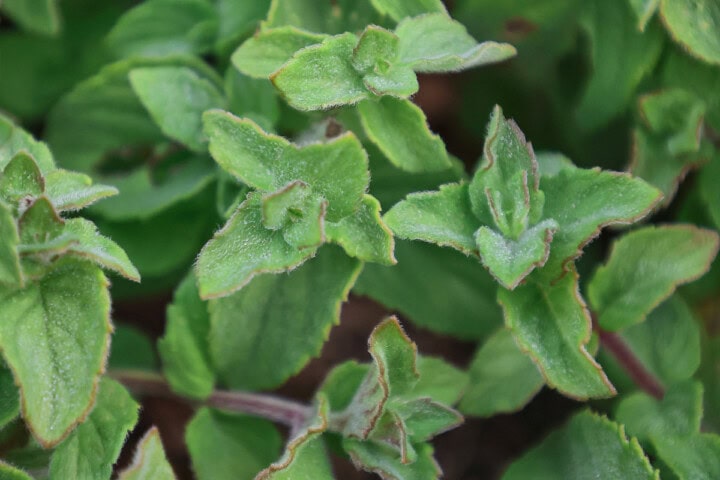
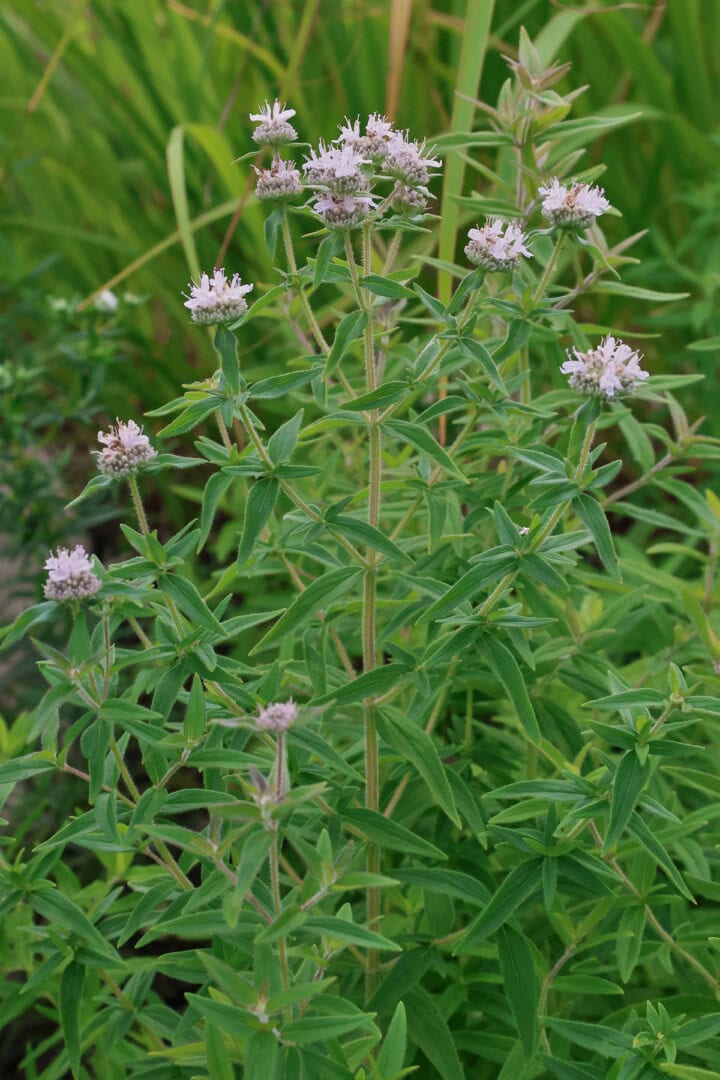

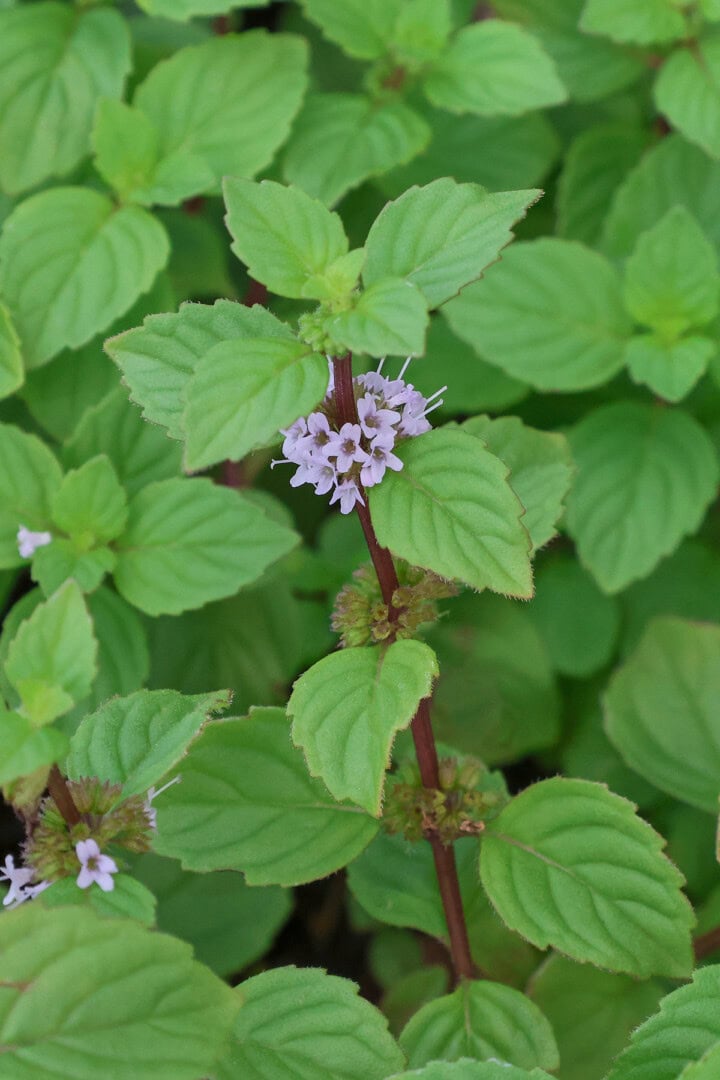


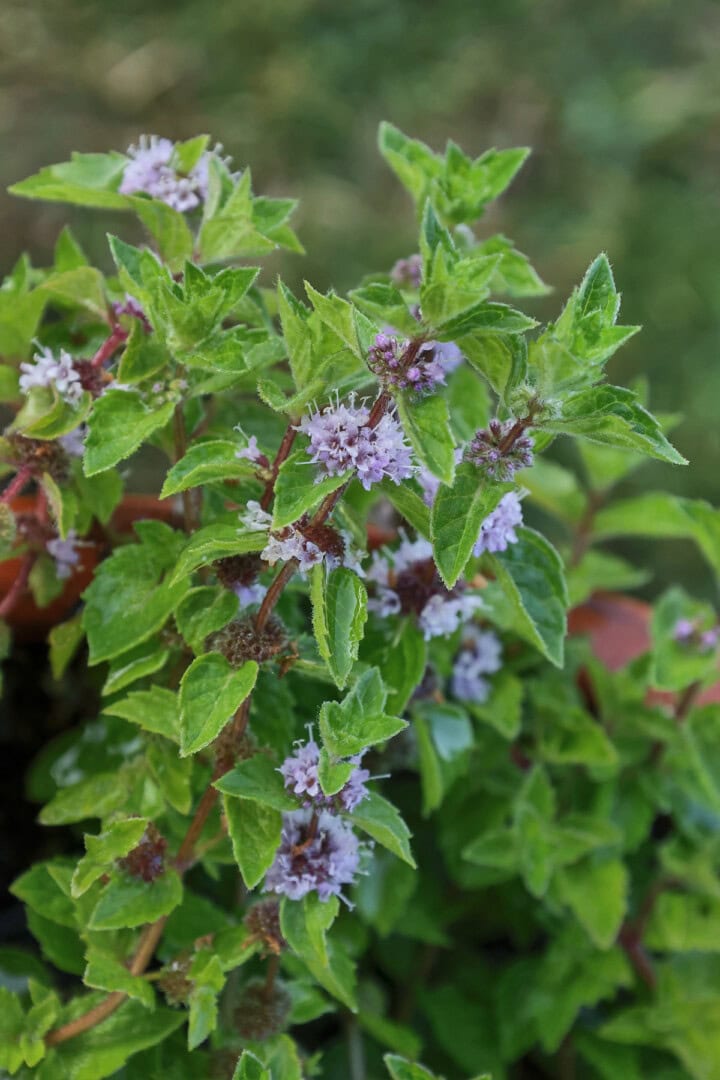
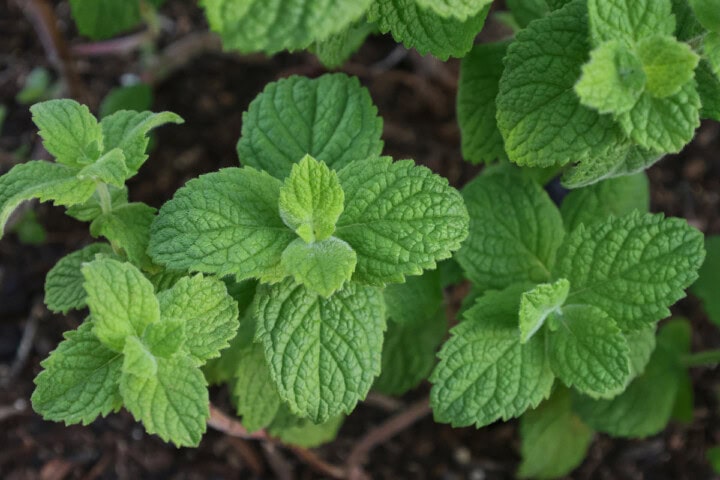


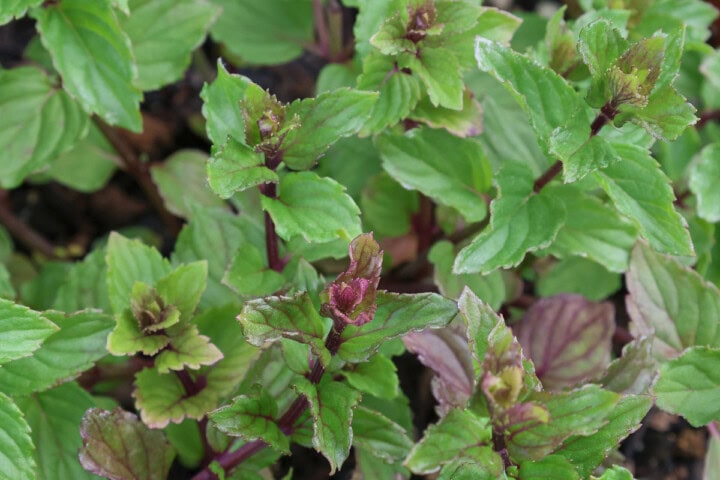


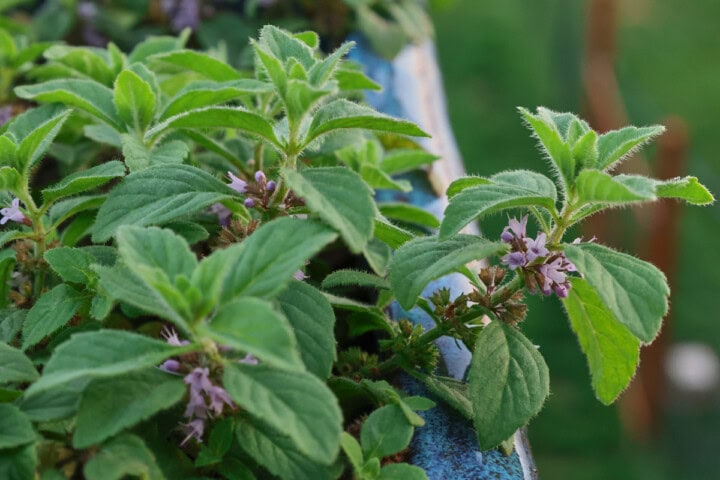

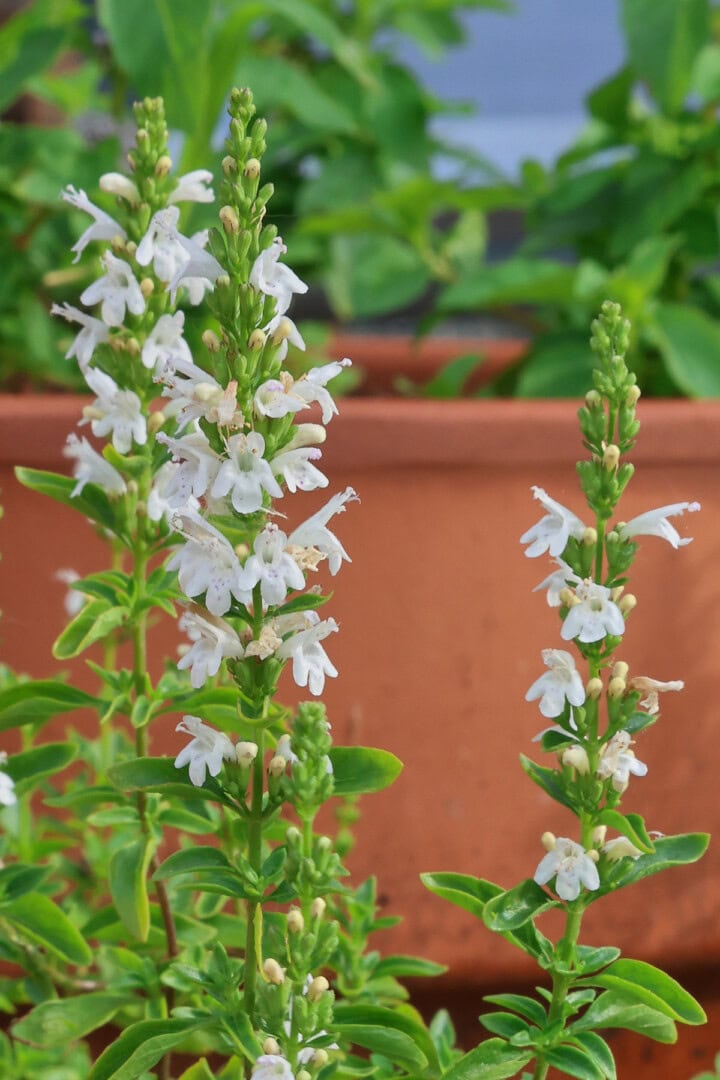
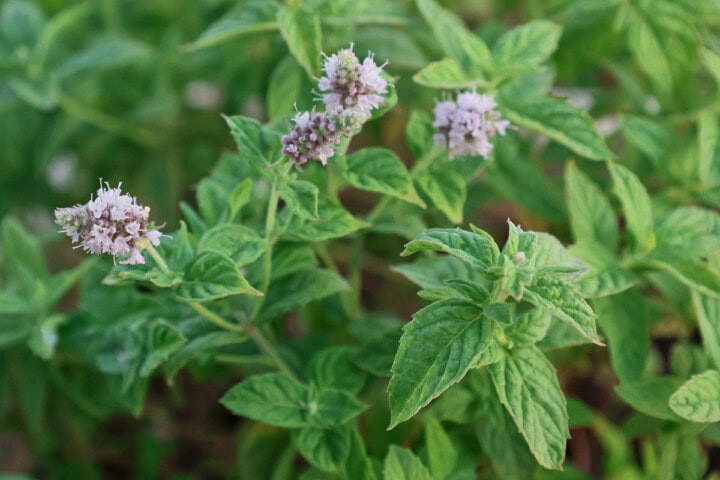
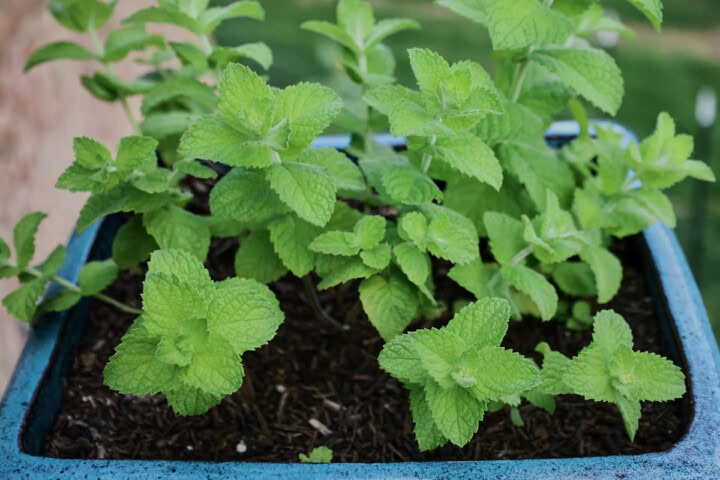

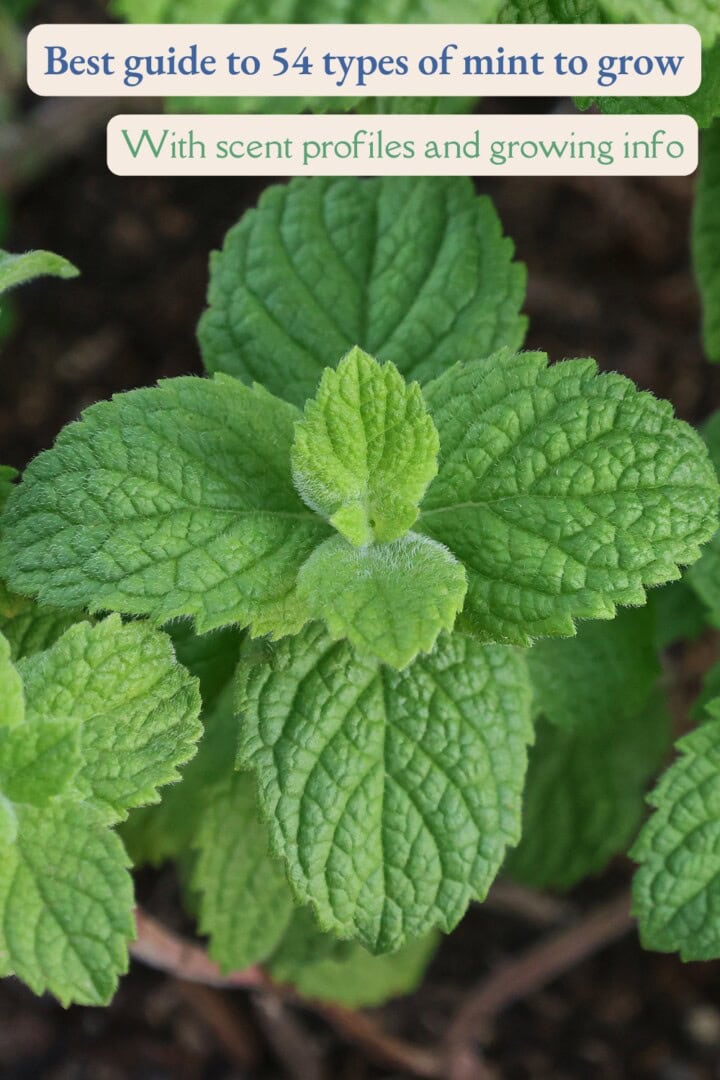
There's no other herb quite like mint. It can carry you on an icy invigorating breeze, or delight your taste buds with a burst of sweet green freshness. There are so many captivating ways to experience mint: in desserts, cocktails, sweets, and even in savory dishes. It's so easy to grow and savor impossibly fresh mint in your kitchen from your own backyard. And I have 54 types for you to enjoy! I've grown them all and documented each one with photos, details and my own scent notes, so you'll know which ones are just right for you. Please keep reading to discover the Best guide to 54 types of mint to grow with scent profiles!
All of the mint photos in this post are from my own garden. I hope you enjoy all of these varieties as much as I do!
Jump to:
- History of mint
- "True" mints vs. others in the mint family
- Mint uses
- Mint leaf scent vs. flavor
- How to grow mint
- 1. African potato mint
- 2. After eight chocolate mint
- 3. Amsterdam lemon mint
- 4. Apple mint
- 5. Arabian mint
- 6. Balkan mint - variation 1
- 7. Balkan mint - variation 2
- 8. Banana mint
- 9. Basil mint
- 10. Berries and cream mint
- 11. Black mitcham peppermint
- 12. Blackcurrant mint
- 13. Chewing gum mint
- 14. Chinese mint
- 15. Chocolate mint
- 16. Corsican mint
- 17. Cotton candy mint
- 18. Double mint
- 19. Eau de cologne mint
- 20. Egyptian mint
- 21. English mint
- 22. French peppermint
- 23. Fruit sensations
- 24. Fuzzy Chinese mint
- 25. Ginger mint
- 26. Grapefruit mint
- 27. Hillary's sweet lemon mint
- 28. Iced hazelnut mint
- 29. Ingauno mint
- 30. Jamaican / Costa Rican mint
- 31. Japanese field mint
- 32. Julep mint
- 33. Kentucky colonel mint
- 34. Lavender mint
- 35. Lime mint
- 36. Margarita mint
- 37. Marley mint
- 38. Marshmallow mint
- 39. Mojito mint
- 40. Moroccan mint
- 41. Mountain mint, hairy
- 42. Mountain mint, Virginia
- 43. Orange mint
- 44. Orange bergamot mint
- 45. Peppermint
- 46. Pineapple mint
- 47. Scotch mint
- 48. Strawberry mint
- 49. Sweet pear mint
- 50. Swiss mint
- 51. Thai mint
- 52. Vietnamese mint
- 53. Water mint
- 54. Wintergreen mint
- ❓Frequently asked questions
- 📚Resources
- ✏️Have your grown these mints?
- 🥕More gardening posts you'll love
History of mint
In Greek mythology, Hades, the god of the underworld, was enchanted with a nymph named Minthe. Hades' jealous wife Persephone changed Minthe into a plant. Hades softened the spell by giving this plant a sweet fragrance.
Mint has been grown and harvested since antiquity, and has been found in tombs in Egypt from 1000 BC. It's been cultivated in Japan for at least 2,000 years. The Romans brought it to Europe. In the 18th century, mint became important for its medicinal applications, and was used as a cure for colic, digestive disorders, and many other conditions.
In Europe, people would use mint by placing it around homes and in sickrooms. Colonists brought peppermint and spearmint to the New World to use as medicine, tea, and as a sleep aid.

"True" mints vs. others in the mint family
The mint family, known botanically as Lamiaceae, includes many beautiful flowering and aromatic plants. The ones that we generally know as mint are within the Mentha genus, and these make up most of the mints listed in this post.
Some of the other mint family listings in this post include plants that can be enjoyed like mints in a culinary capacity, but are in a different genus category. These include African potato mint (genus Plectranthus), Balkan mint and Jamaican / Costa Rican mint (genus Clinopodium), and mountain mint (genus Pycnanthemum).
Here are some mint family members that have great uses in the kitchen. I love to grow these in my mint garden. This list includes the types of mints listed above and more, by genus and with culinary examples of each:
- Agastache: anise hyssop, Korean hyssop
- Clinopodium: calamint, lesser calamint
- Elsholtzia: Vietnamese balm, Vietnamese lemon balm
- Hyssopus: hyssop
- Lavandula: lavender
- Marrubium: white horehound
- Melissa: lemon balm
- Mentha: spearmint, peppermint, apple mint, orange mint, chocolate mint, etc.
- Monarda: bee balm, bergamot, Oswego tea
- Nepeta: catnip, catmint
- Ocimum: basil
- Origanum: oregano, marjoram
- Perilla: shiso (green and red)
- Plectranthus: African potato mint, lemon leaf
- Pycnanthemum: mountain mint
- Salvia: common sage, pineapple sage, clary sage
- Salvia rosmarinus: rosemary
- Satureja: summer savory, winter savory
- Thymus: common thyme, lemon thyme, wild thyme, etc.
There are way too many exciting mint family members to include in this post. The 54 types I'm listing here are just a thrilling starting point!

Mint uses
Medicinal
Today, mint is used in a large variety of ways: as medicine for digestion and upset stomach, nausea, muscle spasms, or cramps, among other uses. Many of mint's beneficial properties come from menthol, which comprises 50 to 78 percent of the oil of peppermint.
Menthol stimulates bile, promoting digestion. It's also an antispasmodic, calming muscles in the digestive system and relieving menstrual cramps. It can also relieve hunger by temporarily delaying peristaltic action.
Culinary - main types
There's such an incredible range in the culinary uses of a wide variety of mints. They've been traditionally used in tea, jelly, and sauces, among many other applications in the kitchen. There are so many mints to explore, each one lending its own unique and special fragrance and flavor to enjoy.
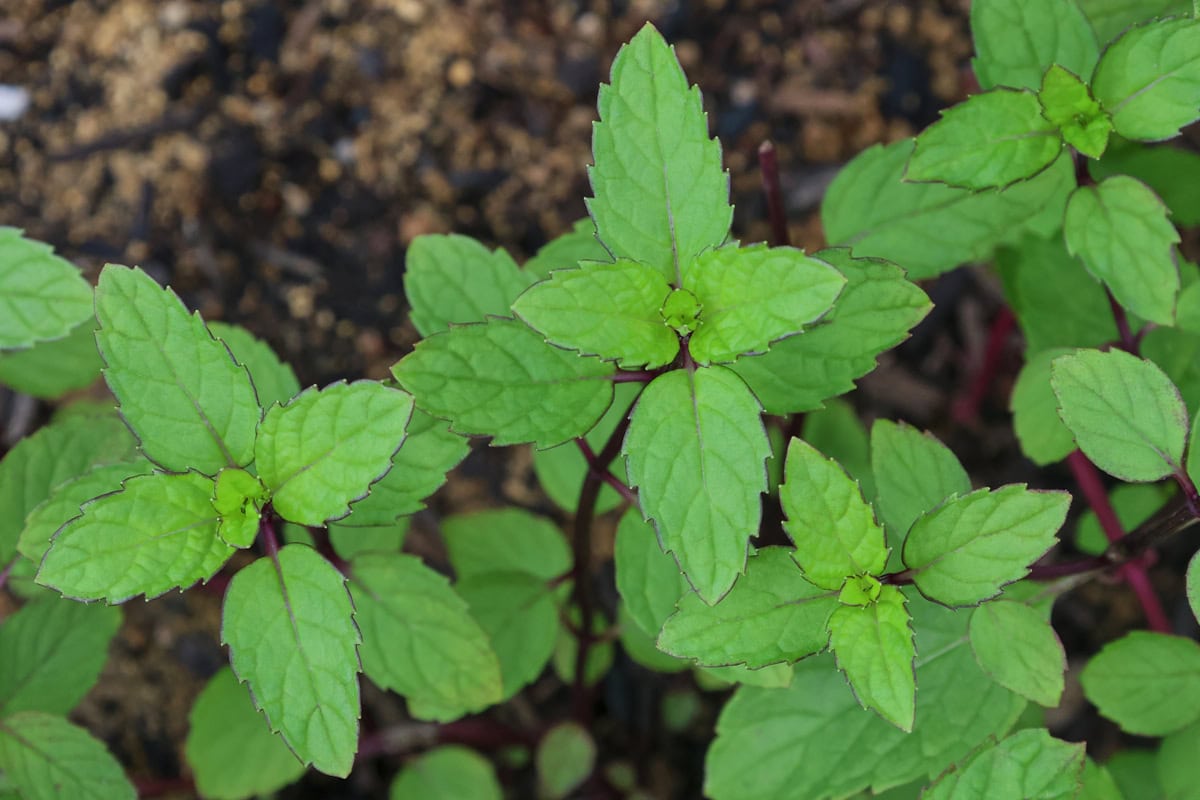
Peppermint
Peppermint is the primary mint used commercially to flavor candy and chewing gum. In home gardens, the best peppermint leaves to use are the young and fresh ones. They make a wonderful tea, simple syrup to flavor desserts, cocktails and sodas, and as an addition to fruit salad.
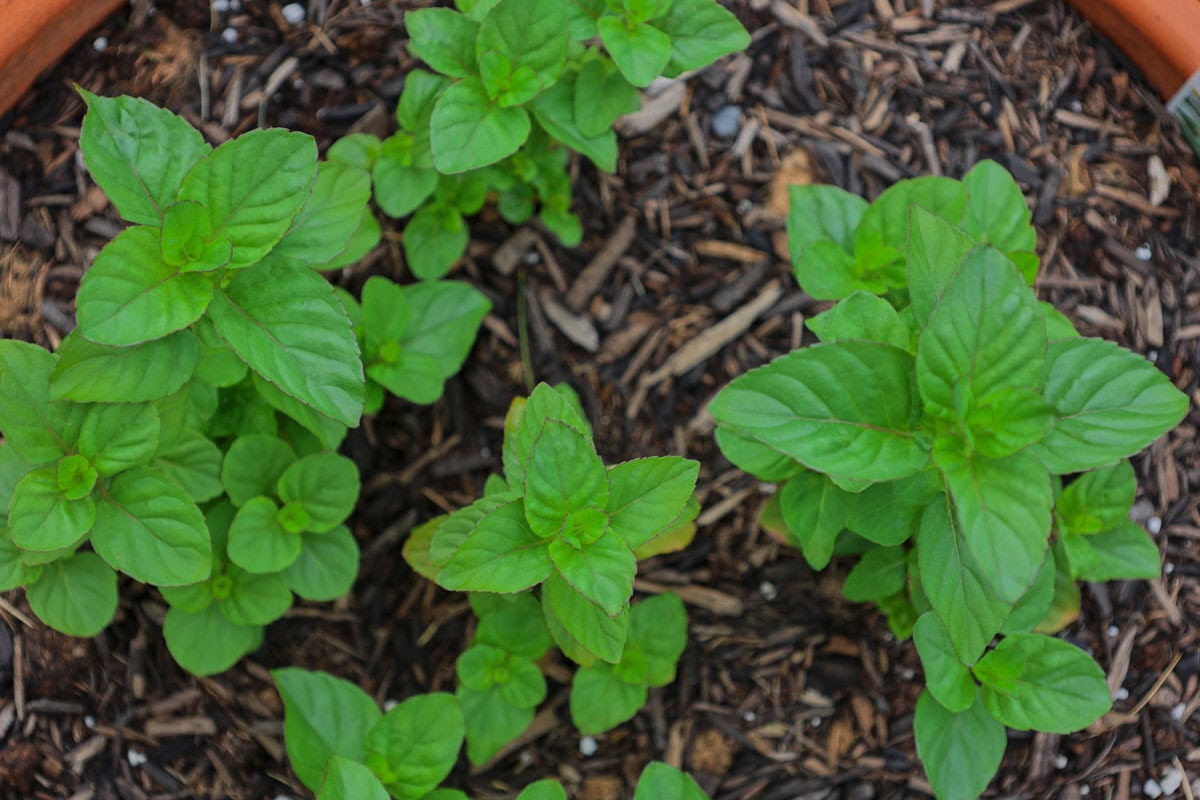
Spearmint
Spearmint is even more versatile in the garden than peppermint. It's milder, sweeter, and less cooling, and it works really well in both sweet and savory dishes. It's ideal in cocktails (like mojitos and mint juleps), desserts, and liqueur.
Japanese mint
Along with peppermint and spearmint, Japanese mint is the other most widely and commercially important mint variety worldwide. The species Mentha arvensis var. piperescens (#31 in this post) is the primary menthol source, and is harvested in various areas in Asia and South America.
Homemade crème de menthe liqueur
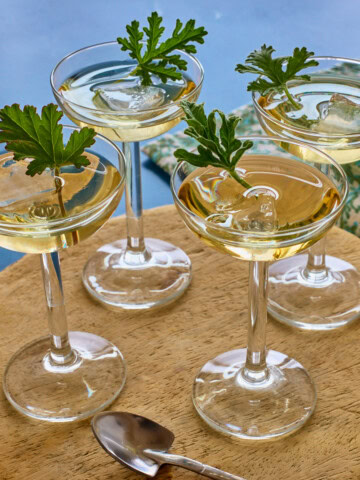
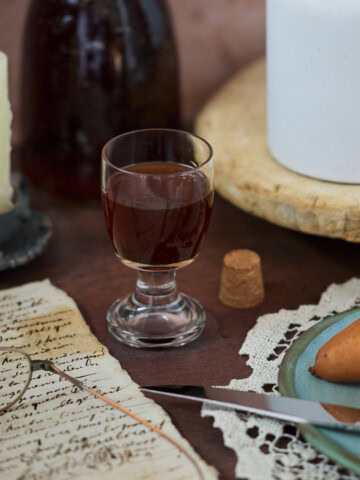
I did a test of several varieties of my garden mints to make my own homemade crème de menthe, a classic French mint liqueur. There were 6 different trials, with mints ranging from the sublime Corsican mint (the type of mint traditionally used for this drink, and #16 in this post) to grocery store mint, to the enthralling Kentucky colonel spearmint (#33 in this post), to a combination of 17 different mints from my garden.
And I've tested variations in the steeping time from 4 weeks to 15 years! Please see all of the variations, taste-tested by 19 people, and find the winning recipe, in my post Homemade Crème de Menthe Guide: 6 Versions Reviewed.
Mint leaf scent vs. flavor
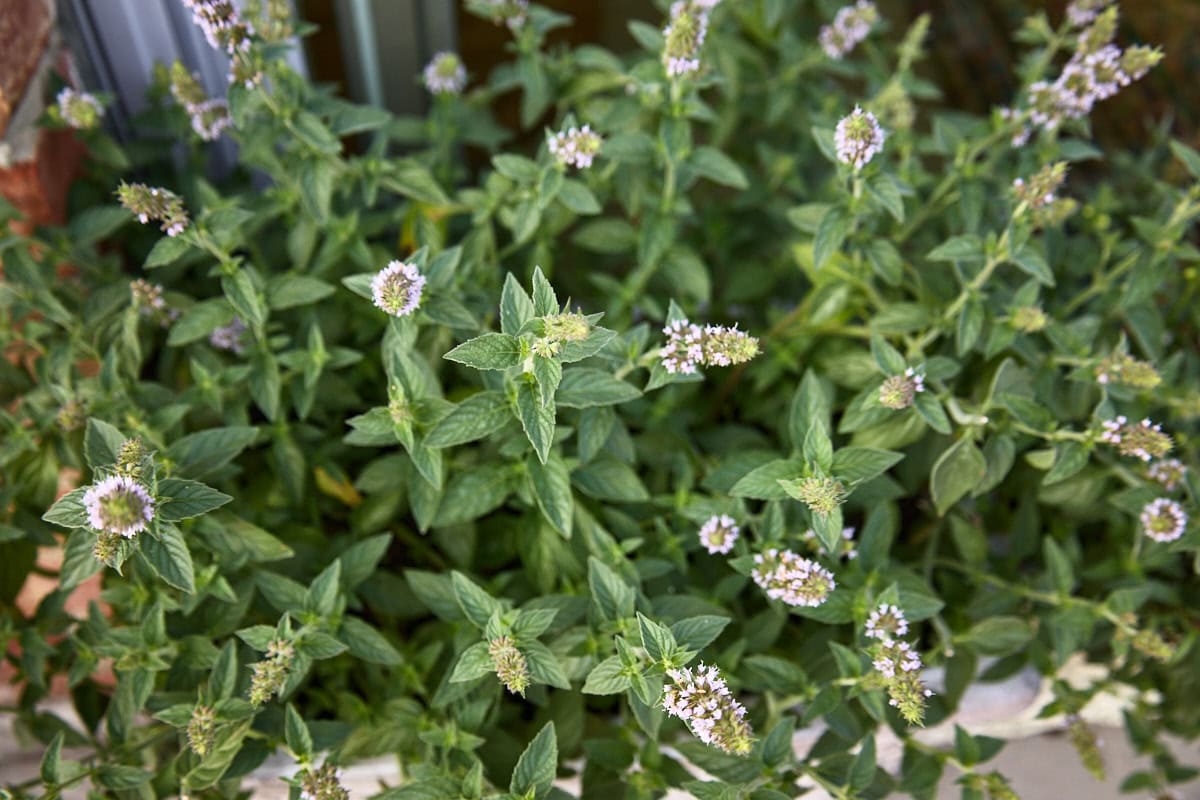
In addition to my descriptive scent notes I've added to the listing for each mint, I've also collected tasting notes as well. But I've chosen not to include them here, and here's why.
When flavor can mislead
In testing both the scents and flavors of both basil and mint leaves, I've been shocked to find the degree to which both can exhibit misleading and unpleasant flavors when tasted directly in the garden. I've found that both herbs contain molecular compounds such as phenols and terpenes that can show up differently on the tongue when combined with saliva compared to being combined with food as we'd normally use them in the kitchen.
When scent is best practice
And I've found that scent is a much more accurate indicator of culinary potential than taste when testing the raw leaves. So while it was fascinating to taste these mints and encounter flavors as diverse as vanilla, cool rain, and rich tea, I didn't want to mislead you with some of the other ones I encountered, like burning tires, dark dirty puddles, or sterilized surgical instruments. Smelling them is much more enjoyable, and is a much better predictor of taste for culinary applications.
Basil does this too!
I've kept my flavor notes in my two basil posts if you'd like to see them. I'm not sure if this information is less than helpful. Some of them did taste good when tasted outright, as did some of the mints. Below are both my part 1 and part 2 basil posts. Part 1 has the scents combined with the flavors, and part 2 has the scent and flavor profiles listed separately.
38 Types of Basil to Grow in Your Herb Garden, Part 1
45 Types of Basil to Grow in Your Herb Garden, Part 2

How to grow mint
Plants vs seeds
There are a few mints that set seeds and can grow true from them. But for the most part, many commonly-grown mints are sterile hybrids. This includes true peppermint. In addition, mints grown from seed do not necessarily grow true to type. So starting mint from cuttings or purchased seedlings is generally the most reliable way to grow it.
It's really easy to start new mint plants with cuttings in a glass of water, or by planting sections of runner stems or growing tips in some moist, well-draining potting soil mixed with compost.
Hardiness
Most mints in the Mentha family are perennials that are hardy somewhere in the range of USDA zones 4-9, with some species in a narrower band within this range or in a warmer climate only. Please give these mints a try, even if they may be outside of your hardiness zones such that you need to grow them as an annual. They're so worth growing and enjoying all summer long.
Invasiveness
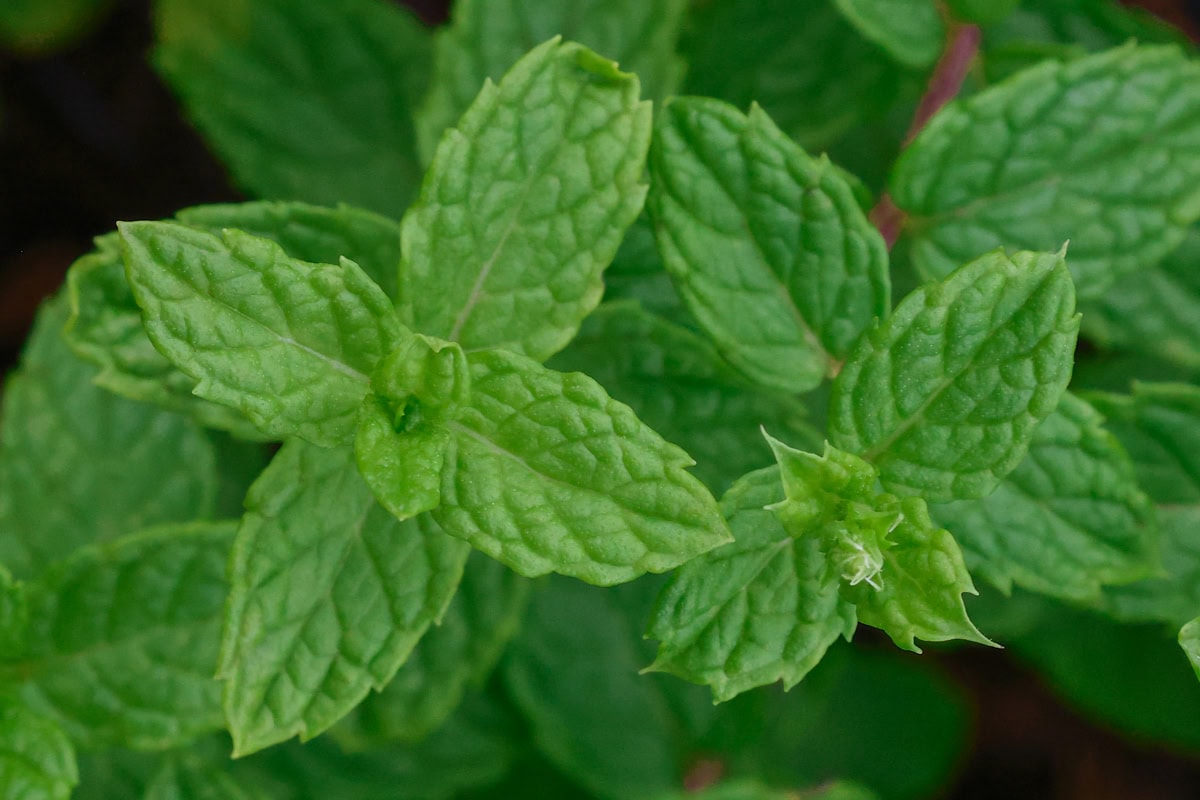
Mint is considered aggressive and highly invasive. It self-propagates by sending both underground rhizomes and above-ground stolons (horizontal stems or runners) to try to root nearby and send up new plants.
Mint can spread so quickly that it can take over a garden bed or an extensive area of lawn within a single growing season. The most effective way to manage mint is by planting it in pots or containers, and watching the stolons that sneak over the rim and try to root in the soil below.
My plant sources
The sources from which I've bought my mint plants (and in some cases, seeds) for this post have come from three vendors that I recommend wholeheartedly. They all devote great care and have very high quality seeds and plants.
Growing conditions
Mint grows best from part shade to full sun, in well-draining potting soil with a fairly neutral pH that has been amended with compost. Please plant it in pots due to the mint plant's invasive nature. I cannot stress enough how quickly mint can take over if it's planted in the ground!
Pests and disease
Mint can be susceptible to fungal diseases such as rust and mildew.
Rust shows up as small rust-colored spots on the leaves, often on the undersides. If any of your mint leaves are affected, prune them out immediately and dispose of them rather than composting them. The best way to prevent rust from afflicting your mint plants is to have good air circulation, to avoid watering the leaves directly, and to harvest the growing tips regularly.
Powdery mildew can potentially cause an issue for mint, especially in humid climates with reduced airflow. It can affect mint late in the season; but if it does, it's generally not a severe case. The best way to prevent mildew is by good plant spacing and exposure to the sun.
Aphids or spider mites may become attracted to mint plants, but they generally don't cause much damage. And the plants generally outgrow pest exposure without intervention.
How to harvest and store fresh mint
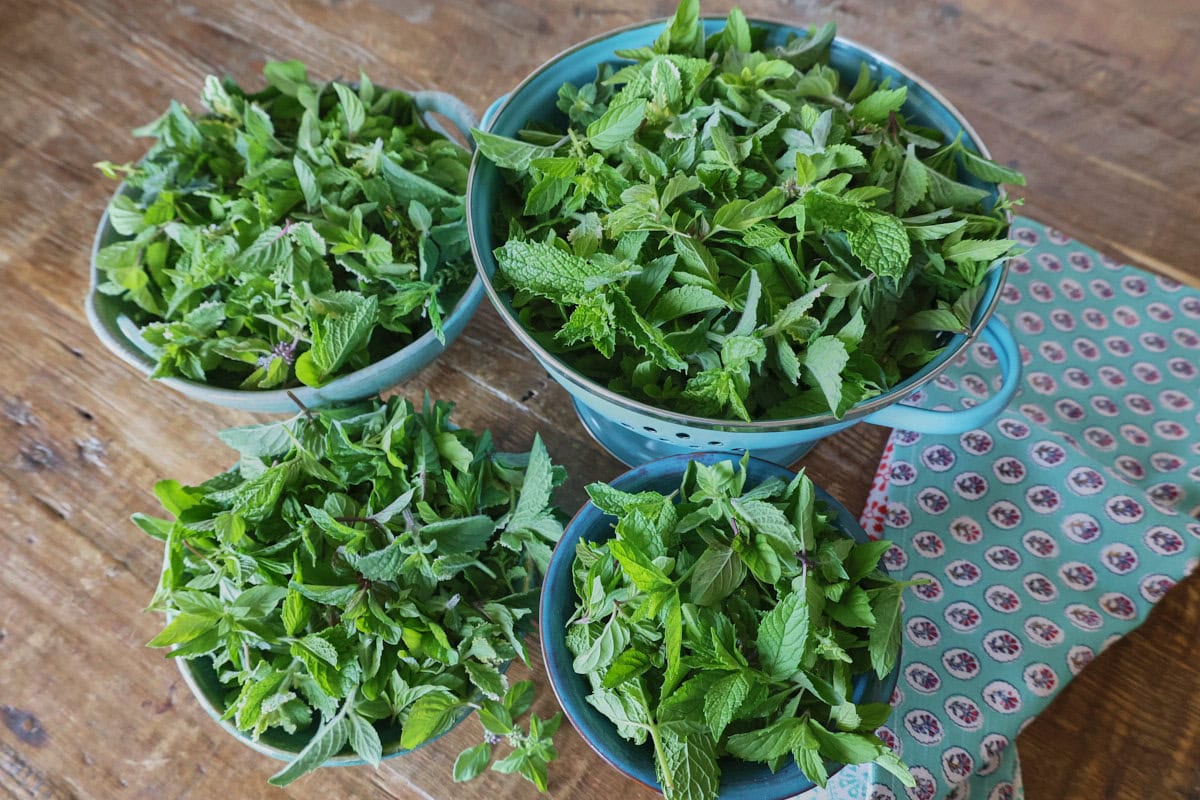
Mint is such a resilient plant that you can start harvesting it while still young. To keep mint plants from becoming leggy, pick the growing tips often throughout the growing season. This causes them to branch out and become more healthy and lush.
To store freshly-harvested mint tops, I like to wrap them in a damp paper towel and place them in an airtight container in the fridge. They keep well like this for at least 1-3 days, and are generally still usable for up to 5 days.
How to dry mint
You can dry mint stems upside down in hanging bundles or in a dehydrator or oven at the lowest heat setting. Try to keep the leaves intact to preserve the essential oils and flavor. For the best flavor, store the dried mint in airtight glass jars away from bright light.
Repotting your mint
After a few years, potted mint can become woody and spent. I find that it really reinvigorates mint plants to remove the roots after a year or two, especially the ones that have been encircling the edges inside the pots. Replanting the younger shoots can also really help to give the plants new energy and vitality.

Uniqueness within varieties
Please note that I've grown and included two versions of Balkan mint, and I'm counting them separately in this post. I always like to try out different versions from separate vendors to establish just how unique plants of the identical name can be. Please compare the photos and scent notes of both variations of this mint to see just how distinctive they can be from one another.
The 54 mints
Without further ado, here are the 54 mints that I've grown, that you can grow too. I'm arranging them alphabetically by common name. Enjoy!
1. African potato mint

Botanical name
Plectranthus esculentus
Origin
Southern and eastern Africa, where it's grown for its delicious and nutritious tuber crop
Description
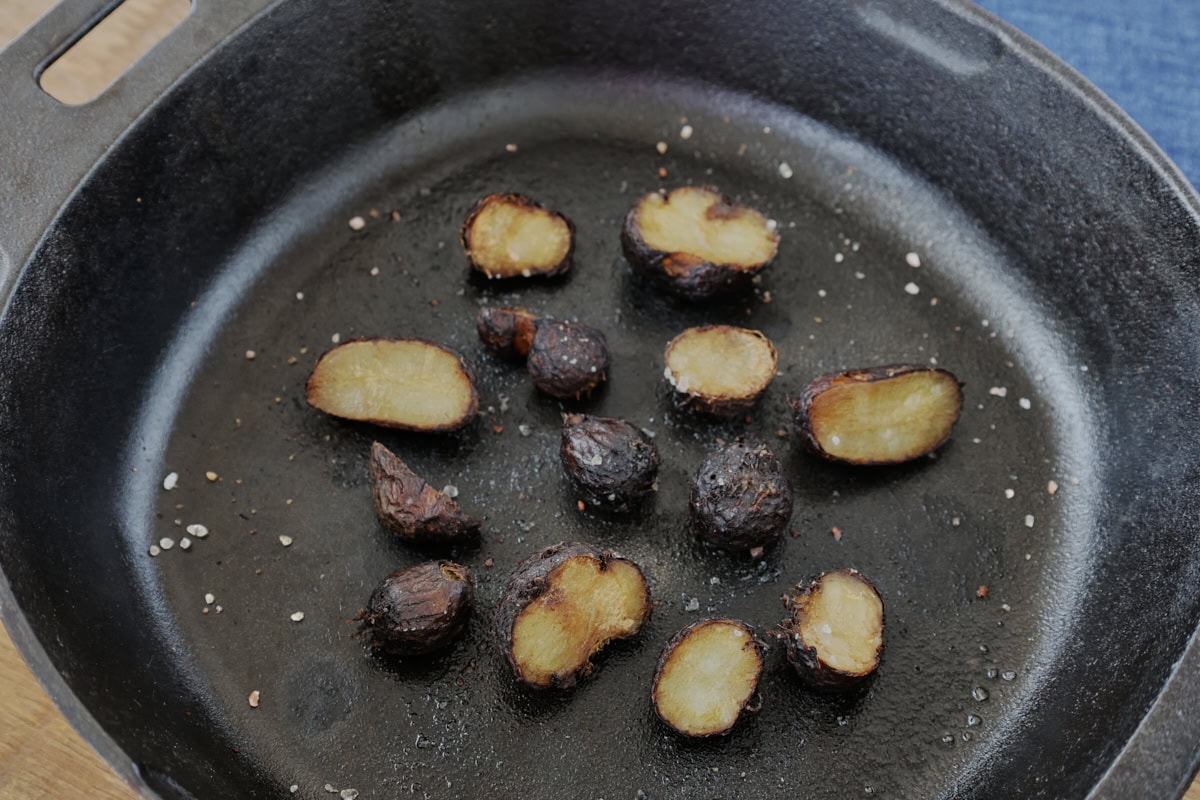
This wonderful plant, a member of the Lamiaceae mint family but not a "true" mint in the genus Mentha, is prized for its delicious tubers instead of for its leaves. It's indigenous to southern and eastern Africa, and is traditionally grown by smallholder farmers as part of mixed cropping systems. The thick leaves are succulent and yellowish to lime green, some of which have burgundy tips. It sprawls around the edges if grown in a pot. You can harvest the tubers after the leaves die back with the cold. This is a really intriguing, completely different type of mint!
Hardiness
USDA zones 9-11
Light
Full sun to part shade
Soil and moisture
Well-draining, moist soil with organic matter
Height
12 inches (30 cm)
My scent notes
Smells like a typical crushed green leaf; green pepper, grass, cucumber, green bean, fresh, herbaceous, and pleasant, but not minty at all
My tuber taste notes
I roasted these tubers with just a light spray of olive oil and coarse salt. We all tried them, and found them to taste really similar to potatoes, but lighter, crunchier, and slightly nutty. They were absolutely sublime.
2. After eight chocolate mint
Botanical name
Mentha 'After Eight Chocolate'
Origin
Named for its minty chocolate aroma resembling After Eight mints.
Description
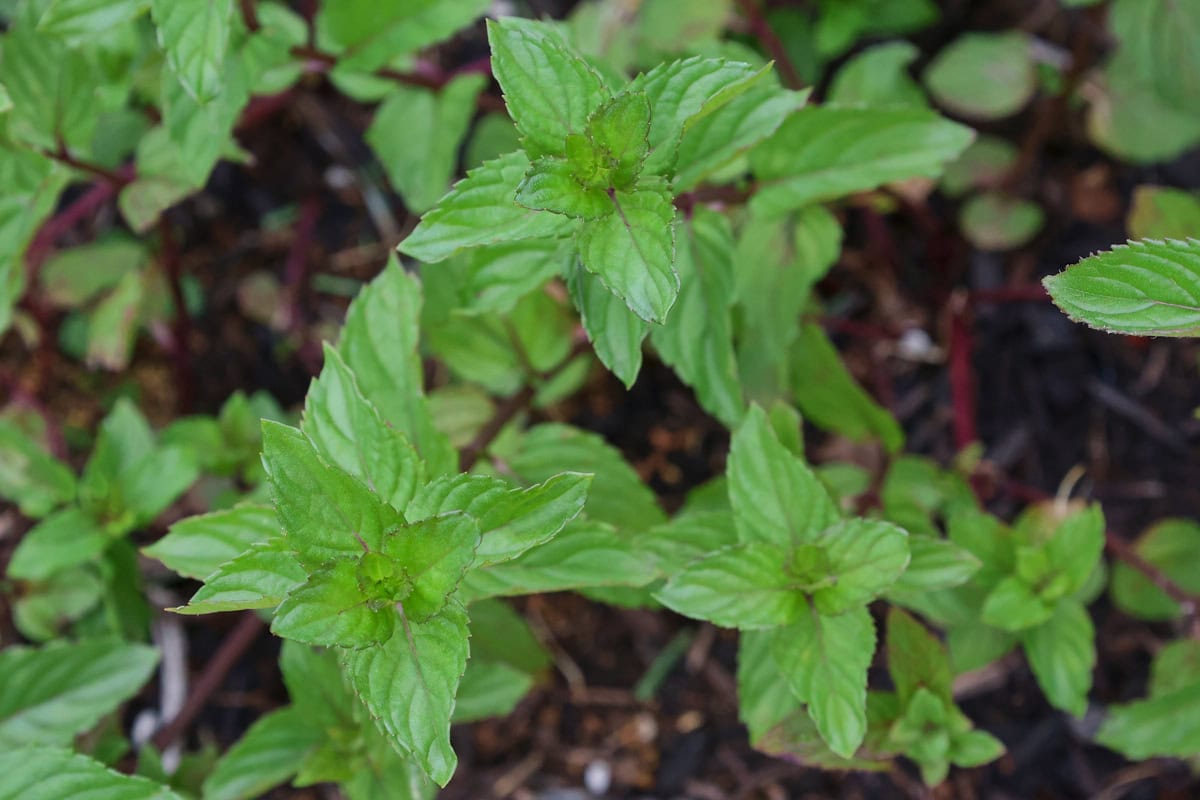
Like with regular chocolate mint, after eight chocolate mint has deep, dark burgundy stems, leaf veining, and margins. The leaves are slightly cupped and a beautiful kelly green with a satin finish. The leaves are less pointed at the tip than with regular chocolate mint. And rather than being completely upright, the branches splay out a bit to the side. A beautiful variation of chocolate mint.
Hardiness
USDA zones 4-9
Light
Full sun to part shade
Soil and moisture
Well-draining, moist soil with organic matter
Height
12-30 inches (30-80 cm)
My scent notes
Delicious, amazing, bright, cold hit of menthol; definitely chocolatey, like in an elegant, high-quality pastry, ice cream, or candy with chocolate and mint; absolutely delicious; invigorating; deep, dark chocolate, vanilla candy, ginger, very fresh sencha green tea
3. Amsterdam lemon mint

Botanical name
Mentha 'Amsterdam Lemon'
Origin
Unknown
Description
Amsterdam lemon mint has pleasantly lemony, snappy, crunchy leaves. The leaves have a prostrate growth habit, similar to that of banana mint. The leaves are a mid-green, and are small, downy, and fairly narrow with a rounded tip. The flowers grow between the leaf nodes, like with banana mint. A really cute plant.
Hardiness
USDA zones 7-9
Light
Full sun to part shade
Soil and moisture
Well-draining, moist soil with organic matter
Height
18-24 inches (45-60 cm)
My scent notes
Lemon candy, clean, new spring grasses, fresh rain, wet stones in the sun, perfume, mild pleasant smell
4. Apple mint

Botanical name
Mentha suaveolens
Origin
Southern and western Europe
Description
Sweeter and less invasive than other types of mint. A beautiful plant. The leaves are an attractive lime green, and are thick, fuzzy, and soft. They're broad and rounded, reaching a gentle point. The stems are white and downy, and it's a fairly tall-growing mint. It also sprawls a little to the side. It stays fairly contained within a pot, and it's a strong and beautiful plant.
Hardiness
USDA zones 5-9
Light
Full sun to part shade
Soil and moisture
Well-draining, moist soil with organic matter
Height
24 inches (60 cm)
My scent notes
Bright red apple scent interlaced with sweet mint; also some savory notes; more like spearmint than menthol. It becomes sweeter as I continue to smell it and further crush the leaf. It definitely smells like a wonderful spearmint; really fresh and clean, high-quality classic sweet mint candy
5. Arabian mint
Botanical name
Mentha 'Arabian'
Origin
Europe and North Africa
Description
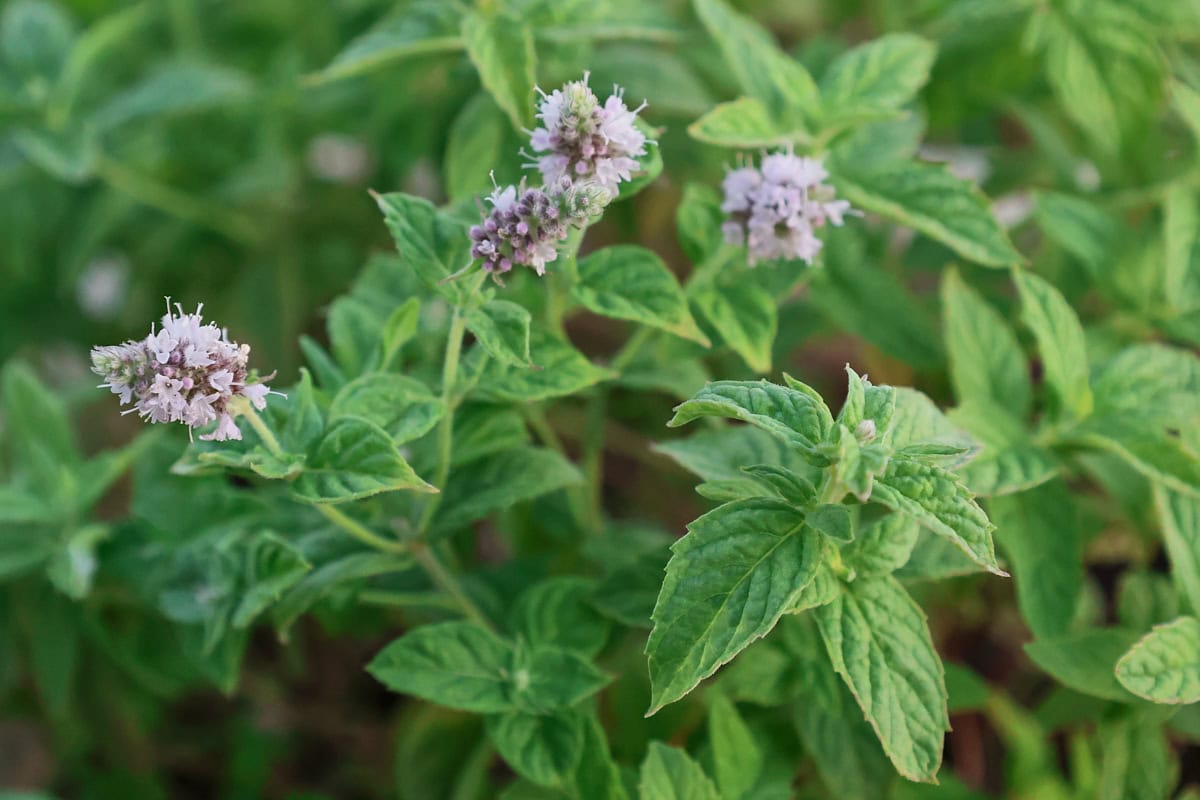
Arabian mint leaves are a lighter green with a bluish cast. They're soft and slightly downy, small, narrow, and shallowly serrated with a gentle point. It's a fairly sparse, low-growing mint.
Hardiness
USDA zones 5-9
Light
Full sun to part shade
Soil and moisture
Well-draining, moist soil with organic matter
Height
Up to 36 inches (90 cm)
My scent notes
Overripe bananas, old parchment, vintage cracked vinyl seats, old vanilla, dried limes, old pears
6. Balkan mint - variation 1

Botanical name
Clinopodium thymifolium
Origin
Balkans / southern Europe
Description
The botanical name Clinopodium thymifolium refers to how the flower whorls are placed like little "foot beds" around the stem, and that it has thyme-like leaves.
I've grown 2 different versions of Balkan mint, so you can see the difference in appearance and in scent that can arise from plants of the same name from different vendors. I think this is one of the biggest joys of experiencing variations amongst cultivars.
My Balkan mint from Ginger's Greenhouse has tiny cupped leaves that point upward, with flowers from between the leaf nodes to the growing tips. They're in loose formations compared to typical mint inflorescences. The flowers are white and adorable. The leaves are a deep forest green. The plant is fairly sparse and not very tall. The stems are long for a low growing plant.
Hardiness
USDA zones 6-9
Light
Full sun to part shade
Soil and moisture
Well-draining soil, somewhat drought tolerant
Height
12-24 inches (30-60 cm)
My scent notes
Slight lemon scent, slight smokiness; mildly minty; balsam, cedar, eucalyptus, camphor, hot rocks, old lake water, cold rain, petrichor
7. Balkan mint - variation 2
Botanical name
Clinopodium thymifolium
Origin
Balkans / southern Europe
Description
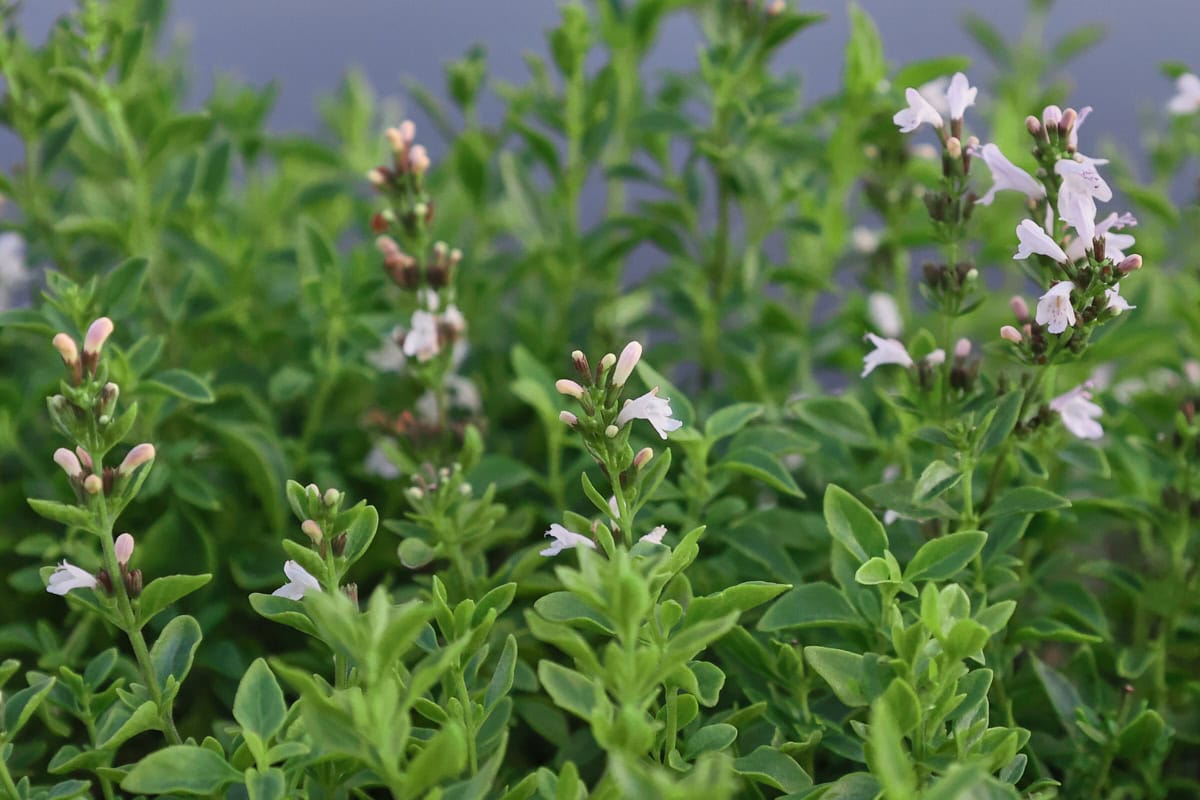
Here's the second variation of Balkan mint that I've grown, from Richters Herbs. Like the first version above, these plants have very small dark green leaves that point upward, and loose inflorescences of white flowers spread out from between the leaf nodes to along the growing tips. The plants are low-growing. This version of Balkan mint has filled out the pot fairly well, as it's fairly dense. The leaves have a satin finish, and are healthy and full.
Hardiness
USDA zones 6-9
Light
Full sun to part shade
Soil and moisture
Well-draining soil, somewhat drought tolerant
Height
12-24 inches (30-60 cm)
My scent notes
Surprisingly clean mint scent from such a small leaf; deep spearmint fragrance; really nice and strong; vintage mint tea; mint chewing tobacco, old vinyl, a deep mint scent
8. Banana mint
Botanical name
Mentha arvensis 'Banana'
Origin
France
Description
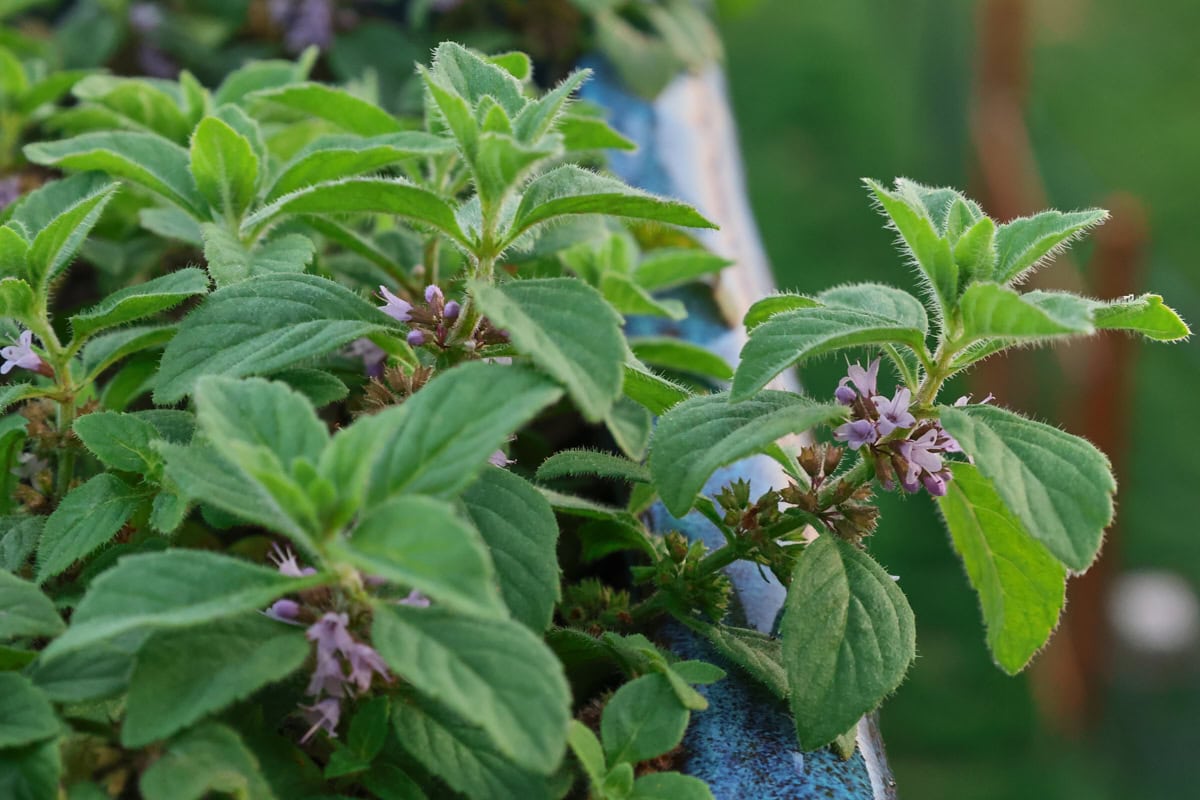
Banana mint is beautiful. The adorable light purple flowers grow between the leaf nodes. This plant has a prostrate (low, creeping) growth habit. The leaves are soft and fuzzy. They're small and elliptical (oval-shaped), reaching a gently-tapered point. This plant also reseeds readily. It's a really adorable mint.
Hardiness
USDA zones 5-9
Light
Full sun
Soil and moisture
Well-draining, moist soil with organic matter
Height
12 inches (30 cm)
My scent notes
This mint really does smell like banana in a pleasant way, like banana-flavored candy; sweet rich soil, umami, deep, fresh, clean laundry; heavy rains, sweet cornbread, fresh green tomato leaves, young sweet pea pods, a spring vegetable garden in the morning
9. Basil mint
Botanical name
Mentha x piperita citrata 'Basil'
Origin
Unknown
Description
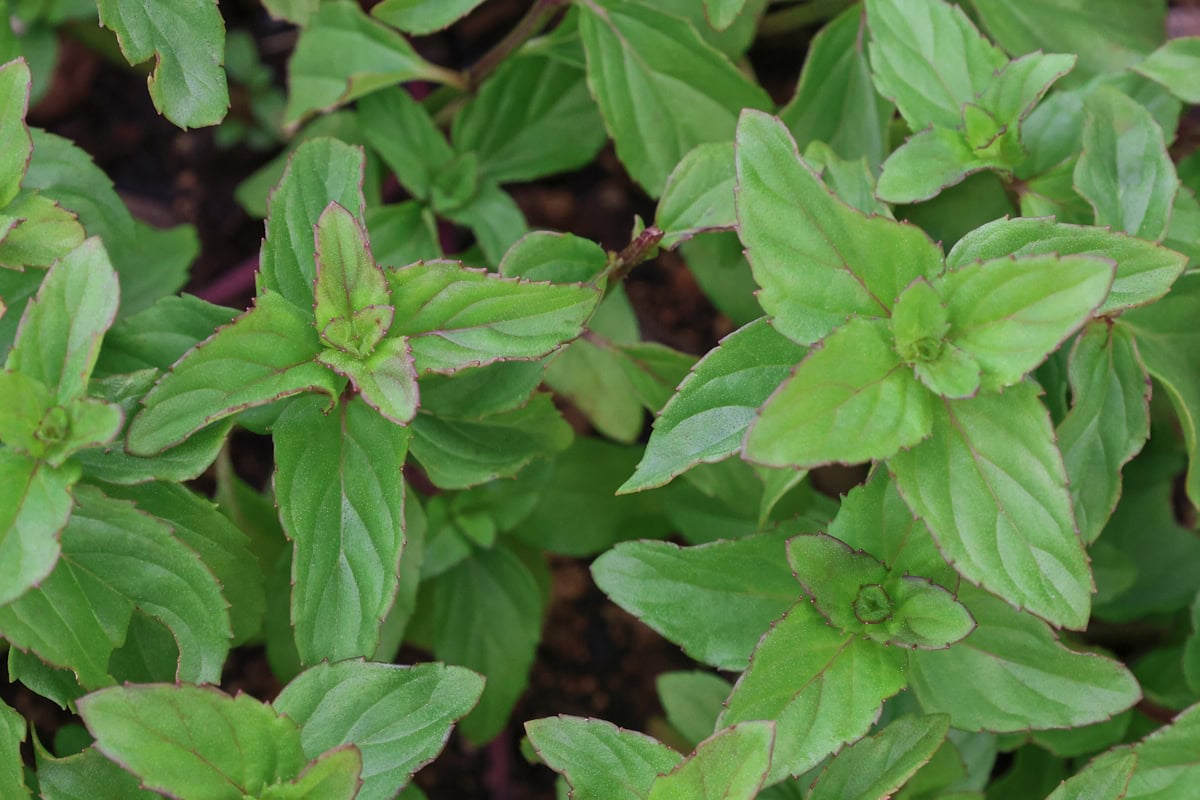
Basil mint leaves are cupped, and have a beautiful rich green color with fuchsia veining, shallow-toothed margins, and a satin finish. It's a low-growing basil, with flower inflorescences that are small and round with deep lilac petals. The stems of the plant are red. The plant is sending out many healthy runners trying to escape the pot, and the growth is very robust.
Hardiness
USDA zones 5-9
Light
Full to part sun
Soil and moisture
Well-draining, moist soil with organic matter
Height
18-24 inches (45-60 cm)
My scent notes
Green bell peppers, mildly sweet; fresh spring rain, new leaf, sweet young green beans, spiced basil, damp air, clean clothes; vanilla, brown sugar, hint of eucalyptus, sun-dried linens
10. Berries and cream mint
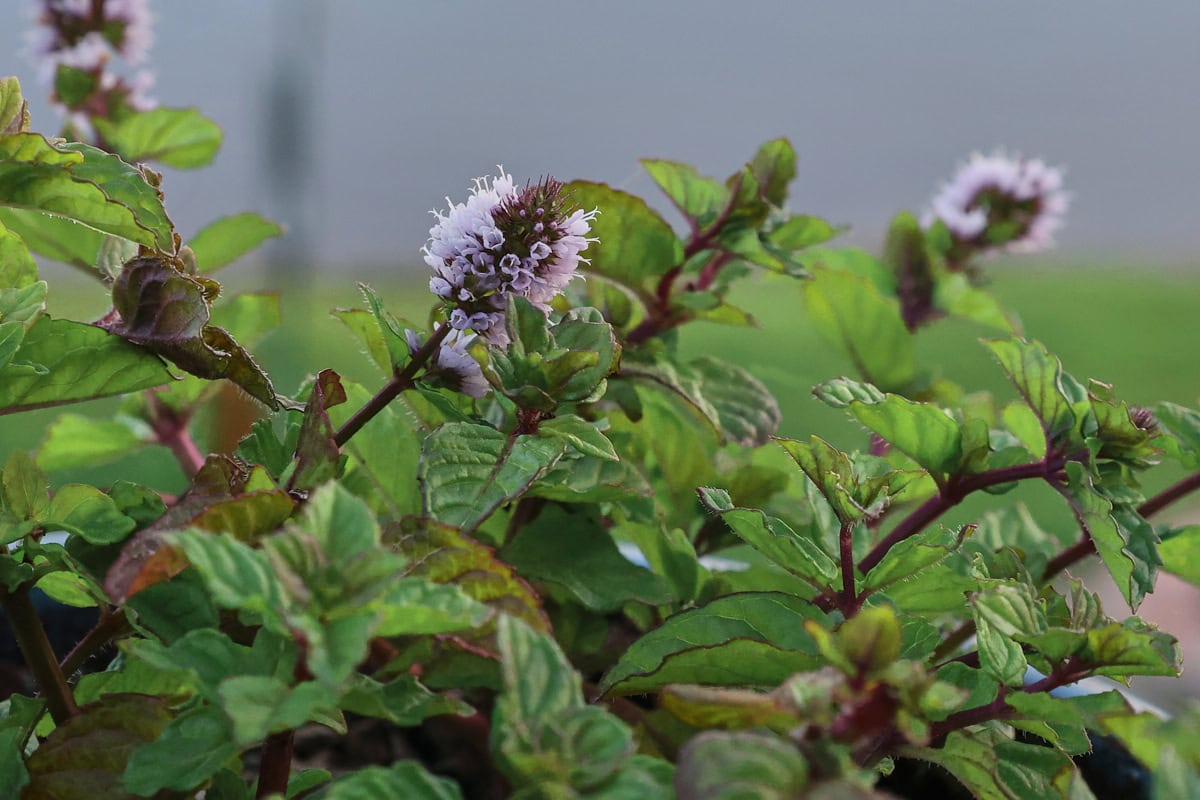
Botanical name
Mentha 'Berries and Cream'
Origin
Developed by mint breeder Jim Westerfield
Description
Berries and cream mint is striking, with nearly-round deep kelly green leaves that taper to a gentle point. The plant is fairly low-growing, with small, fuzzy, short flower inflorescences. It can send out several running stems outside of the pot. The stems are a deep red as are the veins and margins of the leaves. The stems aren't particularly thick and are somewhat sprawling.
Hardiness
USDA zones 5-9
Light
Full sun to partial shade
Soil and moisture
Well-draining, moist soil with organic matter
Height
18 inches (45 cm)
My scent notes
Musky, vintage linens; a little sweet, mildly minty, sweaty, tangy, a little salty; fresh lake water, petrichor, sautéed mushrooms, nutmeg
11. Black mitcham peppermint
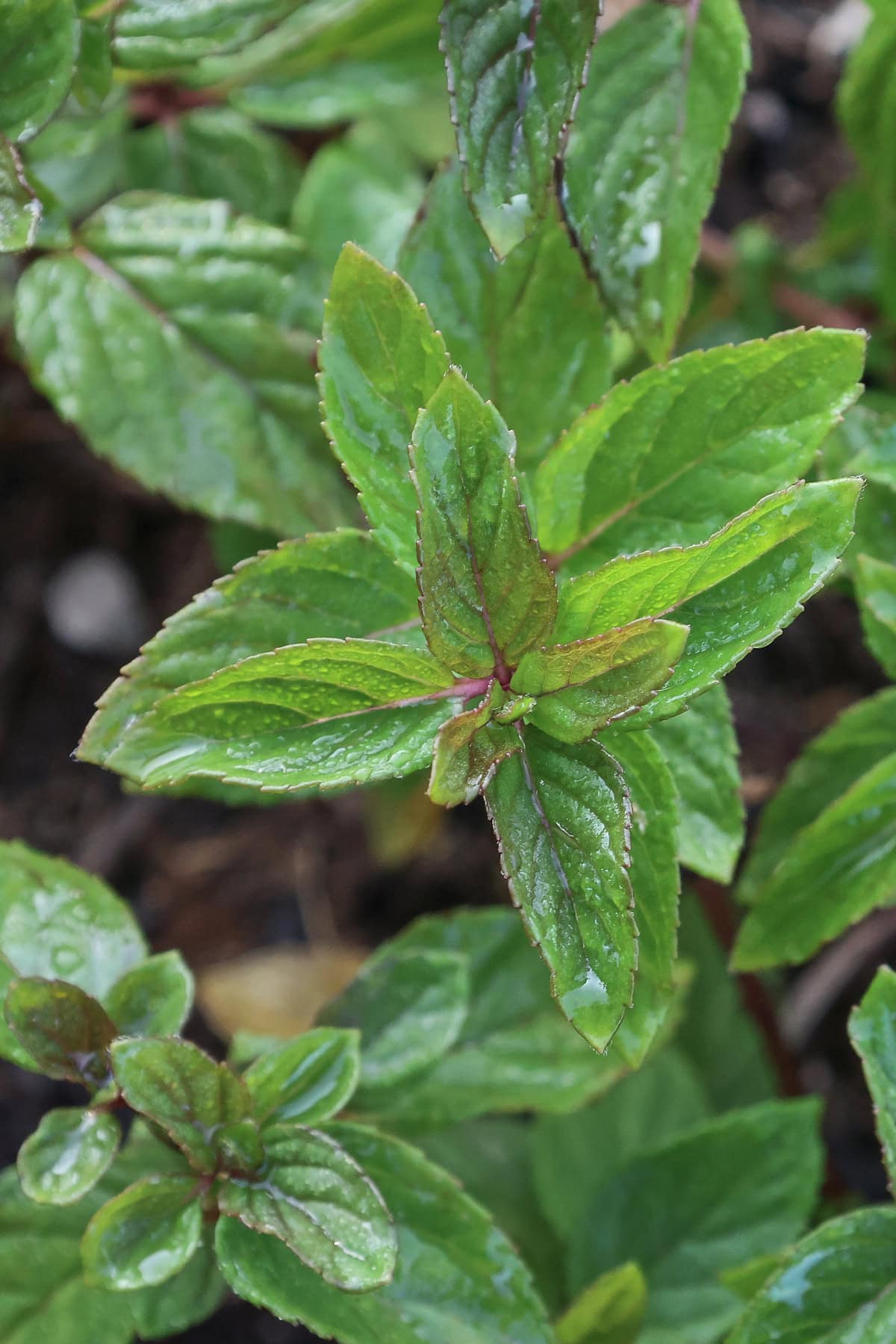
Botanical name
Mentha x piperita 'Black Mitcham'
Origin
England in 1750 in the Surrey district, southwest of London
Description
Also known as black peppermint, black mitcham peppermint is a low-growing mint with deep burgundy stems. The leaves are fairly small and oblong with a gentle point. The veins and leaf margins are the same deep burgundy as the stems.
Hardiness
USDA zones 5-11
Light
Full sun to partial shade
Soil and moisture
Well-draining, moist soil with organic matter
Height
12-36 inches (30-90 cm)
My scent notes
Strong, pleasant minty fragrance; menthol, eucalyptus, cold streams, winter wind, toasted bread; nose-tingling, nice, clean, pure minty smell; mild smokiness
12. Blackcurrant mint
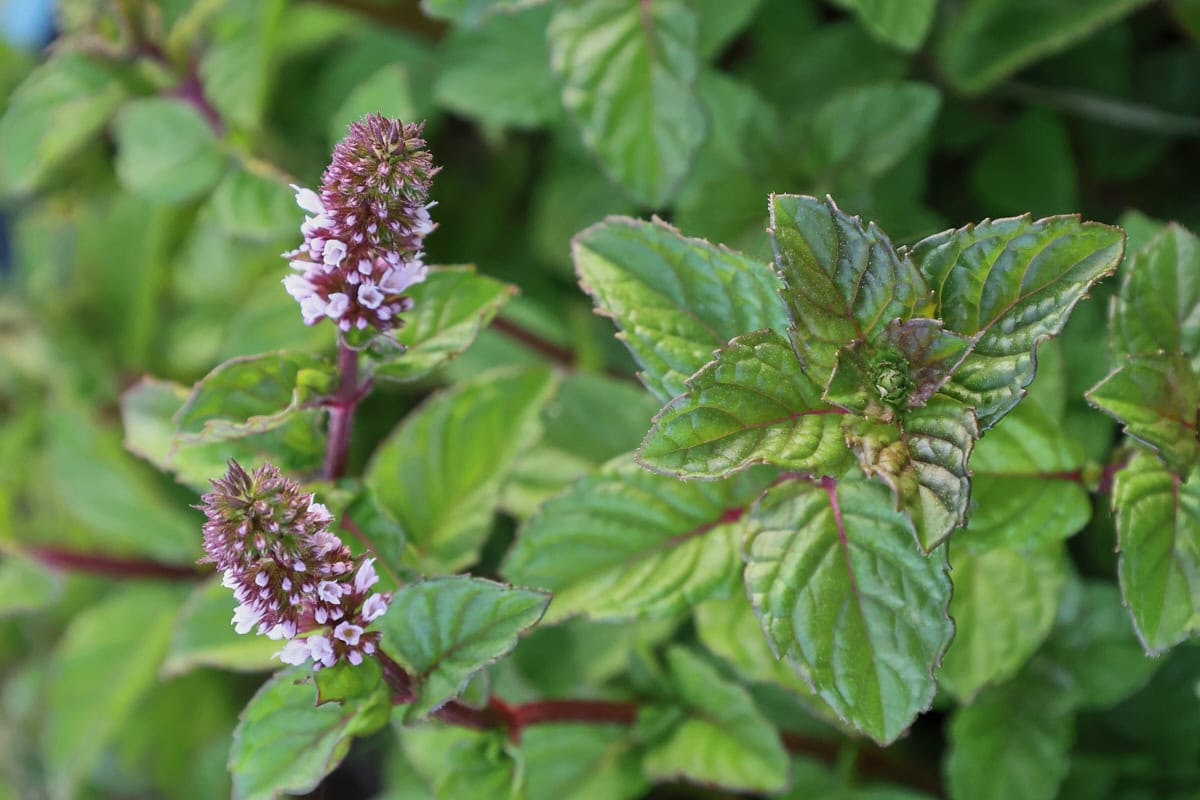
Botanical name
Mentha 'Blackcurrant'
Origin
Mediterranean
Description
Blackcurrant mint has beautiful, deep forest green leaves that are puckered and deep burgundy at the veins. The flower inflorescences are fuzzy and adorable. It can send out several long stem runners that escape the pot. The stems are strong and burgundy in color, and sprawl outward. It's a healthy plant, and the coloration is absolutely stunning.
Hardiness
USDA zones 4-9
Light
Full sun to partial shade
Soil and moisture
Well-draining, moist soil with organic matter
Height
12-36 inches (30-90 cm)
My scent notes
Nice, clean, and fresh; deep, rich, and wonderfully fruity; blackcurrants, fresh green leaves, spring rain, rich soil, sweet oranges; comforting, mild and creamy mint fragrance
13. Chewing gum mint
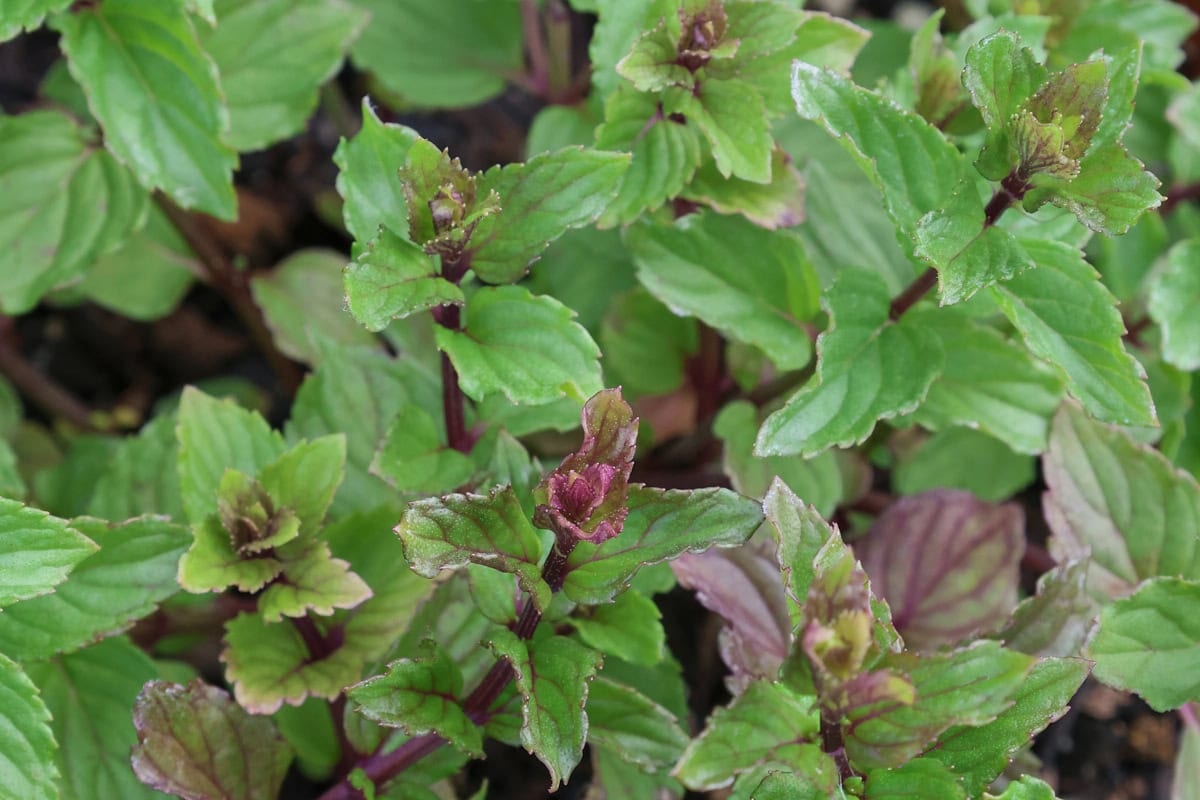
Botanical name
Mentha 'Chewing Gum'
Origin
Europe/Mediterranean
Description
Chewing gum mint has young leaves in a dark forest green. The more mature leaves are a more yellow shade. The stems, leaf veins, and margins are a beautiful dark, deep purple color. The small leaves are cupped and point upward. It's a low growing, healthy-looking and elegant mint.
Hardiness
USDA zones 4-9
Light
Full sun to part shade
Soil and moisture
Well-draining, moist soil with organic matter
Height
12-36 inches (30-90 cm)
My scent notes
Chocolate and mint desserts; fresh, cool, bracing, uplifting, invigorating; chilly winter night, really enjoyable, lots of menthol
14. Chinese mint

Botanical name
Mentha haplocalyx
Origin
East Asia
Description
Chinese mint is tidy, full, and voluminous. The leaves are small, narrow, and tapered. They're a classic rich green. Some of the lower leaves are more bronzed. The stems are a deep fuchsia, along with the veining on the margins of some of the leaves. Other leaf tips are completely green. It has a more sprawling habit as the stems aren't particularly strong, but it's healthy and well-proportioned.
Hardiness
USDA zones 5-9
Light
Full sun to part shade
Soil and moisture
Well-draining, moist soil with organic matter
Height
20-24 inches (50-60 cm)
My scent notes
Smoky roasted oranges, toasted hay, green grapes, toasted lemon slices, sourdough bread, freshly-cut wood, mildly minty
15. Chocolate mint

Botanical name
Mentha x piperita citrata 'Chocolate'
Origin
Hybrid between Mentha aquatica (water mint) and Mentha spicata (spearmint), from Europe, Africa, and Asia
Description
Chocolate mint is especially appealing, with its characteristic red stems and opposite-positioned orthogonal leaf pair formation. The leaves are a deep, handsome green. They're slightly wider at the base, somewhat puckered along the veins, and cupped inward, with pointed tips. They have mauve veins and margins. The strong stems arch and splay gracefully outward. The burgundy inflorescences (flowering structures) have light purple petals. This is a really attractive, vigorous plant. It's prone to sending out multiple stem runners outside of the pot.
Hardiness
USDA zones 4-9
Light
Full sun
Soil and moisture
Well-draining, moist soil with organic matter
Height
24 inches (60 cm)
My scent notes
A delight to smell; truly chocolatey and minty, chilly winter night, minted hot chocolate, sweet, enchanting, invigorating, captivating
16. Corsican mint
Botanical name
Mentha requienii
Origin
Corsica/Sardinia
Description
Corsican mint is probably the most shockingly unique-looking mint. It's very low-growing, creeping, and mat-forming, with shallow roots. And the leaves are a vibrant, luminous green. They're each only a millimeter or two in diameter. The miniscule, adorable flowers are a rich light pink color. This mint spreads slowly and horizontally, and in warmer climates it can outgrow intended growing spaces. But it's non-woody and easy to lift, so this isn't a real challenge. This is really one of my favorite mints that I have to grow every year.
Hardiness
USDA zones 6-9
Light
Full sun to partial shade
Soil and moisture
Well-draining, moist soil with organic matter
Height
1 inch (3 cm)
My scent notes
Amazing, shockingly sweet and minty fragrance; this mint always makes people gasp when they smell it, especially because it's so tiny and looks so different from other mints; undertones of lemon, campfire smoke, aged forests, clean and crisp fall morning air, singed hay, luscious forest understory, new leaves; toasted sourdough bread, salted limes; just amazing; such a beautiful and special mint.
17. Cotton candy mint

Botanical name
Mentha 'Cotton Candy'
Origin
Developed by mint breeder Jim Westerfield
Description
Cotton candy mint has an appealing bluish-green cast. The leaves are soft and fuzzy. They're small, very narrow, and deeply-pointed. The stems arch and sprawl with and burgundy-shaded down. It's a fairly sparse, low-growing plant. The inflorescences (flowering structures) are at the growing tips with petals in a white to light purple. This is a really appealing mint with its bluish leaves and soft downy feel.
Hardiness
USDA zones 6-11
Light
Full sun to part shade
Soil and moisture
Well-draining, moist soil with organic matter
Height
12-36 inches (30-90 cm)
My scent notes
Sage, incense, campfire, lake water, slight hint of mint, mild sweetness, menthol, peppermint, eucalyptus, lemon, camphor
18. Double mint
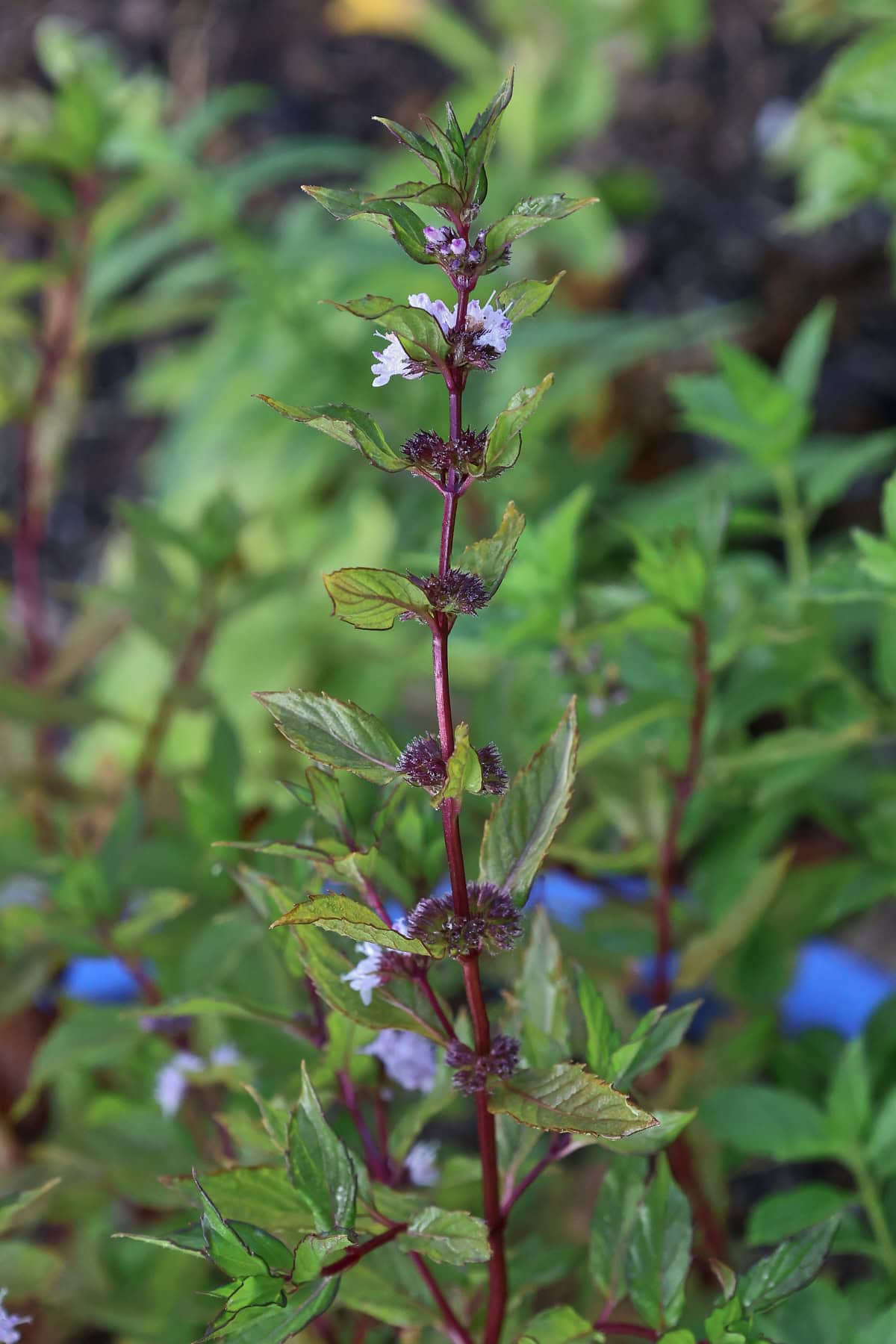
Botanical name
Mentha x gracilis
Origin
A cross between Mentha x piperita (peppermint) and Mentha spicata (spearmint).
Description
Double mint is a fairly tall plant, despite not being very full in volume. The stems are a deep burgundy. The leaves are narrow and deeply pointed, with very pronounced wrinkles at the veins. The flowers grow between the leaf nodes.
Hardiness
USDA zones 4-9
Light
Full sun to partial shade
Soil and moisture
Well-draining, moist soil with organic matter
Height
12-36 inches (30-90 cm)
My scent notes
Such a shockingly sweet and delicious scent; candy canes, pure mintiness; mild nasal chill; just pure mint delight
19. Eau de cologne mint
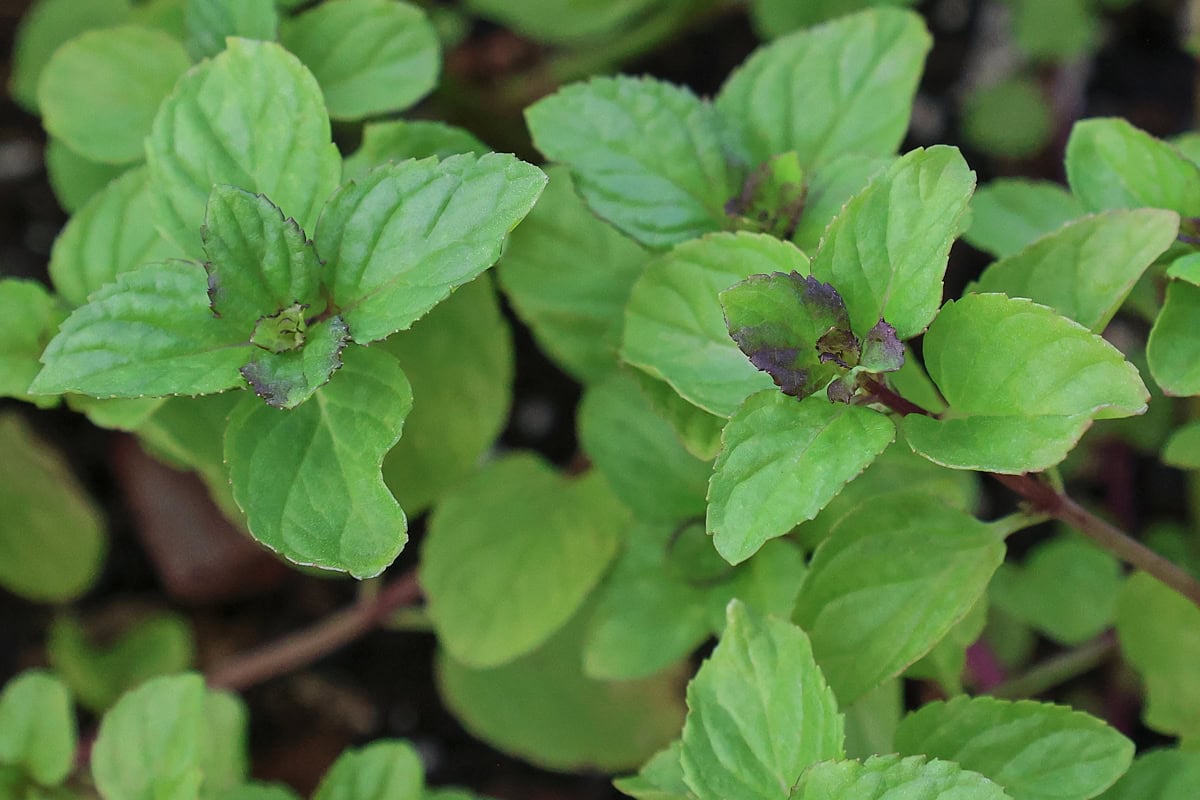
Botanical name
Mentha x piperita citrata 'Eau de Cologne'
Origin
Europe
Description
Eau de cologne leaves are flattish and almost oval. They have a satin finish, with mauve veining and margins of the leaves. It's a really pretty mint. It sends out healthy runners with dark red stems. The plant has a low growth habit. Most of the stems are the same low, uniform height. The detail on the leaves and the colorful veining and margins are really attractive.
Hardiness
USDA zones 5-9
Light
Full sun to partial shade
Soil and moisture
Well-draining, moist soil with organic matter
Height
24-36 inches (60-90 cm)
My scent notes
Perfume, soap, mild menthol, smells like an herb, not as minty. Less of an orange scent, but the cologne part is really accurate
20. Egyptian mint

Botanical name
Mentha niliaca
Origin
Egypt/eastern Mediterranean
Description
Has a similar appearance to apple mint, but with larger, velvety leaves and sturdier, more upright stems. The stems are fairly tall. The leaves are thick with soft white down. They're oval-shaped, wrinkled, impressed (sunken) at the veins, which are white. The margins are the same color as the leaves. The strong, tall stems are somewhat sprawling. This is a really beautiful mint.
Hardiness
USDA zones 5-11
Light
Full sun to part shade
Soil and moisture
Well-draining, moist soil with organic matter
Height
36 inches (90 cm)
My scent notes
Clean, deep, beautiful mint fragrance; background of banana, pear, caramel, spearmint, classic mint
21. English mint
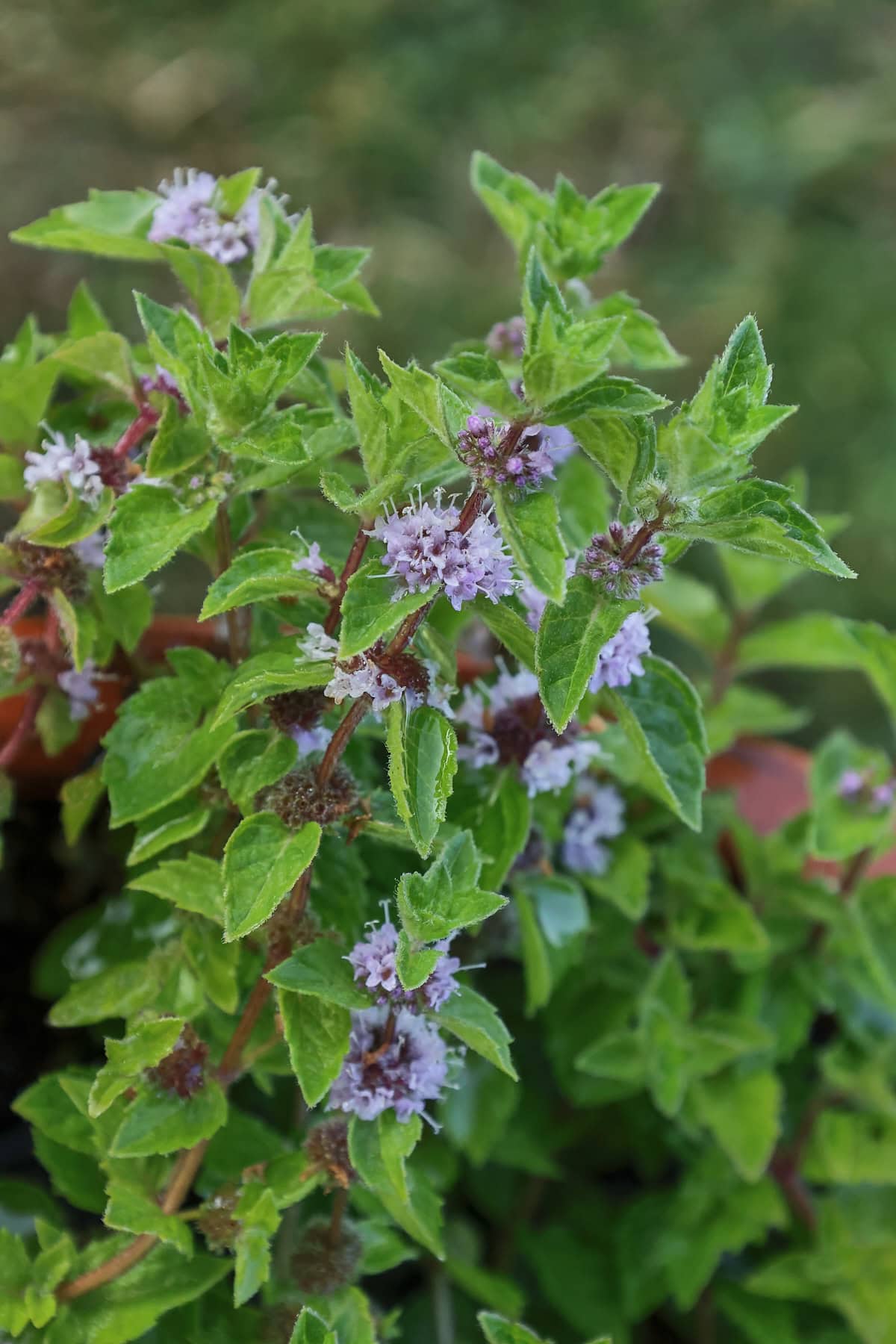
Botanical name
Mentha 'English'
Origin
Mediterranean, brought to England by the Romans
Description
English mint is a fairly low-growing, ground-hugging mint. It can spill over the edges of the pot and seek to escape. The flowers are small, lilac-colored, and in between the leaf nodes, like with banana mint and ginger mint. The stems are reddish and delicate. The leaves are dark green, cupped inward, and pointing upward. They have a satin finish, and are somewhat fuzzy. They're wider at the base and reach a gentle point.
Hardiness
USDA zones 4-9
Light
Full sun to part shade
Soil and moisture
Well-draining, moist soil with organic matter
Height
12-36 inches (30-90 cm)
My scent notes
Traditional mint, bubblegum, candy, fresh sweet marshmallows, soft, fresh and clean, creamy, really enjoyable; would be wonderful in tea or a mojito; a lot of sweetness is coming through; really like this one; spearmint fragrance, green tea, freshly-mown grass, very herbaceous, spring meadows, clean laundry
22. French peppermint
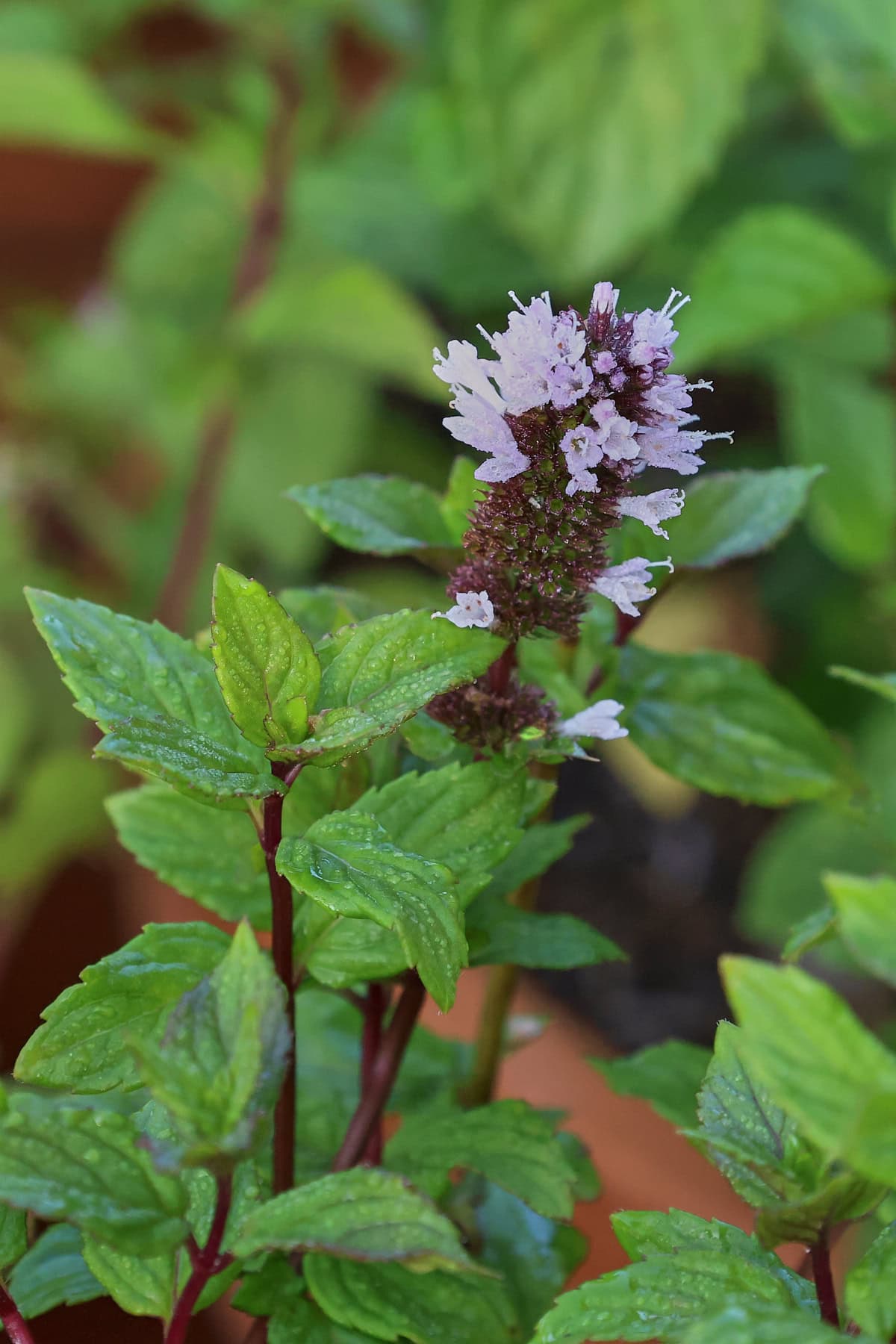
Botanical name
Mentha x piperita 'French'
Origin
Europe and the Mediterranean
Description
French peppermint has a soft, satin finish on the leaves, with burgundy stems, and inconspicuous burgundy veining and margins on the small leaves. The plant can be sparse and leggy. The stems are delicate and sprawling, with a few understated runner stems.
Hardiness
USDA zones 4-9
Light
Full sun to part shade
Soil and moisture
Well-draining, moist soil with organic matter
Height
12-36 inches (30-90 cm)
My scent notes
Minty, creamy, sweet, smooth, somewhat savory note; roasted oranges, cool breezes, crisp fall day, nicely nose-chilling
23. Fruit sensations
Botanical name
Mentha 'Fruit Sensations'
Origin
Developed by mint breeder Jim Westerfield
Description
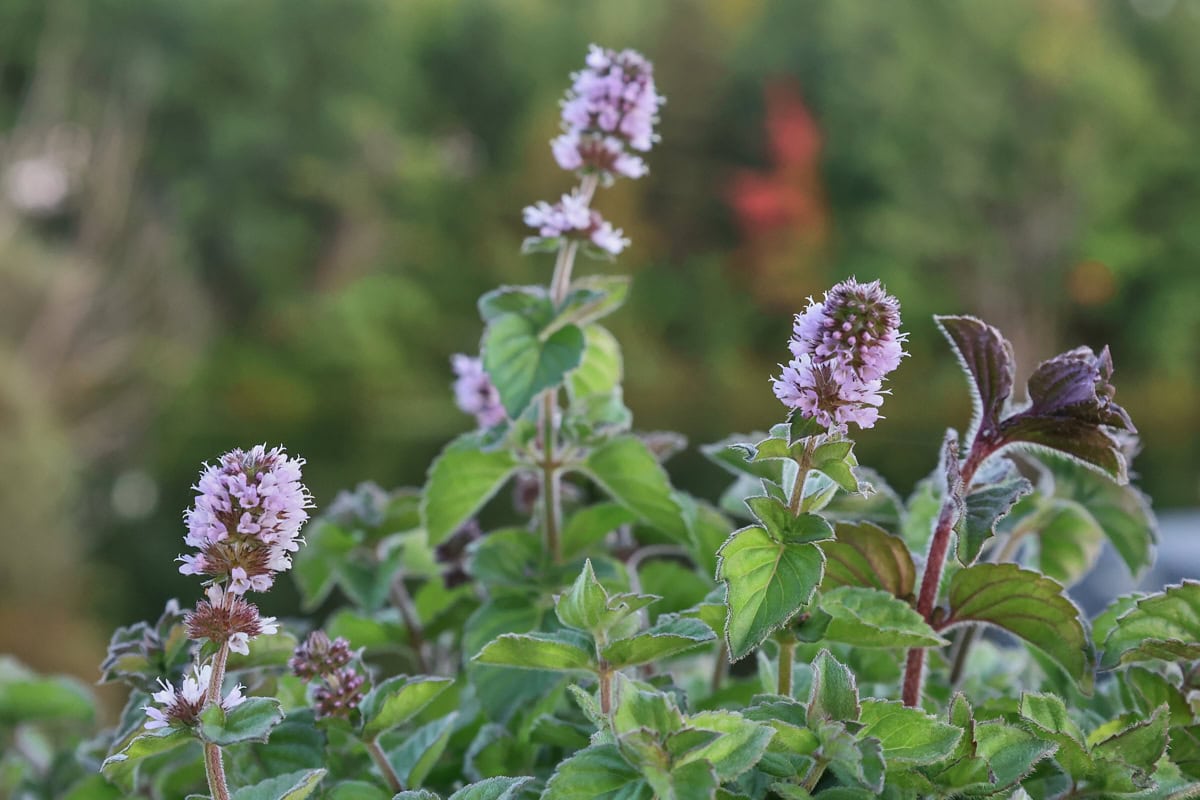
Fruit sensations mint is a handsome plant with fuzzy, fairly smooth lime green leaves with purple margins. They're rounder than most, serrated, and tapering to a point. The inflorescences (flowering structures) are cute and fuzzy. The plant can send out multiple runner stems outside of the pot. It has very upright growth in some of the stems, but other stems are fairly low.
Hardiness
USDA zones 6-11
Light
Full sun to partial shade
Soil and moisture
Well-draining, moist soil with organic matter
Height
12-36 inches (30-90 cm)
My scent notes
Mild minty fragrance, slightly sweet, floral and fruity, old rope, antique shop, incense, smoke, roasted red, grapes, just a hint of sweetness
24. Fuzzy Chinese mint
Botanical name
Mentha haplocalyx
Origin
East Asia
Description
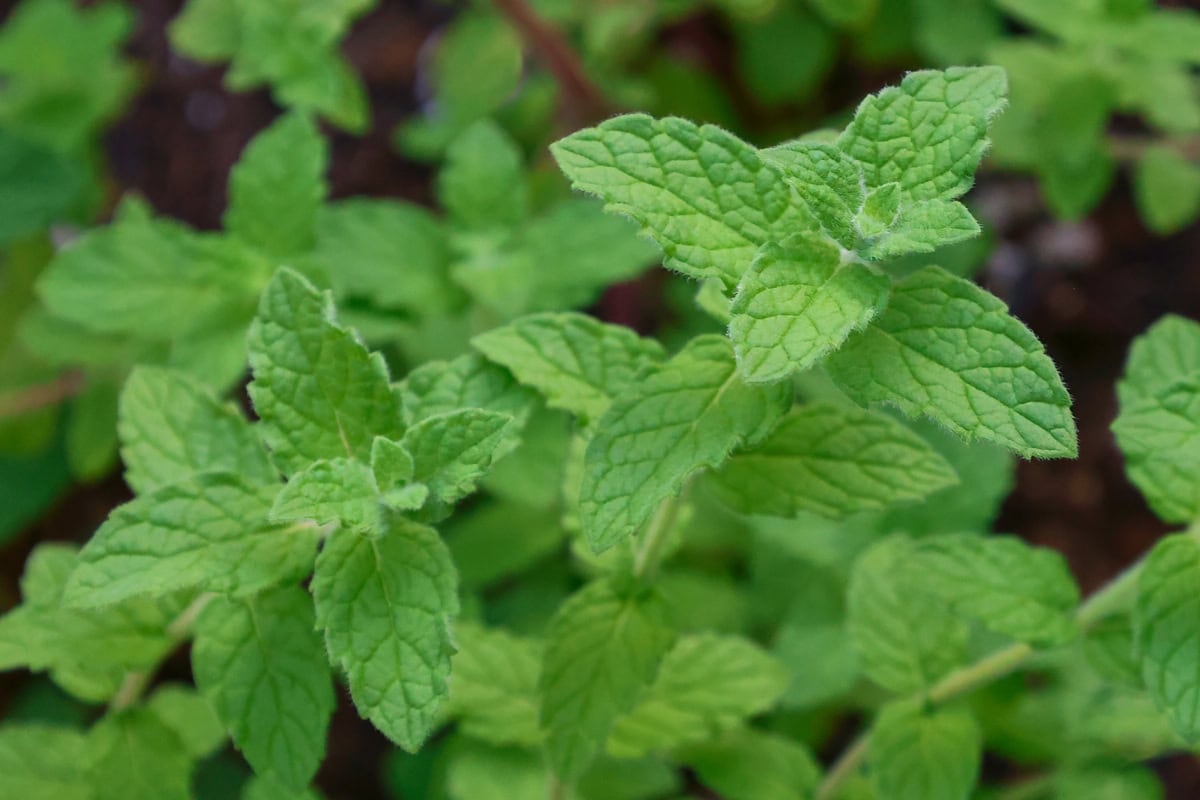
Fuzzy Chinese mint has an appealing blue-green shade. The leaves are downy and soft. They're narrow, reaching a gentle point. The stems are somewhat sprawling and sparse. The lower stems are purplish, but near the growing tip, they're more green. The flower structures are long and tapered with light pink petals. The plant has good volume, and yet it's also somewhat leggy between the leaf nodes. The bluish cast to the leaves is beautiful.
Hardiness
USDA zones 5-9
Light
Full sun to part shade
Soil and moisture
Well-draining, moist soil with organic matter
Height
12-36 inches (30-90 cm)
My scent notes
Garden vegetables, celery, menthol, rich dark tea, air freshener, spring water, barely-detectable mint scent, surprisingly mild
25. Ginger mint
Botanical name
Mentha x gracilis
Origin
Europe and Asia
Description
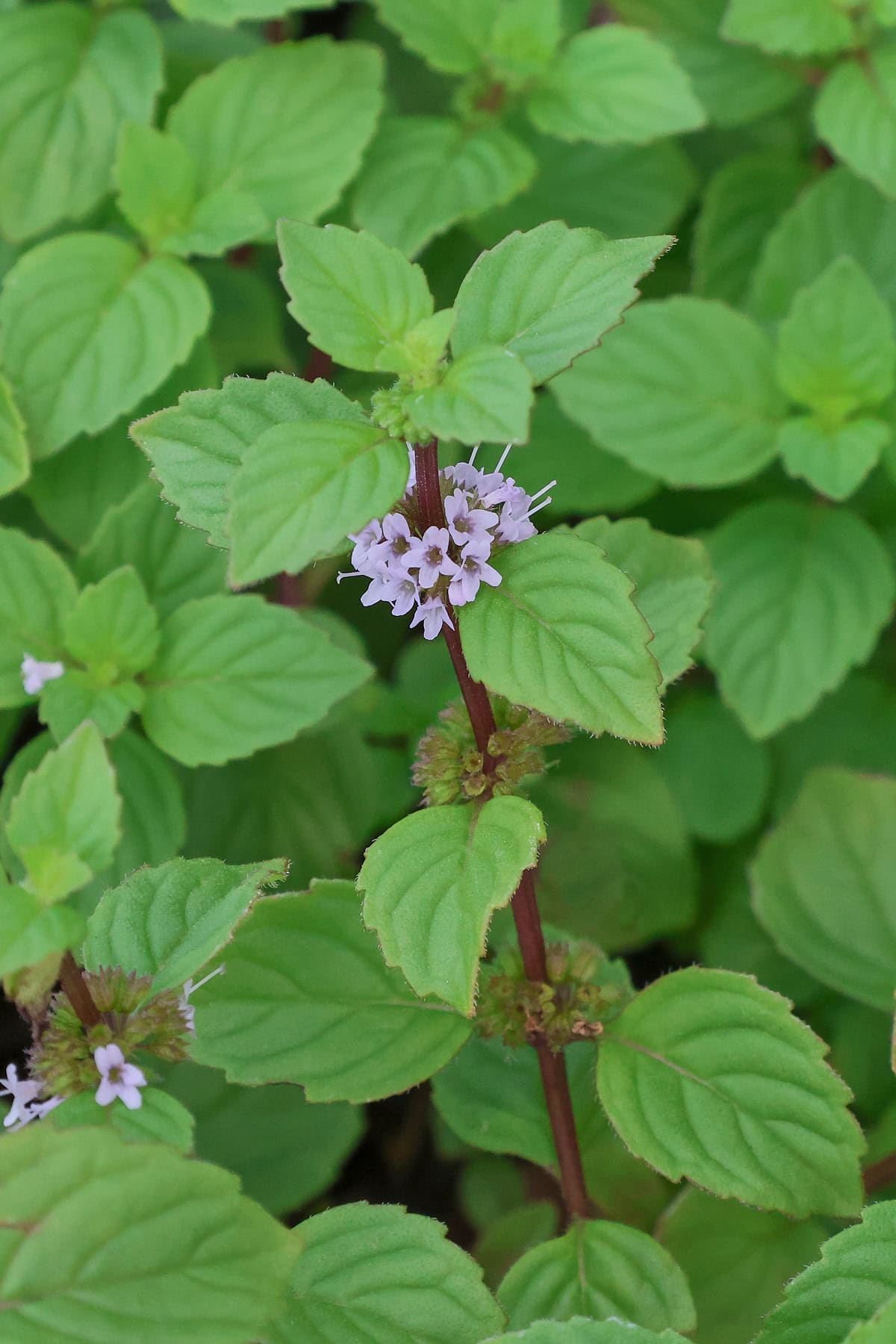
Ginger mint is attractive and low-growing. The leaves are an emerald green on the newer growth and a bright lime green on older growth. They're somewhat flat and wide at the base, as well as short and widely-serrated with a matte finish. The blooms are between the leaf nodes. The light mauve stems are gentle, graceful, swaying, and of a fairly uniform low height.
Hardiness
USDA zones 5-9
Light
Full sun to part shade
Soil and moisture
Well-draining, moist soil with organic matter
Height
18 inches (45 cm)
My scent notes
Fresh ginger, pine needles, less minty, winter woods, masala chai, black pepper, vanilla, perfume, bitter lemon, lemongrass, galangal, orange, peel, perfume, clean, lime zest, fresh spring air
26. Grapefruit mint
Botanical name
Mentha x piperita 'Grapefruit'
Origin
Europe
Description
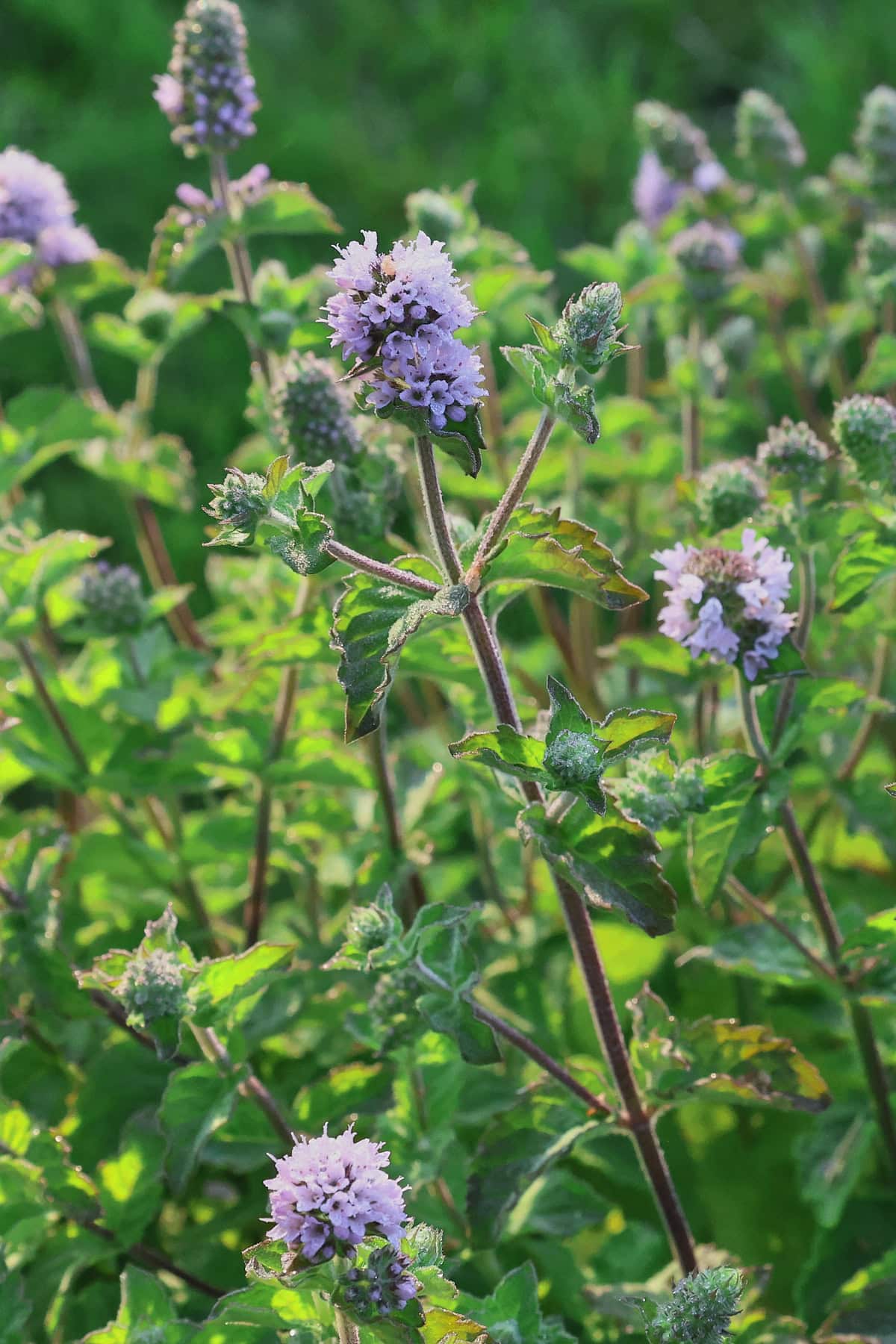
Grapefruit mint becomes completely covered in beautiful lilac-colored, rounded and adorable flowering tufts, and is highly attractive to bees. It's a very impressive plant, with a nicely-formed, large volume. The kelly green leaves are soft, fuzzy, and cupped inward. The veins and margins of the leaves are a purple shade. The downy stems are strong and tall, and burgundy in color with several runner stems. This is a really attractive and vigorous plant.
Hardiness
USDA zones 5-9
Light
Full sun to part shade
Soil and moisture
Well-draining, moist soil with organic matter
Height
12-36 inches (30-90 cm)
My scent notes
Deep grapefruit, savory, salty, lemon, mildly minty, cedar balsam, blonde wood, vanilla
27. Hillary's sweet lemon mint
Botanical name
Mentha 'Hillary's Sweet Lemon'
Origin
Developed by mint breeder Jim Westerfield; a cross between apple mint and lime mint
Description
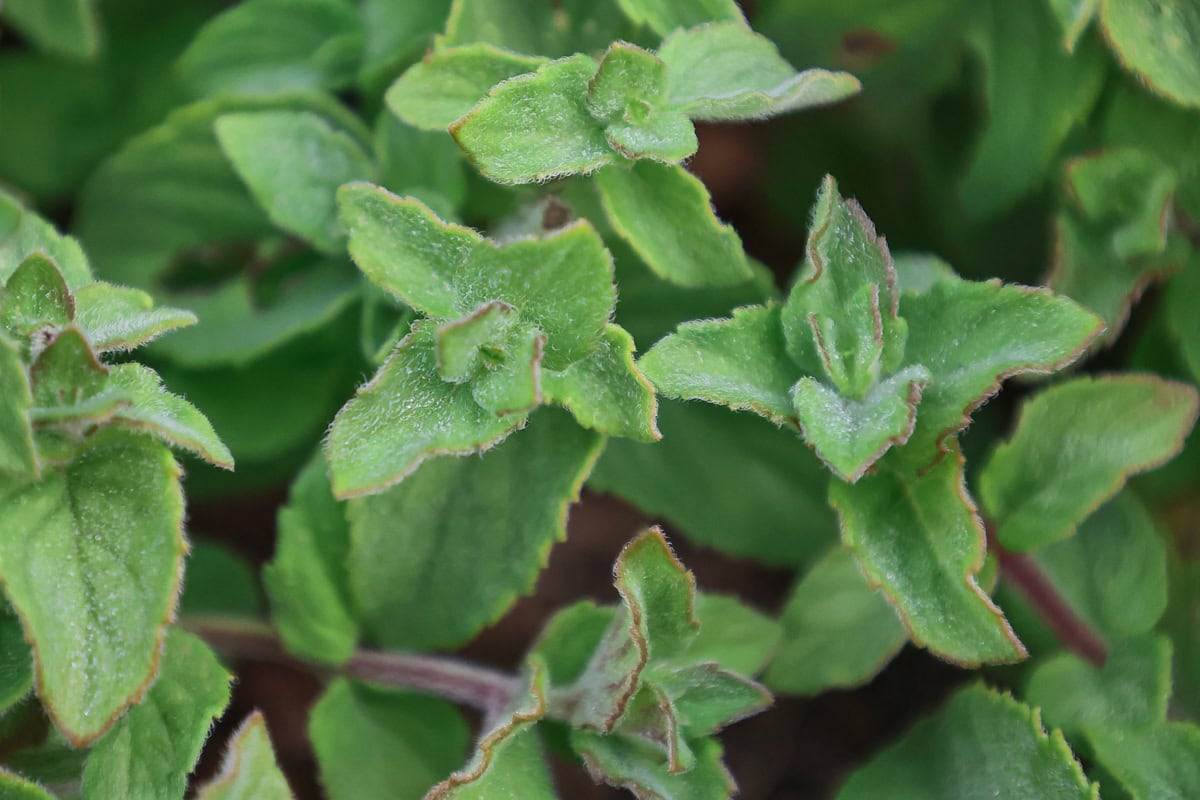
Hillary's sweet lemon mint grows fairly low to the ground and is dense in volume. The downy, compact leaves are wider at the base and taper to a soft point. They're fairly flat and impressed (sunken) at the veins. The stems are fuzzy, and can be whitish, green, or burgundy. The flowers are on long inflorescences (flowering structures) at the growing tips. It has a sprawling growth pattern. The downy look of the plant is beautiful.
Hardiness
USDA zones 6-11
Light
Full sun to partial shade
Soil and moisture
Well-draining, moist soil with organic matter
Height
12-36 inches (30-90 cm)
My scent notes
Sagebrush, marshmallow, cinnamon, stainless steel, slight minty sweetness, orange taffy, mildly invigorating, light smokiness, purple grapes
28. Iced hazelnut mint

Botanical name
Mentha 'Iced Hazelnut'
Origin
Developed by mint breeder Jim Westerfield
Description
Iced hazelnut mint looks very characteristic of a spearmint. The lanceolate (lance-shaped) lime green leaves are wrinkled, narrow, and pointed. The ones near the growing tips are smaller, but the lower leaves are a fairly large size. This mint has very deep burgundy stems and can have leggy growth. The fairly delicate stems are somewhat arched and wandering in various directions. This plant is really beautiful.
Hardiness
USDA zones 4-11
Light
Full sun
Soil and moisture
Well-draining, moist soil with organic matter
Height
12-36 inches (30-90 cm)
My scent notes
Nuts, oranges, nice bracing nasal chill; salt, toasted bread, sweet iced coffee, steamed rice, fresh green stems, mild spearmint; clean, clear, and sweet; banana, vanilla, carob
29. Ingauno mint
Botanical name
Mentha spicata 'Ingauno'
Origin
Europe, North Africa, and Asia
Description
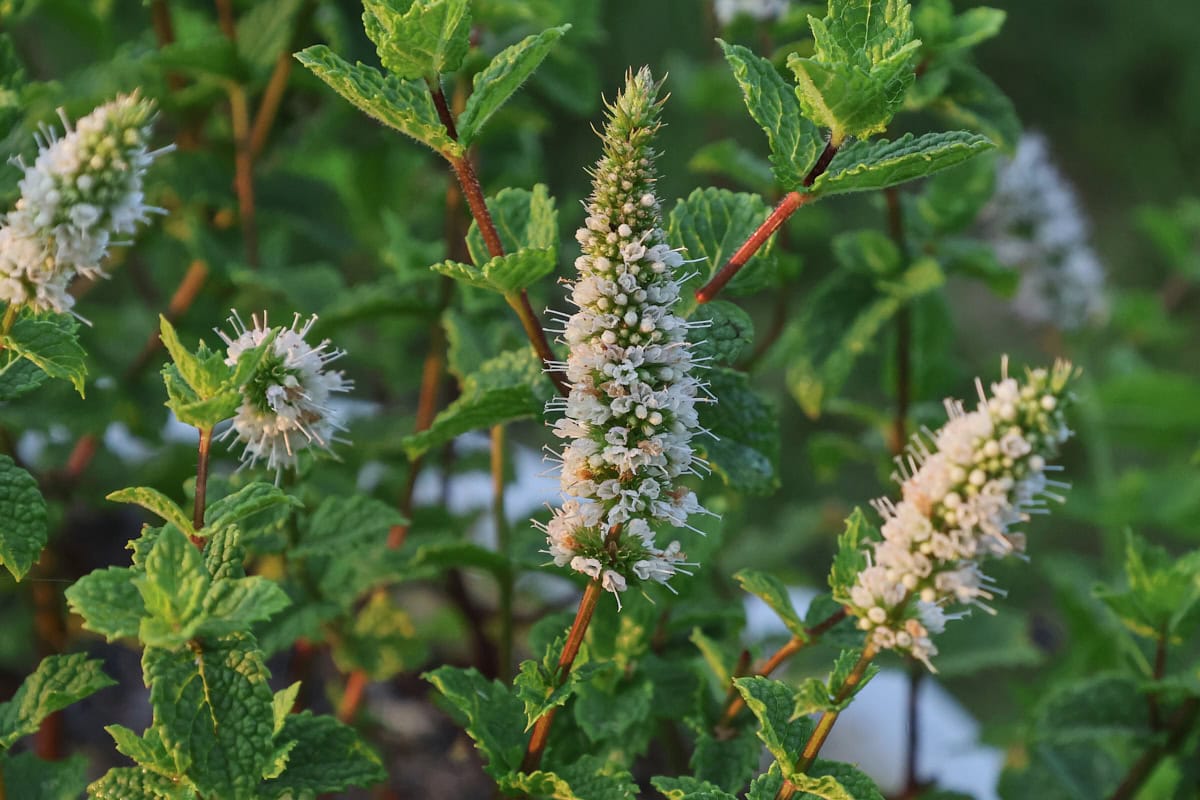
Ingauno mint has leaves that are small, flattened, and rounded before tapering to a pointed tip. They have an emerald green, matte finish. The dark red stems are fairly upright and somewhat leggy. The inflorescences (flowering structures) are long and green with light pink blooms. This is a really appealing mint.
Hardiness
USDA zones 5-9
Light
Full sun
Soil and moisture
Well-draining, moist soil with organic matter
Height
12-24 inches (30-60 cm)
My scent notes
Sweet peas, old books, good sweet cup of tea, nice, clean, cold rain, damp smoke, rich soils, wet rocks, clean bubbling streams, sweet spearmint, fresh, enjoyable to smell, deep, dark, rich, fresh spices, vintage candy
30. Jamaican / Costa Rican mint

Botanical name
Clinopodium vimineum
Origin
Tropical Americas
Description
Jamaican/Costa Rican mint is distinctive and charming. It's not dense, yet is strong and robust. The adorable beautiful electric lime leaves are flat, narrow, and obovate (teardrop-shaped). The veins are impressed (sunken). Some of the stems are tall, whereas others remain low-growing and sprawling. It's a healthy and remarkable looking mint.
Hardiness
USDA zones 9-11
Light
Full sun
Soil and moisture
Well-draining, moist soil with organic matter
Height
6-10 feet (180-300 cm) in frost-free climates when grown as a shrub
My scent notes
Bracingly fresh like peppermint; classic fresh mint scent; deeply aromatic, mint gum, very fresh cold streams, icy permafrost
31. Japanese field mint
Botanical name
Mentha arvensis var. piperascens
Origin
East Asia
Description
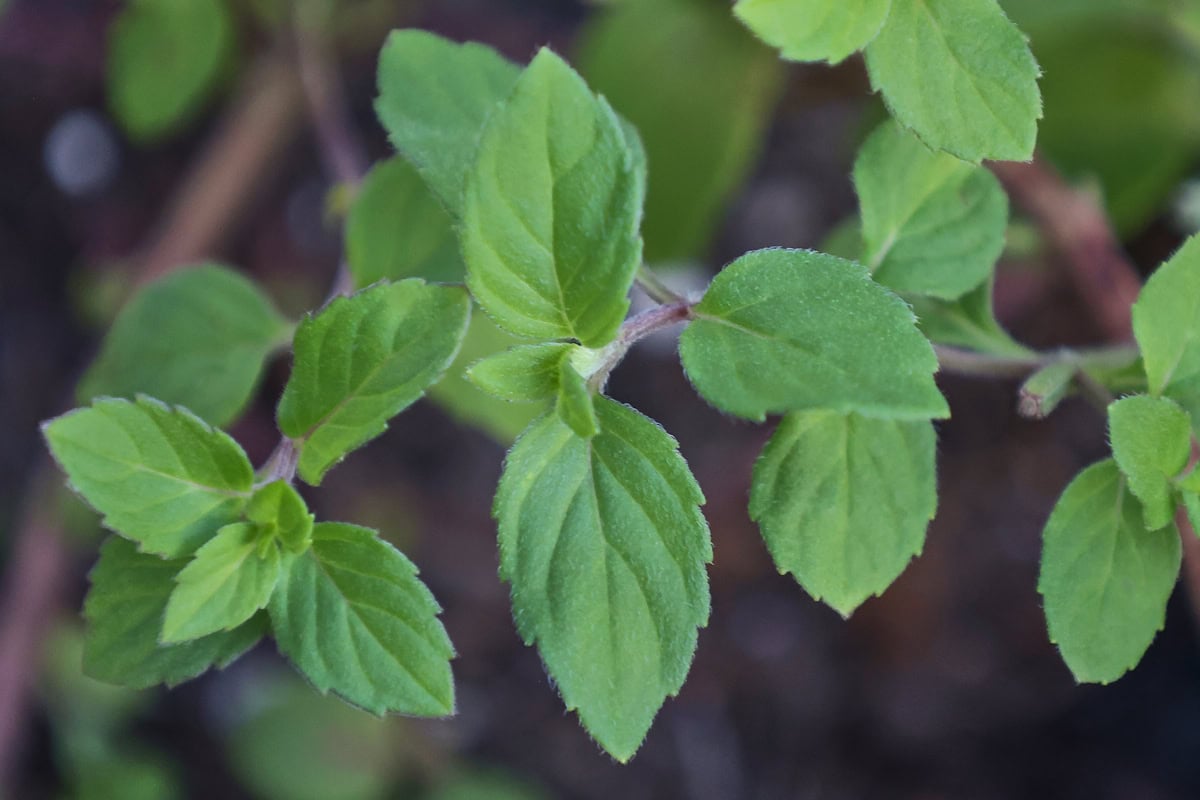
Japanese field mint is nice and tall, and can be somewhat leggy. The fairly flat leaves are impressed (sunken) at the veins, elliptical (oval) in shape, and reaching a gentle apex (tip). The leaves have a matte finish, and are a deep forest green. The flowers are situated between the leaf nodes, reaching a good distance down each stem. This plant may send out runner stems over the edge of the pot.
Hardiness
USDA zones 5-9
Light
Full sun
Soil and moisture
Well-draining, moist soil with organic matter
Height
24-36 inches (60-90 cm)
My scent notes
Very mild scent, clean, fresh cold water, definitely minty and slightly sweet
32. Julep mint
Botanical name
Mentha spicata 'Mint Julep'
Origin
Unknown
Description
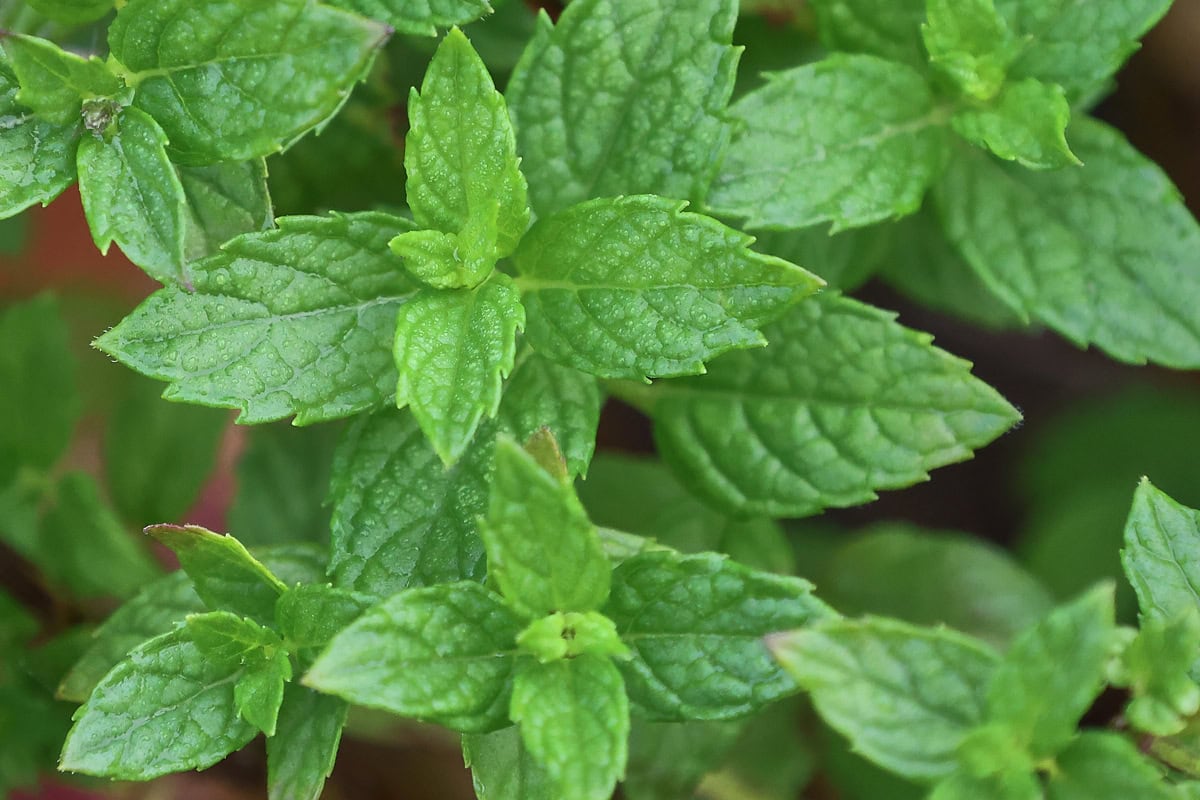
Julep mint is a vigorous and vibrant spearmint with a compact habit. It has a medium height, with leaves that are a deep kelly green. They're fairly small, wider at the base, and not as wrinkled as with Kentucky colonel spearmint. Some the leaves have a purple and bronze shade at the growing tips. The strong, fairly upright stems range from light green at the tips to a more variegated combination of green and purple on the older stems. A delightful fragrance emanates from the leaves.
Hardiness
USDA zones 4-9
Light
Full sun
Soil and moisture
Well-draining, moist soil with organic matter
Height
24 inches (60 cm)
My scent notes
Clean, minty, clear blue streams, candy, spearmint, green, fresh, enjoyable to smell, sweet, strong, cold metal, spring breeze, freshly-laundered towels
33. Kentucky colonel mint
Botanical name
Mentha spicata 'Kentucky Colonel'
Origin
A highly-esteemed variety of spearmint, which is a cross between Mentha suaveolens (apple mint) and Mentha longifolia (longleaf mint). Prized by Spanish invaders in the New World, who carried this mint with them to places as widespread as Guatemala, New Mexico, and the Philippines.
Description
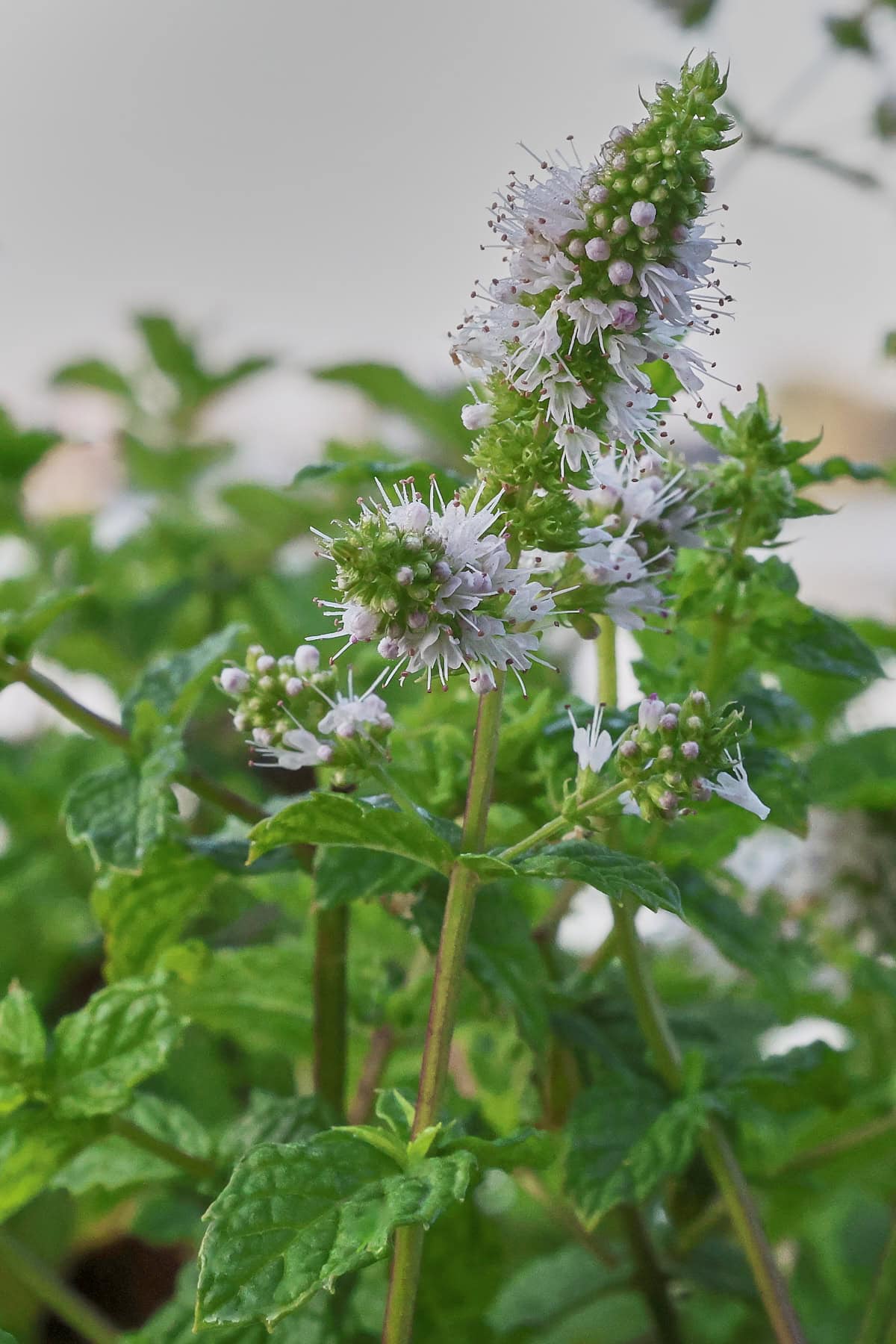
Kentucky colonel is a classic high-quality spearmint. The plant is huge, with bright lime green leaves and red stems that arch and splay outward. The inflorescences (flowering structures) are plentiful and fairly long with light pink petals. It's hardy, prolific, and a healthy and beautiful plant.
Hardiness
USDA zones 5-9
Light
Full sun to part shade
Soil and moisture
Well-draining, moist soil with organic matter
Height
18-24 inches (45-60 cm)
My scent notes
Stunning, delightful, such delicious spearmint flavor; pure, fresh, high-quality mint candy, the best mint chewing gum, the best crème de menthe, roasted marshmallows, sweet red grapes, green and white striped candy canes, unbelievable how sweet this smells; fresh grasses, fresh meadows, vanilla, lush vegetation
34. Lavender mint

Botanical name
Mentha × piperita 'Lavender'
Origin
Europe
Description
Lavender mint is a peppermint cultivar, rather than a member of the genus Lavandula like the lavender herb we know and love. Lavender mint is a striking mix of color combinations. The puckered leaves are slightly elliptical (oval-shaped) and bending downward with a softly tapering tip. The lower leaves are an electric lime green, the upper leaves and stems are a mauve to burnished copper color. The leaf veins and margins are a mauve color, with deeply fuchsia colored runner stems. It has a fairly low growth habit. It's uniformly dense with a bushing habit. The bees love the beautiful flowers, which are short with very light purple coloring. It's a really striking mint.
Hardiness
USDA zones 4-9
Light
Full sun
Soil and moisture
Well-draining, moist soil with organic matter
Height
30 inches (76 cm)
My scent notes
Fresh lavender, perfume, lemony herbs, summer savory, old alpine cottage, bracing, but mildly minty; slight nasal cooling, not very sweet; thyme, cloudy day, wet concrete, epazote, mitsuba, cardamom, herbal tea, old metal, perfume, light sweetness
35. Lime mint
Botanical name
Mentha × piperita 'Lime'
Origin
Mediterranean region
Description
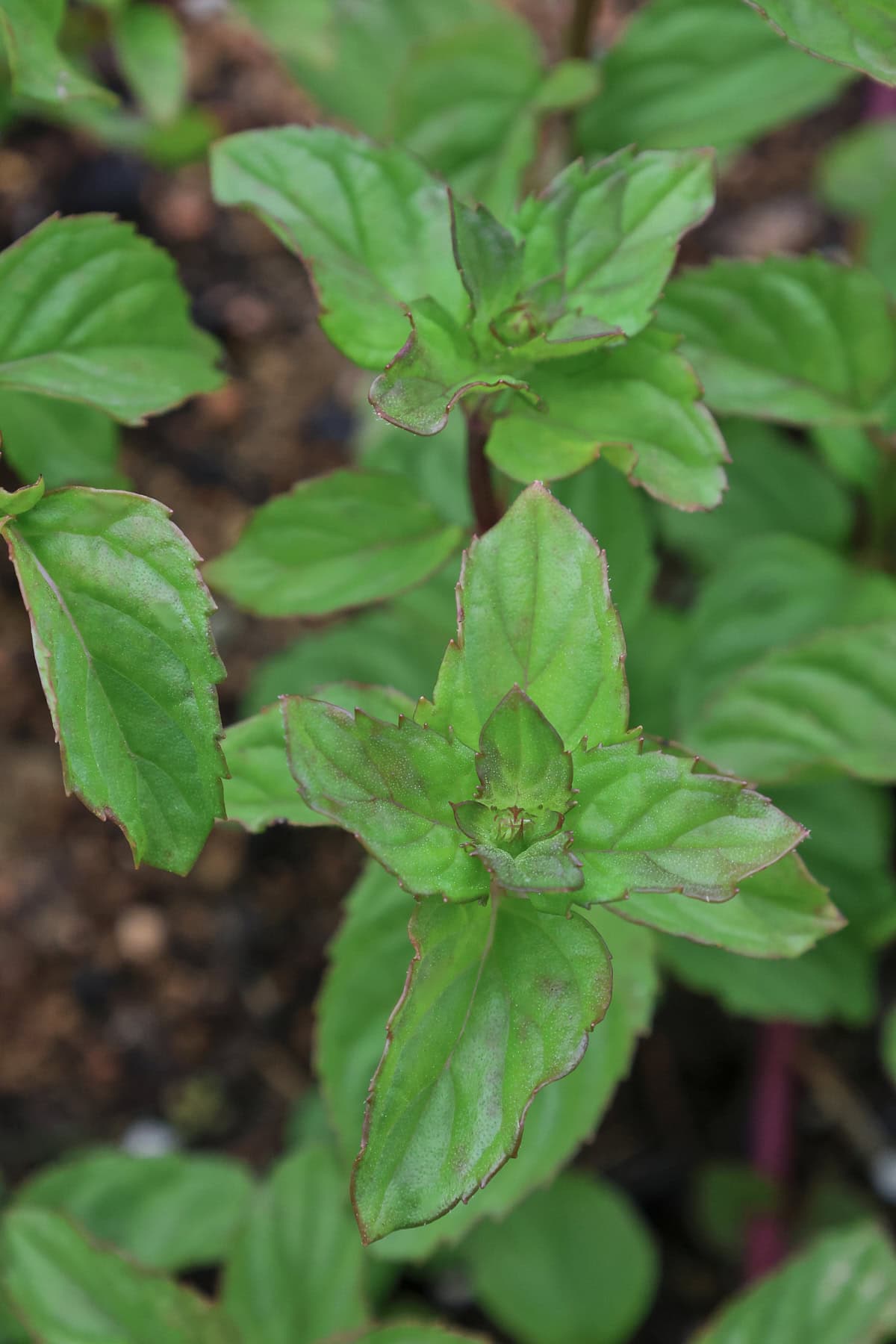
Lime mint has bright, medium green cupped leaves. They're slightly ruffled with deep purple veining and shallow scalloped margins. The short, rounded flowers are adorable, light purple, and located at the growing tips. It can send out an impressive number of runner stems in a deep burgundy color.
Hardiness
USDA zones 4-9
Light
Full sun to part shade
Soil and moisture
Well-draining, moist soil with organic matter
Height
12-36 inches (30-90 cm)
My scent notes
Lime, chilled white wine, juniper, fresh grass, bubbling brook, mildly minty, fresh rain
36. Margarita mint
Botanical name
Mentha 'Margarita'
Origin
Developed by mint breeder Jim Westerfield
Description
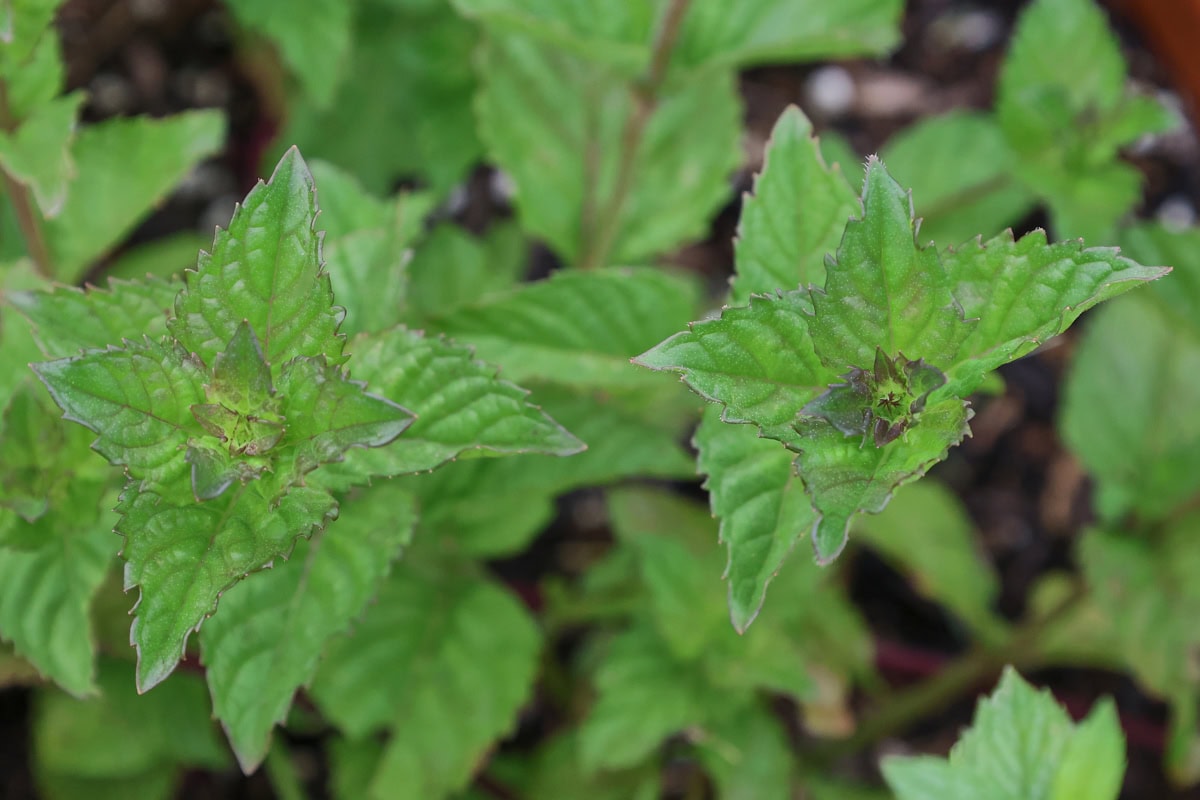
Margarita mint is very distinctive, with leaves that range from various shades of green to bronze, purple, and yellow. They're puckered and deeply cupped at the midrib. The veins and margins of the leaves are a deeper mauve. There are fewer stems on this plant, but they're upright, vibrant, and healthy. The stems are thick and dark purple. This mint can send out multiple strong runner stems. The inflorescences (flowering structures) are a medium length, and the flowers are a gorgeous deep mauve and lilac. The blooms are more saturated in color than with most mints. This is a really stunning plant.
Hardiness
USDA zones 5-9
Light
Full sun to part shade
Soil and moisture
Well-draining, moist soil with organic matter
Height
6-12 inches (15-30 cm)
My scent notes
Salty and savory, earthy, smoky, slightly sweet; no menthol, very mild and creamy; low-key mintiness
37. Marley mint
Botanical name
Mentha spicata 'Marley'
Origin
From the herb garden at the Bob Marley Museum in Kingston, Jamaica
Description
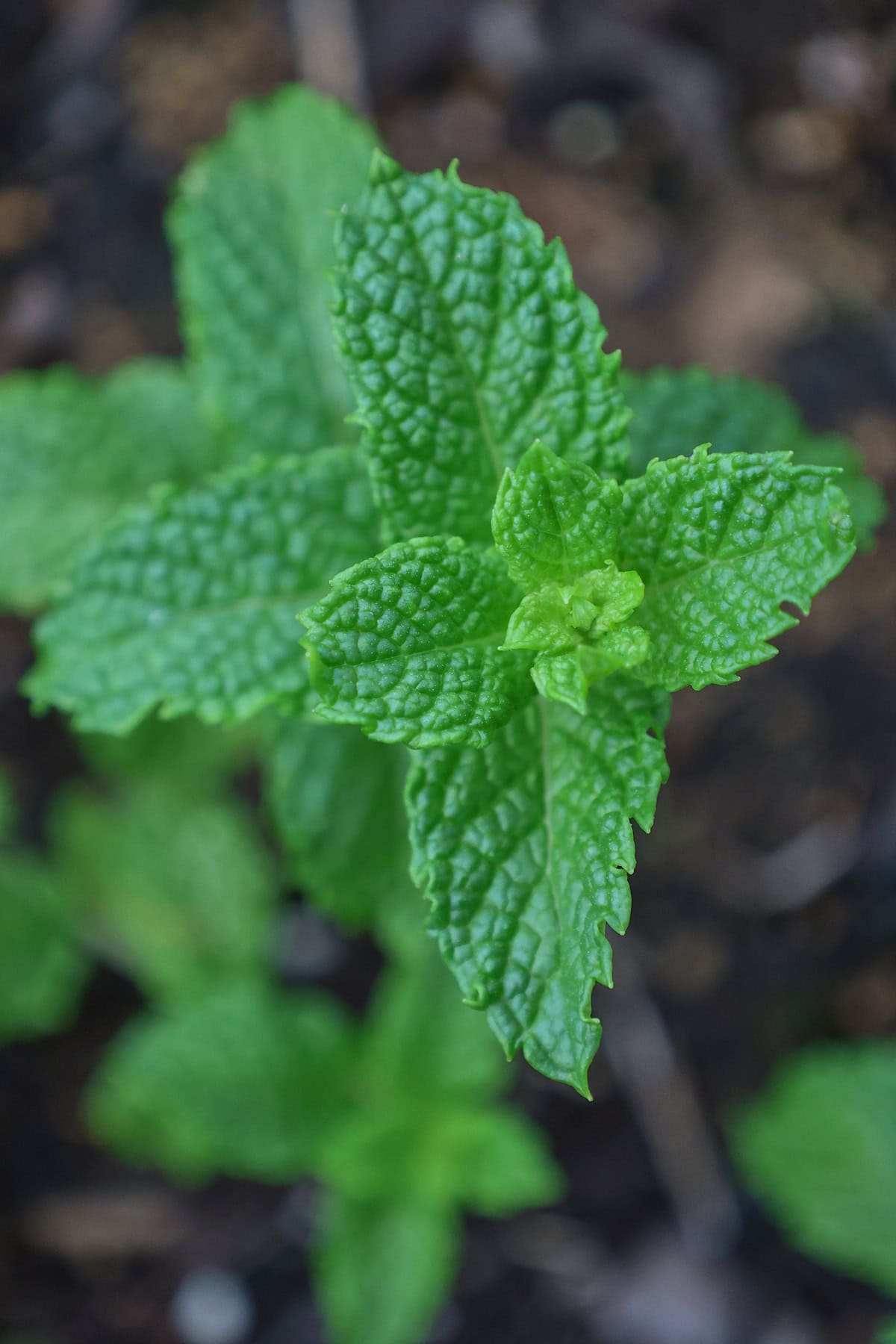
Marley mint can be somewhat sparse in growth habit. The leaves are very crinkled, bright lime green, serrated, puckered, cupping inward and pointed. They resemble those of Kentucky colonel spearmint. The stems are reddish and fairly sprawling. The flower spikes have blooms that are white with purple tips.
Hardiness
USDA zones 3-9
Light
Full sun to part shade
Soil and moisture
Well-draining, moist soil with organic matter
Height
30 inches (76 cm)
My scent notes
Clean and fresh, with good spearmint flavor; sweetness is mild rather than overpowering; would be great in tea; refined and grown-up for a mint; elegant undertone of Earl Grey tea; grassy, new books, fresh spring air, clean laundry, fabric softener, good mint flavor, reclaimed wood; green leaves, tomato stem, umami, somewhat savory, but still sweet
38. Marshmallow mint
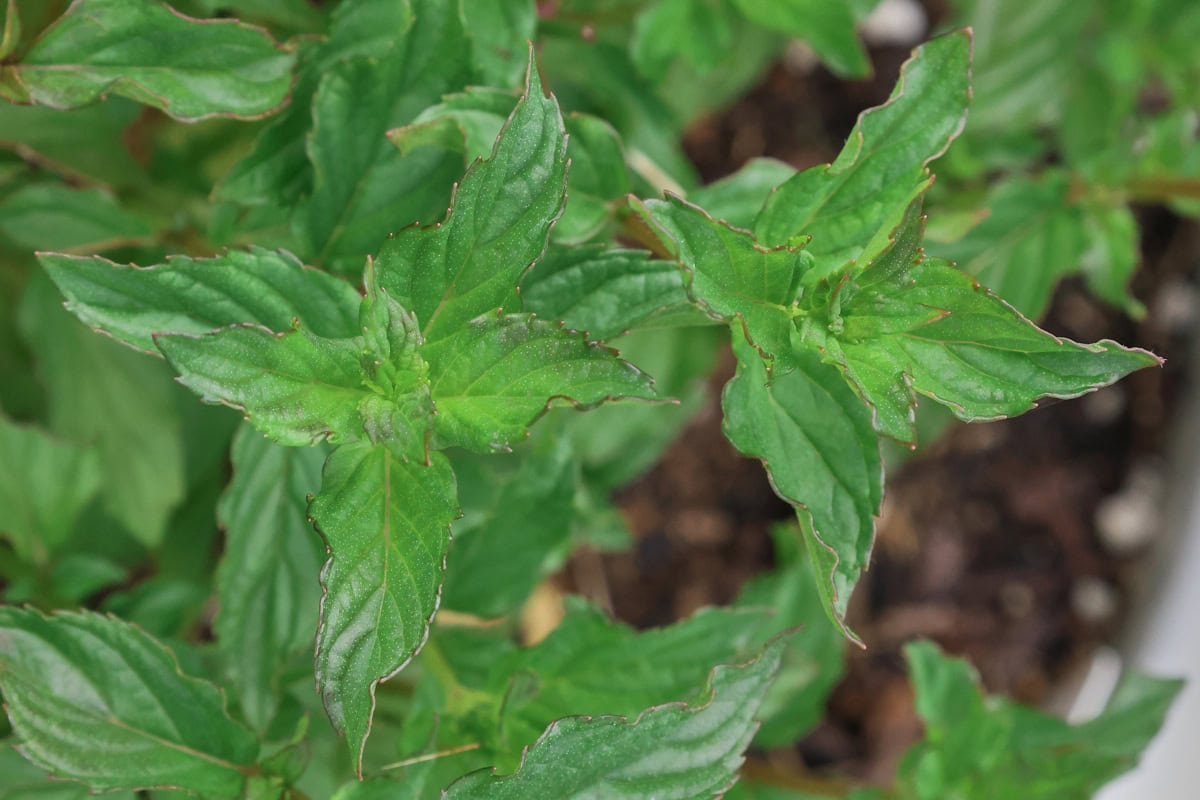
Botanical name
Mentha 'Marshmallow'
Origin
Developed by mint breeder Jim Westerfield
Description
Marshmallow mint has beautiful coloring with the center and base of each leaf in a light lime green, and the edges in a forest green. The stems, leaf veins, and margins range from green to fuchsia. The leaves are slightly wider at the base and taper to a very strong apex (tip). The plant is compact and vigorous with a shrub formation. The stems, while narrow, hold themselves up well. It's a really striking mint with the color variation on each leaf.
Hardiness
USDA zones 4-9
Light
Full sun
Soil and moisture
Well-draining, moist soil with organic matter
Height
12-36 inches (30-90 cm)
My scent notes
Clean, mild blue mist, very fresh and mildly minty, pleasantly bracing, refreshing and cooling, fresh lake water, slight smokiness, clean mountain air, lush meadows, really enjoyable to smell, lovely nasal chill
39. Mojito mint
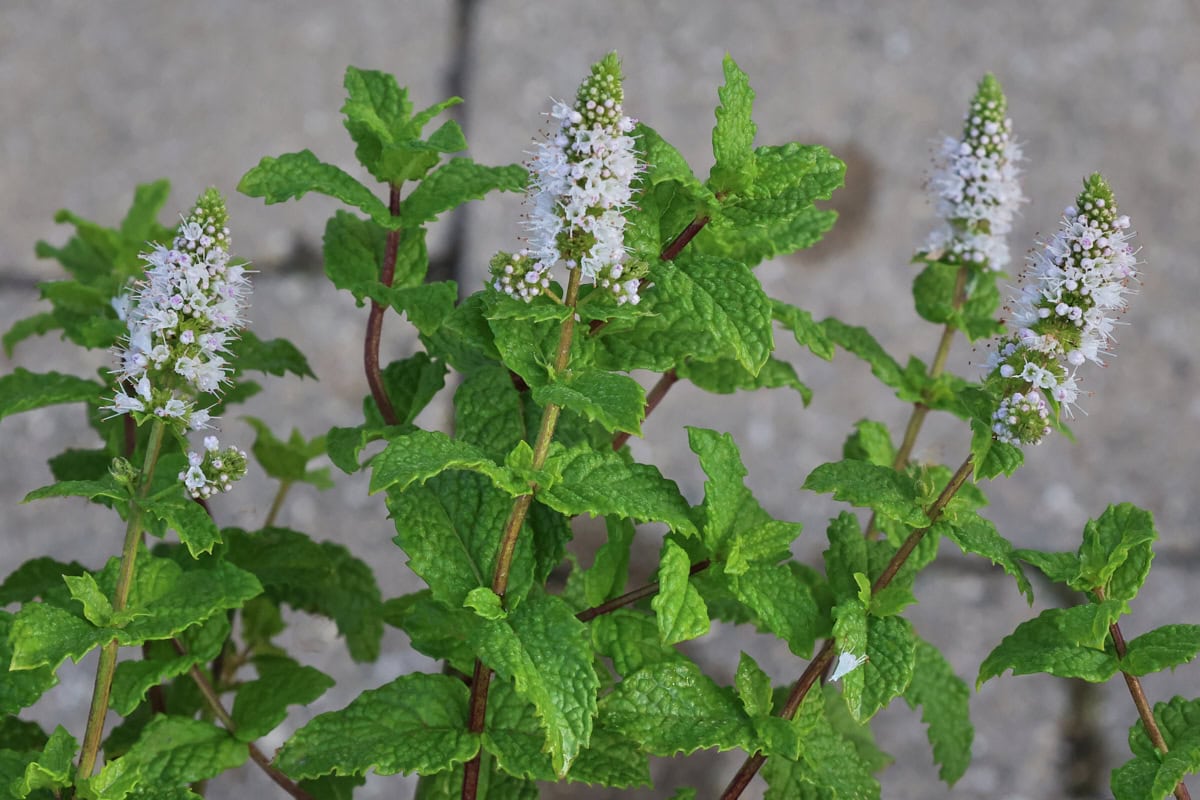
Botanical name
Mentha x villosa
Origin
Cuba
Description
Mojito mint has a classic spearmint appearance. The wrinkled leaves range from light yellow to kelly green. The leaf bases are wider, tapering to a point. The mature leaves are more rounded at the tips, with the new growth narrower and more pointed. The crenulations (scallops) are shallow, with cute little teeth. The inflorescences (flowering structures) are thick with light pink blooms. The stems are deep red, and strong, and splay outward. The plant sends new shoots throughout the soil surface. It's a robust and beautiful mint.
Hardiness
USDA zones 5-9
Light
Full sun to part shade
Soil and moisture
Well-draining, moist soil with organic matter
Height
18-24 inches (45-60 cm)
My scent notes
Fresh clean mint, sweet, delicious; sweetness comes right in through the fragrance; no menthol or tannin; just bright green fresh mint candy
40. Moroccan mint
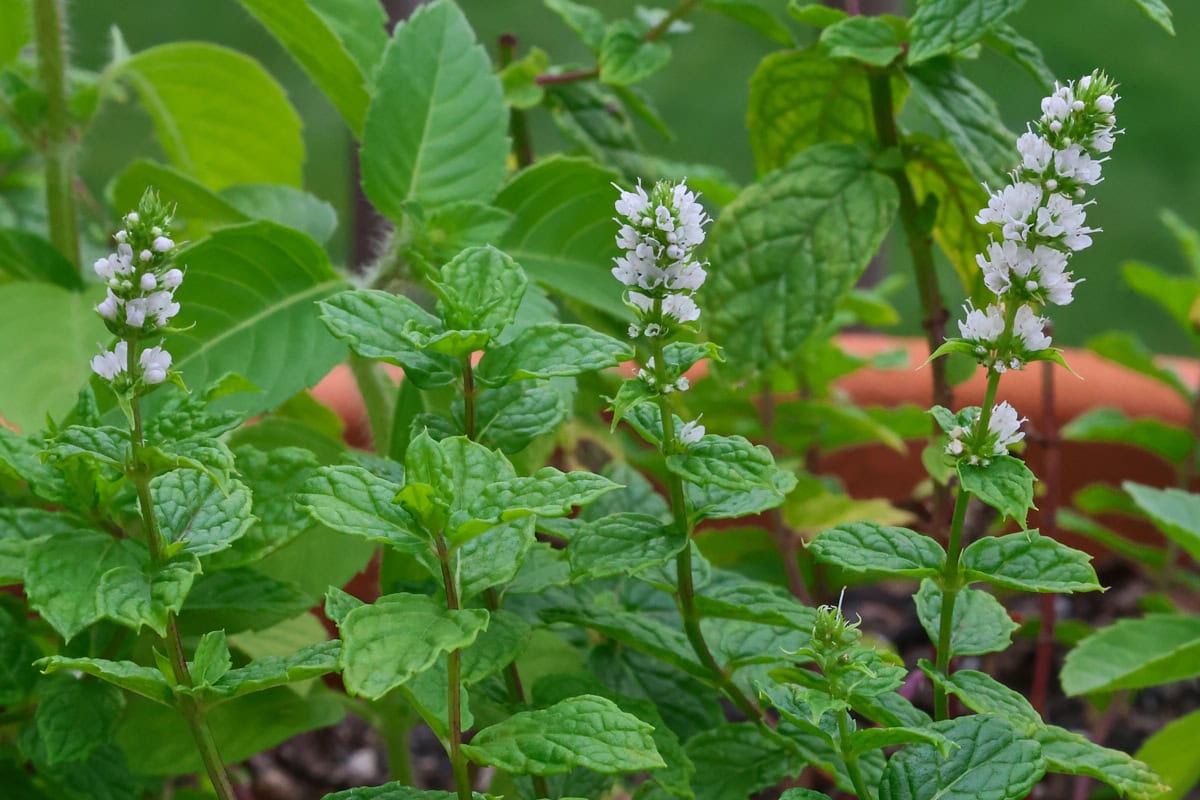
Botanical name
Mentha spicata 'Moroccan'
Origin
North Africa in the mid-19th century
Description
Moroccan mint is an elegant spearmint. The vibrant deep green leaves are puckered. They're elliptical (oval-shaped) and fairly small, reaching a soft point at the tip. Some are narrower than others. The stems are burgundy variegated with green. The inflorescences (flowering structures) are at the growing tips of the stems. The stems can arch somewhat. This is a really special type of spearmint.
Hardiness
USDA zones 4-9
Light
Full sun to part shade
Soil and moisture
Well-draining, moist soil with organic matter
Height
12-24 inches (30-60 cm)
My scent notes
Amazing scent; a wonderful mint; good spearmint tea; sweet, classic mint, the best mint candy; perfect scent for desserts; really enjoyable to smell; great quality mint
41. Mountain mint, hairy
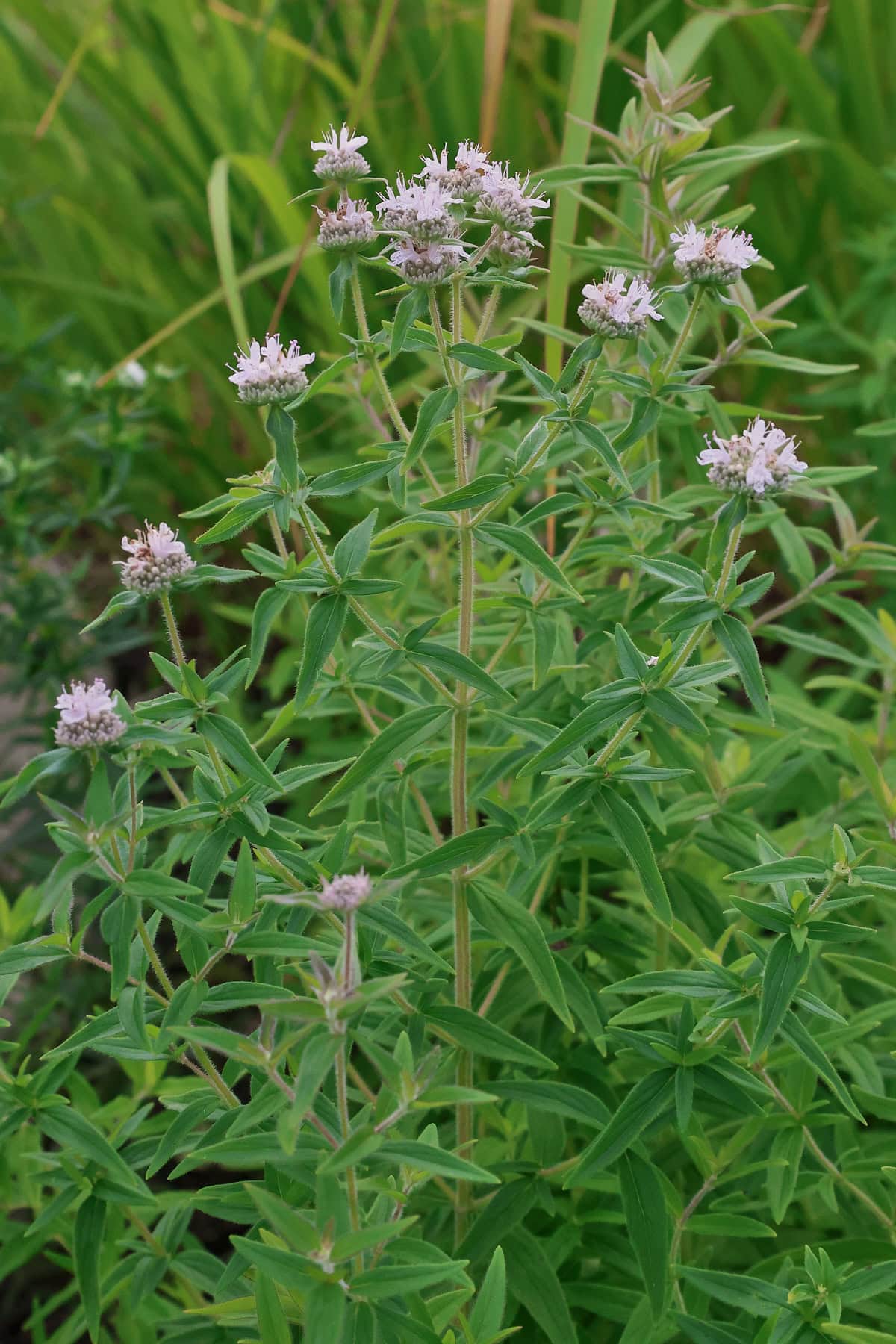
Botanical name
Pycnanthemum pilosum
Origin
Eastern/central US
Description
Hairy mountain mint has soft, matte-textured, pointed leaves. Some of them are more bluish green, and some are a more yellowish green. It's an interesting mix. The inflorescences are flattened with petals around the center. The flowers are speckled light, pink, and dark purple. It's an upright plant with an aesthetic shrub habit, and it sways gracefully in the wind. It's a great pollinator, and a lovely plant.
Hardiness
USDA zones 5-9
Light
Full sun to part shade
Soil and moisture
Medium quality soil, somewhat drought tolerant once established
Height
36 inches (90 cm)
My scent notes
Deep, vintage, mint, sage, light smokiness, deeply green, generations-old mountainside plants; freshest of cold mountain streams, sugarcane, so refreshing and enjoyably bracing; I can feel this slightly in my nose; mature, refined, elegant, freshly-chopped wood, aged cabin, amazing
42. Mountain mint, Virginia
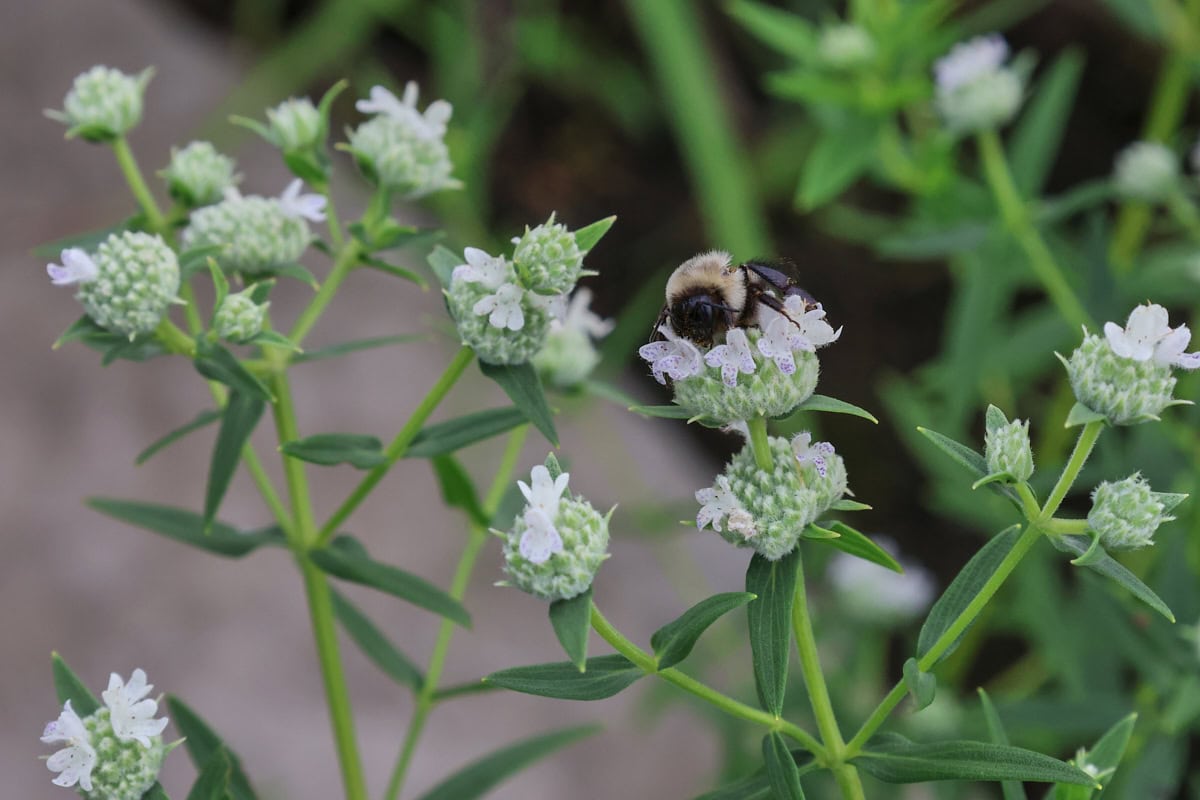
Botanical name
Pycnanthemum virginianum
Origin
Eastern US
Description
Virginia mountain mint is bluish green with very narrow, needle-like pointed leaves. Like with hairy mountain mint, it has flattened inflorescences (flowering structures), and the flowers are white with purple speckles and bloom around the edges. It has a bushing habit, with a graceful texture to the delicate arching stems. There's some internode space between the branches. It's not quite as full as the hairy mountain mint in structure, but it's beautiful and slightly taller than the than the hairy mountain mint.
Hardiness
USDA zones 3-7
Light
Full sun to part shade
Soil and moisture
Moist to average draining, tolerant of many soils
Height
36 inches (90 cm)
My scent notes
Refreshingly minty in a menthol nasal way; sage, campfire, old books, definitely smoky and savory; vintage collectibles, reclaimed wood, dusty attic, epazote, grilled vegetables, Mexican oregano, smoked hickory, mesquite, really interesting
43. Orange mint
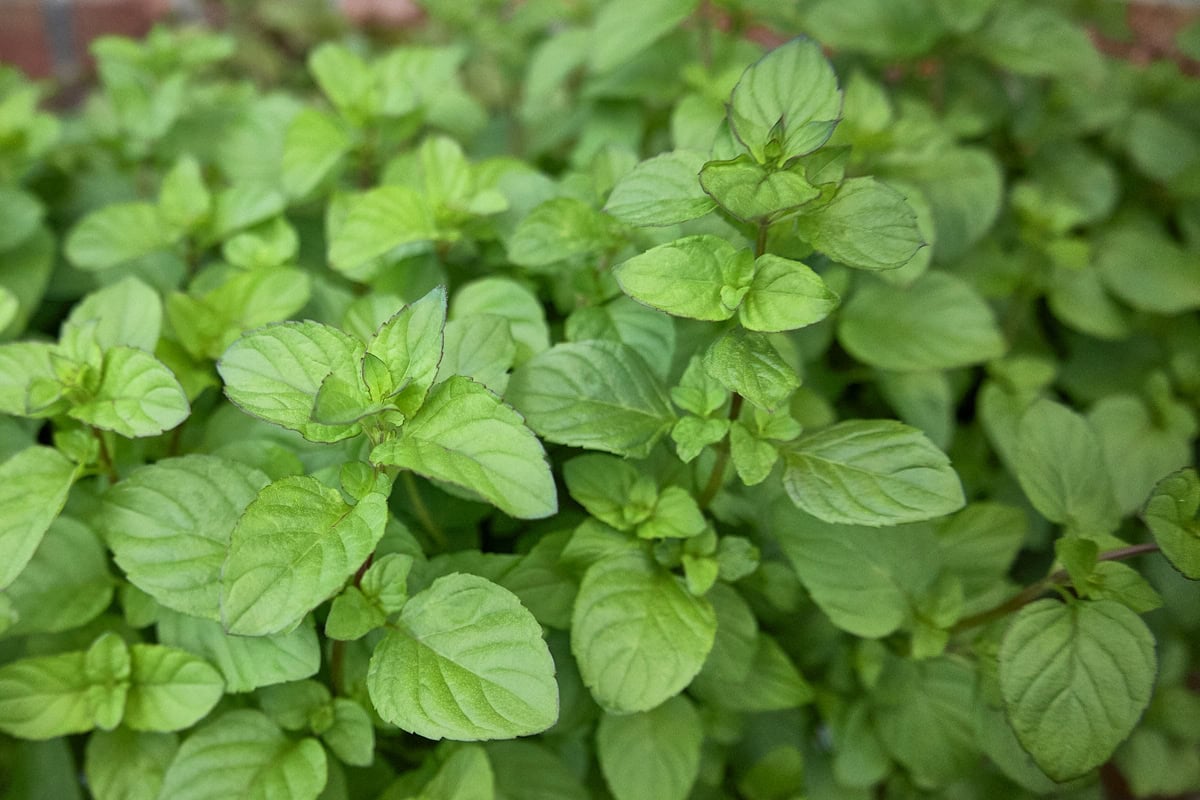
Botanical name
Mentha aquatica 'Citrata'
Origin
Europe, Africa, and Asia
Description
Orange mint is one of my favorites in terms of growth habit. The leaves are slightly ovate, as they're wider at the base and have rounded tips. They have a satin texture. They're fairly flat with slight puckering at the veins. The margins of the leaves are a beautiful burgundy color as are the multiple stem runners. I find orange mint to be almost a climber, and it's capable of beautifully filling in a corner space.
Hardiness
USDA zones 4-9
Light
Full sun to part shade
Soil and moisture
Well-draining, moist soil with organic matter
Height
18-24 inches (45-60 cm)
My scent notes
Rain on fresh grass, new leaf, lemonade, sage, summer savory, epazote, oregano, mild sweetness, less minty, cedar balsam, blonde wood
44. Orange bergamot mint

Botanical name
Mentha x piperita citrata 'Orange Bergamot'
Origin
Europe, Africa, and Asia
Description
Orange bergamot mint is fairly low growing. The leaves are a beautiful emerald green color and are fairly flat. The leaf margins and veining, especially at the growing tips, are burgundy in color. The flowers grow between the leaf nodes and proceed to the growing tips. This plant is sparse, low-growing, and the variegated green and burgundy stems are somewhat sprawling. The flower petals are a light purple lilac color.
Hardiness
USDA zones 4-9
Light
Full sun to part shade
Soil and moisture
Well-draining, moist soil with organic matter
Height
18-24 inches (45-60 cm)
My scent notes
Spiced oranges, intriguing and pleasant; fresh oranges, perfume, flowers, spice market, tropical cocktails, cardamom, black pepper, masala chai, ginger, garam masala, amchur; mildly minty, clean, uplifting, really pleasant
45. Peppermint
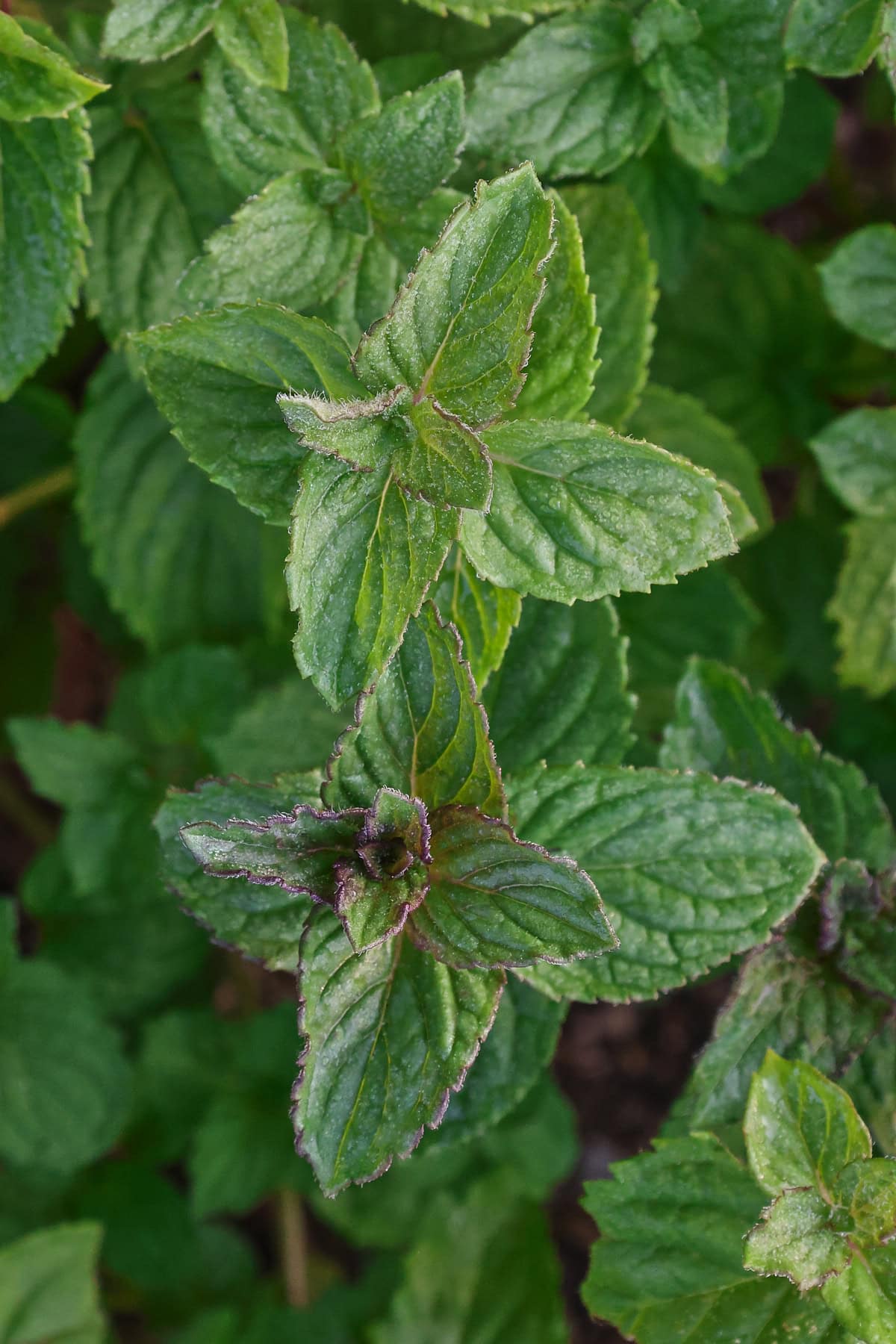
Botanical name
Mentha x piperita
Origin
Carol Linnaeus described this variety in 1753 from a plant species harvested in England; a cross between Mentha aquatica (water mint) and Mentha spicata (spearmint).
Description
Peppermint has distinctive cooling properties due to menthol. It's a handsome mint with deep kelly green leaves and purple veins and leaf margins of varying intensity. The shape of the leaves is ovate, wider at the base and reaching a gentle point with shallow serrations at the margins. The stems are green at the base and purple closer to the growing tips. It's a fairly densely-filled plant.
Hardiness
USDA zones 5-9
Light
Full sun
Soil and moisture
Well-draining, moist soil with organic matter
Height
12-24 inches (30-60 cm)
My scent notes
Amazing, truly delightful, so sweet, clean, green, and minty; green and white peppermint candy, clean water, crisp winter breeze; icy, bracing, deeply impressive; pure high-quality amazing mint
46. Pineapple mint
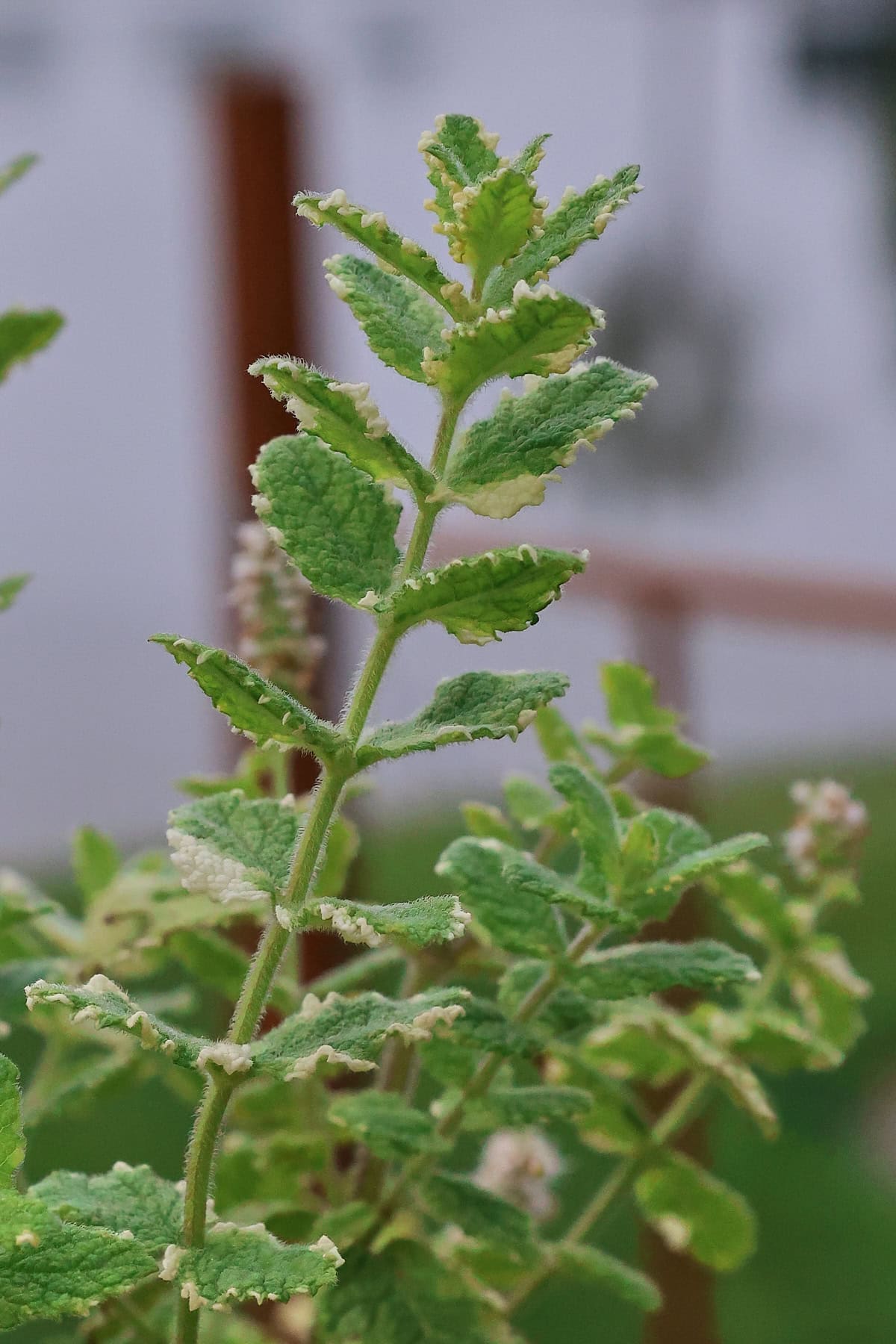
Botanical name
Mentha suaveolens 'Variegata'
Origin
Europe and Mediterranean region
Description
Pineapple mint has deeply-variegated, fuzzy leaves with lime green centers and off-white margins with a finely-scalloped edges. It's a fairly upright-growing mint. The inflorescences (flowering structures) are hairy, pink, and green. This is a beautiful and ornamental mint.
Hardiness
USDA zones 6-9
Light
Full sun to part shade
Soil and moisture
Well-draining, moist soil with organic matter
Height
18-24 inches (45-60 cm)
My scent notes
Pineapple is surprisingly accurate; mango, mild mintiness, some tanginess, sourdough bread, curry, savory, creamy, fresh green plants, salty, savory, umami
47. Scotch mint

Botanical name
Mentha x gracilis
Origin
Scotland, from a natural cross between spearmint (Mentha spicata) and corn mint (Mentha arvensis)
Description
I've grown Scotch mint from 2 different vendors over the past few years, as I've also done above with the Balkan mint. In this case, I'm listing both Scotch mints under one numbered listing, since I don't have a photo to share of the one from Richters Herbs that I grew a few years ago. Here are descriptions of them both:
Richters Herbs: This version of Scotch mint has narrow, pointed leaves with shallow serrations. It has green stems, small lime green leaves, and attractive flowers growing between the leaf nodes. It has a medium height and sprawling form.
Ginger's Greenhouse: This Scotch mint is delicate-looking with small leaves. The stems are variegated from yellow to green to dark pink. The leaves are deeply serrated. Some of the margins and veins are dark pink, and some are white. The tiny leaves have a matte finish. The flowering inflorescences start between the leaf nodes and don't progress much further than the growing tip. It has runner stems.
Hardiness
USDA zones 5-9
Light
Full sun to part shade
Soil and moisture
Well-draining, moist soil with organic matter
Height
18-24 inches (45-60 cm)
My scent notes
Richter's Herbs: Beautifully clean and sweet; mint candy, invigorating, clean, rich, pure green mint, buttery smooth, classic and really impressive; like the best mint candy
Ginger's Greenhouse: Clean, fresh, icy mountain streams, mild mint, more spearmint than peppermint; young lettuces, cool clean rain, sweet minty tea, lime, marshmallow, vanilla, cool winter air, alpine grasses, permafrost, lichen, young mosses
48. Strawberry mint
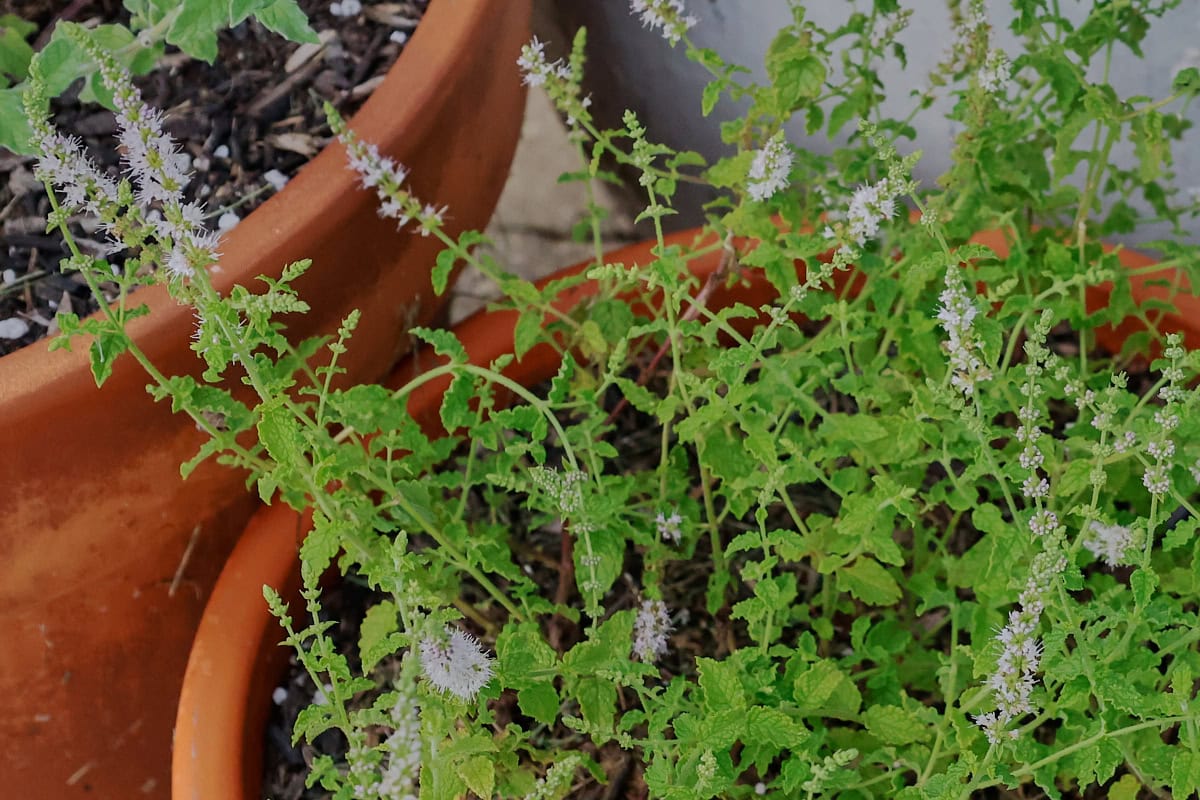
Botanical name
Mentha spicata 'Strawberry'
Origin
Unclear
Description
Strawberry mint is low-growing and dense, with deep medium green wrinkled, small, and narrow leaves. They're ovate, with a wider base and tapering to a soft point. It has a sprawling habit. The flowering inflorescences are at the end of the growing tips, and they're fairly long for the low growth of the plant. The flower buds are a deep, beautiful lilac color until they open to white petals.
Hardiness
USDA zones 6-9
Light
Full sun
Soil and moisture
Well-draining, moist soil with organic matter
Height
12-24 inches (30-60 cm)
My scent notes
Definitely strawberry, sweet hay, musky, hint of mint, mild lemon, toasted bread
49. Sweet pear mint
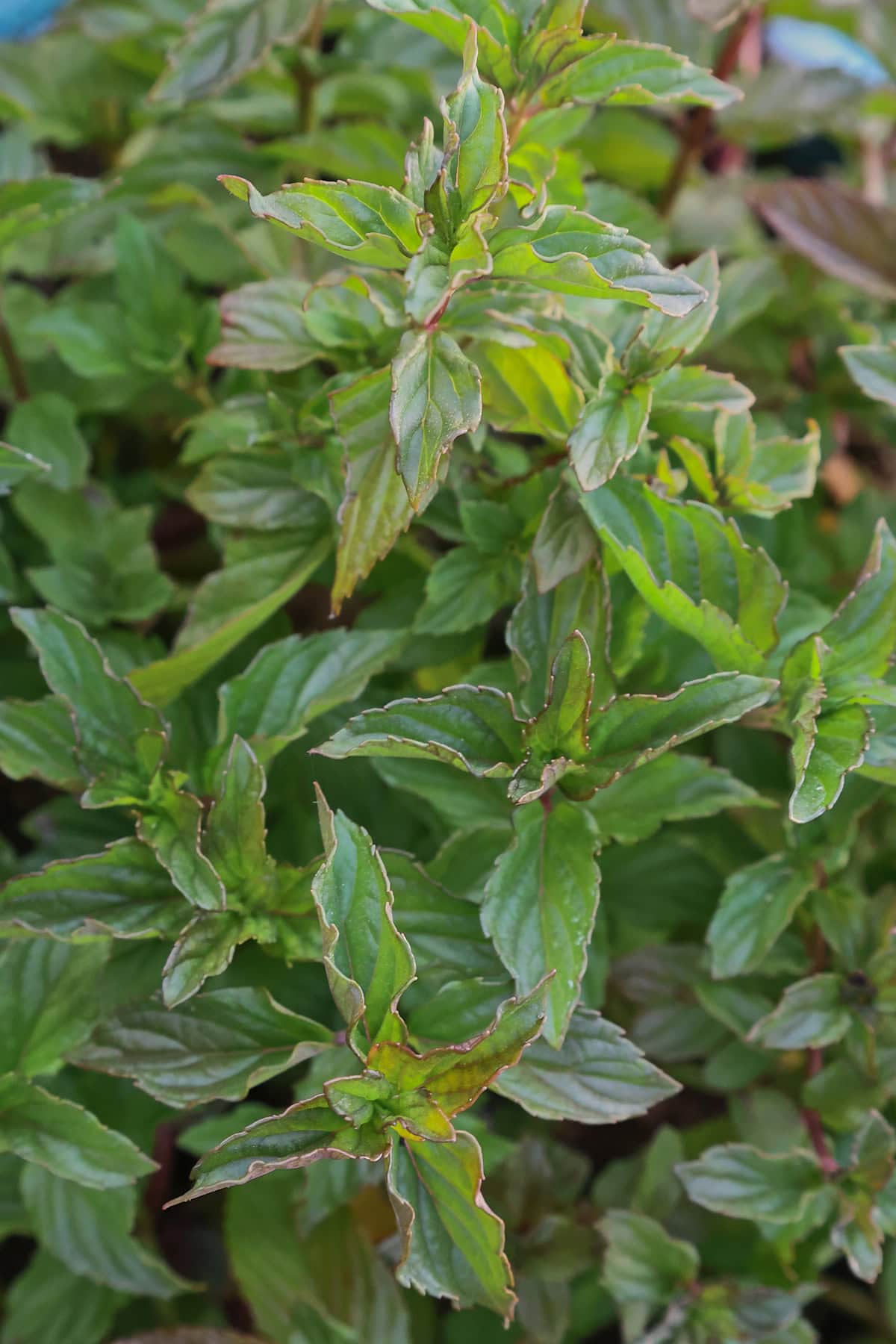
Botanical name
Mentha 'Sweet Pear'
Origin
Developed by mint breeder Jim Westerfield
Description
Sweet pear mint has leaves in a gorgeous vibrant green color. The plant is strong, with stems that are a variegated green and purple. The narrow leaves are puckered at the veins and folded inward. The stems aren't particularly thick, but are vertical and strong. The plant can have multiple runner stems. It's a healthy and vigorous mint.
Hardiness
USDA zones 5-9
Light
Full sun to part shade
Soil and moisture
Well-draining, moist soil with organic matter
Height
18-24 inches (45-60 cm)
My scent notes
Warm water, deep tea, slightly sweet and minty; aged grass, new clothes
50. Swiss mint
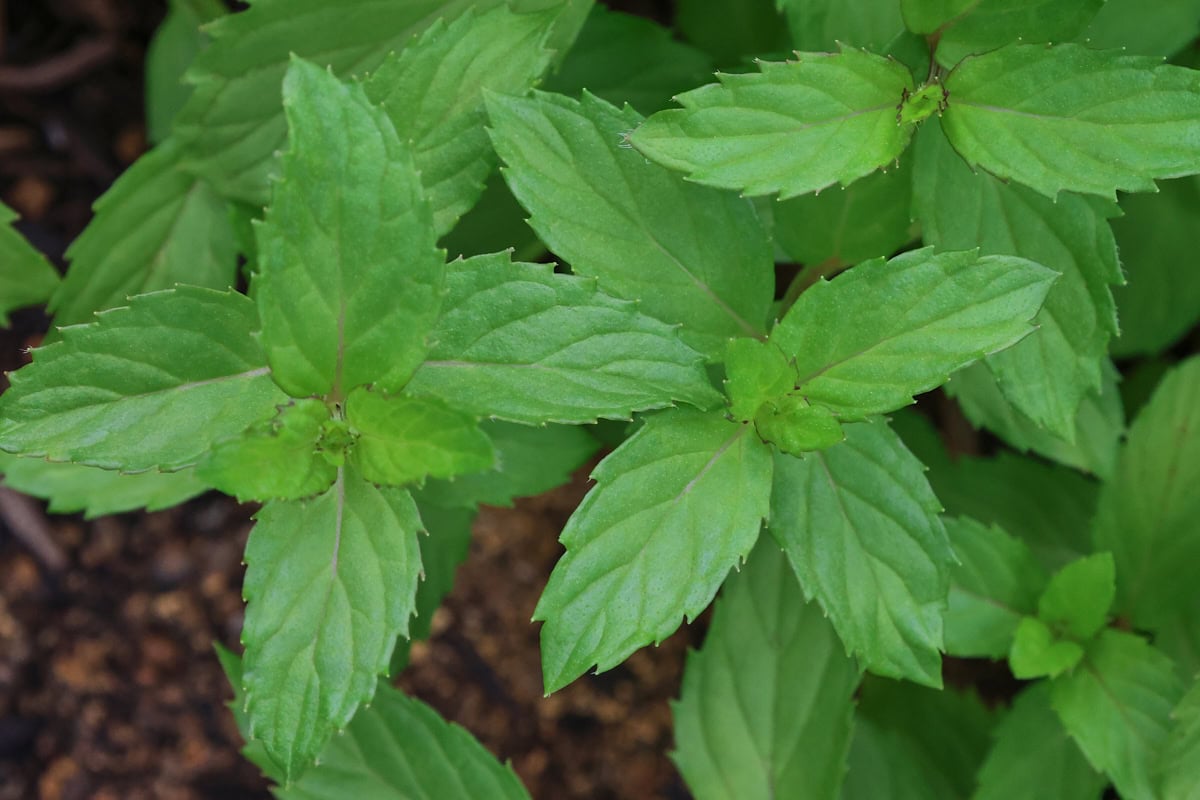
Botanical name
Mentha x piperita 'Swiss'
Origin
Europe
Description
Swiss mint is a low-growing and densely-shaped, strong mint with medium green leaves that are narrow, serrated, and tapered to a point. They're flattish and imprinted (sunken) at the veins. The veins and margins of the leaves are a barely-discernible light purple. The stems are fairly delicate and arching, and are a variegated purple and green.
Hardiness
USDA zones 4-10
Light
Full sun to part shade
Soil and moisture
Well-draining, moist soil with organic matter
Height
24-36 inches (60-90 cm)
My scent notes
Good quality mint gum, but with a weird different edge; old books, ripe fruit, honeydew melon, fresh grass clippings, aged parchment
51. Thai mint
Botanical name
Mentha arvensis
Origin
Thailand, India, and China
Description
Thai mint has striking deep purple stems, leaf veins, and leaf margins. It's a low-growing mint of a forest green color, and the interplay of dark purple with the green is beautiful. The delicate stems have a sprawling and slightly sparse habit. The leaves are on the smaller side, but it's very healthy and lovely mint.
Hardiness
USDA zones 5-11
Light
Full sun to part shade
Soil and moisture
Well-draining, moist soil with organic matter
Height
18-24 inches (45-60 cm)
My scent notes
Wonderful fragrance, fairly mild, clean, clear mint, vanilla, sweet; good quality mint candy; refined, elegant, and pure; classic mint
52. Vietnamese mint
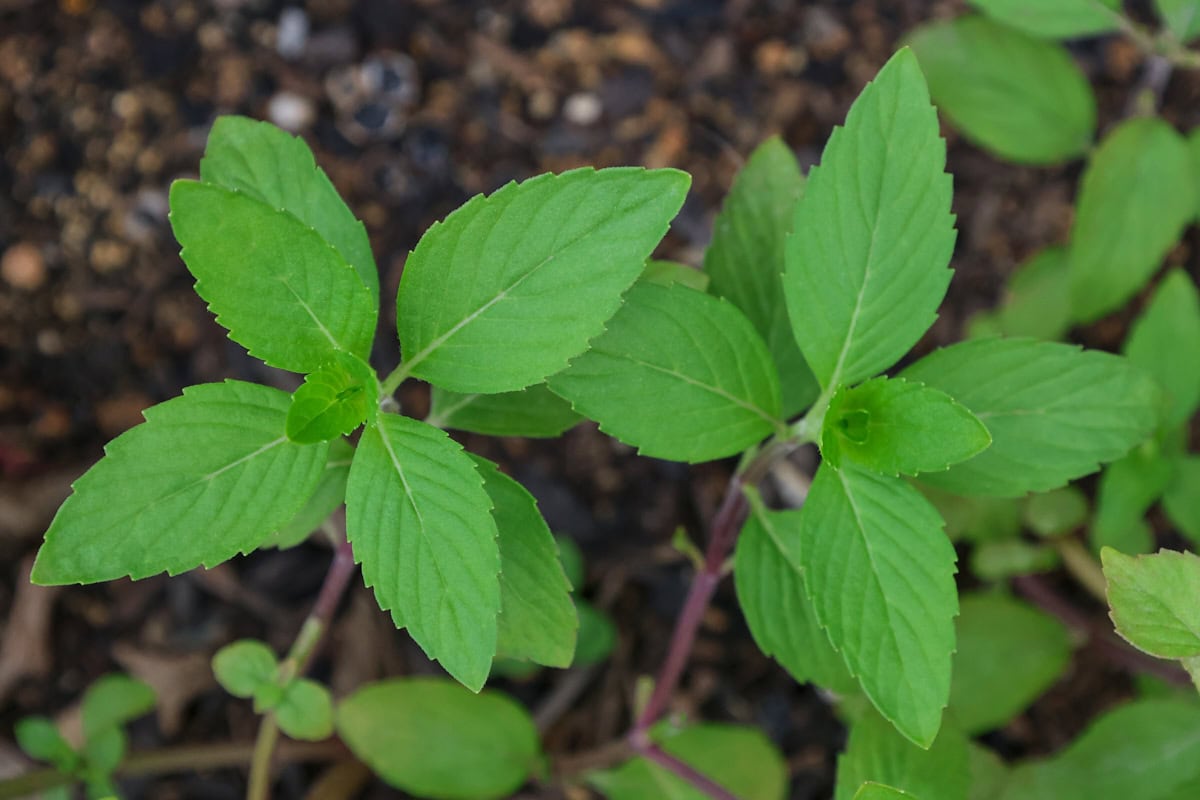
Botanical name
Mentha x gracilis
Origin
Vietnam
Description
Despite a shared hybrid name with other mints in this post, Vietnamese mint has a distinctive growth habit and fragrance all its own. It has beautiful lime green leaves. They're fairly large, narrow, and pointed with white veining. They're orthogonally-positioned opposite one another, so this mint has a nice geometric presentation. The flowers are a beautiful light lilac color, and are adorably interspersed throughout the leaf nodes down the stem. The stems are delicate, somewhat leggy, and swaying in the wind. It has a medium height, yet is taller than expected for the narrow and delicate stems.
Hardiness
USDA zones 5-9
Light
Full sun to part shade
Soil and moisture
Well-draining, moist soil with organic matter
Height
18-24 inches (45-60 cm)
My scent notes
Sweet, nice and fragrant; high-quality candy, delicious mint scent, clean and pure, fresh mountain air, crisp, clean linens, spring water
53. Water mint
Botanical name
Mentha aquatica
Origin
Europe, North Africa, West Asia
Description
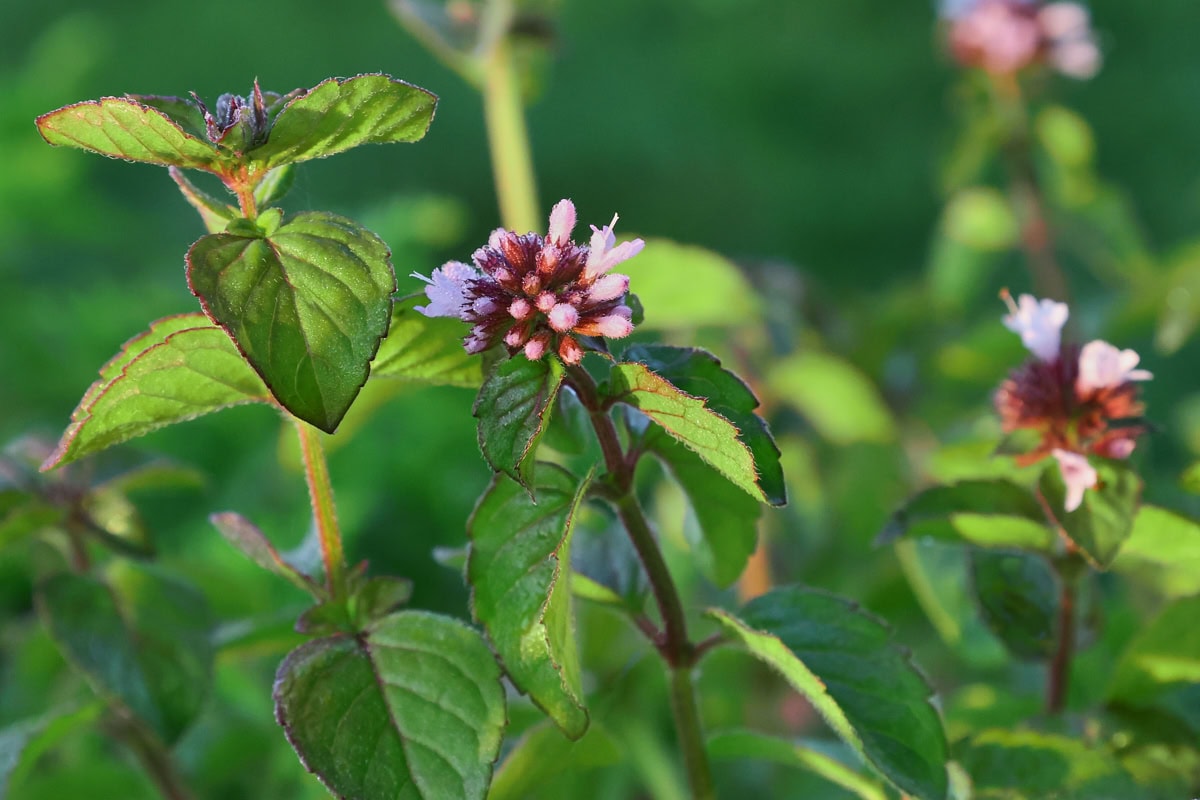
Water mint has an affinity for growing in damp and wet places in the northern hemisphere, near waterways like storm ditches and rivers. It has beautiful, thick deep green leaves with reddish veins and margins. They have a matte finish, and are cupped inward along the midrib. They look soft and velvety, and yet somewhat succulent and thick. The cute flowering inflorescences are a burgundy color with light pink to lilac petals, and the stems on the plant are pink. It can spread with long runners. It's healthy, not too tall, and very handsome.
Hardiness
USDA zones 5-9
Light
Full sun to shade
Height
6-24 inches (15-60 cm)
My scent notes
Pine, lemon, old forest, vintage books, savory, less minty
54. Wintergreen mint
Botanical name
Mentha 'Wintergreen'
Origin
Developed by mint breeder Jim Westerfield
Description
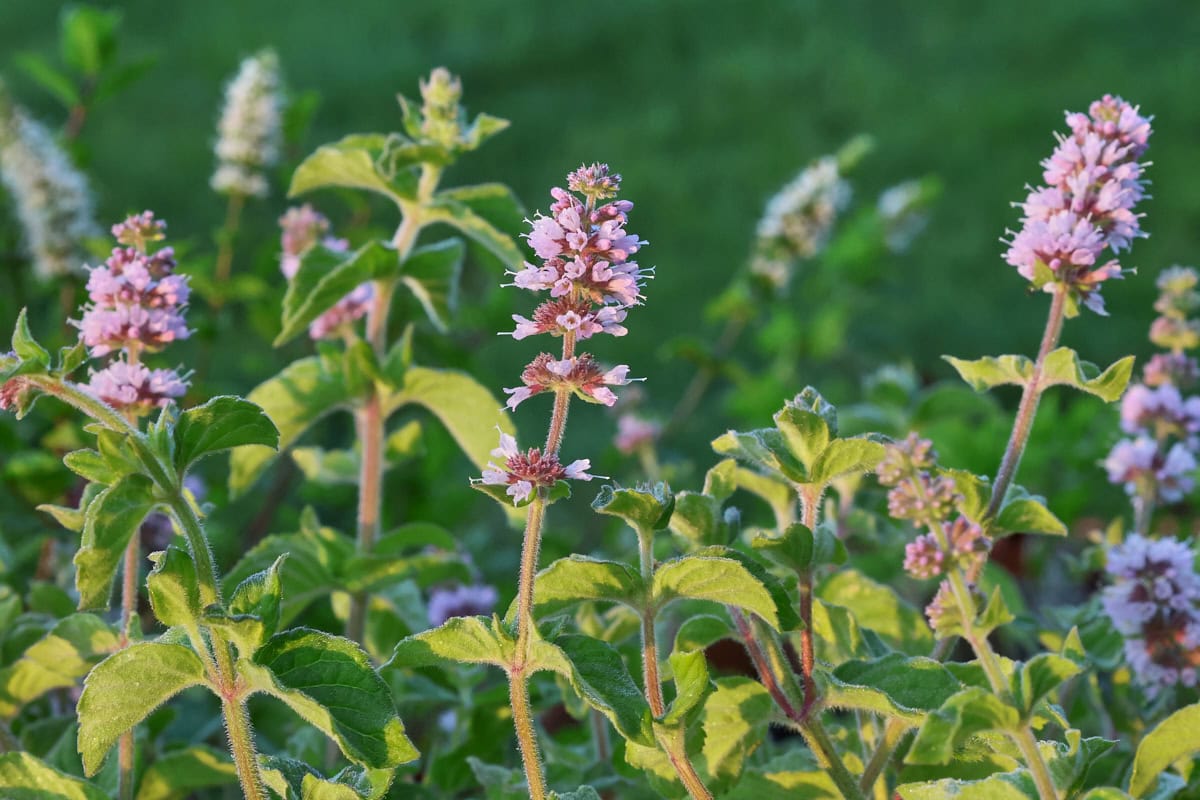
Wintergreen mint is a handsome plant. The slightly bluish to lime green leaves are soft and velvety, with a matte finish. The flower spikes are adorable with lilac blooms and a long flowering tip. The stems are hairy and variegated from green to dark pink. The plant is healthy and vigorous, and not too tall. It can send out healthy runners. It has graceful, slightly-arching stems and an elegant and classy appearance. It's a really adorable mint.
Hardiness
USDA zones 6-11
Light
Full sun to part shade
Height
18-20 inches (45-50 cm)
My scent notes
Sage, catnip, winter savory, lemon, spring greens; mild menthol, oregano, soft, creamy, slight sweetness
❓Frequently asked questions
Mint is a member of a family of plants called Lamiaceae. The most common genus in this family is the beautiful and highly aromatic group Mentha, which includes most of the varieties in this post. Since 1753, there have been more than 3,000 names published within this group.
Beyond the Mentha "true mints," the broader Lamiaceae family also includes many other aromatic culinary herbs such as basil, oregano, thyme, sage, lemon balm, and mountain mint. (I've included more examples in the introduction.) Since mints hybridize easily, and with new cultivars in continuous selection, there's no fixed number of mint varieties.
Mints within the Mentha genus generally differ in their chemical composition. Peppermint (Mentha × piperita) has a high menthol content, giving it a cooling sensation. Spearmint (Mentha spicata) is sweeter with a gentler flavor, and contains little to no menthol. Other mints have a wide variation in characteristics. Their scent and flavor profiles are determined by the ratios of aromatic compounds such as pinene, cineole, limonene, and myrcene. It's differences like these that determine why some mints are better candidates for tea, cocktails, desserts, or savory dishes.
Most mints grow well in full sun to part shade, soil that's moist and well-draining, and a moderate level of fertility. Mint is an aggressive spreader via above-ground runners and underground rhizomes. So it's best grown in pots rather than in the ground. I like to grow mine in large pots in potting soil and compost, and to harvest the growing tips regularly. This encourages the plants to branch out and maintain bushy, rather than leggy growth.
Most mints don't grow true from seed. The most reliable propagation uses techniques such as cuttings, runners, or divisions. It's simple to do stem cuttings yourself by rooting them in a glass of water or moist soil. And when roots appear, you can plant your cuttings and grow them as new plants. Or you can buy new seedlings from a trusted vendor. Please see my list of mint sources in the introduction to find the vendors I've used in this post.
Culinary mints have been grown and consumed by humans for thousands of years. They're considered safe when consumed by people in typical culinary quantities. For pets, tolerance can vary by species and the type and form of the mint in question. Fresh mints leaves are sometimes tolerated in small amounts, while more concentrated types, such as essential oils, can pose health risks, particularly with pets like cats and dogs.
Before offering mint in any form to an animal, please consult with a veterinarian. This information is meant to be used generally, and is not meant to be taken as medical or veterinary advice. Always introduce plant material with caution and stop use if an animal shows any adverse reactions.

📚Resources
Here's a list of the books I've consulted to write this post. Please check them out if you'd like to know more about the wonderful world of mint.
A Pocketful of Herbs: An A-Z, by Jekka McVicar
Culinary Herbs & Spices of the World, by Ben-Erik Van Wyk
Herbs (Eyewitness Handbooks), by Lesley Bremness
Jekka's Complete Herb Book, by Jekka McVicar
Mint: The genus Mentha, Edited by Brian M. Lawrence
Nose Dive: A Field Guide to the World's Smells, by Harold McGee
On Food and Cooking: The Science and Lore of the Kitchen, by Harold McGee
Rodale's Illustrated Encyclopedia of Herbs, by Claire Kowalchik and William H. Hylton, Editors
Stop... and Smell the Mints: A Glimpse into the Mint Family of Plants: Lamiaceae, by Randy Collins
The Herb Book: The Most Complete Catalog of Herbs Ever Published, by John Lust
✏️Have your grown these mints?
I'd love to hear about your experiences. Please let me know in the reviews and comments below!

Leave a Reply