


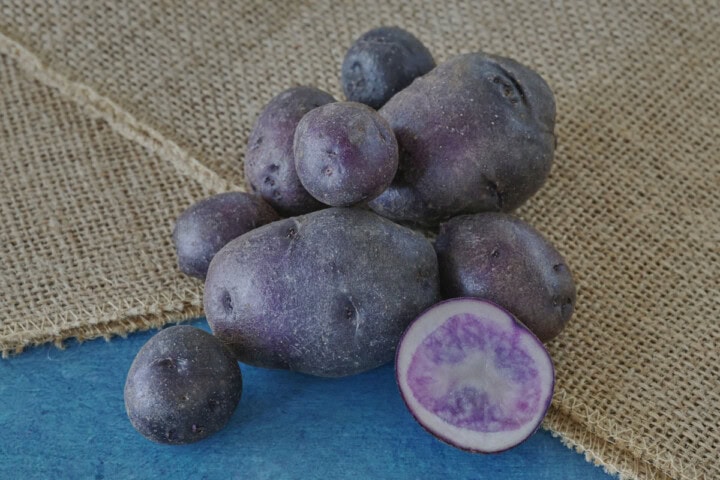
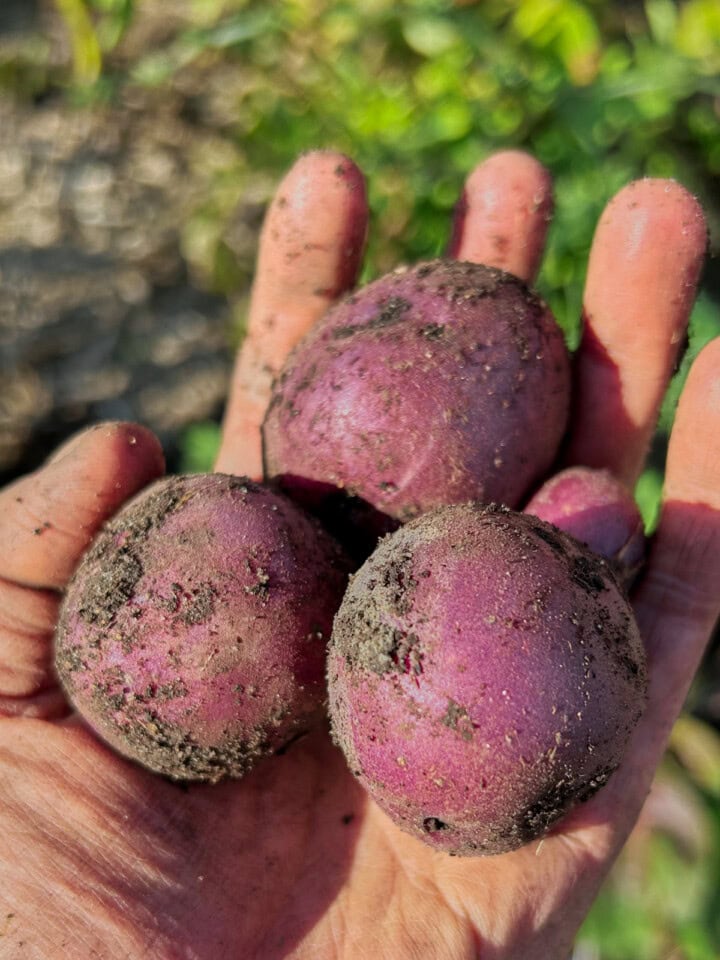
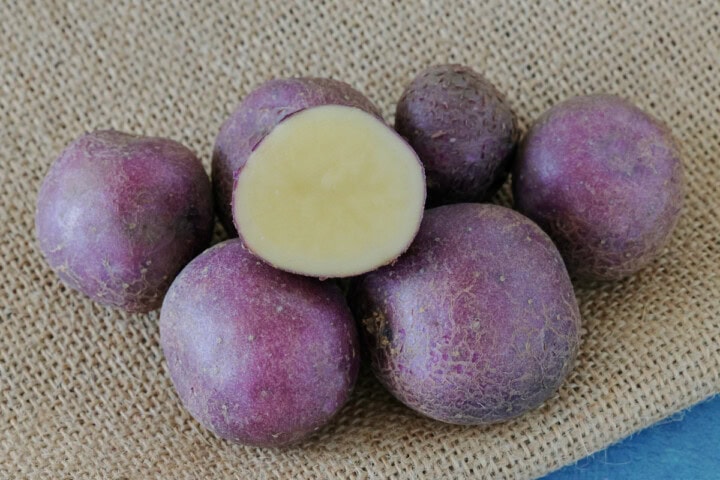
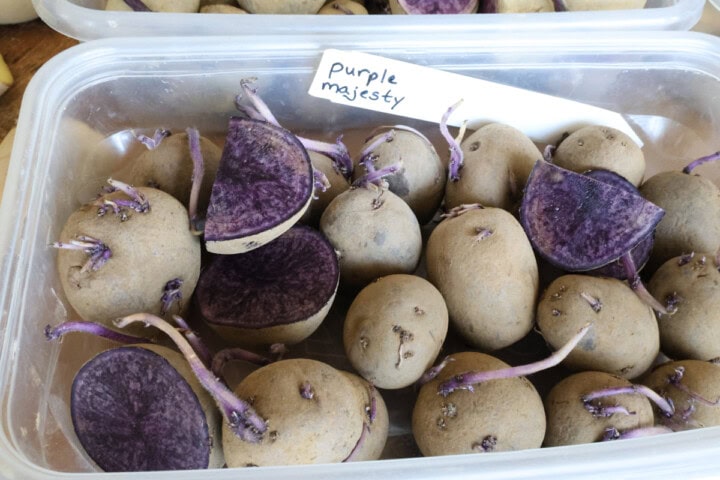
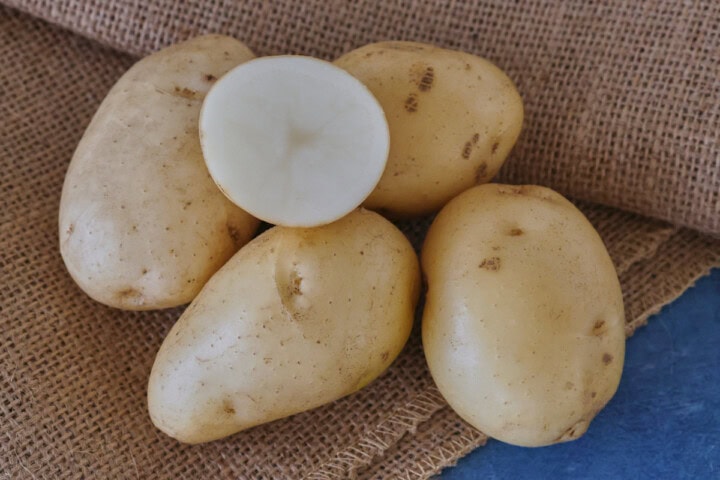
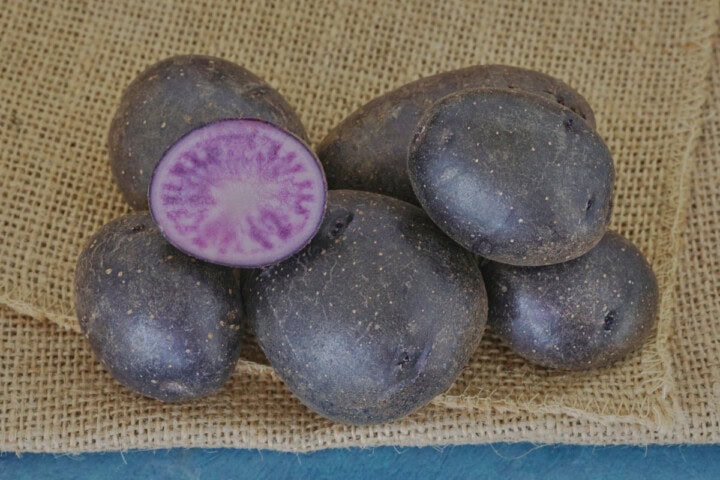


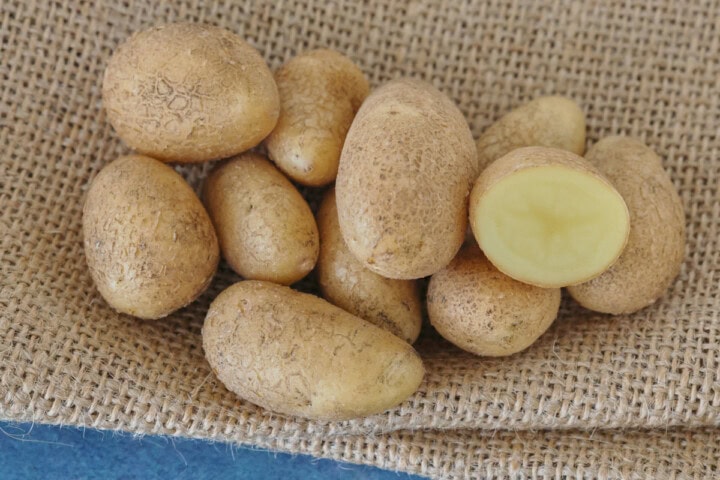




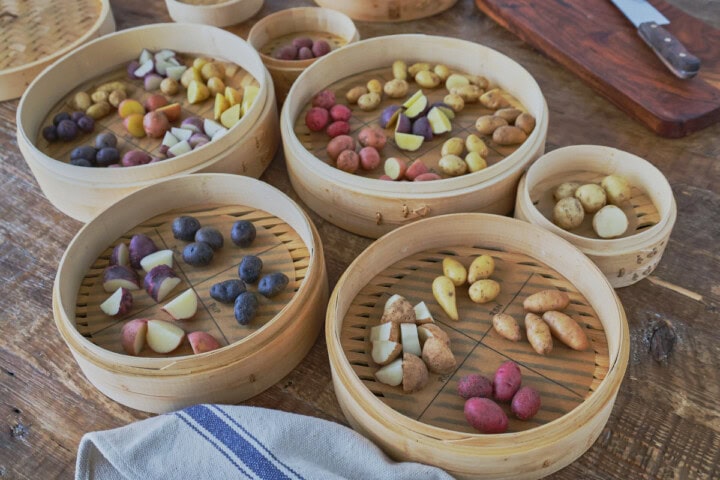
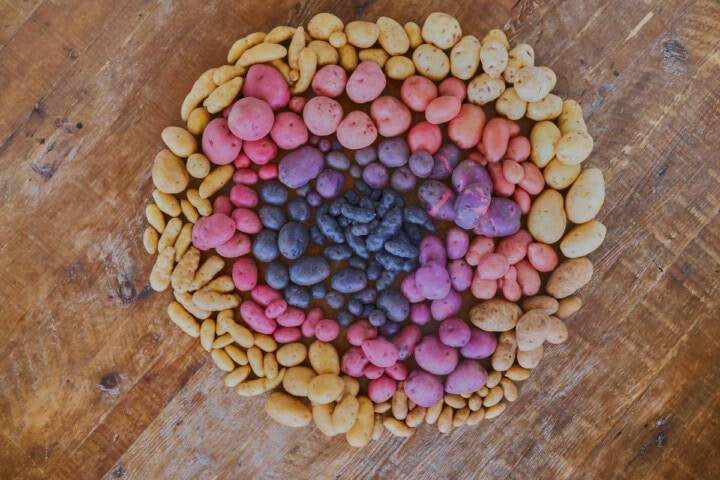

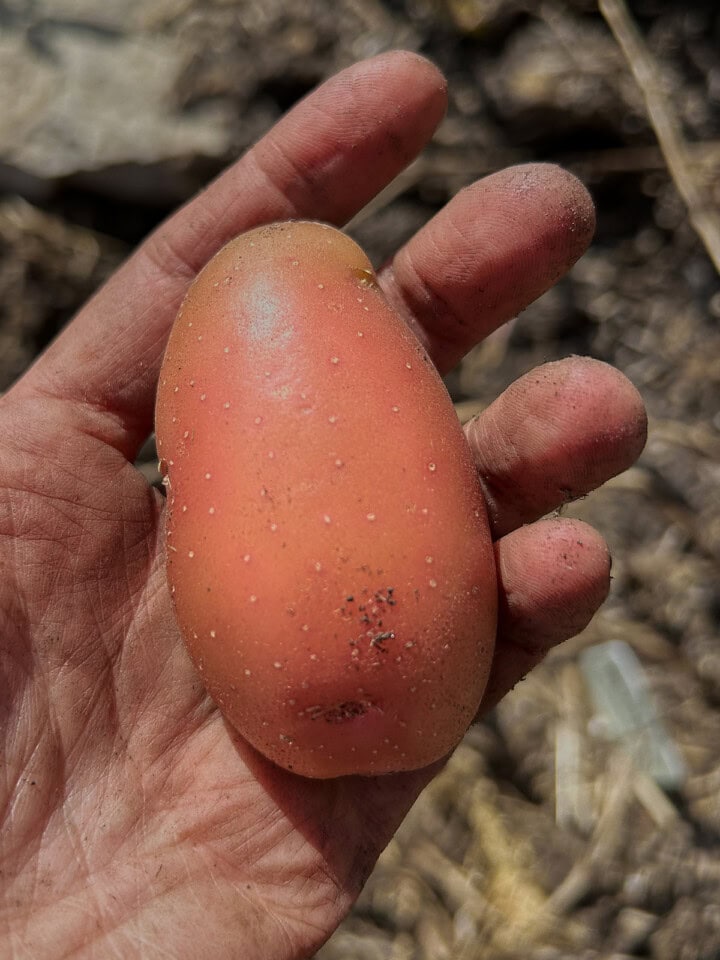



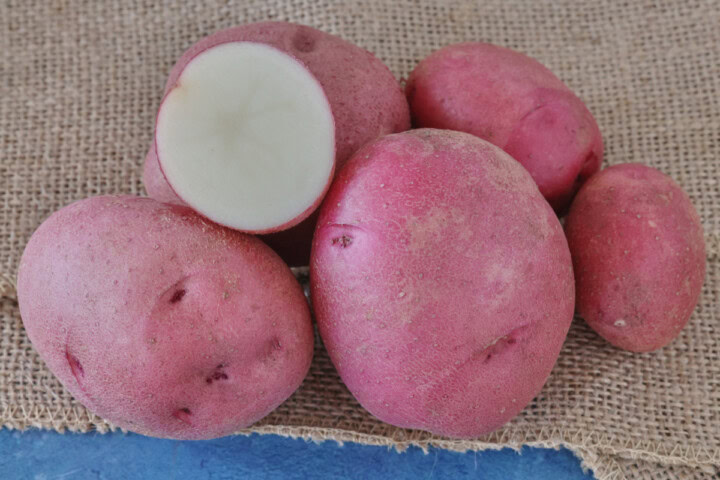
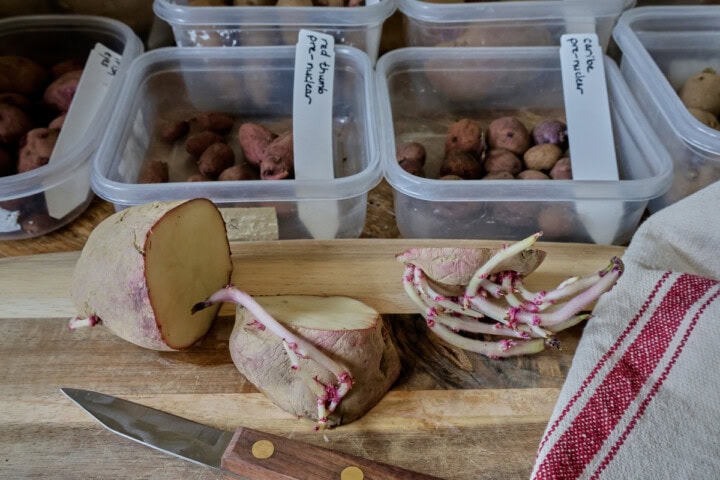
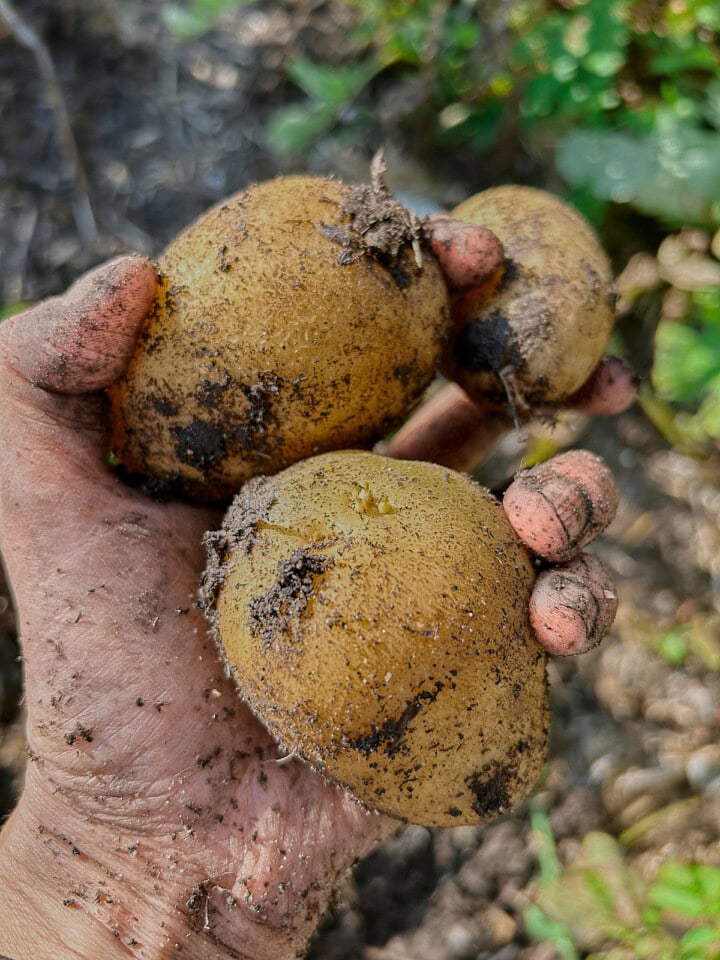


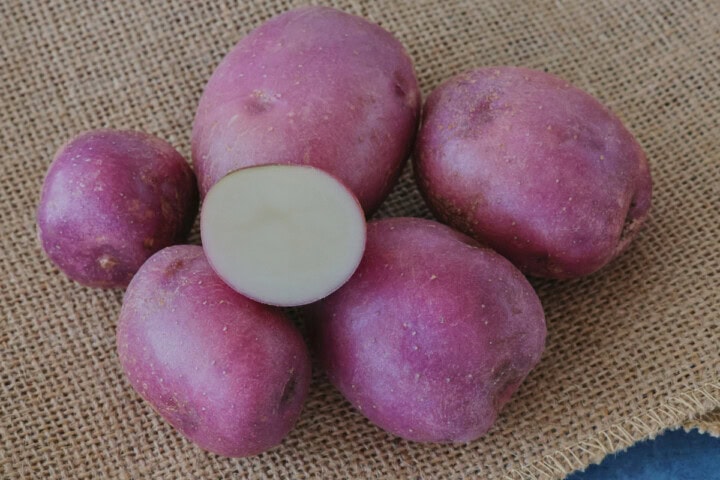


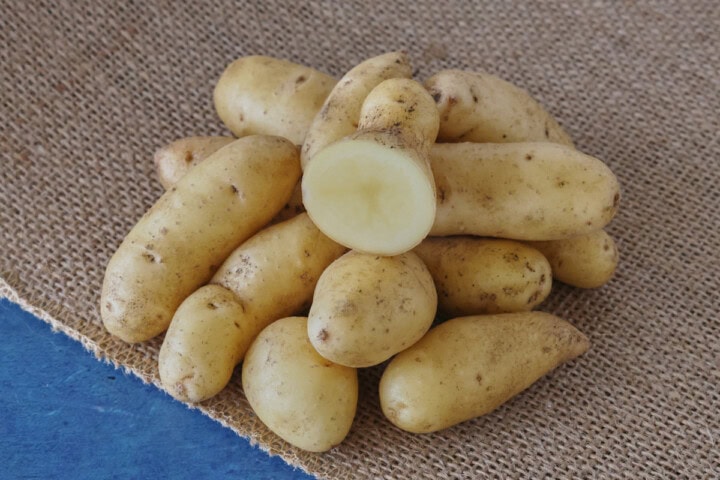
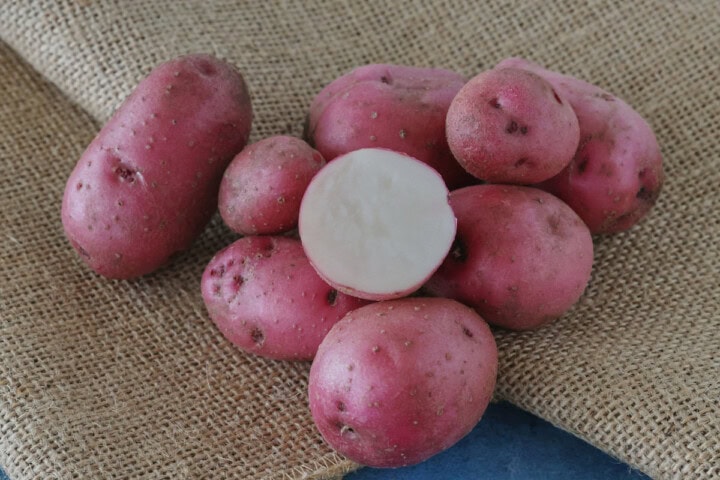






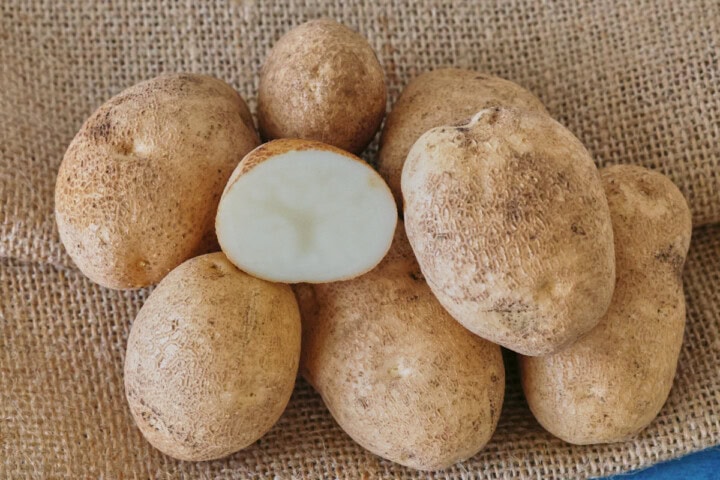

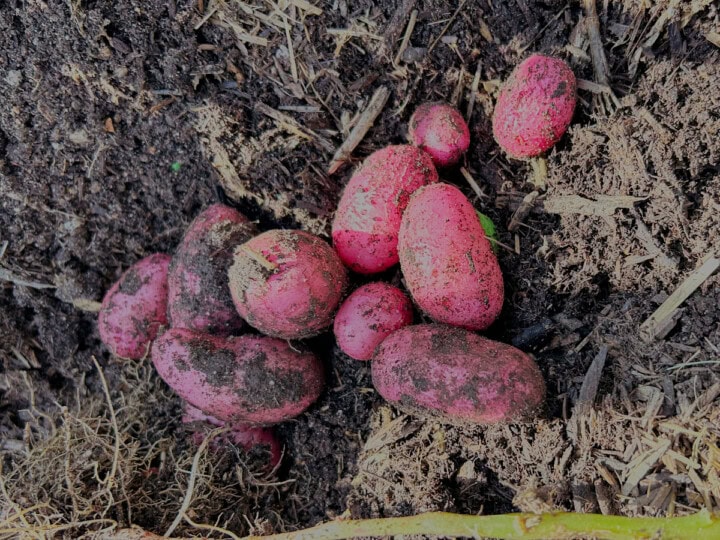


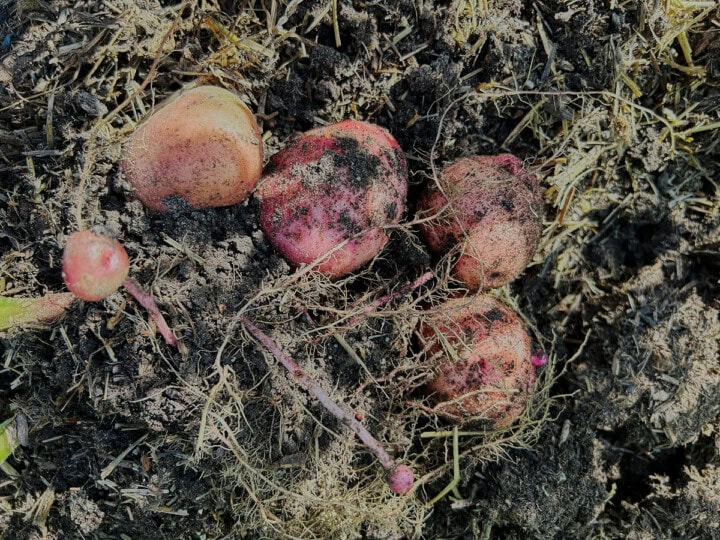

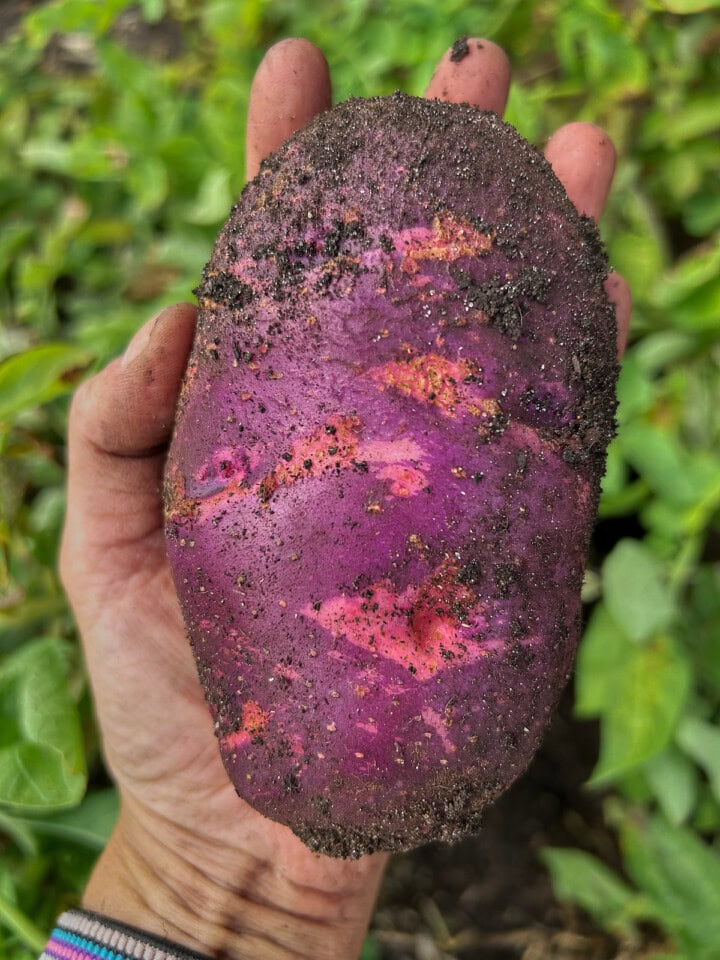



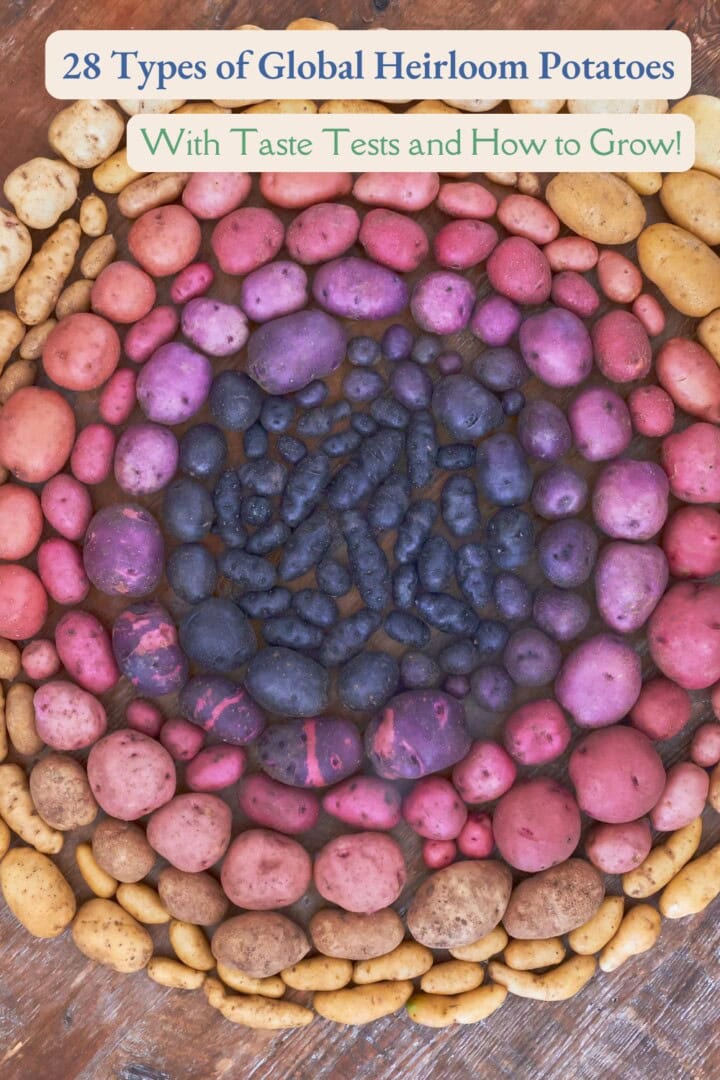
Potatoes are one of my absolute favorite crops to grow. They're easy to plant, they don't require much maintenance during the growing season, and they're truly like a treasure hunt to harvest. You never know what size of tubers you'll have, and how many you'll get. After a lifetime of gardening, it's still magical and exciting for me to grow and dig them up. In this post are 28 special heirloom varieties from around the world that have been saved and replanted for generations. I've grown and included them all here, with photos and details of each. And I've added the input of five taste testers to share how these varieties taste when roasted. And there's also information on how to grow them. I hope you'll grow some of these distinctive heirloom potatoes for yourself and your family. Enjoy these 28 Heirloom Potatoes to Grow with Taste Tests!
Note: All of the potatoes I've photographed in this post are those I've planted and grown in my own garden. You can have beauties like these yourself too! They're so easy to grow.

Jump to:
- 📜Potato history
- 🌿What are heirloom potatoes, and why grow them?
- 🛒Seed potatoes vs grocery store potatoes
- ⭐Regular vs pre-nuclear and nuclear seed potatoes
- 🌱Growing potatoes
- 🧺Harvesting potatoes
- 📦Storage / Dormancy
- 🥔The 28 heirloom potato varieties
- 1. Adirondack blue
- 2. All blue
- 3. All red (pre-nuclear)
- 4. Austrian crescent
- 5. Baltic rose
- 6. Caribe
- 7. Caribe (pre-nuclear)
- 8. Carola
- 9. Charlotte
- 10. Dark red norland
- 11. Désirée
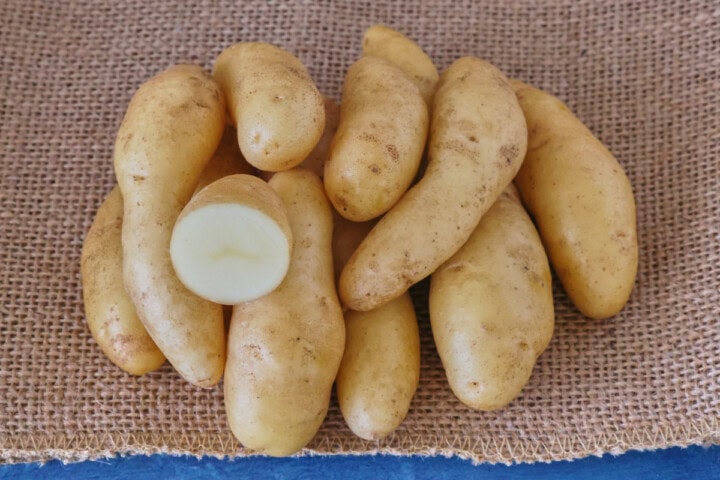
- 12. French fingerling
- 13. German butterball
- 14. Huckleberry gold
- 15. Kennebec
- 16. La ratte
- 17. Ozette (aka makah ozette)
- 18. Peanut (pre-nuclear)
- 19. Purple majesty
- 20. Purple Peruvian
- 21. Purple viking
- 22. Red pontiac
- 23. Red thumb (pre-nuclear)
- 24. Rose finn apple
- 25. Russet burbank
- 26. Russian banana
- 27. Sangre
- 28. Warba pink eye
- ❓Frequently asked questions
- 🪴Seed potato sources
- 📚Book resources
- 🌻More gardening posts you'll love
- ✏️Have you grown any of these potatoes?
📜Potato history
Potatoes originated thousands of years ago in the Andes in South America, near Lake Titicaca in Bolivia and Peru. This was an important crop for the Inca empire, as well as for other earlier and later societies.
European explorers brought potatoes back home in the 1500s, and by the late 18th century, this crop was an integral part of the local diet. Today, there are thousands of regional heirloom varieties that have survived and continue to be planted, each one with its own distinct characteristics.
🌿What are heirloom potatoes, and why grow them?
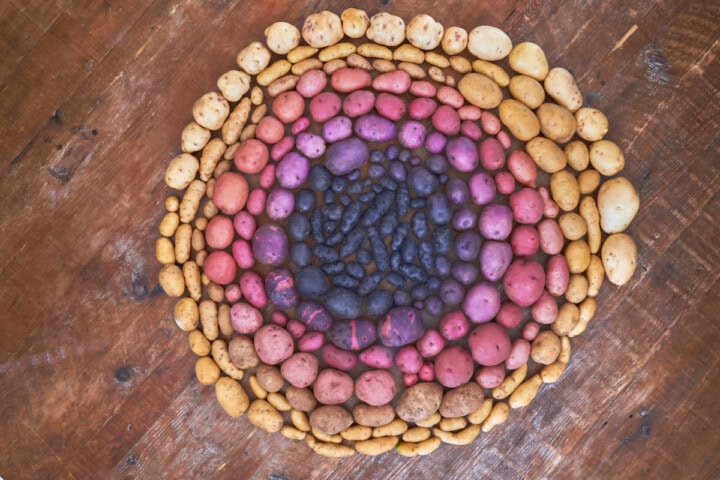
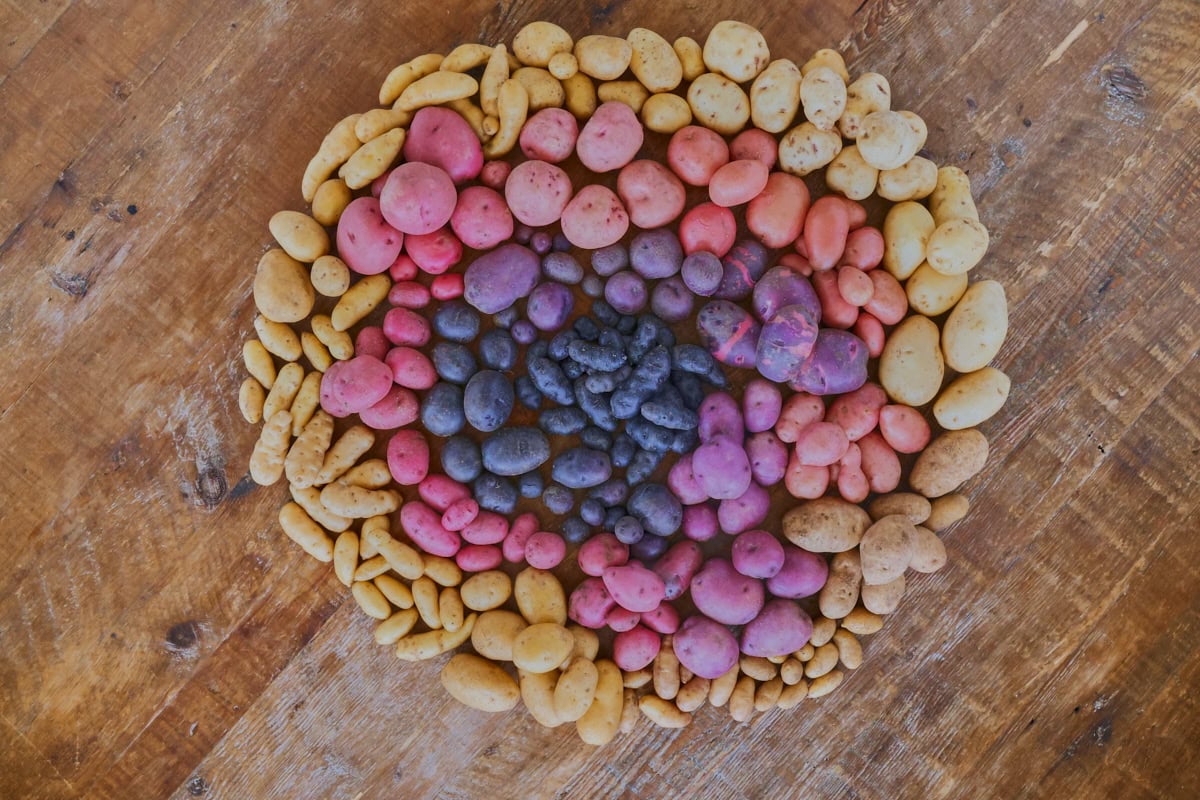
Heirloom potatoes are varieties that have been saved and passed down from one generation to the next. These special and distinct open-pollinated varieties have a huge range in sizes, flavors, colors, textures, and uses in the kitchen.
Heirloom potatoes are markedly different from those you can find in grocery stores. Some are firm and waxy, and are perfect for salads, soups, and stews. Others are fluffy, with the ideal texture for baking, mashing, and making fries. They have flavors that can range from mild to nutty to earthy, and each type has its own unique personality to enjoy.
🛒Seed potatoes vs grocery store potatoes
Seed potatoes are small potatoes that have been grown specifically to be planted. Please use seed potatoes that are certified to be disease-free, and look for those that will yield the characteristics of the type of potatoes that you'd like to grow.
Grocery store potatoes are often treated with growth inhibitors, and may carry viruses and soil-borne pathogens. And they come in a limited selection of varieties. If you'd like to choose the type of potatoes you want to grow, and to enjoy the wide array of flavors, colors, textures, and cooking possibilities, it's worth buying seed potatoes in the varieties you'd like to experience.
⭐Regular vs pre-nuclear and nuclear seed potatoes
I've grown a few seed potatoes in this post that were classified as pre-nuclear. These are varieties that have been created using tissue culture, and they're considered first-generation seed potatoes. As they haven't yet been grown in the soil, they haven't encountered viruses or bacterial problems. (However, this does not make the potatoes grown from them immune from diseases in the garden.) Pre-nuclear seed potatoes are more costly than normal ones, which have generally been grown for several generations. And nuclear potatoes are in-between, having been grown for just one generation.

Potatoes grown from pre-nuclear seedstock are generally expected to have a higher yield in the first year but smaller resulting tubers. This is because pre-nuclear seed potatoes start out smaller. From the second year on, saved potatoes from pre-nuclear seedstock should catch up in size.
Because I'd never grown pre-nuclear seed potatoes, I wanted to compare them with normal seed potatoes of the same variety. So I've included the Caribe potato here in both regular and pre-nuclear variations, and classified them as different varieties just to be able to assess the differences between them. Please check out the caribe potato descriptions below, both regular (#6) and pre-nuclear (#7) to see how each of them has fared.
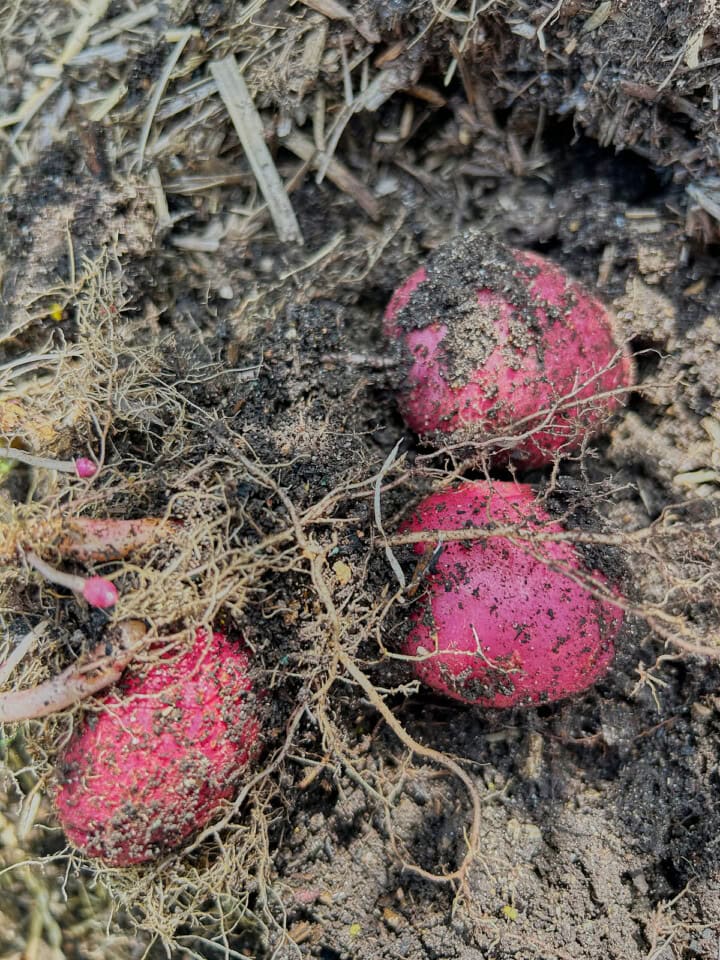
Also in this post, I've grown the all-red (#3), peanut (#18), and red thumb (#23) varieties from pre-nuclear seed potatoes. I haven't encountered any pests or diseases at all in this growing season. Please keep reading to find out how you can grow yours with the best chances of a large and healthy harvest!
🌱Growing potatoes
Preparing seed potatoes with chitting
Please use certified seed potatoes whenever possible rather than store-bought potatoes, since seed potatoes are produced and inspected to reduce viruses and soilborne diseases.
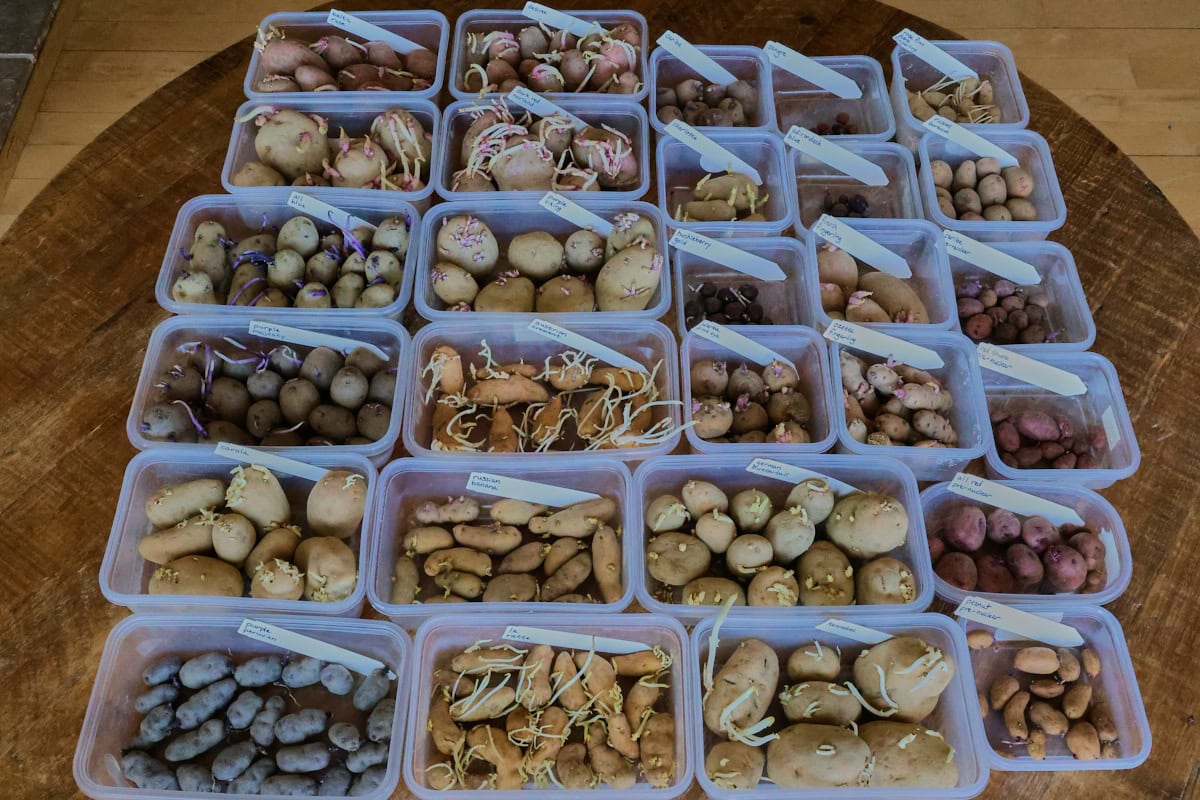
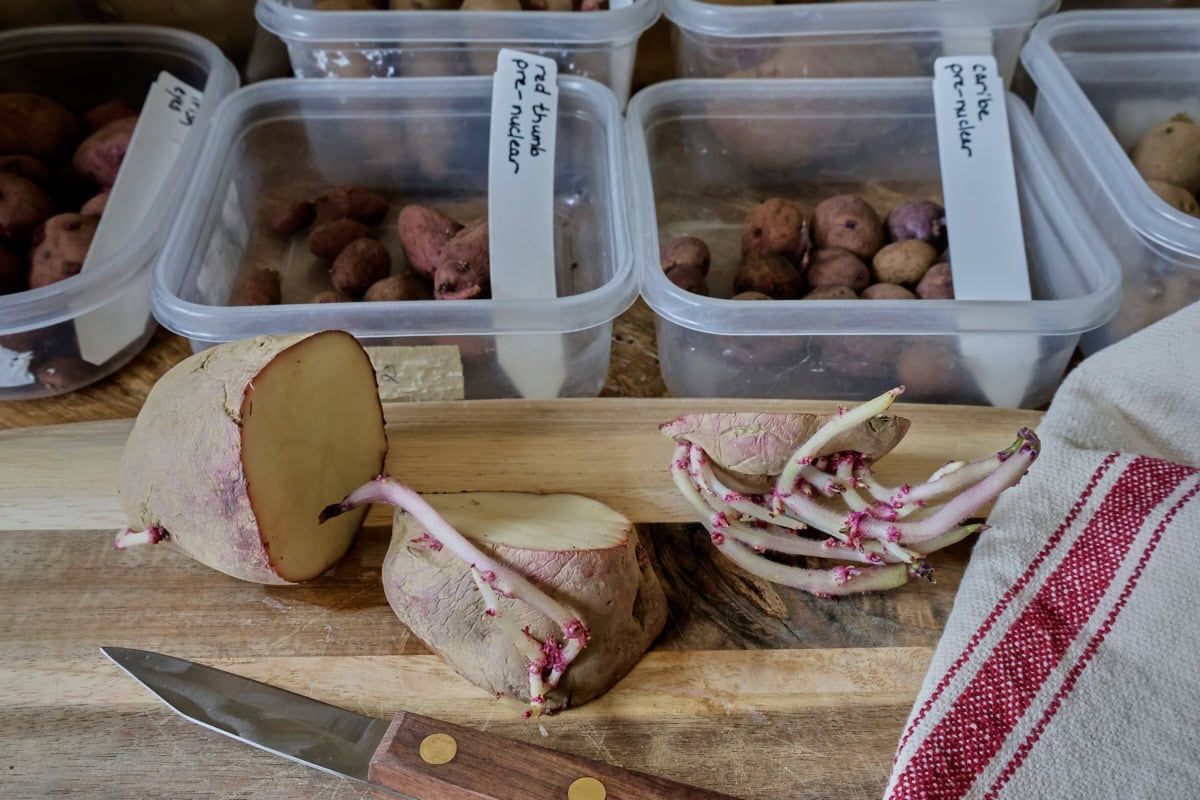
About a week or two before planting your seed potatoes, it's a good idea to "chit" them. This involves placing them in a cool, bright spot in order to encourage the formation of short and strong sprouts.
Additionally, it's helpful to cut the larger seed potatoes into pieces, leaving one or two healthy eyes on each piece. This will prevent the seed potatoes from having too many competing stems that could weaken the plant. After cutting the pieces, allow them to dry for one to two days so the cut surfaces will form a callus. This will help to prevent them from rotting in the cool spring soil. On the other hand, if the seed potatoes are small, it's fine to plant them whole.
Planting in-ground vs in containers
Potatoes can grow well either when planted in the ground or in large containers. In the ground, they generally have higher yields and require less watering. If desired, you can also grow potatoes in containers, grow bags, or raised beds. Please use a container with a minimum depth of 12 to 16 inches (30 to 40 centimeters), and use soil with good drainage. You'll also need to water more frequently, since containers dry out more quickly than garden soil does.
Planting timing
Potatoes prefer to be planted in cool weather. The optimal time is about two to four weeks before the last spring frost. They grow well during spring and early summer, and can slow down if summer temperatures stay above 85°F (29°C).
Early potato varieties ripen quickly to be harvested and eaten soon afterward, while midseason and late season potatoes will take longer to ripen. The latter generally have higher yields and longer storage times.
Soil preparation
For growing potatoes, it's important to have soil that's loose, well-draining, and amended with organic compost prior to planting. Potato tubers grow in size while underground, so they need room to expand. Compacted soils can result in small or misshapen potatoes.
For optimal results, add several inches of finished compost prior to planting to improve soil structure and increase water-holding capacity. Potatoes can tolerate a wide range of pH from about 5.0 to 7.5, with acidic soils on the lower end and alkaline soils above the neutral point of 7.0. In general, soil with great structure and a good amount of organic matter should work well.
Crop rotation
It's also important to grow potatoes in a good regimen of crop rotation, moving crop families from one bed to another each year to prevent a buildup of crop family-specific pests and diseases. If possible, try to avoid repeating the same crop families within the same bed for at least three to four years.

Plant spacing
Potatoes grow well when given adequate spacing to improve airflow, reduce likelihood of disease, and give the tubers enough room to increase in size. Typical in-ground potato plant spacing recommendations are about 10 to 12 inches (25 to 30 centimeters) apart in rows that are 24 to 30 inches (60 to 75 centimeters) apart.
If growing your potatoes in containers, please try to stay consistent with the above recommendations, with about 1 plant per 3 to 5 gallons (11 to 19 liters) of soil.
Determinate potato varieties are generally more compact, since they set their tubers close to the planted seed potato. So determinate plants can tolerate slightly closer spacing within the above recommended range. Indeterminate potato varieties, on the other hand, tend to grow taller and continue to form tubers along buried sections of stems. So indeterminate potato plants benefit from a bit more spacing and deeper soil to accommodate larger yields.

Planting depth
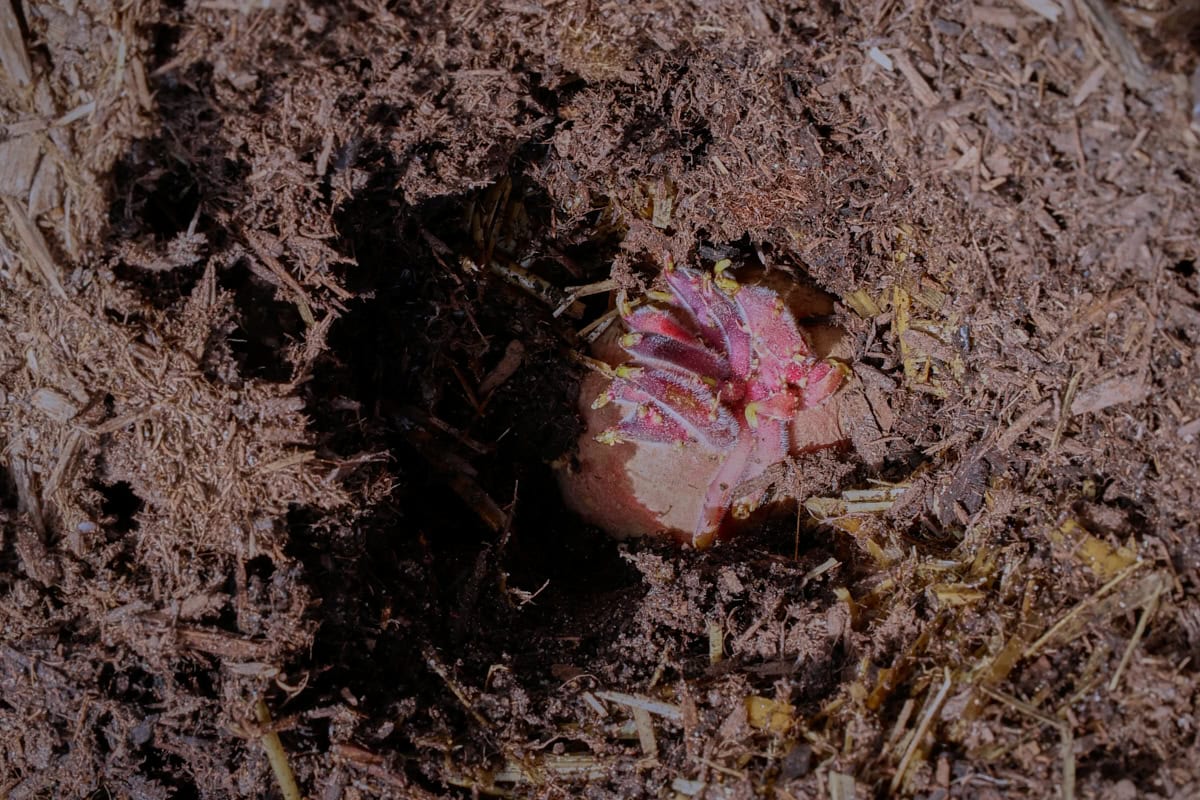
Plant seed potatoes and/or chitted pieces at a depth of about 3 to 4 inches (7 to 10 centimeters) in loose, well-draining, organically-amended soil with their eyes and sprouts facing upward. It's important to plant deeply enough to avoid exposing the tubers to sunlight. This can cause greening. (Please don't eat any portion of a potato that has become green. This generally indicates an increase in glycoalkaloids, which can make you ill if you eat them.) And seed potatoes planted too deeply can cause slow emergence from the soil. So it's helpful to plant within the above recommended depth range.

Hilling soil around the plants
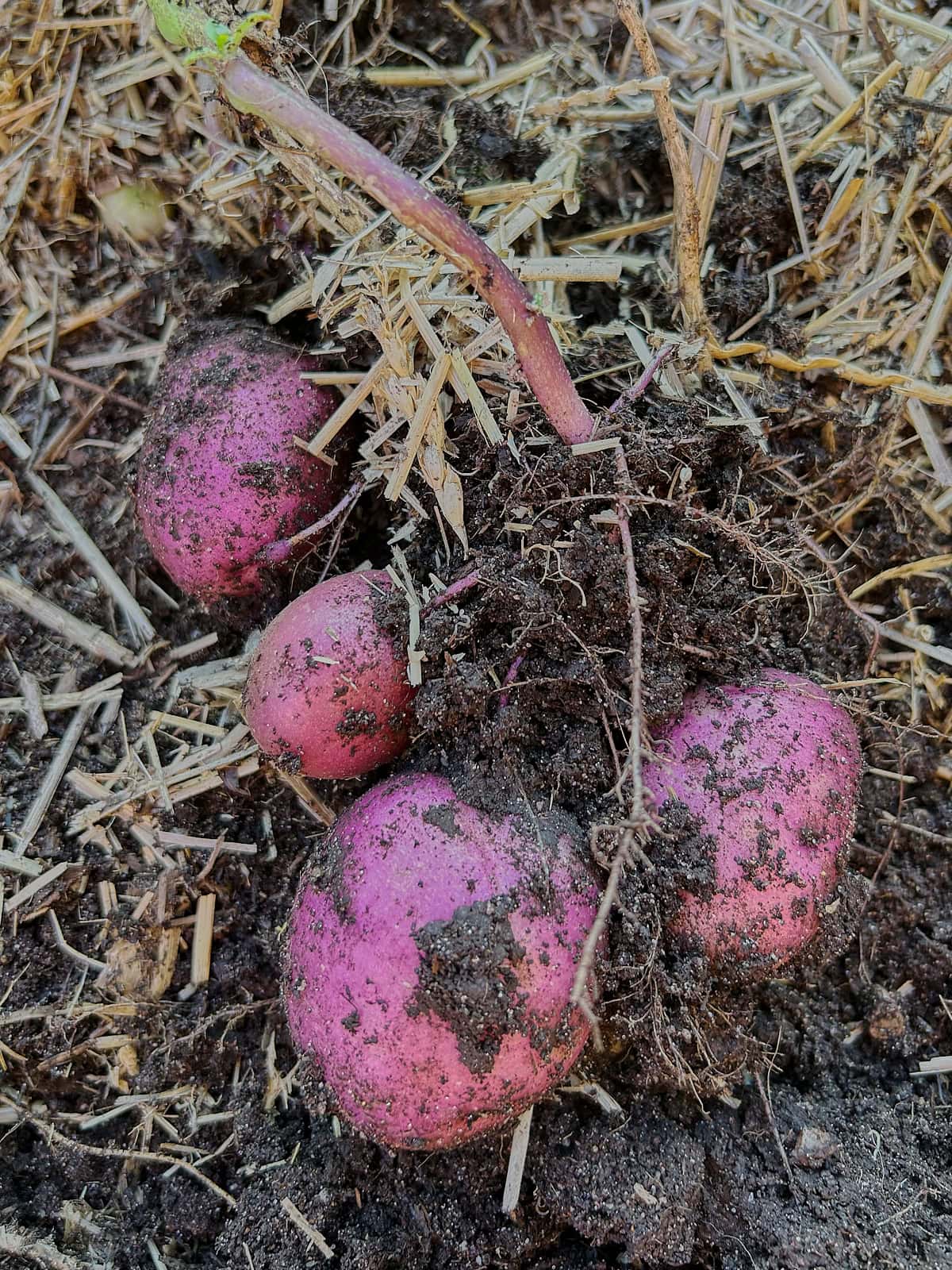
When the stems of your potato plants reach 6 to 8 inches (15 to 20 centimeters) tall, it's helpful to gently hill or mound soil or compost around the stems. This allows new potatoes to form where the stem is buried in the soil. Make sure to keep the top leaves exposed when you hill up the soil. Repeat this process once or twice during the growing season to maximize the potato tuber formation along the vertical stems and increase your yield.
Hilling the potato plants also prevents the tubers from being exposed to light, which can cause greening. (Please don't eat parts of potatoes that are green, as they're slightly toxic.) It's especially helpful to do hilling for indeterminate potato varieties, which continue to set tubers upward along stems that are below the soil level. Determinate potato varieties set fewer layers of tubers, and they need less repeated hilling, although it's still important to protect the tubers from exposure to light.
Pests and diseases
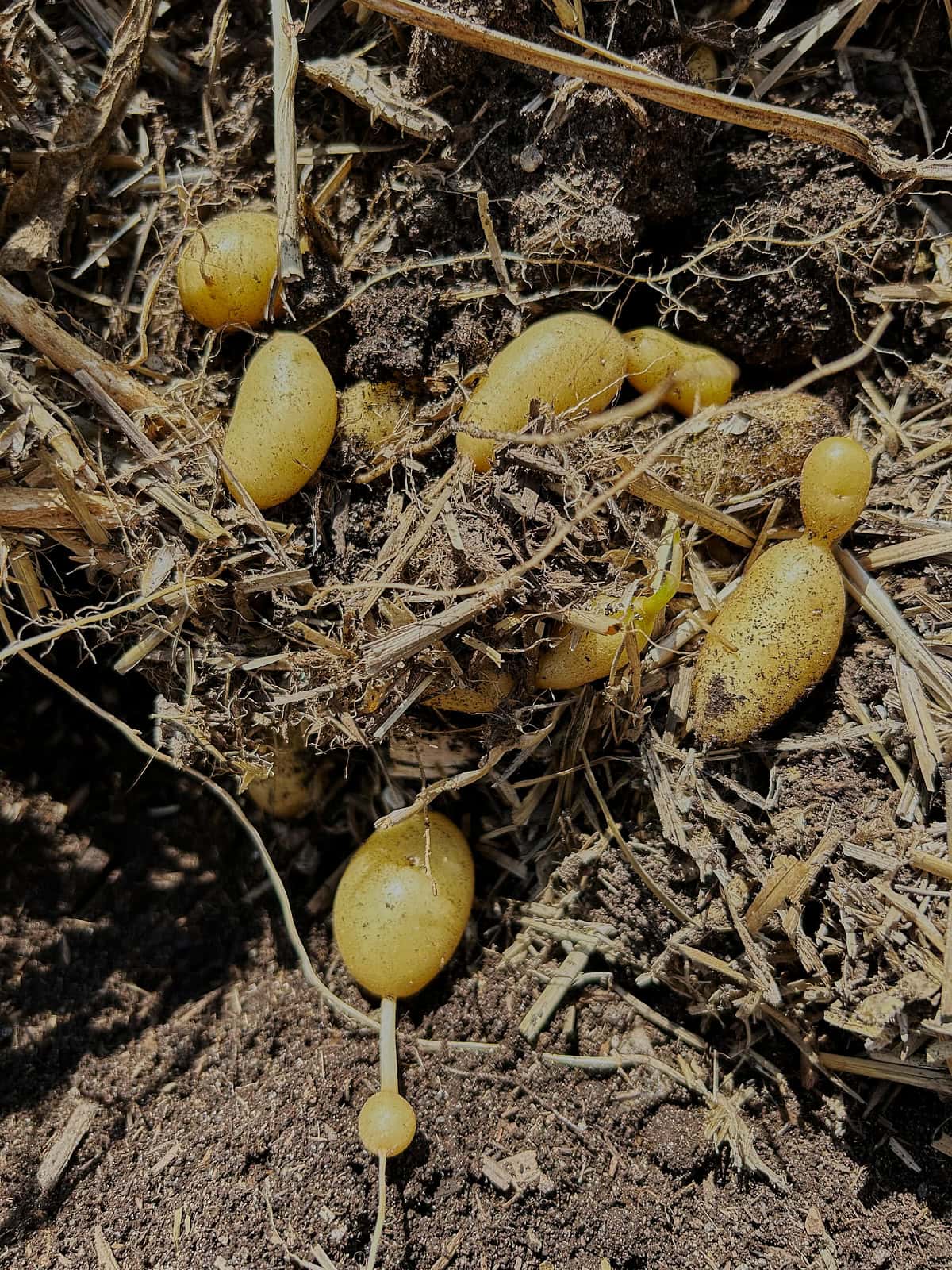
While potatoes are fairly easy to grow, they can be affected by various pests and diseases that can be a threat to this and other members of the nightshade family. (This crop family is also called Solanaceae, and in addition to potatoes, it also includes tomatoes, peppers, and eggplant among others.)
The most common problems that can affect potatoes and other nightshades include fungal diseases such as early and late blight, soil-borne issues like common scab and blackleg, and insects like Colorado potato beetles, flea beetles, and aphids. Many of these issues can arise from infected seed potatoes or from buildup in the soil.
This is one of the reasons that crop rotation is so important. It's also helpful to give the plants enough space for good airflow, and to grow in loose, well-draining, organically-amended soil. And it's crucial to use seed potatoes that are certified to be disease-free.
If you have any infected foliage, remove it immediately, and either use row covers to prevent insect infestations, or remove the insects by hand. It's important to have good organic agricultural practices like healthy soil, clean seed potatoes, and crop rotation rather than using chemicals.
Planting season length
There are differences between the US-based and UK-based potato season timing classifications. Here are some general rules of thumb for the naming of the potato growing seasons based on timing in both systems, as well as a range of days to maturity from the planting date.
| US term | General days to maturity |
| Early | 60-80 |
| Midseason | 80-100 |
| Late | 100+ |
| UK term | General days to maturity |
| First early | 70-85 |
| Second early | 85-100 |
| Early maincrop | 100-115 |
| Maincrop | 115-150+ |

🧺Harvesting potatoes
There are two general stages of potato harvesting. You can dig up "new" potatoes about two to three weeks after they flower. At this stage, the potatoes are small and the skins are still delicate and thin. And for full-sized potatoes, it's best to wait until the vines start to become yellow and die back naturally. This signals that the tubers have reached their final size and that the skins have set.
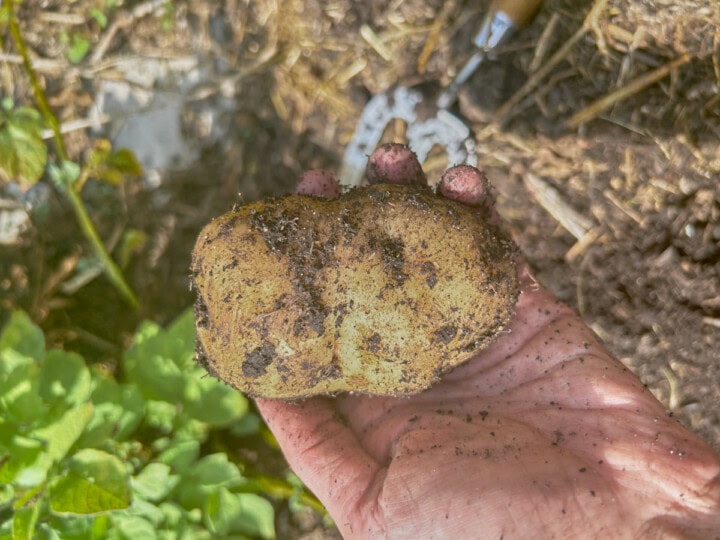
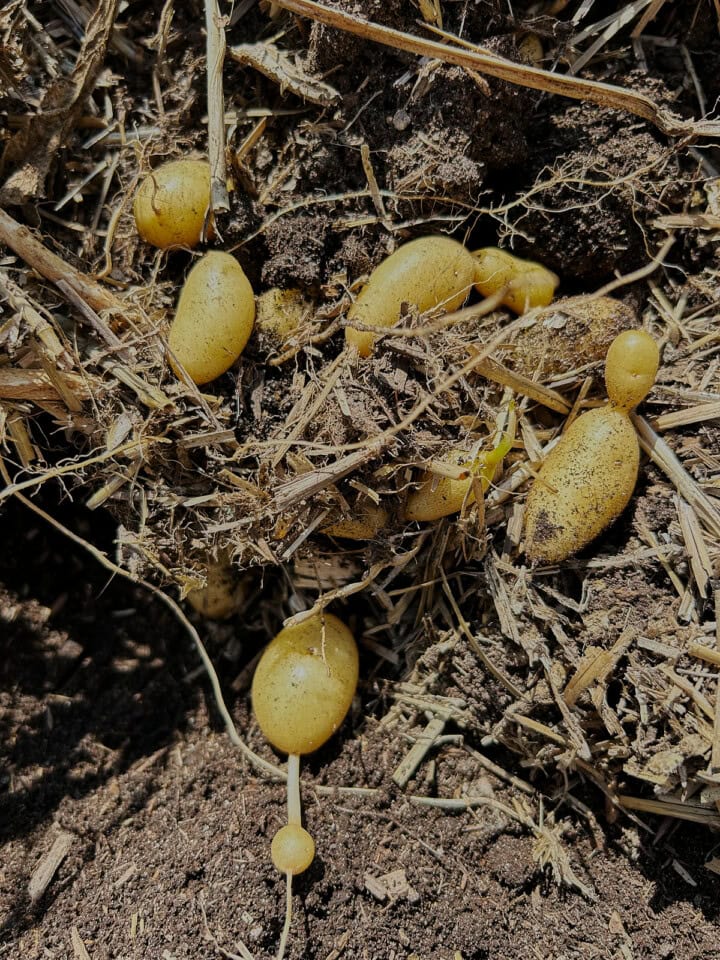
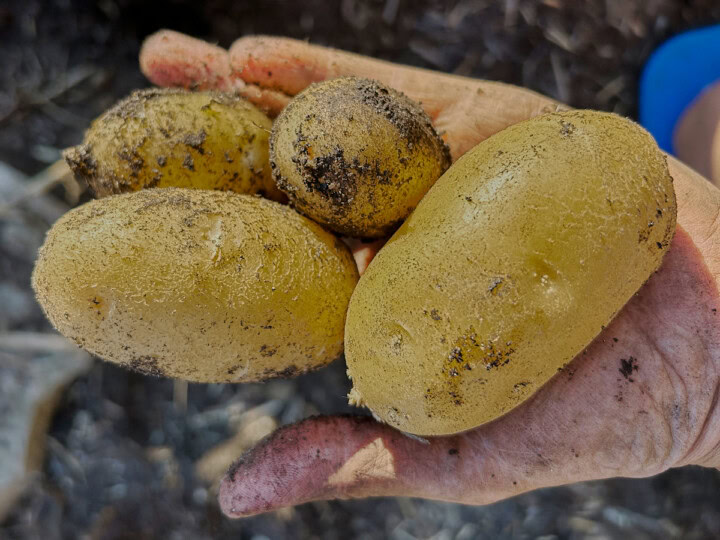
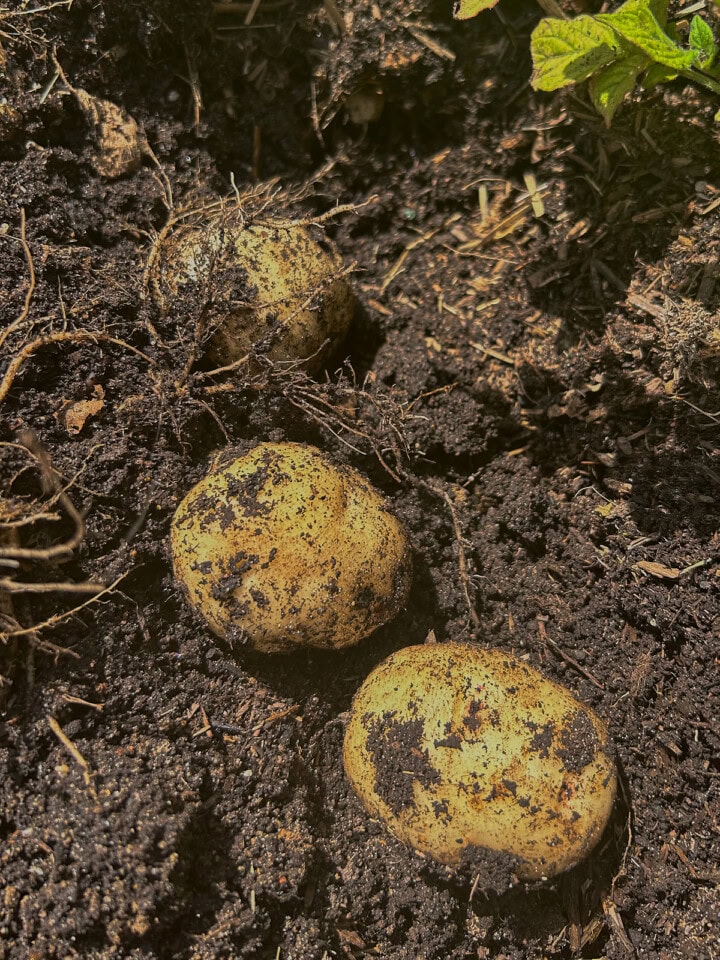
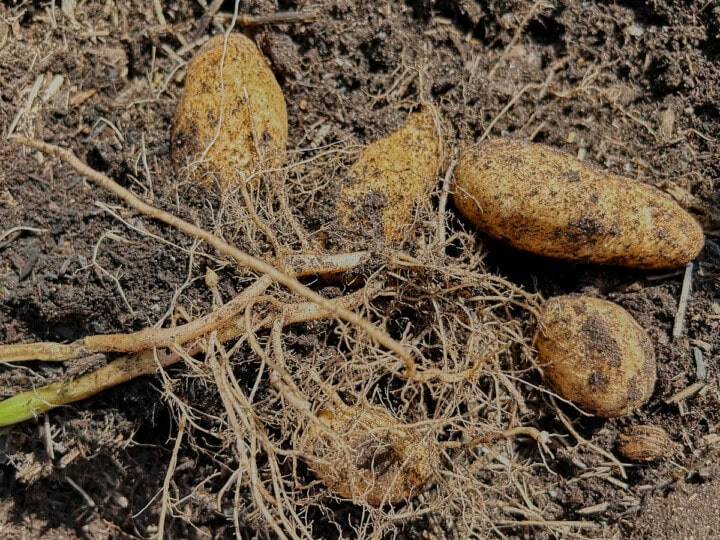
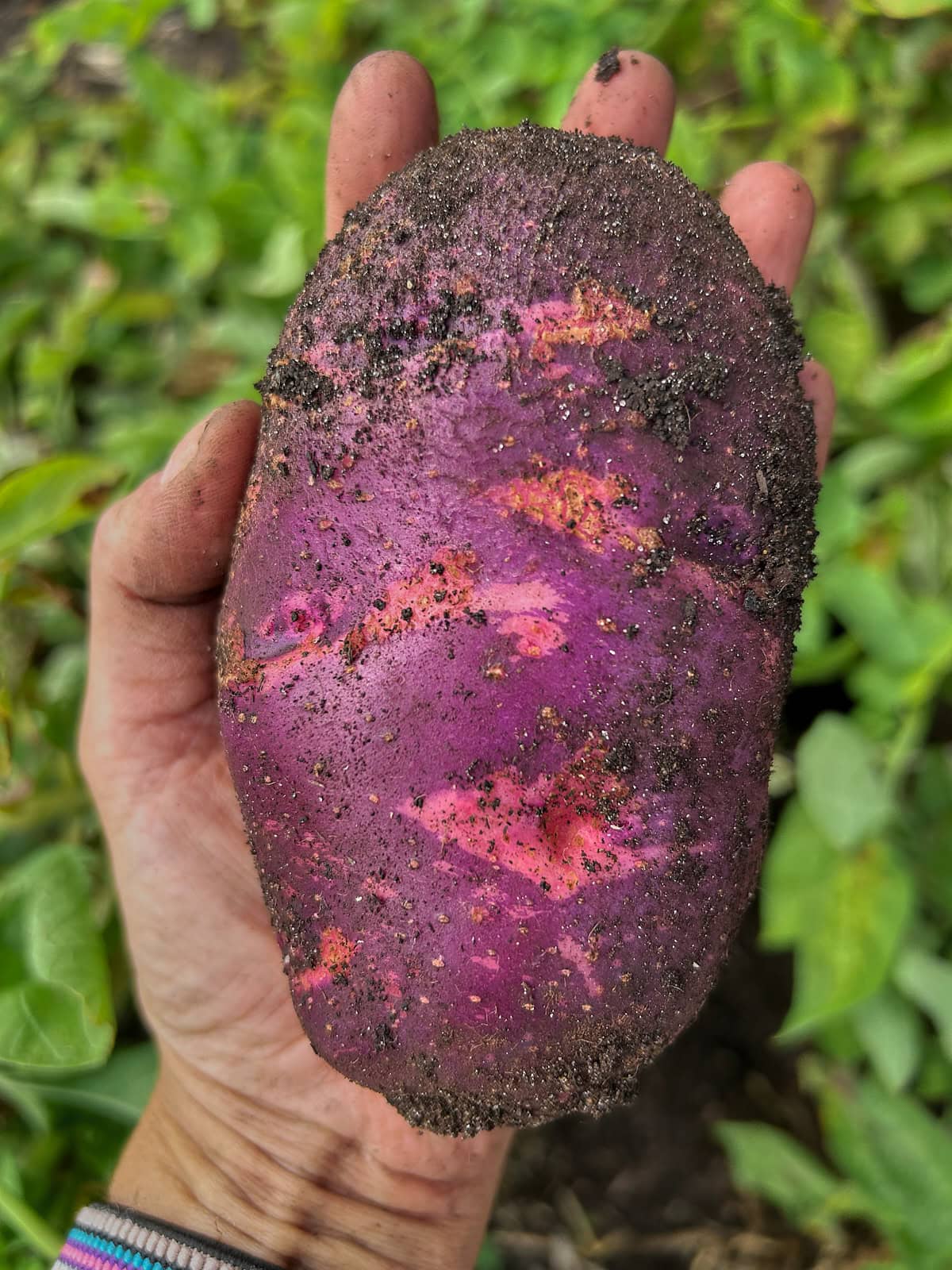
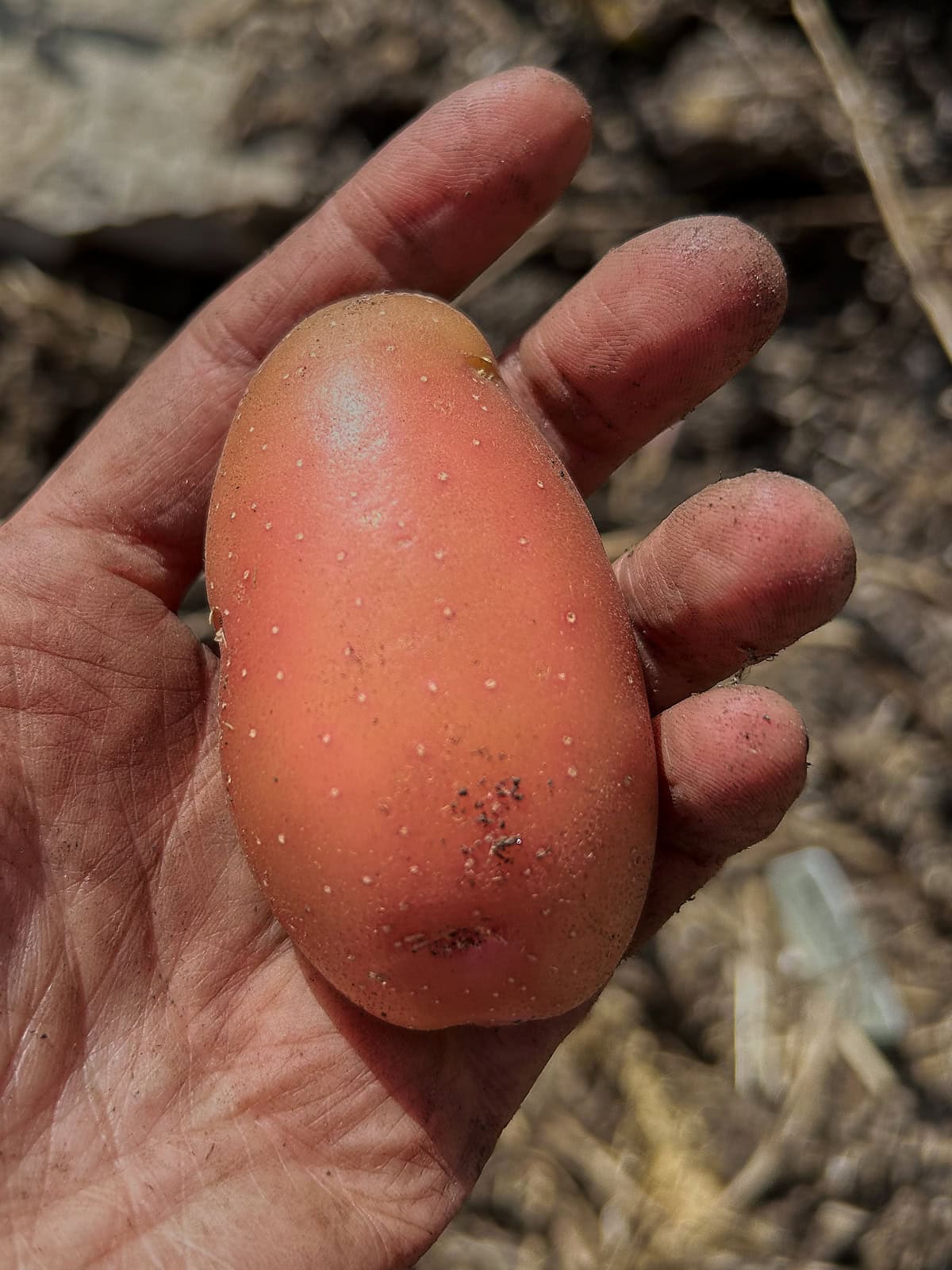
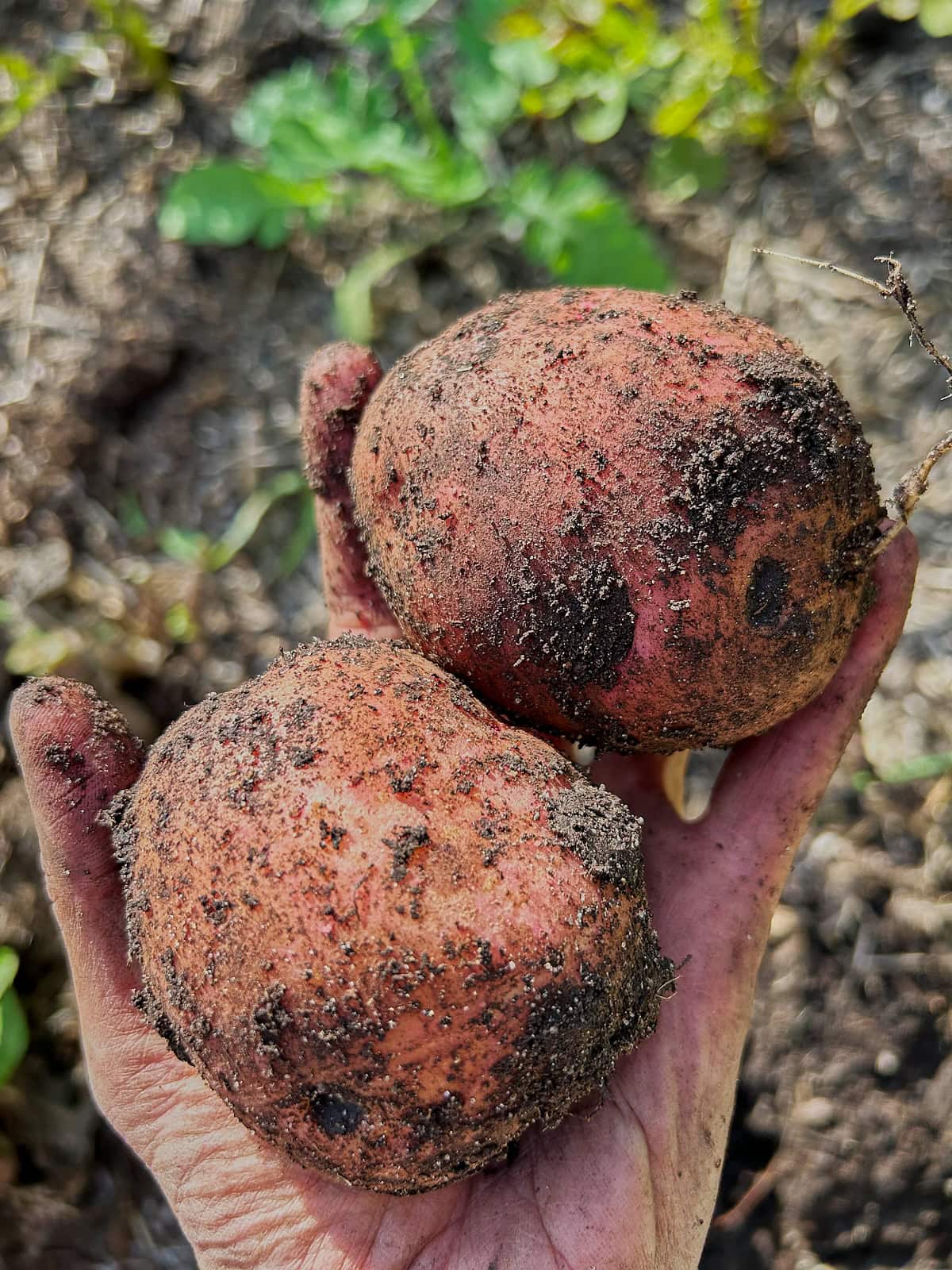
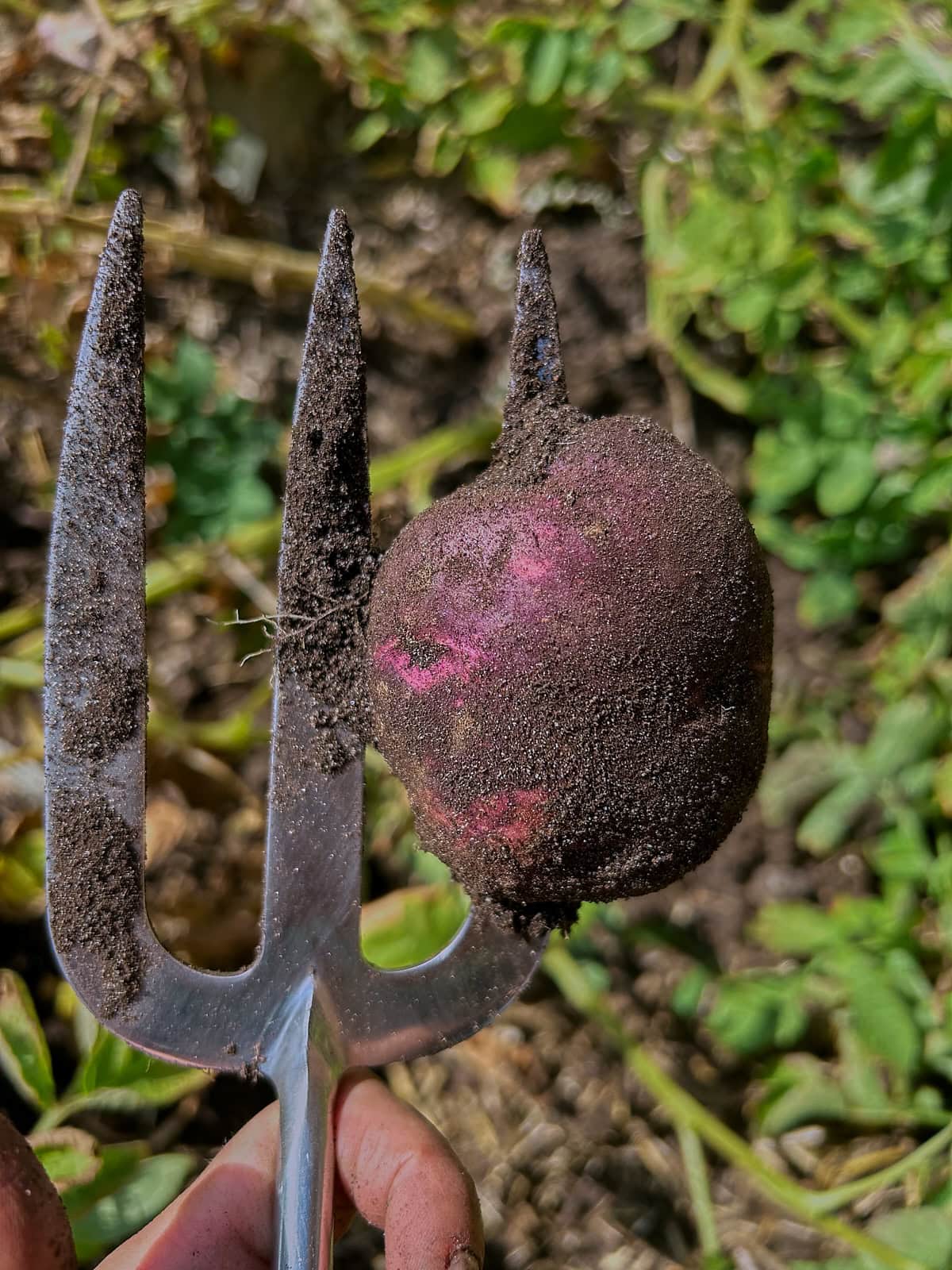
To harvest, carefully loosen the soil with a garden fork or shovel 12 to 18 inches (30 to 45 centimeters) away from the stem of the plant. You want to avoid doing what I did in the photo below, despite trying to be careful!
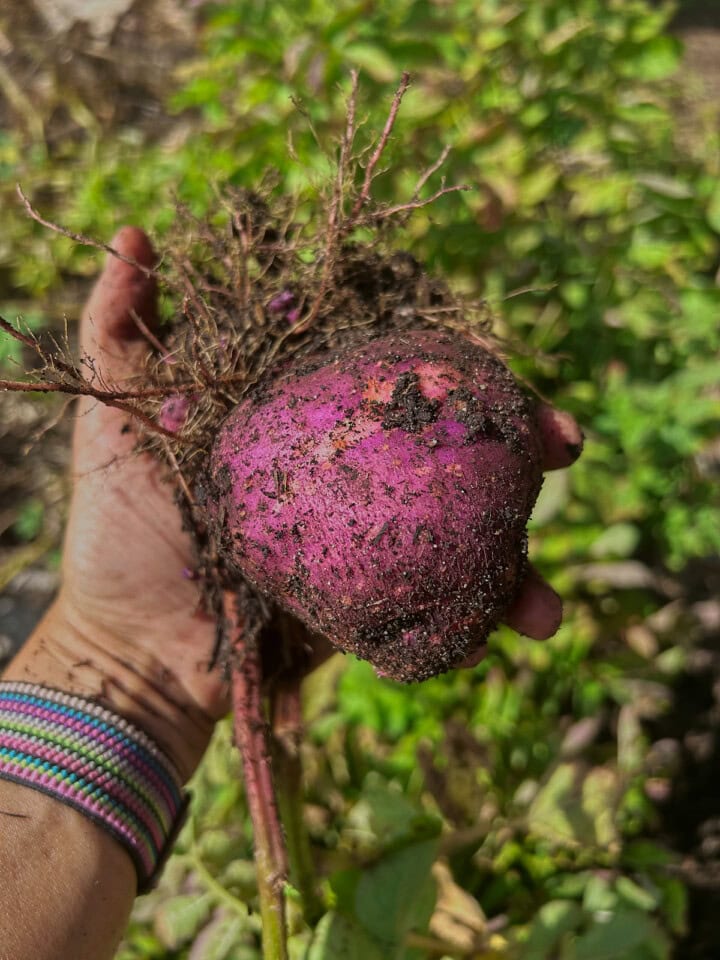
Lift the soil carefully with your tool of choice, and then gather the potatoes by hand. This is such a special moment in the garden that I always treasure. It's so exciting to reveal the harvest! Rather than washing the potatoes right away, brush off the loose soil. Then let the potatoes cure for about seven to ten days in a dark, well-ventilated space to allow the skins to toughen and for small cuts to heal. For any that you may have inadvertently speared, like the one I did below, these are best eaten soon after harvesting.
After curing, move the potatoes to storage in a cool place per the storage section below. As for freshly-dug "new" potatoes, however, you can enjoy these right away.
📦Storage / Dormancy
Potato storage following the harvest can differ greatly from one variety to another. Early potatoes are best eaten fresh, and they tend to sprout quickly. Late season varieties, on the other hand, can be stored for months before they break dormancy and begin to sprout.
Depending upon the potato variety, storage timing can vary from around 1 to 6 months after the harvest. The ideal storage conditions for storing harvested potatoes are a cool and dark environment, ideally between 45 to 50°F (7 to 10°C) with relative humidity of around 90-95%.
🥔The 28 heirloom potato varieties
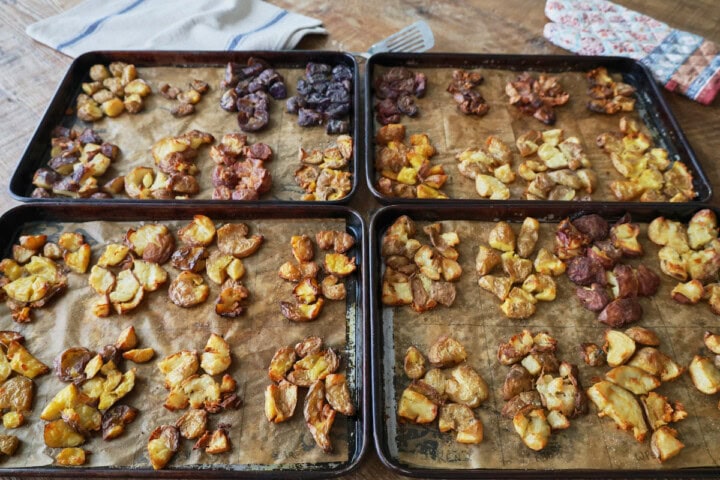
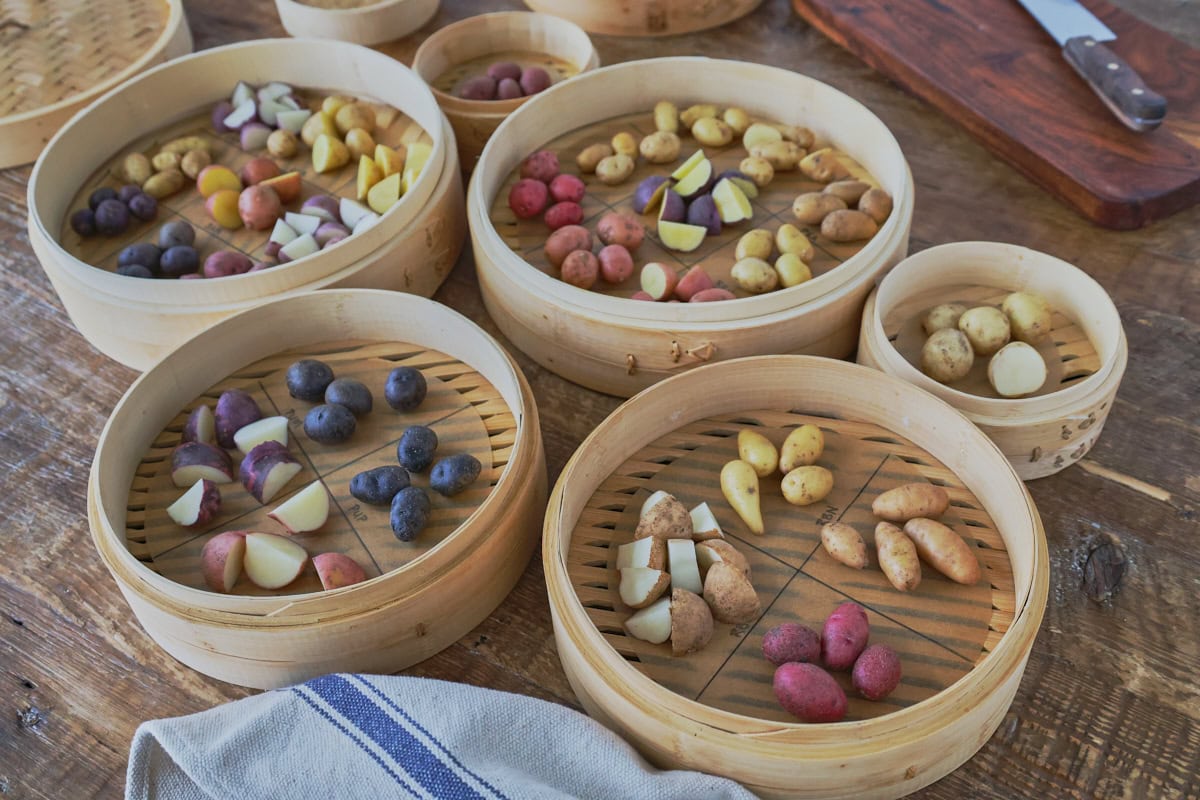
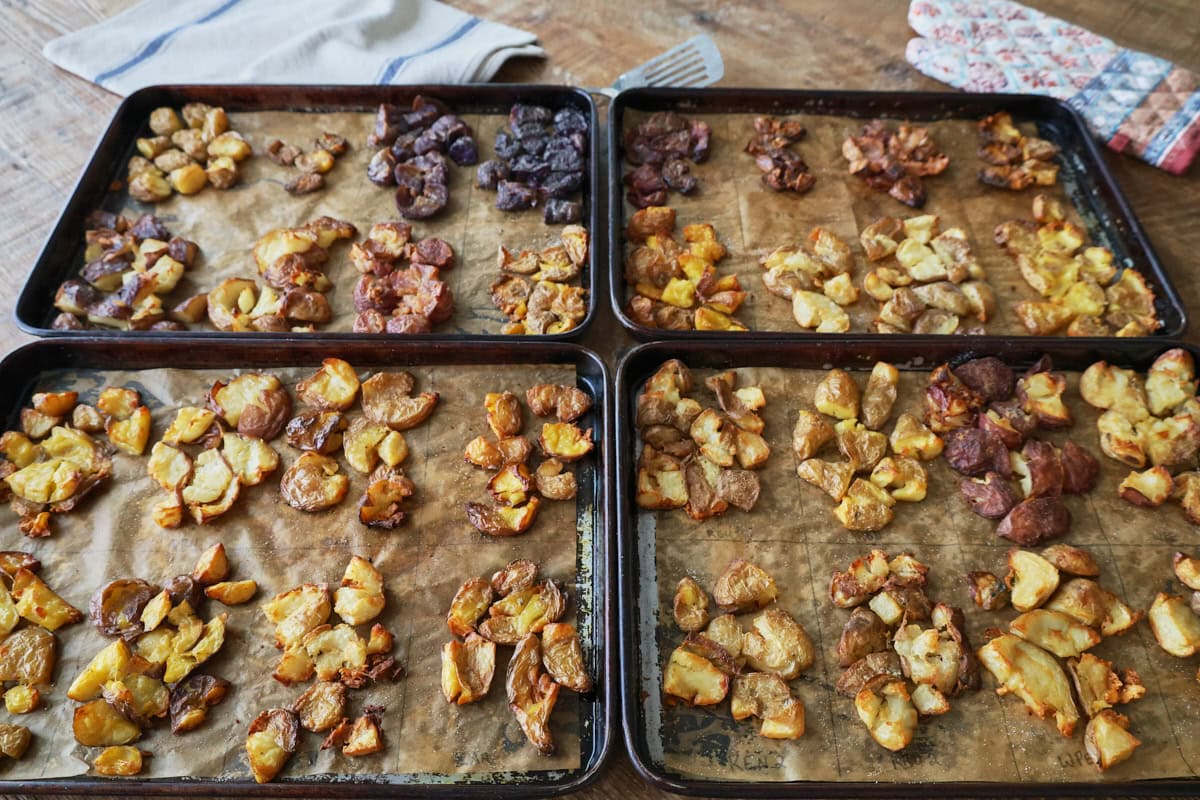
Here they are, listed individually below. I hope you enjoy reading about these varieties as much as my family and I have enjoyed growing, harvesting, and tasting them! For tasting note reference, our 5 tasters have enjoyed the potatoes after they'd been steamed, smashed, drizzled with olive oil and salt, and roasted.
Note: Since I'm US-based, when I mention that a potato is good for making "chips", this is the UK equivalent of "crisps." Similarly, what I call "fries" is the UK term for "chips." It can be confusing, but I find these nomenclature differences to be fascinating as well.
1. Adirondack blue

Quick facts
| Origin | Time to maturity | Yield | Size, shape |
| Cornell University | Early to midseason, 85 to 95 days | Medium-high | Medium, round to oval |
Culinary profile
| Description | Texture, flavor | Best uses | Storage |
| Blue skin and flesh, holds color when cooked | Moist, firm, slightly waxy, mildly earthy | Bake, chips, mash, roast, salads, steam | Moderate, 2 to 3 months |
Our taste testers' notes
Earthy, thin crunchy skin, creamy, buttery, crisp, delicious!
2. All blue

Quick facts
| Origin | Time to maturity | Yield | Size, shape |
| Europe | Mid to late season, 95 to 110 days | Medium | Medium, round to oblong |
Culinary profile
| Description | Texture, flavor | Best uses | Storage |
| Purple-blue skin and flesh, high antioxidant level | Slightly mealy, moist, earthy | Bake, chips, roast, steam, sauté | Good, 2 to 3 months |
Our taste testers' notes
Really crisp and great.
3. All red (pre-nuclear)

Quick facts
| Origin | Time to maturity | Yield | Size, shape |
| Robert Lobitz of Paynesville, Minnesota, US | Late midseason, 85 to 100 days | Medium | Medium, round to oval |
Culinary profile
| Description | Texture, flavor | Best uses | Storage |
| Red skin, pinkish white flesh | Moist, firm, mildly sweet, classic potato flavor | Boil, roast, salads, sauté | Good |
Our taste testers' notes
Old soil, savory, mid-creamy, vintage, earthy, chewy, crisp, so good.
4. Austrian crescent

Quick facts
| Origin | Time to maturity | Yield | Size, shape |
| Austria | Late season, 100 to 120 days | High | Fingerling, curved and slender |
Culinary profile
| Description | Texture, flavor | Best uses | Storage |
| Yellow skin, light yellow flesh | Waxy, firm | Boil, roast, salads, sauté, steam | Good, 3 to 4 months |
Our taste testers' notes
Tastes like a regular russet type potato; good, firm and yet crumbly chew; vintage heirloom flavor, delicious, mild; super crisp, captivating, tangy, buttery, nice texture.
5. Baltic rose

Quick facts
| Origin | Time to maturity | Yield | Size, shape |
| Northern Europe | Midseason, 90 days | Medium to high | Medium, oval |
Culinary profile
| Description | Texture, flavor | Best uses | Storage |
| Pink skin, yellow flesh | Moist, smooth, buttery, firm | Boil, roast, salads | Good |
Our taste testers' notes
Slightly buttery, mild, really great tanginess, smooth, nice flavor, buttery, really soft, creamy.
6. Caribe
I've included this caribe variety in 2 separate listings, both this one and in #7 below, as if they're different types. I wanted to compare the regular seed potatoes and the pre-nuclear versions of this potato to understand the differences in the harvest.
Pre-nuclear seed potatoes, like the ones in #7 below, have been created by tissue culture, and have not yet had a generation planted in the soil. So they're less prone to disease, and they generally a have a higher yield than regular seed potatoes. In my trials, as expected, my harvest of the pre-nuclear caribe potatoes yielded smaller potatoes. But unlike expectations, I didn't have a markedly larger harvest. I only had this one variety to compare in both seed potato types. And I wasn't particularly exacting in planting the same weight of each. So I'd like to do more trials to assess this more rigorously in the future. But what a fun experience this was!
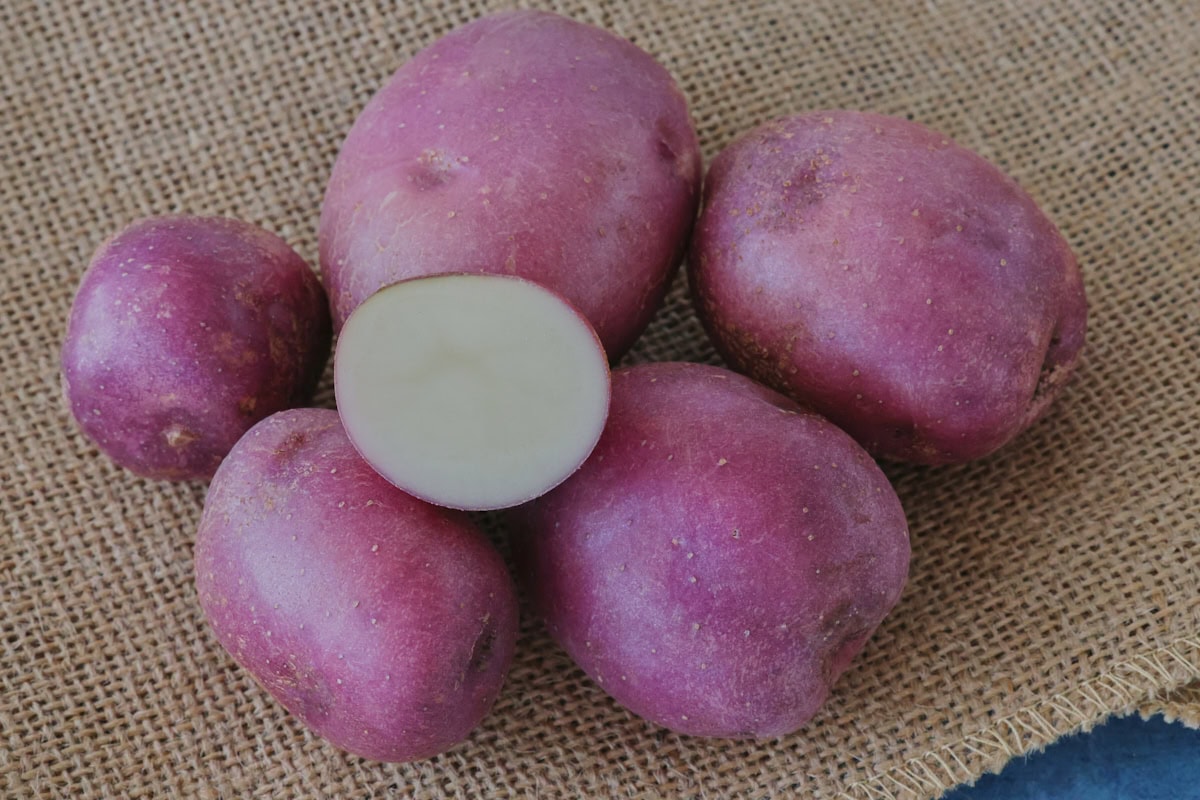
Quick facts
| Origin | Time to maturity | Yield | Size, shape |
| New Brunswick, Canada | Early to midseason, 80 to 90 days | Medium | Medium, round to oval |
Culinary profile
| Description | Texture, flavor | Best uses | Storage |
| Smooth purple skin, white flesh | Firm, moist, mild | Bake, boil, chips, roast, salad | Short to good, 2 months |
Our taste testers' notes
Tastes good, smooth texture, crunchy skin, naturally savory, mid-creaminess; creamy and mild, nutty, tangy, awesome!
7. Caribe (pre-nuclear)
And here's the pre-nuclear version of the same caribe potato above. While the potato facts and culinary profile are the same for both, it's interesting to note that there were slight differences in our taste-testers' notes between the two types.

Quick facts
| Origin | Time to maturity | Yield | Size, shape |
| New Brunswick, Canada | Early to midseason, 80 to 90 days | Medium | Medium, round to oval |
Culinary profile
| Description | Texture, flavor | Best uses | Storage |
| Smooth purple skin, white flesh | Firm, moist, mild | Bake, boil, chips, roast, salad | Short to good, 2 months |
Our taste testers' notes
Smooth, smoky, waxy, firm, lingering earthy flavor; delicious tang, nice, chewy, crisp; more structure, denser, smooth, mild; nice toasty flavor.
8. Carola
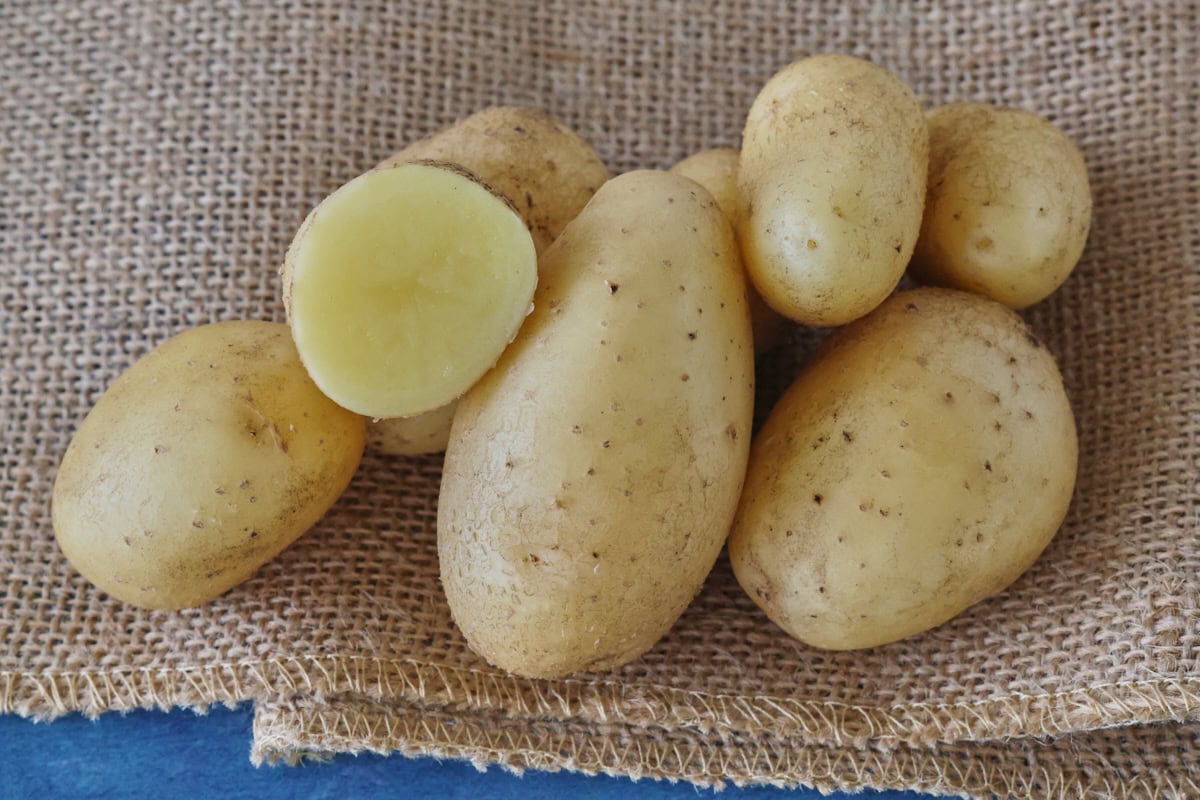
Quick facts
| Origin | Time to maturity | Yield | Size, shape |
| Germany | Midseason, 90 to 100 days | Medium | Oblong |
Culinary profile
| Description | Texture, flavor | Best uses | Storage |
| Yellow skin and flesh | Moist, firm, creamy, smooth, buttery | Bake, boil, mash, roast, scallop, steam | Good |
Our taste testers' notes
Tastes like a russet; good, nice texture; super creamy, salty, buttery, crisp skin; amazing, perfect balance of tang, smoothness, chew, and crispiness; brighter but mild flavor; really nice taste.
9. Charlotte

Quick facts
| Origin | Time to maturity | Yield | Size, shape |
| France | Early to midseason, 80 to 95 days | Medium | Small, oval |
Culinary profile
| Description | Texture, flavor | Best uses | Storage |
| Tan skin, yellow flesh | Firm, waxy | Boil, roast, salads, steam | Medium |
Our taste testers' notes
Good texture; firm, waxy, chewy, crisp, refined, elegant vintage potato flavor; creamy, mild; flavorful, a little tangy.
10. Dark red norland

Quick facts
| Origin | Time to maturity | Yield | Size, shape |
| North Dakota | Early season, 70 to 85 days | Medium | Medium, round |
Culinary profile
| Description | Texture, flavor | Best uses | Storage |
| Red skin, white flesh | Moist, firm, mild | Bake, boil, roast, steam | Good |
Our taste testers' notes
Chewy, aged wood, sweet, mild, delicious; so creamy, mild, excellent smooth flavor!
11. Désirée
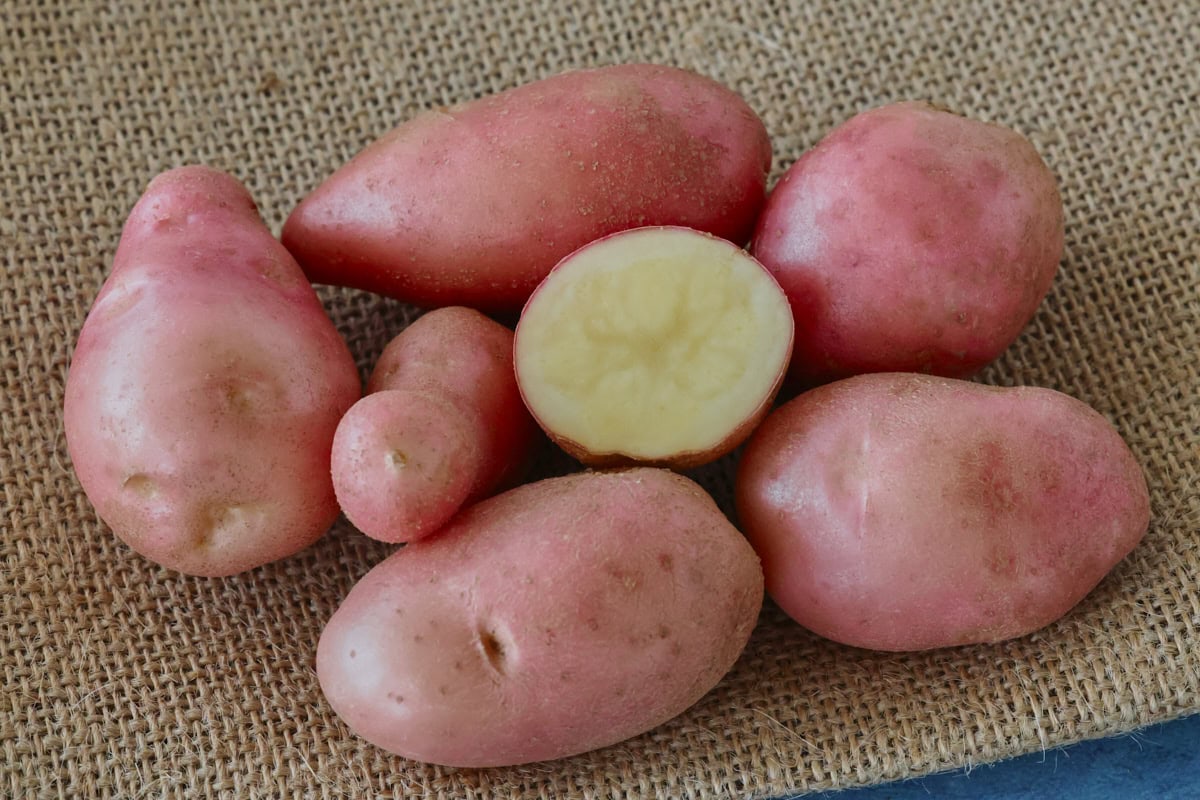
Quick facts
| Origin | Time to maturity | Yield | Size, shape |
| Netherlands | Late midseason, 95 to 110 days | High | Medium to large, oval to long |
Culinary profile
| Description | Texture, flavor | Best uses | Storage |
| Smooth pink skin, light yellow flesh | Slightly firm, creamy, nutty | Bake, boil, chips, mash, roast, salads, sauté | Good, 3 to 5 months |
Our taste testers' notes
Firm yet creamy, rusty, tannic; wild mushrooms, almonds, fantastic; earthy, nutty, complex, delicious caramelization and crispness.
12. French fingerling
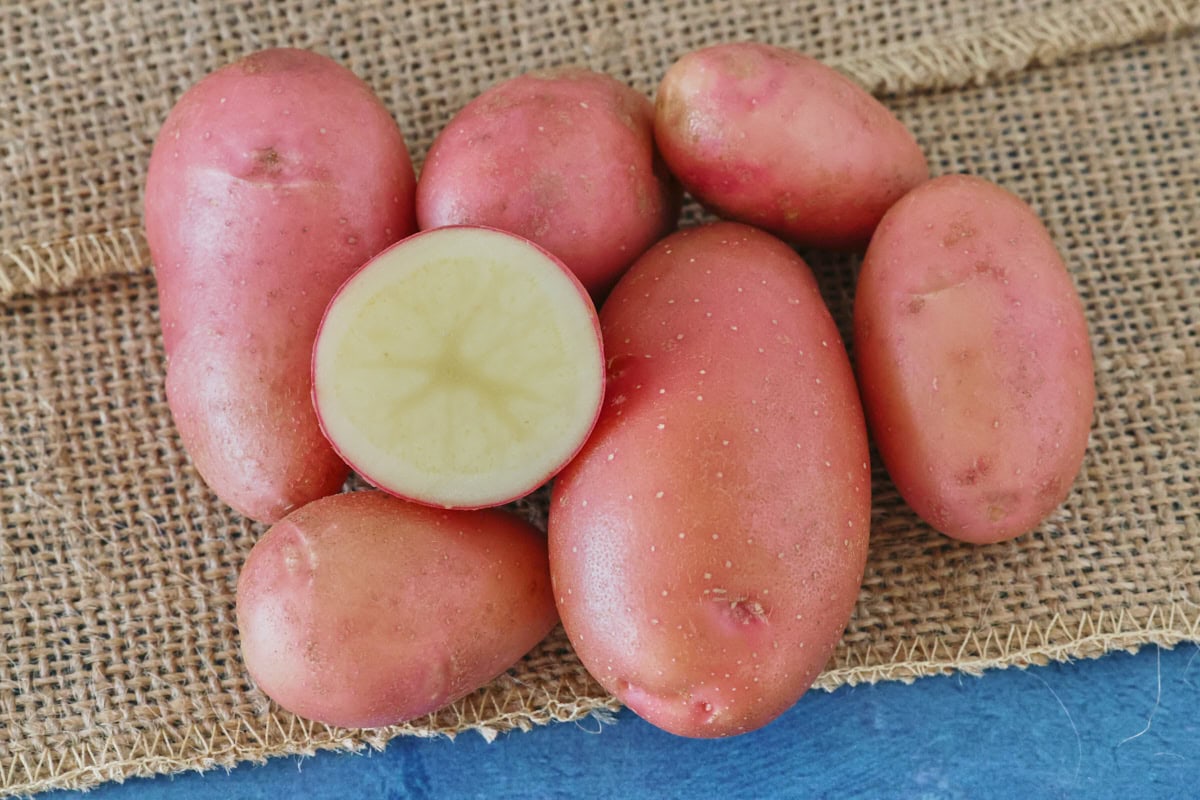
Quick facts
| Origin | Time to maturity | Yield | Size, shape |
| Europe | Late season, 100 to 120 days | Medium low | Small, oval fingerling |
Culinary profile
| Description | Texture, flavor | Best uses | Storage |
| Red skin, yellow flesh | Waxy, firm, buttery, creamy | Roast, salads, sauté | Good |
Our taste testers' notes
Good texture, buttery, creamy and firm, so good; deep tang, bright, buttery, deep flavor, great. Liked a lot roasted, like a potato chip; super smooth, great taste, Best so far!
13. German butterball

Quick facts
| Origin | Time to maturity | Yield | Size, shape |
| Germany | Late season, 100 to 120 days | Medium | Medium to large, oval to oblong |
Culinary profile
| Description | Texture, flavor | Best uses | Storage |
| Slightly netted tan skin, yellow flesh | Firm, dense, creamy, rich, slightly mealy | Bake, boil, mash, roast, sauté, soups | Excellent, up to 5 months |
Our taste testers' notes
Good, so creamy, mild, beautiful, smooth flavor, firm; smoky, delicious char, toasted almonds; slightly crumbly.
14. Huckleberry gold
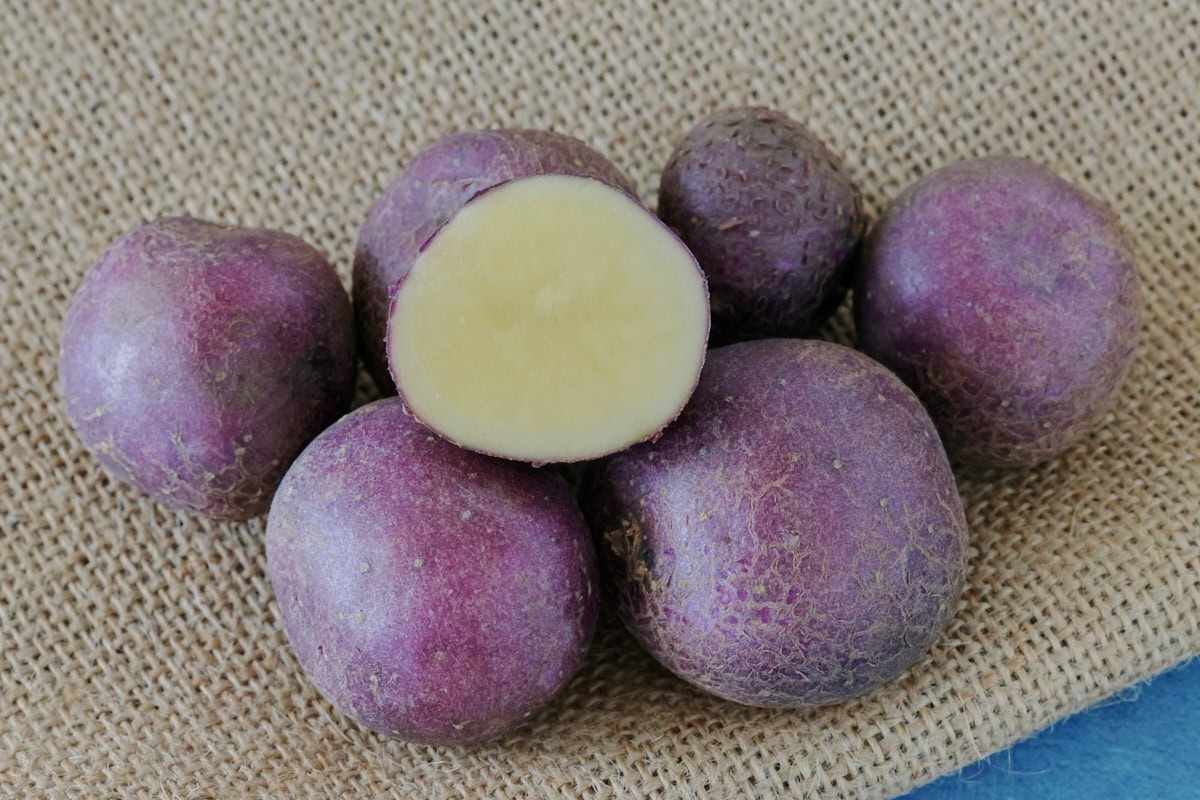
Quick facts
| Origin | Time to maturity | Yield | Size, shape |
| North America | Midseason, 90 days | Medium | Medium, oval |
Culinary profile
| Description | Texture, flavor | Best uses | Storage |
| Purple skin, pale yellow flesh | Creamy, moist, slightly sweet | Mash, roast | Good |
Our taste testers' notes
Firm, creamy, fall air, autumn leaves; earthy, driftwood, elegant; tastes more vegetal, on the soft side but not necessarily smoother.
15. Kennebec
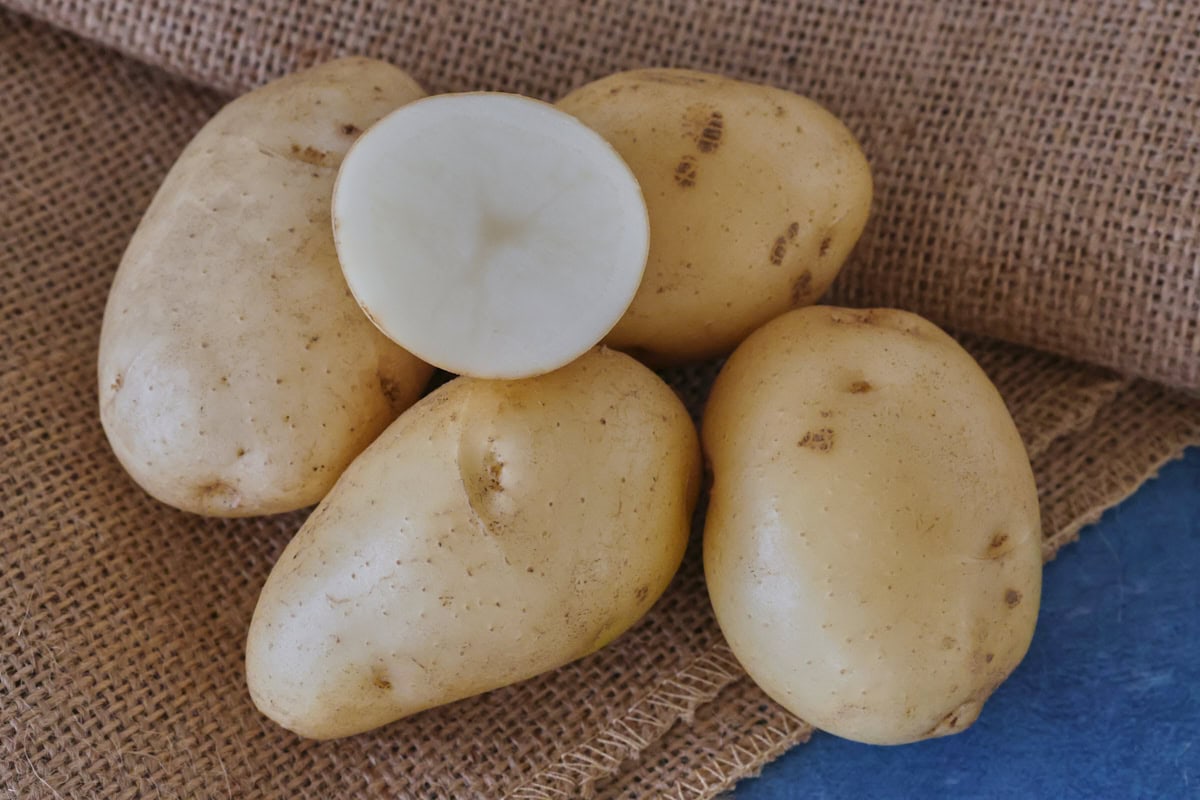
Quick facts
| Origin | Time to maturity | Yield | Size, shape |
| Named for Kennebec River in Maine | Midseason, 80 to 95 days | High | Large, oval |
Culinary profile
| Description | Texture, flavor | Best uses | Storage |
| Thin beige skin with beige flesh | Firm, smooth, creamy, slightly mealy | Bake, boil, chips, fries, mash, salads, sauté, soups, stew | Excellent |
Our taste testers' notes
Super firm, smooth, refined; mild, chewy, crisp; aged paper, really liked roasted; mild, nice flavor.
16. La ratte
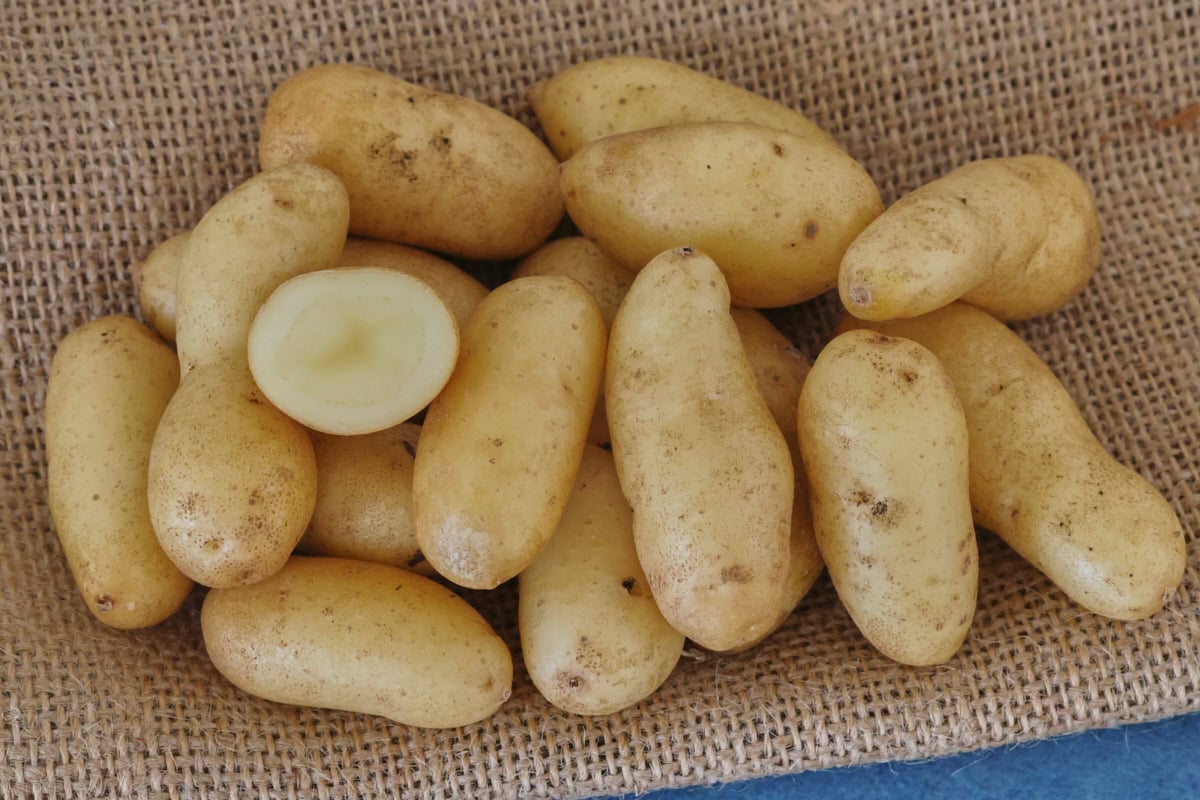
Quick facts
| Origin | Time to maturity | Yield | Size, shape |
| France | Late season, 90-110 days | Medium low | Small to medium, fingerling |
Culinary profile
| Description | Texture, flavor | Best uses | Storage |
| Beige skin and light yellow flesh | Waxy, firm, nutty, sweet, rich, smooth | Roast, salads | Good |
Our taste testers' notes
Extra firm, mild flavor, buttery and smooth taste; classic deep potato flavor, nice and crisp; slightly gritty texture, mild.
17. Ozette (aka makah ozette)
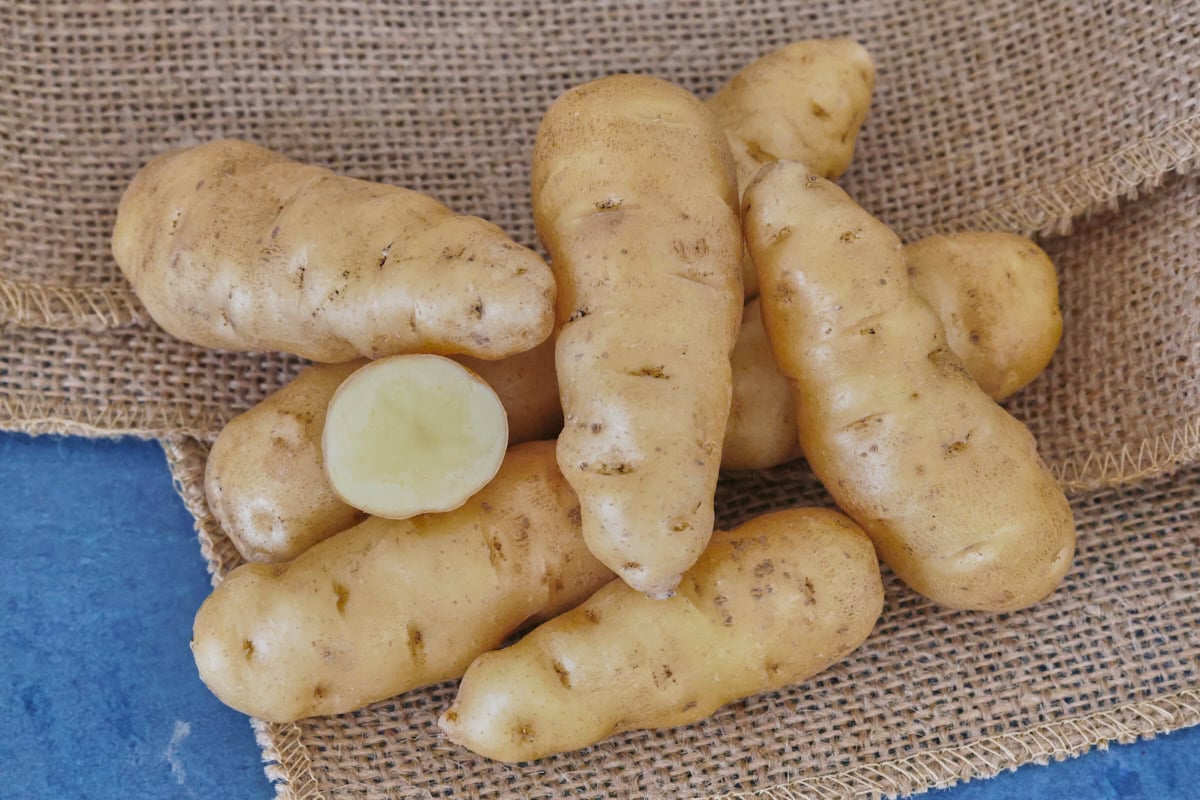
Quick facts
| Origin | Time to maturity | Yield | Size, shape |
| Brought by Spanish explorers from Andes to Makah Nation, Washington State | Late season, 100 to 120 days | Medium low | Medium, fingerling |
Culinary profile
| Description | Texture, flavor | Best uses | Storage |
| Beige skin, pale yellow flesh, knobby, deep eyes | Waxy, earthy, nutty, dense, smoky | Roast, salads, sauté, steam | Good |
Our taste testers' notes
Tastes good, smooth texture; firm, barn wood, smoked tea leaves, campfire; very buttery, tangy, mild, creamy, so much potato flavor! GREAT flavor, like mashed potatoes.
18. Peanut (pre-nuclear)
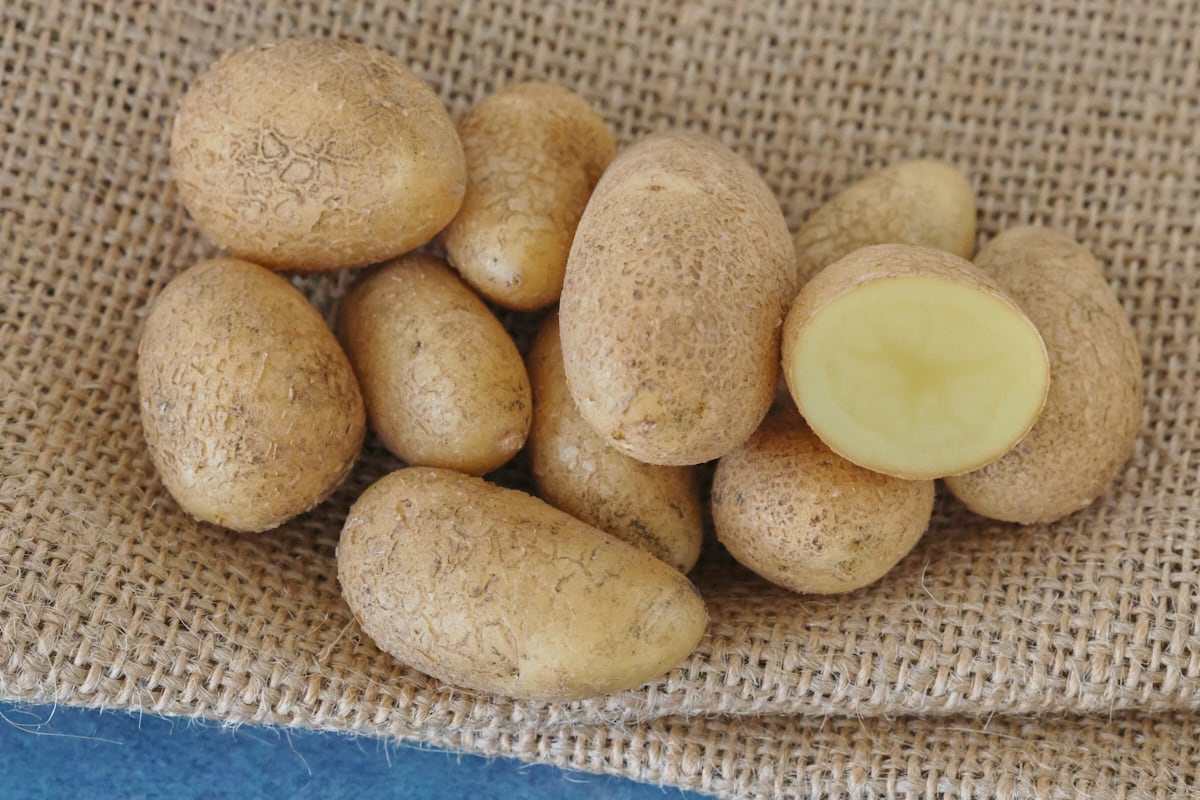
Quick facts
| Origin | Time to maturity | Yield | Size, shape |
| Sweden | Midseason, 90 days | Medium | Small, fingerling |
Culinary profile
| Description | Texture, flavor | Best uses | Storage |
| Tan skin, yellow flesh | Firm, waxy, rich | Roast, sauté, salads | Good |
Our taste testers' notes
Very good, best one so far; good balance of flavor and smooth texture; crumbly, crisp skin, nice mild flavor, oaky, toasted paper, delicious; gorgeous caramelization; complex, elegant flavor, beautiful roasted taste.
19. Purple majesty
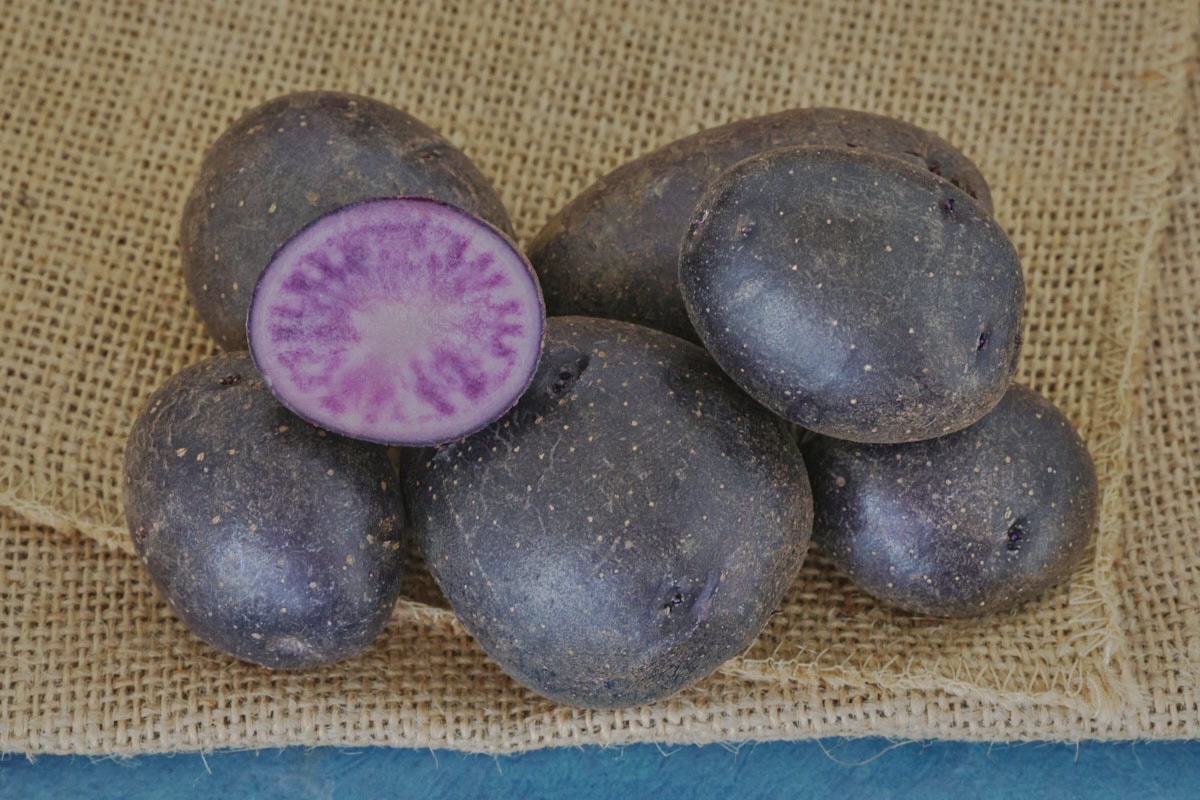
Quick facts
| Origin | Time to maturity | Yield | Size, shape |
| Colorado | Midseason, 85 to 95 days | Medium | Medium, round to oblong |
Culinary profile
| Description | Texture, flavor | Best uses | Storage |
| Dark purple skin, purple flesh | Mildly sweet, buttery, slightly starchy | Chips, roast, sauté | Short |
Our taste testers' notes
Buttery, mild, heirloom flavor, beautiful color retention, tangy and delicious skin, chewy, earthy, nutty flesh; great caramelization, fall leaves, tree bark; super purple inside, tastes good roasted; nice flavor, dry.
20. Purple Peruvian

Quick facts
| Origin | Time to maturity | Yield | Size, shape |
| Peru | Late season, 100 to 120 days | Medium | Small, fingerling |
Culinary profile
| Description | Texture, flavor | Best uses | Storage |
| Purple skin and flesh, deep eyes | Firm, slightly mealy, nutty | Bake, roast, salads, sauté | Long |
Our taste testers' notes
Crumbly, mild; red grapes, wet slate, deep caramel, dry red wine, amazing and complex flavor; dry, sweet, nutty.
21. Purple viking

Quick facts
| Origin | Time to maturity | Yield | Size, shape |
| North America | Midseason, 85 to 95 days | Medium | Large, round |
Culinary profile
| Description | Texture, flavor | Best uses | Storage |
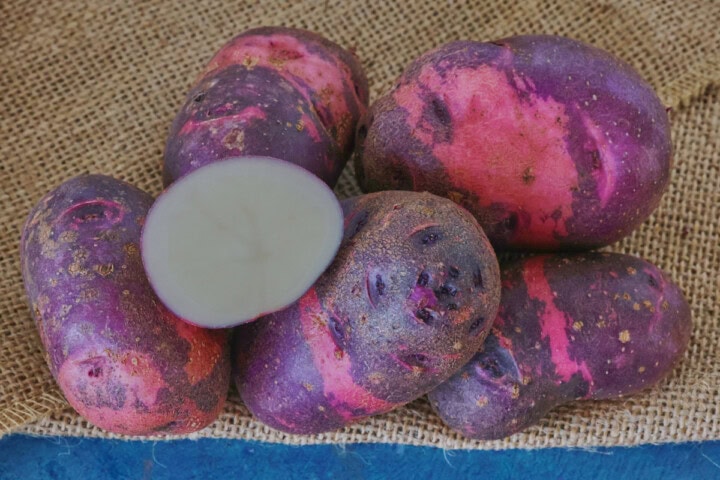
| Pink and purple marbled skin, white flesh | Creamy, moist | Bake mash, roast | Good |
Our taste testers' notes
Good texture, classic russet taste; beautifully firm and smooth, delicious, so mild and creamy, love this; so buttery, moaning in delight; fresh paper, new hay, jute, old books, so enjoyable to eat; smooth, great taste for mashed potatoes; delicious.
22. Red pontiac

Quick facts
| Origin | Time to maturity | Yield | Size, shape |
| Michigan, USA | Early to midseason, 80 to 90 days | High | Medium to large, round |
Culinary profile
| Description | Texture, flavor | Best uses | Storage |
| Red skin, white flesh | Waxy, moist, firm, classic potato flavor | Bake, boil, mash, roast, salads | Good |
Our taste testers' notes
Mid-creamy, slightly sandy, old-time potato taste; beautifully creamy, vintage potato flavor, mild but so refined and delicious; middle ground between smooth and gritty.
23. Red thumb (pre-nuclear)

Quick facts
| Origin | Time to maturity | Yield | Size, shape |
| North America | Early to midseason, 100 to 110 days | Medium | Small, fingerling |
Culinary profile
| Description | Texture, flavor | Best uses | Storage |
| Pink skin, white flesh | Firm, waxy, buttery, rich | Roast, salads | Good |
Our taste testers' notes
Chunky, mealy texture, tough crisp skin; classic potato flavor, crumbly, sandy, mild; nutty, roasty, savory, so deeply flavored and great; has more traditional potato taste, more vegetal.
24. Rose finn apple

Quick facts
| Origin | Time to maturity | Yield | Size, shape |
| France | Late season, 100 to 120 days | Low | Small, fingerling |
Culinary profile
| Description | Texture, flavor | Best uses | Storage |
| Pinkish-beige skin, pale yellow flesh | Waxy, firm | Boil, grill, roast, salads, sauté | Good |
Our taste testers' notes
Good texture, firm, buttery, delicious, antique parchment, slight tang; buttery, mild, creamy, sourdough, twine, complex, really good; liked a lot roasted.
25. Russet burbank

Quick facts
| Origin | Time to maturity | Yield | Size, shape |
| Plant breeder Luther Burbank in US | Late season, 110 to 130 days | Very high | Large, oblong |
Culinary profile
| Description | Texture, flavor | Best uses | Storage |
| Brown skin, white flesh | Fluffy, dry, classic baked potato flavor | Bake, fries, mash, sauté | Excellent |
Our taste testers' notes
Crumbly and firm, mild, smooth flavor, earthy; melt-in-your mouth creamy, earthy, nutty, toasted bread, charred corn, slight tang, rustic, classic flavor, smooth.
26. Russian banana
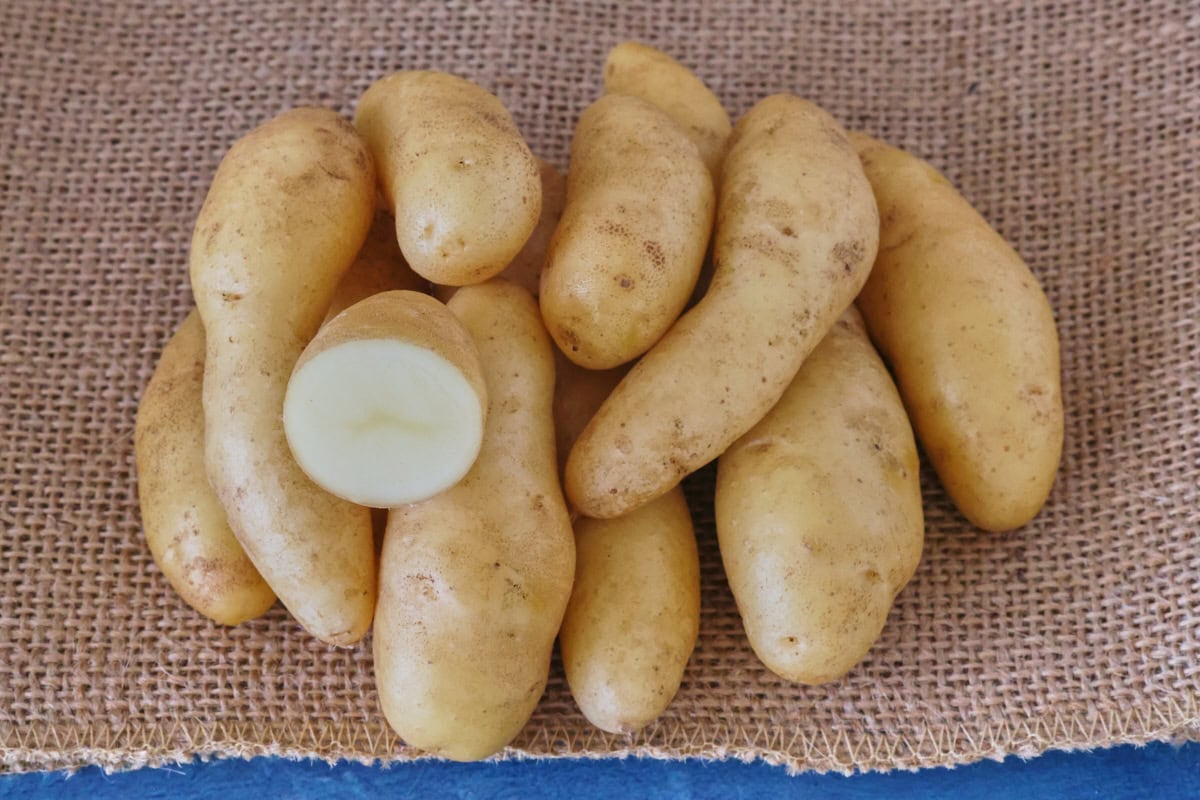
Quick facts
| Origin | Time to maturity | Yield | Size, shape |
| Baltic region | Late season, 100 to 120 days | Medium | Slender fingerling |
Culinary profile
| Description | Texture, flavor | Best uses | Storage |
| Tan skin, yellow flesh | Firm, waxy, nutty | Roast, salads | Good |
Our taste testers' notes
Tastes very good, smooth texture, well-balanced; extra firm and dense, old world flavor, chunky, old wood, fall leaves; so earthy, complex, and great.
27. Sangre

Quick facts
| Origin | Time to maturity | Yield | Size, shape |
| Colorado, USA | Mid to late season, 90 to 105 days | Medium | Medium, oval |
Culinary profile
| Description | Texture, flavor | Best uses | Storage |
| Red skin, white flesh | Moist, firm, mildly sweet | Bake, boil, roast | Good |
Our taste testers' notes
Very firm, waxy, mild, vintage parchment, crumbly butter, thick skin; tannic red wine, creamy, chewy, earthy, petrichor, fall stream, deep soil, so good; dry-ish, great roasted flavor; really nice crispy taste.
28. Warba pink eye

Quick facts
| Origin | Time to maturity | Yield | Size, shape |
| Minnesota, USA | Early season, 75 to 85 days | Medium | Small to medium, round |
Culinary profile
| Description | Texture, flavor | Best uses | Storage |
| Beige skin, pink eyes, white flesh | Moist, firm, waxy | Bake, boil, roast | Short to good |
Our taste testers' notes
Crumbly, chunky, floral, interesting! smoky, charred, deep, umami, old rope, straw bales, rustic and great; liked a lot roasted; lighter flavor, more planty.
❓Frequently asked questions
Heirloom potatoes are varieties that have been saved and replanted for generations. They're open-pollinated and have characteristics that make each variety special, such as flavor, texture, color, and local history. Most grocery store potatoes are bred more for uniform shipping size and transportation durability than for the characteristics that make an heirloom distinctive and unique.
It's possible to do this, but it isn't generally a good idea. Potatoes at the grocery store are often treated with sprout inhibitors, and they may also carry soil-borne diseases or viruses. Seed potatoes that are grown specifically for planting are generally inspected and certified to be free of disease. This will give you a higher chance of success with improved health and yield in your potato crop.
Certified seed potatoes have been inspected and tested to show no disease before planting. Pre-nuclear seed potatoes have been grown through tissue culture, and have not yet had a generation planted in the soil. So while they can often yield smaller potatoes in the first year of planting, they are less likely to encounter disease, and the yield is generally higher. They're correspondingly more expensive than regular seed potatoes. Nuclear seed potatoes are in between, as they're formerly pre-nuclear ones that have been grown for just one generation in the soil.
You can grow potatoes from the tiny "true" seeds in green potato berries that grow on the plant above the soil. These true seeds don't typically match the parent variety, and will grow into genetically unique plants. Gardeners more commonly grow seed potatoes instead, which are clones that are reliably true to type.
Early potatoes are best eaten fresh, within a few weeks after harvesting. Main season and late season potatoes can store for three to five months or longer, depending on the variety. They're best stored in a cool, dark place around 45 to 50°F (7 to 10°C) with high humidity.
🪴Seed potato sources
For the potatoes in this post, I've bought from and recommend the following vendors:
📚Book resources
Here are some books I've used to help me do research for this post. They have great additional potato-growing information in case you'd like to dig deeper.
Potato: All You Need to Know in One Concise Manual, by Bill Laws
🌻More gardening posts you'll love


✏️Have you grown any of these potatoes?
Please keep in mind that this is nowhere near an exhaustive list of the heirloom potatoes that are out there for us to explore. The available selection from around the world is enormous! I'm excited to try even more varieties next time, and I'd love to hear about any that you grow too. I'd love to know about your potato-growing experiences in the comments below.



AliceK says
So which of these would you grow again? It seemed as if you liked the French fingerling and Peanut the best, but I'd be tempted to grow the Purple Viking because it was gorgeous! I have only tried potatoes once, with not very good success, in a grow bag. Something ate the tops off (deer? groundhogs? rabbits?) so I didn't get much yield.
Shelly Benitah says
Alice, I'm so sorry to hear that something ate your potato tops. That must have been so frustrating! And I love the varieties you've mentioned too. All of them were so exciting to try. The purple vikings were stunning with their color and size, the French fingerlings were so creamy, and the peanuts were so flavorful. I'd absolutely grow all 28 of these again, as I feel like once wasn't enough to really get to know them all. There were so many colors, flavors, textures, and special talents in the kitchen. And there are so many more varieties that I still have left to grow! It's such a thrill to grow potatoes, and to find on harvest day just what's down there under the soil. This was the first time in years that I'd grown them, and I feel so excited to really get back into them again. Thanks so much for reaching out, and have a great weekend!
Karen Kerns says
I certainly will save this post!! I grew potatoes in containers as well as in-ground. The difference being larger sized potatoes grown in-ground, and soup and stew sized in containers. Also, limited in-ground space was a consideration, so I chose containers as well.