

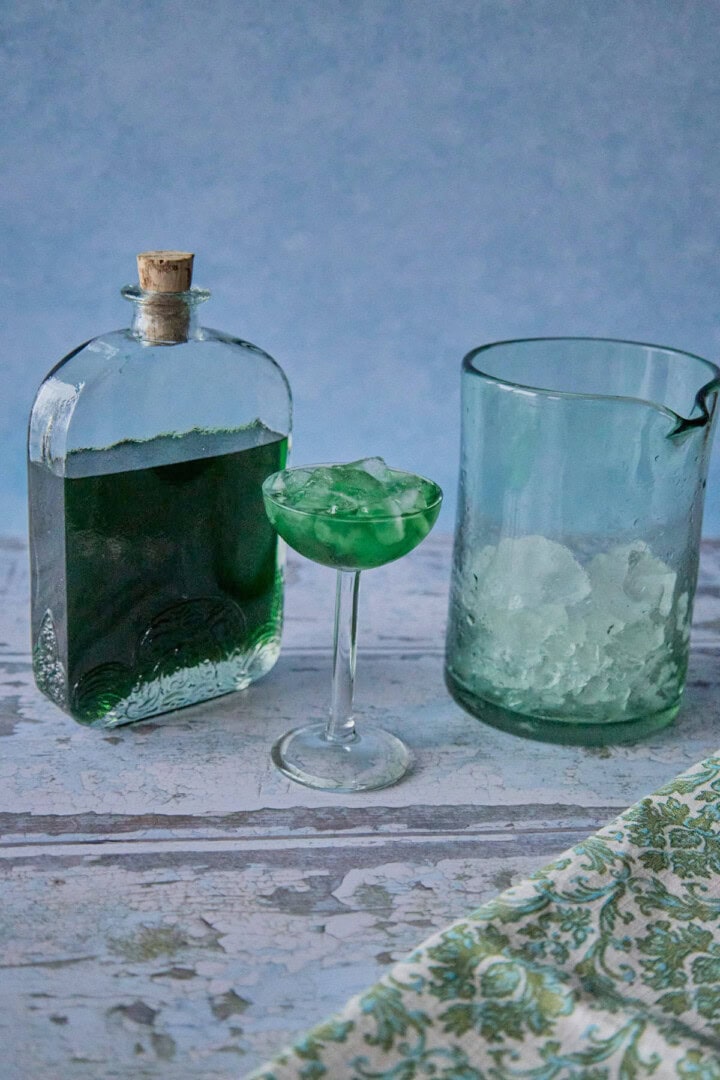
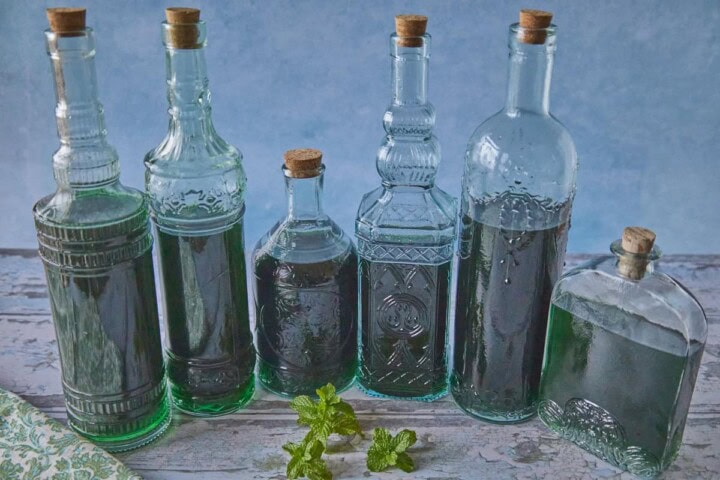


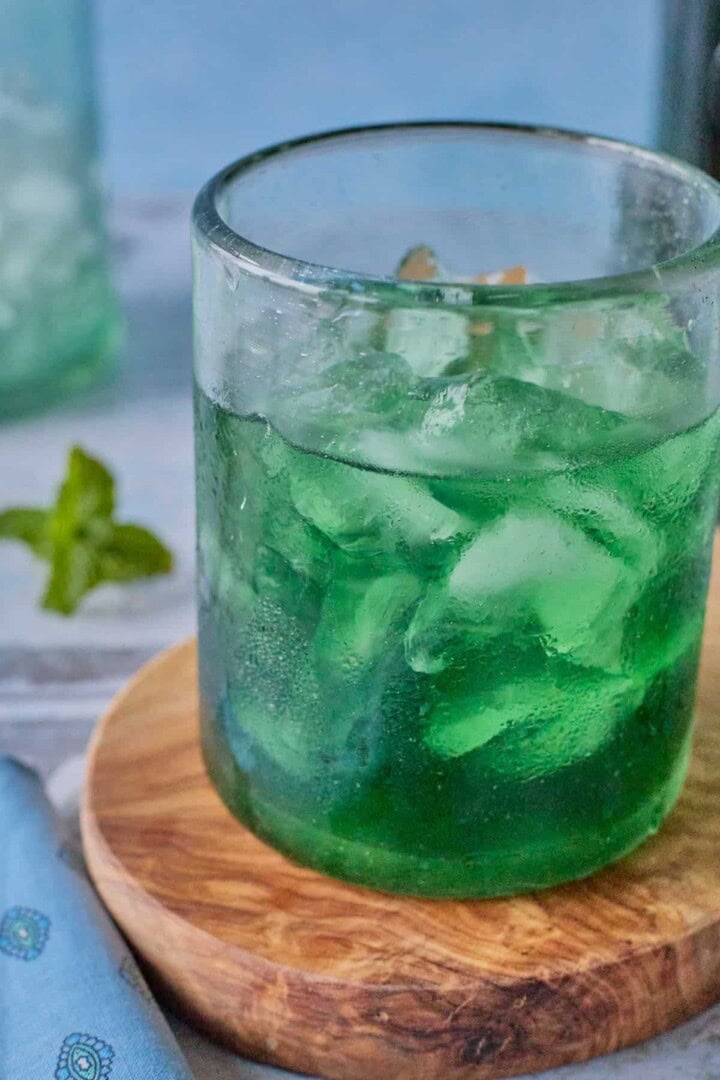


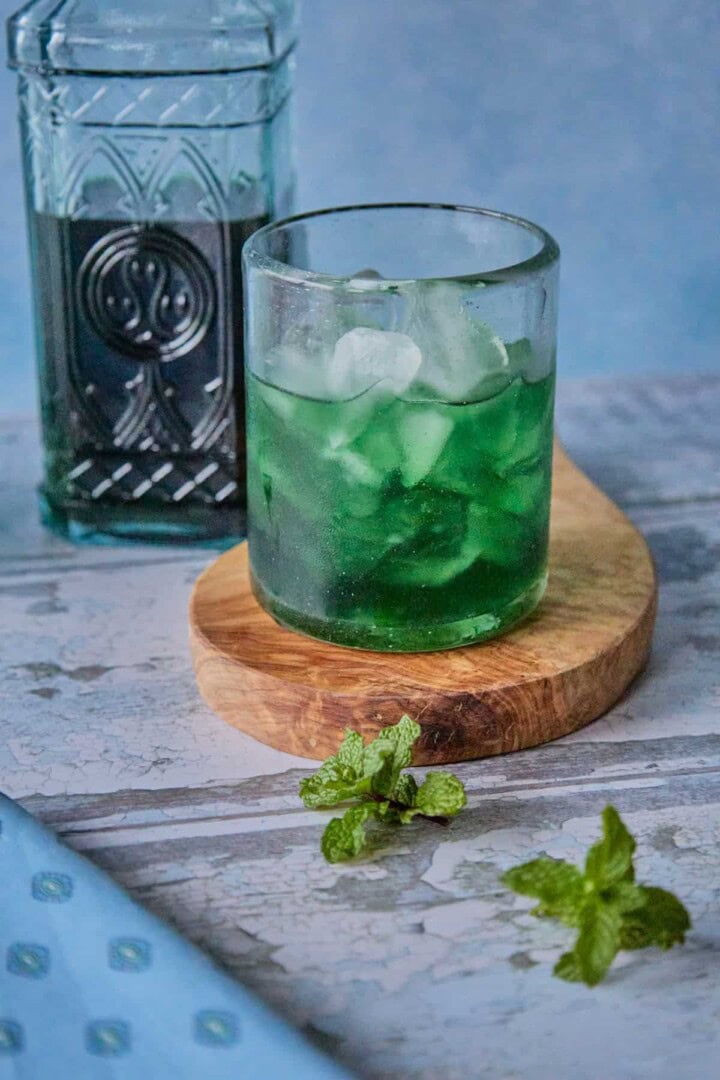
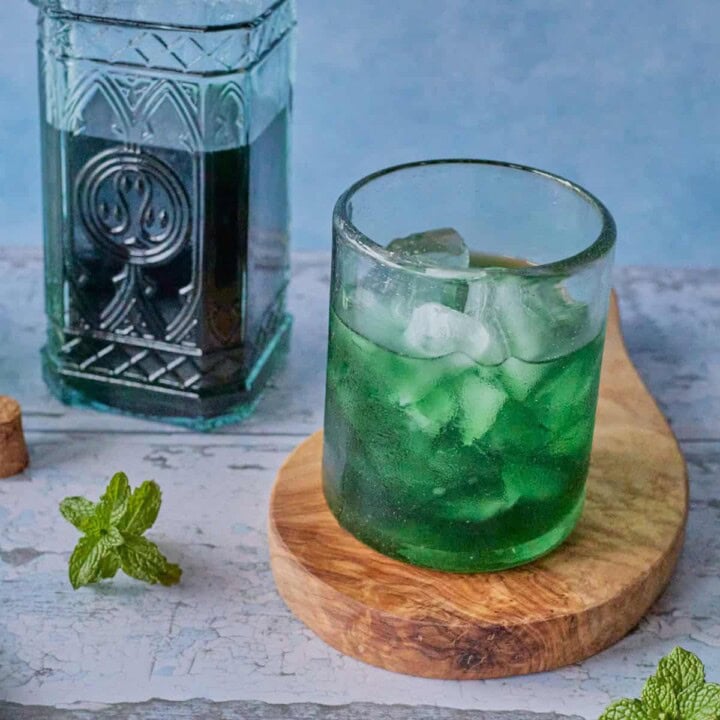



This traditional homemade French mint liqueur is a smooth, refreshing classic that's simple to make yourself using garden-fresh mint! And it's already traditionally vegan, so it's easily accessible. But which mint yields the best flavor, and how long should it steep? Don't worry, I have the answers for you so you can make the best-tasting minty drinks around! Please check out this Homemade Crème de Menthe Guide: 6 Versions Reviewed!
Here's a showdown of 6 different artisanal recipe variations tasted and reviewed by 19 people, using up to 17 different varieties of my home-grown mint. And these liqueur variations have been aged from as long as 15 years to as fast as 4 weeks. So we have a wide range of testing criteria to help you make the most amazing homemade mint liqueur!
For the best recipe variation, look no further. And the results may shock you; they've certainly shocked me!
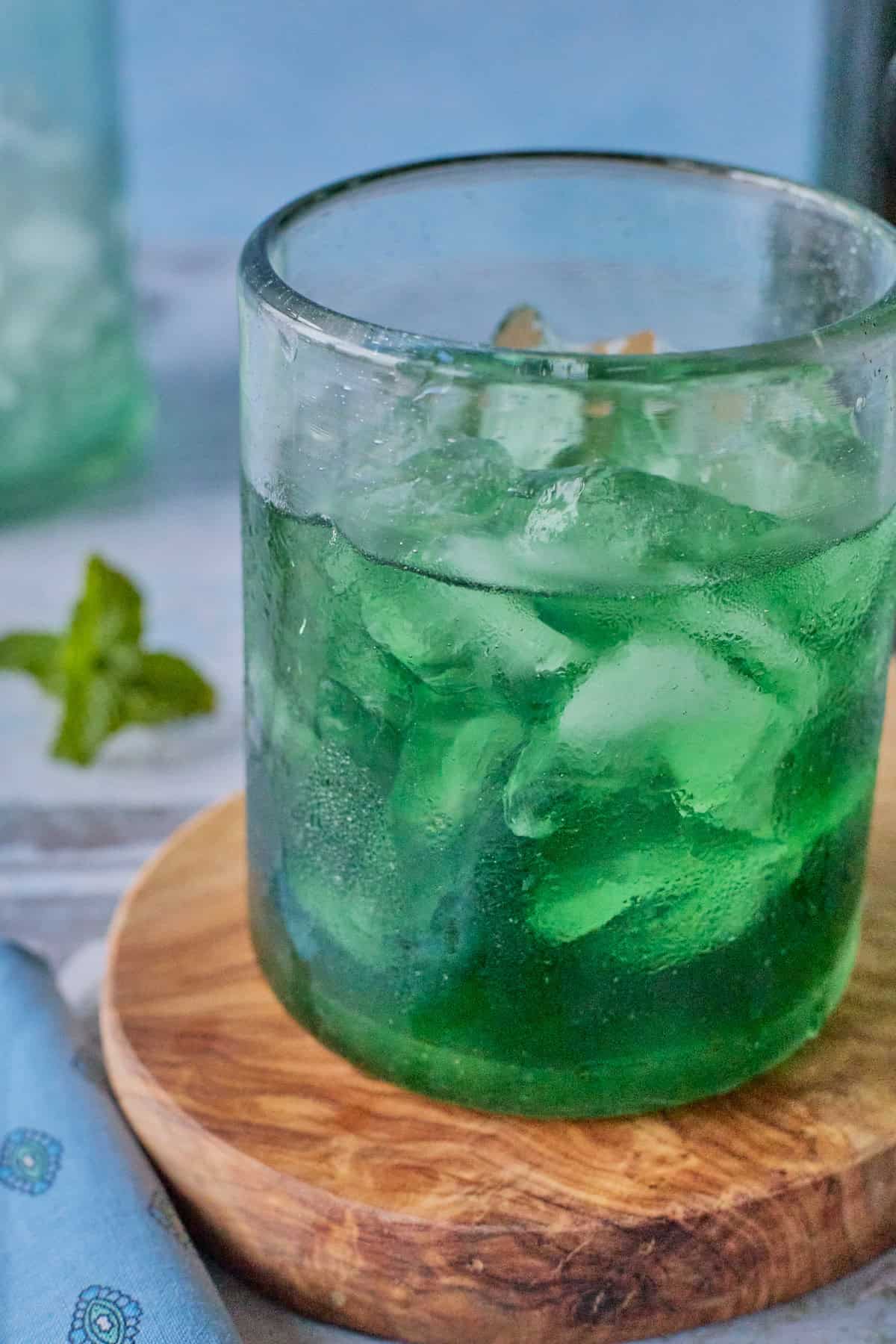
Crème de menthe is a classic French liqueur that was developed in the late 19th century. And there's a reason it's been popular for so long. It's velvety and luscious, bursting with sweet minty freshness.
The word "crème" refers to the sugar content in the liqueur, rather than any dairy. So this drink is traditionally suitable for a plant-based diet.
Now you can confidently make your own liqueur, and rest assured that it'll be delicious and refreshing with the coolness of fresh mint. Your guests will love it on ice or in a cocktail or dessert!
Jump to:
- 💕Why this recipe is special
- 📒Ingredient notes
- Version 1: Mixed mints, aged 15 years
- Version 2: Traditional Corsican mint, aged 1 year
- Version 3: Traditional Corsican mint, aged 4 weeks
- Version 4: Kentucky colonel spearmint, aged 4 weeks
- Version 5: Grocery store mint, aged 4 weeks
- Version 6: 17 mixed mints, aged 4 weeks
- ⭐And the winner is...
- ⚖️ Reviewing the results
- 📚Step by step instructions & photos
- 💡Tip for success
- 🔀Substitutions
- 🍶Variations
- 🥣Equipment
- ⏲Make ahead and storage
- 🍲Serving suggestions
- ❓FAQ
- ✨More herbs and recipes you'll love
- Homemade Crème de Menthe Liqueur
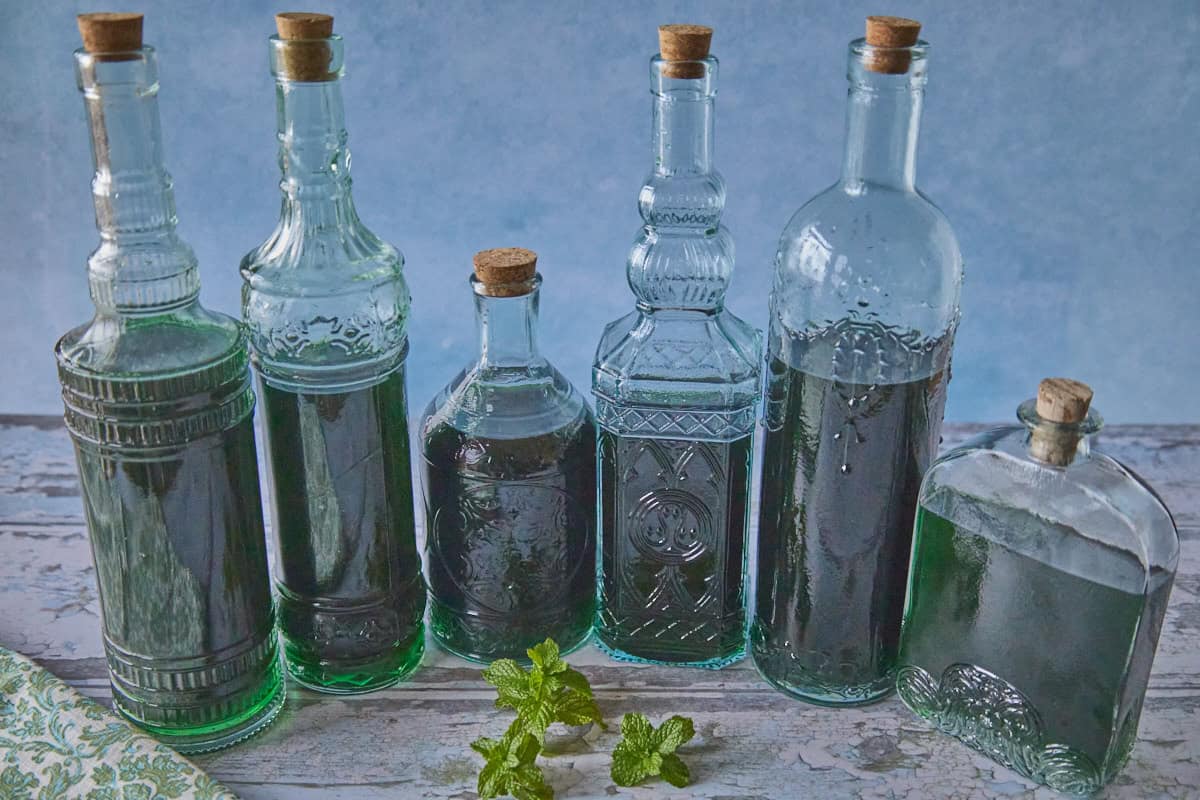
💕Why this recipe is special
Soothing in cold weather:
This timeless French classic can be enjoyed any time of year. In the cold months, crème de menthe is often served as a digestif after meals, when it's especially soothing after a heavy and rich winter meal. And during the winter holidays, this liqueur lends itself beautifully to celebrations, where it's often served in cocktails and desserts.
Refreshing in warm weather:
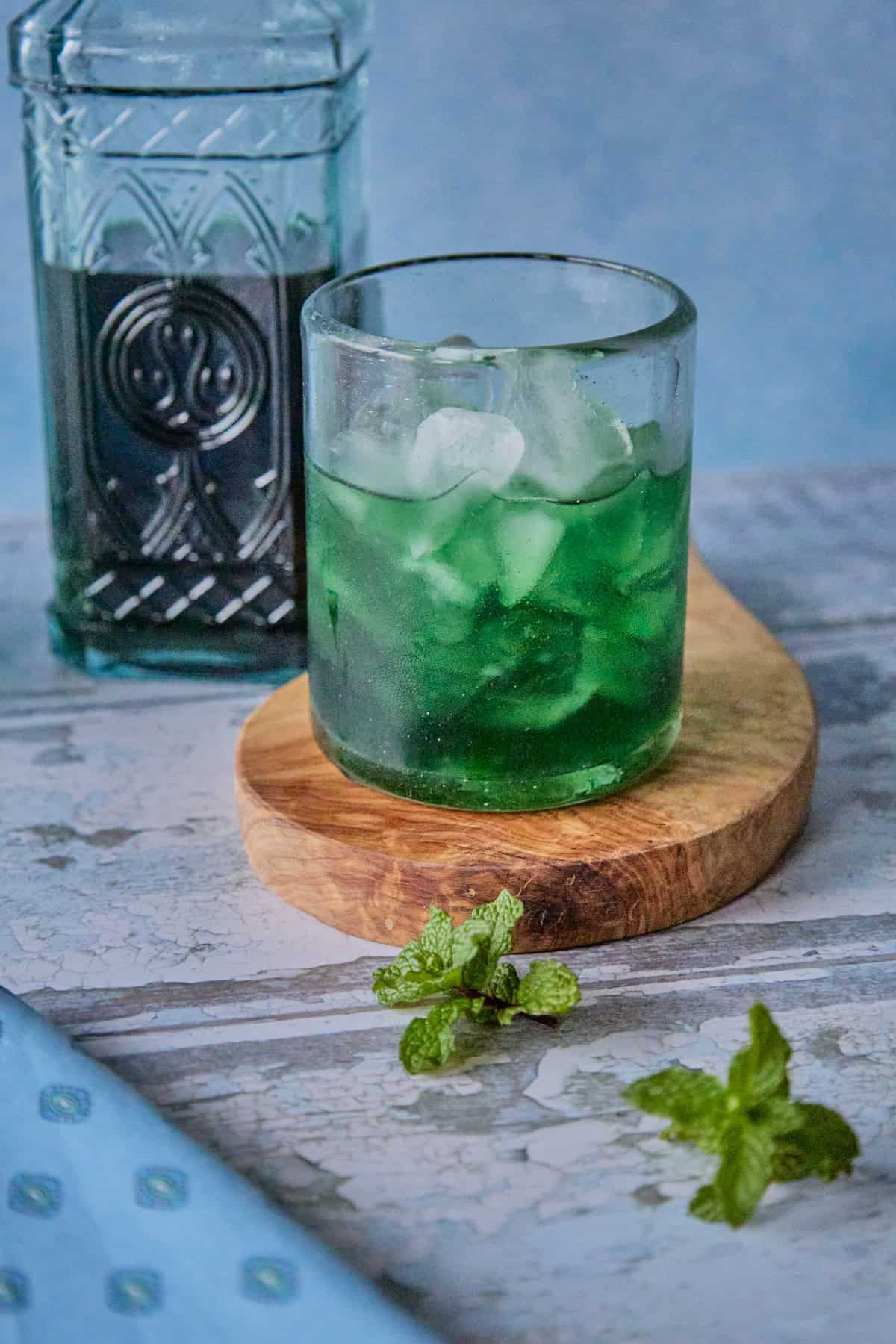
In the warmer months, this vibrant green drink (it also comes in a clear form) is bright and festive, and it ushers in a season of lush greenery in nature. This liqueur is particularly refreshing on a warm day. And on St. Patrick's Day as well, where a little more green is always welcome.
Mint is so easy to grow!
Whether you're a seasoned gardener or someone with no growing experience, you can absolutely grow your own mint. And even in a cold climate like mine, it generally overwinters very well. Just make sure to grow it in pots, or it'll take over your whole garden!
There's so much you can do with homemade crème de menthe, and just think of how fun it'll be to tell your friends and family you've made it with your own homegrown mint!
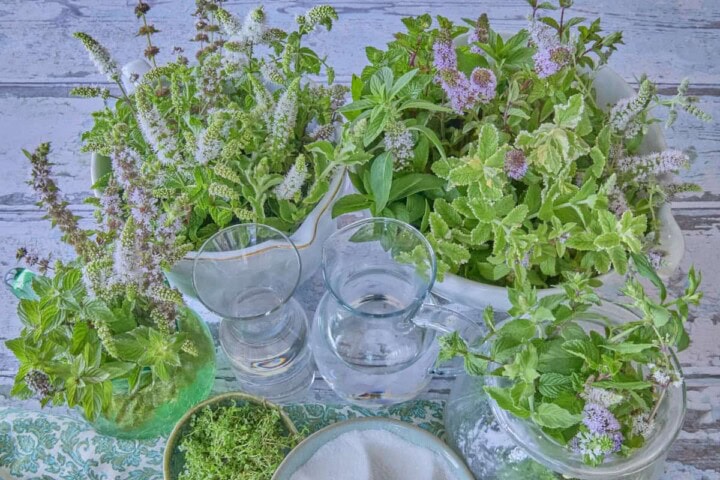
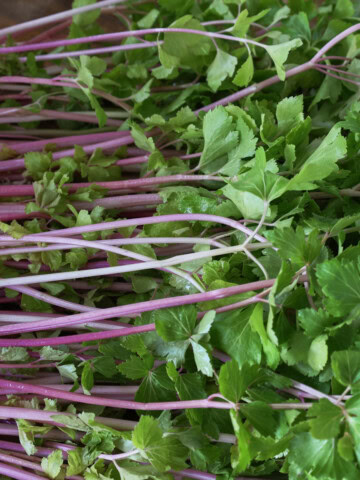
Below are the 17 varieties of mint I grew in my garden this year. All of the photos come from my own garden. Each of these mints has its own unique appearance, growth habit, and of course, invigorating fragrance and sweet, crisp flavor. And they come from all over the world, where mint is one of the most highly appreciated herbs anywhere.
And if you're interested in growing another fragrant and flavorful herb with unique varieties from all over the world, please check out my post 38 Types of Basil You Need to Grow in Your Herb Garden. Basil is another very special herb that I always need to grow!
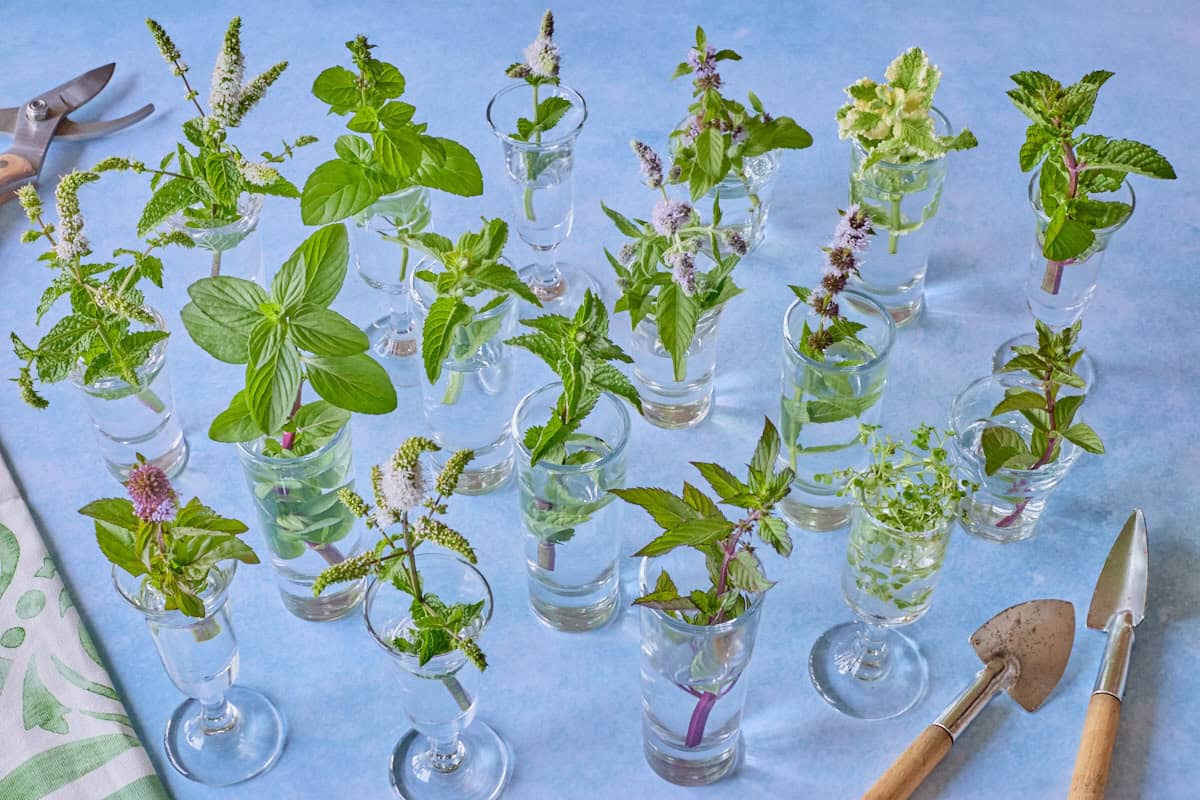
📒Ingredient notes
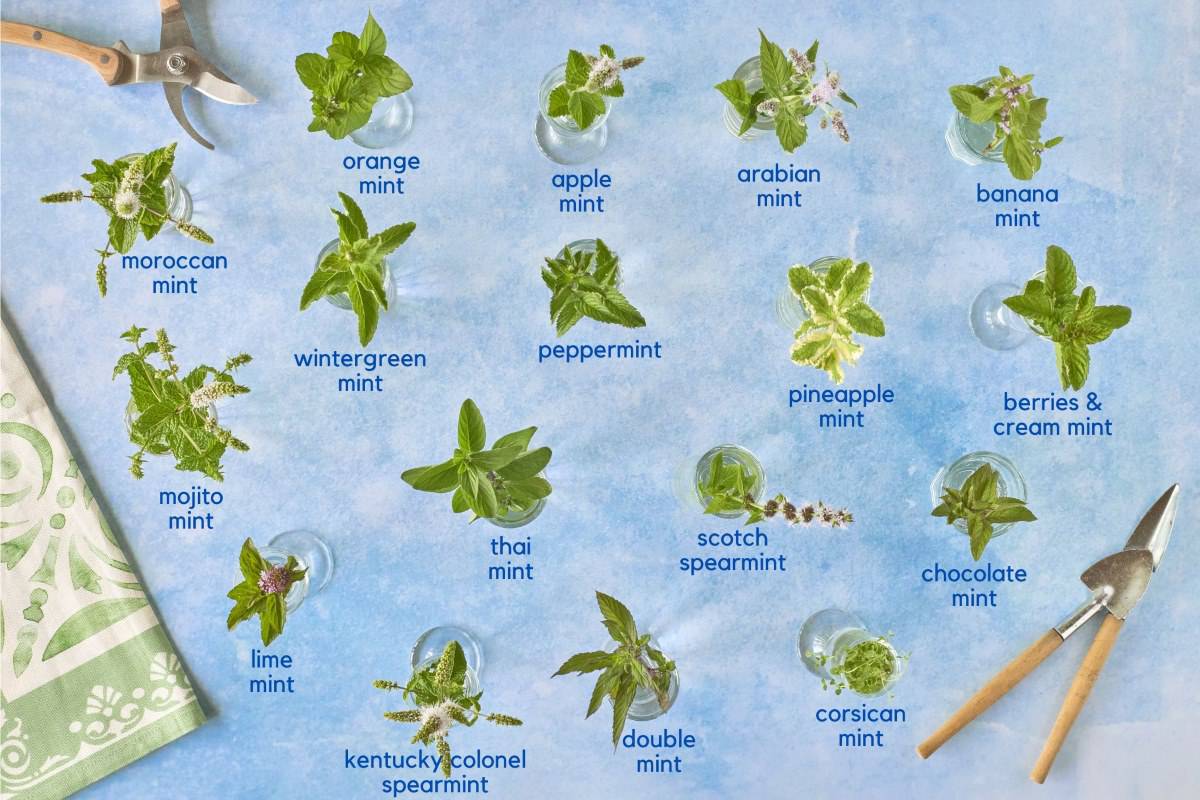
The crème de menthe versions included here were made with one, some, or all of the mints above. And there's also a version with easily-available grocery store mint. They're so easy to grow!
Version 1: Mixed mints, aged 15 years
I remember making this batch 15 years ago. I was making a last harvest before the fall, and came up with an idea to combine some of my mints with lemon thyme and a vanilla bean to make a more unique crème de menthe. And to give it even more personality, I used a base of rum instead of my usual vodka one for my botanical liqueurs. Let's see below if this one-of-a-kind version has great flavor and has aged well!


🌿Version 1 ingredients:
- Apple mint
- Corsican mint
- English mint
- Peppermint
- Kentucky colonel spearmint
- Chocolate mint
- Rum
- Sugar
- Water
- Vanilla bean
- Green food coloring (optional)
👄Tasters' notes:
Strong, aged, thick, very pungent!!, nope, very musty, all sorts of wild flavors, too busy for me, not syrupy; more kick to it; the worst one, didn't like it; bitter smell, too strong-made me cough; nasty!!! harsh, no; fruit flavors forward; extra kick
✨Rating out of 10:
3.4
Version 2: Traditional Corsican mint, aged 1 year
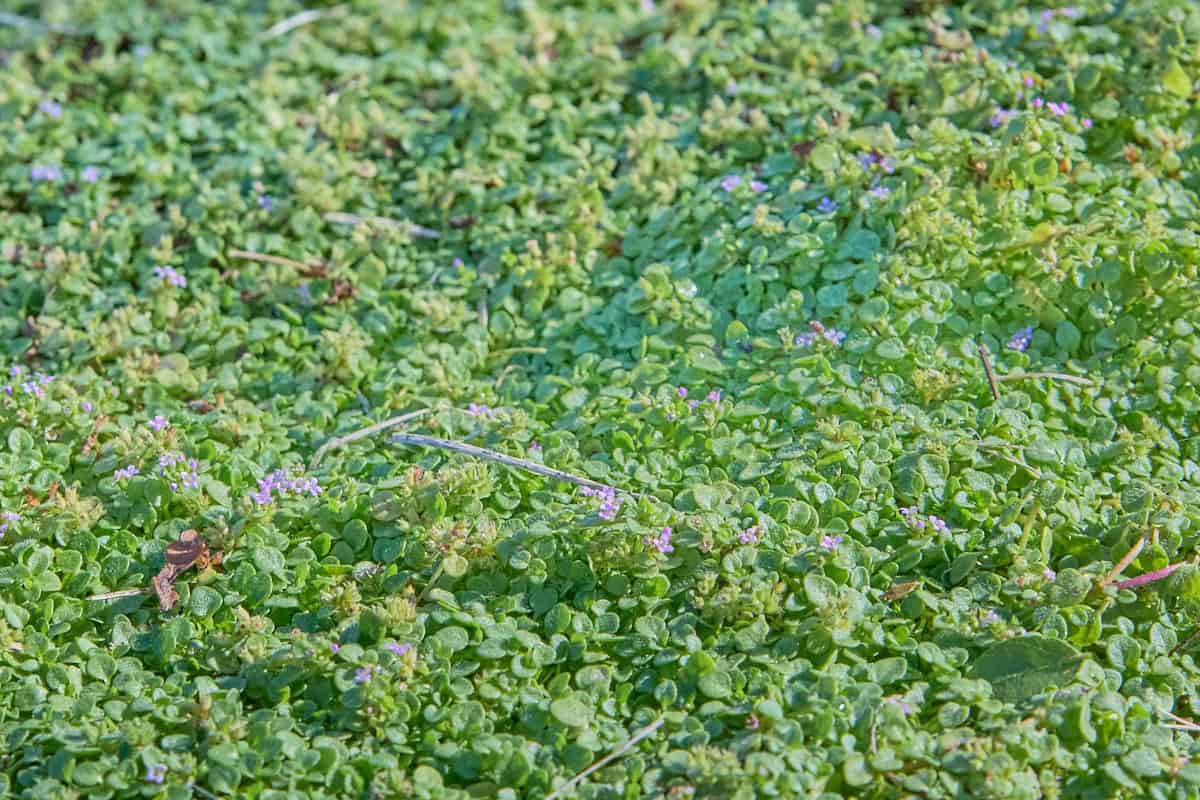
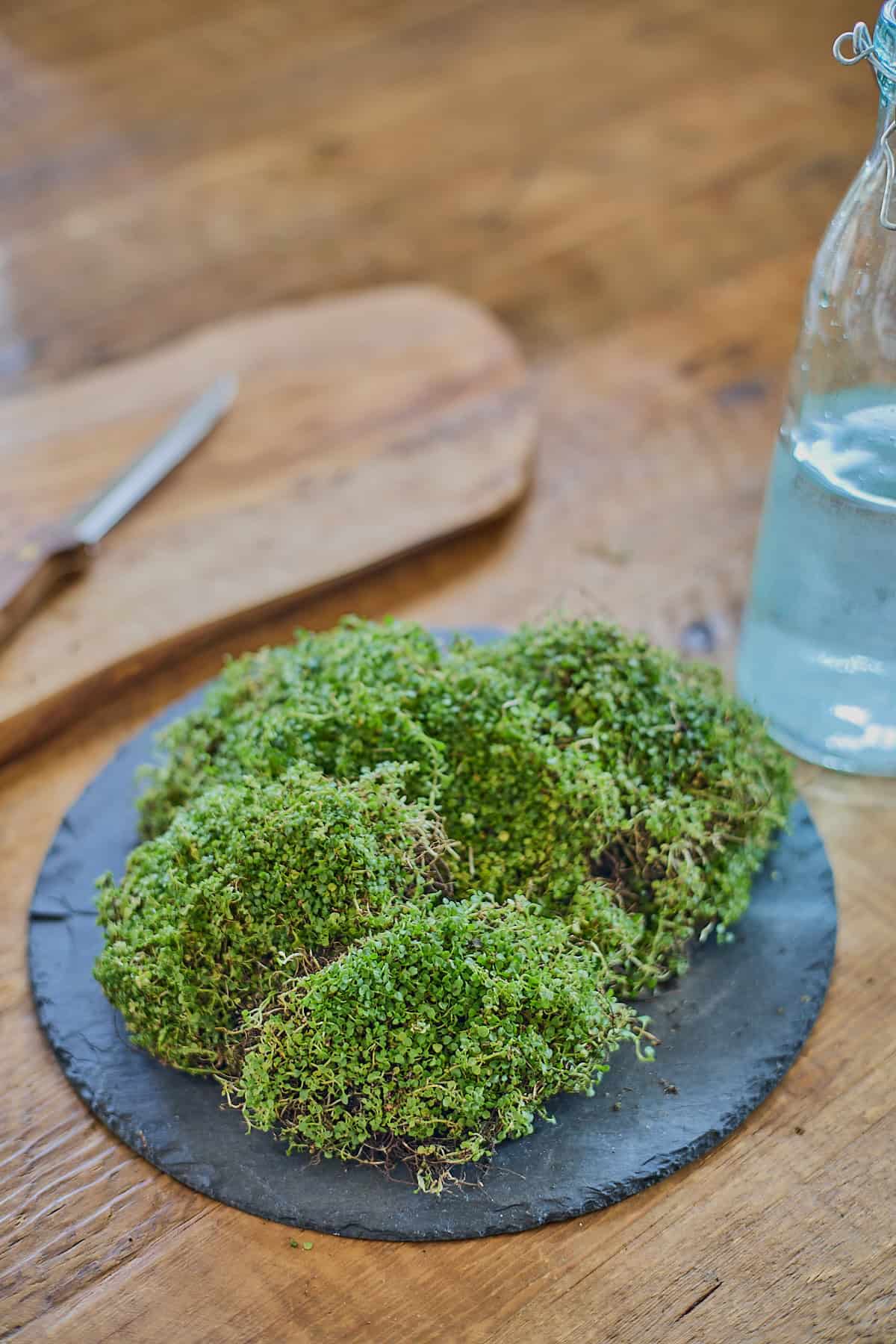
This is how I usually make crème de menthe - with my beloved tiny and delightfully fragrant Corsican mint, which is one of the varieties (along with peppermint and spearmint) that's historically used to make this drink. And I generally age all of my homemade botanical alcohol infusions for a year to smooth out the bite of the vodka. Read below to see if this type of mint and this long steeping time made the difference.
🌿Version 2 ingredients:
- Corsican mint
- Vodka
- Sugar
- Water
- Green food coloring (optional)
👄Tasters' notes:
Too much bite, sweet, a lot of mint, licorice, smoke, I don't like it! harsh notes, a different kind of mint? less sweet; no, no, no; don't love it; not great; didn't like it; strange scent; light mint; medicine aftertaste; too minty
✨Rating out of 10:
3.8
Version 3: Traditional Corsican mint, aged 4 weeks
On the other hand, not everyone has time to wait a year to make their homemade liqueur. Some people will want a fast version that can be made in late summer and be ready for fall and winter drinks.
So I wanted to try the same ingredients as in version 2, but this time to steep the leaves for 4 weeks instead of a year. Let's see how it went!

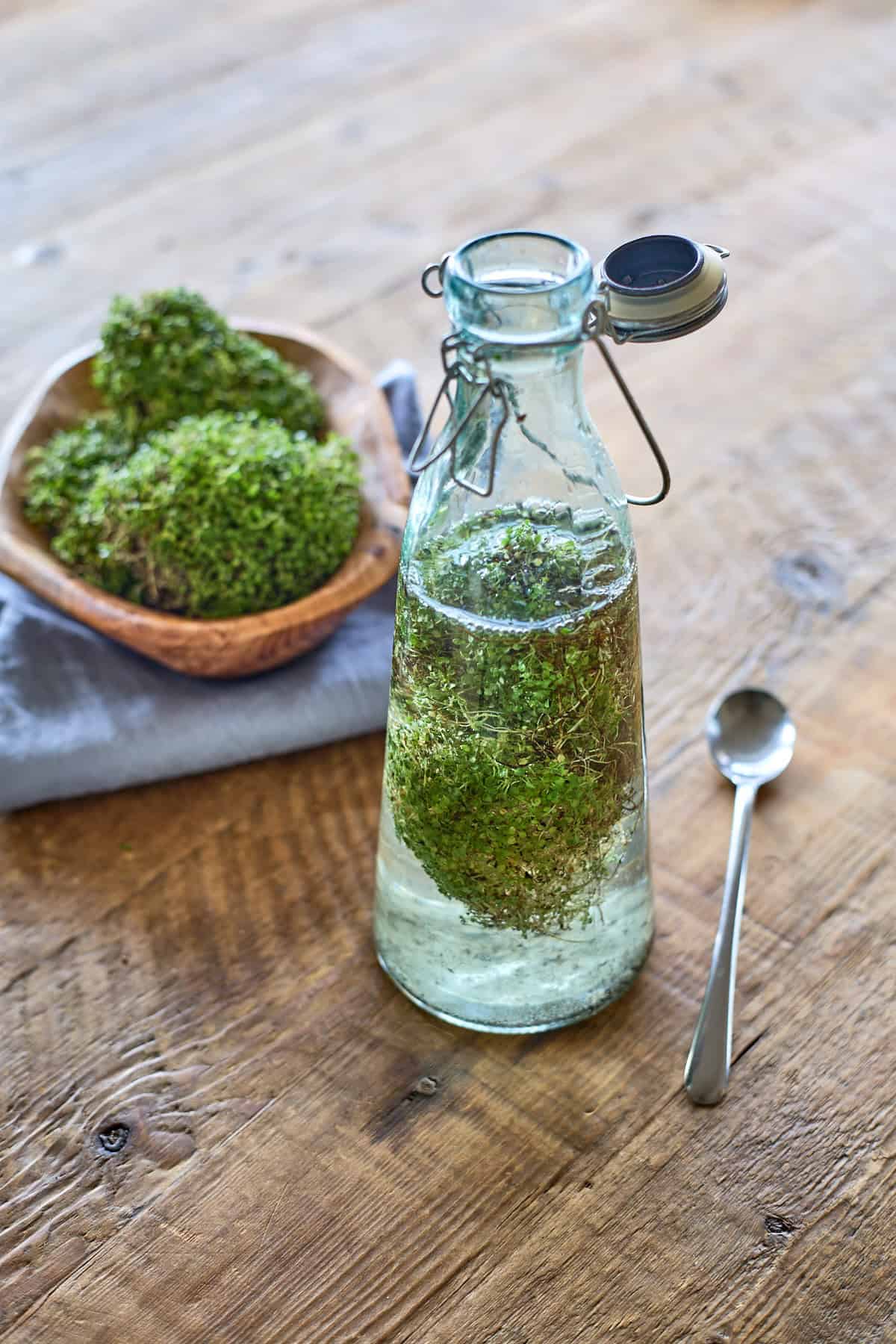
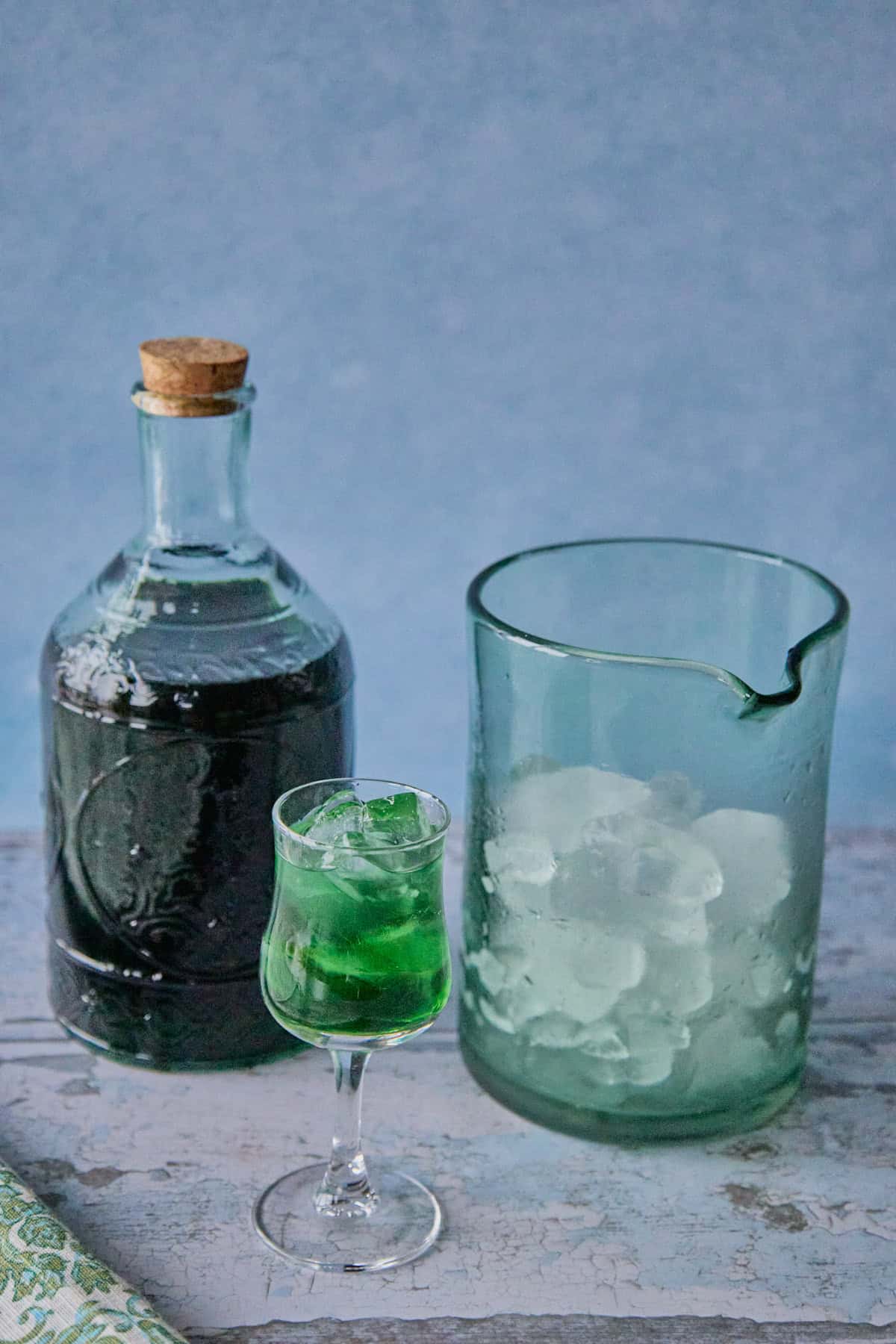
🌿Version 3 ingredients:
- Corsican mint
- Vodka
- Sugar
- Water
- Green food coloring (optional)
👄Tasters' notes:
Too sweet; hint of caramel, heavy, not too bad, earthy, not a fan, syrupy; liked it; filmy; lemony, medicinal, don't love; tastier; thumbs down
✨Rating out of 10:
3.9
Version 4: Kentucky colonel spearmint, aged 4 weeks
Kentucky colonel mint (a type of spearmint) is a really special one. It has the classic sweet quality of spearmint but is more complex and refined. And it has herbaceous notes that make the fragrance seem especially green and inviting.
I wanted to test a version made with this mint because it has an artisanal quality of flavor, and is also readily available in farmer's markets as seedlings in the spring. Check below to see what our tasters thought.
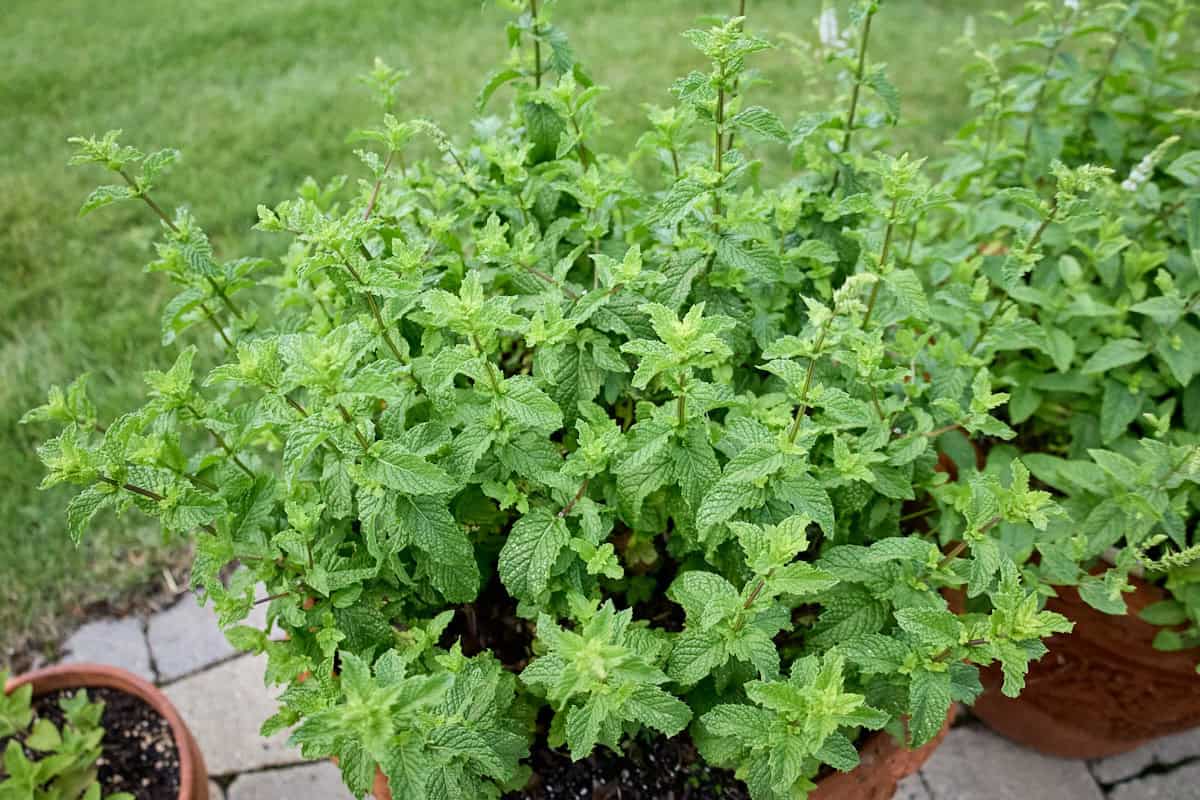
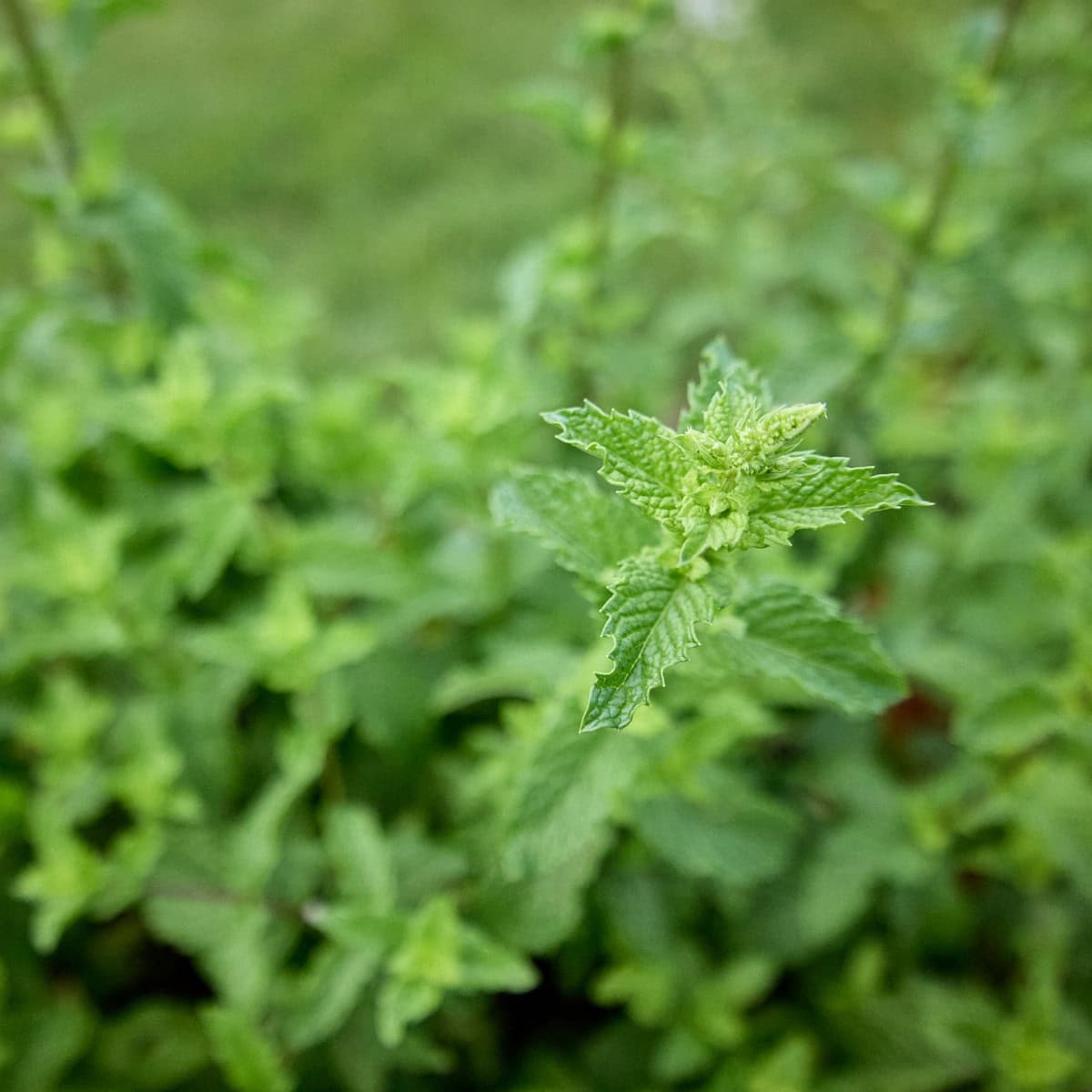
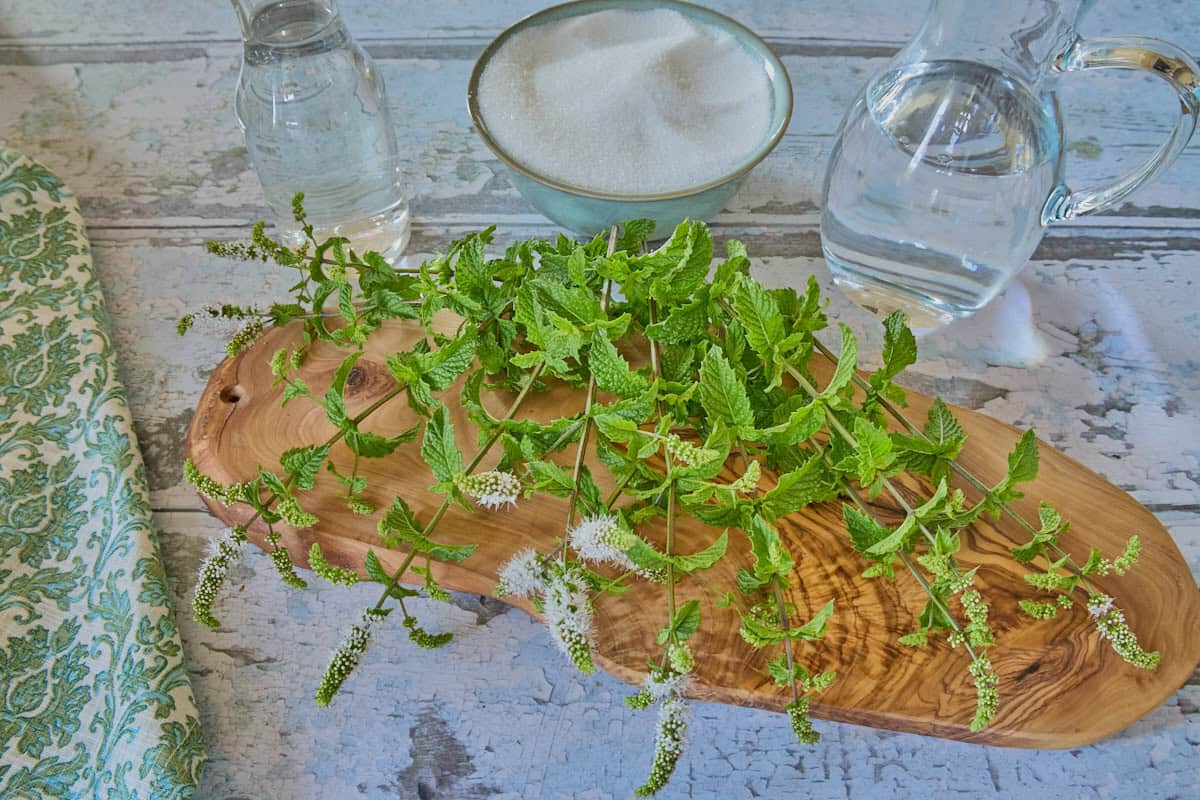
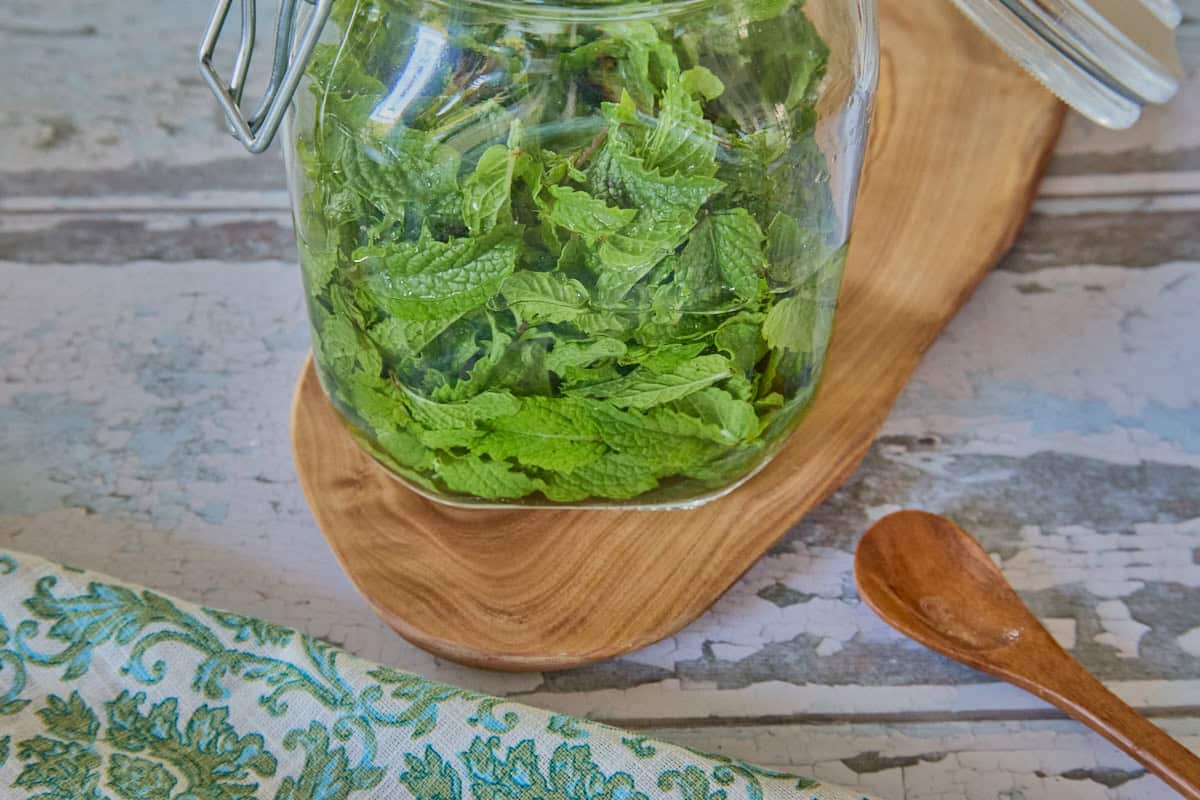

🌿Version 4 ingredients:
- Kentucky colonel spearmint
- Vodka
- Sugar
- Water
- Green food coloring (optional)
👄Tasters' notes:
Need a 2nd taste; rich, very good, spice, candy cane, I like it! spearmint with some oak; smooth, sweet, minty, maybe favorite, good in coco, good, loved it, it was sooo minty, then delicious; liked it, great! chocolate? very very good, love it!!! delish, ok; deep, mint, old moss, damp woods, aged, not a fan, not good, too sweet, tastes like Andes mint; excellent
✨Rating out of 10:
8.3
Version 5: Grocery store mint, aged 4 weeks
Of course no taste test could be complete without a baseline "regular" mint. I bought this one at my local grocery store. I tried to contact the farm it came from to establish the variety, but I didn't hear back.
And maybe it's better not to know; this is a perfect example of a generic mint that is readily available if you want to use it in your liqueur but don't have the time or space to grow your own. Let's see how it did in the taste tests!
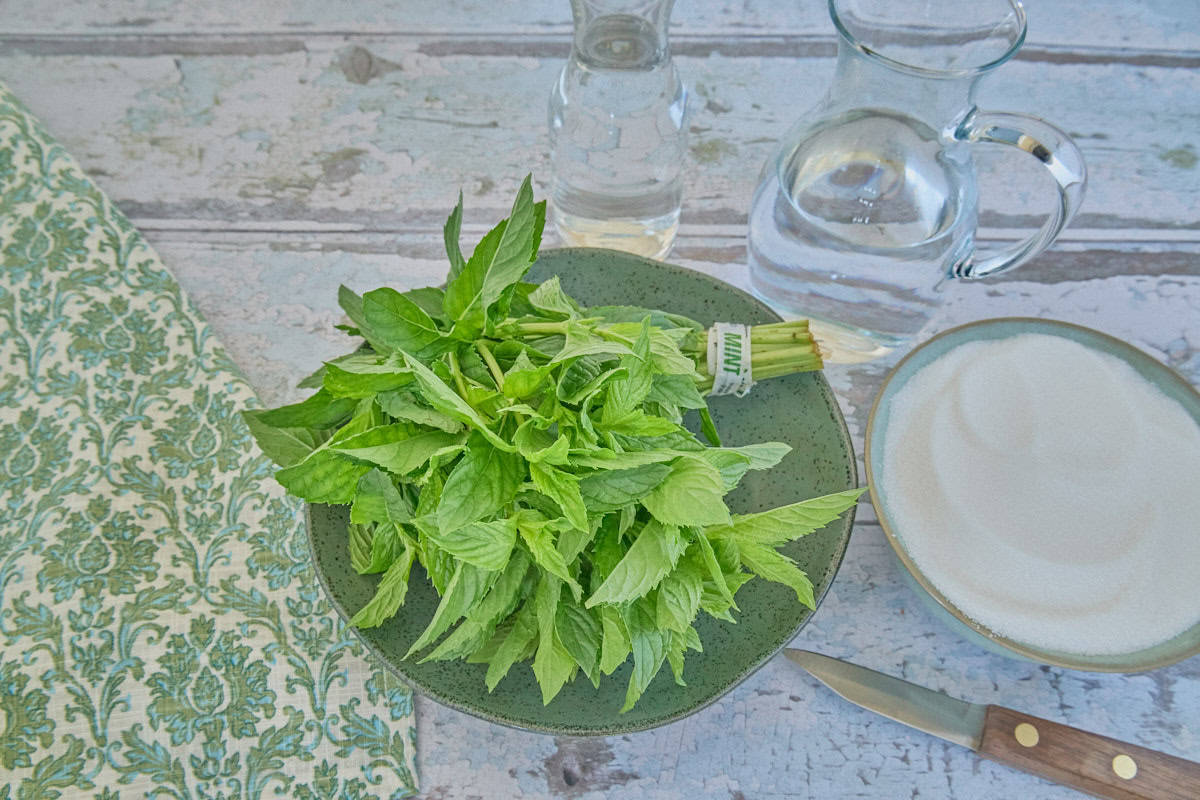
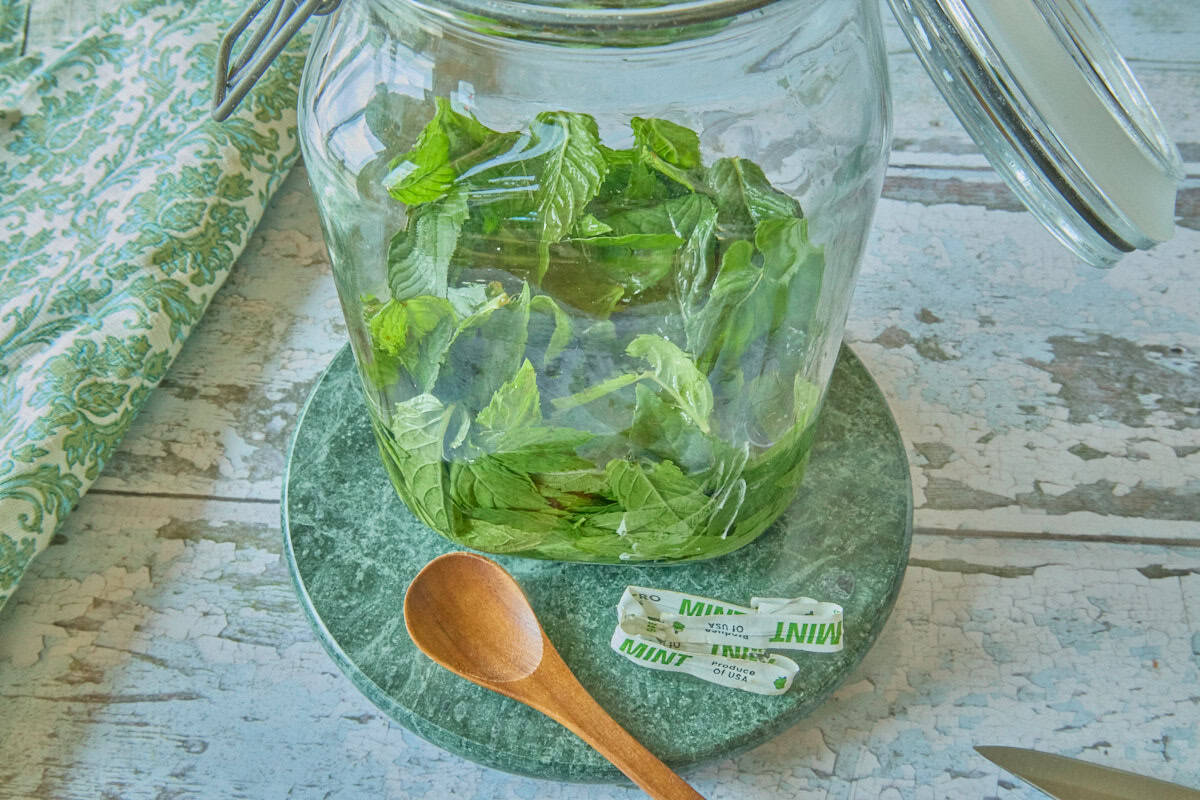
🌿Version 5 ingredients:
- Grocery store mint (undetermined variety)
- Vodka
- Sugar
- Water
- Green food coloring (optional)
👄Tasters' notes:
Different mint flavor than others; sharp, has lots of spearmint! good, thicker, stronger mint flavor, strong in-your-throat taste; taste a hint of chocolate; like it; tied for my favorite, strong nose; good flavor; sticky; very sweet; over-complicated; don't love the aftertaste; too sweet, gross mint, too many flavors; I like this one; hints of chocolate, too sweet; too syrup-like
✨Rating out of 10:
5.0
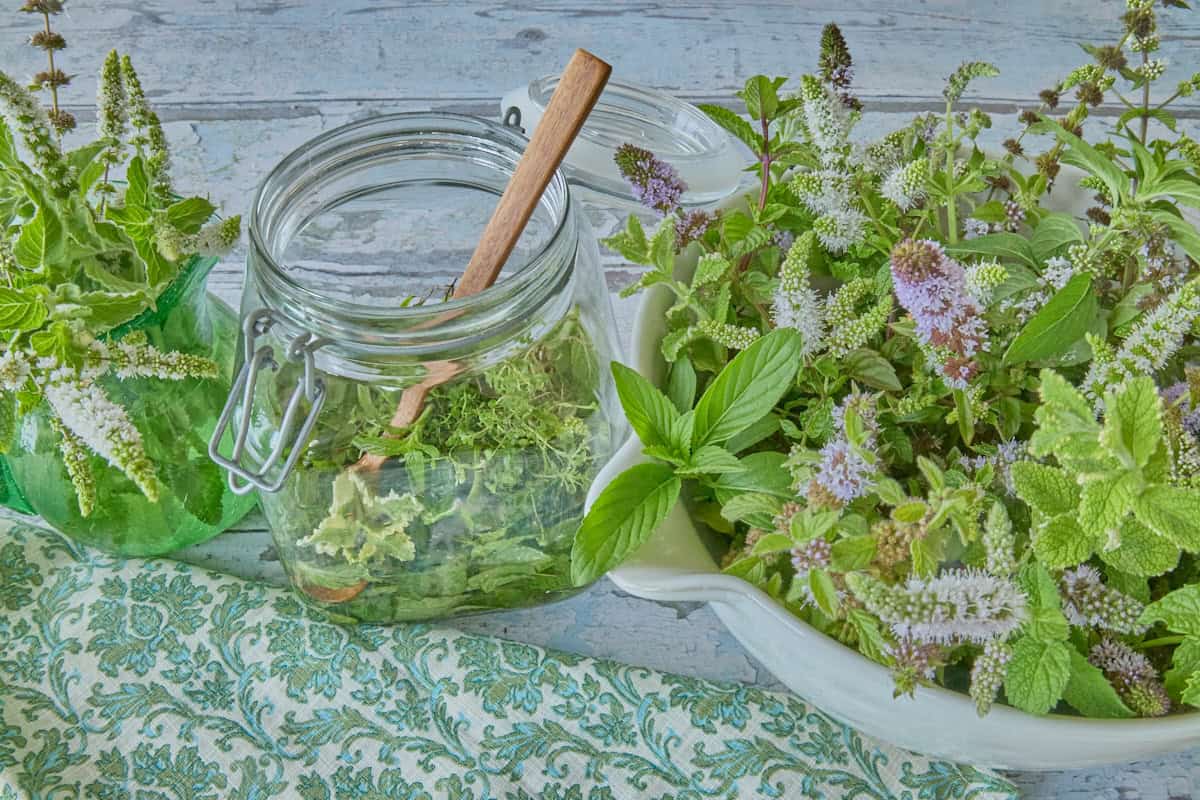
Version 6: 17 mixed mints, aged 4 weeks
Here is where I really wanted to have fun with a combination of all of the mints in my garden this year. I've included them all in this blend, with a quick 4-week aging time.
I'm so glad I had this beautiful mixture of so many mint types to compare to the baseline grocery store mint at the other end of the spectrum in version 5. How do you think this one did in our taste tests? Read below to find out!

🌿Version 6 ingredients:
- Apple mint
- Arabian mint
- Banana mint
- Berries & cream mint
- Chocolate mint
- Corsican mint
- Double mint
- Kentucky colonel mint
- Lime mint
- Mojito mint
- Moroccan mint
- Orange mint
- Pineapple mint
- Peppermint
- Scotch mint
- Thai mint
- Wintergreen mint
- Vodka
- Sugar
- Water
- Green food coloring (optional)
👄Tasters' notes:
Full bouquet, sweet, brandy, chocolate mint taste, brandy-like, good! difference is gone at this point for me, lol...; smooth with ample mint flavor; mint is pure; yummy, sweet, like I'm drinking caramel, liked it; good! chocolate; filmy texture; light, good mint; syrup-like
✨Rating out of 10:
6.7
⭐And the winner is...
Here are the results in descending order, with ratings out of 10 (with 10 being the best) for each of the 6 versions. I'm so glad I've had so many testers to really give these findings some authenticity:
1. Kentucky colonel mint, aged 4 weeks (version 4): 8.3
2. 17 mints, aged 4 weeks (version 6): 6.7
3. Grocery store mint, aged 4 weeks (version 5): 5.0
4. Corsican mint, aged 4 weeks (version 3): 3.9
5. Corsican mint, aged 1 year (version 2): 3.8
6. 6 mints, lemon thyme, vanilla bean, rum, aged 15 years (version 1): 3.4
⚖️ Reviewing the results
Aging
I'm in shock! After all of these years making my own botanical liqueurs, I've always thought I needed to age them all for at least a year. These results change everything! All of the top 3 versions were aged only 4 weeks. Unbelievable!
Mint varieties
And the traditional Corsican mint version that I've always sworn by wasn't the winner. Not even close! Wow. But Kentucky colonel mint, this is a special one. It's so deliciously aromatic, so fresh. I should have tried this variation sooner. And at only 4 weeks of aging! This is such great news.
I'm excited that the mixture of all 17 of my garden mints also did well in the #2 spot. So being creative is also good. But not too creative. My monster creation from 15 years ago with the different alcohol base (instead of vodka like in all of the others) was just awful. Even I spit it out in our tasting sessions. I feel bad for my friends, family, and neighbors who pushed their way through it. Maybe too much of a good thing can be a much less delicious thing.
Growing vs. buying your mint
It's great from a convenience perspective that regular unnamed grocery store mint came in at #3. So while I hope you'll try your hand at growing your own mints, you can still make a decent version with just the plain stuff you find at the store. This option is much easier from a timing perspective.
Summing up
From now on, at least for my future bottlings of homemade crème de menthe liqueur, I'm not going to bother waiting a year. 4 weeks is just fine! And I'm going to use either the readily-available Kentucky colonel mint, (which I see every spring as seedlings at local farmer's markets), and/or I'll get creative with a mixture of my garden mints. But definitely with a vodka base, and without any additional ingredients that could detract from the extraordinary fresh mint flavor.
📚Step by step instructions & photos
Here are the steps for making the winning version with Kentucky colonel mint and aging for just 4 weeks. And the recipe is below in the recipe card. This variation is so easy go grow and make yourself!
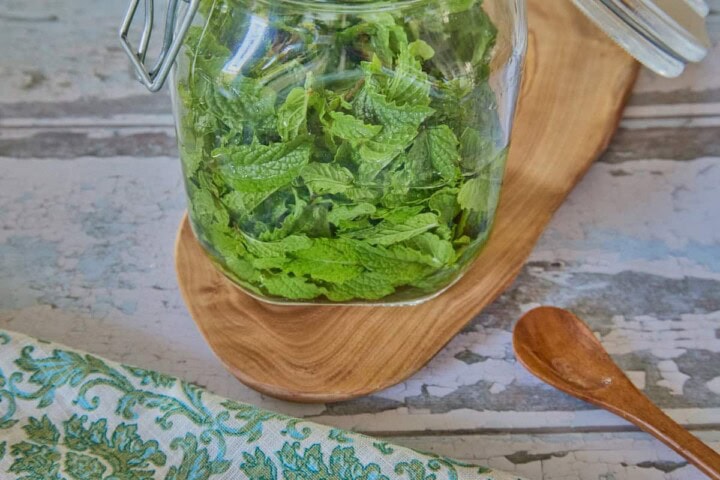
- Gather your ingredients: Use the freshest mint you can find. Rinse and dry the mint, and then separate the leaves from the stems. Discard the stems.
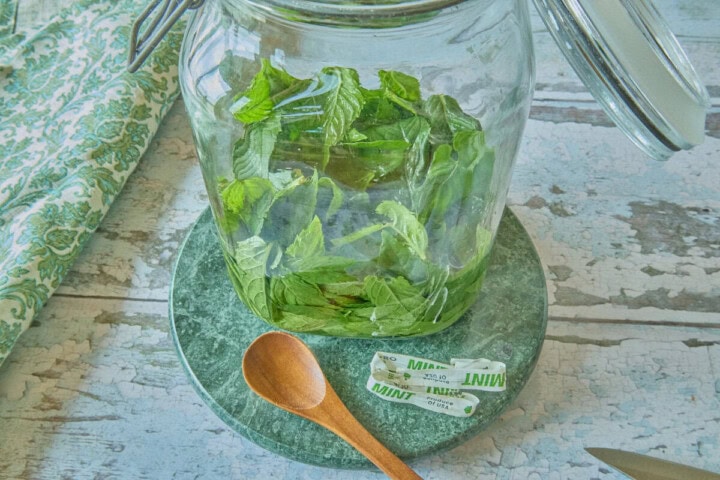
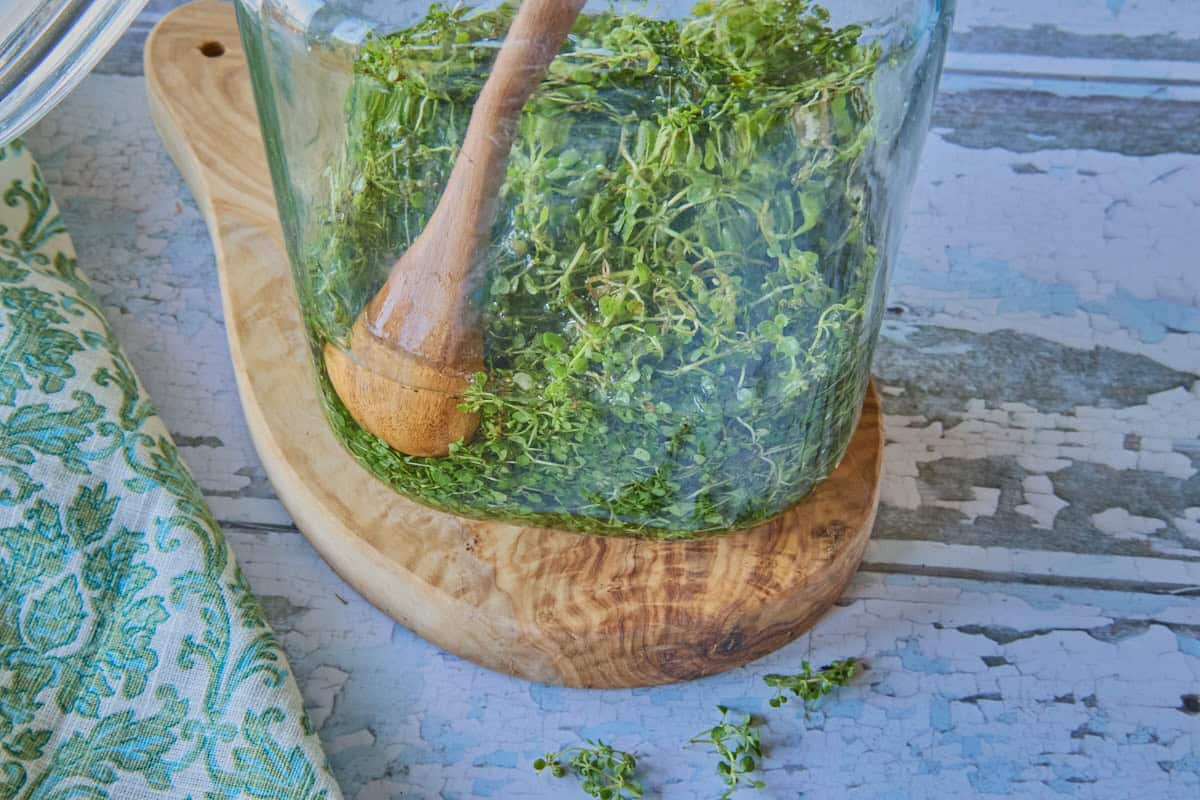
- Steep the mint: Place the vodka in a large air-tight jar. Make sure the jar has enough room for the syrup that will be added later. Place the mint leaves in the jar, and store in a dark cabinet. Shake the jar a minimum of once weekly for at least 4 weeks. The leaves and the liquid will turn brown. This is normal!
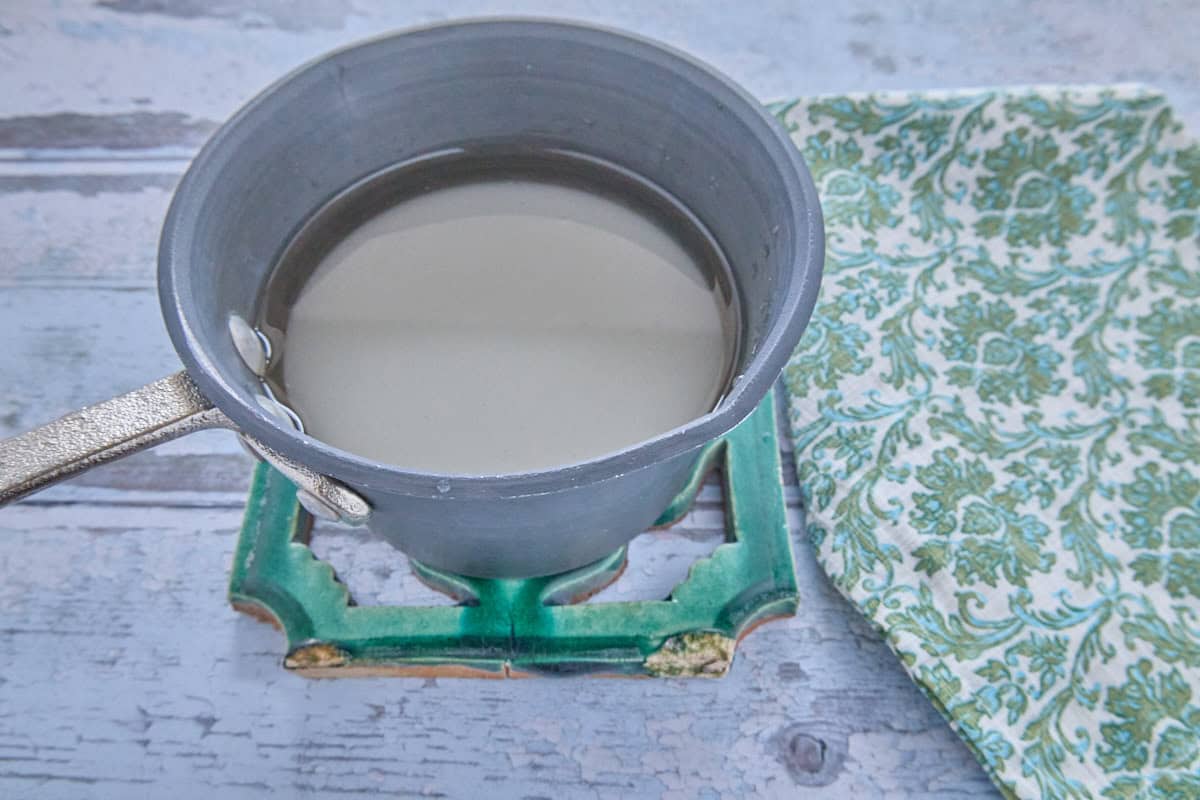
- Make the simple syrup: Decide on the thickness you'd like your liqueur to have, per the quantities in the recipe. Add the sugar and water to a small saucepan. Turn the heat to low and stir occasionally until the sugar dissolves.
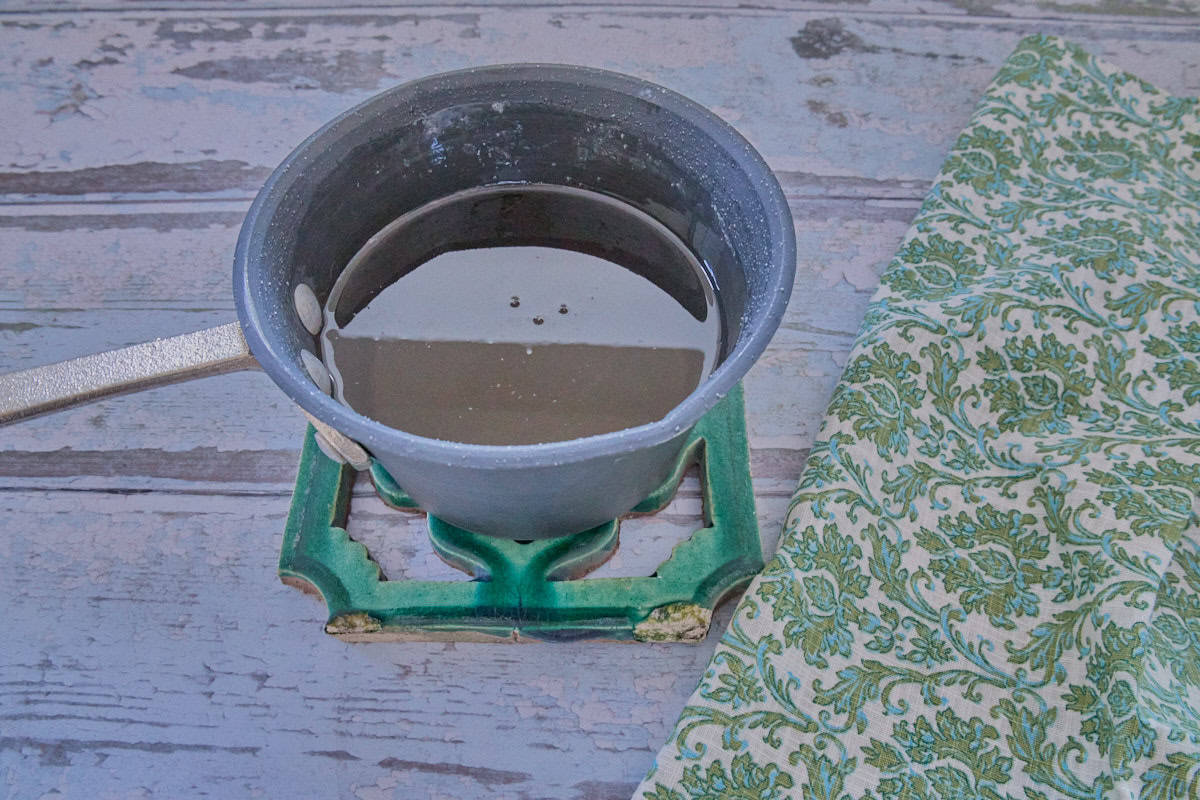
- Finish the syrup: Increase the heat to high and bring the syrup to a boil. Let it boil for 1 to 2 minutes. Allow it cool completely.
- Make the liqueur: Remove the mint leaves from the jar and strain the leaves from the liquid. Add the fully-cooled simple syrup to the jar. If desired, add a small amount of green food coloring until reaching the desired shade.
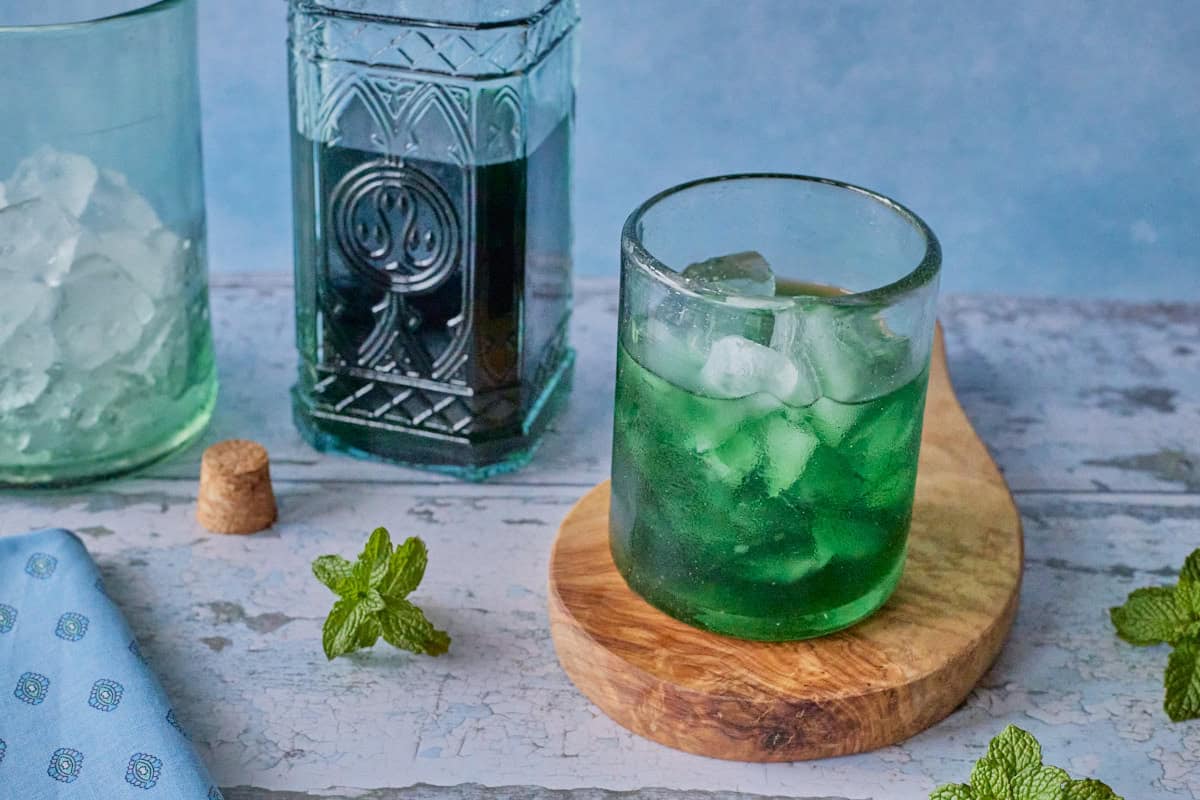
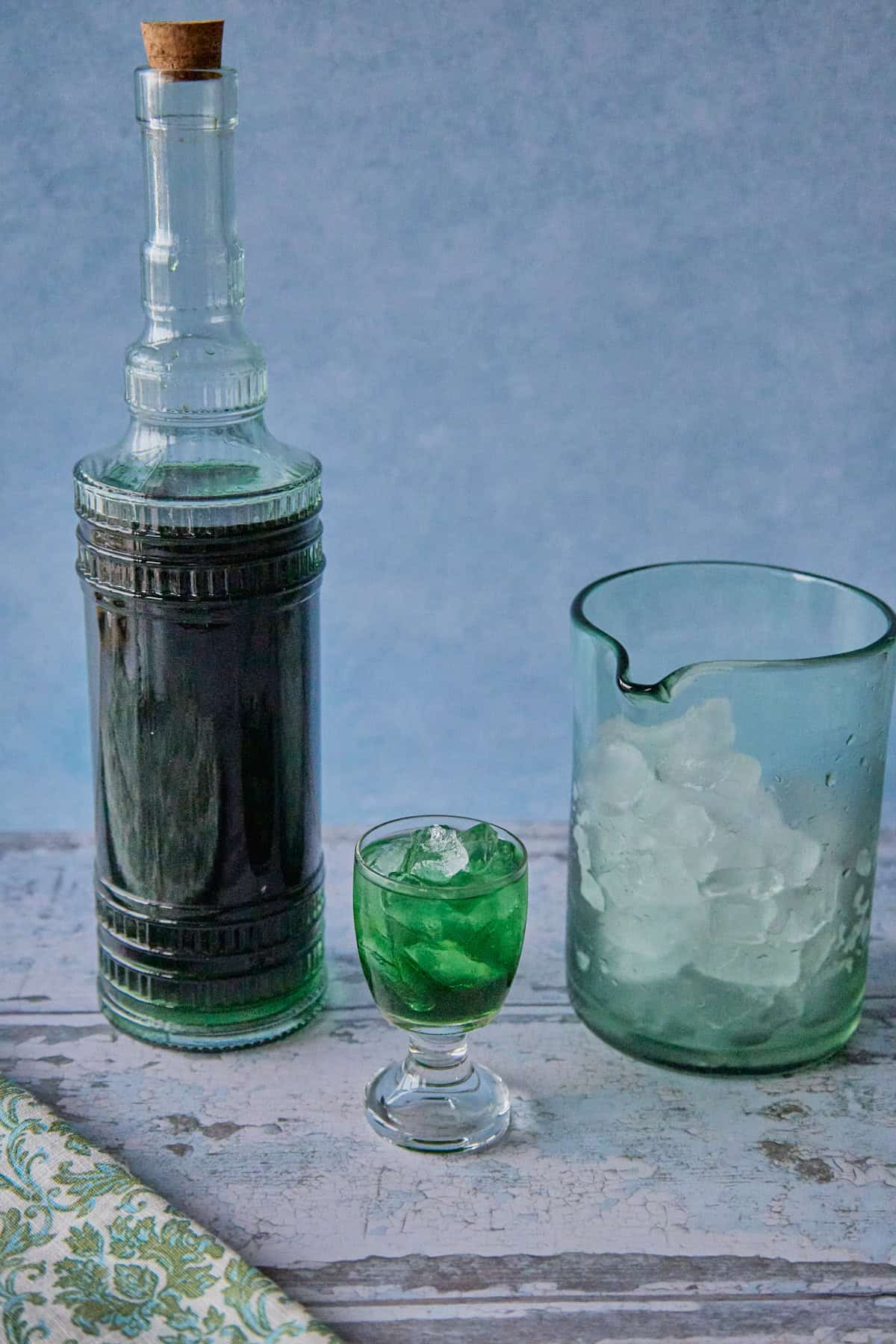
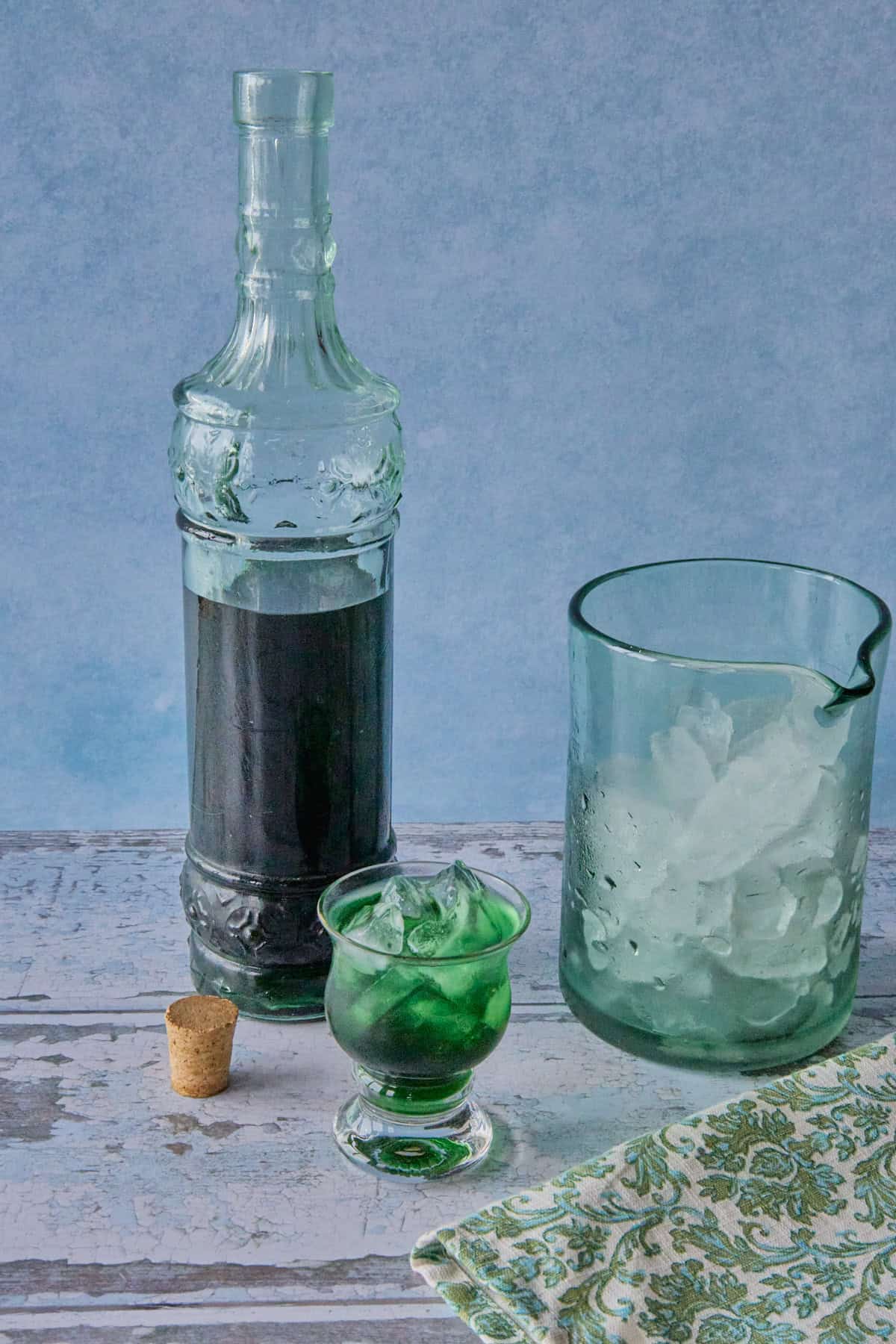
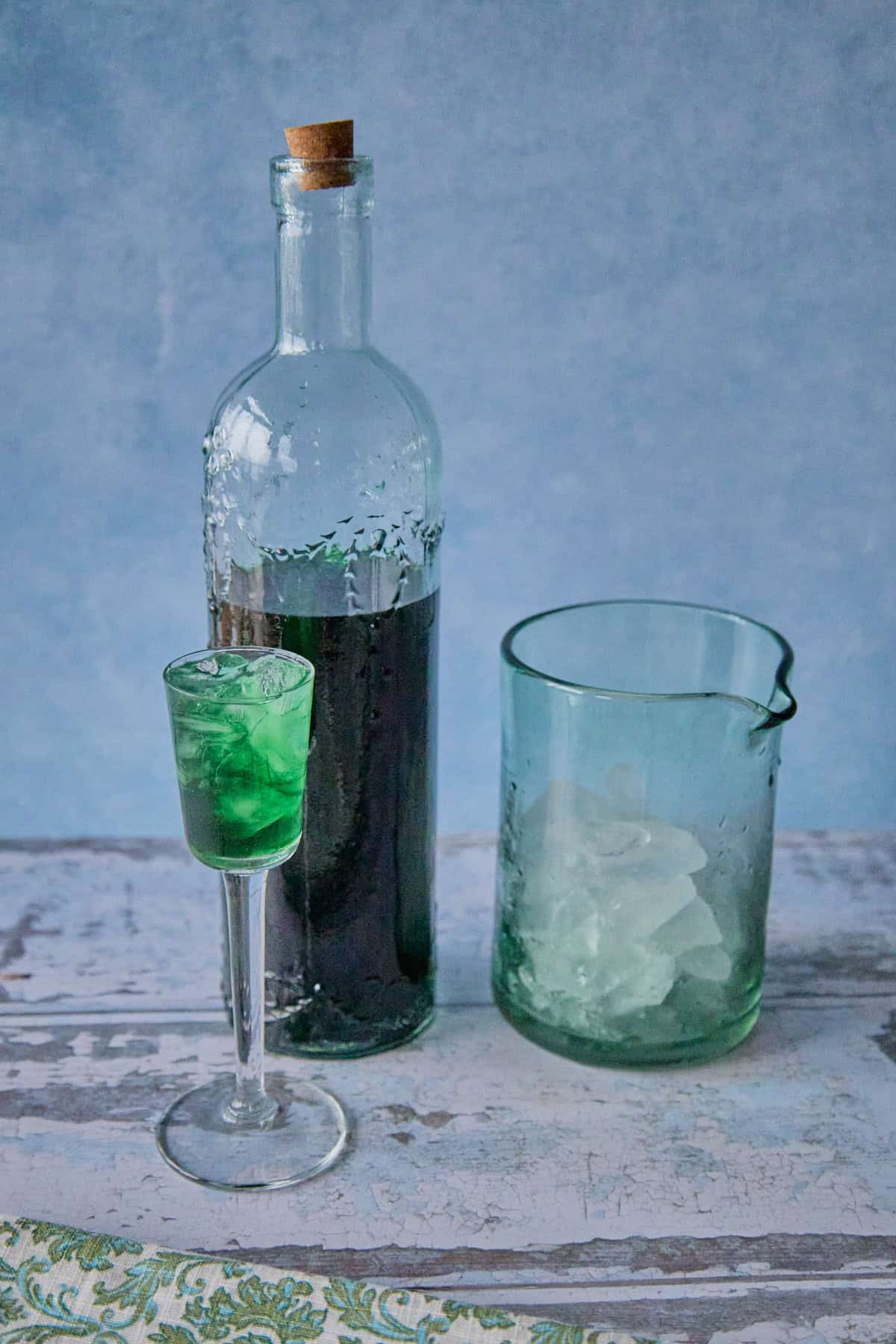
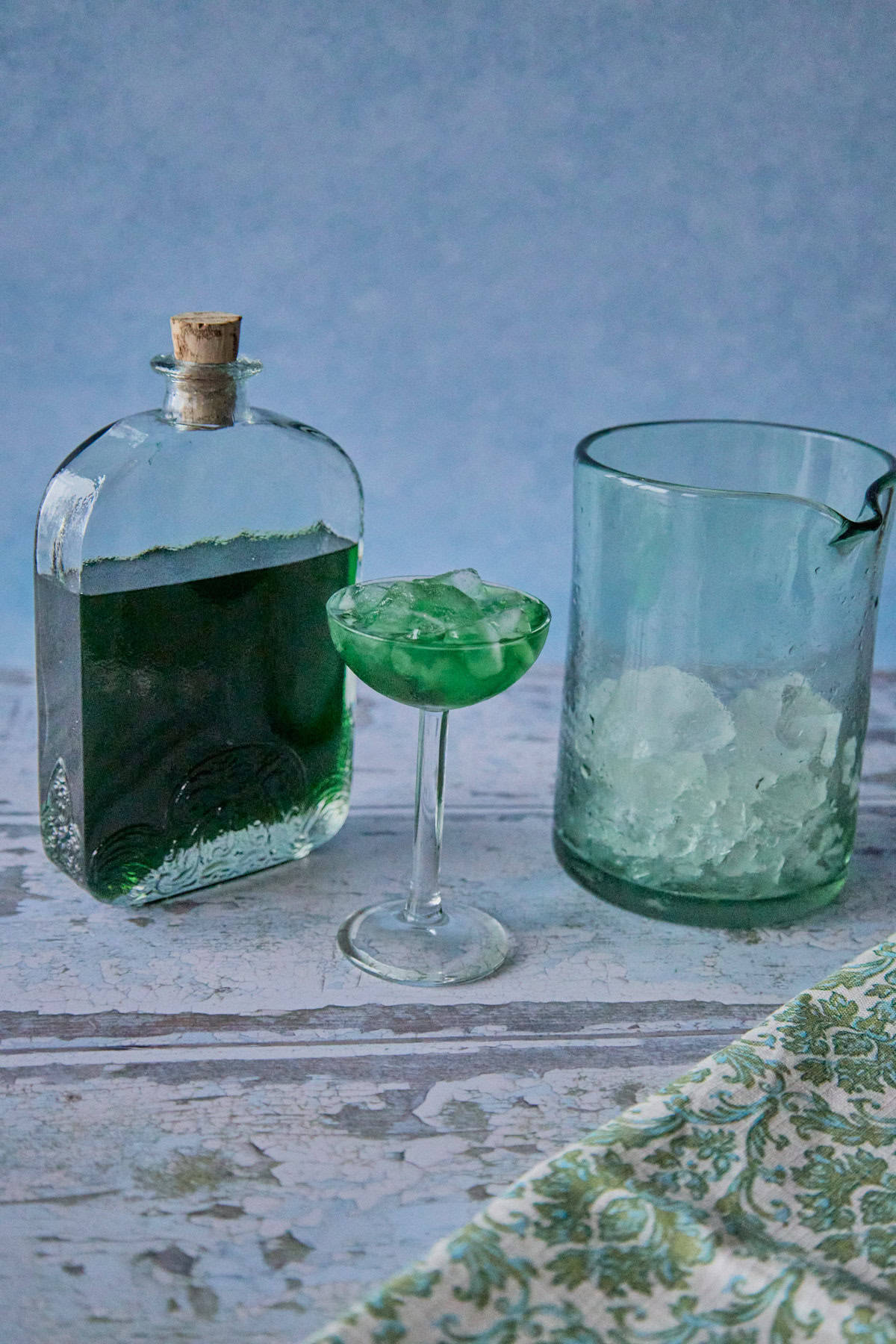
- Serve: Pour the liqueur over ice or add to a cocktail or dessert and serve. Enjoy!
See the recipe card for quantities.
💡Tip for success
Liqueur texture:
Would you prefer your liqueur to be thick and syrupy or thinner and more fluid? You can make yours either way, depending on the sugar to water ratio in your simple syrup.
I generally make mine with a 2:1 ratio, or twice the volume of sugar compared to the water volume. I like the rich smoothness that a thicker liquid gives to the drink. But you can do 1:1 as well, if you prefer a more liquid texture. I've included both options in the recipe card.
There are both viscosity (thickness) and storage duration tradeoffs with your choice of these simple syrup ratios. Please read the notes in the "Make ahead and storage" section for these storage details.
🔀Substitutions
Non-alcoholic version:
If you're looking to make a mocktail, or add some minty sweetness to your cup of tea or hot cocoa, you can skip the vodka and steep your fresh mint leaves directly in your simple syrup instead. This is another delicious way to enjoy your garden mint in a drink!
Dried mint vs. fresh:
I strongly recommend using fresh mint in this recipe if you can. Even if grocery store mint is the only one available. But if you only have dried mint on hand, just know that it's more concentrated than fresh mint. So if using dried leaves, only use ⅓ of the quantity called for in this recipe.
🍶Variations
Color
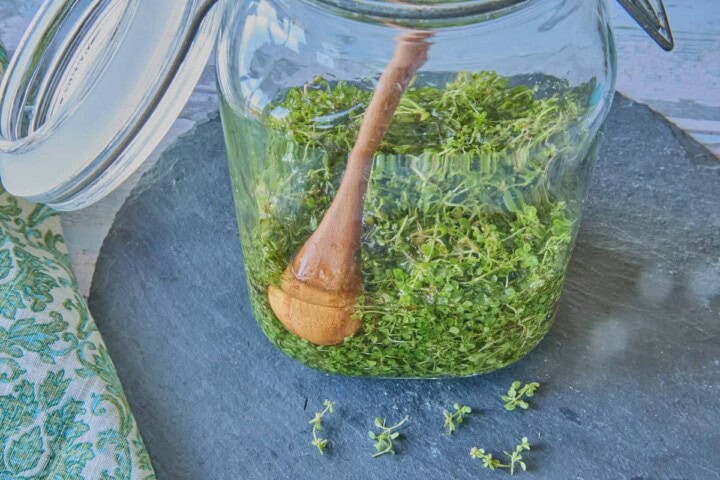
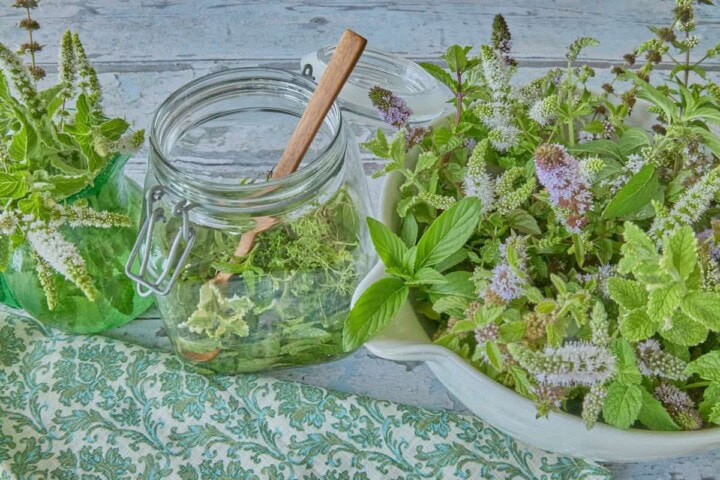
As you can see in the photos of making version 1, the mint leaves and vodka will turn brown during steeping. This is normal! You haven't done anything wrong when this happens. It's due to a number of factors, including a breakdown of chlorophyll in the leaves, oxidation from exposure to oxygen, and compounds such as tannins and phenolic compounds in the leaves bringing about this degradation in the color.
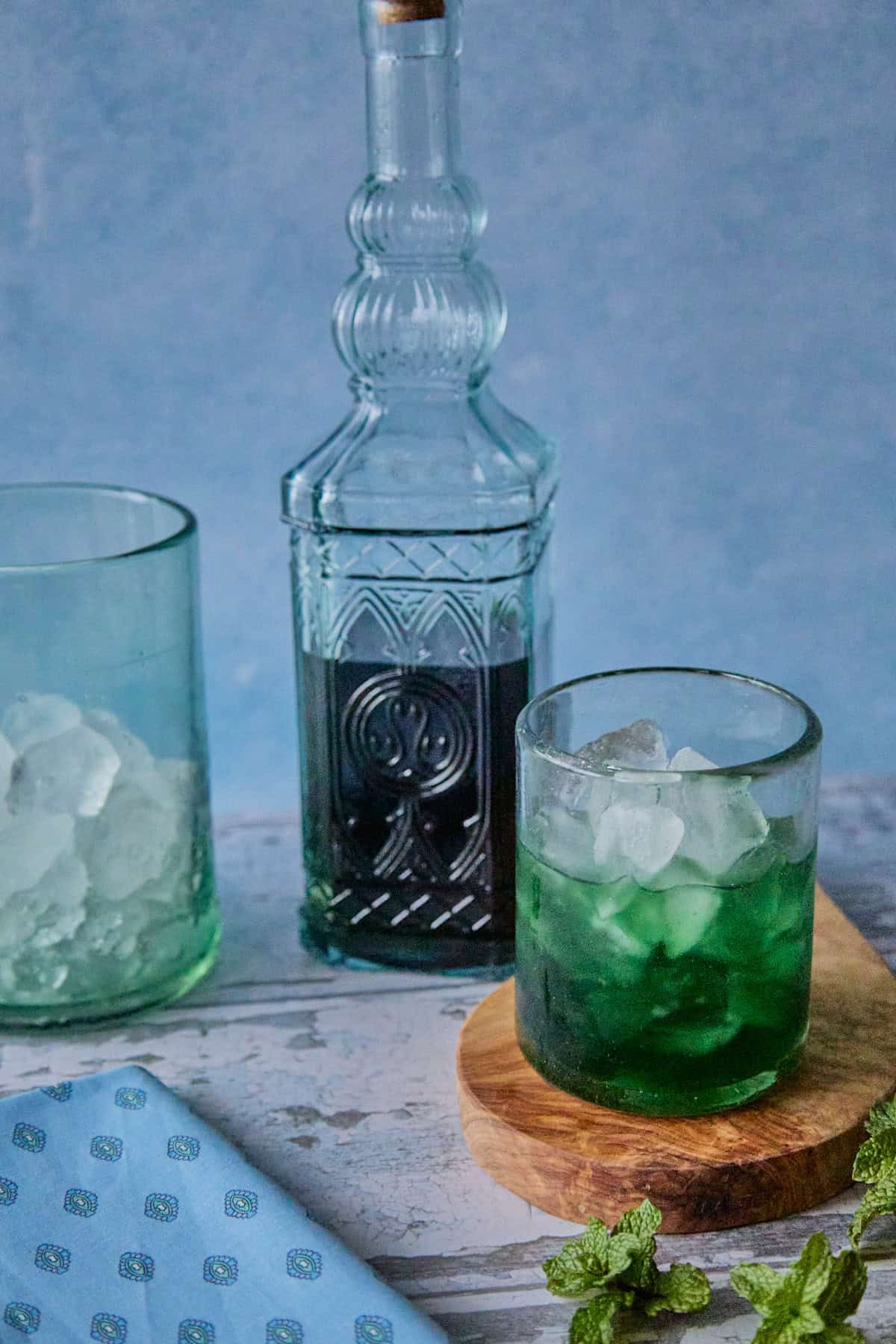
But not to worry! You can either serve your crème de menthe in its natural caramel color, or you can use a few drops of green food coloring to bring your liqueur back to a beautiful vibrant shade of green. I've been relieved to discover that the brown undertones of the liquid don't stop the food coloring from being able to achieve its full verdant green glory for this drink.
The food coloring that I've used for this recipe is a professional-grade gel one from Ann Clark. It only took a very small amount (1 to 3 drops for me) to achieve a beautiful shade of green.
Strength
I've made each of these versions with 80-proof (40% alcohol by volume) vodka or rum. I think this level creates a good balance of flavor and kick. And this yields a liqueur of about 25% alcohol by volume, which is in the typical range for a traditional crème de menthe. You could alternatively use 100-proof vodka (50% alcohol by volume) if you'd like. This will give you a stronger, more intense liqueur.
Aging time
After shocking results like these, I'm a convert to aging my liqueurs for less time. All 3 of the top-tasting versions were only aged for 4 weeks, instead of a year or 15 years! This is such a relief. For some of my other botanical liqueurs, they definitely benefit from the rounding and smoothing of the vodka over a year. But I'm really happy to have found that 4 weeks is plenty for this one. Now I won't have to plan quite so far ahead to make this.
Type of mint
I definitely recommend growing your own Kentucky colonel mint. This variety doesn't grow true from seed, so you'll need to start with live plants. You'll likely be able to find seedlings of it at your local farmer's market. If not, online herb vendors like Richters have the plants available.
Alcohol base
I'm done using rum in making crème de menthe after the results with version 1. I'll stick with vodka for this drink like I've been doing in more recent years.
🥣Equipment
- Pruning shears: To trim the mint from the plant if growing your own
- Digital scale: To weigh your mint leaves accurately
- Airtight glass jar: I recommend a 1-liter minimum jar size for steeping the mint leaves in the vodka, and then for adding the syrup after straining out the leaves
- Fine-mesh sieve or cheesecloth-lined colander: For straining the mint leaves
- Airtight bottle: 1 liter bottle for storing the finished liqueur
⏲Make ahead and storage
Liqueur steeping time: You should plan on a minimum of 4 weeks for the mint leaves to fully flavor the vodka while steeping in a dark cabinet. You can always check sooner, though, just in case. Or, of course, you can wait longer.
Room temperature storage: It's completely fine to store your crème de menthe in an airtight bottle (I use swing-top bottles) at room temperature (50-70°F or 10-21°C). Under these conditions, it should last at least 2-3 years if you use a simple syrup with a 2:1 sugar to water ratio. For a thinner 1:1 ratio, this duration is a shorter 1-3 years.
Refrigerator storage: If you opt for refrigeration, a 2:1 simple syrup ratio will extend the storage duration to be at least 3-5 years. With a similar timeframe for a 1:1 ratio, although a lower sugar content could allow flavors to degrade more quickly.
Freezer storage: And freezing should keep it fresh indefinitely for a 2:1 syrup ratio, and as low as 6-12 months for a lower sugar content with a 1:1 ratio.
🍲Serving suggestions
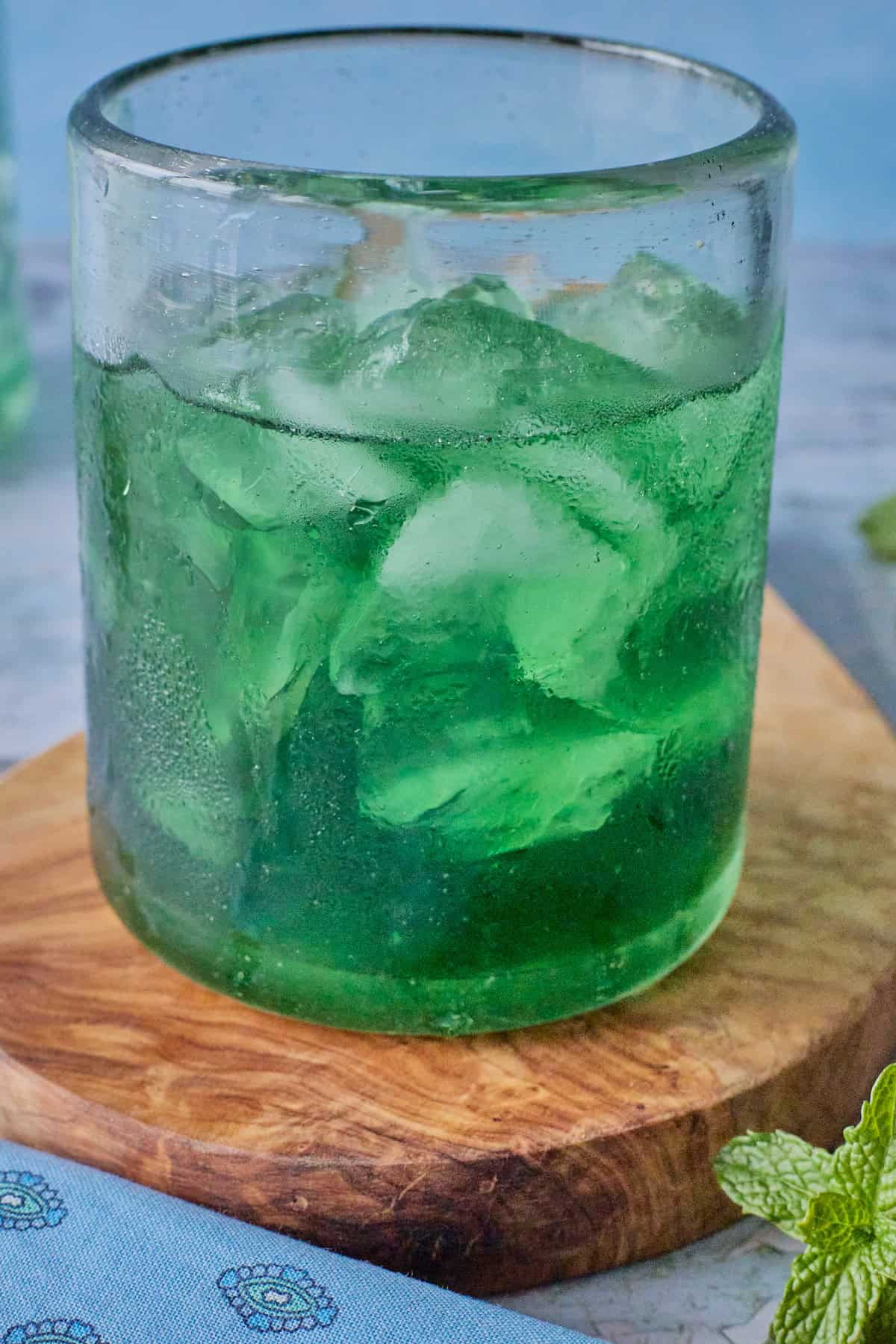
Digestif: This is traditional way to serve crème de menthe liqueur after a meal. You can serve it either neat or over ice for a cooling and soothing evening drink.
Cocktails: A grasshopper is a perfect and classic drink for special occasions. It's a dessert cocktail that contains both crème de menthe and crème de cao, along with cream. For a delicious vegan version, you could use coconut or cashew cream.
Another classic cocktail using this drink is a stinger. This includes brandy along with the crème de menthe. This is a good way to bring sophistication into an evening sipper.
Desserts: You can make an indulgent mint parfait by drizzling crème de menthe over vanilla ice cream.
And there are so many other ways to be creative and use this drink. Enjoy the possibilities with your homemade version!
❓FAQ
In summer, serve over crushed ice. Or add to a mojito or mint julep for an extra minty kick! In winter, you can add some to a cup of hot chocolate or coffee, or add to baked goods when you want to add a fresh and sweet minty note.
Yes you can, but the flavor will be slightly different. Fresh mint is more flavorful and aromatic. And dried mint is more concentrated. If you use it, add ⅓ the amount you'd use of fresh leaves.
Traditionally, crème de menthe ranges from 15% to 30% alcohol by volume. The recipe here for version 4 using Kentucky colonel mint and a 2:1 sugar to water simple syrup ration will yield a liqueur at about 25% which is in that classic range.
I recommend using a mid-range vodka for this recipe. It's economical, and it will be smooth and neutral enough to let the fresh flavors of the mint shine through.
✨More herbs and recipes you'll love
Looking for other garden posts and recipes like this? Try these:
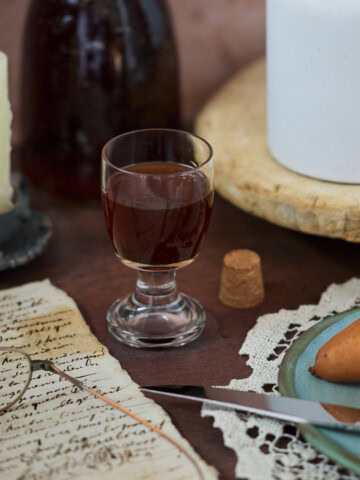
✏️Did you grow your own mint and/or make this recipe?
I'd love to know in the reviews and comments below!
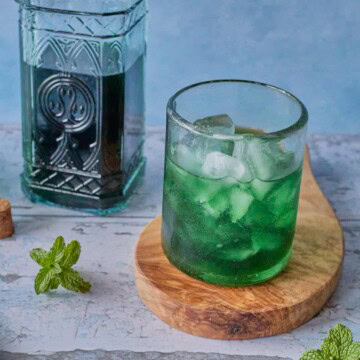
Homemade Crème de Menthe Liqueur
Ingredients
- 2 cups (500 ml) vodka
- 2.5-3 cups (40 g) fresh Kentucky colonel (or other) mint leaves, loosely-packed
- 2 cups (400 g) granulated sugar, (or for a thinner liqueur, 1 cup or 200 g)
- 1 cup (237 ml) water
- 1-3 drops green food coloring, (optional, adjust to your color preference)
Instructions
Steep the mint in the vodka
- Rinse and dry the mint. Remove the leaves from the stems and discard the stems.
- Add the vodka and mint leaves to a jar. Seal the jar and let it steep for 4 weeks in a cool, dark place, shaking at least once per week. The leaves and liquid will turn brown. This is normal.
- After a minimum of 4 weeks, strain the vodka with a fine-mesh sieve or a cheesecloth-lined colander to remove the mint leaves.
Prepare the simple syrup
- Combine sugar and water in a saucepan. Bring the mixture to a boil, stirring occasionally, and let it boil for 1-2 minutes until the sugar is fully dissolved. Remove from heat and let it cool.
Combine and serve
- Mix the strained vodka with the cooled rich simple syrup. If desired, add a few drops (starting with just one and adding more as needed) of green food coloring for a vibrant green liqueur.
- Add the crème de menthe to a bottle and store it in a cool, dark place, or in the refrigerator or freezer. Enjoy!

Leave a Reply