



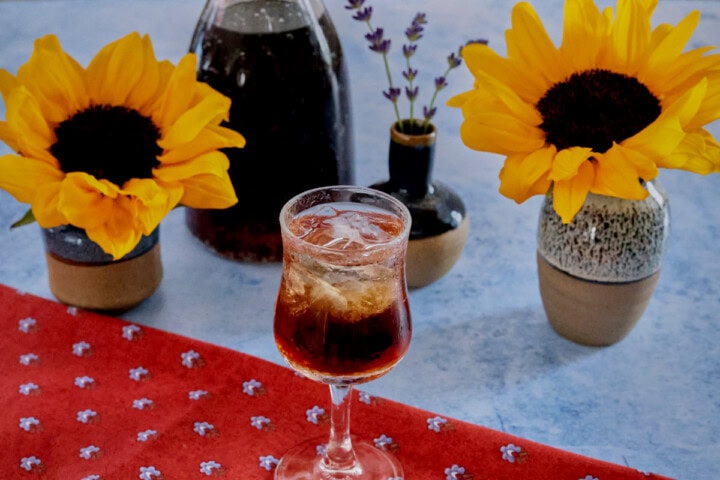
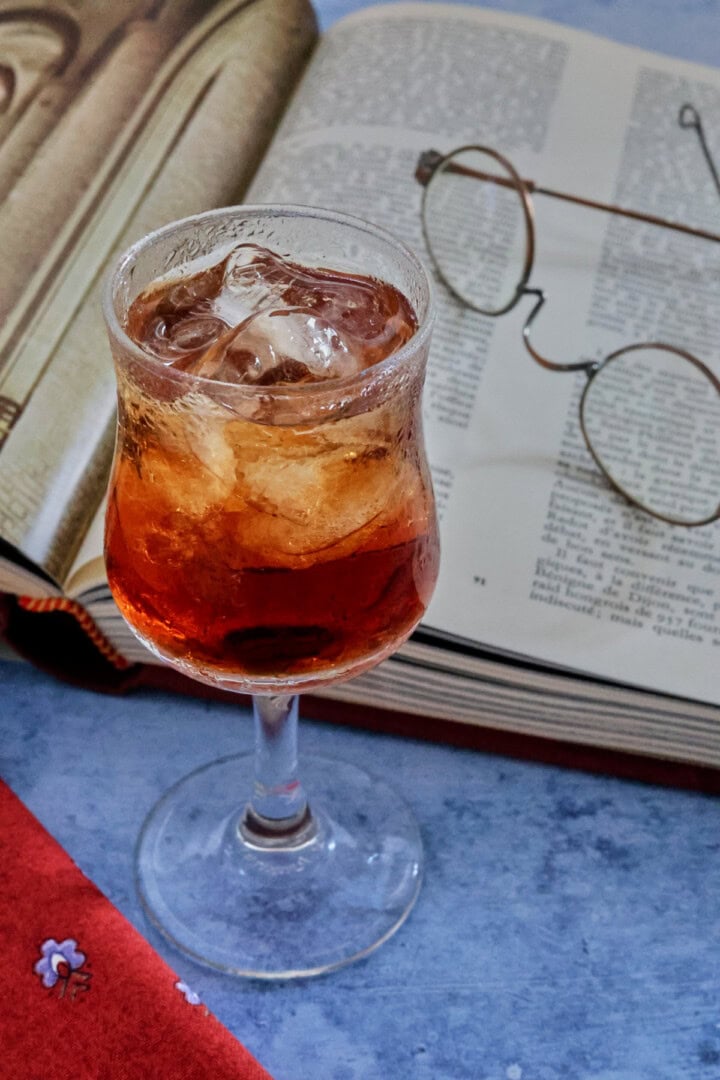
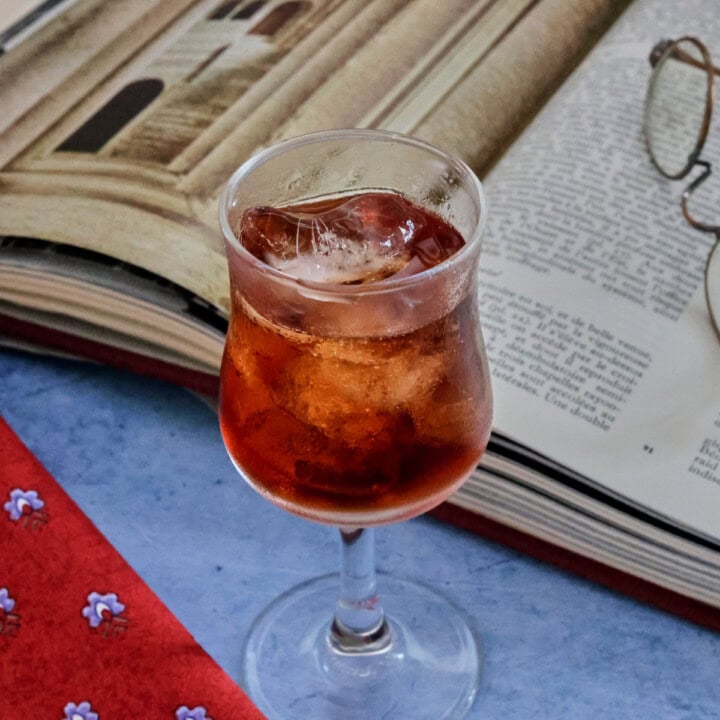


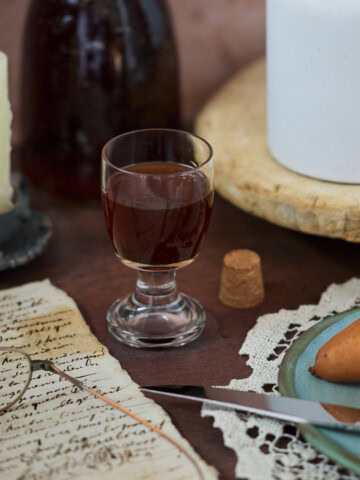
This fragrant, captivating homemade French liqueur de verveine is made from fresh lemon verbena leaves. It has bright lemon notes, rounded with hints of caramel and vanilla. I've been making this for over 30 years with a range of quantities, and every batch has turned out beautifully. With just three ingredients and a flexible recipe, it's one of the easiest and most rewarding homemade liqueurs you can make. And this aromatic herb plant is so easy to grow. The liqueur has a hearty amber hue, and is a very special drink to enjoy with friends and family. You just have to try making this irresistible Homemade Lemon Verbena Liqueur (Liqueur de Verveine)!

🏛️A beautiful, time-honored tradition: the origins of liqueur de verveine
Lemon verbena (Aloysia citrodora) is native to South America. It was introduced to Europe by Spanish and Portuguese explorers in the late 1700s. In France, it quickly gained popularity for its intense lemony aroma and soothing digestive properties.
Joseph Rumillet‑Charretier created liqueur de verveine in the Haute-Loire region of south-central France in 1859. His classic version, Verveine du Velay, became an iconic liqueur in the region, celebrated for its complex botanical flavor and rich amber hue.
Liqueur de verveine is traditionally served as an after-dinner digestif, enjoyed chilled in small glasses. It's still popular today thoughout France, especially in Auvergne and the southern regions, as well as across Europe.
🌿How I first tasted lemon verbena liqueur (and why I've made it for 30 years)
Just over 30 years ago, my husband and I were traveling in the south of France. One evening, at a quiet restaurant on the patio in Saint-Paul-de-Vence, we had a simple dinner that ended with an unassuming and generous gift from the waiter: two tiny glasses of golden liqueur, a homemade specialty, liqueur de verveine.
I took a sip and found it stunning. The flavor was citrusy, floral, deeply herbal, and impossibly fragrant. I knew I had to learn to make this myself.
When we returned home, I found some lemon verbena plants, planted them in my garden, and began experimenting with my own batches using traditional French techniques. I've been making it and sharing it with friends and family ever since.

Jump to:
- 🏛️A beautiful, time-honored tradition: the origins of liqueur de verveine
- 🌿How I first tasted lemon verbena liqueur (and why I've made it for 30 years)
- 💕Why you'll love this recipe
- 📓Ingredient notes
- 📒Step by step instructions & photos
- 💡Tips for success
- 🍂Why this liqueur turns amber and why that's okay
- 🌱Growing lemon verbena at home
- How long to steep lemon verbena liqueur (and when it's ready to drink)
- 🥣Equipment
- ⏲Storage
- 🍲How to serve it
- ❓FAQ
- ✨More recipes you'll love
- ✏️Did you make this recipe?
- Homemade Lemon Verbena Liqueur (Liqueur de Verveine)
💕Why you'll love this recipe
Flexible and rustic
You can make it with just a few leaves, or add more for a deeper infusion. And it naturally ages to a deep golden hue. And of course, it's naturally plant-based. Just make sure to use vegan granulated sugar. I like to use Pioneer granulated sugar. It's made from sugar beets and is from near my hometown!
Vivid and stunning citrus flavor
Fresh lemon verbena is an incredibly aromatic plant. It's one of my favorites to surprise people with in my herb garden. It always yields a shocked gasp of delight when I ask someone to smell the leaves. I hope you'll also grow this herb. It's so easy and special!
Delightful on its own or in cocktails
Lemon verbena liqueur has a long shelf life, whether at room temperature, in the fridge, or in the freezer. The vodka content will keep the liqueur from freezing. Store it however you'd like to be ready to serve either over ice, or already ice-cold.
📓Ingredient notes

🥄Just 3 ingredients
- Fresh lemon verbena leaves
- Vodka
- Granulated sugar
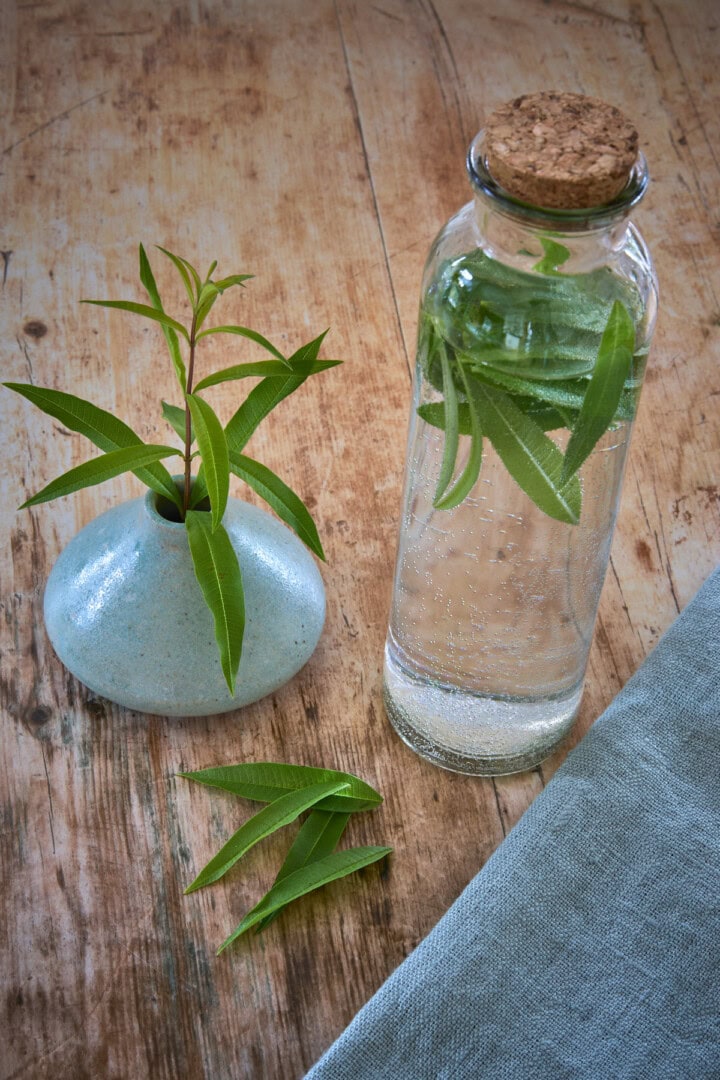
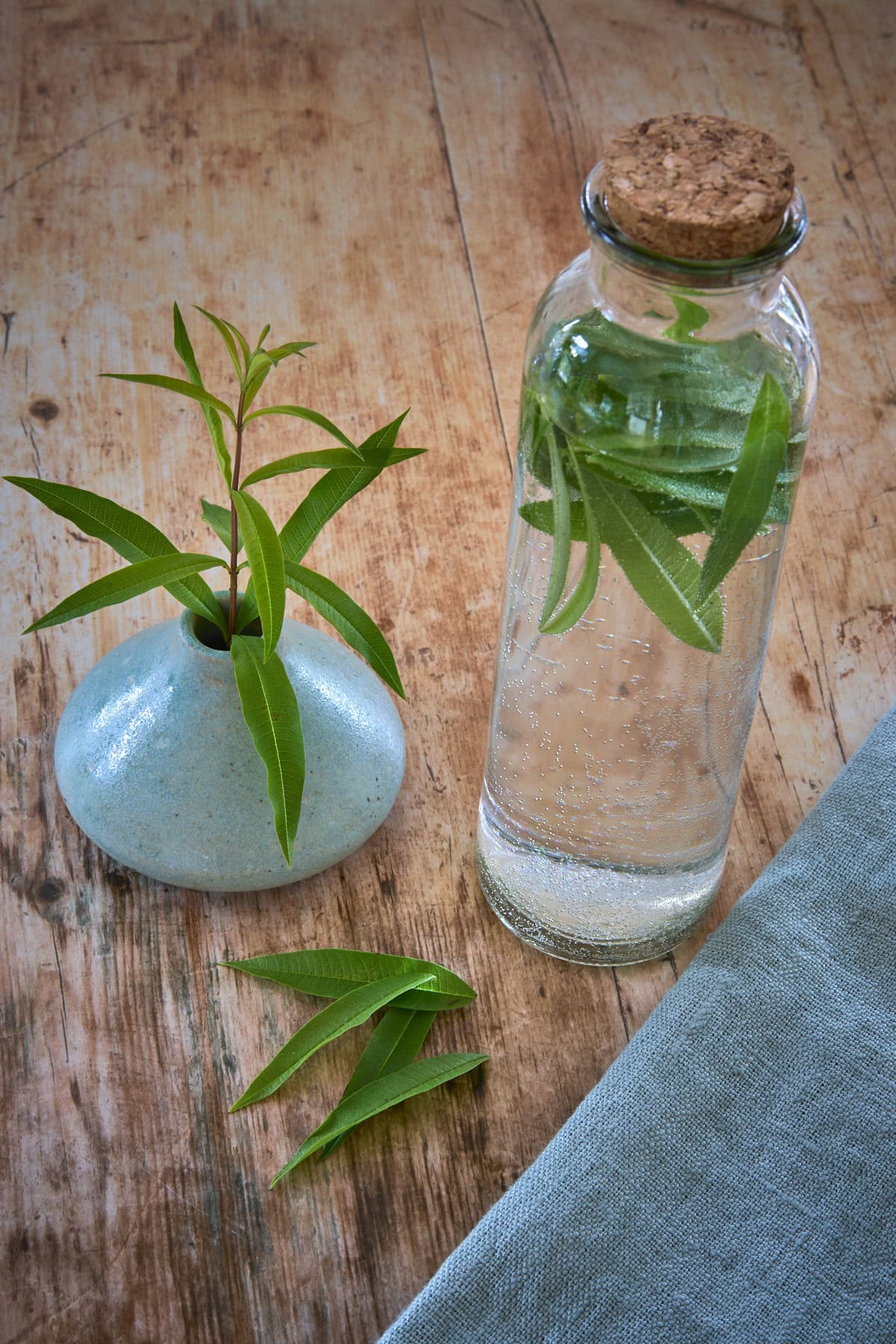
Shown above are the leaves and vodka at the start of the infusion. They're fresh, fragrant, and ready to lend incredible flavor to your homemade liqueur.
See recipe card for quantities.

📒Step by step instructions & photos

- Step 1: Harvest your lemon verbena leaves. Select unblemished leaves (without any woody stems), weigh them, rinse, and pat them dry.

- Step 2: Add the clean, dry leaves to a minimum 1.5-liter airtight jar. Add vodka to the jar and seal it. Keep in a cool, dark cabinet for 1-6 months, shaking gently once per week.
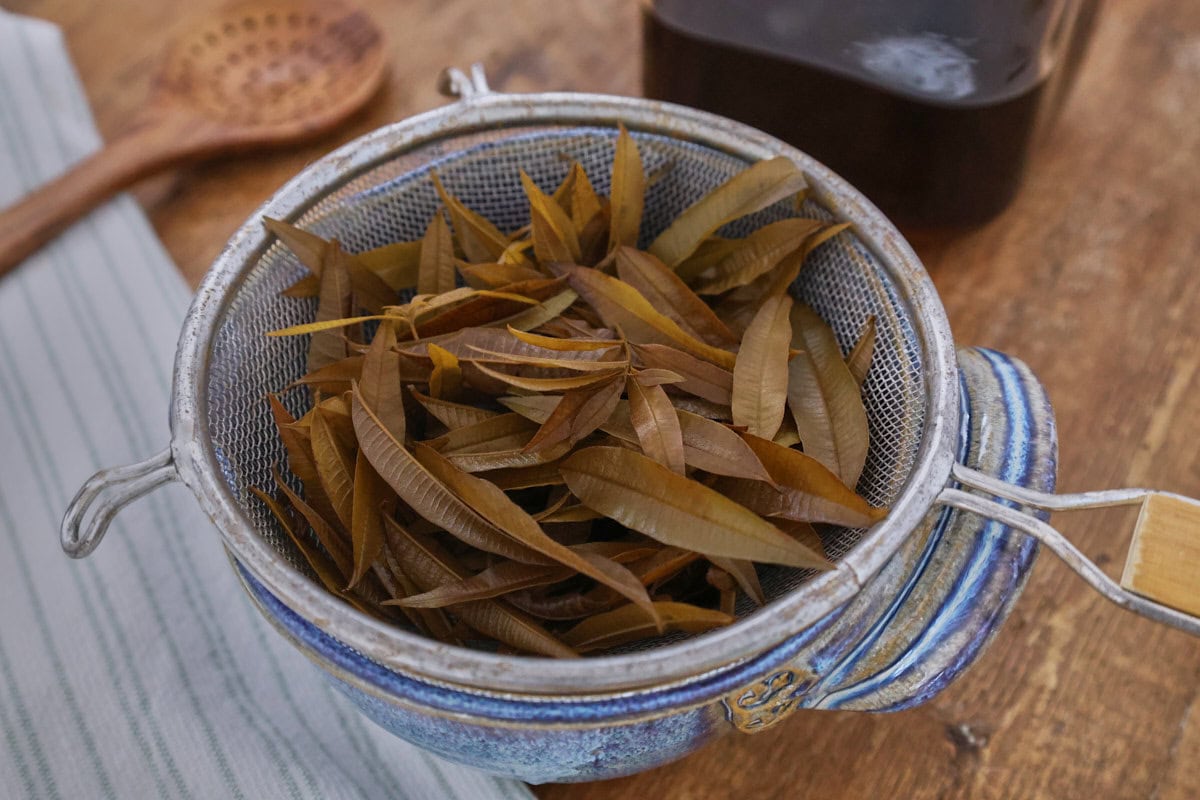
- Step 3: Strain out the leaves using a fine-mesh strainer or cheesecloth. Avoid pressing on the leaves as you strain to prevent bitterness in the liqueur.
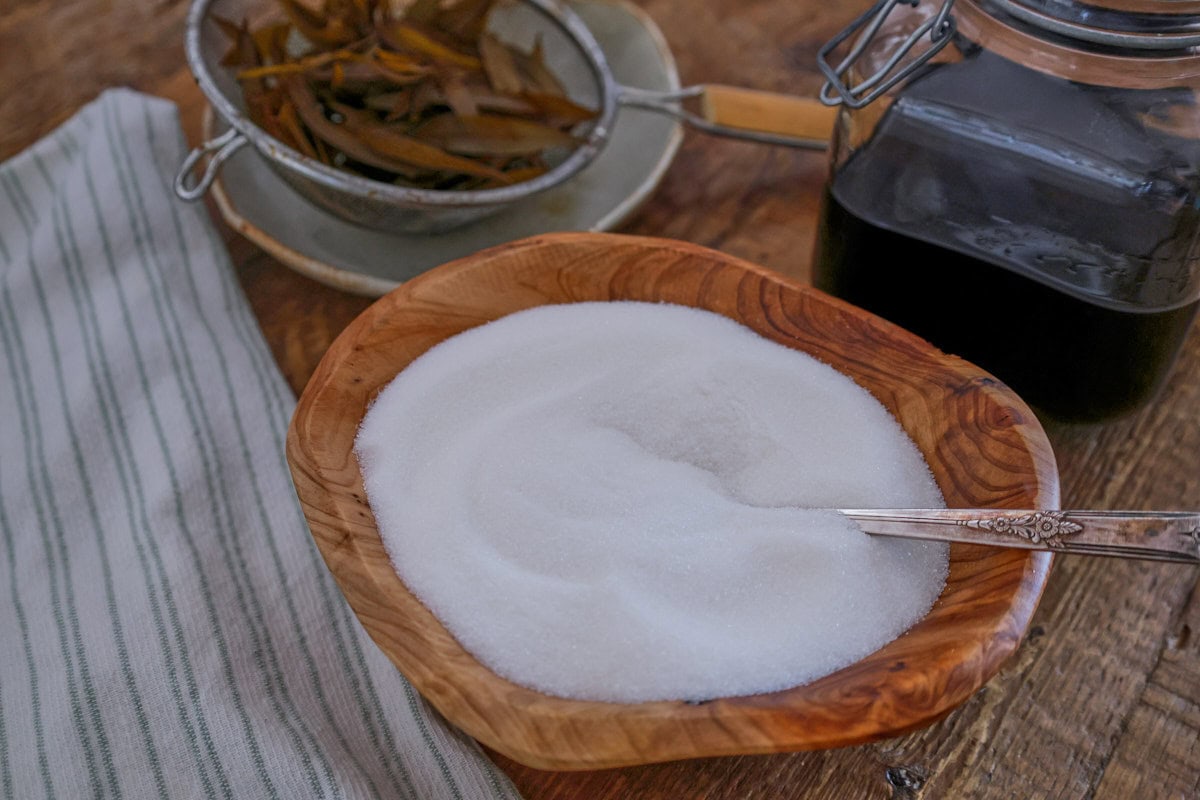
- Step 4: Add sugar directly to the jar.
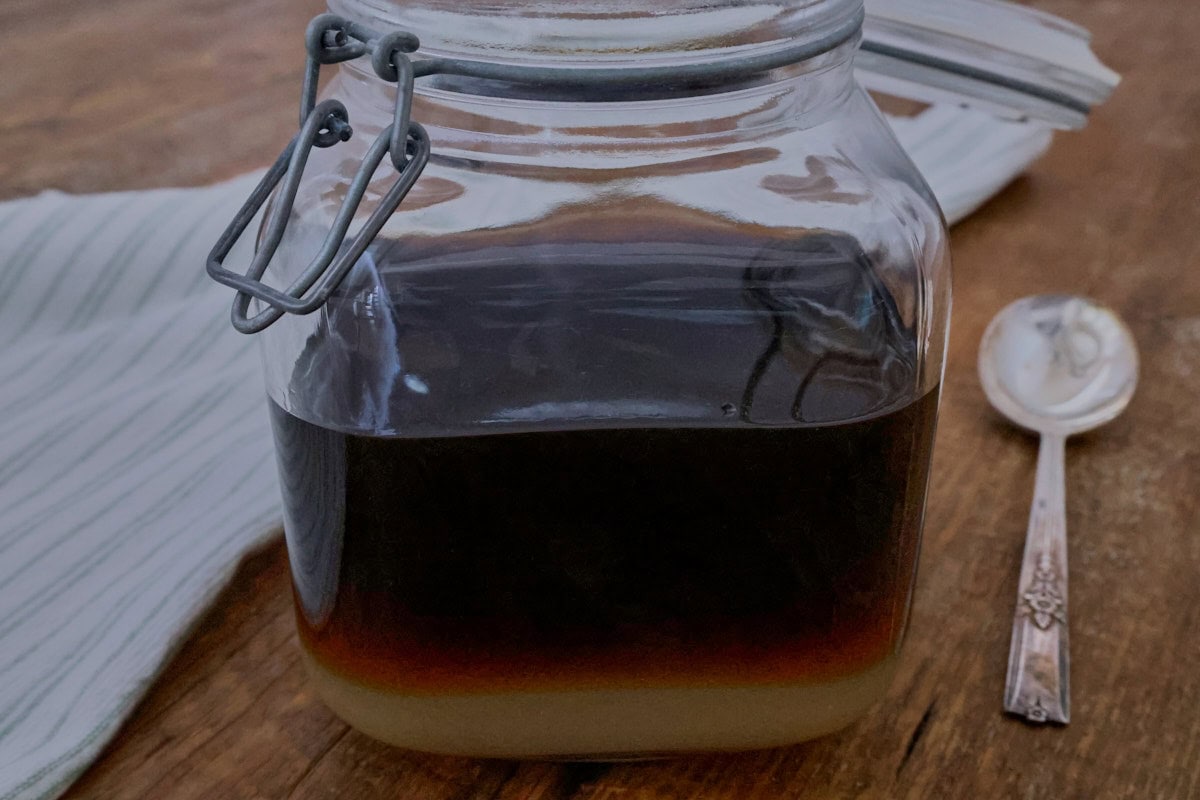
- Step 5: Stir or shake the jar to dissolve the sugar. Keep in a cool, dark cabinet preferably for 2-6 more months, or to taste.

- Step 6: Stir the liqueur and transfer to a clean, airtight 1-liter bottle. Store at room temperature, in the fridge, or in the freezer. Enjoy!
🔍Hint
Vodka quality: There's no need to use expensive vodka in this recipe. I've used both pricey and inexpensive brands over the years, and I find that the lemon verbena flavor leaves the vodka quality indistinguishable after steeping. So it's fine to use an inexpensive brand!
💡Tips for success
- Jar and bottle size : Use a minimum of a 1.5-liter steeping jar so the vodka fully covers the leaves and allows for headroom. You'll later add the finished liqueur to an airtight 1-liter bottle.
- No need for simple syrup: I prefer to add the sugar directly to the jar. It's easier and avoids diluting the liqueur
- Aging brings depth: I wait about a year from infusion to sipping. But this is flexible and can be adapted to your taste. See the recipe card notes for details.
🍂Why this liqueur turns amber and why that's okay
If you've seen photos online of bright green lemon verbena liqueur, you may wonder why yours turns a deep amber color. Here are some details:
• Chlorophyll breaks down during the process of steeping for several months. This oxidation process happens even when the liqueur is stored in a cool, dark cabinet.
• Commercial versions with a green hue often utilize colorants or stabilizers.
• Some recipes suggest blanching the leaves to delay discoloration, but this is likely to dull the flavor.
• The amber hue of homemade liqueur de verveine is gorgeous and authentic. But of course, you can add some green food coloring if you'd like to have a more botanically-inspired shade.
You may be surprised to learn that crème de menthe liqueur has this same beautiful toasted brown shade after steeping the mint leaves. You can see this in my post Homemade Crème de Menthe Guide: 6 Versions Reviewed. In the case of this mint liqueur, I usually opt to add a very small amount of food coloring to achieve the vibrant green shade of this classic drink.
So for your lemon verbena liqueur, you can leave it rustic and natural, as I do, or you can certainly add some food coloring if you'd like.
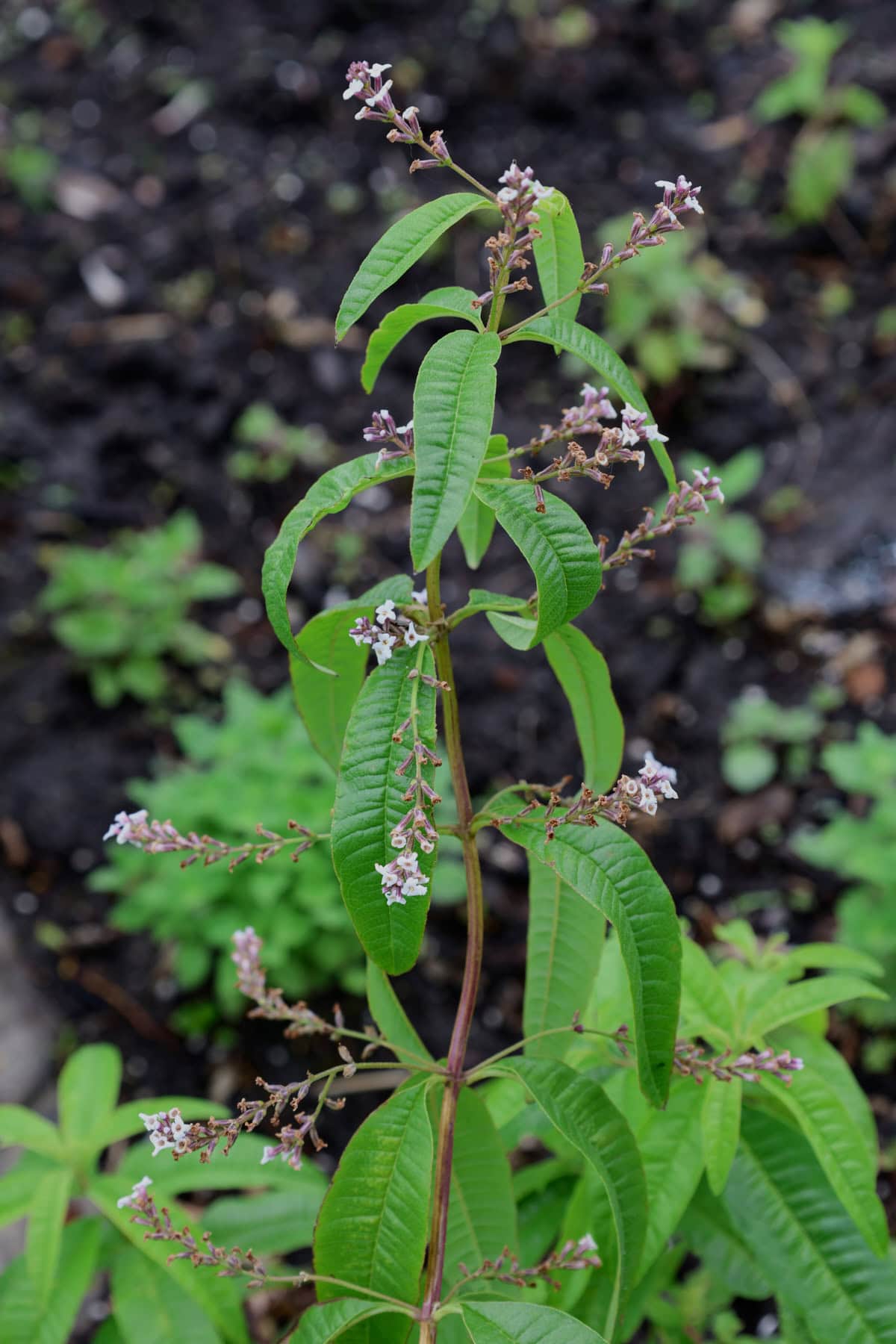
Here's a flowering lemon verbena plant from my garden:
🌱Growing lemon verbena at home
If you've never grown lemon verbena, this liqueur is a compelling reason to start. Of the nearly 300 herbs I grow in my garden, lemon verbena (Aloysia citrodora) is one of the most astonishingly fragrant. The scent of the leaves is incredibly fresh and vivid, with heady notes of lemon, spring breezes, bright lemongrass, fresh linens, and green summer meadows.
Lemon verbena is one of the easiest, most rewarding herbs to grow. It's typically grown as an annual in most climates, though in zones 9 and up it may overwinter as a perennial.
In Zone 6A, I need to replant mine each year but it's worth it. Last year, mine even surprised me by surviving a mild winter near a brick wall. If you have a sunny spot and a pot or garden bed, you have what you need. I plant mine in organically and vegetatively-amended soil, and keep it watered. Then I let it grow unattended until I need it, and I've never had issues with pests or disease. This herb is so easy and worthwhile to grow!
This herb is unreliable when grown from seed, so I recommend starting with seedlings. You may be able to find them at your local farmer's market or garden center, or you can order them online at Richters Herbs.
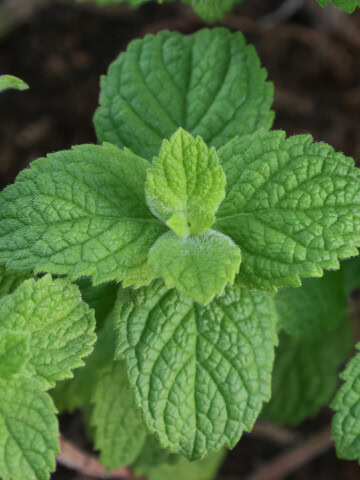
All of the photos of lemon verbena in this post are from my herb garden.

How long to steep lemon verbena liqueur (and when it's ready to drink)
While this liqueur reaches its most deep, rich, well-rounded flavor after about a year, you don't have to wait that long to enjoy it. Here's how the flavor evolves over time, to help you decide when it works best for you:
- After 1 month of steeping:
At this point, the liqueur will be light, grassy, and very fresh. The lemon verbena aroma is already present, but the flavors are not yet fully rounded. It may be sharp and vegetal; not bad, but possibly a bit raw. - After 3 months:
By now the taste will be more blended and less herbaceous. The flavor should be deeper and more mellow, and the color will take on a golden hue. - After 6 months (recommended minimum):
This is the point where the flavor really starts to develop. It should mellow into a drink that's more elegant, while still maintaining the distinctive bright citrus flavor. You can certainly serve it at this stage, especially in cocktails if it's not yet ready to be sipped on its own. - After adding sugar:
This will really round out the flavor. It should take at least a few weeks (ideally a minimum of 1 to 2 months) after sweetening to achieve a nice level of balance. - After 10-12 months (my recommended timing):
By now, the flavor will be rich, smooth, and well-blended. The color has deepened into a beautiful amber, and the flavor is lush, floral, and citrusy without the sharpness from earlier stages. If you can wait this long, this is the batch you want to sip neat in tiny glasses. If you'd prefer not to wait this long, you can always make multiple batches and enjoy them at various stages!
So if you're short on time or just too curious to wait, you can enjoy your homemade lemon verbena liqueur sooner. it'll still be fragrant and delicious. And if you have the patience, like with most good things, it only gets better with time.
🥣Equipment
- Scissors or a garden pruners: To trim the lemon verbena branches (using the uppermost ones) from the plant, and the leaves from the branches
- Digital kitchen scale: For accurately weighing lemon verbena leaves (35-85 g, or 3-5 loosely-packed cups) and sugar (300-375 g, or 1.5-just under 2 cups)
- Liquid measuring cup: to measure 750 ml (just over 3 cups) of vodka
- 1.5-liter (minimum) glass jar with a tight-fitting lid: For steeping the lemon verbena in vodka (a wide mouthed-jar is really helpful)
- Fine mesh strainer or cheesecloth: To filter out the steeped leaves and prevent sediment.
- 1-liter airtight glass bottle: For storing the finished liqueur
- Funnel: Helpful for transferring the finished liqueur from the steeping jar to the bottle
- Long-handled spoon: To stir in the sugar after straining
- Labels and pen: To mark the steeping and bottling dates for steeping reference
⏲Storage
Room temperature
This liqueur keeps beautifully for years in an airtight jar or bottle. Keep the liqueur in a cool, dark cupboard. You can serve it with ice as needed if you don't have time to chill it in advance.
Refrigerate
You can also keep it in the fridge to have handy to serve chilled.
Freeze
This is my favorite way to store my homemade liqueurs. The vodka content prevents the liquid from freezing solid, so I can serve them ice-cold whenever I'm ready.
🍲How to serve it
There are so many ways to enjoy this elegant, captivating and refreshing liqueur:
- Pour it chilled in tiny glasses as a digestif
- Add to sparkling wine or soda for a summer spritz
- Drizzle into fruit salad or sorbet
- Add to cocktails for a bright botanical boost

❓FAQ
Not necessarily. The full aging time (about a year) gives the liqueur its smoothest, richest flavor. But it's drinkable and delicious well before then. After just 2-3 months of steeping, the lemon verbena flavor will already be flavorful, though a bit more grassy and sharp. If you're in a hurry, you can strain and sweeten it then, and let it mellow another month or two before serving. The longer it sits, the rounder and deeper the flavor will be. This flexible steeping makes it good at 3 months, better at 6, the most well-rounded at 10 to 12 months.
Technically, yes, but the flavor is vastly inferior. I recommend using fresh leaves for the best results.
Absolutely. This recipe is very forgiving and scalable. I've made it in various strengths and quantities over the past 30 years, and it's always turned out wonderfully.
Yes, 35 g (3 cups, loosely-packed) per 750 ml (just over 3 cups) of vodka yields a lovely liqueur. And you can go up to 85 g (5 cups) for a stronger infusion. I've made it at both ends of the range over the years, depending on how many plants I could fit in my garden. And it's been thoroughly enjoyable in this whole range of strengths.

✨More recipes you'll love
Looking for other recipes like this? Try these:
✏️Did you make this recipe?
Please let me know in the reviews and comments below!


Homemade Lemon Verbena Liqueur (Liqueur de Verveine)
Ingredients
- 35-85 g (3-5 cups) fresh lemon verbena leaves, loosely-packed if measured in cups
- 750 ml (3 cups) vodka, any neutral-flavored brand is fine
- 300-375 g (1½-2 cups) granulated sugar
Instructions
- Rinse the lemon verbena leaves and pat them dry. Add them to a minimum 1.5-liter airtight jar.
- Pour the vodka over the leaves. Seal and place the jar in a cool, dark cabinet, shaking about once per week to distribute the flavor.
- After 1-6 months (see notes below), strain out the leaves with a fine-mesh strainer or cheesecloth.
- Add sugar (see notes below for quantity) to the jar and stir or shake to dissolve. Place in a cool, dark cabinet for 2-6 months (see notes below).
- Stir the liqueur. Use a funnel to pour it into an airtight swingtop bottle. Enjoy!

Leave a Reply