


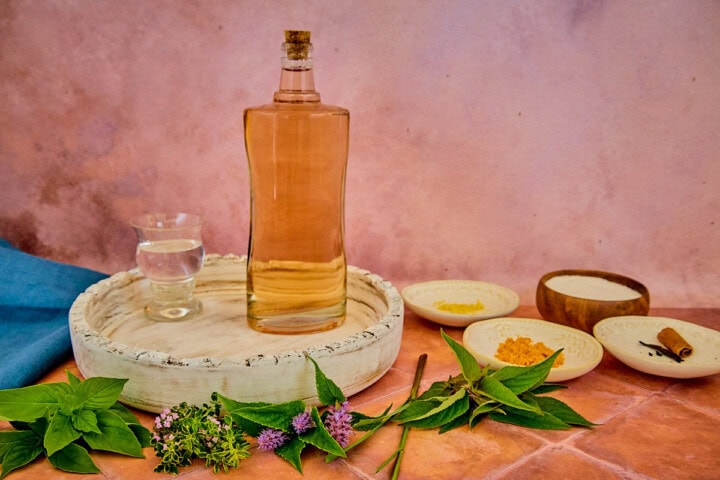

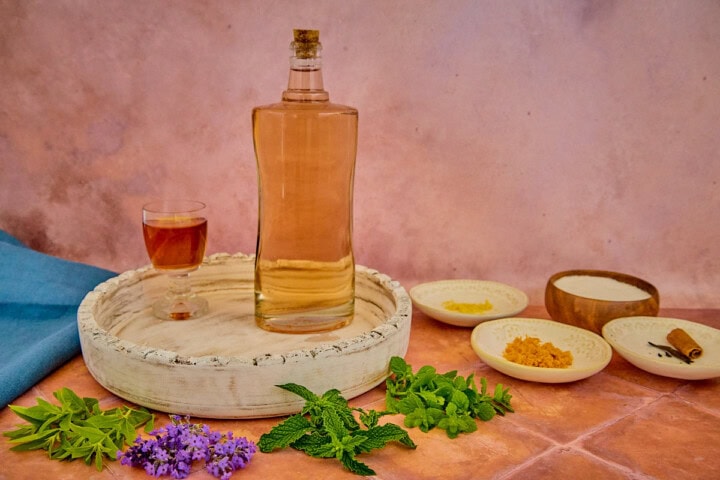


Vin d'orange is a gorgeous and refreshing fortified wine apéritif from Provence, and it's so easy and fulfilling to make yourself! It's ready in just 4 weeks of steeping. You can serve this this drink as a cool refresher in summer, a comforting citrus spiced apéritif in winter, or any time in between. You'll love enjoying this 9 Homemade Vin d'Orange Versions with Herbs, 30 Taste Tests with your family and friends!

I first made vin d'orange years ago for a South of France party where it was a huge hit amongst our friends. Ever since, I've wanted to investigate the best homemade version of this authentic and cherished drink. Here I'll share the results here from our 30 different taste testers on which versions they've liked the best.
In this post, I've tried 9 different variations on the traditional version, changing the citrus preparation, the types of base alcohol, and different sweet herbs from the garden. I've steeped them all a minimum of 4 weeks, which really allows the flavors time enough time to infuse. In my experience, this is a really short timeframe when it comes to botanically-infused alcohol.
Vin d'orange is not to be confused with orange wine, even though the translation is the same. Orange wine is a type of wine that uses white grapes, but leaves the skins in contact with the juice for a period of time as it ferments. This process is more commonly used in red wines, and since the skins contain pigments, this preparation leads to a wine that has a more orange hue. I'm looking forward to trying orange wine at some point, but here we'll be talking about the heavenly homemade vin d'orange instead.
Jump to:
- 💕Why this recipe is special
- 📒Ingredient notes:
- ⭐And the winner is...
- ⚖️ Reviewing the results
- 📚Step by step instructions & photos
- 💡Tip for success
- 🔀Substitutions:
- 🍶Variations
- 🥣Equipment
- ⏲Make ahead and storage
- 🍲Serving suggestions
- ❓FAQ
- ✨More herbs and recipes you'll love
- Homemade Vin d'Orange with Vodka and Less Common Herbs

💕Why this recipe is special
Traditional quartered versus grated fruit:
Vin d'orange is traditionally made with quartered Seville oranges as well as lemons. This method lends bitterness to the drink in two ways. First, Seville oranges (also traditionally used for making British orange marmalade) have their own inherently bitter flavor. Secondly, quartering citrus fruit and exposing the bitter white pith (the part just beneath the outer skin) imparts even more bitterness to the final vin d'orange.
While I love cocktails with a hint of bitterness, (I adore a good Campari and soda), this isn't my favorite flavor for a vin d'orange. For this drink, I'd rather let the citrus and wine flavors really shine through unadulterated by bitterness. But the nice thing about this taste test is that you can customize it however you'd like. So if Seville oranges work for you, please feel free to use them!
I've used organic oranges and lemons for all of these trials. This is important since the skin will be flavoring the drink. You really don't want pesticides in your vin d'orange. And after the first version with the quartered fruit, the remaining 8 versions use only the shallowly-grated zest. This removes any bitter component, and just infuses the orange and lemon zest directly into the drink.
Testing vodka versus brandy as fortifying alcohol along with rosé wine:
Vin d'orange is traditionally made with rosé wine, although you can use white wine instead. I really wanted to strive for authenticity in these trials, so I've used rosé. And not just any, but a good quality one: Château 'Esclans' Whispering Angel Rosé from Provence in the south of France. Generally, when I make my own botanical liqueurs, the alcohol content is strong enough that I can use a mid-level brand and still have great taste. But since vin d'orange has a milder wine base, I really wanted to make sure the quality wouldn't be in question for these tastings.
And for the fortification of the rosé wine, I'm trying out both brandy and vodka, which are both traditional options for making this apéritif. And for consistency, I'm using good quality brandy and vodka from France for these trials: Rémy Martin VSOP Cognac (Cognac is a specific type of brandy) and Grey Goose vodka.
You can grow your own herbs for this special drink!
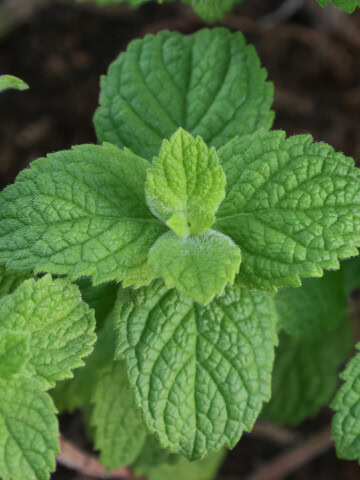
You can grow any of the herbs in this recipe yourself. This is so rewarding to do! All of the herbs in these photos are from my herb garden, except for the lemongrass. I'm still growing this deliciously fragrant herb, but the stems don't reach their full juicy maturity in my short northern growing season. So while I still love to grow it, I've bought the lemongrass at the store to use in this recipe.
If you'd like some more inspiration to grow and use your own herbs in a homemade botanical liqueur, check out my post for Homemade Crème de Menthe Ultimate Guide-6 Versions Reviewed. And for some inspiration about how to grow some tantalizingly-scented and flavored basil varieties from all over the world, please check out my post 38 Types of Basil You Need to Grow in Your Herb Garden!
📒Ingredient notes:
All 9 versions of the vin d'orange use rosé wine, either brandy, or vodka, oranges and lemons, sugar, and the commonly-included aromatics of vanilla bean and cinnamon stick. And then we get progressively more playful with two different ways to add the citrus, as well as varying herb combinations for an extra-exciting twist.
Version 1: vodka, quartered fruit, no herbs
This is the most traditional, simplest version. It uses quartered lemons and oranges, rather than grated zest versions in the remaining trials. Here, I wanted to see if the bitterness from the exposed white pith would be easy to discern in the final drink. And whether people like a bitter flavor component in this drink. In this first version, we're not using any herbs to really get a sense of the baseline flavors of this apéritif.

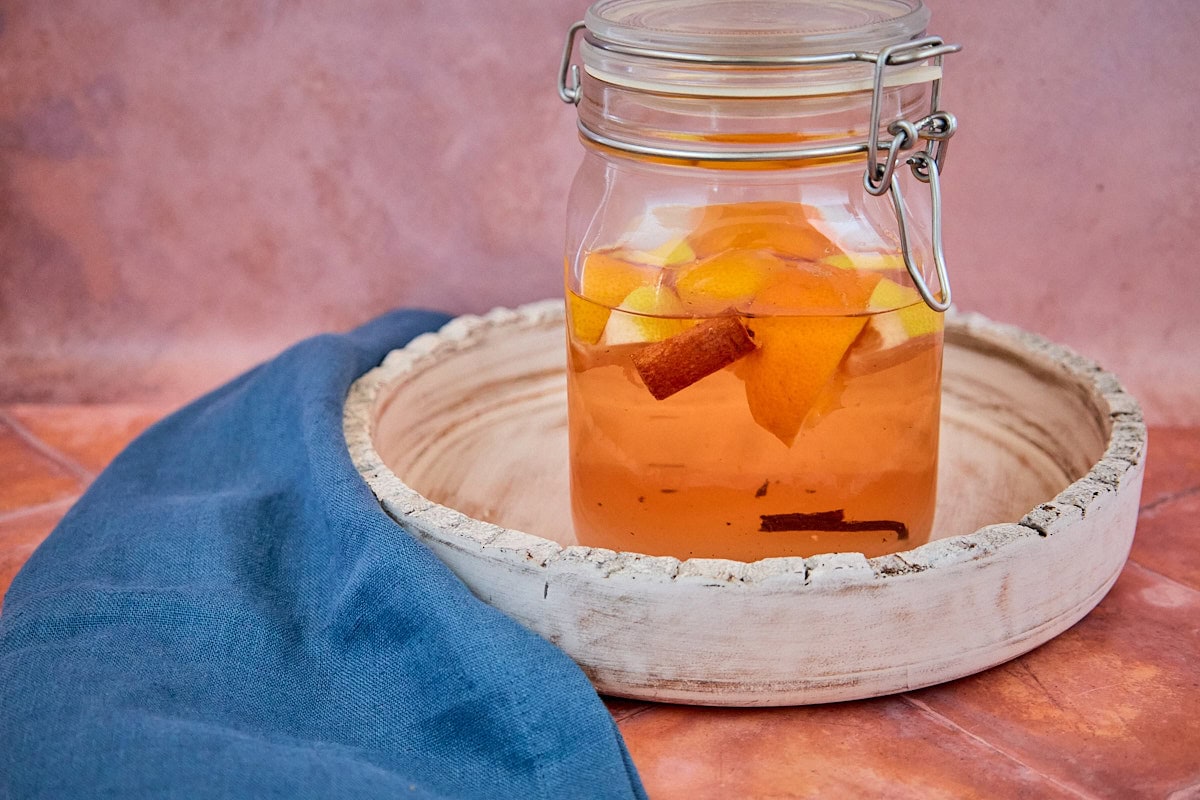
🍊Version 1 ingredients:
- Rosé wine
- Vodka
- Sugar
- Orange
- Lemon
- Cinnamon stick
- Vanilla Bean
👄Tasters' notes:
Flavor pros: Nice sweetness like ice wine, tangy and spiced, like the bitterness, fruity
Flavor cons: Maybe a little too acidic, don't like the aftertaste, a little bitter, has an off-flavor, too sour
Texture: Airy, light, clean, smooth, syrupy, too thin
Strength: More alcohol in this, strong
Overall pros: Really good flavor, love this, my fave, excellent, great rounded flavors, pleasant, not too sweet but flavorful
Overall cons: Doesn't have strong depth of flavor, less balance
✨Rating out of 10:
7.27
Version 2: vodka, grated fruit, no herbs
This version is the same as version 1, except that starting here (and continuing in the rest of the variations) I've shallowly grated the oranges and lemons to only include the zest. So from now on we won't be experiencing any bitterness from the pith as we encountered in version 1.
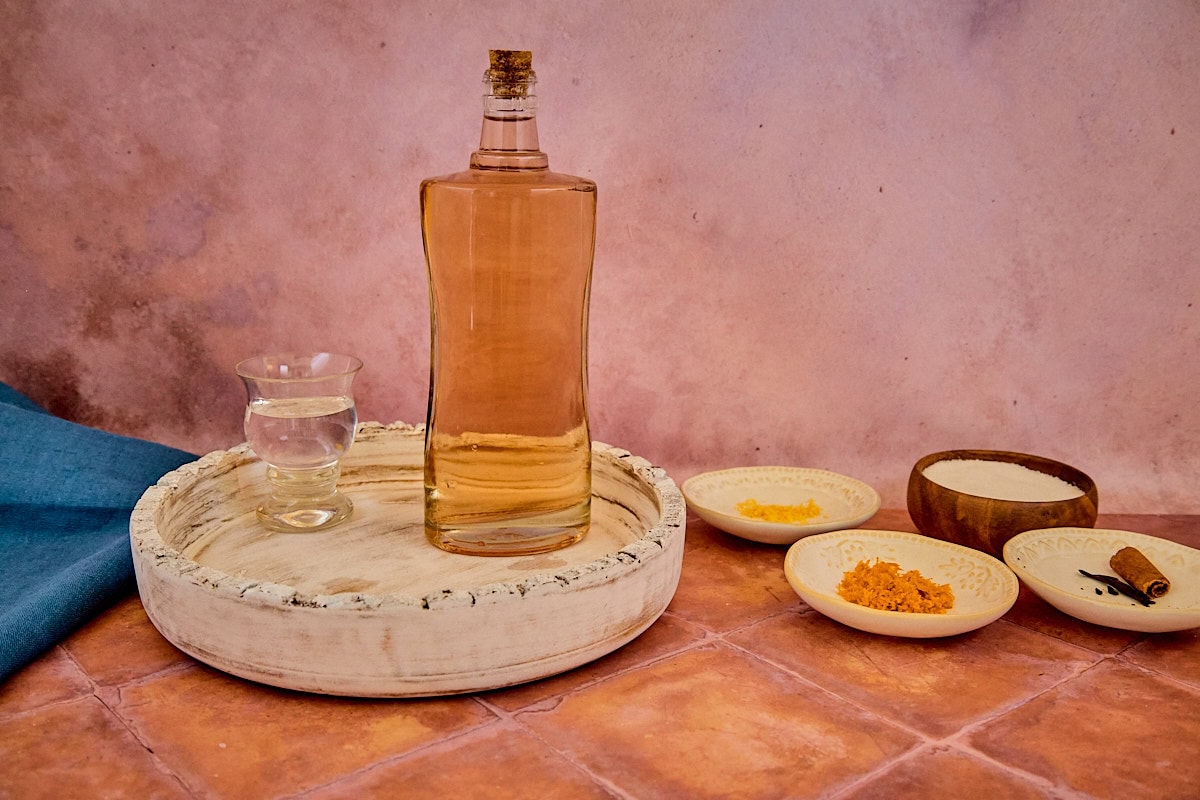

🍊Version 2 ingredients:
- Rosé wine
- Vodka
- Sugar
- Orange
- Lemon
- Cinnamon stick
- Vanilla Bean
👄Tasters' notes:
Flavor pros: Fruity, like cider, spice, & lime, really sweet & tangy, closer to vodka than the others, I think it has brandy, vanilla, spring woods, cinnamon, orange, floral, sweet minty taste, chocolatey aftertaste
Flavor cons: Medicinal, not as tasteful, too much citrus, has an off-taste
Texture: Smooth in front & after, smooooth, light, fresh, soft
Strength: More alcohol taste/kick
Overall pros: Good flavor, would be a great shot, I like it
Overall cons: Definitely not my favorite, just ok
✨Rating out of 10:
7.08
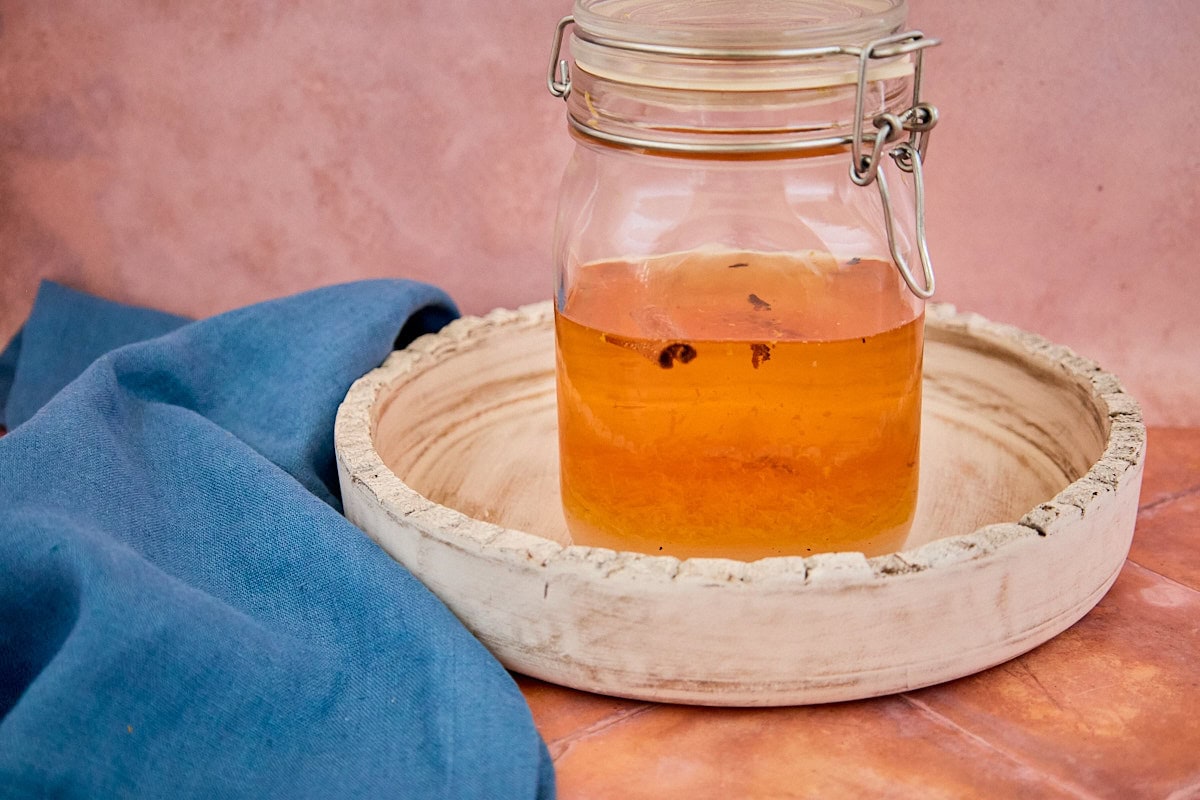
Version 3: brandy, grated fruit, no herbs
Version 3 continues with the grated citrus and no herbs, and now we're trying brandy in place of the vodka in the first 2 versions.

🍊Version 3 ingredients:
- Rosé wine
- Brandy
- Sugar
- Orange
- Lemon
- Cinnamon stick
- Vanilla Bean
👄Tasters' notes:
Flavor pros: Spicy, sweet, a lot of citrus, I like the lemon and cinnamon, fruity, orange, tangy, minty, plum, more lemon flavor, hint of spice
Flavor cons: Musty, could have been sweeter, don't like the aftertaste
Texture: Dry, smooth, light, good texture, clean, prickly, heavier
Strength: More of a kick, strong, sharp, so much vodka, strong alcohol
Overall pros: Very flavorful, complex, good, well-balanced, flavorful but simple, milder flavors that blended well
Overall cons: Too many flavors, less sweet
✨Rating out of 10:
7.12
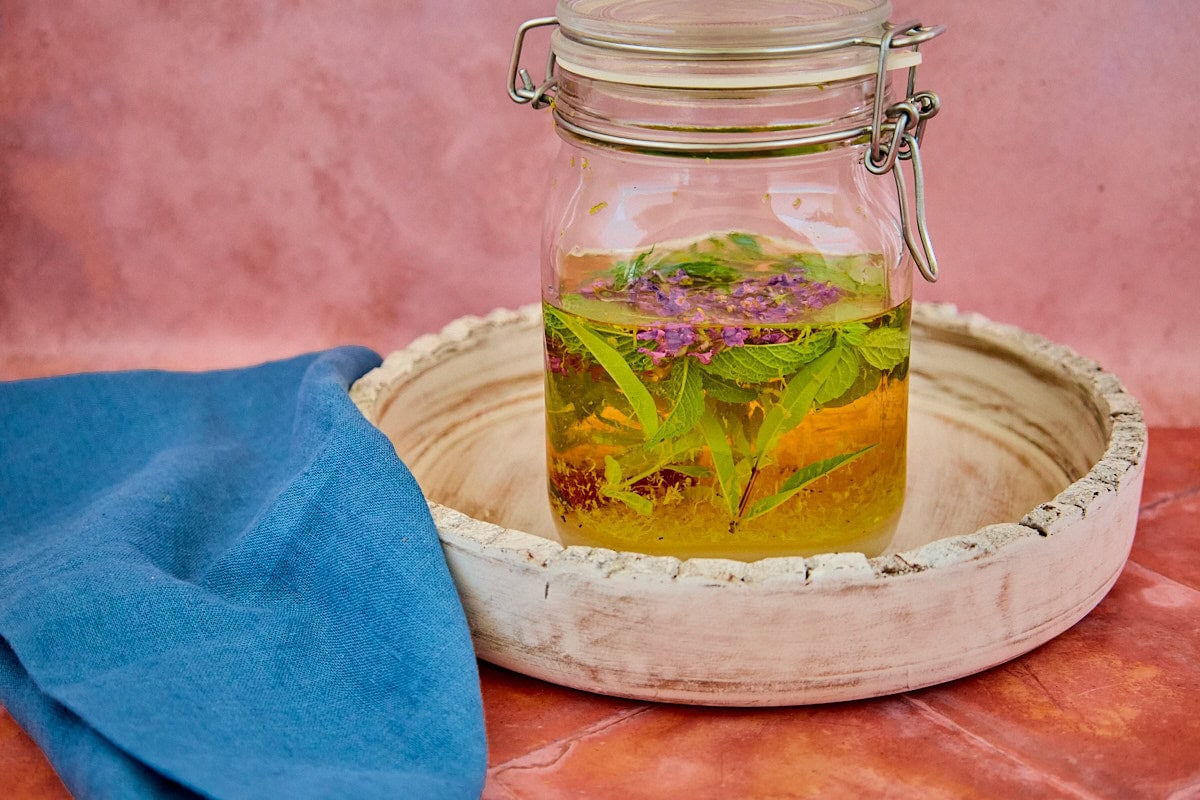
Version 4: vodka, 4 common herbs
Version 4 includes the introduction of some fairly common herbs that are easy to grow and also prevalent in the South of France where vin d'orange originates. Here are the ones we'll be using: lemon verbena, lavender, mint, and lemon balm.

🍊Version 4 ingredients:
- Rosé wine
- Vodka
- Sugar
- Orange
- Lemon
- Cinnamon stick
- Vanilla Bean
- Lemon verbena leaves
- Lavender flowers
- Mint leaves
- Lemon balm leaves
👄Tasters' notes:
Flavor pros: Heavy fall flavor, mulled spice, lemon, thyme, good sweetness, balanced flavors, cinnamon and brandy, slight spice, lavender, strong orange flavor, vanilla aftertaste, maybe lemon basil
Flavor cons: Not very orangey, has a licorice smell
Texture: Bite at the beginning and then smooth, so smooth and creamy, chunky texture, thicker
Strength: No burn
Overall pros: Great, flavorful, perfect combination of flavors, my favorite, excellent, nice balance of sweetness & spice, sweet & subtle
Overall cons: Too sweet, had a bite, bitter, weak
✨Rating out of 10:
6.90
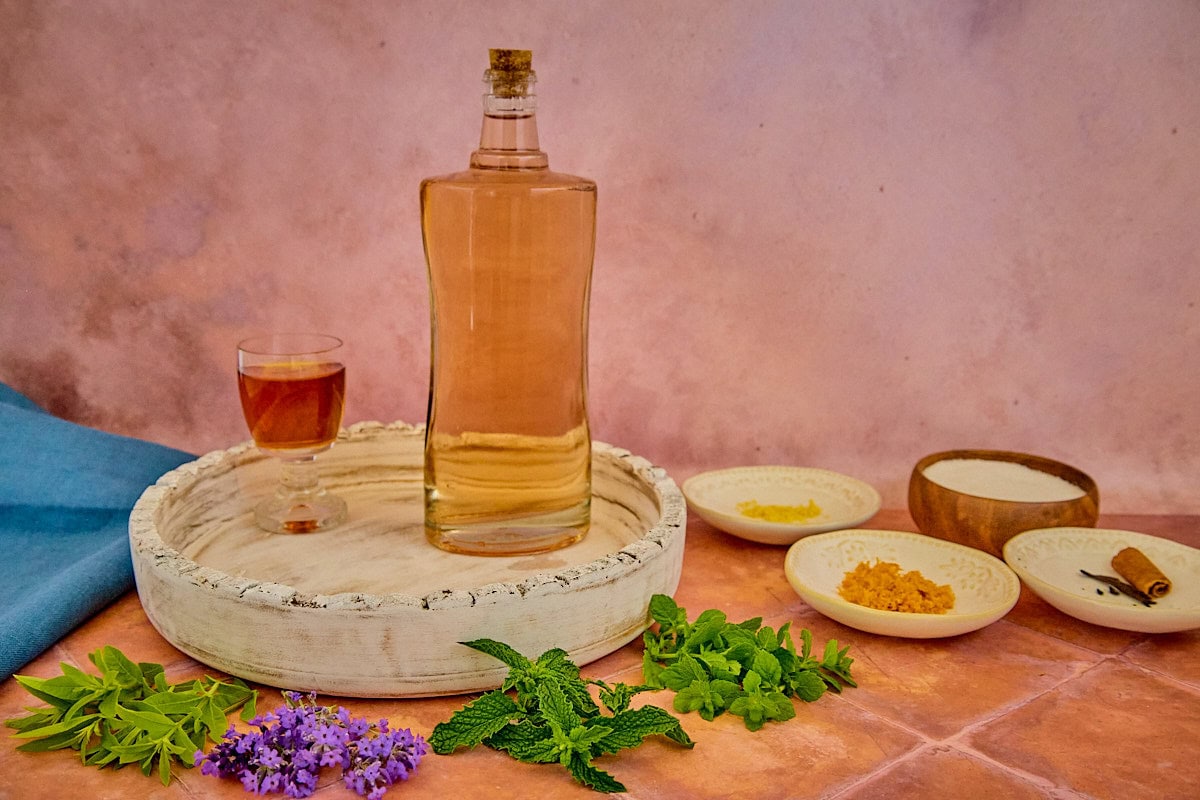
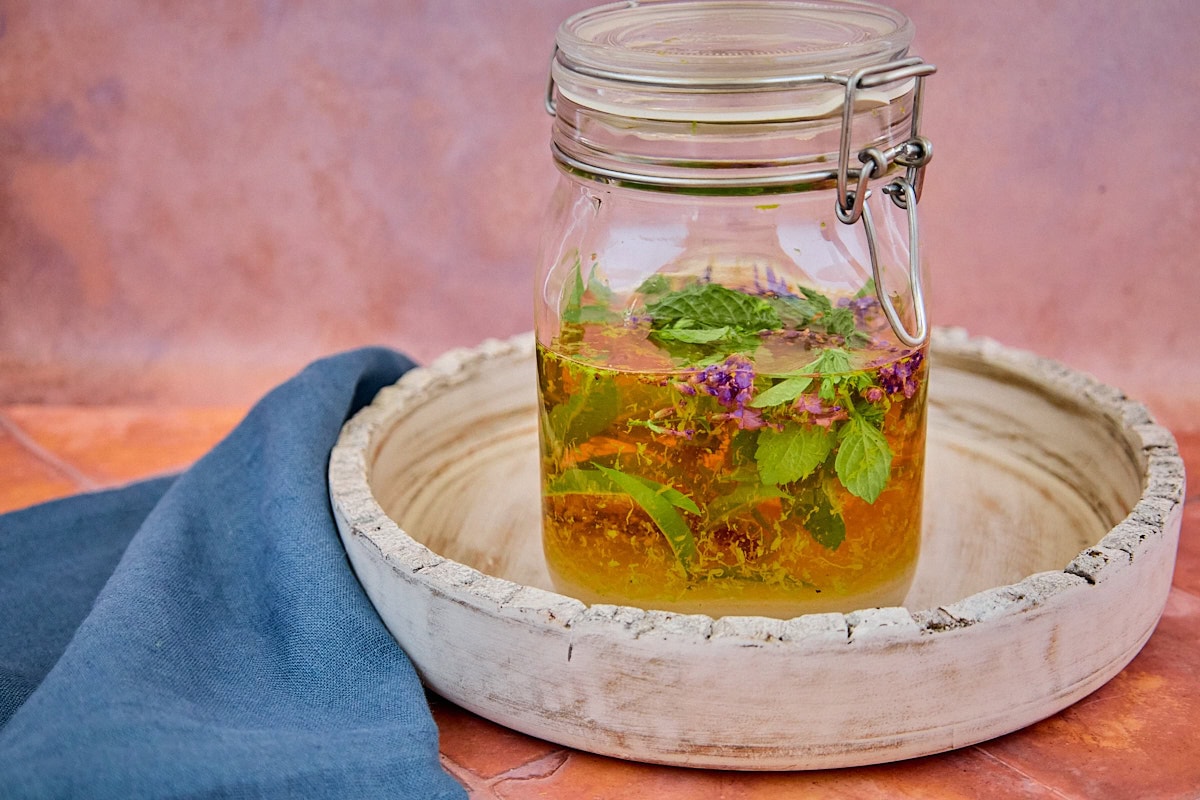
Version 5: brandy, 4 common herbs
This version is the same as version 4 with the introduction of some common herbs, except that now we're trying this with the brandy instead of the vodka.
🍊Version 5 ingredients:
- Rosé wine
- Brandy
- Sugar
- Orange
- Lemon
- Cinnamon stick
- Vanilla Bean
- Lemon verbena leaves
- Lavender flowers
- Mint leaves
- Lemon balm leaves
👄Tasters' notes:
Flavor pros: Rose, sweeter than the others, more complex spices, anise hyssop, vanilla, sweet wine, lots of orange & cinnamon flavors, brandy, smell of marigold, lots of earthy flavors
Flavor cons: More licorice, not as fruity, bitter, unbalanced, blander overall, sour, not a brandy fan
Texture: Smooth, a little more blunt, thicker
Strength: Less alcohol taste, sharp start, so much vodka, has a bite, strong
Overall pros: I really like it a lot, very good, easy drinking, mild
Overall cons: My least favorite, harsher tasting
✨Rating out of 10:
6.10
Version 6: vodka, 5 less common herbs
Now we're reverting back to vodka as the alcohol fortifier, and switching the herb combination to some that may be less common than those in versions 4 and 5.
These herbs are still easy to grow, and we're trying them here to push the envelope of flavor combinations for this refreshing drink. Here are the new ones we're trying this time: lemon basil, lemon thyme, anise hyssop, lemongrass, and pineapple sage.


🍊Version 6 ingredients:
- Rosé wine
- Vodka
- Sugar
- Orange
- Lemon
- Cinnamon stick
- Vanilla Bean
- Lemon basil leaves
- Lemon thyme leaves
- Anise hyssop leaves
- Lemongrass leaves
- Pineapple sage leaves
👄Tasters' notes:
Flavor pros: Tastes like honey, like bubblegum, herby, mint, more pronounced orange, brandy, wine, bolder flavors, fruity, warm holiday spice, orange & lemon flavor, anise was nice
Flavor cons: Anise is strong, more sour/tangy
Texture: Refreshing, less bite, smooth with good zest
Strength: Less liquory,
Overall pros: Best one so far, I like it, an interesting combination, nice, subtle, light notes, flavors well-balanced, nice sweetness and balanced flavor, complex
Overall cons: Medicinal, coughing
✨Rating out of 10:
7.90
Version 7: brandy, 5 less common herbs
Version 7 includes the same herb combination as in version 6, but here we're switching the vodka for brandy again to taste whether the herbs are more or less compatible with a different alcohol base.


🍊Version 7 ingredients:
- Rosé wine
- Vodka
- Sugar
- Orange
- Lemon
- Cinnamon stick
- Vanilla Bean
- Lemon basil leaves
- Lemon thyme leaves
- Anise hyssop leaves
- Lemongrass leaves
- Pineapple sage leaves
👄Tasters' notes:
Flavor pros: Spiced, sweeter, must be a brandy one, orange, and brandy taste amazing, tastes like vermouth, consistent, tart-sweet
Flavor cons: Very basic, without a lot of extra flavors, like a cleaner, too many herbs, too sweet, bitter, competing spices, flavor unclean
Texture: Lighter, smooth, thick, not thick enough
Strength: Slightly more alcohol
Overall pros: Really good, amazing balanced and sweet flavors, don't change anything with this one, it's perfect, I love this, my favorite so far, good blend, bold, flavorful, more unique flavor
Overall cons: Not my favorite, I don't like it, bad and pungent, medicinal, least fave
✨Rating out of 10:
6.83
Version 8: vodka, 8 least common herbs
And now we're really going to have some fun with herbs! We're back to vodka again as the alcohol base. And now we're trying a larger combination of herbs that are even more unique than before. But they're still really easy to grow, and they all have delightful scents and flavors that would be a welcome addition to any herb garden. Here they are: blue spice basil, rose petal thyme, lime balm, Mexican tarragon, orange spice thyme, red bergamot, orange mint, and Mabel Gray scented geranium.


🍊Version 8 ingredients:
- Rosé wine
- Vodka
- Sugar
- Orange
- Lemon
- Cinnamon stick
- Vanilla Bean
- Blue spice basil leaves
- Rose petal thyme leaves
- Lime balm leaves
- Mexican tarragon leaves
- Orange spice thyme leaves
- Red bergamot leaves
- Orange mint leaves
- Mabel Gray scented geranium leaves
👄Tasters' notes:
Flavor pros: Spicy, cinnamon is the first thing you taste, pineapple, sweet and tangy, fruity, you can really taste the orange, good tang and spice, like apple pie, zesty orange and lemon, smoky, grapefruit, herby, thyme, earthy
Flavor cons: A little perfumey, less spiced, less balanced, cinnamon taste is too strong, dominant orange flavor, sour
Texture: Thick, light, smooth
Strength: Not enough sweetness to balance out the alcohol
Overall pros: Really good, liked it, consistent on the palate, I like the sweetness level compared with the sour, bitter end, but not in a bad way
Overall cons: Flavorful in the beginning then dies out, more bland than the rest
✨Rating out of 10:
7.77
Version 9: brandy, 8 least common herbs
Version 9 includes the same excitingly diverse herb combination as in version 8, but now we're swapping the vodka for the brandy again. This is the last iteration in our 9-version taste trials. I'm really excited to see what the overall results tell us from our 30 taste testers!


🍊Version 9 ingredients:
- Rosé wine
- Brandy
- Sugar
- Orange
- Lemon
- Cinnamon stick
- Vanilla Bean
- Blue spice basil leaves
- Rose petal thyme leaves
- Lime balm leaves
- Mexican tarragon leaves
- Orange spice thyme leaves
- Red bergamot leaves
- Orange mint leaves
- Mabel Gray scented geranium leaves
👄Tasters' notes:
Flavor pros: Cinnamon, lemon basil, brandy, very sweet, like orange mulled cider, slight licorice flavor, woodsy, citrus is nicely balanced with sweetness and alcohol, tastes like fall, very orangey, vanilla, vodka, rose petal, excellent herb mix
Flavor cons: Bitter slightly, sharp, tastes like vodka, sour
Texture: Very smooth
Strength: Alcohol is really strong, bitey
Overall Pros: Really good balance of flavors, love this one, very good, uncomplicated, hits the palate early, nice depth and fall flavor, spicy & sweet
Overall cons: Too many different flavors, not a lot of flavor
✨Rating out of 10:
7.17

⭐And the winner is...
Here are the results in descending order, with ratings out of 10 (with 10 being the best) for each of the 9 versions. I'm so grateful that I've had 30 testers to really give these findings some authenticity:
1. Vodka, less common herbs (version 6): 7.90
2. Vodka, least common herbs (version 8): 7.77
3. Vodka, quartered fruit, no herbs (version 1): 7.27
4. Brandy, least common herbs(version 9): 7.17
5. Brandy, no herbs (version 3): 7.12
6.Vodka, no herbs (version 2): 7.08
7. Vodka, common herbs (version 4): 6.90
8. Brandy, less common herbs (version 7): 6.83
9. Brandy, common herbs (version 5): 6.10

⚖️ Reviewing the results
The most highly-reviewed versions out of our 9 trials included vodka with less common herbs, vodka with the least common herbs, and vodka with quartered fruit and no herbs. All 9 versions were within a fairly narrow range of results. Some were so close that I had to use ratings to the hundredths place just to tell them apart. Each version had positive and negative comments.
Alcohol type
Overall, vodka was more highly-preferred than brandy as the alcohol fortification base. It was also interesting to see that testers often had a difficult time identifying which type was in each version. I think it's likely that the neutral flavor of the vodka really helped the remaining ingredients to shine through.
Fruit preparation
The grated orange and lemon performed better with our testers than the quartered fruit with the bitter pith. On the other hand, some testers liked the bitterness. So if you'd like to have your vin d'orange on the bitter side, you can both quarter your fruit and also use the traditional bitter Seville oranges to help achieve this flavor profile.
Herb types
It's really fascinating to me that the top 3 results had totally different herb combinations from less common herbs to least common herbs to no herbs. I think this really goes to show how infinitely customizable vin d'orange can be, and it's that much more exciting that it can still taste great with so many different flavor profiles. So go ahead and make a version that really speaks to you and your tastes!
Summing up
I think it's really encouraging that each type had its own subset of fans. So if you decide to make your own vin d'orange, you can go by the taste interests of your friends and family and decide which one will work best for you! And please consider growing your own herbs for this and other food and drink uses. It's so, so rewarding to go out in the garden and snip your own herbs for whichever recipe you may need!
📚Step by step instructions & photos
Here are the steps for making the most popular version with a base of vodka and less common herbs. And the recipe is below in the recipe card. This variation is so easy go grow and make yourself!
- Gather your ingredients: Use the freshest herbs and citrus you can find (you want organic here if possible, since you're using the skins). And, since the alcohol content is lower than a straight liqueur, I recommend good quality rosé wine and vodka for this recipe as well.
- Steep the ingredients: Place everything in a large air-tight jar. Store in a dark cabinet, and shake the jar a minimum of once weekly for at least 4 weeks. Strain the liquid and enjoy!

See the recipe card for quantities.
💡Tip for success
Quality ingredients:
Use organic fruit and fresh herbs to avoid pesticides and strive for the best possible flavor in your vin d'orange.
Accurate Measurements:
I highly encourage using a digital scale to get the most accurate quantity measurements of your ingredients. In fact, I use 2 different inexpensive digital scales: one really small and sensitive one for weighing very small quantities, like the herbs and spices in this recipe. And then a normal-sized kitchen one that can hold more regularly-occurring quantities.
Experiment with the Ingredients
Using your preferences and the examples here, make a custom vin d'orange with a flavor profile that's fun and exciting for you and your guests!
🔀Substitutions:
Rosé wine:
You can use white wine instead for a lighter color and flavor.
Vodka or brandy:
Use whichever of these traditional alcohol fortification bases that you prefer.
Oranges and lemons:
You're welcome to try other citrus fruits here according to your tastes and whatever's in season. If you'd like your vin d'orange to have a bitter flavor profile, use Seville oranges and expose the pith by quartering the fruit during steeping.
Herbs:
You can use dried herbs instead of fresh, but the latter will provide the best flavor. Also, if using dried herbs, use half the quantity since they're more concentrated.

🍶Variations
Color
You can adjust the type of wine and citrus ingredients for a lighter or deeper hue in the finished drink.
Strength
You can adjust the sugar and alcohol quantities to achieve different levels of sweetness and dryness in your vin d'orange.
Aging time
If you'd like your finished drink to be stronger, you can steep it for longer than 4 weeks to make the flavors more intense.

🥣Equipment
- Pruning shears: To gather the herbs if growing your own
- Digital scale: To weigh your ingredients accurately
- Airtight glass jar: I recommend a 1-liter minimum jar size to hold all of the ingredients and be able to easily mix and stir them
- Fine-mesh sieve or cheesecloth-lined colander: For straining the herb leaves
- Airtight bottle: 750 mL bottle for storing the finished liqueur
⏲Make ahead and storage
Liqueur steeping time: You should plan on a minimum of 4 weeks for the herb leaves to fully flavor the vodka while steeping in a dark cabinet. You can always check sooner, though, just in case. Or, of course, you can wait longer.
Room temperature storage: It works well to store your vin d'orange in an airtight bottle (I use swing-top bottles) at room temperature (50-70°F or 10-21°C), in a cool, dark cabinet. Under these conditions, it should last about 6 to 12 months.
Refrigerator storage: Refrigeration will keep the vin d'orange fresh longer, about 12 to 18 months.
Freezer storage: And freezing should keep it fresh indefinitely. Make sure to use a bottle with enough room to allow for possible expansion.
🍲Serving suggestions
Digestif:
Vin d'orange makes a perfect after dinner drink when chilled in small glasses.
Cocktails:
You can use this drink as the base for spritzer or sparkling wine cocktails.
Desserts:
This drink would be fabulous drizzled over a sorbet or granita!

❓FAQ
In the summer, you can drink this apéritif chilled by itself or with spritzers or sparkling wine for a refreshing citrus-infused thirst quencher. In winter, you can add this drink to mulled wine and serve it warm for a comforting and cozy sipper.
Depending on which fortification base you use, the alcohol content should be about 12-14%.
I'd recommend using at least mid-range quality for the wine, vodka, and/or brandy. This will prevent harsh lower-quality alcohol flavors from interfering with the subtle notes of the ingredients that we really want to shine.

✨More herbs and recipes you'll love
Looking for other garden posts and recipes like this? Try these:
✏️Did you grow your own herbs and/or make this homemade vin d'orange?
I'd love to know in the reviews and comments below!

Homemade Vin d'Orange with Vodka and Less Common Herbs
Ingredients
- 500 mL (2 cups) rosé wine
- 65 mL (¼ cup) vodka
- 100 g (½ cup) sugar
- 10 g zest from 1 organic sweet orange, grated
- 3 g zest from ¼ organic lemon, grated
- ½ cinnamon stick, about 1.5 grams
- ¼ large vanilla bean, split, about 1.3 grams
- ½ tablespoon fresh lemon basil leaves, about 2 grams
- ½ tablespoon fresh lemon thyme leaves, about 2 grams
- ½ tablespoon fresh anise hyssop leaves, about 2 grams
- ½ tablespoon fresh lemongrass stem, about 2 grams
- ½ tablespoon fresh pineapple sage leaves, about 2 grams
Instructions
- Combine the rosé wine and vodka in a large jar.
- Add sugar and stir until dissolved.
- Add the grated peel of sweet orange and lemon.
- Add the cinnamon stick, split vanilla bean, and fresh herbs.
- Seal the jar and let it macerate for at least 4 weeks in a cool, dark place, shaking occasionally.
- Strain and bottle the liquid. Serve chilled.
Notes
- Feel free to customize this recipe to suit your tastes! This vin d'orange is infinitely adjustable. It's really fulfilling to experiment with different alcohol bases, spices, and herbs from your garden! Enjoy this delightful drink that is perfect for either cold or warm weather.
- Use organic oranges and lemons if you can find them. Since you'll be using the exposed zest, you don't want to be adding pesticides to your vin d'orange.
- You can serve this drink in the summer as a refreshing spritzer or with sparkling wine, or as a warm comforting in the winter added to mulled wine. Or any time in between!
Leave a Reply