

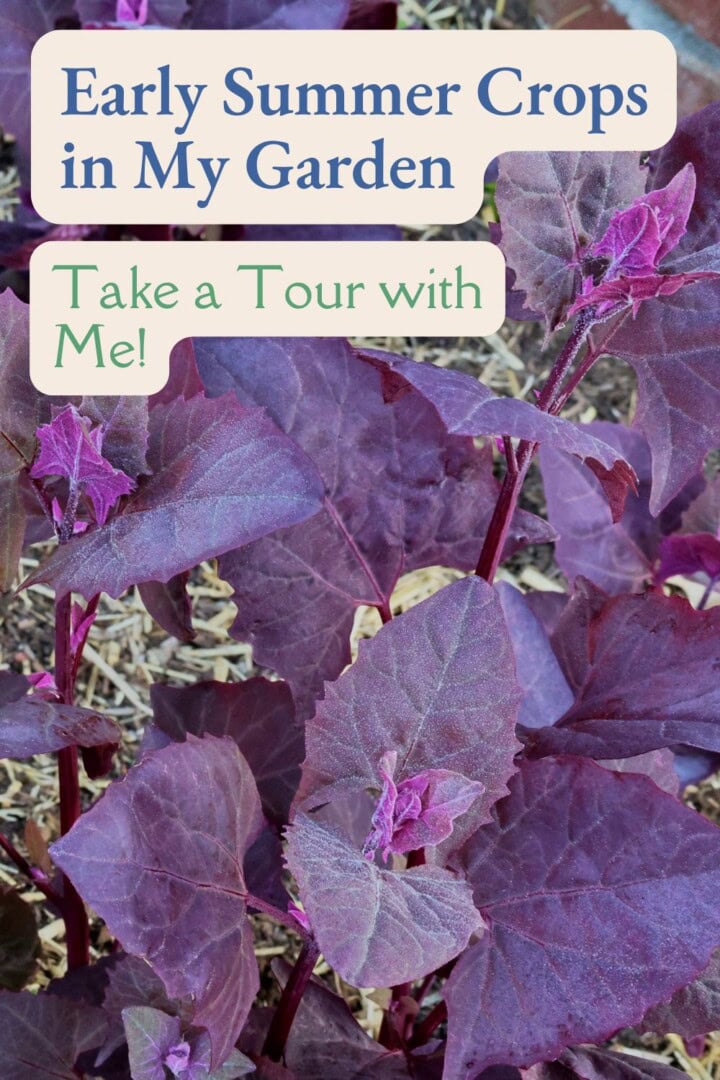
Here's a glimpse of some early summer herbs and vegetables coming up in my garden, in the middle of the planting frenzy. Right now is the busiest time in the garden here in Michigan, USDA planting zone 6a in the upper midwest. I'm planting every free second, and feeling hopelessly behind. There are so many herb and veggie plants to get in the ground. There's no better time to metaphorically stop and smell the roses than right now, as there are already some gorgeous crops at their very best.
If it weren't for all of you, I'd probably just give them a cursory and wistful glance while rushing around to keep planting, swearing, and hobbling around in gardening back pain. I'm practically hyperventilating to take time away from planting to write this post. But it's so important to appreciate it all! Thanks for inspiring me to stop this morning and appreciate these early garden gems. And if you'd like to read about my planning adventure for this year's herb garden, please check out How I Grow Nearly 300 Culinary Herbs in My Garden.
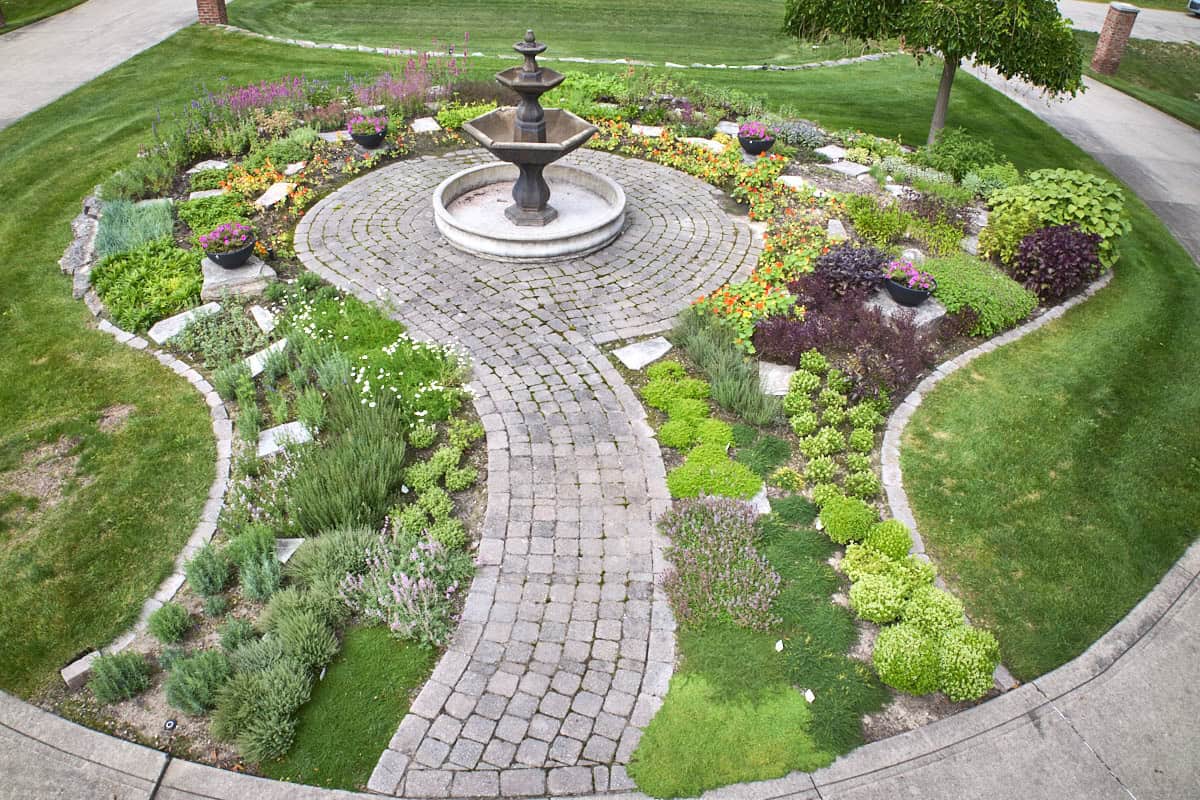
Just for fun, here's a photo of my herb garden from late summer two years ago, the first year I planted it. I'm really looking forward to seeing the herbs fill in even more this year as the season heats up. Let's take a garden walkthrough together to see what's ready in the garden right now!
Perennial herbs
Thyme
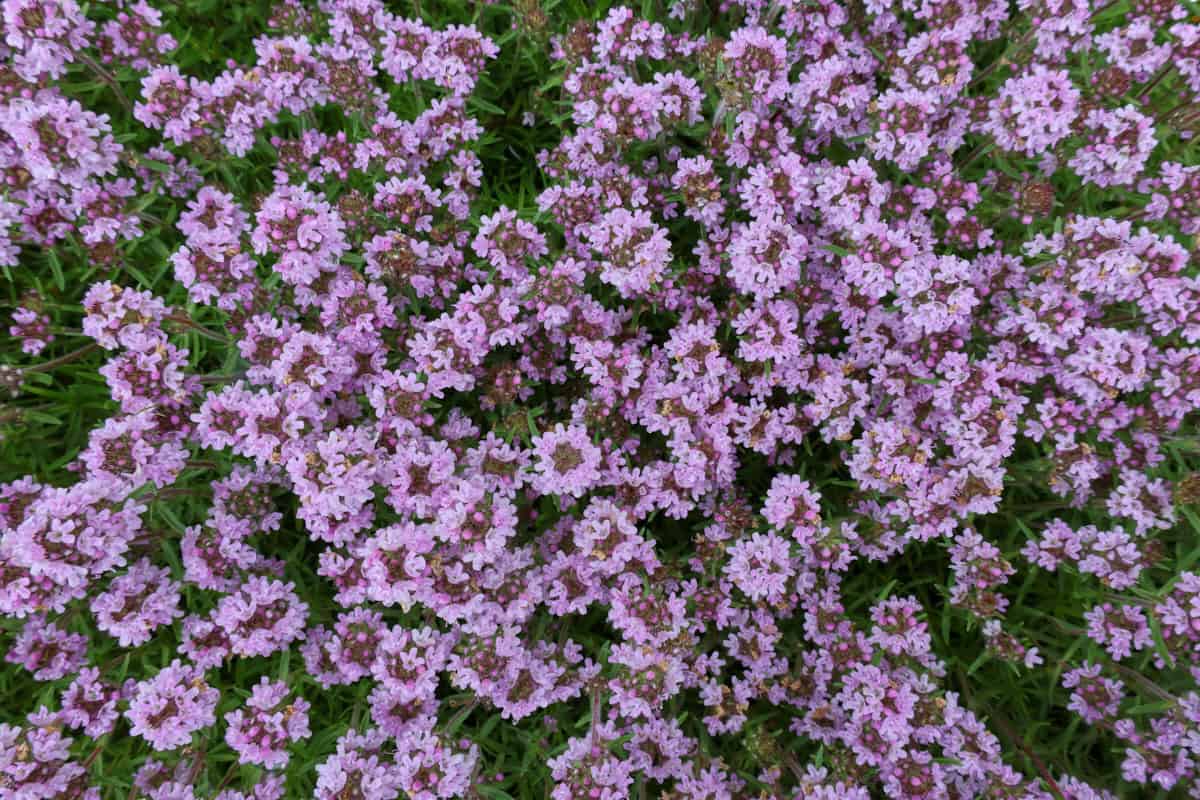
Orange spice thyme is one of my favorite thyme varieties to grow in the garden. The citrus scent is floral, sweet, and magical. It has a prostrate growth habit and tiny needle-like leaves. I've been growing this one for many years, and I adore it. The blooms are heavenly.
This year I have 18 thyme varieties. Each one has its own distinctive scent, flavor, appearance, and growth habit. Here they are:
- Caraway
- Creeping lemon
- English
- French
- Lavender
- Lemon variegated
- Lime
- Mint
- Orange
- Orange spice
- Purple carpet lemon
- Rose petal
- Royal (Thymbra capitata)
- Spanish
- Spanish lemon
- Spanish red
- Spiked (Thymbra spicata)
- Wild
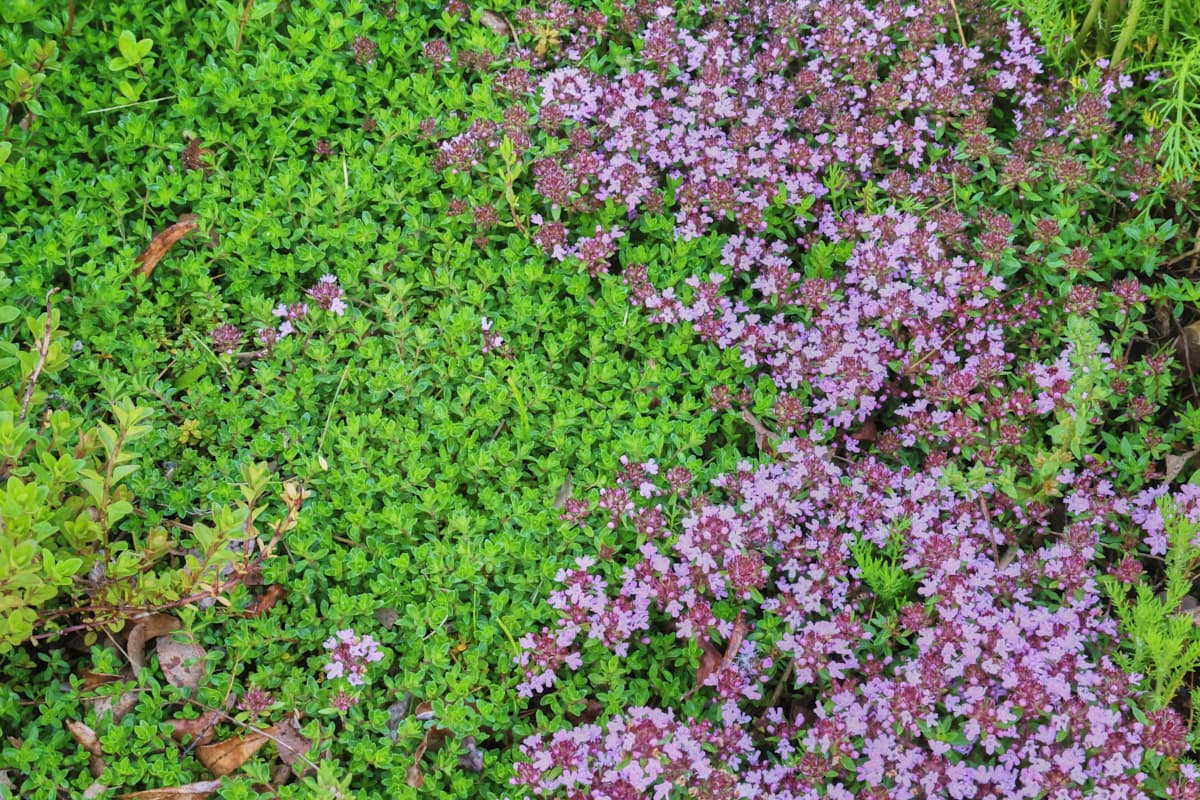
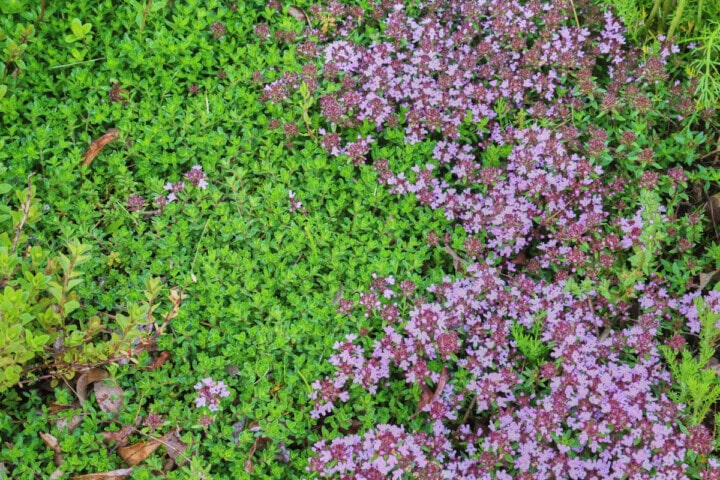
From left to right, here are wild, mint, and caraway thyme. And some chamomile trying to take over on the right. I love having so many thyme varieties on hand to treasure. And their blooms are adorable!
Chives
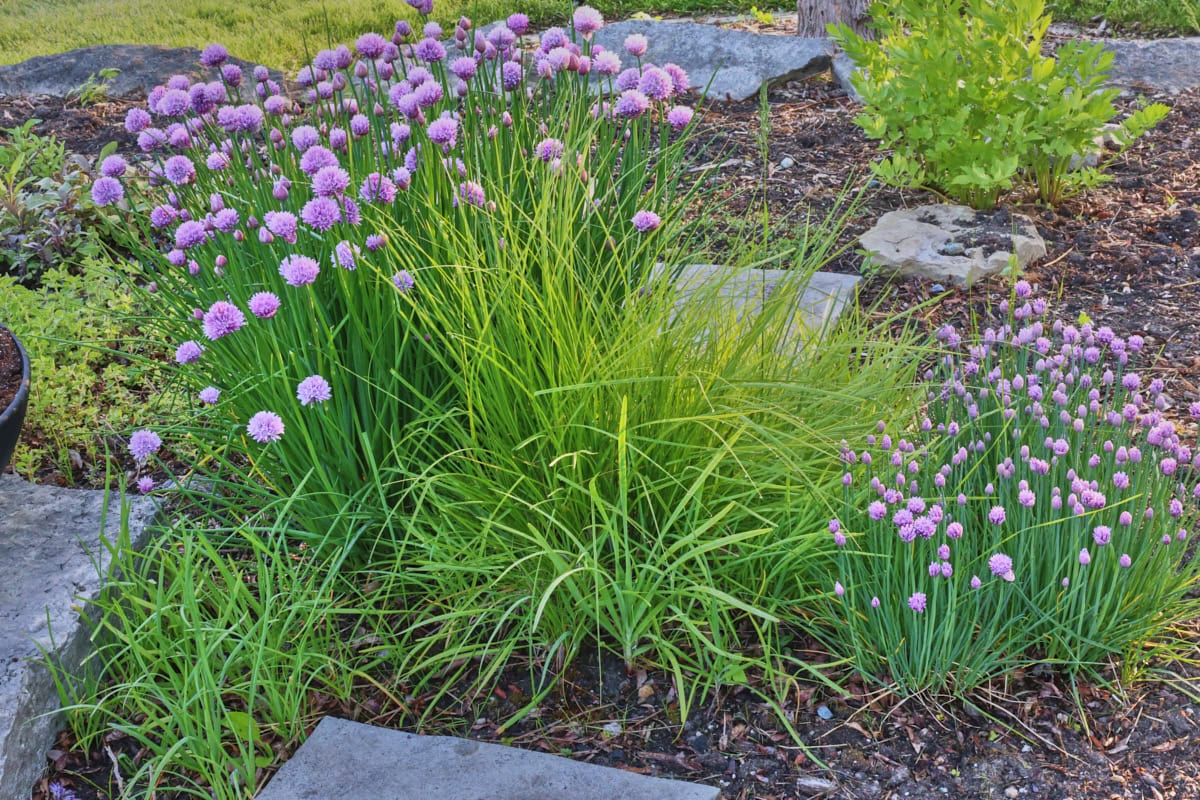
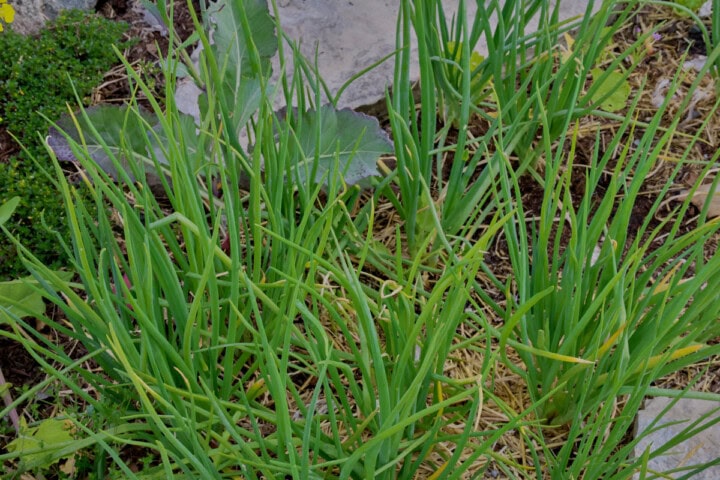
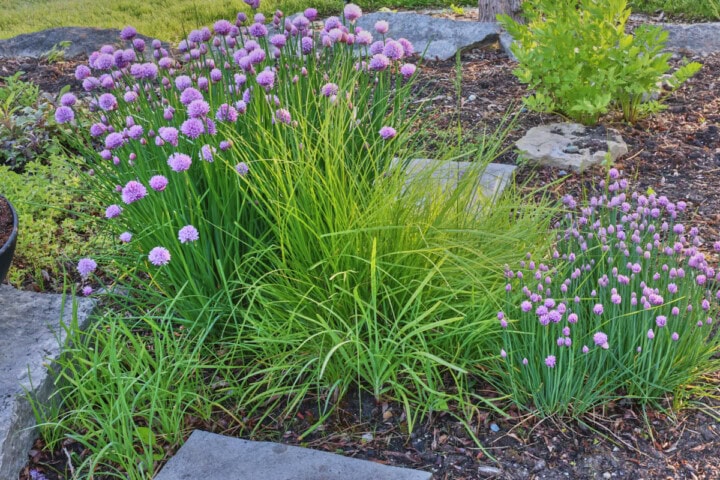
Chives are among the first perennial herbs to emerge in my spring and early summer garden. I grow several varieties for cooking with the leaves and edible flowers. Here are (center row, from left to right) profusion, garlic, and common chives, with nira chives in the left foreground. These are so reliable in coming up every year. I love gathering them for a huge variety of dishes and having this range of varieties.
My youngest daughter Mio loved eating the pungent chive flowers straight out of the garden when she was little, calling them "yonyons." Which, in our family, eventually referred to all types of onions. I still write "yonyons" on my grocery lists today.
Oregano
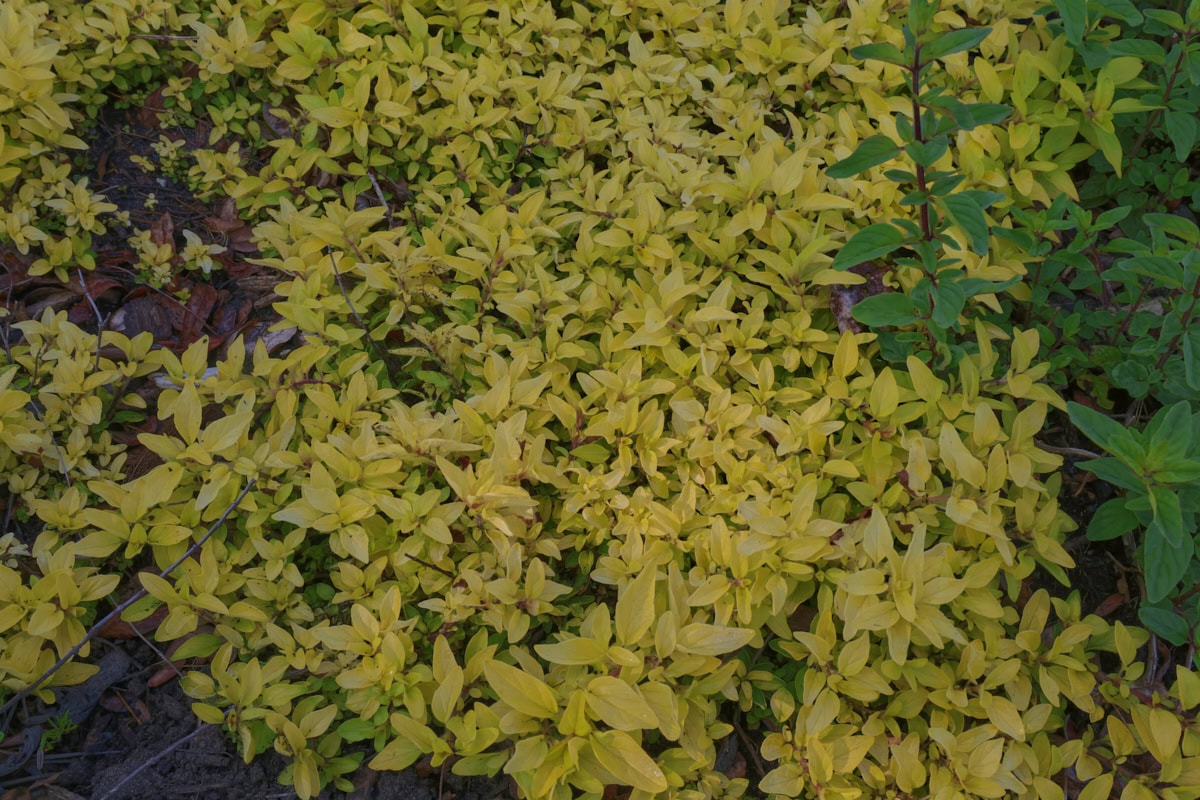
Here are some golden and Greek oregano. I have 6 different oreganos this year, which is really exciting. I love the wide range of culinary potential that oregano has, as well as being a perennial herb that's so easy to grow in the garden. My oregano varieties this year are:
- Golden
- Greek
- Herrenhausen
- Italian
- Mexican (Lippia graveolens)
- Mexican bush or oregano indio (Poliomintha longiflora)
The latter two are new to me this year. I'm always elated to try new types!
Sweet cicely
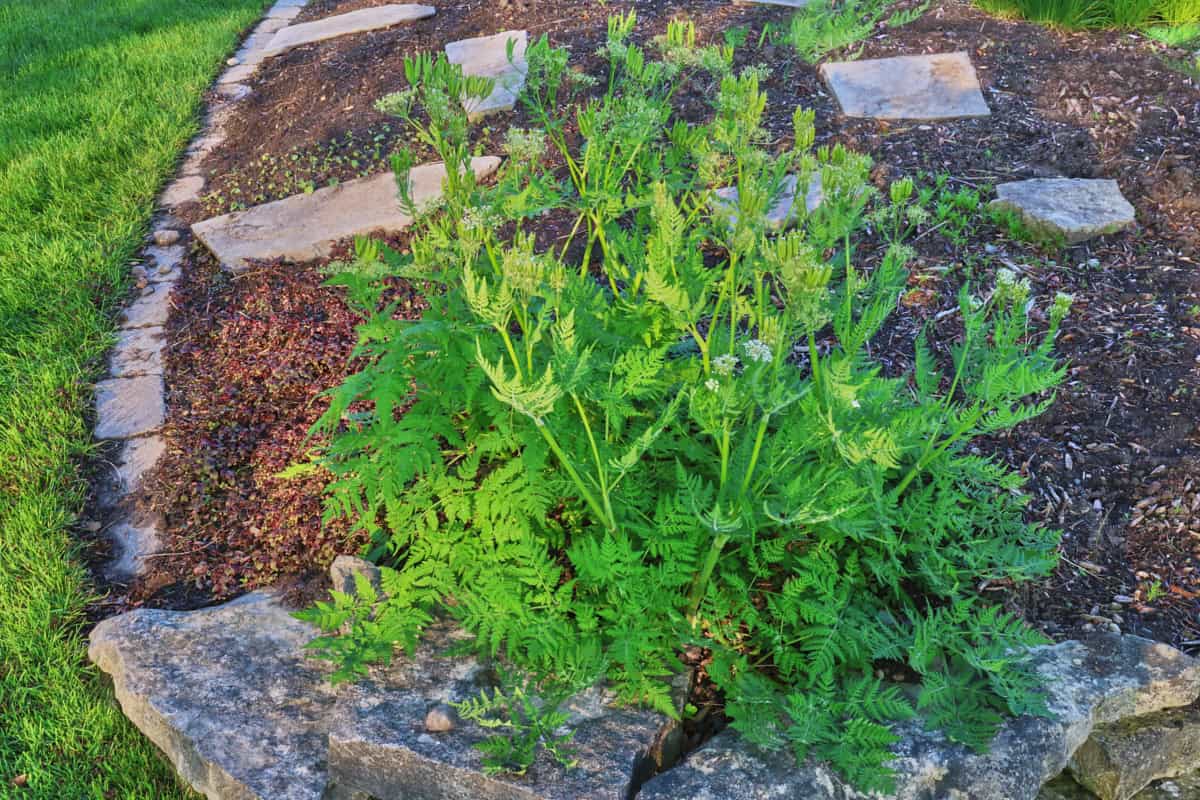
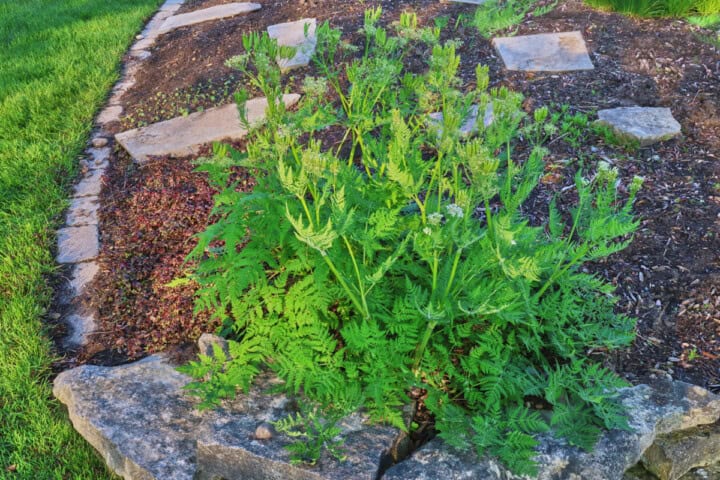
Sweet cicely is a delightful, sweet, anise-flavored perennial that deserves to be better known for its use in the kitchen. I really love this one. The lacy, delicate fernlike leaves and white flowers are so enchanting. And I adore the flavor. This will be great in iced tea this summer.
Sweet fennel and angelica
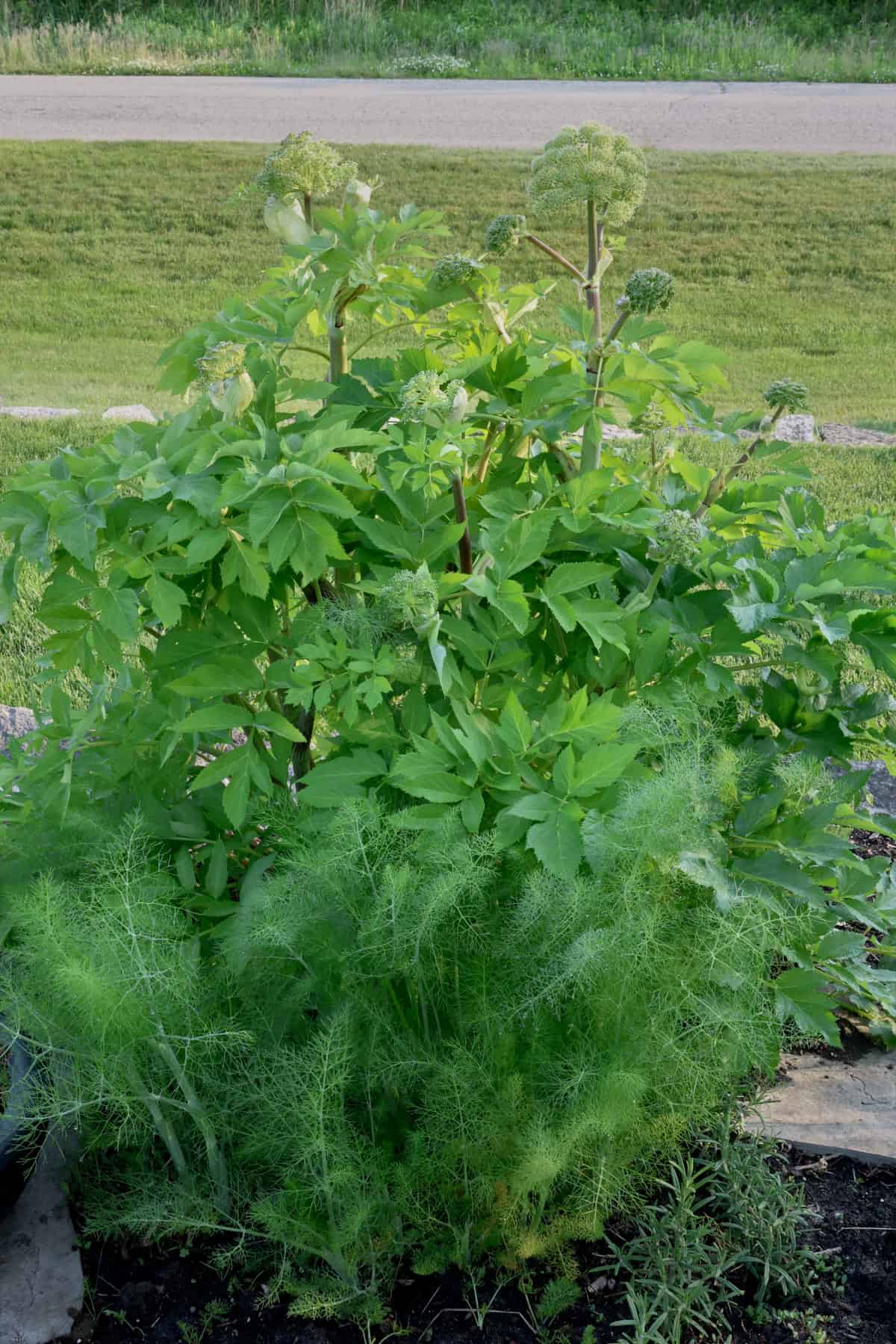
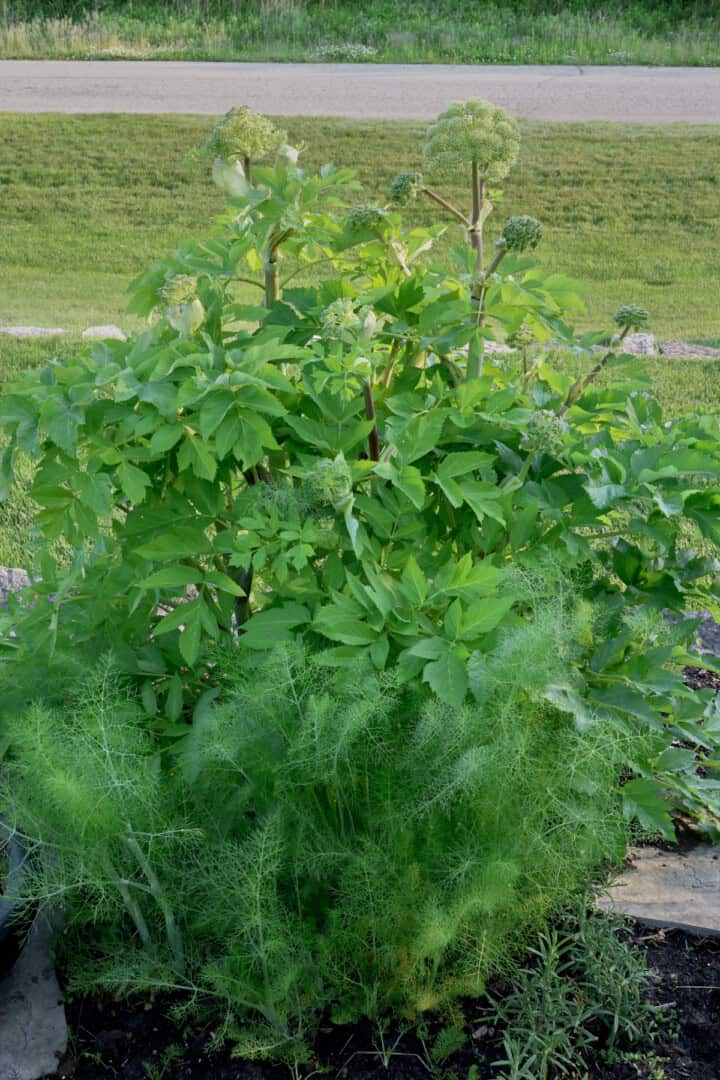
Sweet fennel (foreground) and angelica (background) are two of the most flavorful perennial herbs in my garden. I'm really lucky that I managed to get a third year out of the normally biennial angelica. And it flowers so early that I've once again missed making my angelica liqueur and candied angelica while the shoots were at their most tender! They supposedly taste the mildest before flowering.
Well, it's a good thing I like strong flavors. The angelica liqueur that I made last summer has been steeping for 11 months now. So I need to taste it and see how it turned out. If it's good, I'll do a blog post with the recipe. It's not ok that this ripens so early before I finish my spring planting madness!
Lemon balm and other citrus balms
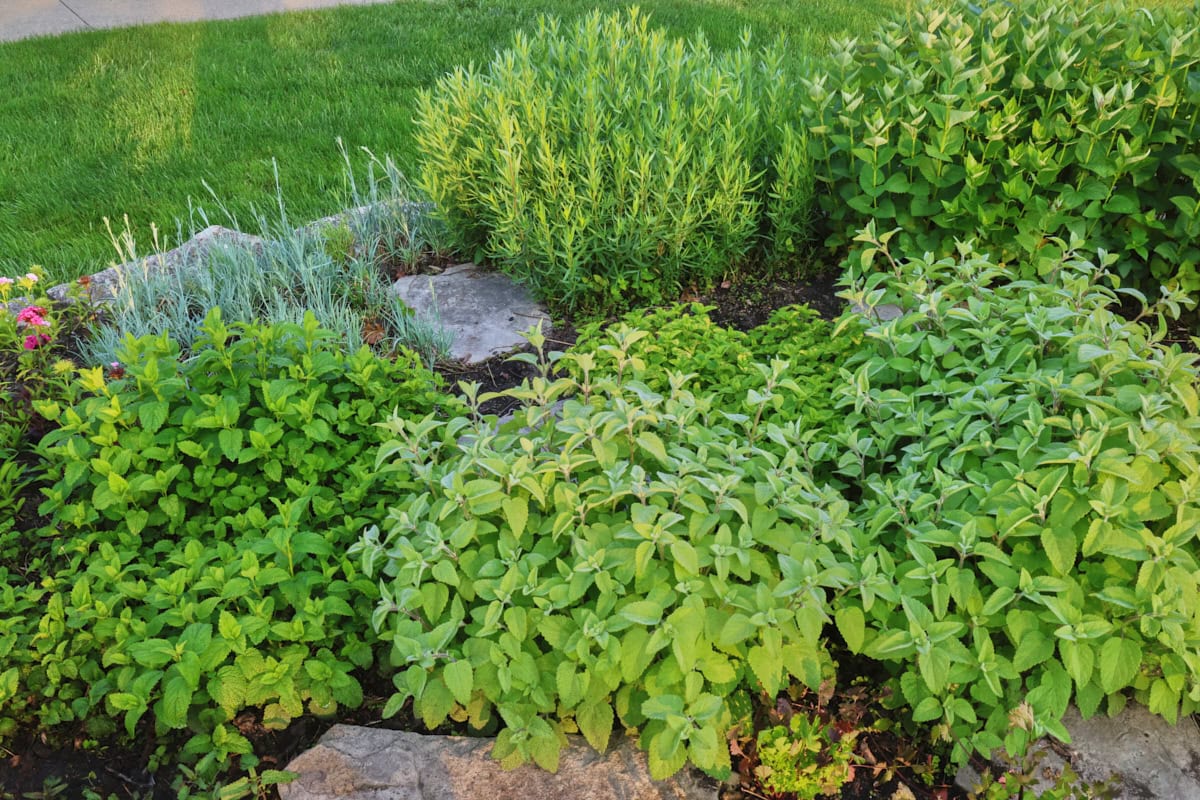
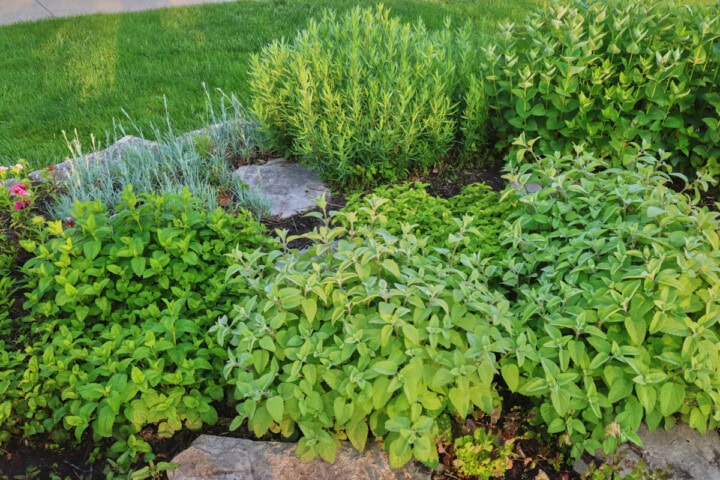
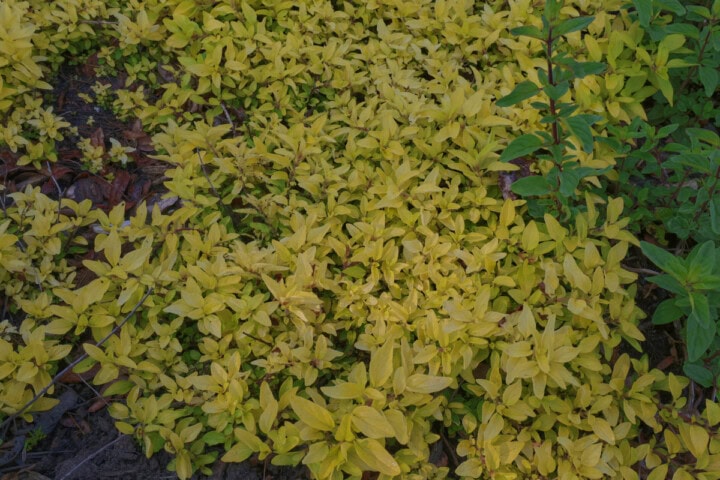
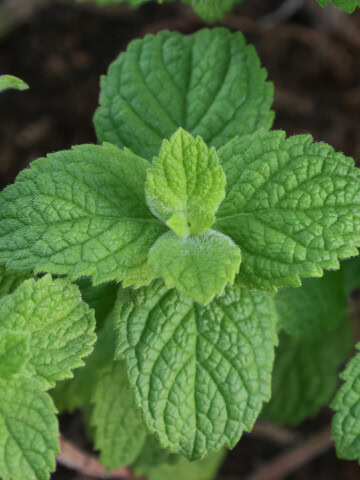
Here are my lemon balm and other citrus balms, which look their best at this time of year before they try to take over the planet. (And also, in the background from left to right, there's some sweet william, clove pink, French tarragon, and anise hyssop. And the edge of some cilantro (coriander) in the foreground.)
Dammit, I should have known that being in the Lamiaceae (mint) family, these balms would be tough to wrangle when planted in-ground. I mean, I did know, but just not the ridiculous extent of reseeding all over the entire garden bed every spring. And when my number of planters is limited, the mint goes in them first!
Here are the lemon balm and other citrus balm varieties I have this year, and one new variety I'm about to plant this week:
- Lemon limoncello
- Lemon Quedlinburger Niederliegende (This is the new one this year.)
- Lime
- Orange
- Variegated lemon
These have phenomenal scents, and they'll be amazing in iced tea and summer cocktails! I could also try them in desserts, especially with the nuances of these different varieties.
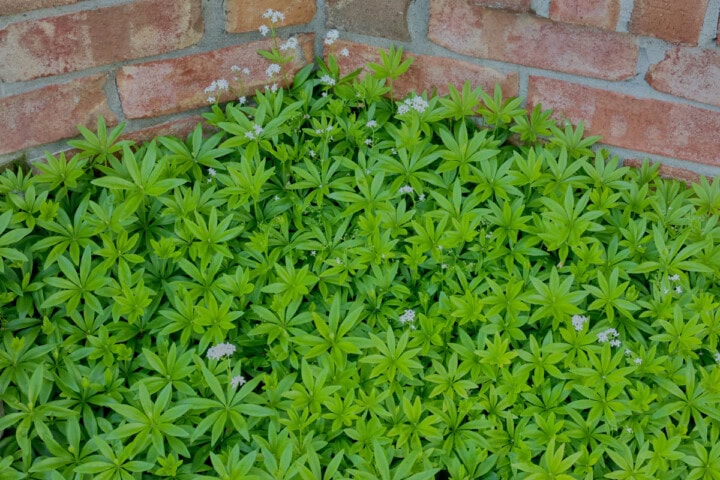
Sweet woodruff
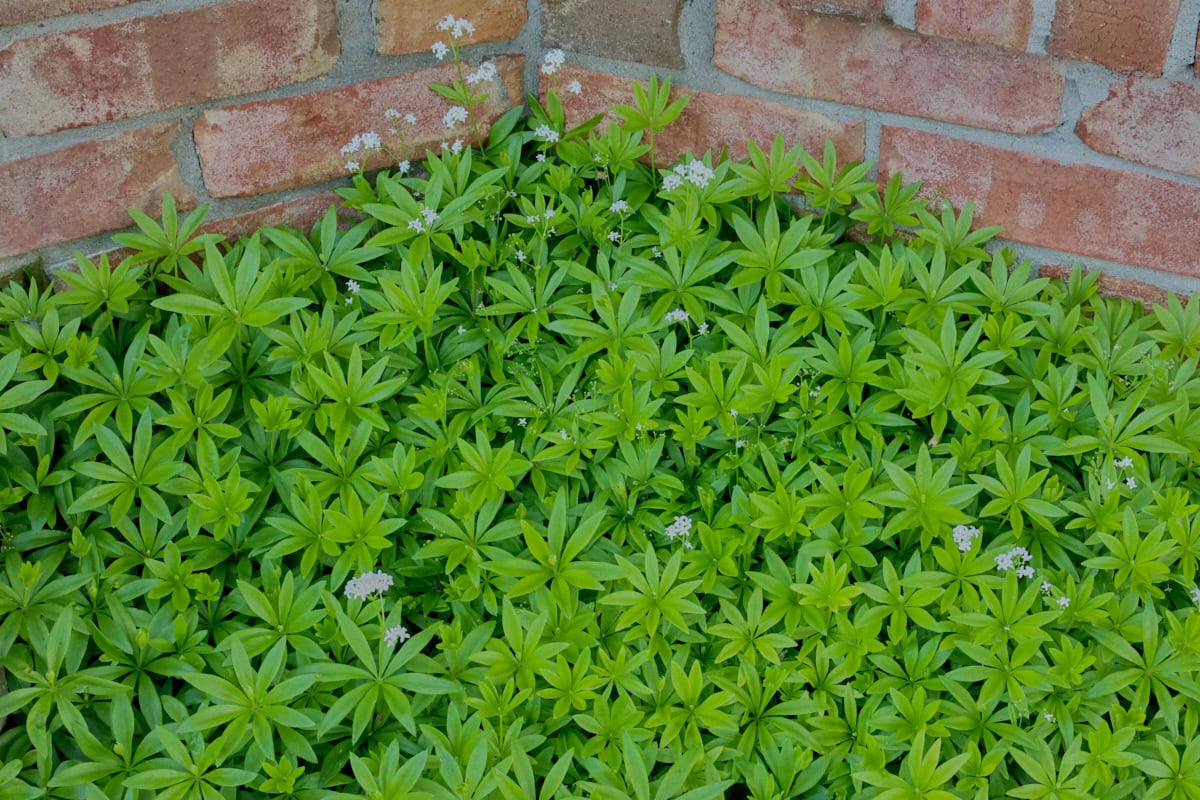
Sweet woodruff is a gorgeous herb that doubles as an edible groundcover, even in total shade. There's always a part of a garden bed that doesn't get enough sun, and this is where I plant this versatile herb. If given the chance to plant something in my landscaping, I'll always seek out every opportunity to grow something edible. There are such a wide variety of global botanical opportunities to flavor our food and drink, and I love to experiment with this!
Sweet woodruff is often characterized as having flavors of vanilla, grass, and almond. I need to make some May wine out of it at some point. This is a German tradition, and involves macerating the sweet woodruff in white wine, often with fruit. I'm sure it's divine.
Lovage
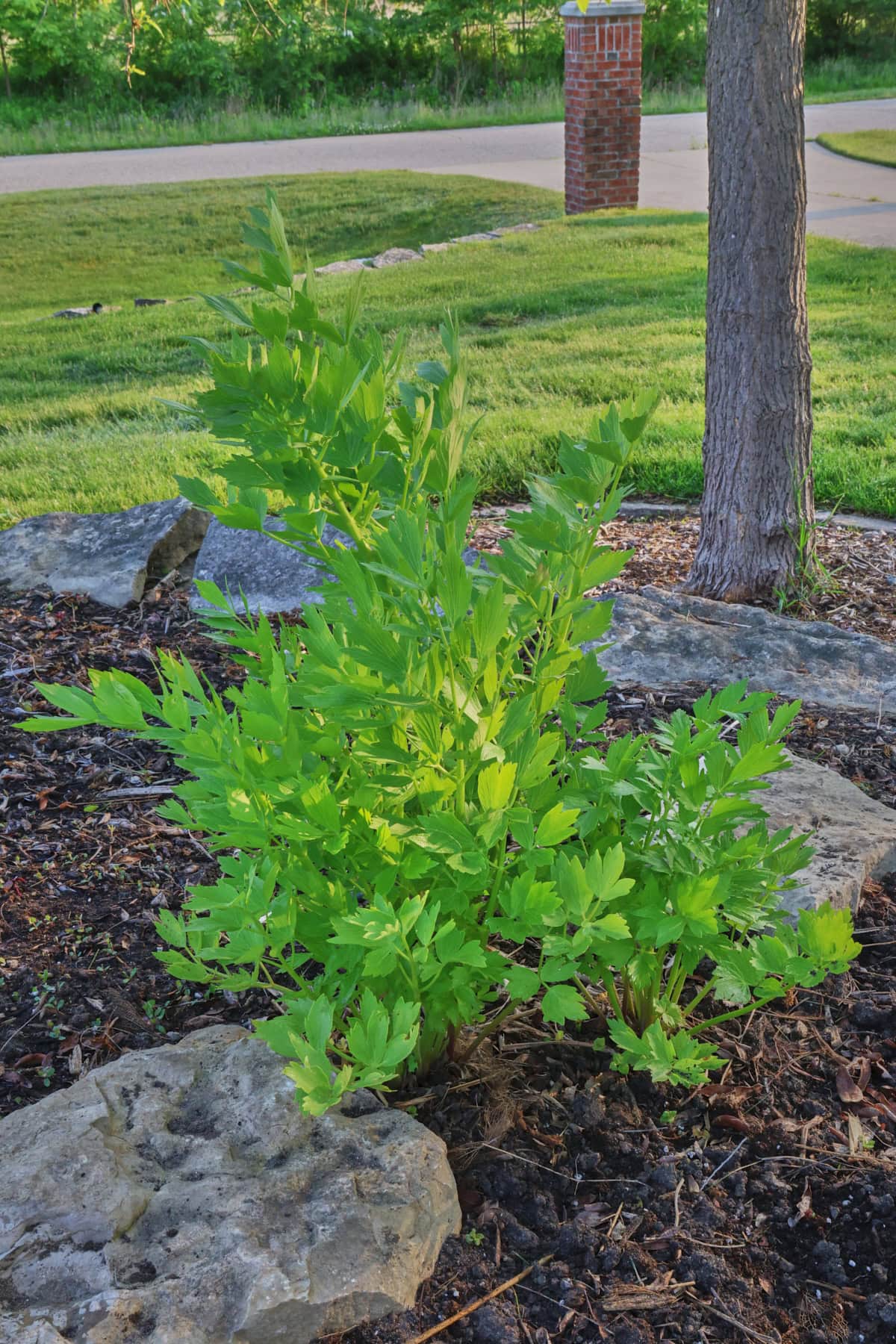
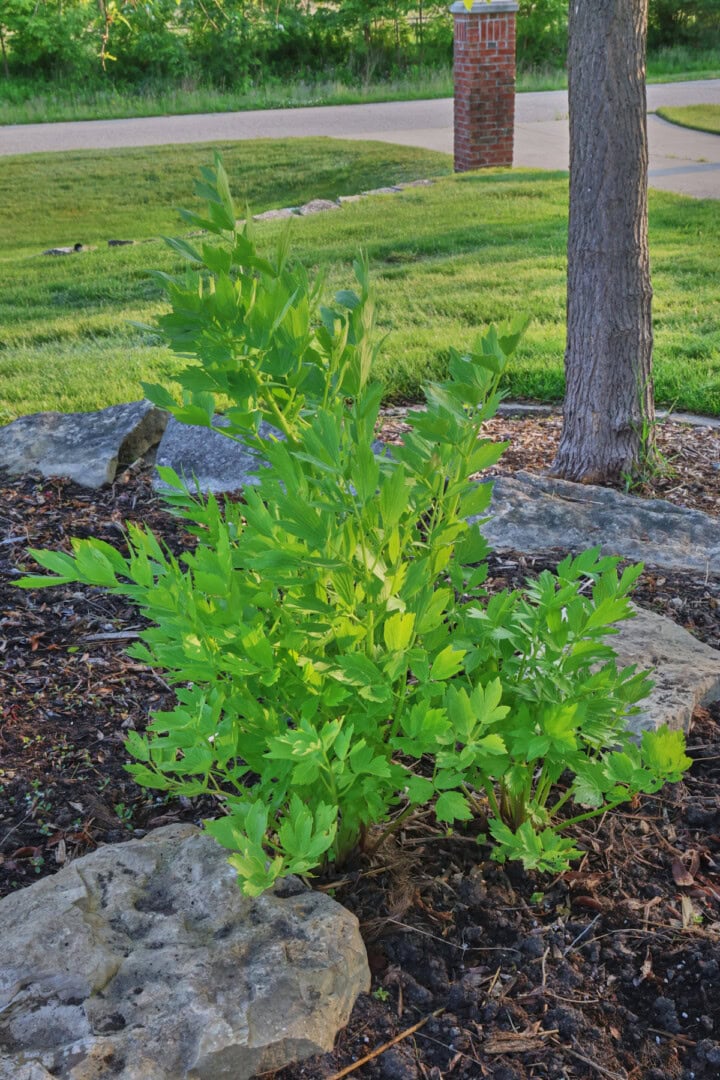
Lovage is my archnemesis in the herb garden, and one of the strongest-flavored perennial herbs that I grow. I first encountered this when I was living in Germany, and I mistook it for cutting celery. It was easy to make this mistake as it's in the same Apiaceae family, which also includes regular celery, so it looked very similar.
This is no ordinary or mild celery relative. It has a knock-your-socks-off level of celery flavor, with a bitter, earthy edge. That first time I bought it, thinking it was cutting celery, I completely ruined the sauce I was making. And I adore celery flavor. Especially my beloved Doc Brown's Cel-Ray soda. It's absolutely the best. You have to try it. So please know that my disdain for lovage isn't from an underappreciation of celery flavor. It actually is that ridiculously strong.
Now I know that if I ever use lovage, I'm going to start with just the tiniest portion of a leaf. Sheesh. I like having this herb in the garden to keep me humble, and to know there are some herbs (like salad burnet and pineapple sage) that I have yet to fully appreciate.
But there's another reason that lovage is special to me. When I first discovered it while living in Germany, it was of course with the German name Liebstöckel. It's just so much fun to utter this word. So much so that I no longer need to say the name in English, just like with my other favorite German words to say, Spargel (asparagus), zum Mitnehmen (takeout), and Staubsauger ("dust sucker" or vacuum cleaner.) I just adore these!
There, isn't your day so much better now? When you have words that are this enjoyable to say, you have to take advantage of this linguistic opportunity. But I digress. The garden awaits.
Annual herbs
Chervil
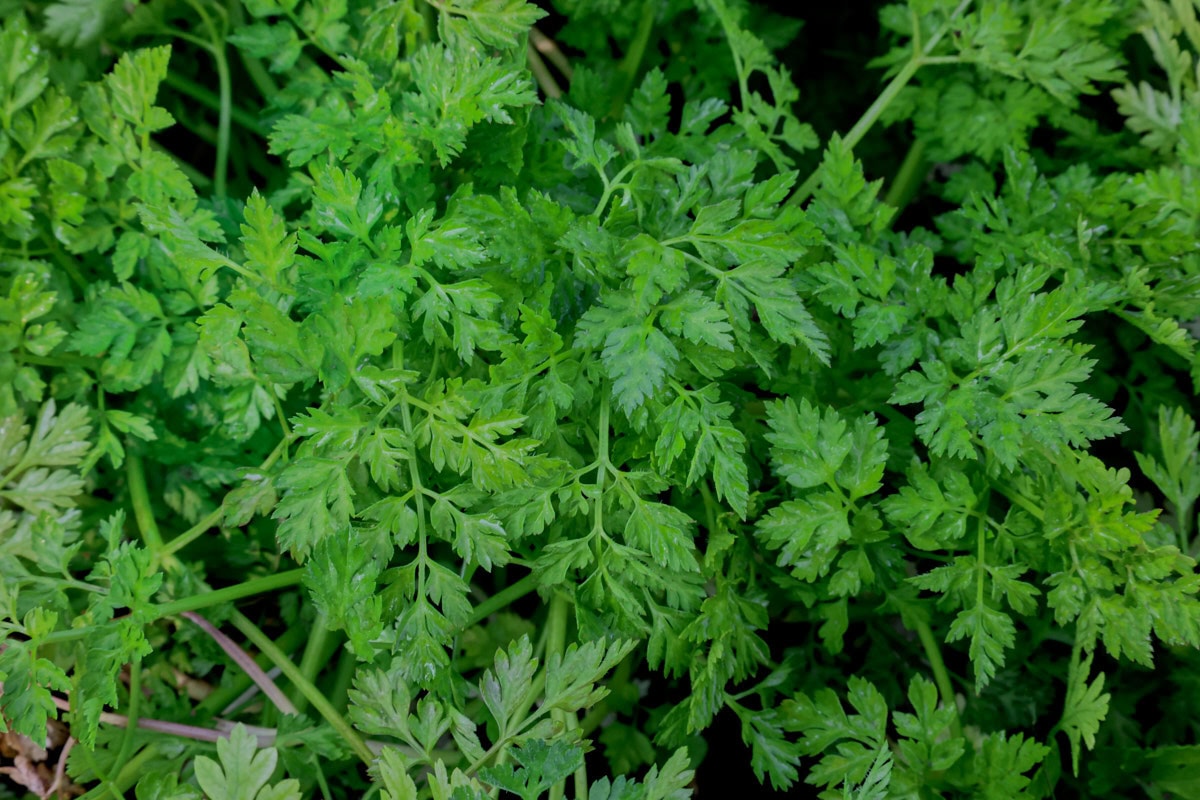
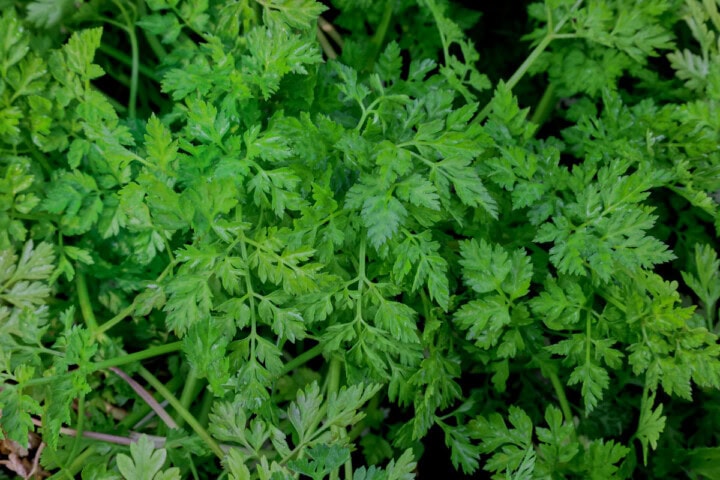
Chervil is a delicate, lacy annual herb with a delightful, mild flavor reminiscent of parsley and anise. It's an ephemeral treasure in the garden that lasts only a short time, and often seems to be done for the season by the time I'm ready to enjoy it. But it's so worth it to grow!
Bay laurel
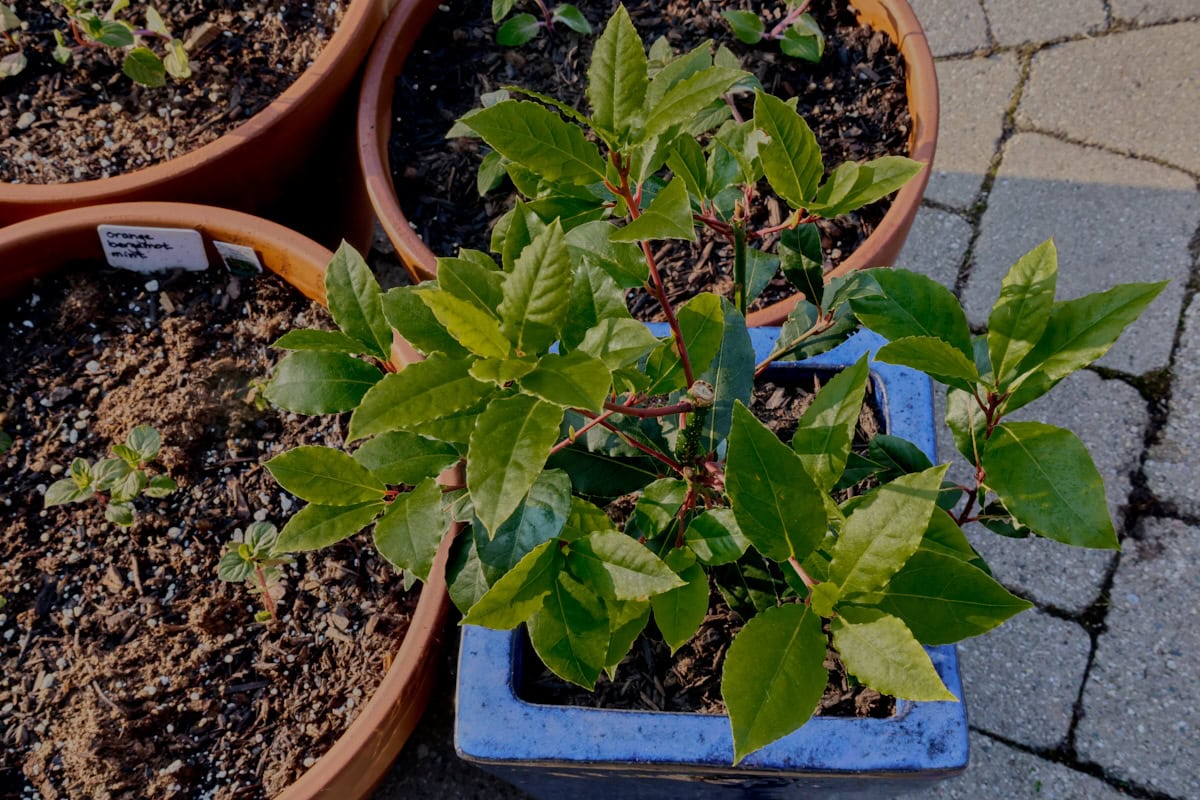
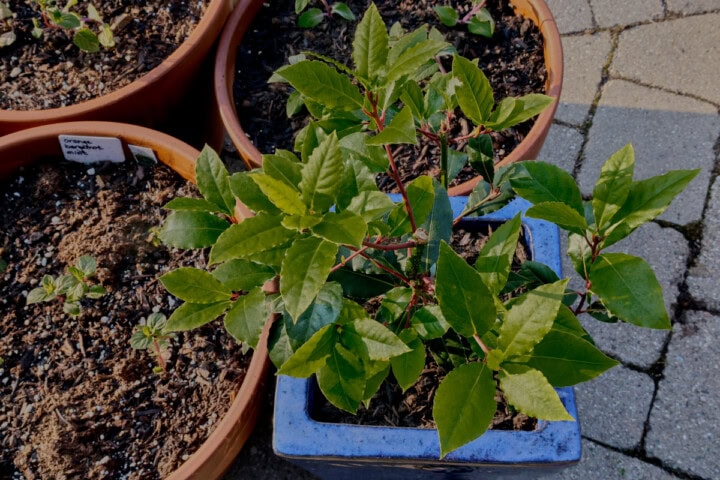
My bay laurel spends winter indoors as a houseplant, and it's now finally back outside and thriving in the early summer. Last year it had grown ridiculously tall and narrow, so late this winter (while it was still inside) I took several cuttings while at the same time prompting the plant to put out more side shoots and create a more rounded habit. I tragically didn't water the cuttings enough, so none of them have made it. But I still have my original, which looks beautifully shaped now. And I can try again to take cuttings next year.
Veggies
Fava beans
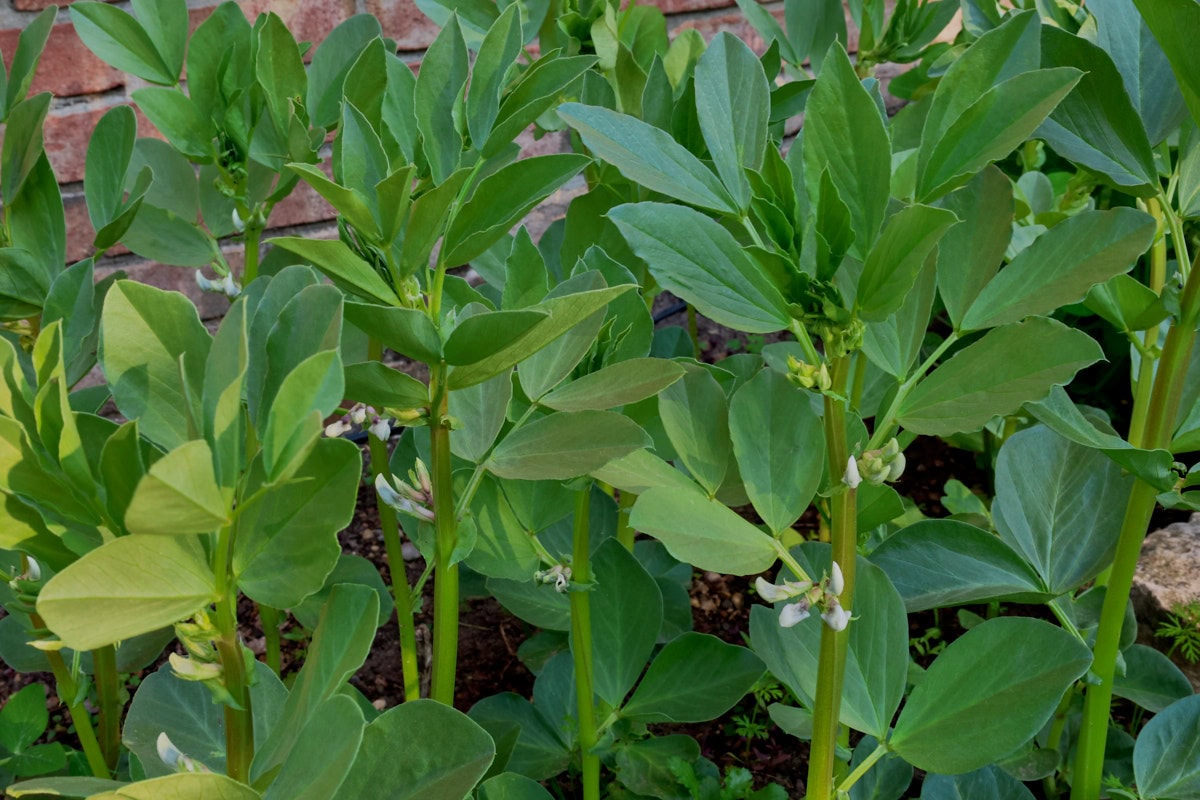
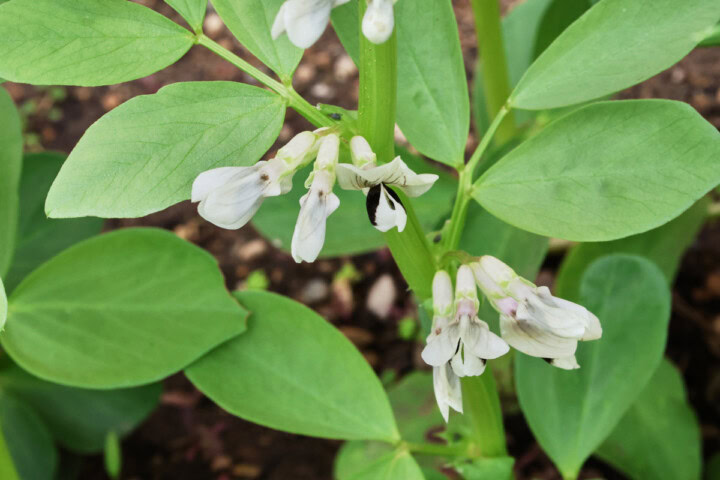
Fava beans deserve so much more recognition in home vegetable gardens and in the kitchen. They're beyond delicious, and celebrated in many world cuisines. I just adore the beautiful black and white blooms that will open in the next few days.
Lettuce
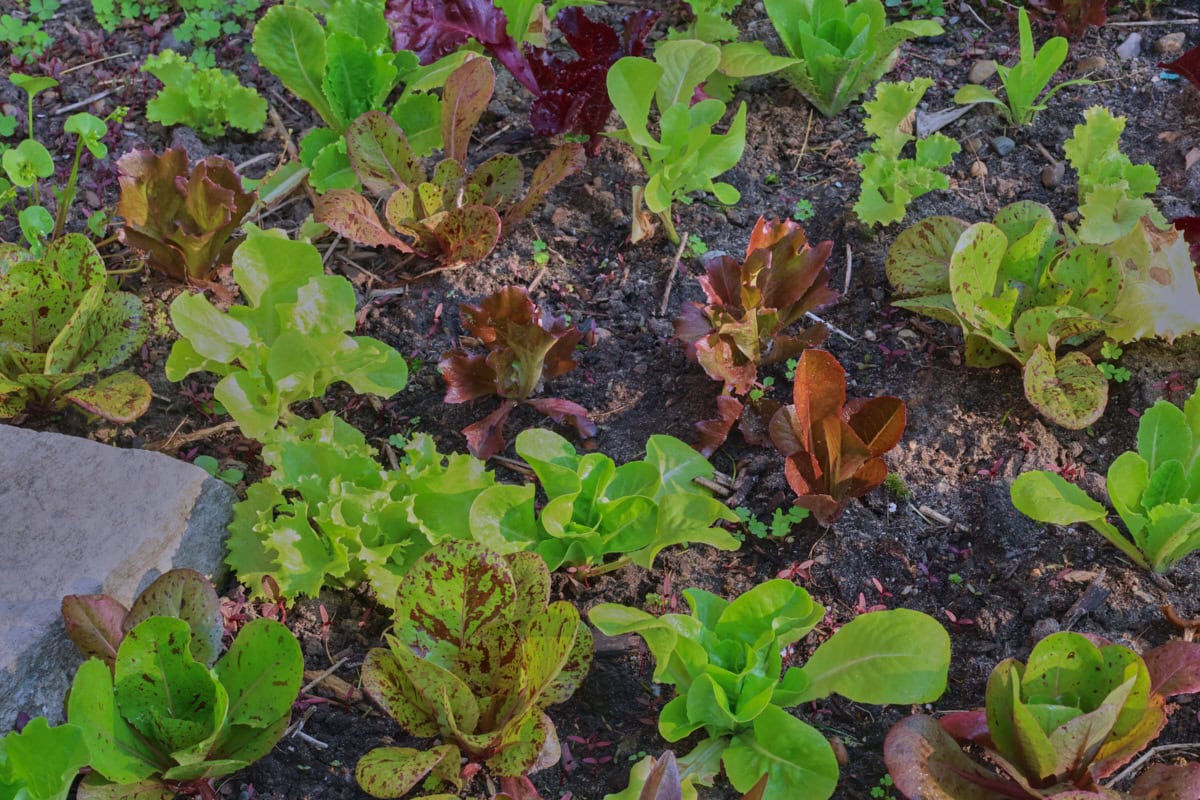
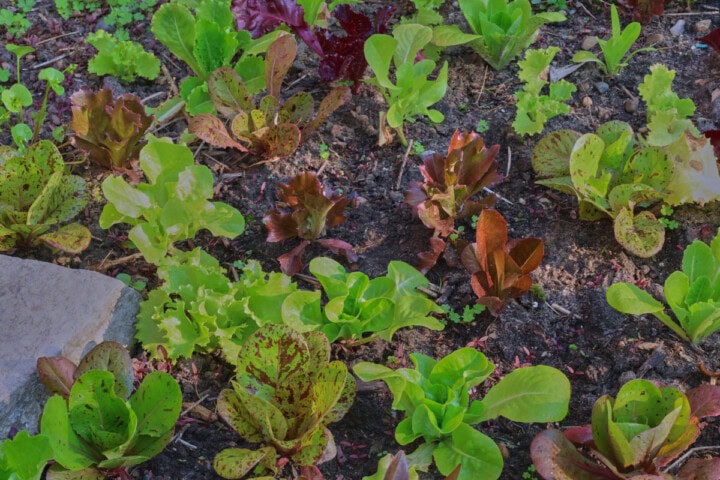
It warms my heart to see the morning sun on these bejeweled baby lettuces in the summer vegetable garden. They'll make summer salads so special with their various colors, flavors, and textures. And this time of year, it's tough during planting season to keep up with weeds like this white clover popping up in between all of my crops right now.
Mâche

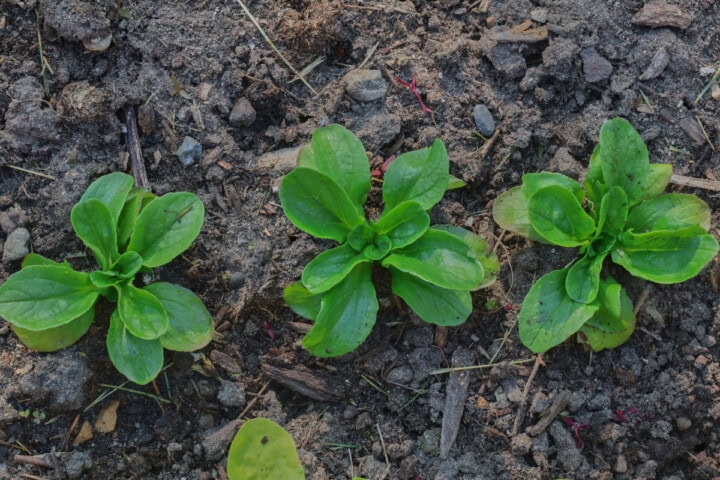
Mâche is also known as lamb's lettuce, Feldsalat, or corn salad. This mild and nutty green is so special. I first encountered it when we lived in Germany, and we ate it dressed simply in walnut or hazelnut oil and a sprinkle of fleur de sel. It's difficult to express how exciting it is to taste this, and it's so worthwhile growing it.
It's always been a challenge for me to grow this when sown directly in the garden. It waits until just the right moment with the perfect cool temperatures to come up. Sometimes for me it waits until the next season to sprout. So now I've solved this by planting it under my grow lights, where it sprouts reliably when I want it to!
Orach
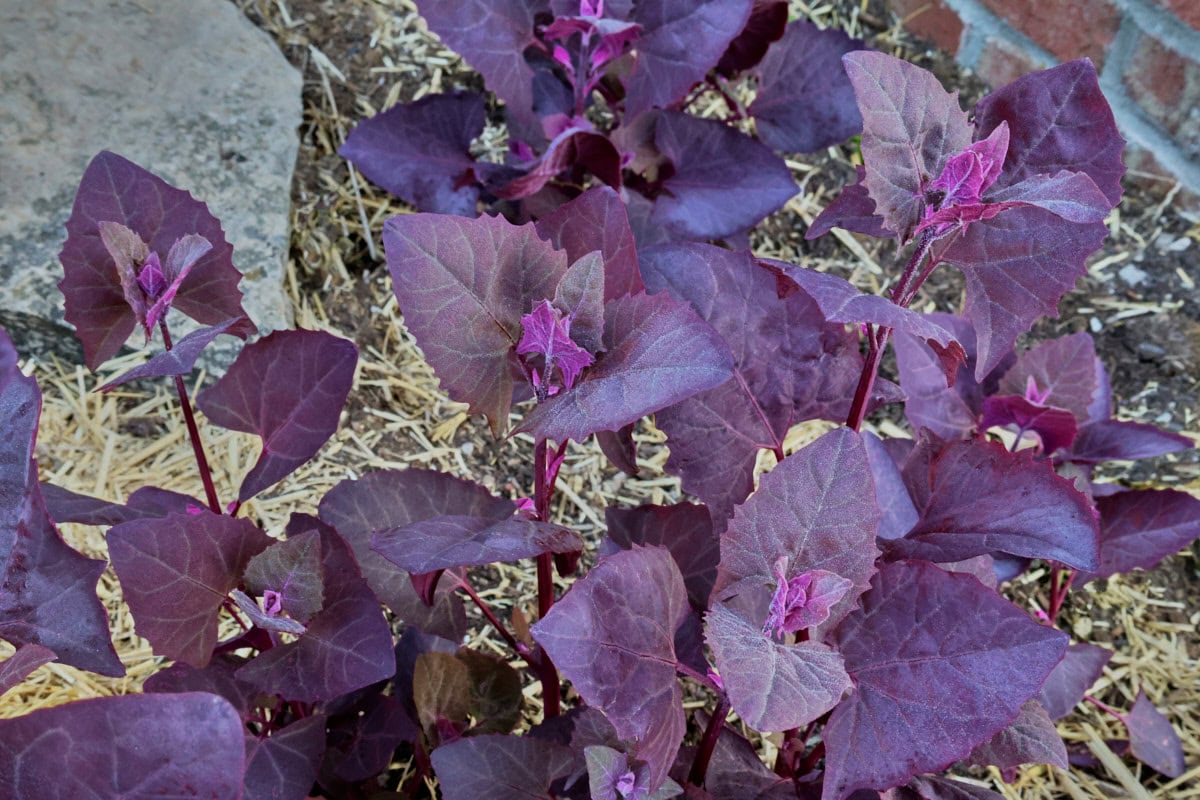
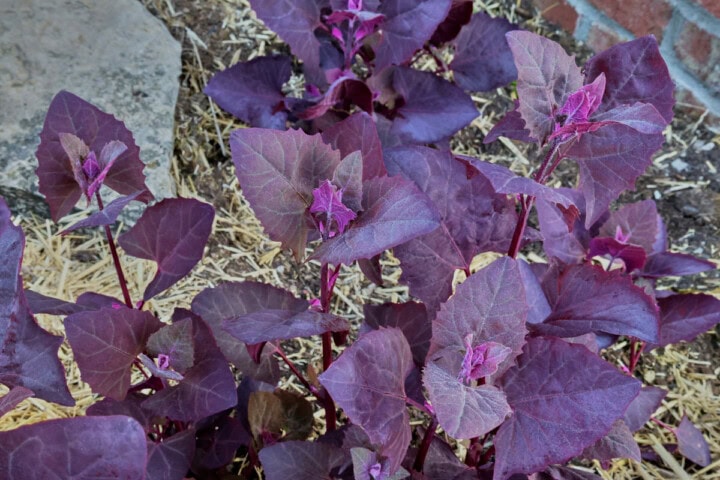
Here's some purple orach that I planted last fall, and it finally decided to come up this spring. It's such a beautiful leafy green for salads. The color is magnificent, and it has a delightful crunch and mild tangy flavor.
Potatoes

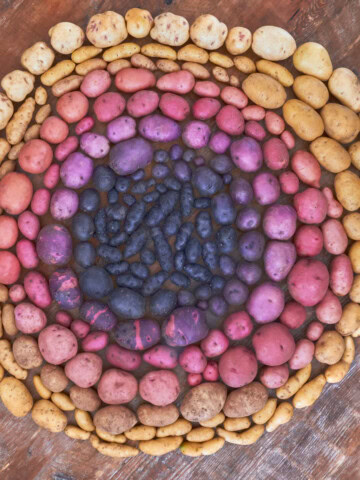
The potatoes are sprouting! I've planted 28 heirloom varieties from around the world this year to fill a large bed. You can read about my heirloom varieties in my post How I Planted 28 Heirloom Potato Varieties. This one is a fingerling variety, La Ratte, also known as La Ratte de Grenoble. This is really a special one. I haven't grown potatoes in years, so I'm really looking forward to the exciting treasure hunt of harvesting them again! This was always one of the gardening jobs the kids have loved to do.
Kale
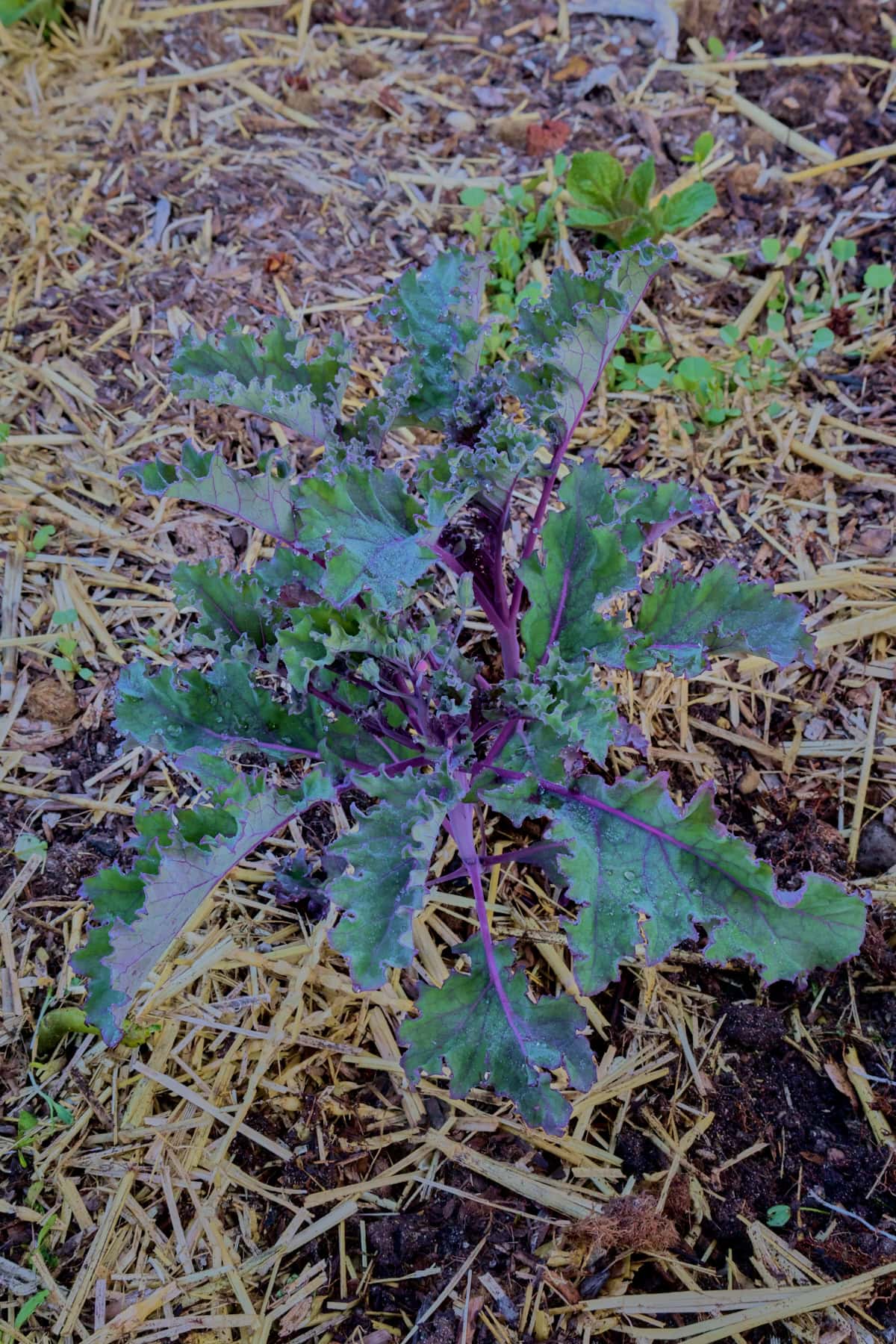
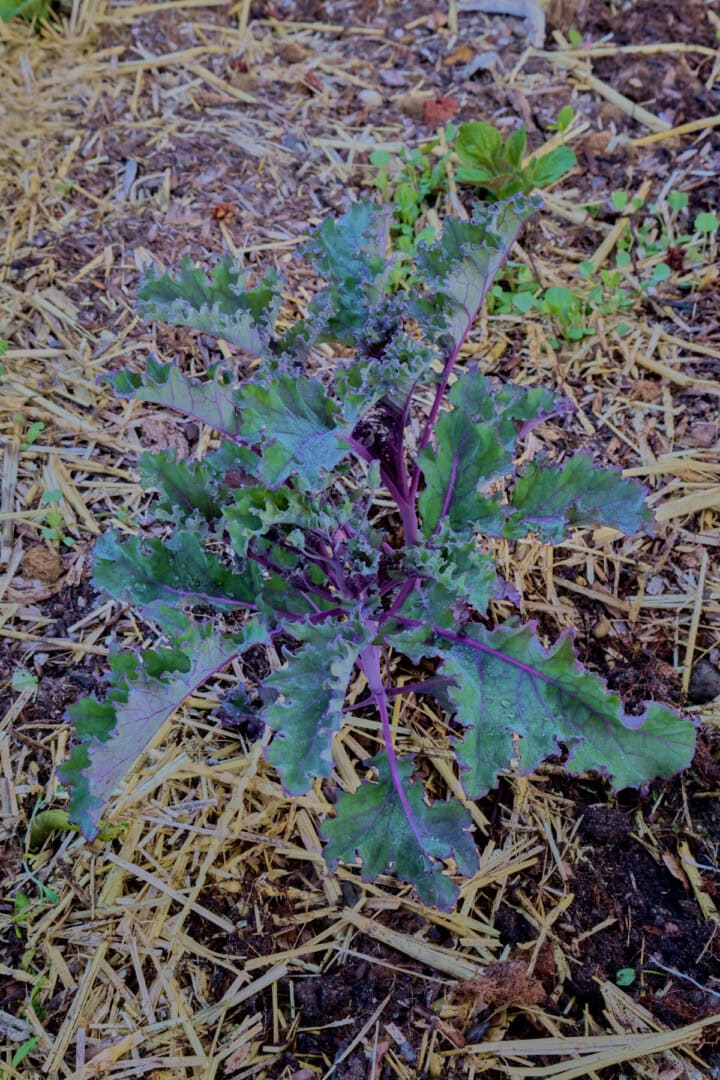
Red Russian kale is a spectacular leafy green for texture, and this volunteer seedling decided to come up after crop rotation from last fall. Since it's now in the middle of my potato bed, I need to move it to my bed of greens. I love the substantial chew and texture when eating any type of kale. This green means business, and is such a beloved addition to the garden.
Bloody dock
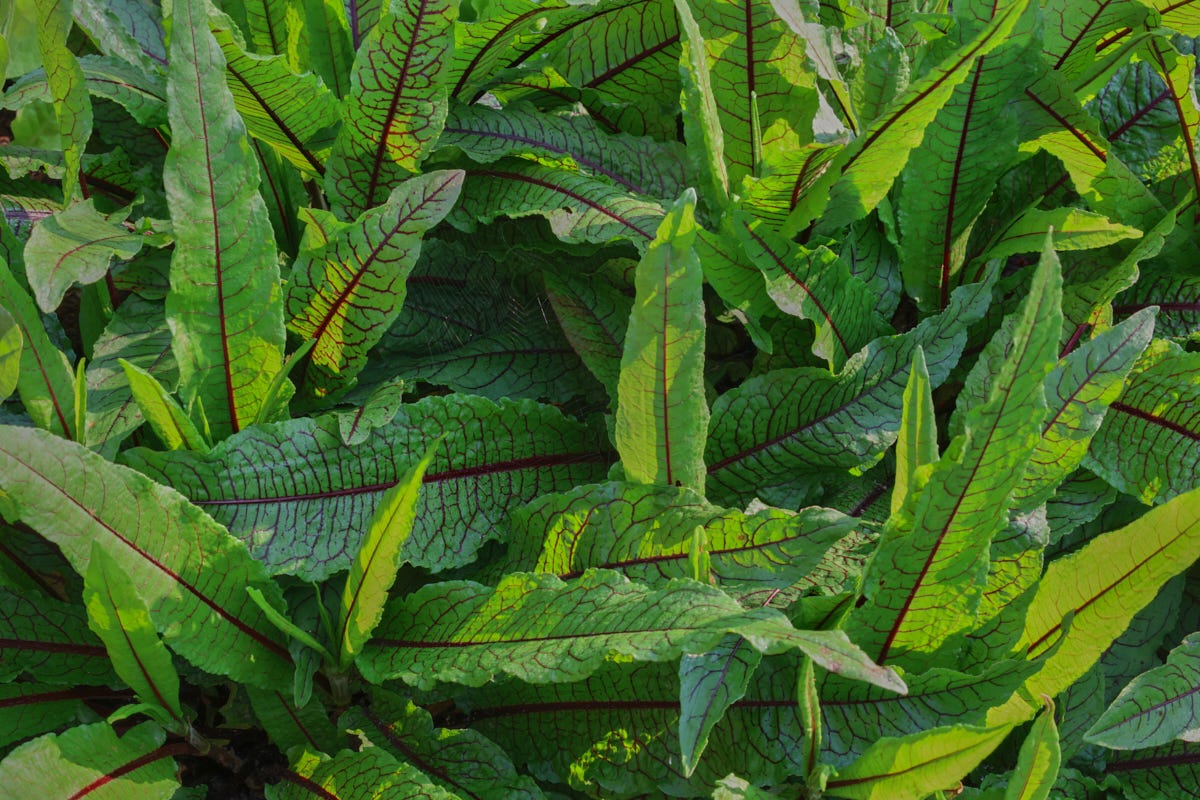
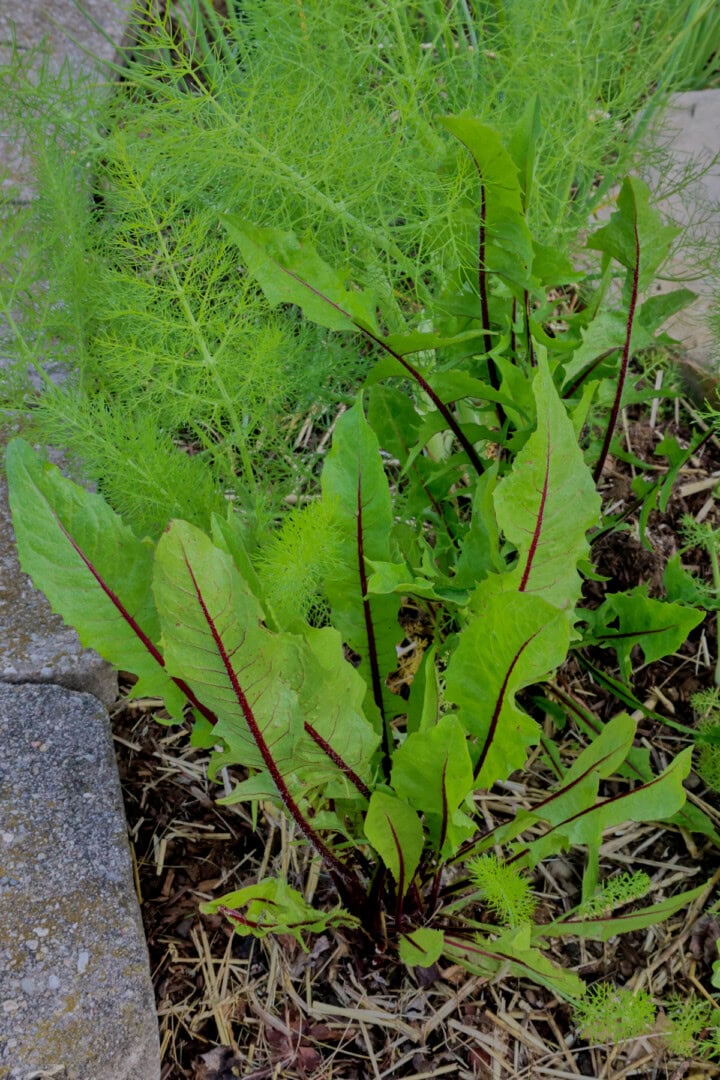
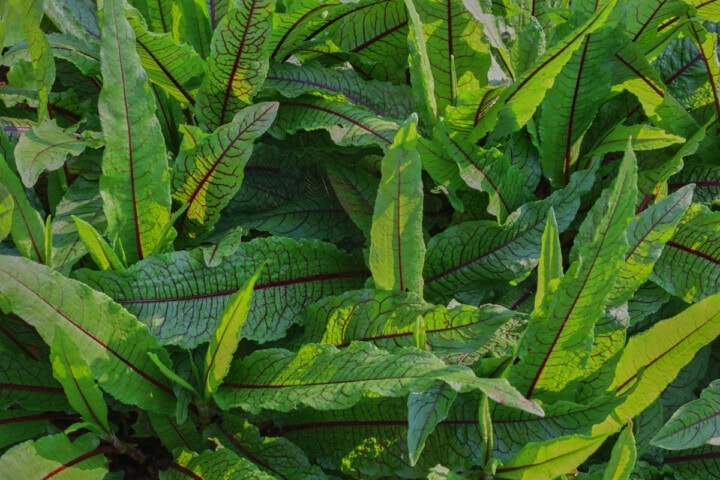
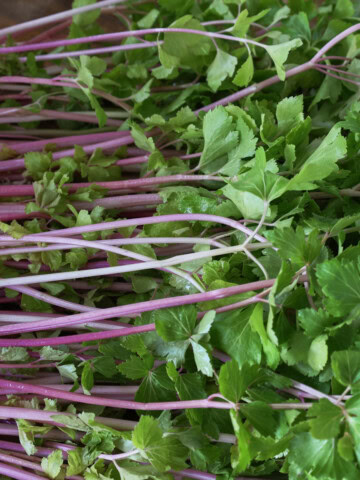
Bloody dock is a vibrant and mildy tangy green that I need to use more often in salads and soups. It's a close relative of the sorrel I grow and use to make Rustic Vegan French Sorrel Soup (Soupe à l'Oseille). The colors of this dock are just stunning.
Shallots
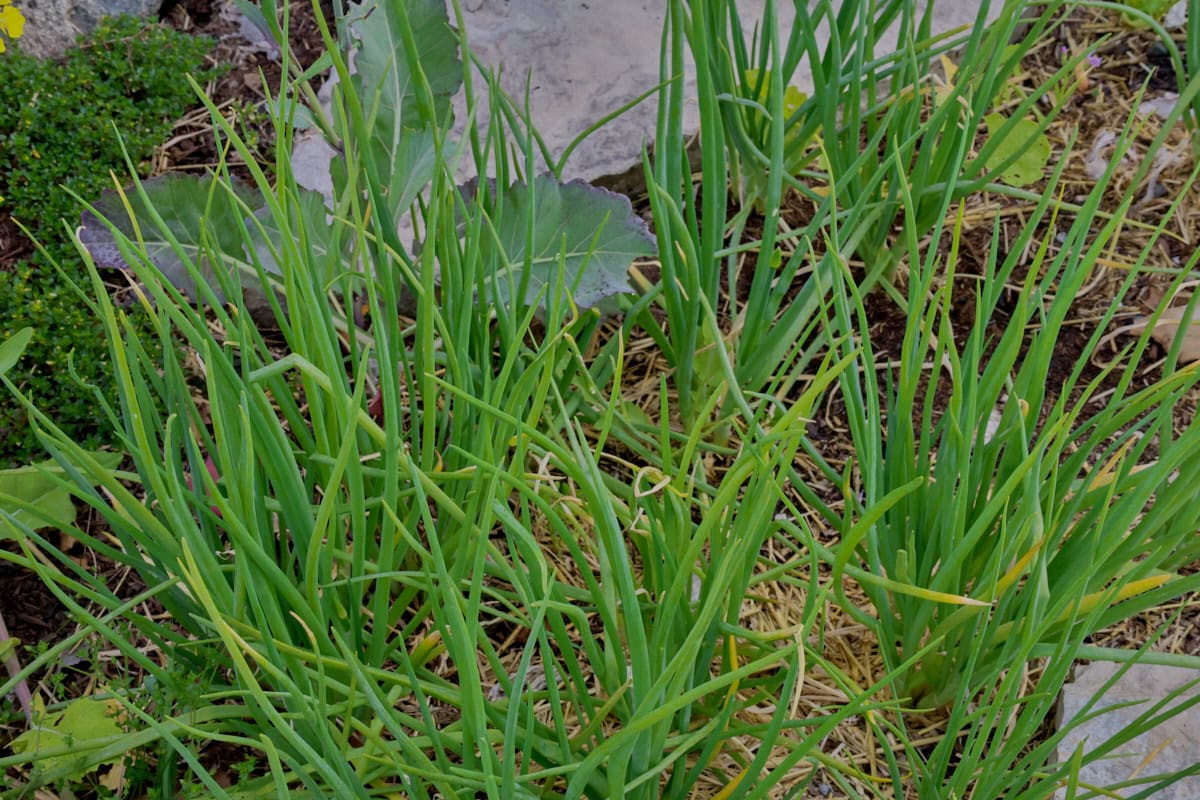
Here are some red and Dutch yellow shallots that I have no recollection of planting last fall. I was shocked when they came up this spring. I looked back to my garlic order from Keene Organics, and sure enough, there they were!
Garlic

My garlic is filling an entire bed this year. This seemed like a brilliant idea in October when I planted it, and a slightly unhinged one by spring. It's easy to succumb to gardening greed when planting in October while several of the beds are done for the season. So this spring, after I used an entire garden bed for 21 varieties of garlic, I've been scrambling to compensate for my garlic madness and find room for all of my other crops. Sigh.
Burdock
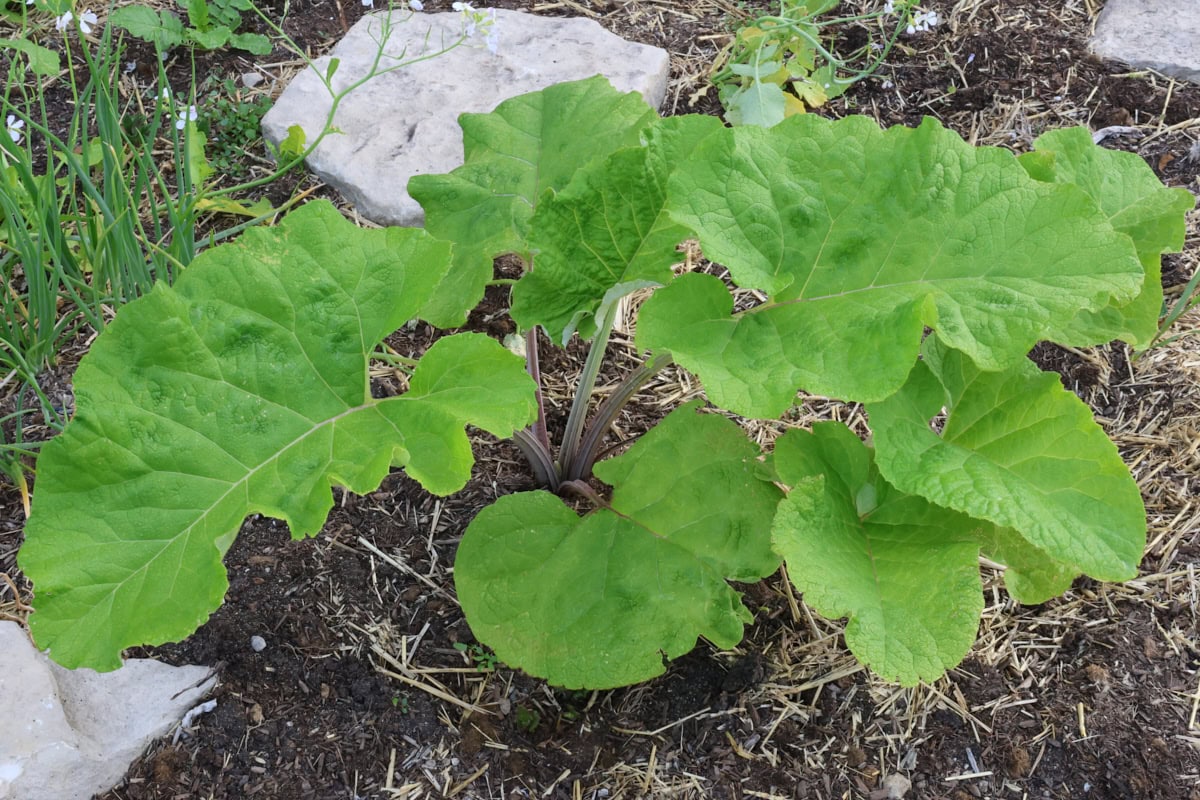
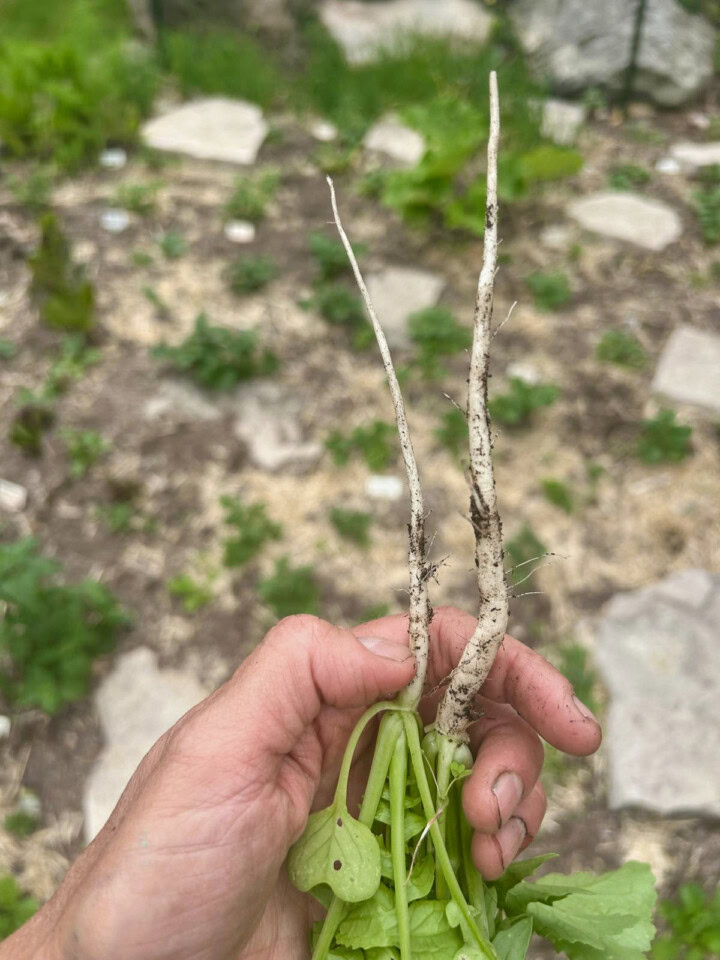
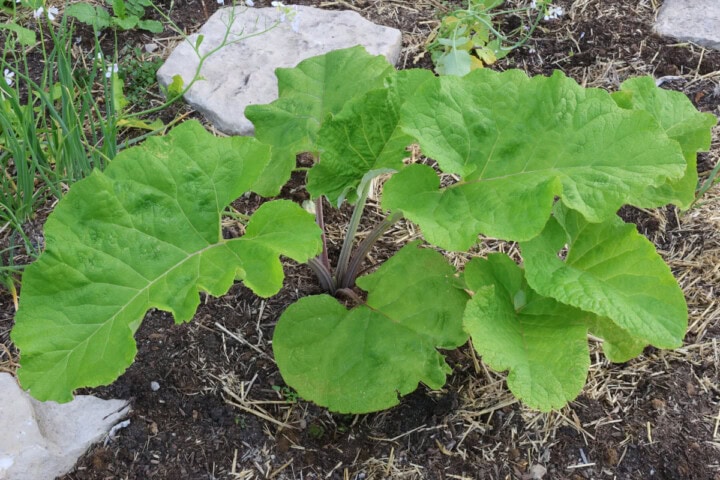
Takinogawa burdock. I was thrilled to find this Japanese variety at Baker Creek, with its sumptuous roots reaching 3 feet (1 meter) long! I had somehow missed the part in the description that they're "grown in traditional Japanese burdock boxes." So when I tried to harvest it last fall, I was digging, pulling, swearing, and inadvertently snapping the roots in half since it was impossible to dig down that far without disturbing the other crops. So of course it resprouted from the parts that were left. It looks like I'll have a crop of halfway snapped-off burdock roots for the foreseeable future. I need a traditional burdock box!
Radishes
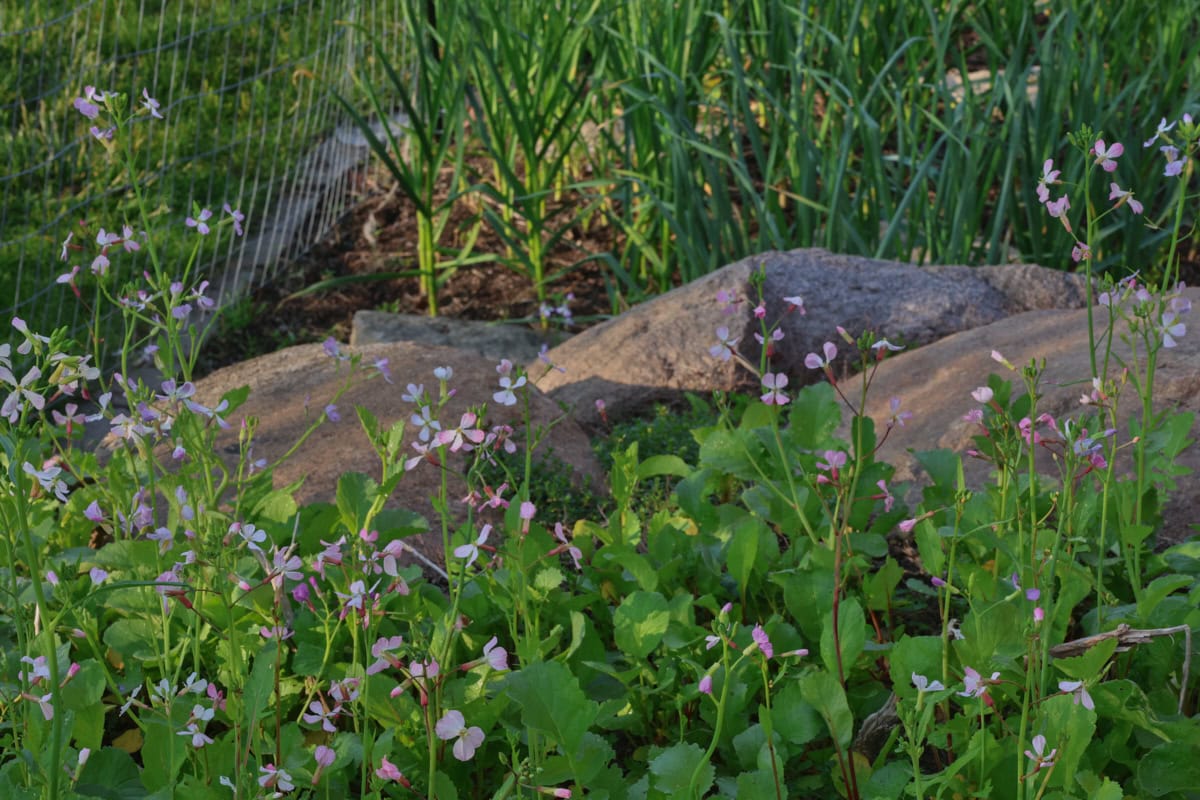
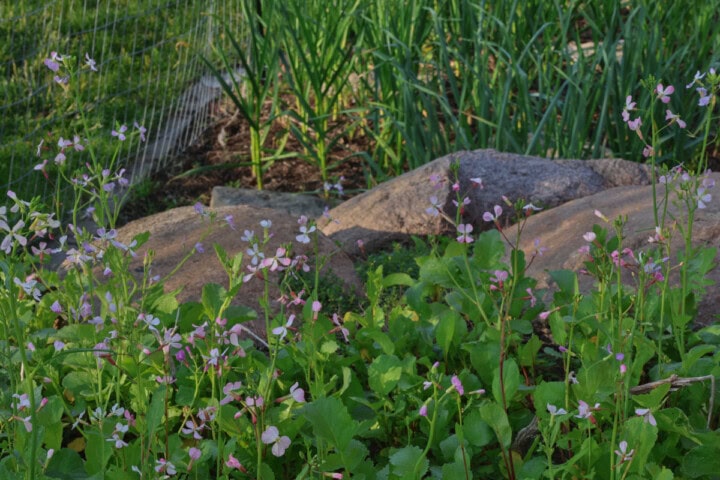
These radish flowers are what happens when I don't get out there to harvest my radishes soon enough. I didn't even get out there in time to thin them out this year, so they're probably bitter and pithy. But I've harvested a few today while planting, and they weren't terrible. So we'll see. I have to get out there and pick them!
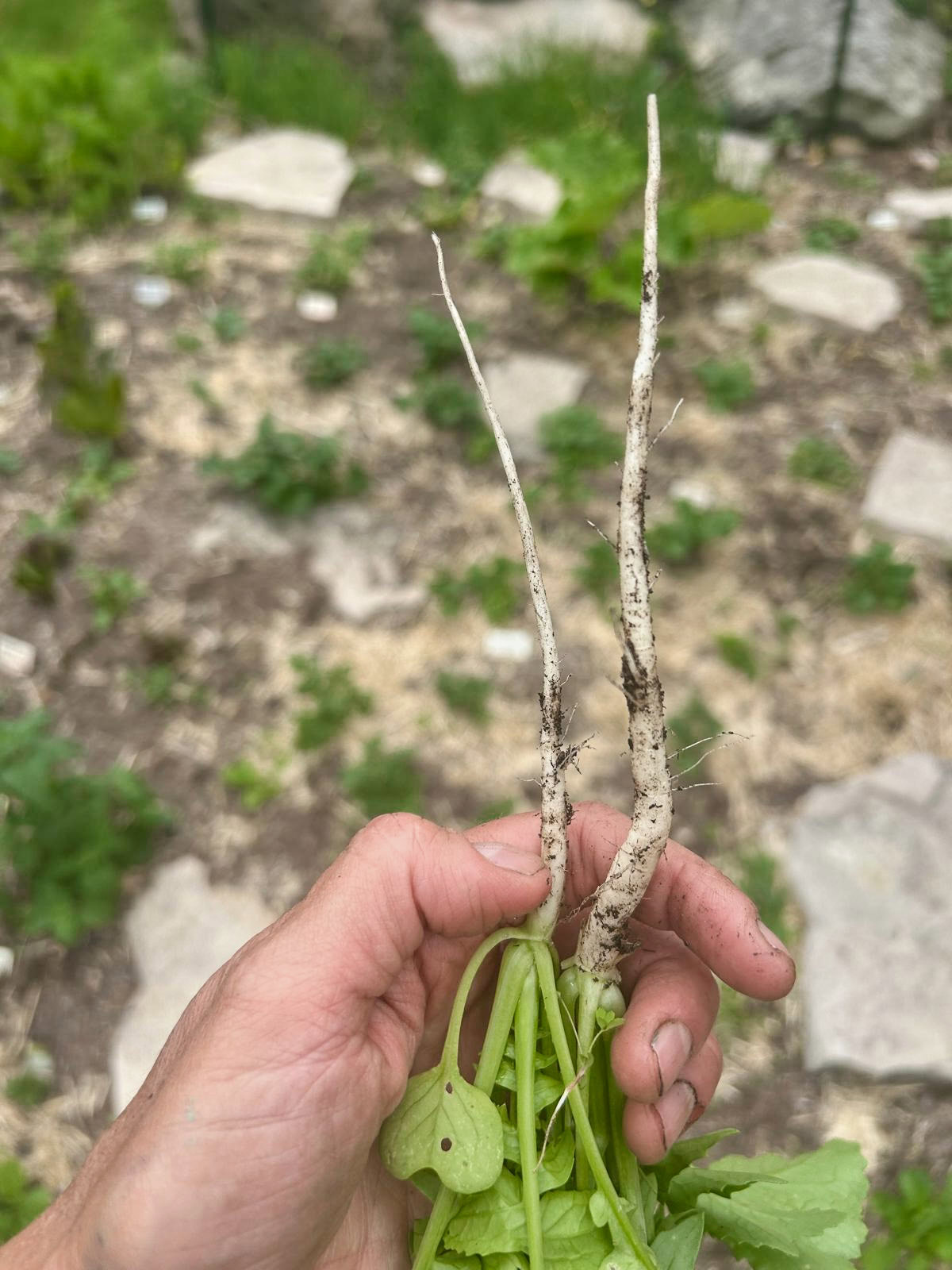
These daikon radishes, also called tillage radishes when grown as a cover crop, came in the mix of winter-kill cover crop seeds that I had planted last September. I had sprinkled the seeds among my ripening fall crops, while the weather was still warm enough for them to sprout. And my fall crops were already well enough established that the cover crop seedlings didn't impede their growth before they were ready for harvest.
I wanted to give the cover crops as much opportunity for growth as possible before winter took them down. These radishes in the photo were part of the cover crop seed mix that also included oats, cowpeas, fenugreek, lentils, millet, brown flax, turnips, and mustard seeds. Using cover crops (also known as "green manure") is a great agricultural practice that's included in permaculture and regenerative agriculture.
Good cover crop management provides so many advantages in your garden regimen: this prevents erosion, adds biomass to the soil, improves the soil condition (including structure, level of aeration, moisture retention, etc., collectively also known as "tilth"), reduces weed and pest pressure, "fixes" nutrients into the soil in a way that's bioavailable for root uptake, feeds soil microorganisms, and prepares your garden bed for the next season of crops.
Plus, it's really important to me to use strictly organic and vegetative amendments to the soil, with none of them derived from animal sources. Cover crops are a great part of an integrative practice to have your garden absolutely thrive with no animal inputs.
And daikon radishes are especially helpful in breaking up compacted soil and allowing water and roots to penetrate it. They also pull up nutrients from deep within the soil. So if you have the time and room to let them ripen and then decompose in the soil, these nutrients will be distributed slowly into the soil.
Anyway, these newly-sprouted radishes had come up everywhere this spring in my freshly-planted potato bed. You can see the new potato plants sprouting in the background of the above photo. I spaced the potatoes pretty tightly within their normal range, and I didn't think I could spare the room to allow these radishes to continue growing. But alas, these baby ones were so cute in this photo.
Culinary dandelion and sweet fennel
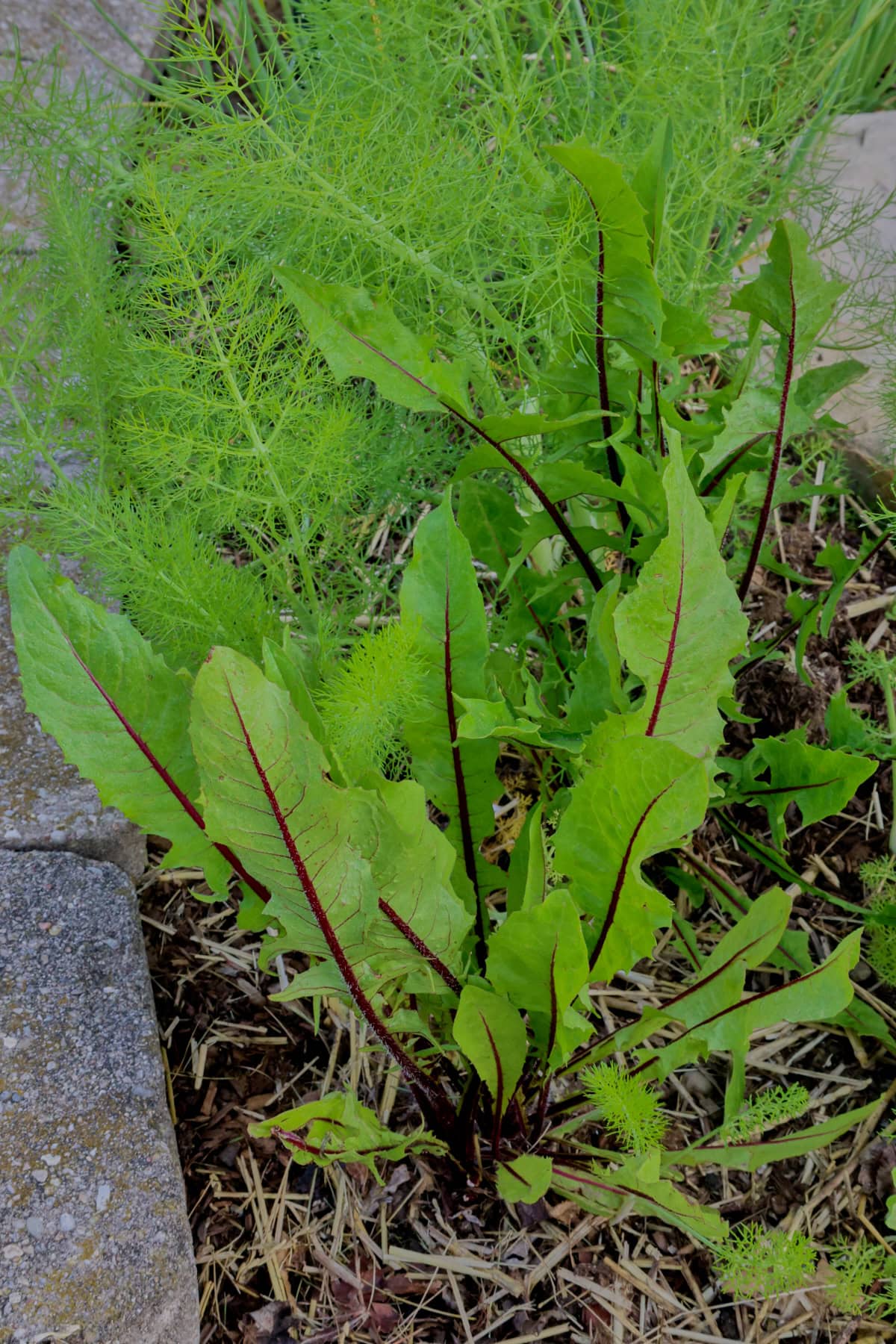
Here are some italiko rosso dandelion and sweet fennel. I planted both of these last fall, and both have fortunately decided to grace me with their presence again. I'd thought this fennel was the Florence (bulbing type) fennel I'd planted last fall. But nope, this has turned out to be a volunteer of the sweet (herb type) fennel that must have reseeded from my herb garden across the yard.
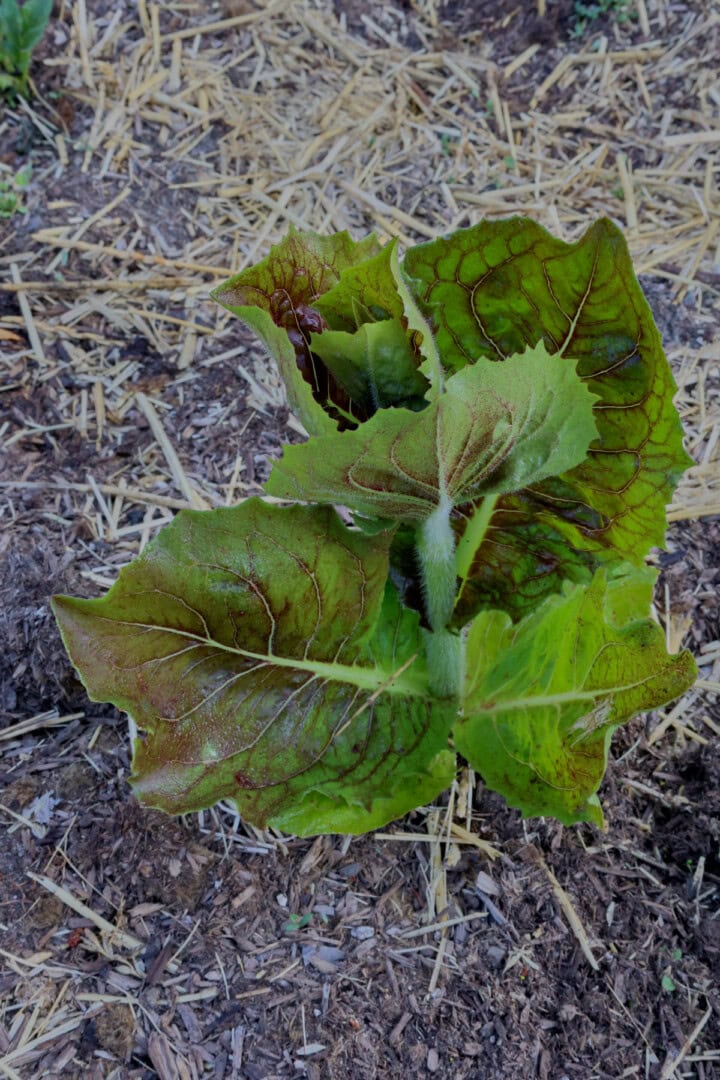
Radicchio

Palla rossa radicchio is a bitter salad green that I planted last fall and has come up again. I'm really looking forward to tasting it. I really love salad greens with a note of bitterness. I really need to grow a larger variety of radicchio next year.
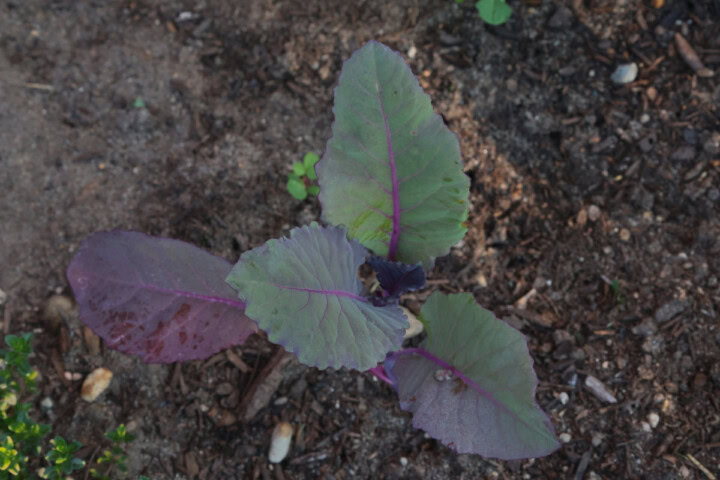
Cauliflower
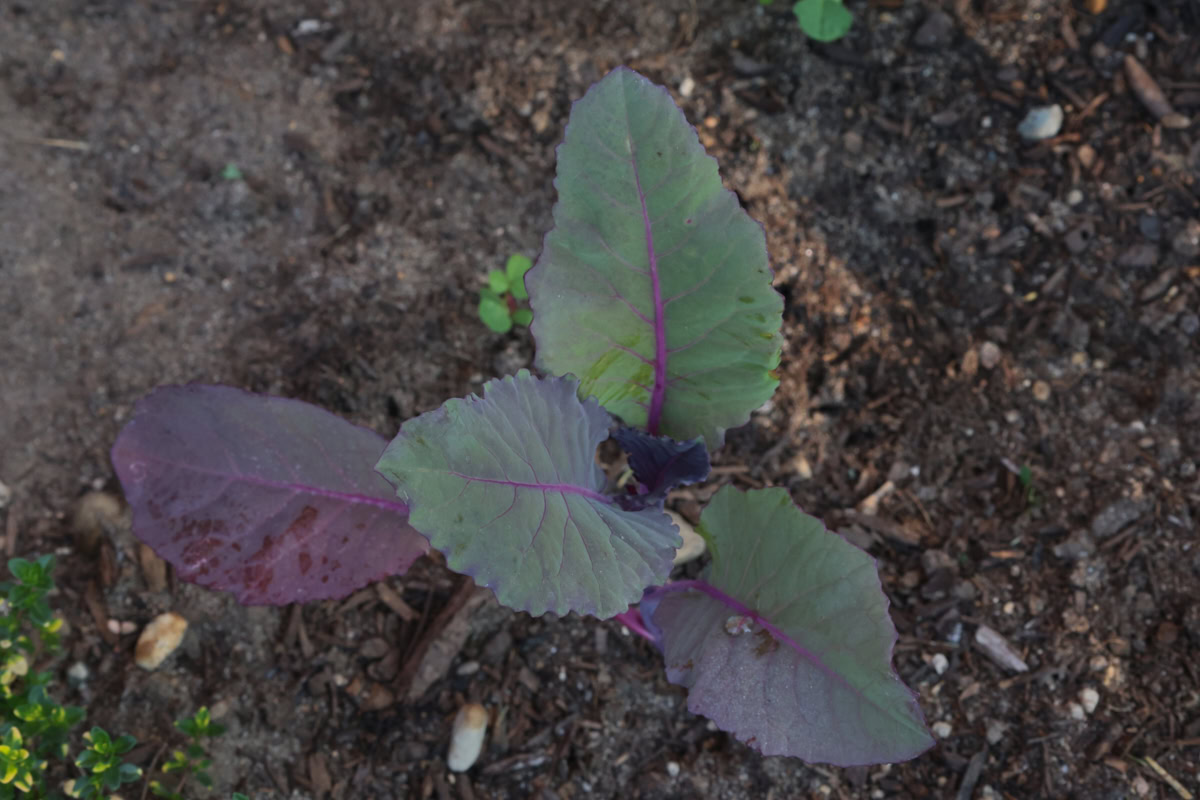
A beautiful Purple of Sicily cauliflower seedling that I started in early April under my grow lights. The luminous colors are just gorgeous. I'm really looking forward to the purple cauliflower heads when it's mature.
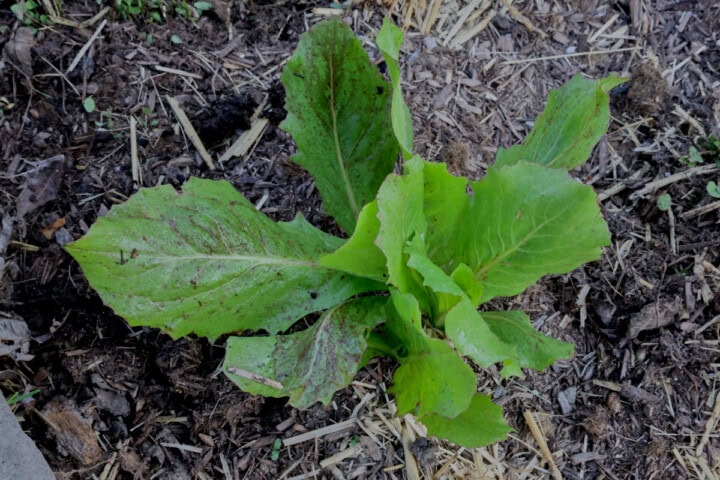
Escarole
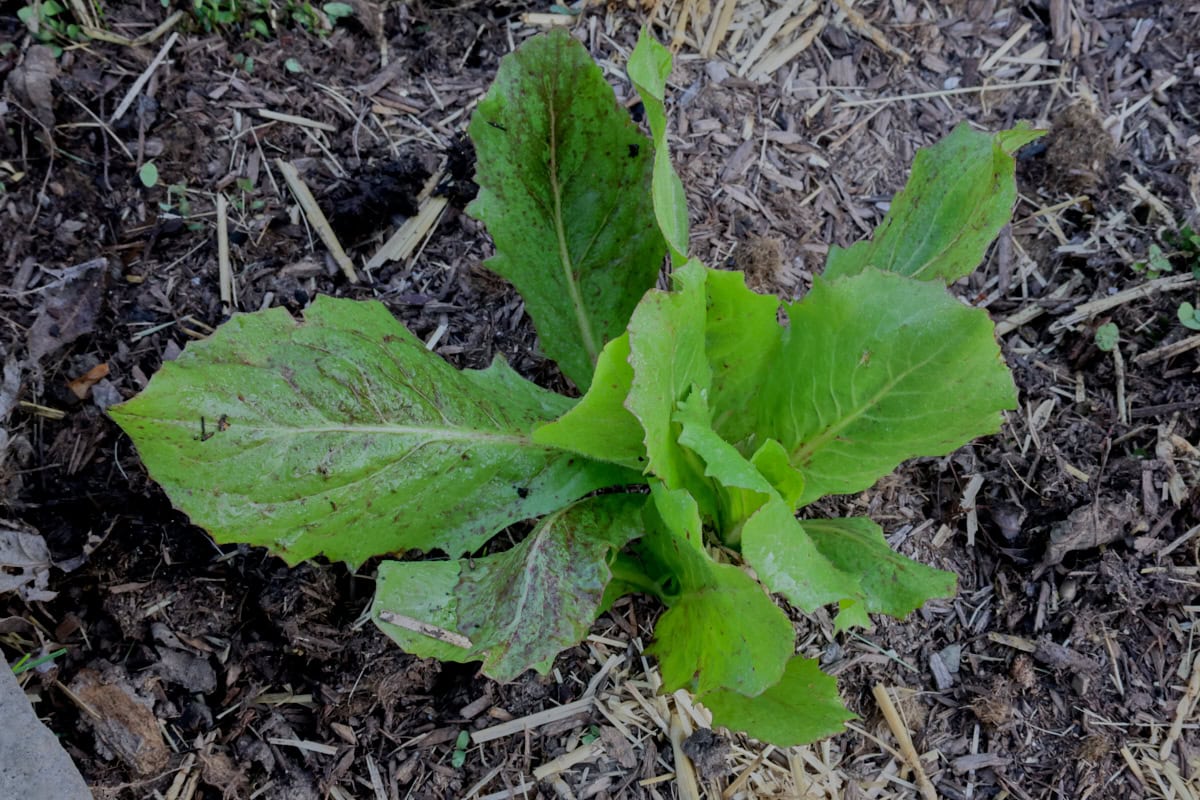
Eros escarole is another cool-season leafy green that I still haven't tasted yet. I'm excited to experience the nutty, slightly bitter flavor that it's known for. Note to self: If I don't find the time to taste every one of my crops each year, maybe I have too many damn crops!
I'm so grateful to any of you who have stuck around long enough to get through this post. I hope my garden photos and ramblings provide value to you. Please let me know in the comments below if you have any feedback, questions, or requests for me to address as the gardening season gets underway. I'm so glad you're along for the ride! Thanks, as always, for being here.
More heirloom gardening and cooking posts you'll love

✏️Do you grow your own herbs and vegetables?
I'd love to hear about your garden. Please let me know in the reviews and comments below!

Rosie Mapplebeck says
Wonderful varieties to try and inspirational photos I love this post thank you. My own garden is forest based so leafy growth clings to sunny spots or the polytunnel as scotland gets wild arctic winds
Shelly Benitah says
Rosie, Thanks so much for your kind comments! I love hearing about your growing environment, and that you're doing a forest garden. I get high winds too, as we live on a lake. It can sometimes be a challenge to find crops that can withstand this. I'd love to hear more about how your garden goes for you. Thanks for reaching out! 🥰