


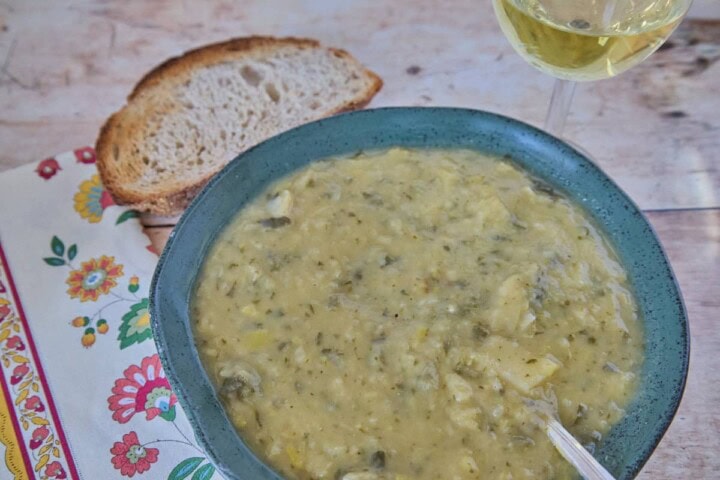



If there were ever a recipe to convince you why you should have a garden, this is the one! (And if you don't have sorrel, don't worry, this recipe has an easy and equally-delectable substitute with spinach and lemon juice.) This irresistible French soup is comfort food at its finest. You'll be amazed at the heavenly flavor with so few ingredients. This is thanks to the delightfully lemony flavor of sorrel, which is also one of the easiest plants you can grow. I'm going to show you why you need this herb both in your garden and in Rustic Vegan French Sorrel Soup (Soupe à l'Oseille)!

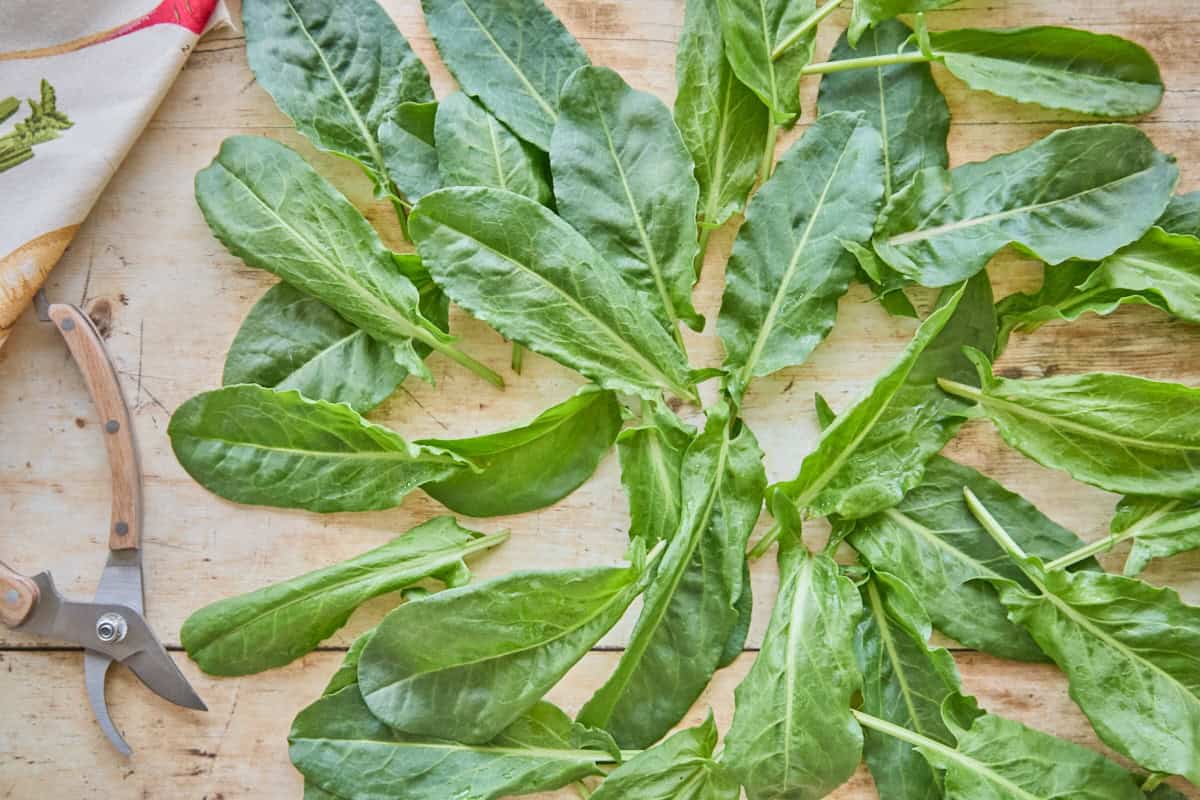
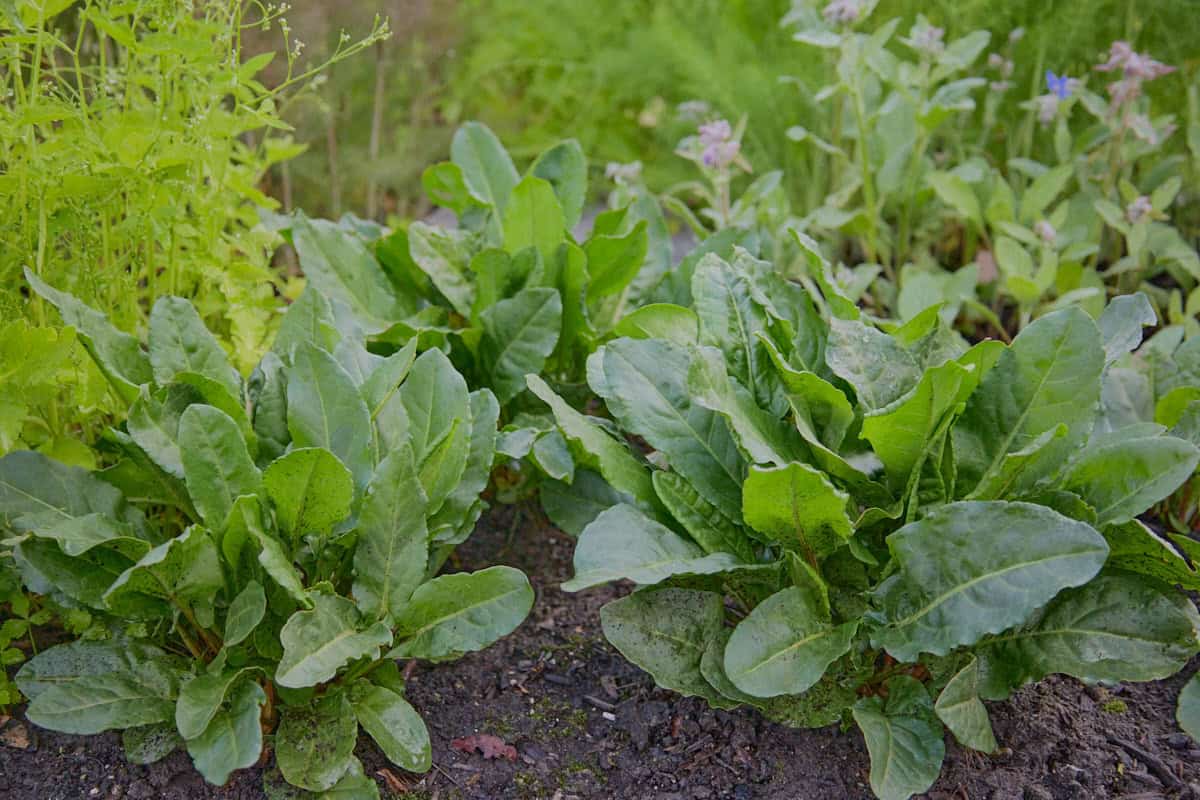
Here's a photo of sorrel, growing in my garden. This plant is normally considered an herb, since it's generally used to contribute flavor, rather than being eaten on its own. Sorrel has the most exceptional tangy, lemony flavor that you have to taste to believe!

Important health note:
Sorrel leaves contain oxalic acid, which has been linked to liver dysfunctions or kidney stones in high quantities. Fortunately, cooking sorrel decreases concentrations of oxalic acid to lower amounts. According to WebMD, "Sorrel is possibly safe when consumed in foods." But if you are pregnant or breast-feeding, have kidney disease, or are within 2 weeks prior to surgery, please consult a professional to make sure that consumption is safe for you.
Perennial with nutrition:
Sorrel is a perennial plant in the buckwheat family (Polygonaceae). It's a nutrient-dense plant, containing all of the essential amino acids, as well as calcium, magnesium, iron, potassium, sodium, and vitamins A & C.
Sorrel comes back up every year in USDA Hardiness zones 4-8. This means most of the US. For additional hardiness zone detail by state and for international zones, please consult Plantmaps.
Profusion variety of sorrel recommendation:
There are several types of sorrel. The one I grow, and which is shown above and used in this soup recipe is Profusion sorrel, Rumex acetosa 'TM683'. This variety of sorrel does not bolt (go to seed), which is a huge advantage over other cultivars. The leaves stay tender for the duration of the growing season, unlike traditional varieties. Profusion doesn't send up an unsightly stalk that needs pruning to prevent the leaves from becoming tough and bitter. And you can keep picking it throughout the summer, and it'll continue to send up new leaves.
In other words, if you plant it once, you'll have it from early spring when it comes up until well into the fall, and it'll return year after year. It's a cold-hardy gem that keeps producing while you use it. What could be easier?
Bloody dock variety:
Another variety of sorrel that I grow is bloody dock (Rumex sanguineus). Here's a photo of it from my garden:

Bloody dock is a red-veined sorrel, and is also a perennial of the same level of hardiness. It's both milder in tanginess and earthier than regular sorrel. And it's slow to bolt, which means a prolonged growing season. It's also beautifully ornamental with its exquisite red veining on bright green leaves. This is another sorrel that's worthy of a spot in your garden!
Jump to:

💕Why sorrel soup is special
Sorrel soup, known in France as soupe à l'oseille, potage crème d'oseille, or potage Germiny (a version that traditionally contains eggs), is a hearty, rustic classic. It's truly a gastronomic feat that's much more than the sum of its parts.
My vegan version here is no exception, with a thick, warming texture from the potatoes, leeks, and shallots, creamy mouthfeel from the plant-based heavy whipping cream, and a sumptuous tang from the sorrel.
My tasters have been surprised and delighted with the taste, despite the soup's simplicity. It's easy to make, and the fresh sorrel is quick to gather from your garden or farmer's market. And if you don't have sorrel on hand, you can achieve the same tangy heights from a simple swap with spinach and lemon juice. I hope you'll give this soup a try!
📓Ingredient notes

- Olive oil
- Shallots: These will elevate the flavor of the soup, as they're more delicate and complex than onions, with a subtle garlic flavor.
- Leeks: These have a smooth, buttery flavor that's more refined than that of regular onions. Make sure to rinse between the layers as you prepare them. The chopping of the leeks and shallots doesn't have to be neat, since you'll be blending the soup at the end.
- Vegetable stock: This can be prepared stock, homemade, or a combination of water and bouillon paste or cubes.
- Bouquet garni: thyme, parsley, bay leaves: Please use fresh thyme and parsley; if you have access to fresh bay leaves, use these too. The dried ones are stronger, so you won't need as many as with fresh ones. This trick of tying the herbs together tightly with a string is such a wonderful way to save time. You won't have to pick off the leaves or chop them, and you can easily retrieve all of the stems that remain after flavoring the soup.
- Potatoes: If you're looking to have creamy chunks in this soup, yukon gold, red, or fingerling potatoes would work well. If you'd like a fluffier, heartier texture with potatoes fully blended in, russets would work well here.
- Sorrel leaves (or spinach leaves and lemon juice): If your sorrel leaves are older, you should either remove the stems, chop them, or spend extra time blending them into the soup. In my trials, I've found these stems to be more fibrous than the ones from younger leaves, and they may leave stringy bits if not completely broken down by blending. Or if using spinach and lemon juice, rest assured that you won't be compromising on flavor. I was shocked at how good this substitution was. It tastes just as good as the sorrel.
- Vegan heavy whipping cream: I've tried several brands, and they've all worked well.
- Salt and freshly-ground black pepper
- Fresh herbs for garnish: parsley, chives, and / or chervil: These really contribute to making the soup look fresh and enticing. Any combination of these herbs will work well.
See recipe card for quantities.
📒Step by step instructions & photos
Before you begin, tie your thyme, parsley, and bay leaf/leaves together with kitchen twine to create your bouquet garni to add in step 3.

- Saute vegetables: Add olive oil to the pan, and sauté the shallots and leeks over medium heat for about 10 minutes.

- Stir in stock: Add and stir in the vegetable stock (or water plus vegetable bouillon).

- Add potatoes and bouquet garni: Add these to the pot. Stir, and bring to a boil. Reduce heat and simmer until the potatoes are cooked through, about 15 minutes.

- Remove bouquet garni, add sorrel and cream: Turn off the heat. Take out the bouquet garni, and stir in the sorrel leaves (or spinach leaves and lemon juice) and vegan heavy whipping cream.
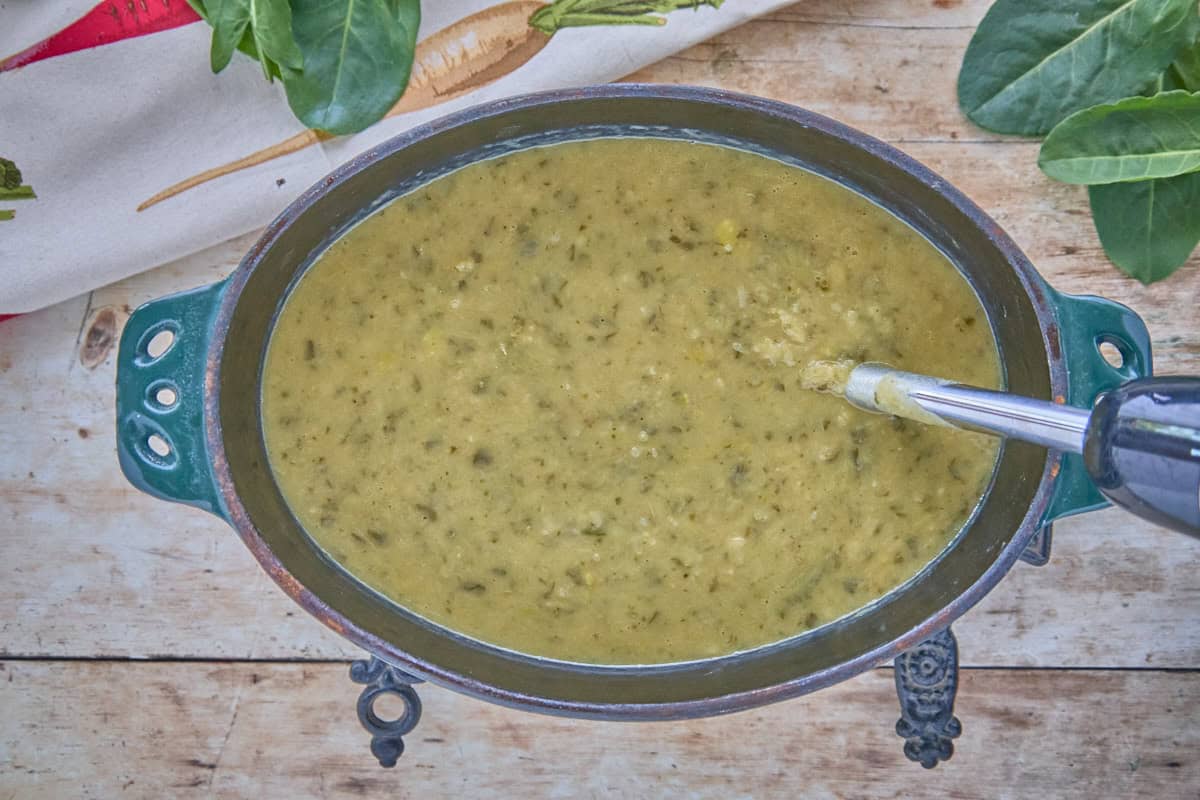
- Blend the soup: Using an immersion blender (or a regular blender), purée the soup to the preferred texture. Add salt and pepper to taste.
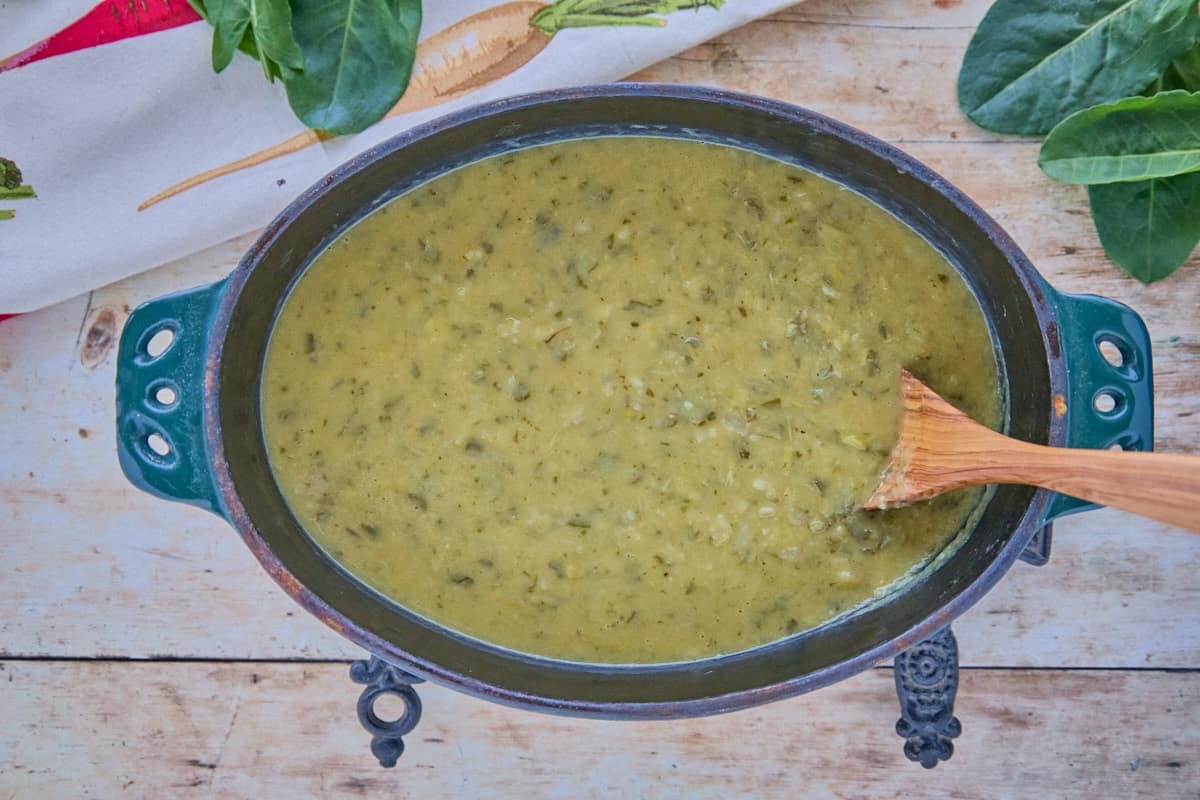
- Stir and serve: Stir through and divide into bowls. Sprinkle with preferred garnishes and serve!
💡Tips for success
Chiffonade vs purée
For this soup, I find myself agreeing to disagree with a master!
In Julia Child's Mastering the Art of French Cooking, volume 1, recipe for "Potage Crème d'Oseille or Potage Germiny," Julia insists: "cut the leaves into chiffonade (thin slices or shreds). Do not purée the soup."
So naturally, in my first few trial versions of my recipe, I tried slicing the sorrel into chiffonade. And it was beautiful. However, all of our testers and I agreed that this wasn't going to work. We tried this with strips that were long, short, wide, and narrow. And each time, we had them hanging out of our mouths, trying to slurp them back in with soup dribbling down our chins. It was such a mess.
We found that a quick and partial purée with a few chunks of potatoes and larger flecks of sorrel worked out wonderfully. And it's faster and easier to make it this way. It's a whole lot more rustic, and a lot less fussy and messy! But of course it's up to you.
Bright vs drab green
I had high hopes for the sorrel to remain a lively vivid green in this soup. (When I tested spinach as a substitute, it managed to stay bright.) Especially when I added it at the very end of cooking, after removing the pot of soup from the heat. But I also wanted to make sure the sorrel would warm through enough to lower the oxalate content. And alas, even minimal heat at the very end of cooking turns the leaves into a drab olive green color. I also tried blanching the leaves, but this made no difference.
But I think it's all about the perspective. After eating several trial versions of this soup, I've come to appreciate the earthy, heartwarming quality in the muted shade of green. It seems cozier somehow. And now I think I actually prefer it this way. Plus, you can sprinkle some bright green herb garnishes on top if you'd like to retain that hint of brightness.
Deer-proof your sorrel
I had both my Profusion and bloody dock types of sorrel growing worry-free in my herb garden for a year. And this was in a bed of 200 varieties of strongly-scented herbs that the deer wouldn't touch. They didn't eat a thing, even with hoofprints from them walking through it every night! But this year has been different. Maybe the food supplies are low, since I've read that deer aren't typically drawn to the strong flavor of sorrel.
This year, they've eaten most of the leaves regularly after my first harvest in the spring. So instead of leaving my sorrel in my herb garden, I'll be moving it next year to a veggie garden bed that I have to keep protected from deer. I've learned the hard way that I have to do this after agonizing each morning after they were eating a new veggie crop every night.
If you do grow sorrel, I'll be so excited for you, and I'd love for you to let me know! And please plan to protect this precious plants with some sort of netting if possible. It's the only thing that's worked for me so far. And it's worked really well. Happy planting!
🔀Substitutions
Olive oil: If you'd like a little more flavor, you can use vegan butter instead. Or avocado oil would work well too.
Sorrel: Please don't worry if you don't have access to fresh sorrel. The combination of fresh spinach leaves and lemon juice will be just as good. We were shocked at how good this substitution tastes!
Shallots and leeks: You can use regular onions instead. The taste will be a little more pronounced, but will still be delicious.
Vegan heavy whipping cream: You can use full-fat coconut milk or cashew cream instead.
Vegetable stock: It works just as well to use vegetable bouillon and water. Or, if you'd like a deeper umami flavor, you can use mushroom stock or bouillon as well.
🍶Variations
Potage Germiny variation: This adaptation normally uses eggs. If you'd like to replicate the smoothness of this variation, you could add a vegan egg replacer.
Bouquet garni: It could be fun to experiment with more or different fresh herbs in this bundle, such as tarragon, dill, summer or winter savory, or marjoram.
Spice: If you'd like to add a kick to the soup, consider adding a pinch of red pepper flakes.
Chunky texture: We really love to leave pieces of potato in the soup for a more rustic feel. To do this, just purée it less thoroughly with the immersion blender after cooking.

🥣Equipment
- Digital scale: Cooking by weight makes recipes so much easier! And with fewer dishes. These scales are inexpensive, and worth every penny.
- Vegetable peeler: for peeling your potatoes. I recommend a y-peeler; it's so much easier on your wrist than side-peelers.
- Cutting board and knife: For chopping your veggies.
- Kitchen string: for tying together your herbs for easy retrieval after they flavor your soup.
- Large saucepan: A minimum of 4-quarts (or 4 liters) is great for making this quantity of soup.
- Immersion blender or regular blender: An immersion blender would be perfect here. It's so much easier to purée directly in the pot than to transfer hot soup to a blender. Immersion blenders are much less expensive too, and often come in a set with a garlic mincer. Such great tools!
⏲Make ahead and storage
- Make ahead: You can make this soup up to 2 days ahead. It tastes even better the next day, so this is a perfect soup for planning ahead.
- Refrigerator storage: The leftovers will store in the fridge in an airtight container for 3 to 4 days. You can reheat it, or even enjoy it cold like I do!
- Freezer storage: This soup can be frozen for up to 3 months.
🍲Serving suggestions
- Hot or cold: This soup is delicious at any temperature! I love enjoying the leftovers cold, straight out of the fridge. But then again, I love any food cold. Do what works for you!
- Toppings: You can use the fresh herbs (parsley, chives, and/or chervil) recommended in the recipe, or you can use toasted garlic and herb croutons, nuts, toasted pepitas, kale chips, or whatever sounds good to you.
- Bread: Of course bread goes so well with this soup. I especially love toasted sourdough. But any bread that you love will do.
- Light meal: This soup is perfect on its own or with a side salad for lunch.
- Main course: If you'd like to make this soup more filling, you can add white beans, chickpeas, sweet potatoes, broccoli, or any veggies you'd like!
❓Frequently asked questions
Spinach leaves and fresh lemon juice work perfectly as a substitute! Our testers were shocked at how well this swap worked. But I still encourage you to grow your own sorrel and use it in this recipe! If you do, please let me know in the comments. Any gardening I can convince you to do would make me so proud.
Please see my take on this in the "Tips for success" section above. No, they'll turn a dull olive color as soon as they encounter the heat. And I've also tried blanching them with no success. But heating greatly reduces the oxalic acid content, and to me, the muted color makes the soup even more appealingly rustic. And you can always through on some fresh herbs as a garnish to brighten up the color.
It'll taste even better the next day, or even the day after that! And then you can enjoy it cold and straight out of the fridge, like I do. Mmm...

✨More recipes you'll love
Looking for other garden posts and recipes like this? Try these:



✏️Did you make this recipe and/or plant your own sorrel?
I'd love to know in the reviews and comments below!

Rustic Vegan French Sorrel Soup (Soupe à l'Oseille)
Ingredients
- 3 tablespoons olive oil
- ½ cup (60 g) shallots, chopped, about 2 medium
- 5 cups (470 g) leeks, about 4 medium, white and light green parts, rinsed and chopped
- 6 cups (1.420 ml) vegetable stock, or 6 cups water plus 2 tablespoons vegetable bouillon paste or 6 bouillon cubes
- 1 bouquet garni, tie the following herbs securely into a bundle with kitchen string:
- 3 sprigs fresh thyme leaves, about 1 tablespoon
- 3 stems parsley with leaves, about 4 tablespoons
- 3 fresh bay leaves, or 1 dried bay leaf
- 3 ¼ cups (772 g) ½-inch (1.3 cm) potato chunks, from about 3 large potatoes, peeled
- 4 cups (117 g) fresh sorrel leaves, packed, with stems removed (or substitute for sorrel: 4 cups (about 120 g) packed fresh spinach leaves and 1.5 tablespoons lemon juice, adjusted to taste
- ¾ cup (180 ml) vegan heavy whipping cream
- salt, to taste
- freshly-ground black pepper, to taste
- 2 to 4 tablespoons fresh parsley, chives, and/or chervil, chopped, optional as a garnish
Instructions
Prepare bouquet garni:
- Place the thyme, parsley, and bay leaves in a bundle, and tie them together firmly with kitchen string to make the bouquet garni. This will make it easier to remove the stems when the soup is done.
Sauté vegetables:
- Using a large saucepan, heat the olive oil over medium heat.
- Add the chopped shallots and leeks to the pan and sauté, stirring often until softened, about 10 minutes.
Stir in stock:
- To the pan, add the vegetable stock or water and bouillon paste or cubes.
Add potatoes and bouquet garni:
- Stir in the potatoes and bouquet garni. Increase the heat to high, and bring the mixture to a boil.
- Turn the heat to medium low. Simmer until the potatoes are fork-tender, about 15 minutes.
Remove bouquet garni:
- Turn off the heat. Remove the bouquet garni from the pan.
Blend and serve the soup:
- Add the sorrel leaves (or the spinach leaves and lemon juice) and the vegan heavy whipping cream to the pan. Using an immersion blender or regular blender, purée the soup until some chunks of potato remain for texture. Or, if preferred, purée until completely smooth.
- Add salt and pepper to taste.
- Pour soup into bowls. If desired, sprinkle the additional chopped parsley, chives, and/or chervil on top of the soup. Serve and enjoy!


Stuart D Logan says
Given my East European heritage, the sorrel soup hits home not only on a culinary level, Shel. Thanks for you tireless inventiveness on behalf of your fellow vegans. -Stuart
Shelly Benitah says
Stuart,
That's really kind and thoughtful of you! Thanks so much for letting me know. Food is really deeply personal to me too. It warms my heart that you have this meaningful connection between food and your ancestry.