









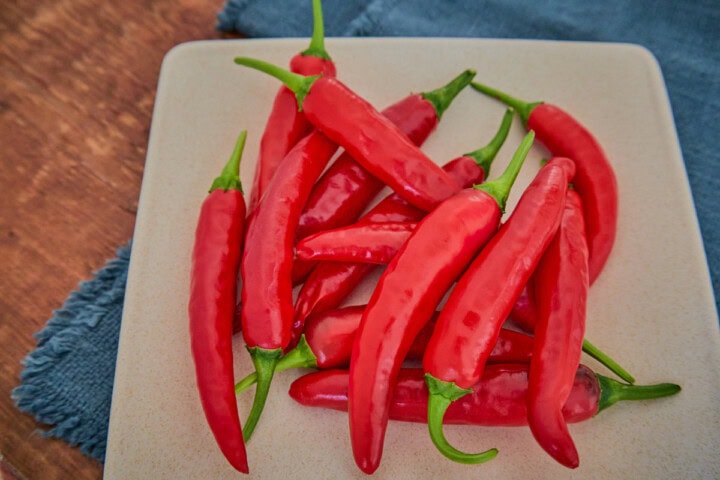
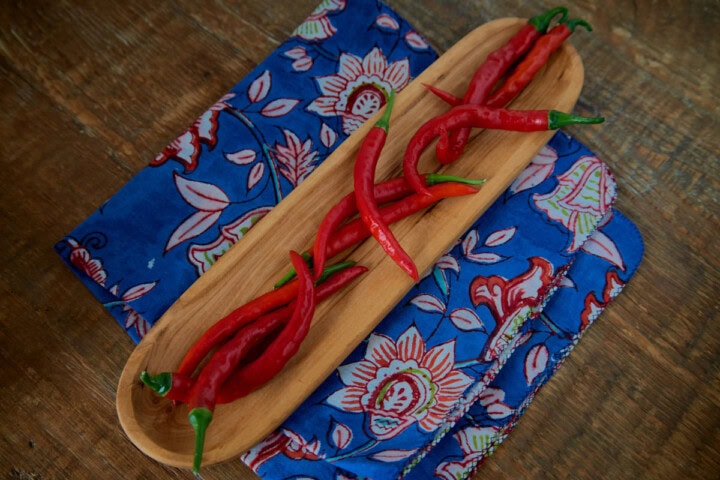

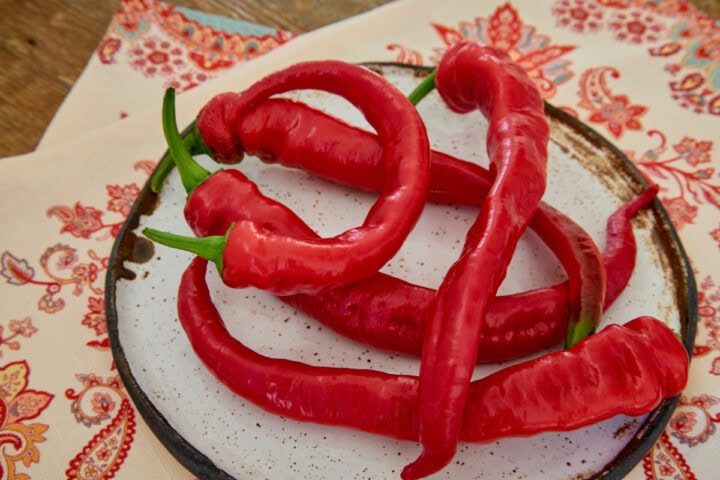


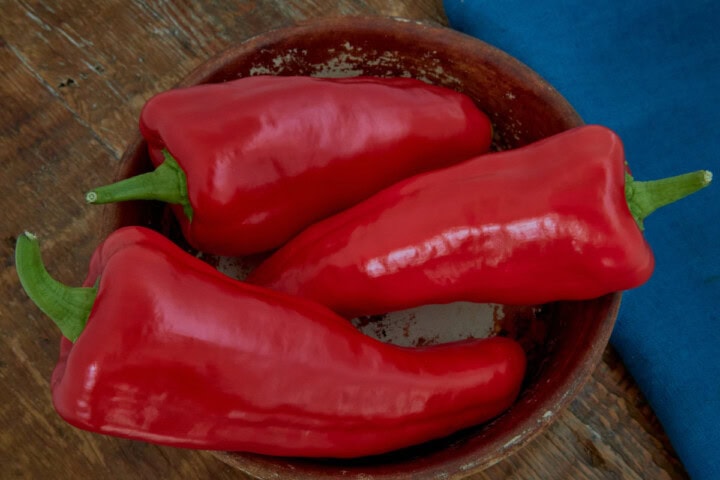



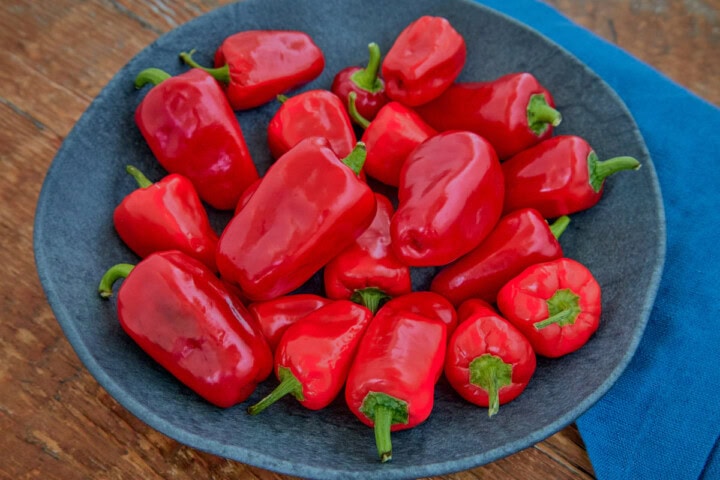
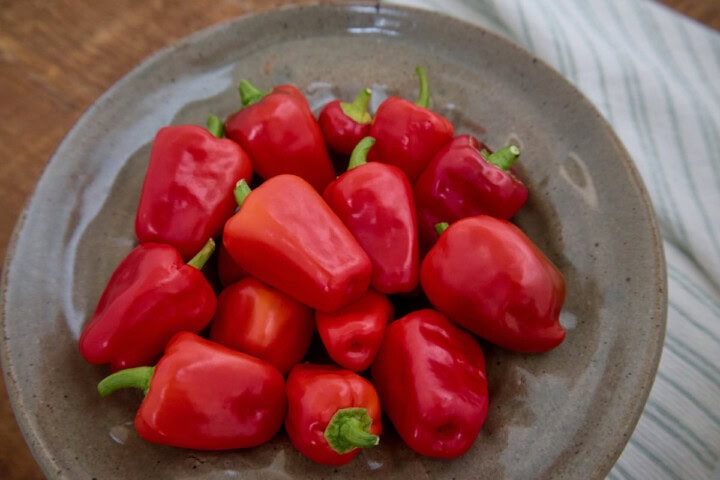














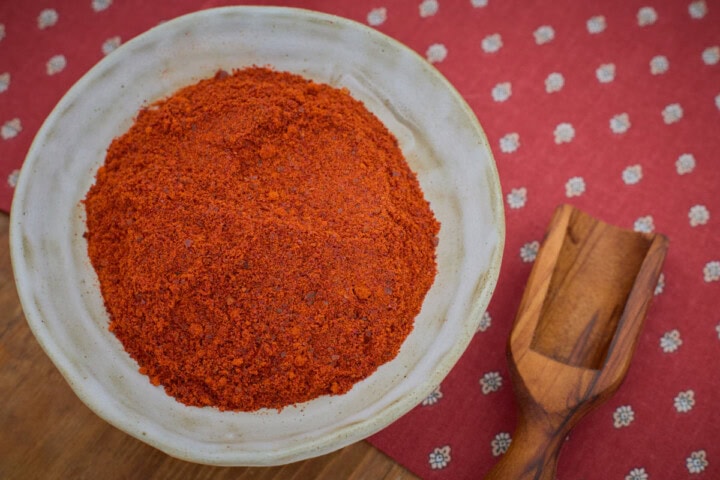

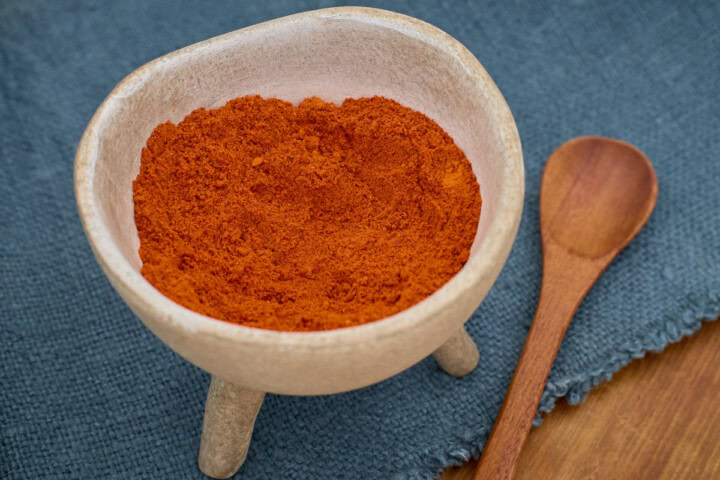


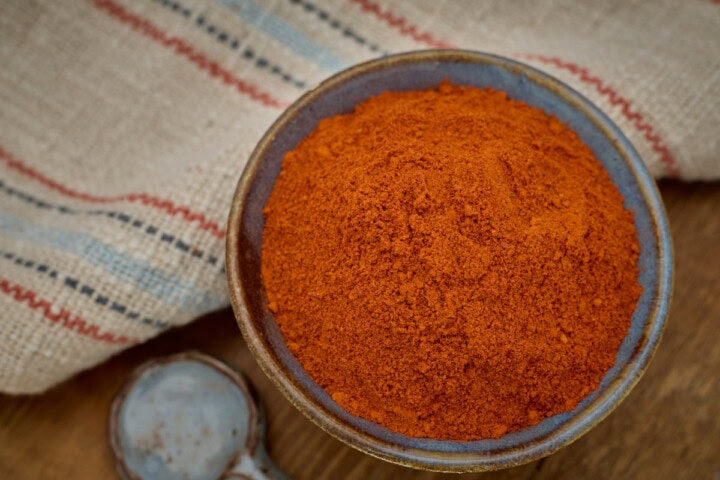
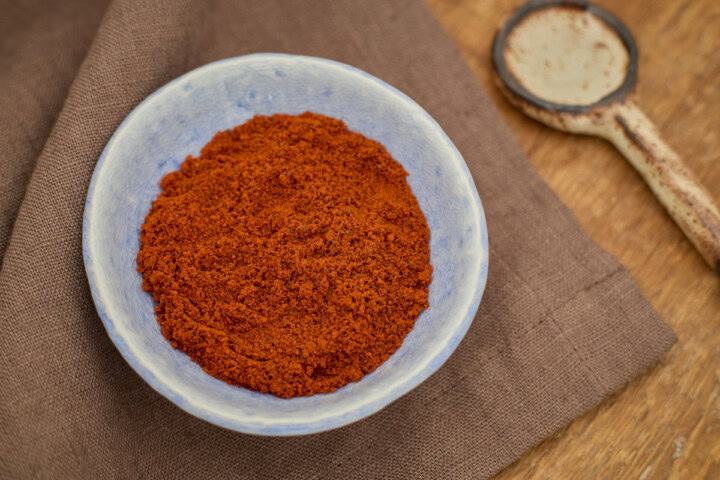
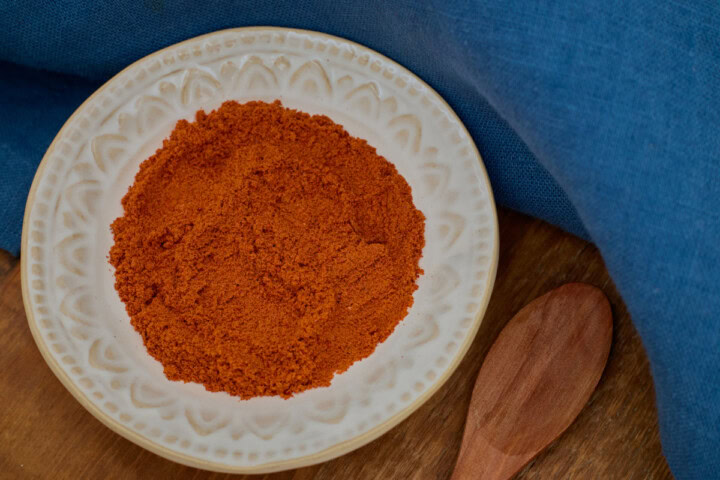
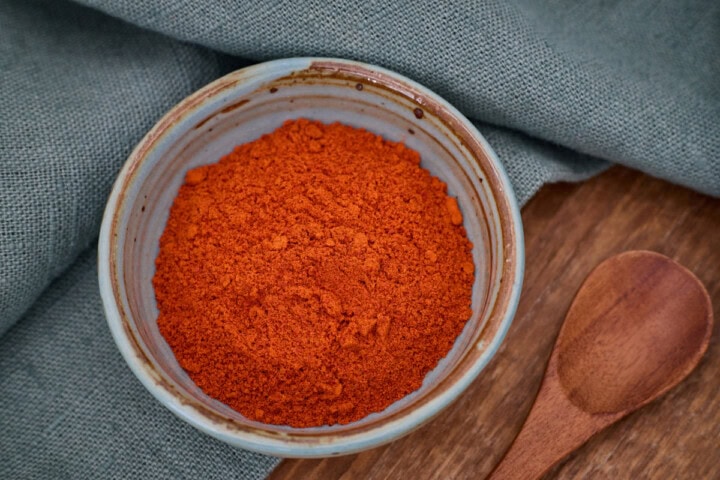
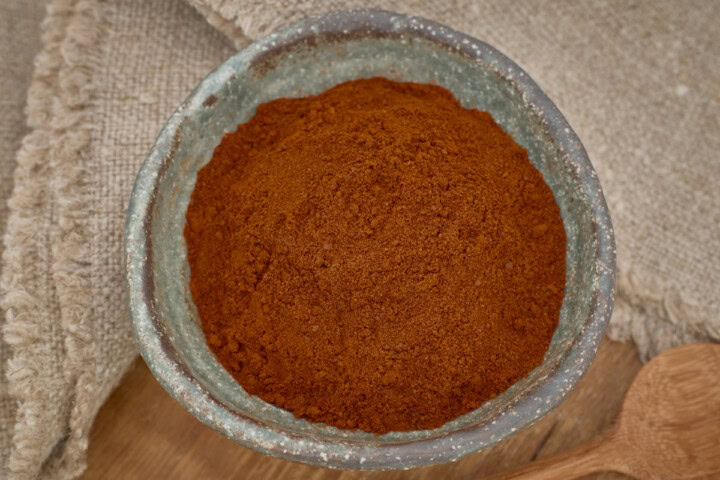
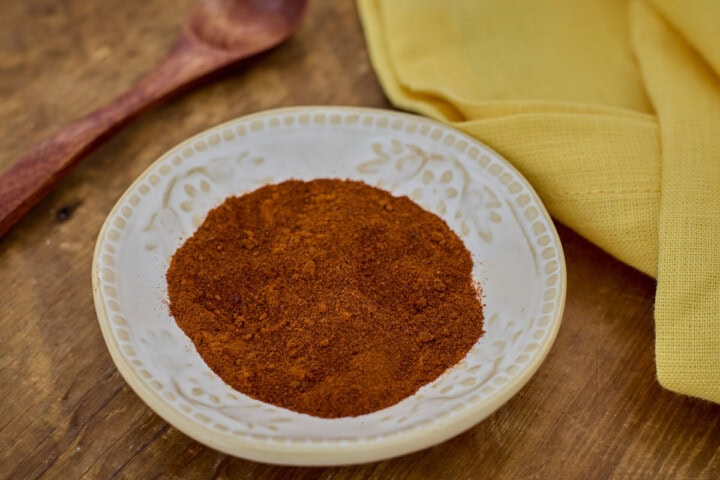




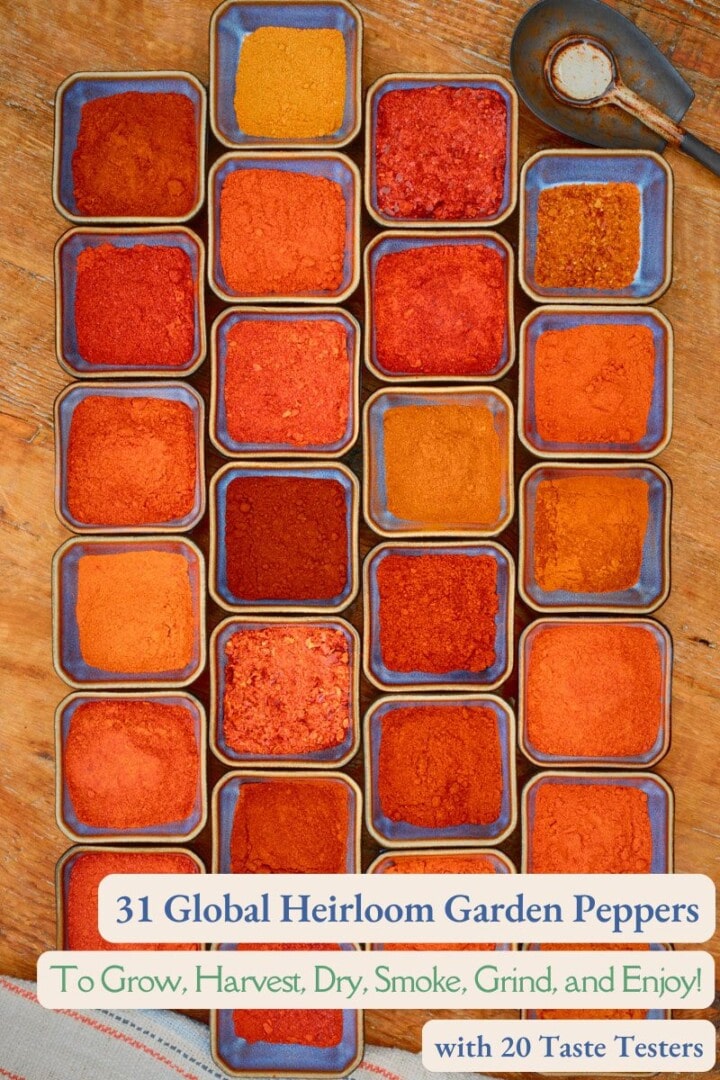
Do you love bold flavors and discovering your own unique garden treasures with fascinating cultural and geographic origins, flavors, colors, and varied heat levels? Then you've come to the right place! Heirloom peppers, whether sweet or spicy, are some of the most thrilling additions to your garden. Please join me for this look into 31 Peppers to Grow, Harvest, Dry, Smoke, Grind, and Enjoy!
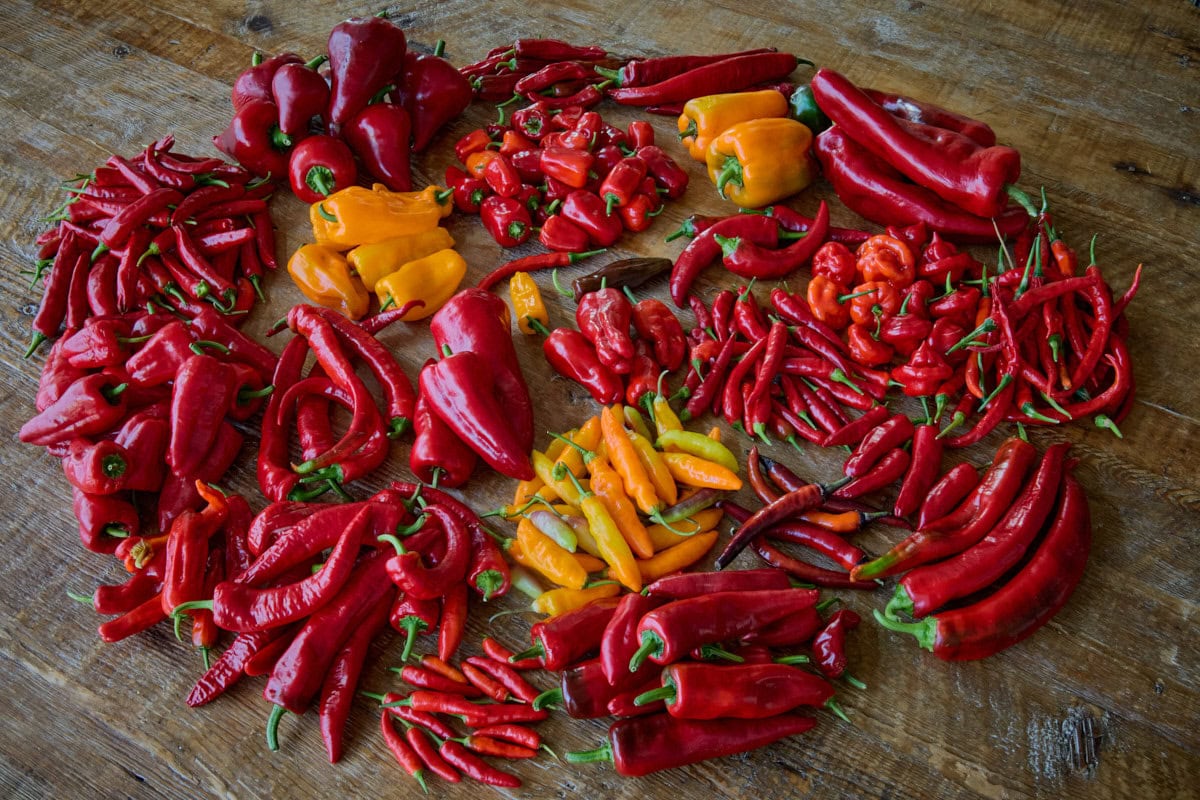
It's important to note that regional differences in naming a spicy pepper can be both pervasive and very personal. They may be called spicy or hot peppers, chilis, chillis, chiles, and more regional terms. I celebrate all of these beautiful cultural differences. And just for the sake of brevity, I'll use the terms peppers or chilis throughout the post.
I'm going to show you 31 distinctive global heirloom varieties I've grown in my garden that you can easily grow and experience yourself. My list includes the flavor descriptions of 20 taste-testers who have tasted and compared my homegrown peppers to the few varieties I was able to find dried in stores. And our tasters have also compared some home and store-bought smoked versions. There are also additional details about each variety, including botanical name, origin, description, heat rating, and traditional usage.

Many of these chilis are nearly impossible to find in local grocery stores. So you can either travel the world to taste them, or you can grow them in your own garden. (Of course, without question, it would be thrilling to do both!) It's so easy and worthwhile to grow, harvest, and taste them for yourself. I'll show you how you can easily dry, smoke, and grind your peppers into a powder. There are so many delightful ways to experience these gorgeous garden gems.
There are many unique pepper cultivars from all over the world, each one with its own distinctive color, flavor, texture, heat level, and set of cultural traditions. There's a huge spectrum of heirloom varieties that have been passed down from generation to generation.
In this post I'm including the pepper varieties I've grown in one summer, mostly in planters, around my very limited growing space. I hope you'll find some room in your garden for these bejeweled treasures to discover and enjoy. You'll be so glad you did!
In addition to the flavor notes of each pepper in the descriptions below, I've also included details about each cultivar, such as its origin, heat level, and description. I'm so happy to show you just some of the variations out there for you to grow and share with your friends and family.
Jump to:
- 💕Why sweet and spicy peppers are special
- 🌿How to grow chilis / peppers
- 💡Important chili / pepper growing tip
- 1. Aji amarillo
- 2. Aji dulce
- 3. Aleppo
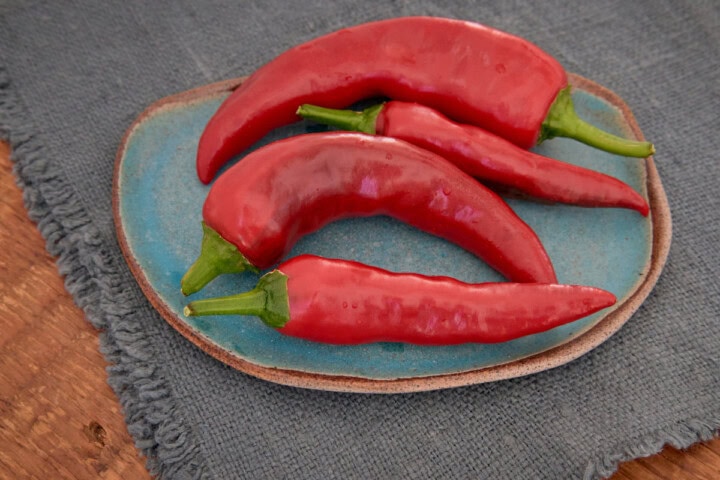
- 4. Beaver dam
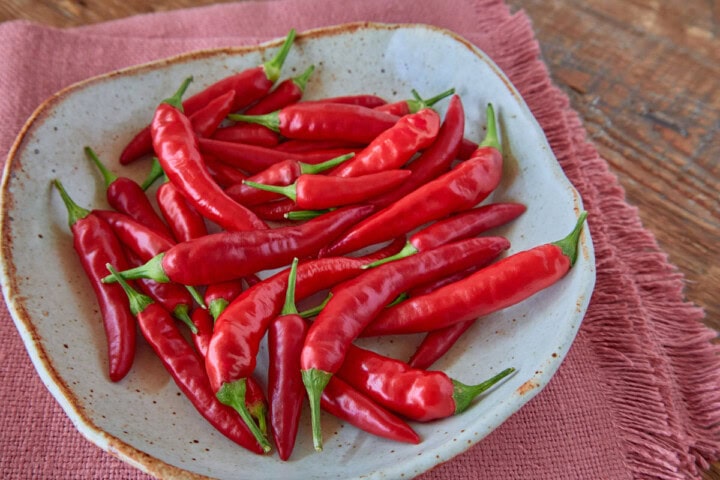
- 5. Birdseye
- 6. Buena mulata
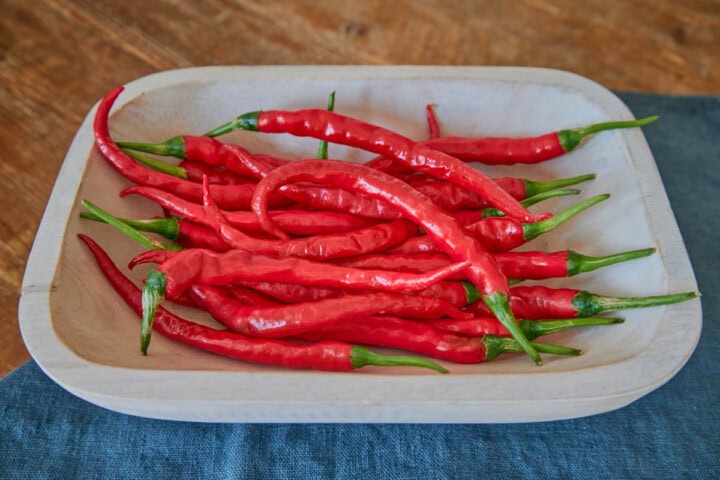
- 7. Cayenne long red thick
- 8. Chile catarina
- 9. Datil
- 10. Giant aconcagua
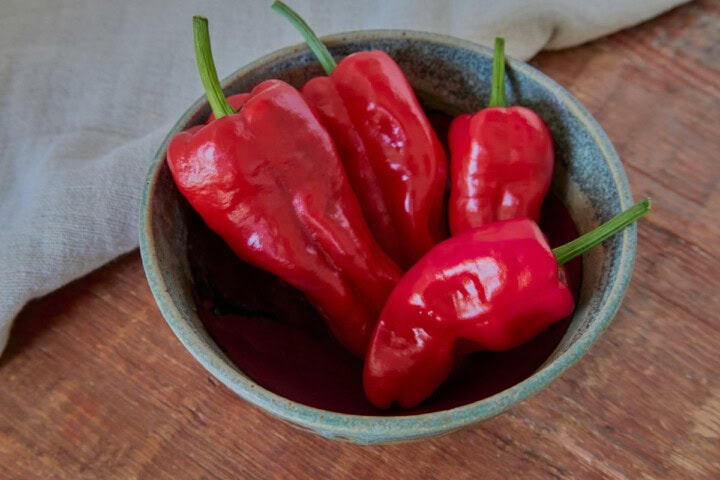
- 11. Giant Marconi hybrid
- 12. Guajillo (when dry, mirasol when fresh)
- 13. Hong gochu
- 14. Jimmy Nardello
- 15. Kashmiri
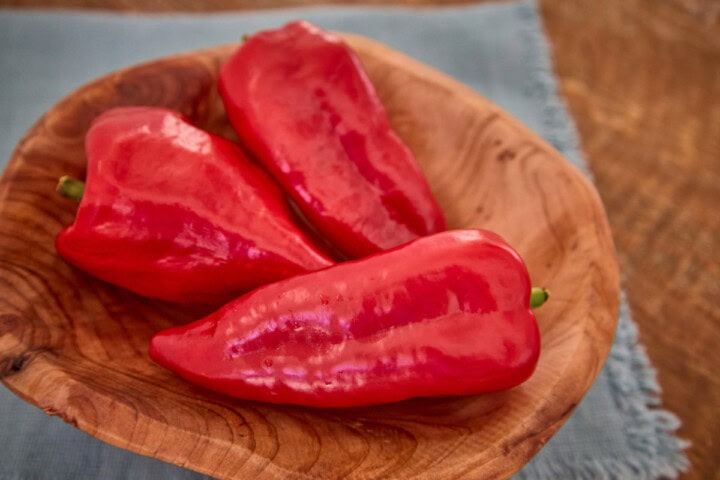
- 16. Lesya
- 17. Leutschauer paprika
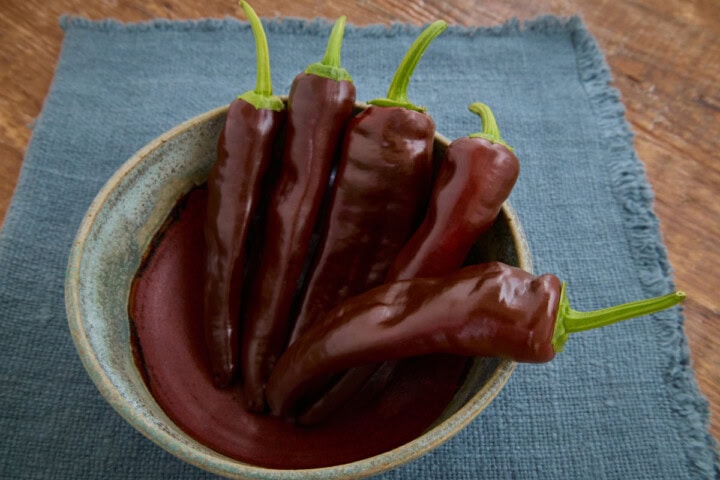
- 18. Mareko fana berebere
- 19. Numex big jim
- 20. Orange marmalade
- 21. Padrón
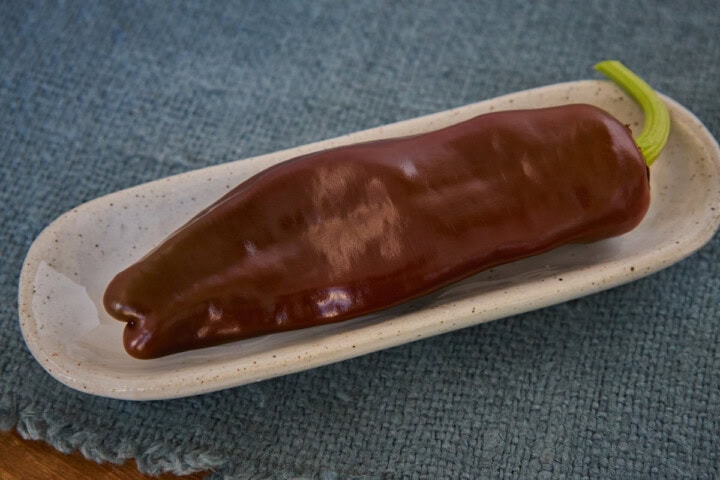
- 22. Pasilla bajio (when dry; chilaca when fresh)
- 23. Petit marseillais
- 24. Piment de Bresse
- 25. Piment d'Espelette
- 26. Piri piri (also known as peri peri)
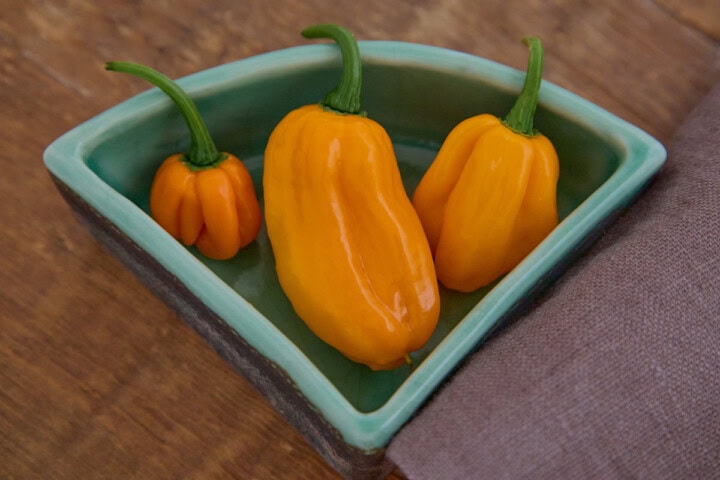
- 27. Scotch bonnet
- 28. Shisito
- 29. Sugar rush peach
- 30. Szeged paprika
- 31. Txorixero
- How to dry, smoke, and grind your own (chile, chili, chilli) peppers, step by step
- 📓Ingredient notes
- 📒Step by step instructions & photos
- 💡Pepper preparation tip for success
- 🔀Substitutions
- 🍶Variations
- 🥣Equipment
- ⏲Storage
- ❓FAQ
- ✨More gardening tips and recipes you'll love
- How to Dry, Smoke, and Grind Your Own Peppers

💕Why sweet and spicy peppers are special
There are so many reasons you should grow your own heirloom peppers. It's deeply personal to nurture, harvest, and taste these world-renowned riches for yourself.
Exquisite global treasure
The problem with choosing some varieties of peppers to grow is that, assuming you have limited growing space like I do, this means you won't be able to choose other varieties. The cross-section of 31 types in this post is just a tiny sample of the thousands of distinctive and culturally significant types that are available. I want to make sure you see this list as a just humble beginning, rather than a definitive guide.
I try to always appreciate that I'll have next year to grow the plants that won't fit in my garden this year. For me, this gardening opportunity cost is a metaphor for so many things in life, where patience truly is a virtue. I'm truly grateful for each growing season when I can grow more unique varieties.
Growing and harvesting peppers from each plant is such a joy to me. Especially when there are so many enticing dishes from around the world with these peppers that I have yet to try. I look forward to experiencing each and every one.
A global treasure of unique varieties
The cultivation and cooking of capsicums began in South America as long ago as 7500 BC, and they're now grown throughout the world. If you're only familiar with the pepper varieties available at the grocery store, there's a thrilling array of types from around the world for you to discover in your garden.
A wide diversity in origin, color, fragrance, texture, and taste
There's such an exciting range in the types of peppers you can grow and taste. This includes the diminutive chiltepin, which is just ¼ inch (0.6 cm) in diameter, as well as the Guinness World's Records' longest chilli pepper, a 19.881 inch (50.5 cm) Joe's Long Cayenne chilli.
Other variations span the spice spectrum. For example, the exquisitely sweet Lesya or Jimmy Nardello pepper (both are featured here among my homegrown varieties in this post) have no spice at all, and the Guinness World's Records' hottest pepper, Pepper X, has a scorching Scoville Heat Unit (SHU) rating of 2,693,000. This is much hotter than the previous record-holder, the Carolina Reaper, with 1,641,183 SHU. (I've grown this pepper, but I didn't dare keep the plant around near harvest time. Of my 5 kids, I was so worried that my 3 young boys and their "I dare you syndrome" would override common sense and necessitate a trip to the emergency room.)
You can grow chilis from the tropics to temperate zones in Latin America, Asia, Africa, Europe, or North America. They can have colors such as green, red, yellow, orange, brown, and purple. And they may have shapes that are slender and pointed to flattened, bumpy, and wrinkled. There's no end to the range of distinctive characteristics you can taste for yourself!
Recommended resources
Here are 3 pepper books I own and find such a joy to read. You can use these to find out more about which varieties you can choose, and all the details you need to help your plants grow and thrive. And there are even more books out there if you'd like to expand your pepper library even further.
Another fragrant and diverse garden plant to try
If you're interested in growing another fragrant and flavorful garden plant with unique varieties from all over the world, please check out my post 38 Types of Basil You Need to Grow in Your Herb Garden. Basil is another very special plant that I always need to grow!
🌿How to grow chilis / peppers
Whether you live in the tropics or in a way-too-cold northern climate like I do, you can grow your own peppers. It's so easy and gratifying to do this.
Growing season
Some peppers are perennials in very warm climates (generally in USDA hardiness zones 9-11), and they need to be grown as annuals for the rest of us. Chilis thrive when daytime temperatures are between 70-85°F (21-29°C) and nighttime temps stay above 60°F (16°C). If you live in the US, you can check the growing climate and for your area with the USDA Plant Hardiness Zone Map. For additional hardiness zone detail by state and for international zones, please consult Plantmaps.
Seeds vs plants
In general, pepper cultivars can be grown reliably from seed. They do require an earlier seed planting date under grow lights than some vegetables that germinate more quickly. This is especially true for the spicier ones. And you need to wait longer than your last spring frost before planting them outdoors. Peppers are a heat-loving crop, and they need a minimum consistent nighttime temperature of 60°F (16°C) before the plants go into the ground.
I generally plant my pepper seeds indoors under grow lights 8 to 10 weeks before this minimum nighttime temperature arrives in my climate. And they germinate especially well with the heat from your grow lights or from temperature-controlled heat mats beneath your planting trays.
If you'd like to try grow lights, they don't need to be expensive professional ones. Even inexpensive fluorescent lights will work, and should be on for about 12-16 hours per day. The seeds will need to be kept at temperatures of 75-90°F (24-32°C) to germinate in 5-10 days. You may have even more consistent germination success if you soak your seeds for a few hours before planting to soften the seed coat. There are great resources available in books and online to show you how to choose, set up, and use plant grow lights.
But if you don't have grow lights, or the time to start them early, you can buy your plants as seedlings as well. Hopefully you can find some unique heirloom varieties at your local farmer's market. And there are also many seed and plant vendors available online for even the rarest cultivars.
Ordering early
I just love when the seed catalogs arrive in the fall, and the orders for spring become available online. It's fulfilling to discover historically and culturally significant types online that are new to me, and that I can order to grow for myself. And it takes time to do this, so I get started each year with my garden planning as early as I can. It's truly magical to be a part of preserving and continuing the tradition of this seed heritage.
Feeding and awaiting outdoor planting
As your seedlings start to grow, or if you buy your peppers as plants, make sure to choose your outside planting spot to get at least 6 to 8 hours of direct sunlight per day. This will work well in planters or directly in the ground.
Once your seedlings have two sets of true leaves, you can feed them an organic, plant-based fertilizer like Down to Earth Vegan Mix. This one has worked really well for me. So does Down to Earth Azomite. And it also helps to add organic and plant-based compost to your soil before outdoor planting time. And during the growing season, you can side-dress your plants with more organic plant-based fertilizer or compost. And you can water with or use organic kelp extract such as GS Plant Foods organic kelp fertilizer as a foliar feed. I've had great results with this.
Hardening off
When the danger of frost is past, and the nighttime temperatures are at least 60°F (16°C), you can harden off your seedlings. This will help them adjust to growing outdoors in the real sunlight. If you were to skip this step, the plants would likely become scorched and not survive.
To harden off your seedlings, you can take them outside for progressively longer times over a 7-day period, from 1 hour on the first day in the shade to full sun by the 7th day. Or you can leave them out all day if you have 3 days in a row with full cloud cover.
Planting and spacing outdoors
Once the plants are accustomed to outdoor conditions and the nighttime temperatures are consistently at 60°F (16°C) or above, you can plant them in an area that gets at least 6 to 8 hours of sunlight per day.
You may want to stake your plants to help support them stay strong as they branch out and bear the weight of their fruit. Most heirloom pepper plants reach a height ranging from 18-36 inches (46-91 cm) tall. And if you have a higher-elevated spot in your garden bed, this is preferable for when the cooler nights arrive (and cold air settles in the lowest spots first) at the end of summer.
The preferable plant spacing for peppers is at least 18-24 inches (46-61 cm), with a spacing between rows of 24-36 inches (61-91 cm) between rows. Or you can also plant them in planters with great success. I usually do this myself, as I have a limited garden space. The planters should be a minimum of 12 inches (30 cm) in both height and diameter with a minimum volume of 3-5 gallons (11-19 L). But if you can use planters with a minimum diameter of 14-16 inches (36-41 cm), depth of 12-14 inches (30-36 cm), and volume of 7-10 gallons (26-38 L), this would be ideal to really allow the plants and roots to have the room grow and thrive.

💡Important chili / pepper growing tip
I've had great success with staking my pepper plants as they grow. I like to use stakes that are about 4 feet (122 cm) tall, which will give you a strong foundation of about 12 inches (30 cm) in the ground and will still leave the plant with 3 feet (91 cm) of sturdy staking above the ground.
And for tying the pepper plants to the stake, I like to use sturdy twine. I tie the twine in a figure 8 between the stem and the stake. This allows some slack for a growing stem, distributes the tension evenly, and keeps the plant secured.
Plus, when the growing season is over, and you're ready to add your plants to a compost pile or lawn bag, you can just add the twine right along with the plant. This makes it so much easier!
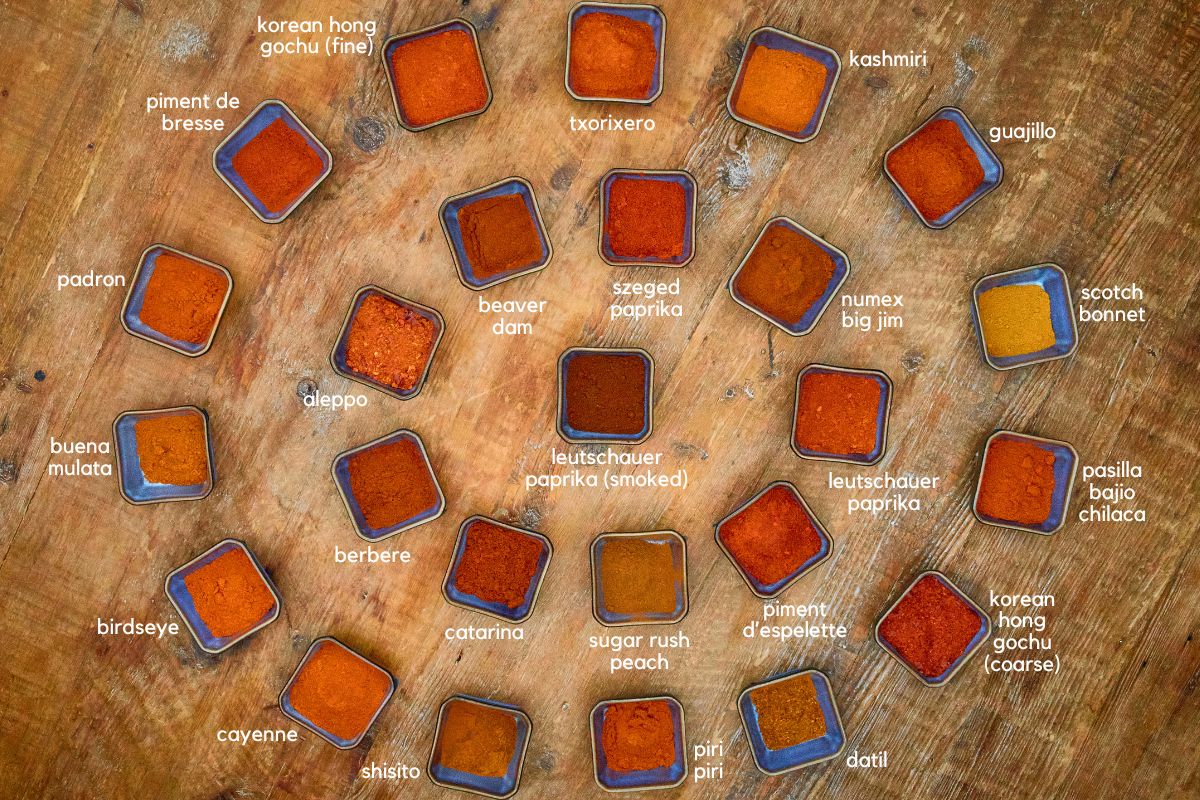
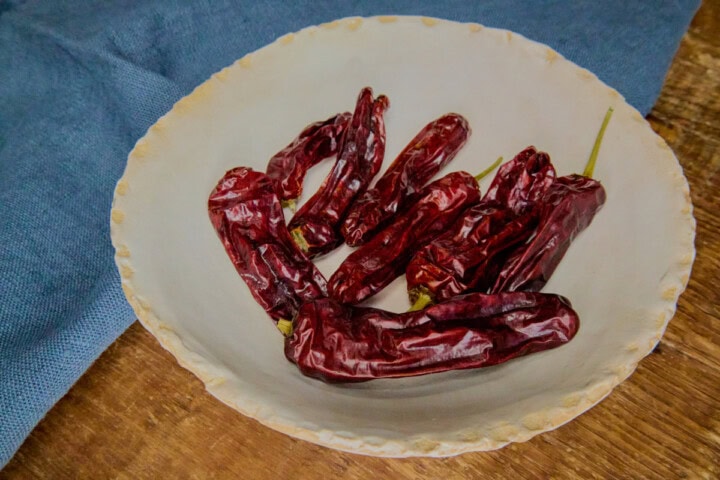
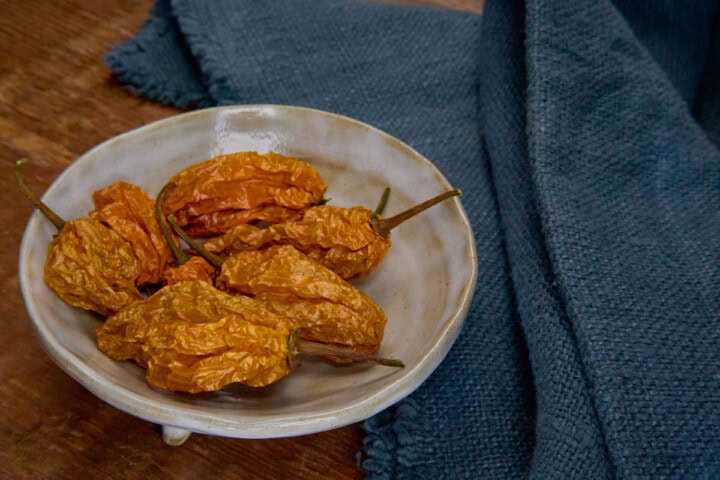
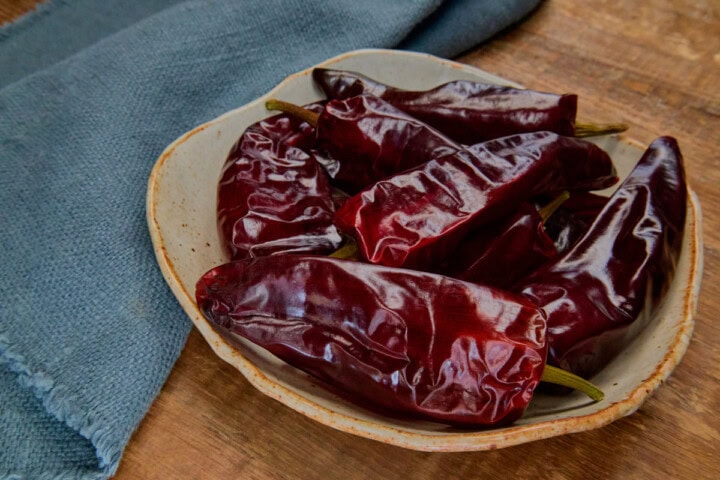
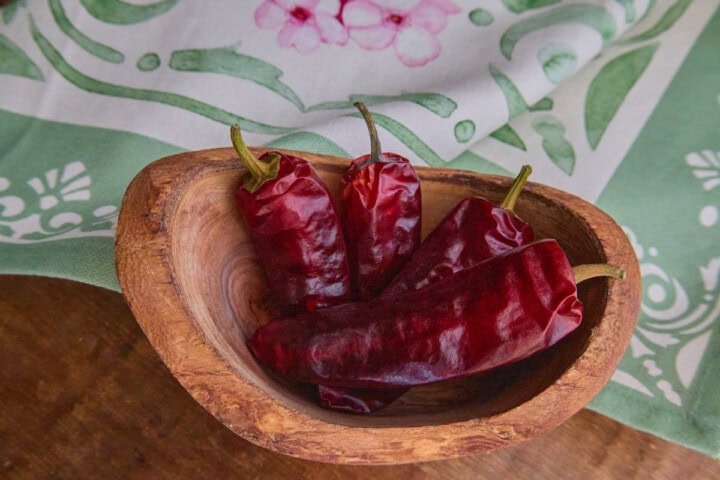
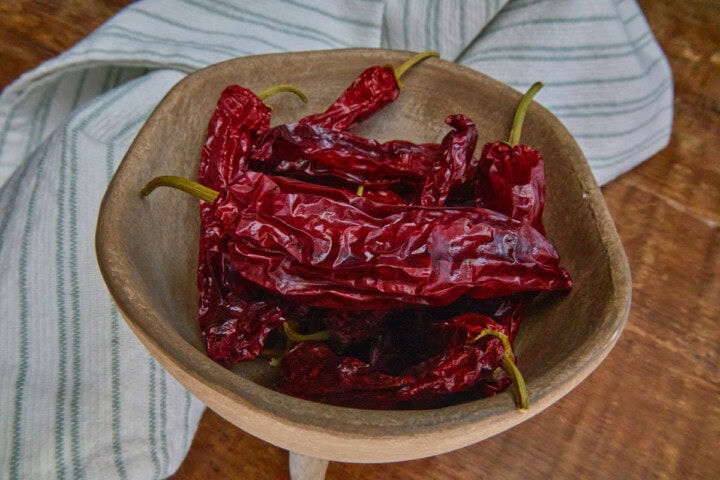
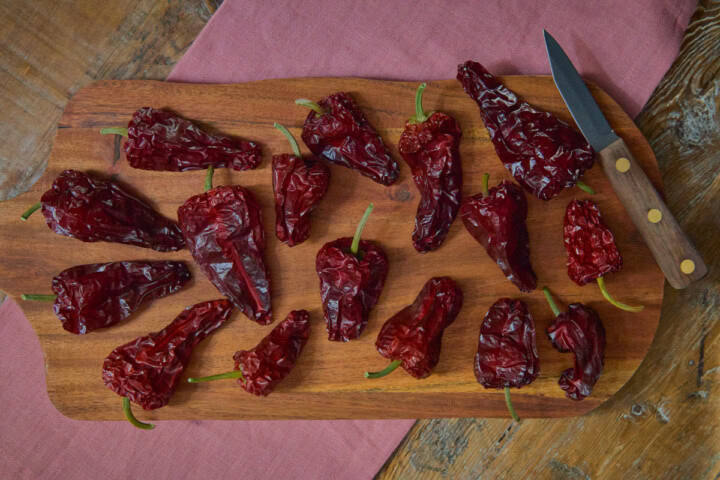
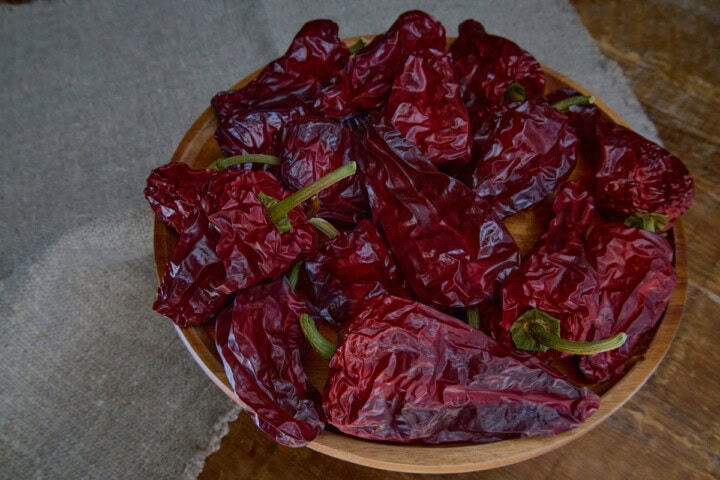
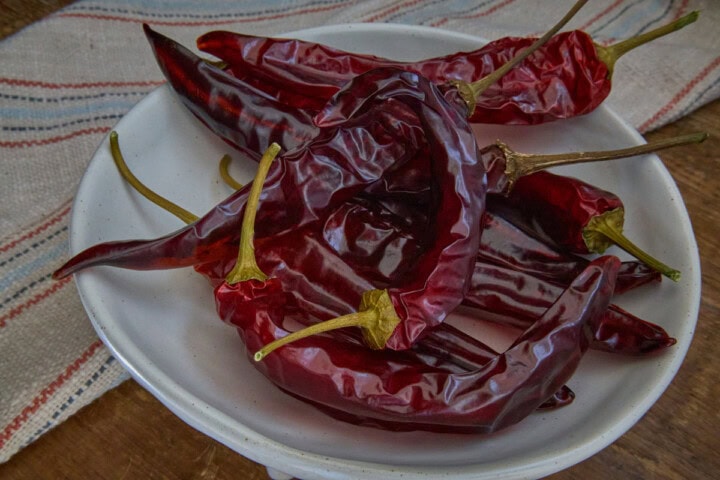
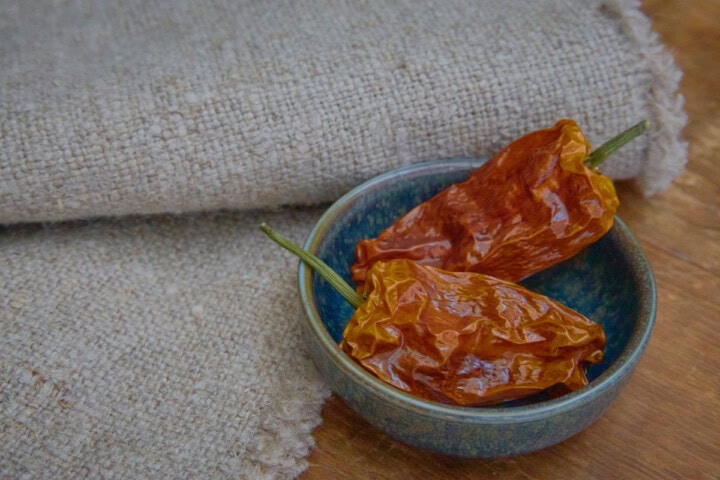
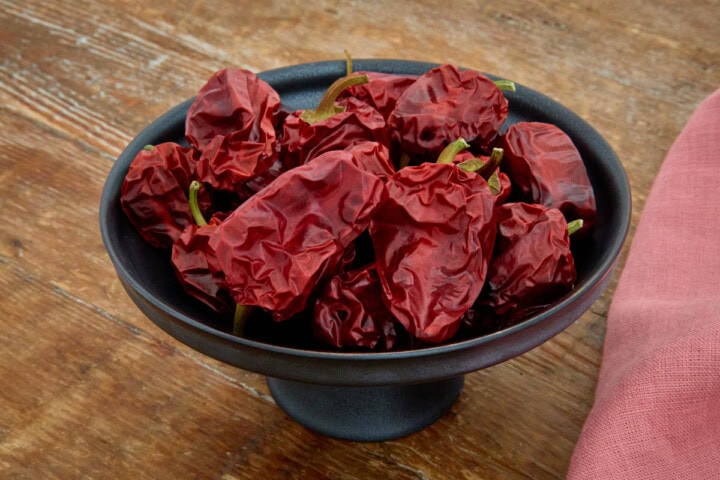
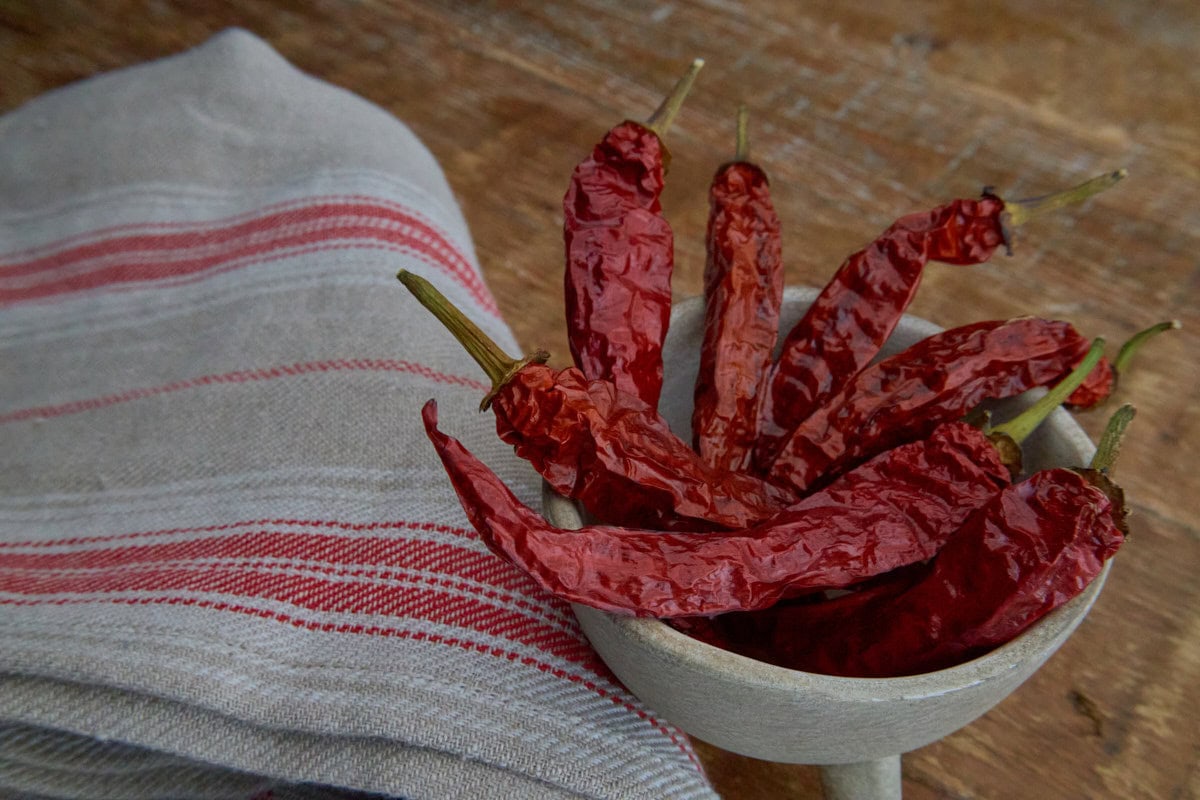
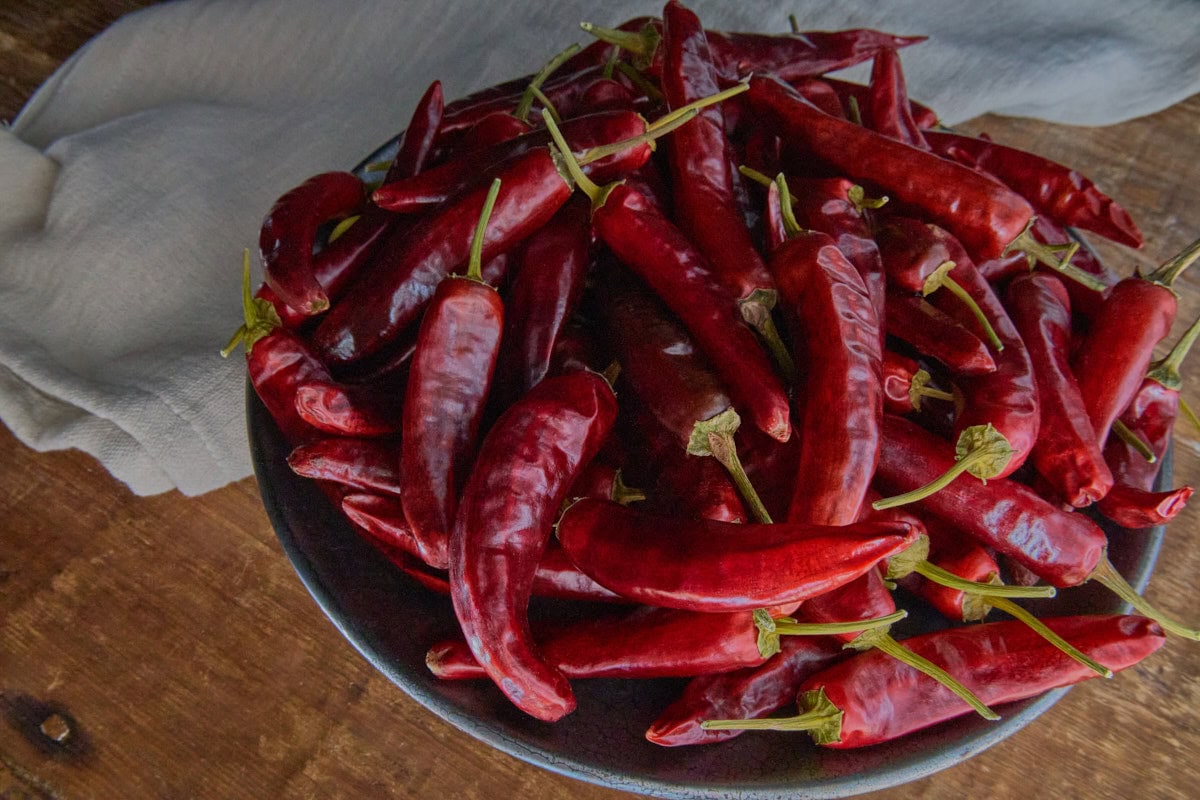
Below is a list of the 31 varieties I've grown this year, with descriptions and flavor notes from our 20 tasters. (The above photo shows the ones among these that I've dried.) All of the photos in this post are of my own homegrown peppers. Please take the Scoville heat ratings as a generalization.
I had initially intended to rank them by heat level, but then I discovered with our tasters that the heat could vary wildly compared to the listed Scoville Heat Unit (SHU) level. So please take heat levels in the list below as just a basic and variable reference point.
I felt so validated to have found that the often-cited New Mexico State University Chili Pepper Institute describes chili heat level as the product of both genetics and growing environmental factors such as heat and water levels. And that it takes optimal low-stress growing conditions to yield chili peppers of a predictable heat level. So please use my numbers as a suggestion, but to also expect variation when you grow these varieties yourself!
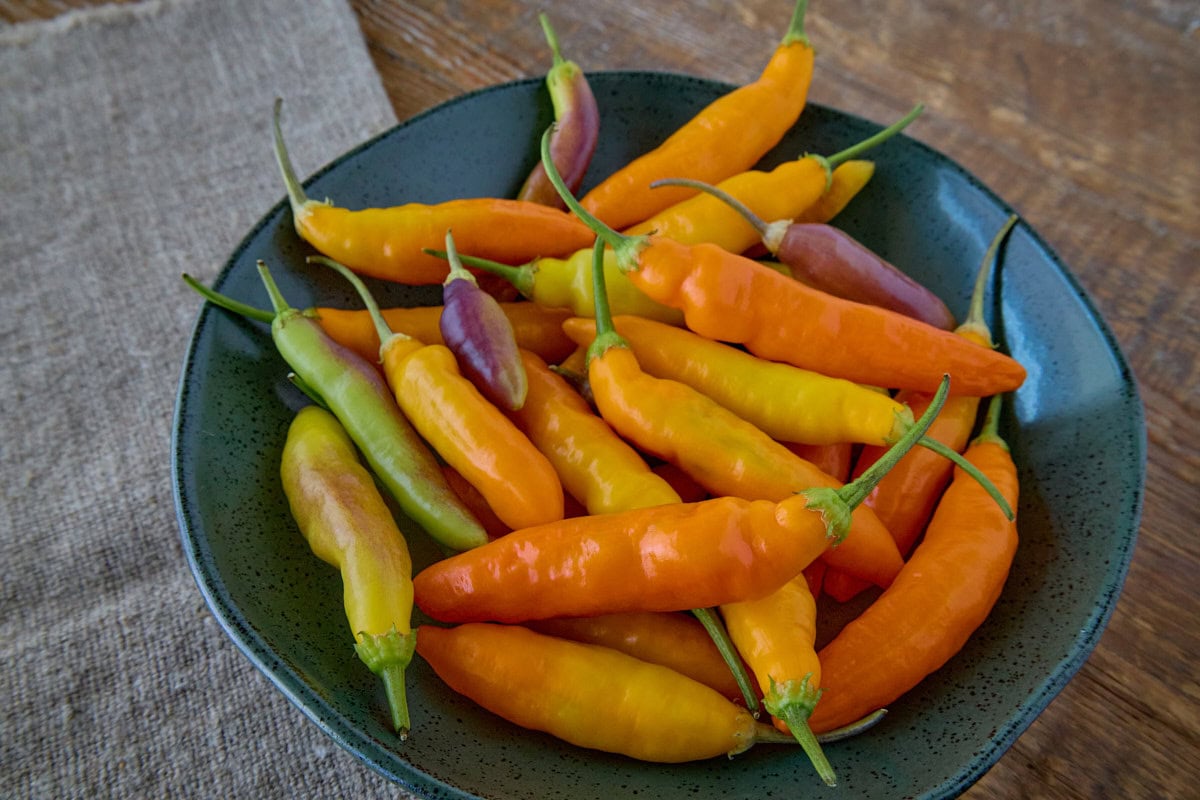
1. Aji amarillo
Botanical name
Capsicum baccatum
Origin
Likely Bolivia, now also grown throughout Peru, Argentina, and Brazil
Description
Narrow, 3-5 inch (8-13 cm), ripening from green to light yellow to purple to orange
Scoville heat unit rating
30,000-50,000 SHU
Traditional usage
Fresh, dried, pureed, or ground; sautéed, puréed, and added to sauces
Our tasters' flavor notes
Fresh homegrown
Spicy, smooth, smoky, mustardy, subtle, buttery, sweet, flavorful
2. Aji dulce
Botanical name
Capsicum chinense, or sometimes classified as Capsicum baccatum
Origin
Puerto Rico
Description
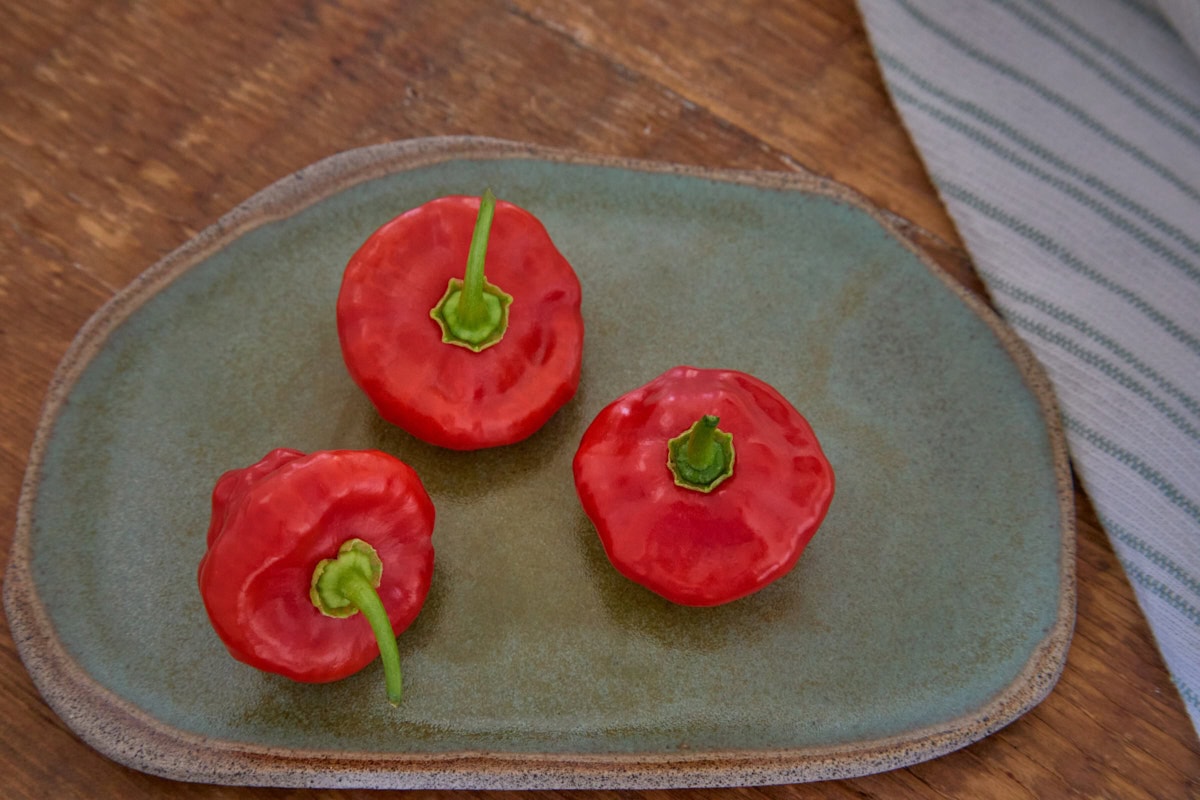
Tapered and flattened shape, ripening from green to deep red. About 1.5-2.5 inches (4-6.5 cm) in length
Scoville heat unit rating
0-500 SHU
Traditional usage
A main component in sofrito and sauces, stews, and rice; commonly eaten fresh, dried, pureed, or ground
Our tasters' flavor notes
Fresh homegrown
Mild, lightly-flavored, good crunch, no spice, sugar snap pea flavor, like apples, grassy
3. Aleppo

Botanical name
Capsicum annuum
Origin
Syria and Turkey
Description
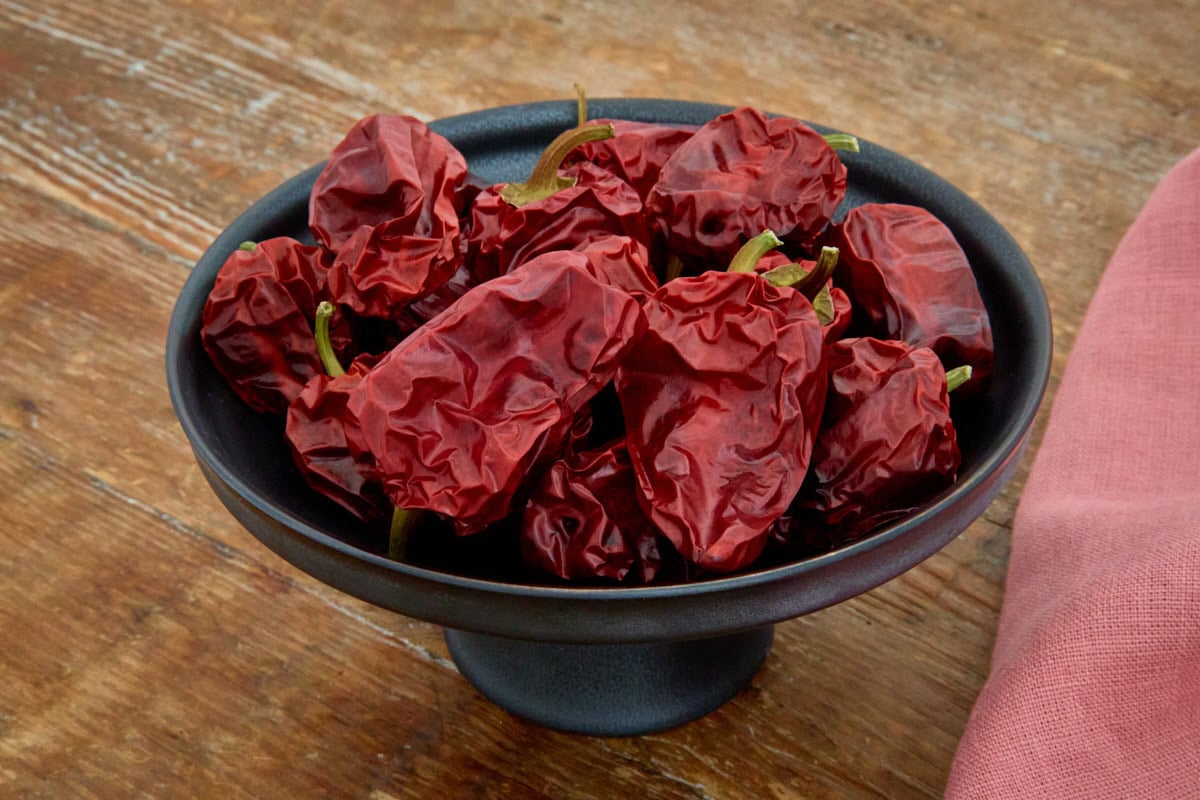
In the Slow Food Foundation's Ark of Taste; tapered with 4 sides, 1 inch (2.5 cm) long, ripening from green to bright red
Scoville heat unit rating
0-500 SHU
Traditional usage
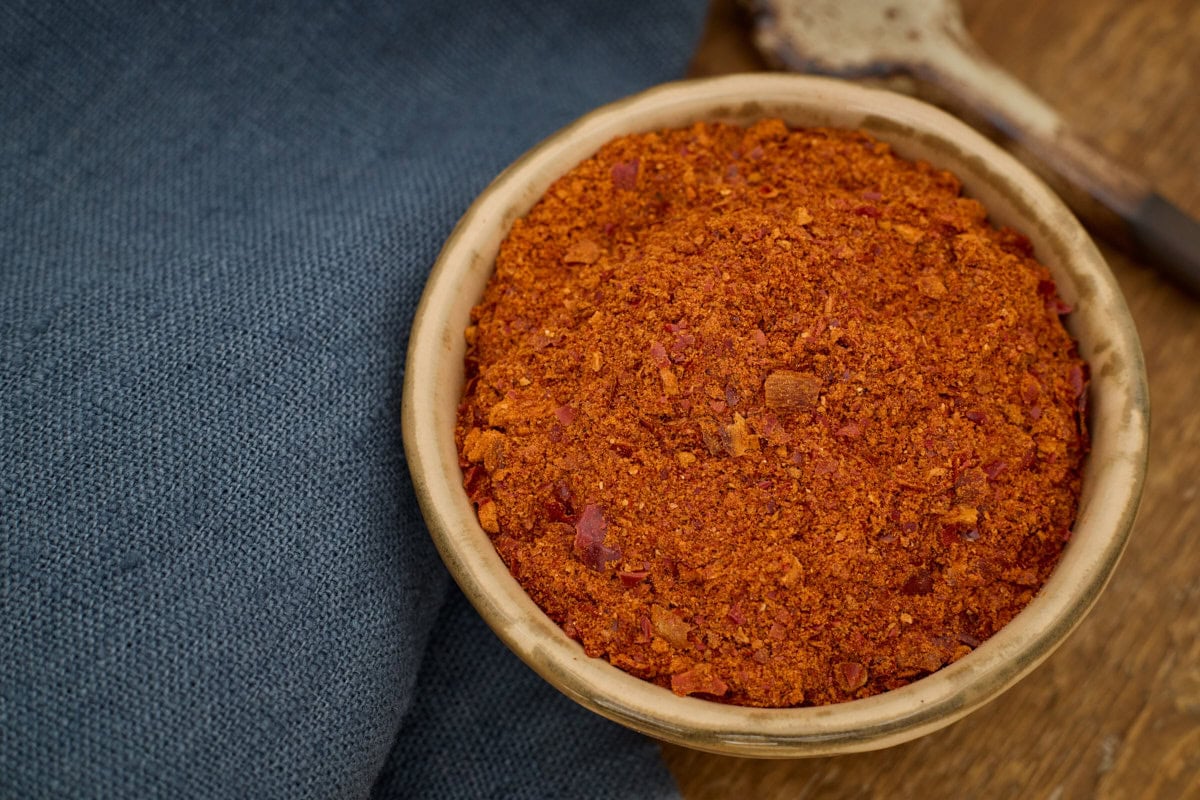
Dried and coarsely ground and added to spice blends, roasted vegetables, bean dishes, marinades, and salads
Our tasters' flavor notes
Dried homegrown
Spicy, a little sweet, mild, bitter
Dried store-bought
Buttery, earthy, spicy, flavorful with cherry wood notes
4. Beaver dam


Botanical name
Capsicum annuum
Origin
Brought from Hungary to Wisconsin in 1912
Description
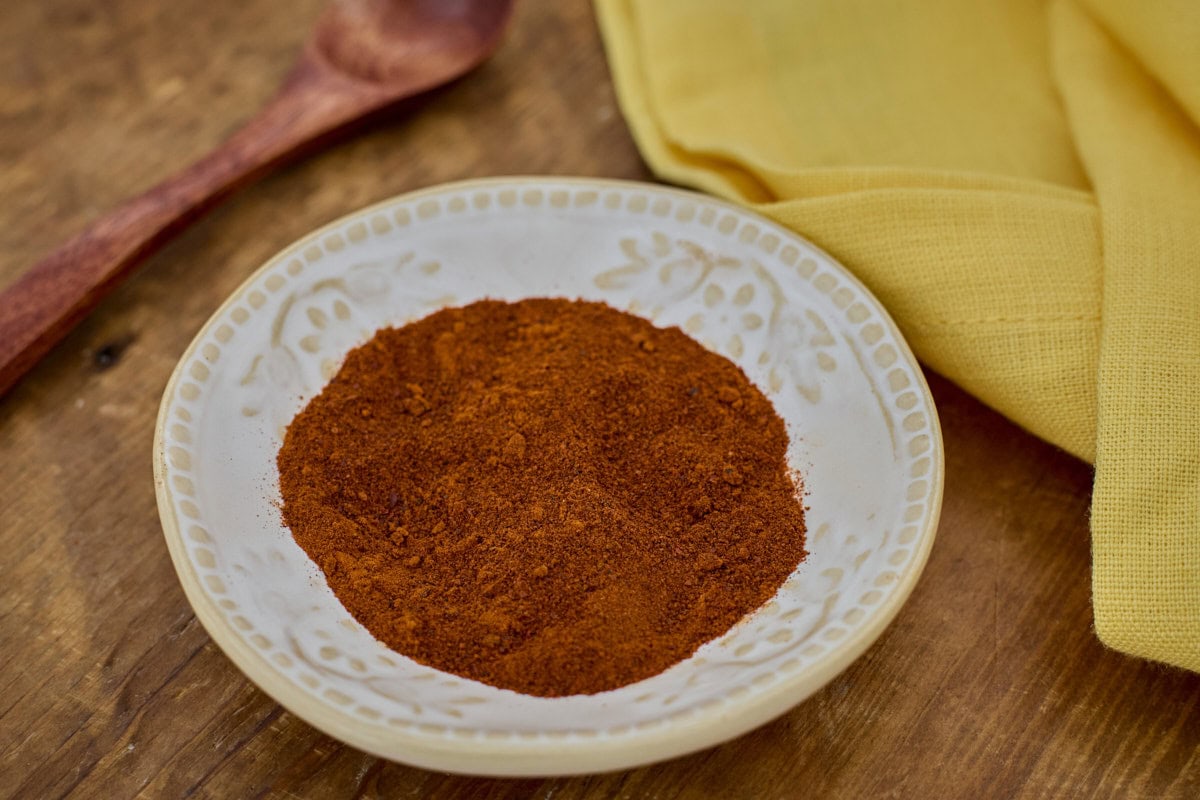
In the Slow Food Foundation's "Ark of Taste"; has its own annual festival in Beaver Dam, Wisconsin; ripe fruits are deep red and horn-shaped, 6-9 inches (15-23 cm) long
Scoville heat unit rating
500-1,000 SHU
Traditional usage
Often eaten fresh or grilled, in salads, salsas, and grilled vegetable dishes
Our tasters' flavor notes
Fresh homegrown
Mild, quick kick, sweet, good, like spring
Dried homegrown
mild, woodsy, dark cherry, mossy, good kind of bitter, mild warmth, sweet, fruity, like oranges, apples, earthy, woody, a little tang and zing (dried)
5. Birdseye
Botanical name
Capsicum frutescens
Origin
Southeast Asia
Description
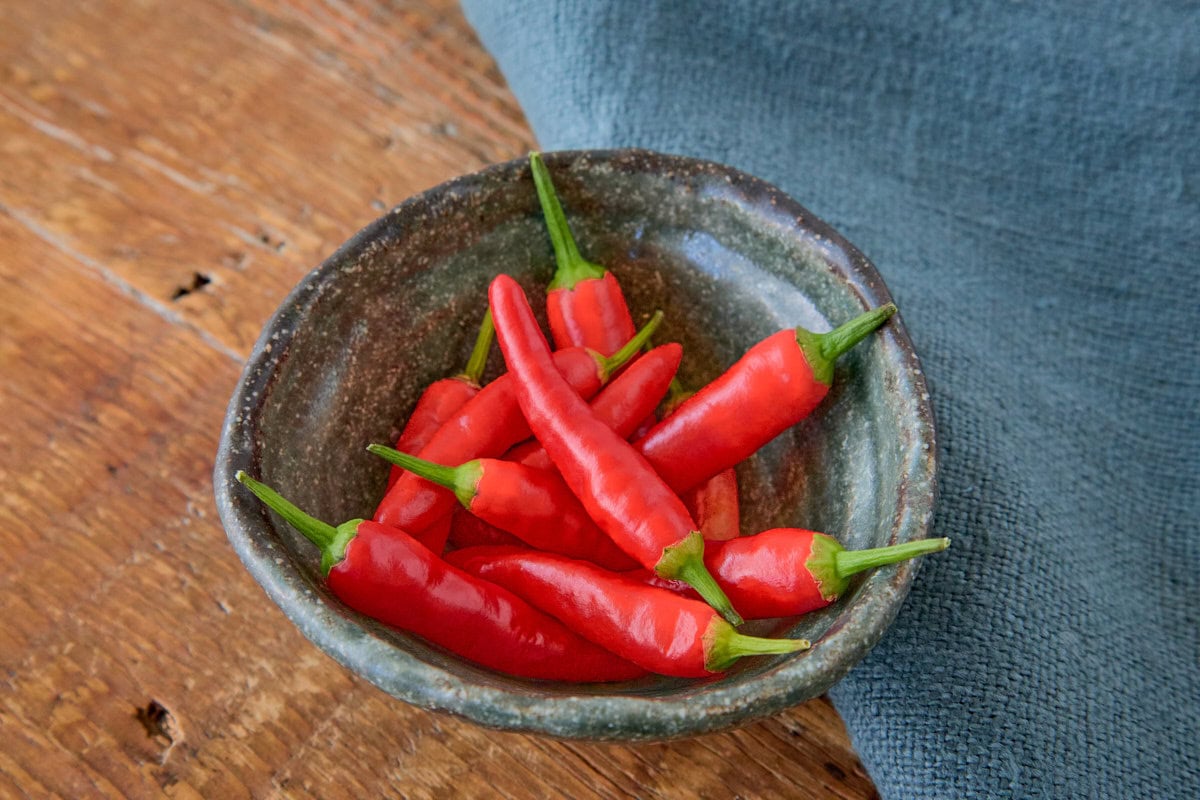
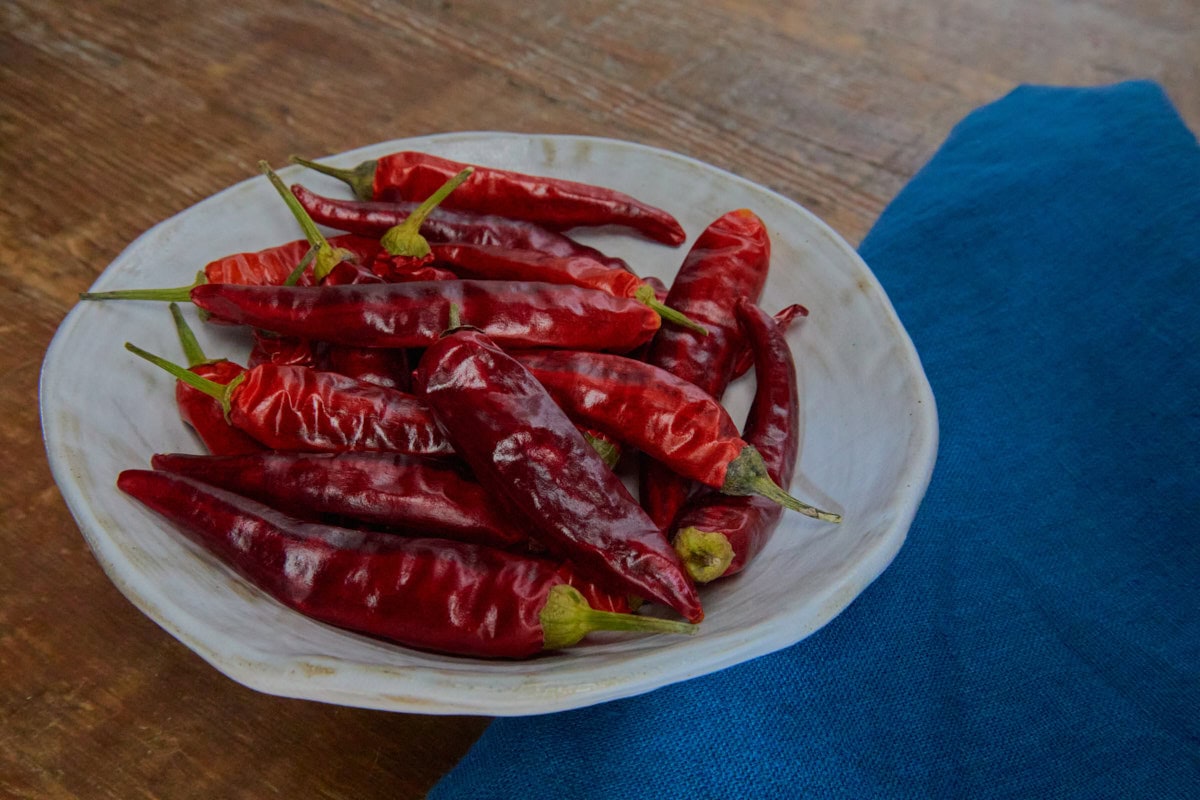
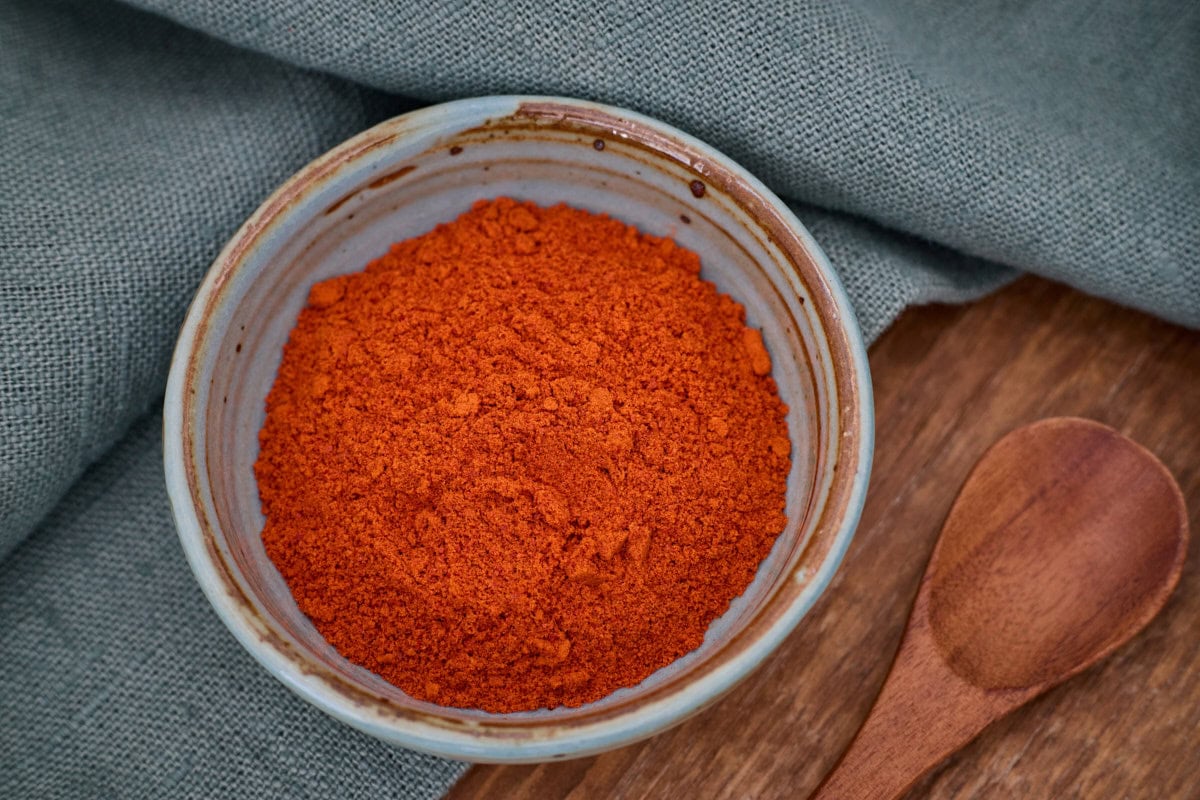
Generally 1-2 inches (2.5-5 cm) long and red or sometimes yellow when mature
Scoville heat unit rating
50,000-100,000 SHU
Traditional usage
Often eaten fresh or dried, in curries, salads, stir-fries, and sauces
Our tasters' flavor notes
Dried homegrown
Sweet, buttery, soft, jute, sundried tomato, roasted eggplant, maple syrup
6. Buena mulata

Botanical name
Capsicum chinense
Origin
Caribbean or Latin America
Description
Ripens from a vibrant purple to orange to red; propagated by artist and avid seed collector Horace Pippin, who traded seeds with William Woys Weaver's grandfather; now maintained by Weaver's Roughwood Seed Center for Heritage Seedways, a movement to preserve heirloom seeds; currently in stock at Baker Creek Seeds.
Scoville heat unit rating
30,000-50,000 SHU
Traditional usage
Primarily used fresh, but sometimes also dried; often used in salsas, chutneys, sauces, and marinades
Our tasters' flavor notes
Dried homegrown
Lemony, hot, very sweet, dry, deeply-roasted veggies, sweet rust, yellow pollen
7. Cayenne long red thick


Botanical name
Capsicum annuum
Origin
The city of Cayenne, French Guiana
Description
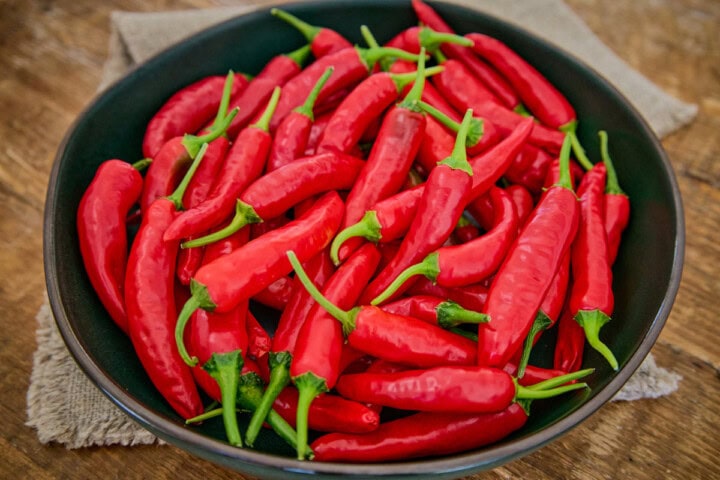
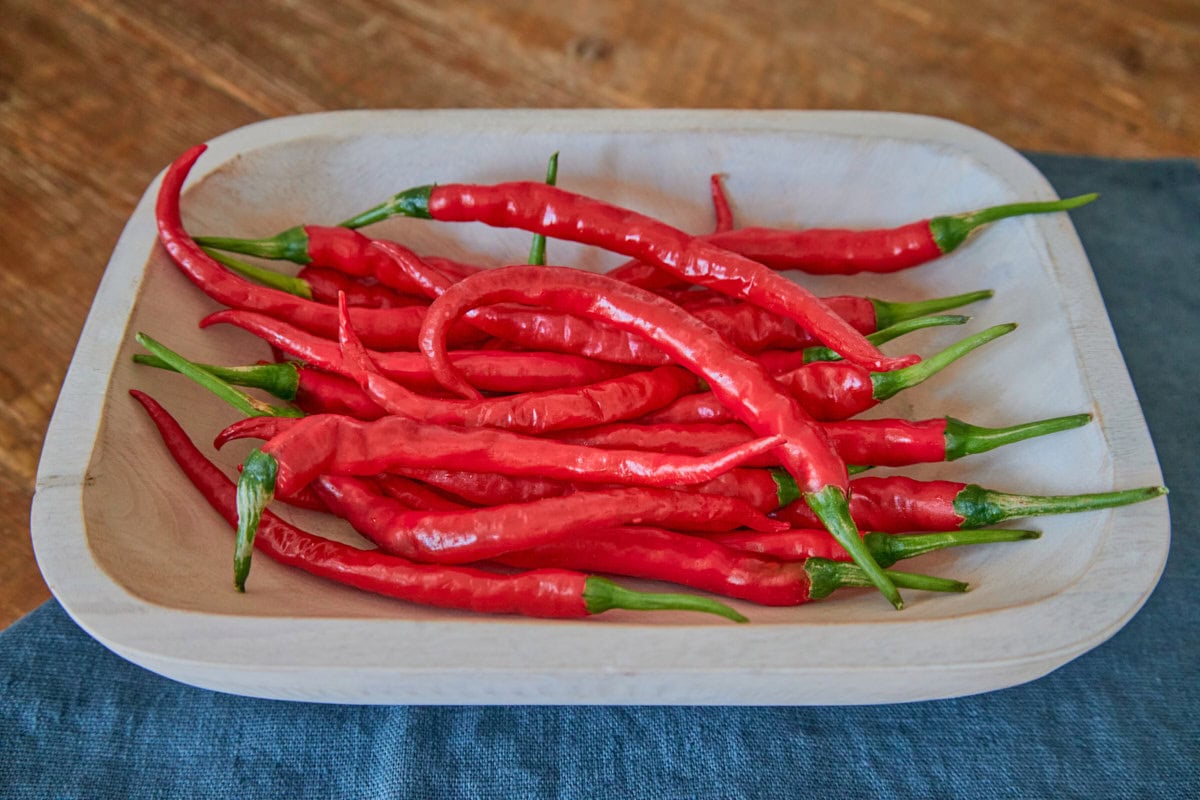
Ripens from green to red; slim, 6 inch (15 cm) long, wrinkled, tapered, and often curved fruits; thick-fleshed
Scoville heat unit rating
30,000-50,000 SHU
Traditional usage
Used fresh or dried, in curries, stews, soups, chili, and hot sauces
Our tasters' flavor notes
Dried homegrown
Slightly spicy, buttery, a little sweet, deep aged parchment, toasted walnuts, fruity shandy, old sweater, za'atar
Dried store-bought
dry, baked clay, ripe bog, hay bale, dry fall leaves, dank, not sweet
8. Chile catarina

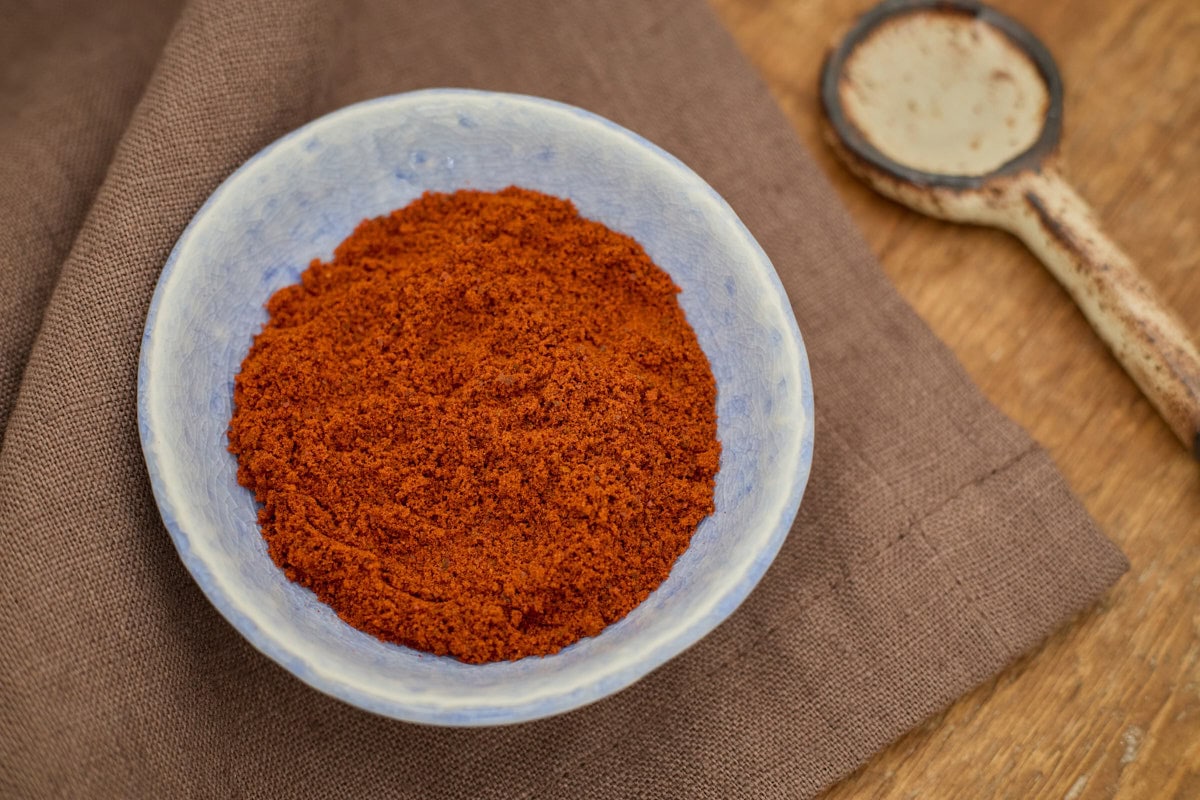
Botanical name
Capsicum annuum
Origin
The state of Nayarit in central Mexico
Description
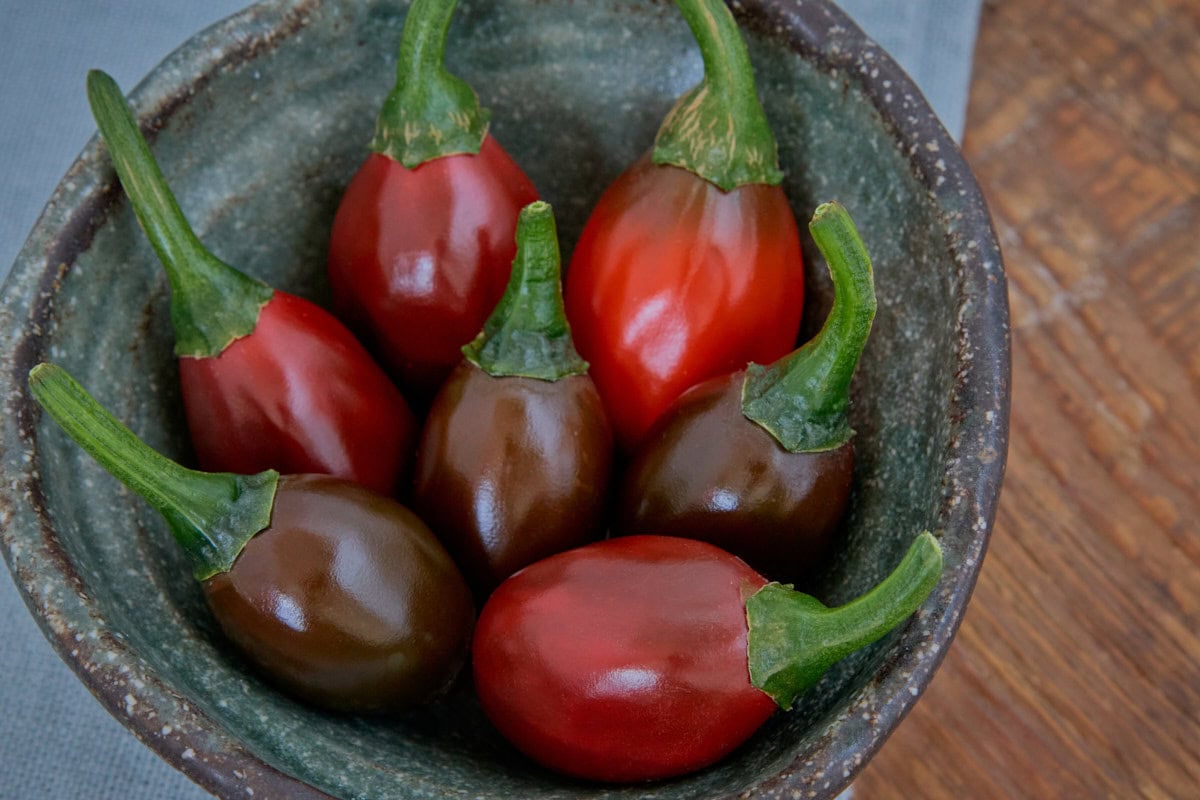
In the cascabel chile group, known for their rattling seeds; 2 inches (5 cm) long, oval, reddish-brown fruits when ripe
Scoville heat unit rating
100-500 SHU
Traditional usage
Mainly used fresh, often in salsas and hot sauces, stews
Our tasters' flavor notes
Dried homegrown
Low-key sweet, nutty, brown butter, sundried tomato, red wine, cinnamon, hot chocolate, baked earth, peanuts
9. Datil


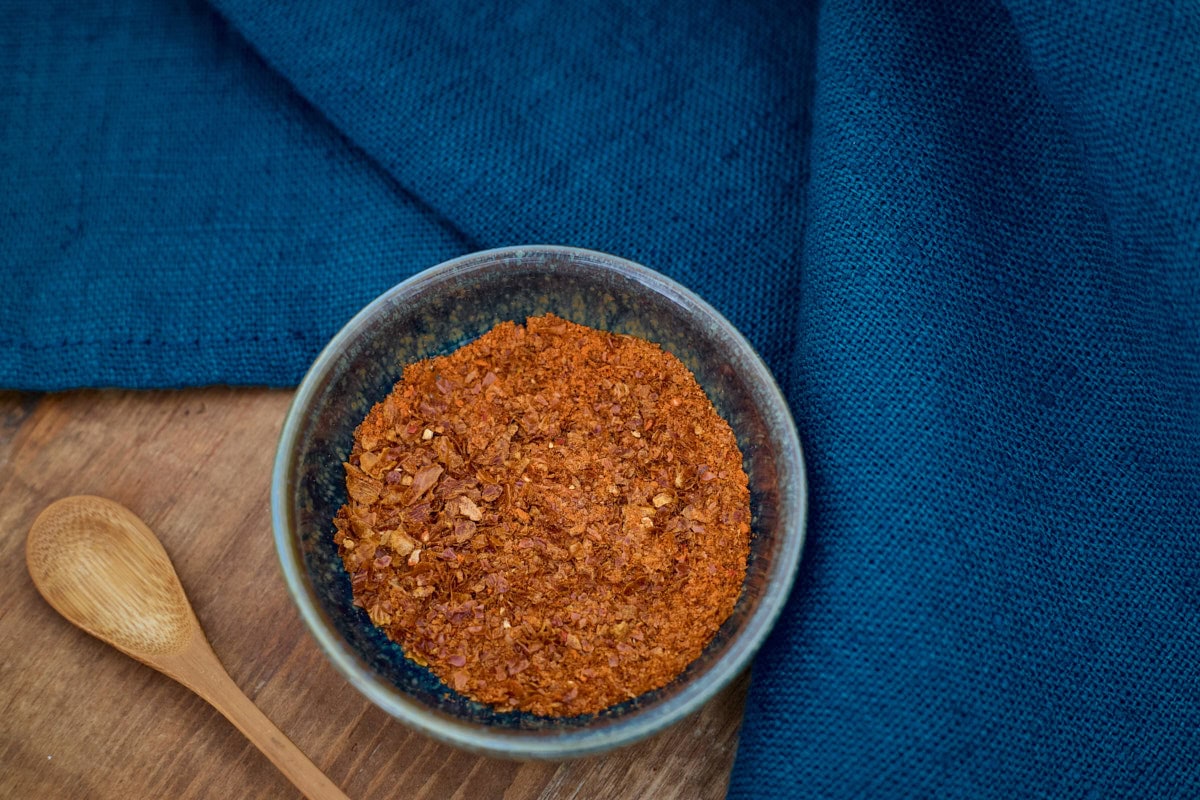
Botanical name
Capsicum chinense
Origin
St. Augustine, Florida
Description
In the Slow Food Foundation's Ark of Taste; generally 2-2.5 inches (5-6 cm) long, ripening from green to bright yellow
Scoville heat unit rating
100,000-300,000 SHU
Traditional usage
Generally eaten fresh, in hot sauces, stews, and grilling sauces
Our tasters' flavor notes
Dried homegrown
Crunchy, mild, warm, dry, spicy, dried hay, dried lemons, old manuscript
10. Giant aconcagua

Botanical name
Capsicum annuum
Origin
Named for Aconcagua, the highest peak in the Andes in Argentina where it originated.
Description
Large oblong thick-walled fruits up to 12 inches (30 cm), ripening from green to orange to red
Scoville heat unit rating
0 SHU
Traditional usage
Primarily eaten fresh in salsas, stuffed, and added to salads
Our tasters' flavor notes
Fresh homegrown
Sweet, strong, fruity, full of flavor, no heat, juicy
11. Giant Marconi hybrid


Botanical name
Capsicum annuum
Origin
Italy
Description
Improved version of original Marconi pepper; tapered, lobed fruit ripening from green to red
Scoville heat unit rating
0 SHU
Traditional usage
Great eaten fresh or dried, in salads, grilled, fried, and roasted
Our tasters' flavor notes
Fresh homegrown
Slightly sweet, no heat, tangy, best pepper so far
12. Guajillo (when dry, mirasol when fresh)
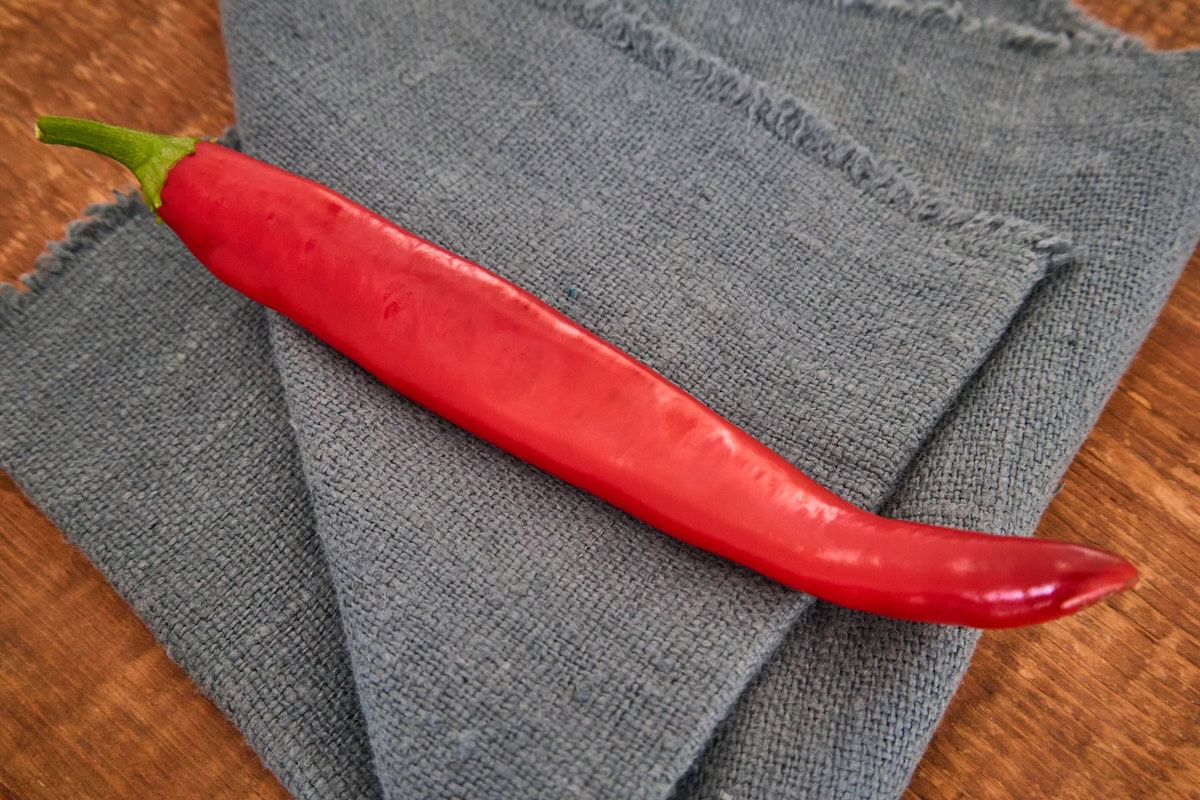


Botanical name
Capsicum annuum
Origin
Mexico
Description
A very important pepper in Mexican cooking; the fresh form, mirasol, is named after a sunflower since the fruits grow pointing upward. Ripens from green to brownish to bright red, narrow and 5-6 inches (13-15 cm) in length.
Scoville heat unit rating
2,500-5,000 SHU
Traditional usage
When fresh (mirasol), used often in salads, roasting, and grilling. When dried (guajillo), this pepper is often rehydrated and blended into sauces or marinades.
Our tasters' flavor notes
Dried homegrown
Sweet, smoky, tangy, some back-of-the-mouth spice, raisins, white wine, cantaloupe
13. Hong gochu
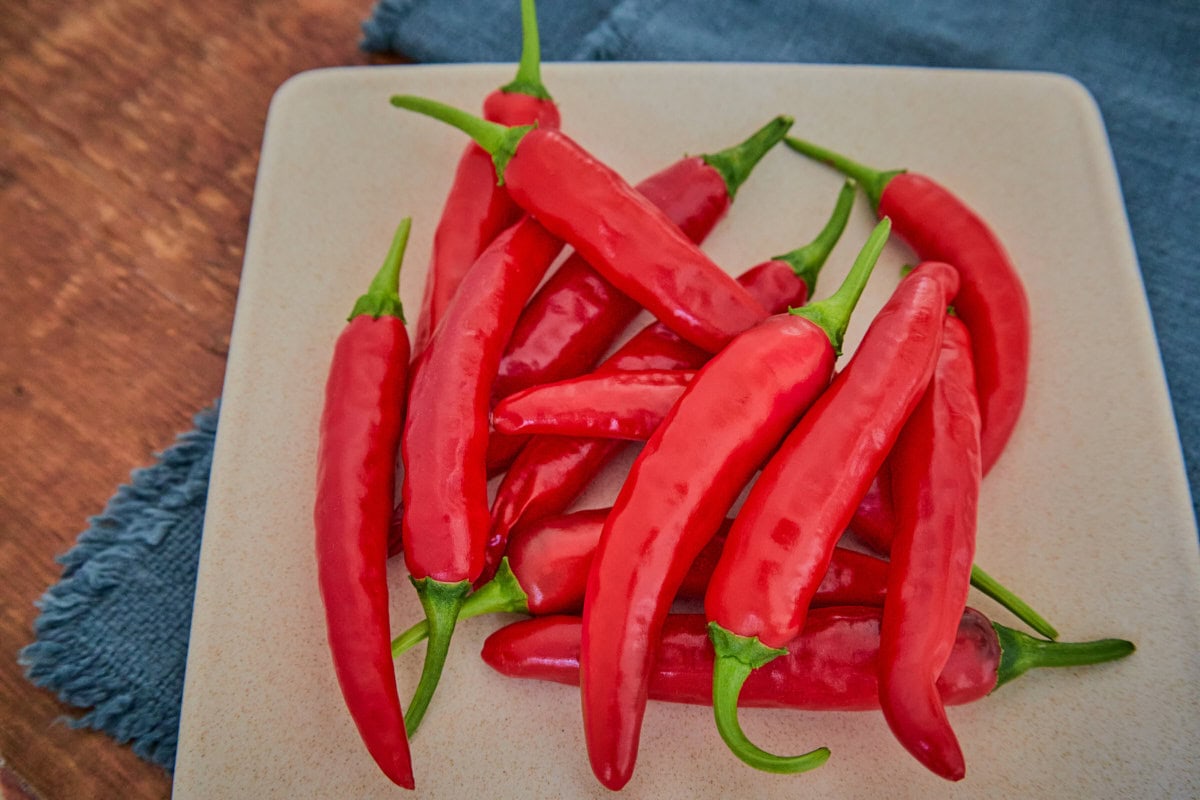

Botanical name
Capsicum annuum
Origin
Korea
Description
A very significant pepper in Korean cuisine. The 4-5 inch (10-13 cm) fruits are narrow and tapered, and ripen from green to bright red.
Scoville heat unit rating
1,500-10,000 SHU
Traditional usage
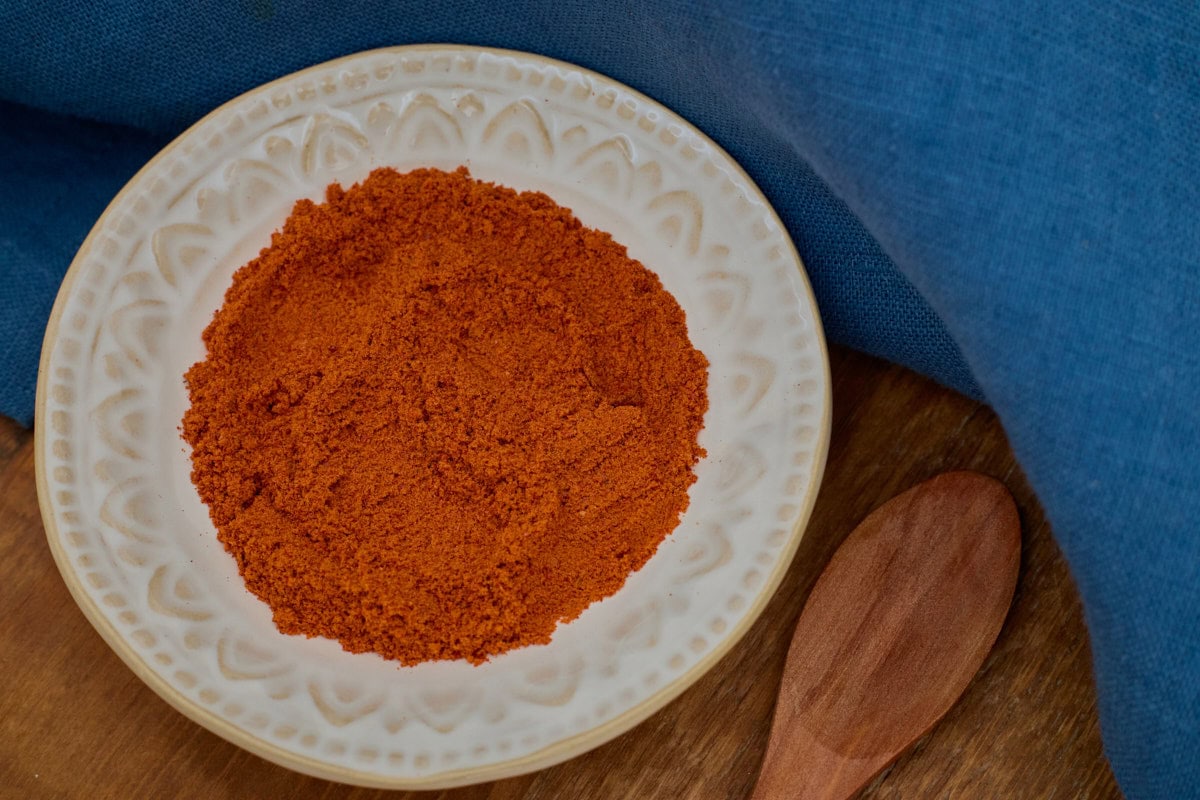
This is the pepper most commonly used to make gochugaru (red pepper flakes, ground either finely or coarsely, as in above photo) and gochujang (fermented red pepper paste). Used to make kimchi, bibimbap, and stews.
Our tasters' flavor notes
Dried homegrown (fine-textured version)
Buttery, smoky, mild, building heat, good kick, aged rope, deep balsamic vinegar, tomato paste, crisp beer
14. Jimmy Nardello

Botanical name
Capsicum annuum
Origin
Basilicata in southern Italy
Description
In the Slow Food Foundation's Ark of Taste; celebrated for its rich, fruity flavor; the wrinkled, curved, thin-skinned fruits ripen from green to bright red, and are about 5-8 inches (13-20 cm) long
Scoville heat unit rating
0 SHU
Traditional usage
Generally enjoyed fresh in salads, salsas, roasted, or added to tacos
Our tasters' flavor notes
Fresh homegrown
Salty, more tangy, very vegetal, red apple
15. Kashmiri
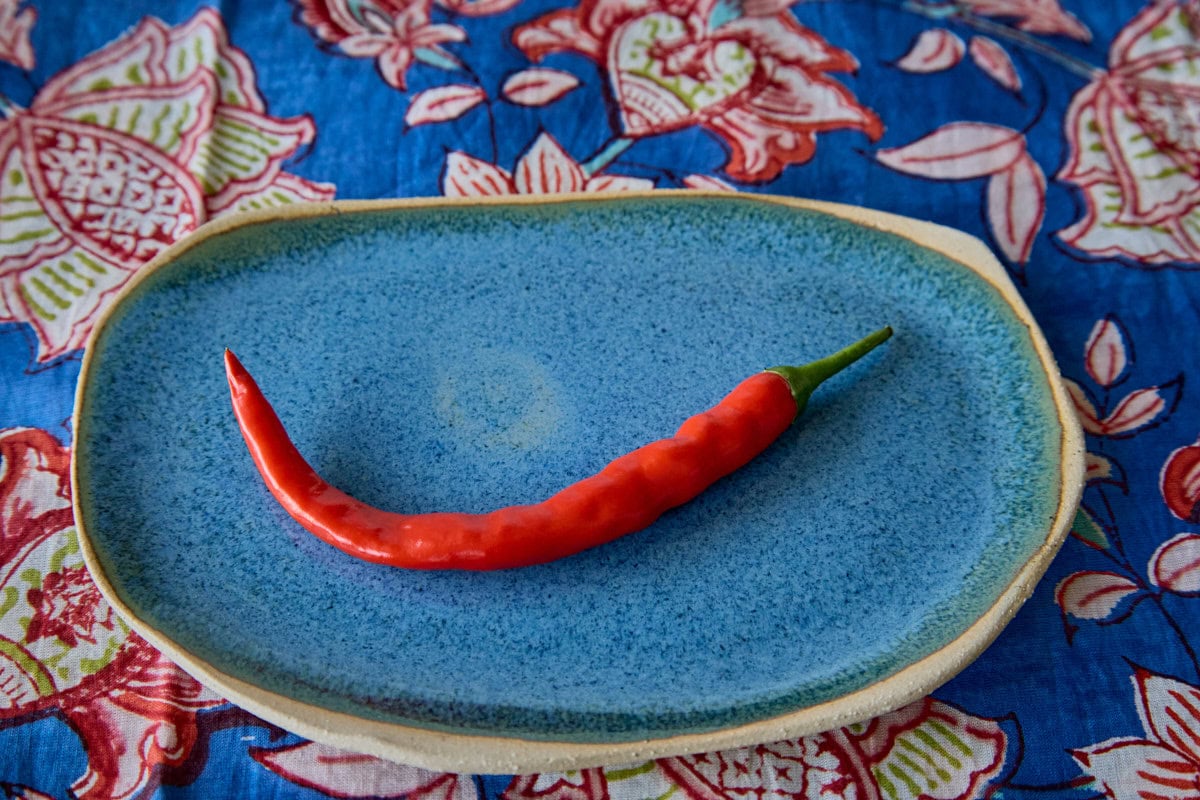
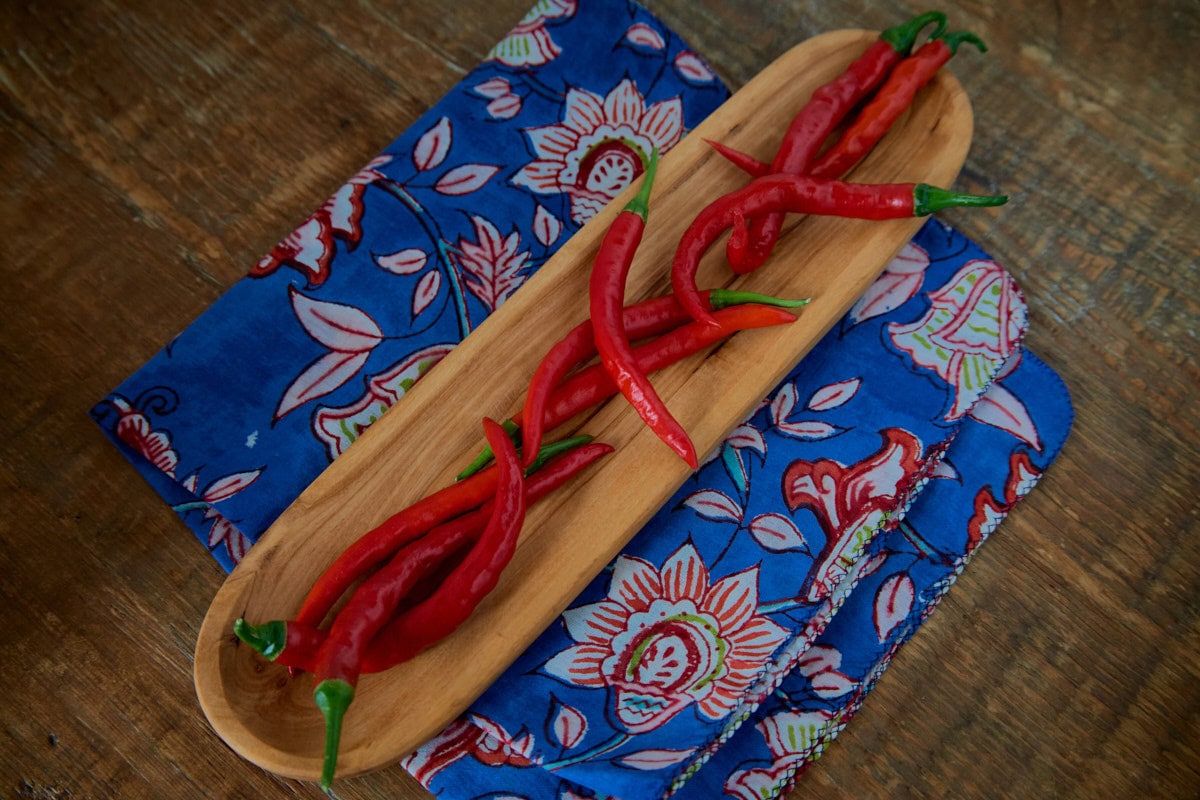


Botanical name
Capsicum annuum
Origin
Kashmir region of India
Description
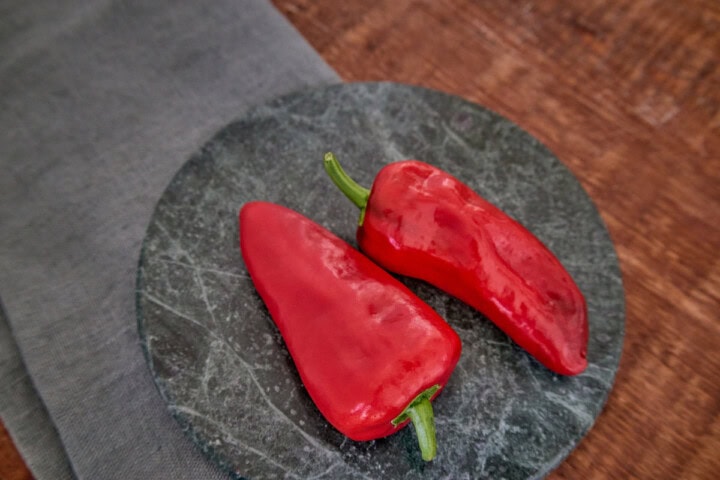
Narrow, tapered, and mild, ripening from green to vivid red. Fruits are 4-6 inches (10-12 cm) in length.
Scoville heat unit rating
1,000-2,000 SHU
Traditional usage
Generally used dried, and added to curries, marinades, chutneys, lending its vibrant color and mild flavor to several dishes.
Our tasters' flavor notes
Dried homegrown
Slightly sweet, nice warm kick in the middle, slow heat, rope, old books, bitter edge, awakens the palate
Dried store-bought
Mild, not sweet, bitter, slow build, dry, smokier, lightly sweet, tannins, stale paper, turmeric, toasted caraway, slow burn
16. Lesya
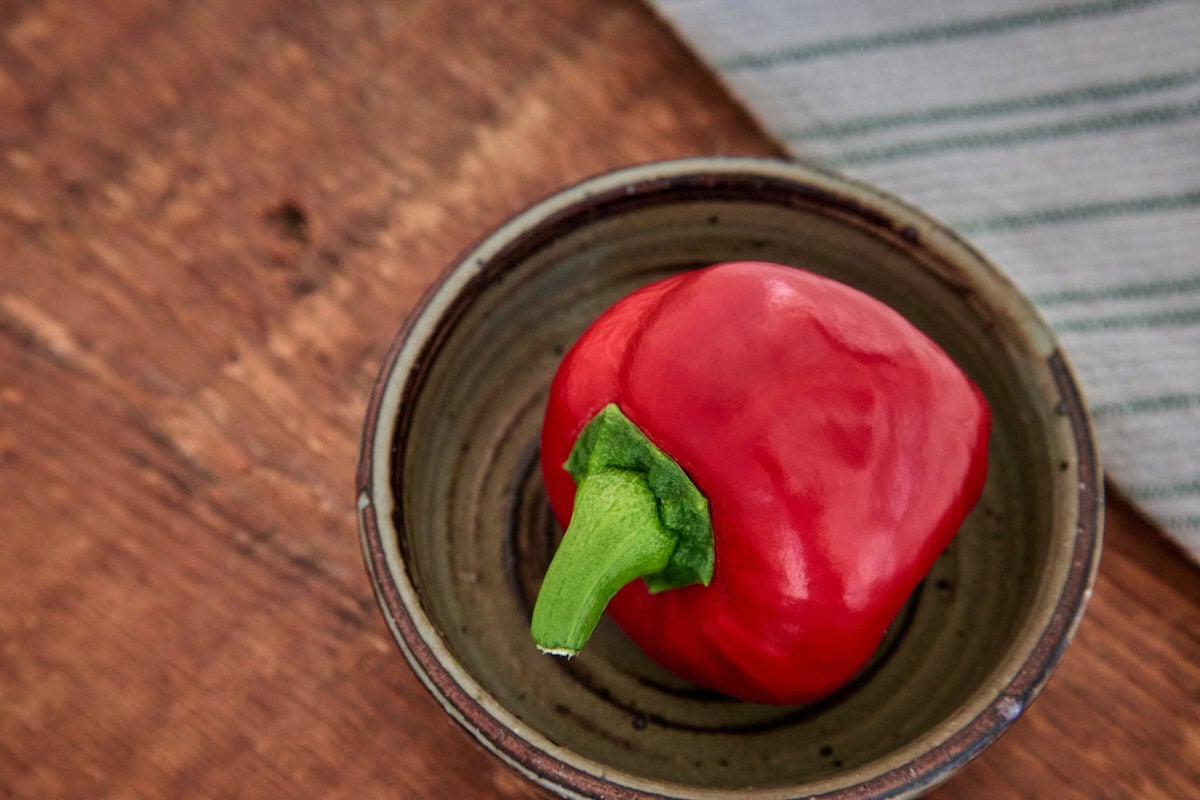
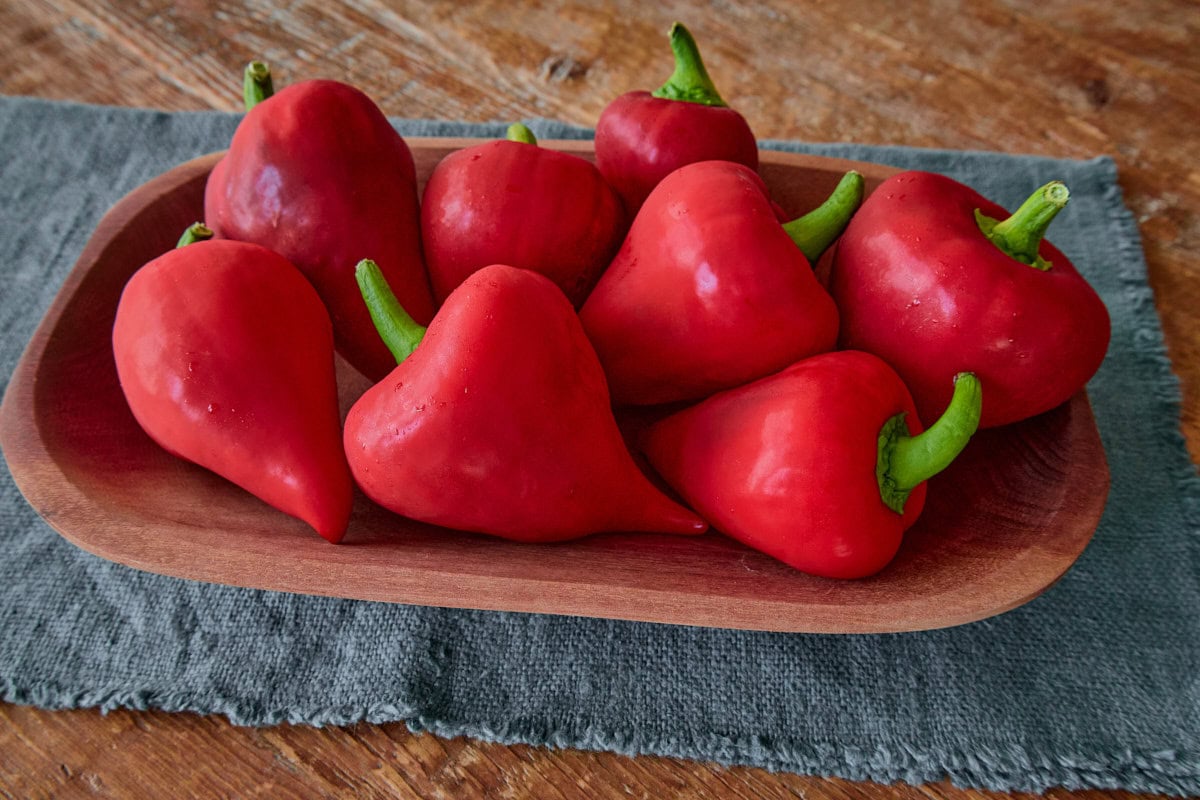
Botanical name
Capsicum annuum
Origin
Ukraine
Description
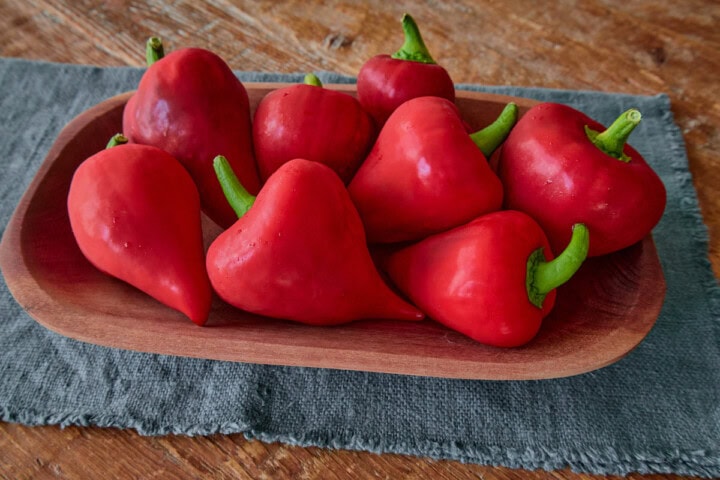
Thick-walled, juicy, and sweet, ripening from green to bright red; round at the shoulders and tapering to a point, 3-4 inches long and wide.
Scoville heat unit rating
0 SHU
Traditional usage
Often eaten raw, stuffed, roasted, and sautéed
Our tasters' flavor notes
Fresh homegrown
Salty, like a bell pepper, more flavorful, less vegetal, no tang, note of paper
17. Leutschauer paprika

Botanical name
Capsicum annuum
Origin
Brought from Leutschau, Slovakia to Matrafured, Hungary in the 1800s
Description
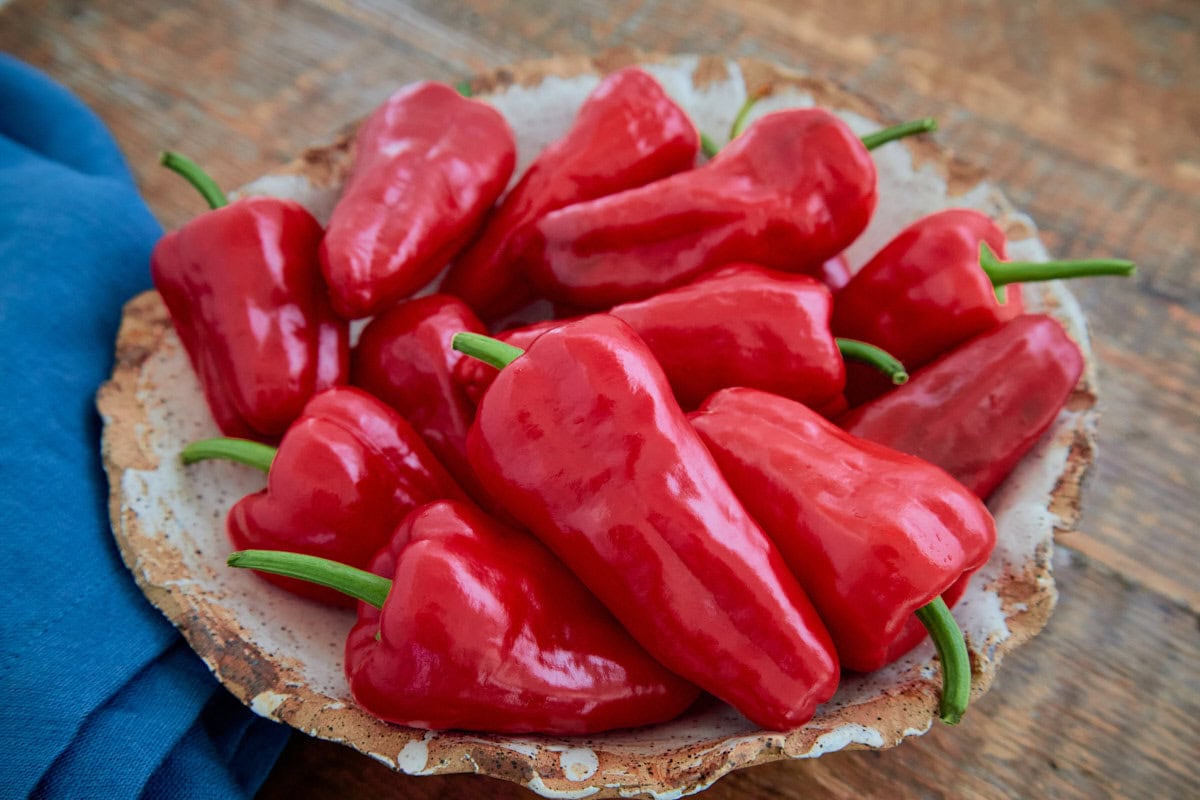
The thin-walled, 3-4 inch (8-10 cm) lobed and tapering fruits mature from green to dark red
Scoville heat unit rating
500-2,000 SHU
Traditional usage
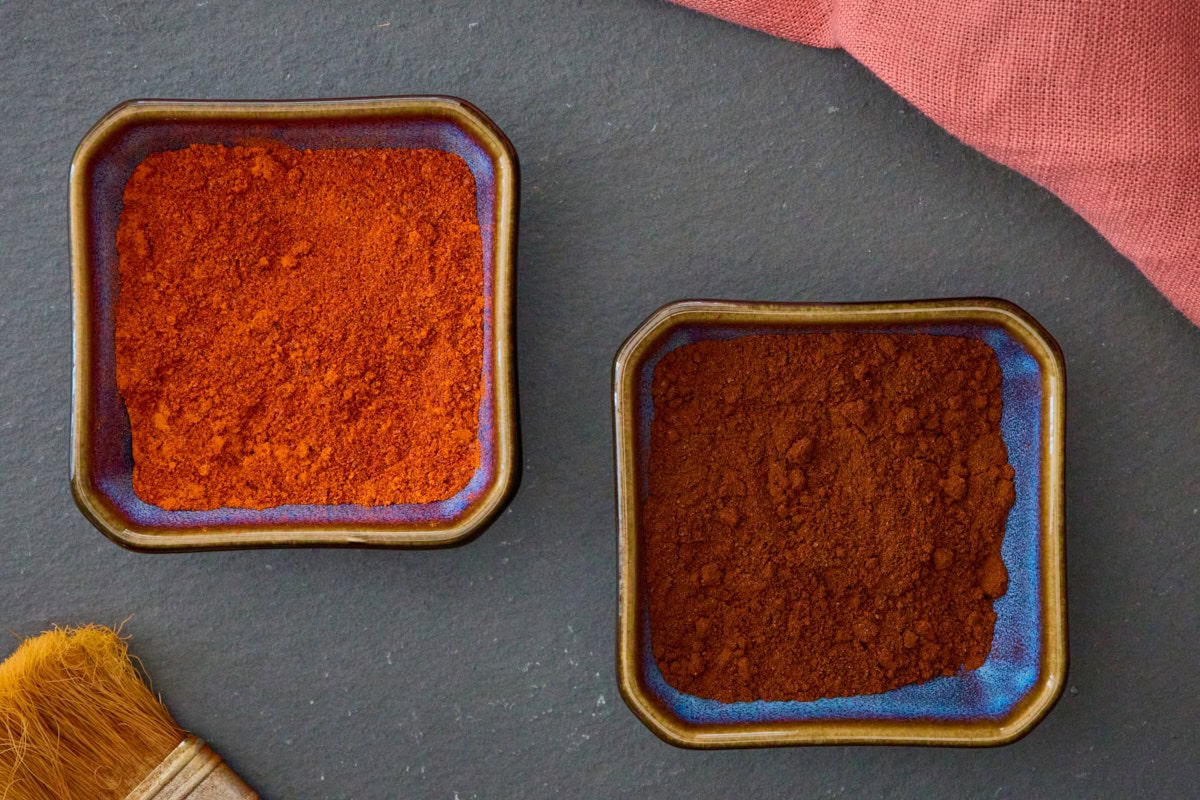
Primarily ground (after drying and often smoking) into paprika powder and added to salads, dips, stews, soups, and roasted or grilled vegetables.
Our tasters' flavor notes
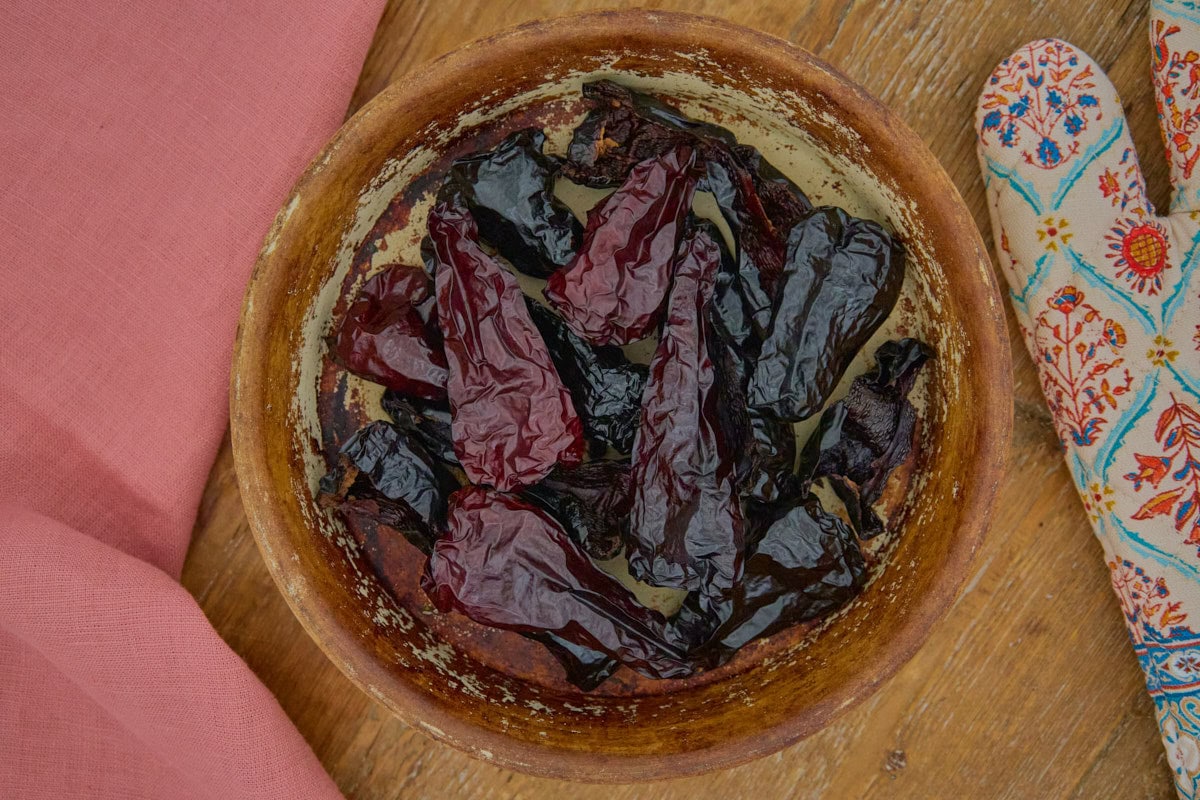
Dried homegrown
Sweet, fruity, buttery, mild spice, herbaceous, fruity, rounded, really fresh and full, smoky, favorite so far, tea, citrus
Dried store-bought
Mild, bell-peppery, green tea, very mild spice, strong earthy flavor, more savory, smoky, dry, brown butter, good aged red wine, no sweetness, charred wood, like this one too
Dried, homegrown, home-smoked (with oak wood chips; see recipe card below for directions)
Smoky, tasty, bitter, sharp, earthy, flavorful, cocoa powder, strong bitter coffee, oak, ashes, molasses, gingerbread, wood smoke
Dried, store-bought, smoked
Deep, a little sweetness, tasty, flavorful, a little less smoky than home-smoked, no spice, barbecue, deep char, burned wood, aged hickory, campfire
18. Mareko fana berebere
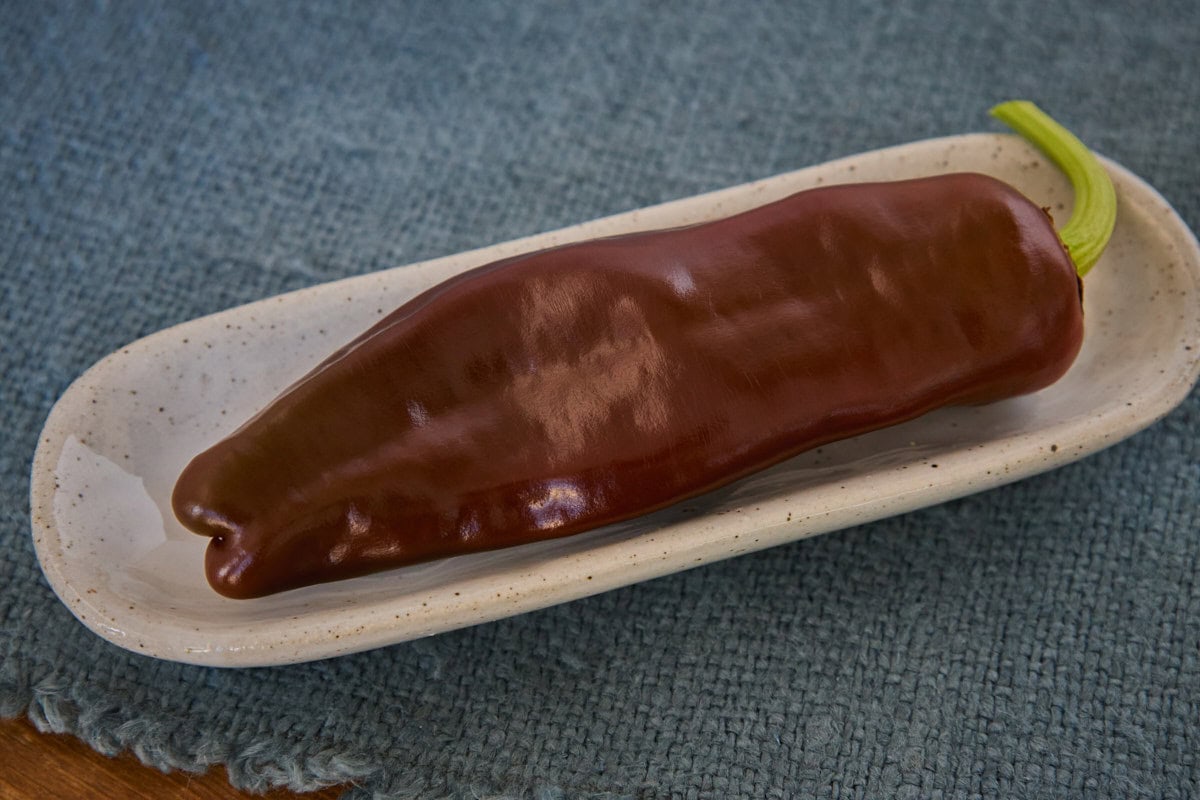


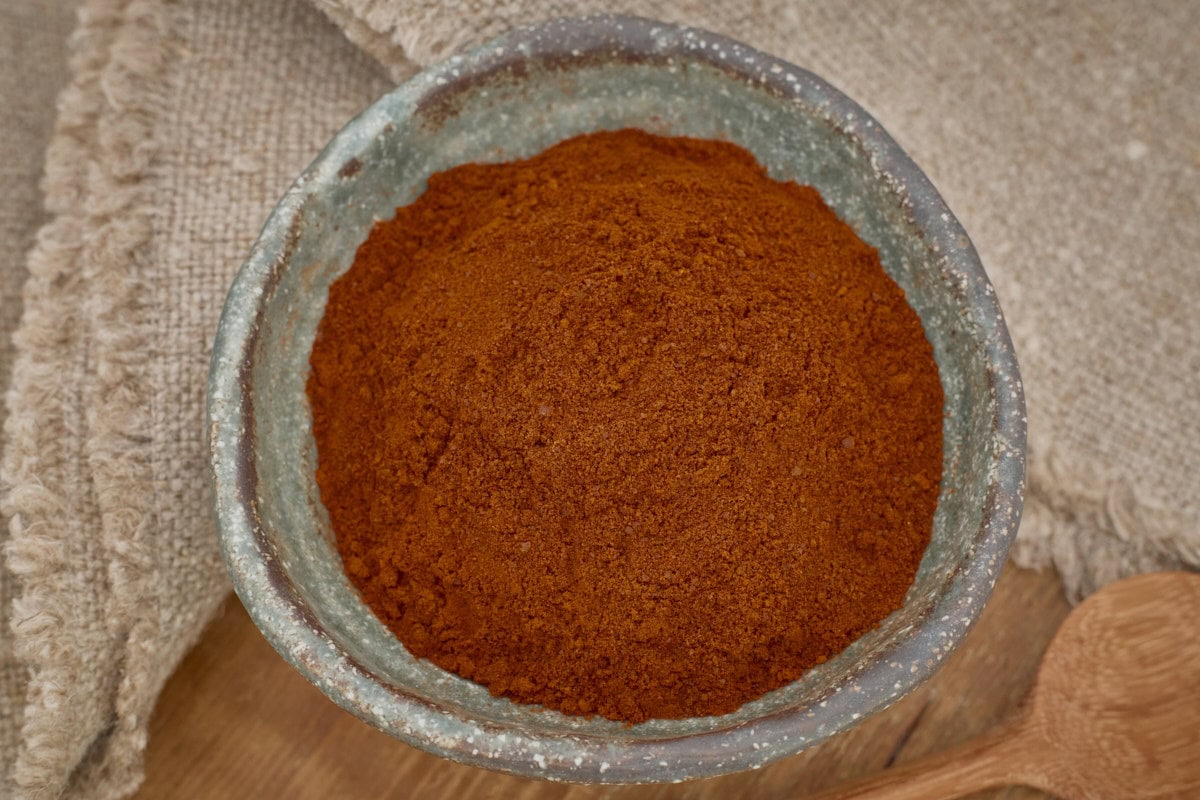
Botanical name
Capsicum annuum
Origin
Ethiopia
Description
Narrow, 3-4 inch (8-10 cm) long tapered fruits that ripen from green to dark brown
Scoville heat unit rating
10,000-45,000 SHU
Traditional usage
Commonly used in the traditional spice blend berbere, and in stews, rubs, and sauces.
Our tasters' flavor notes
Dried homegrown
So sweet, tangy, smoky, so good, deeply satisfying and warm, birch wood, roasted coffee, chicory, molasses
19. Numex big jim
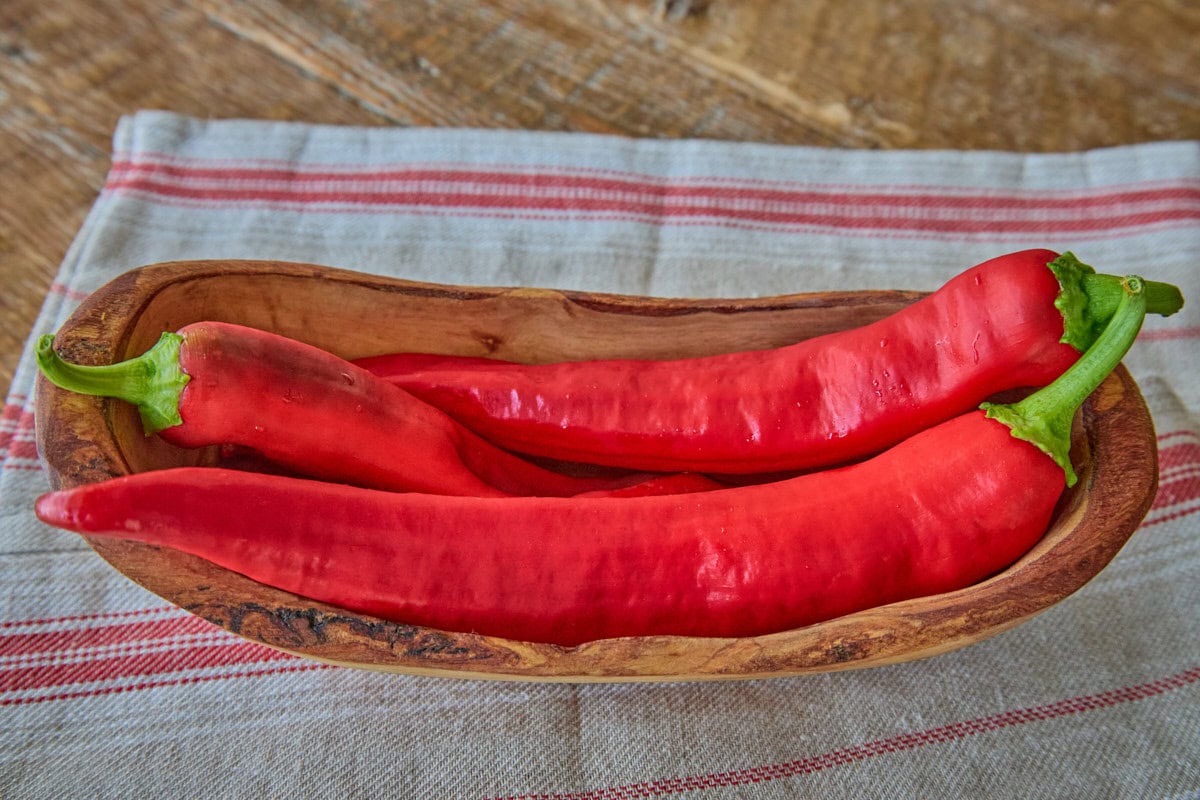
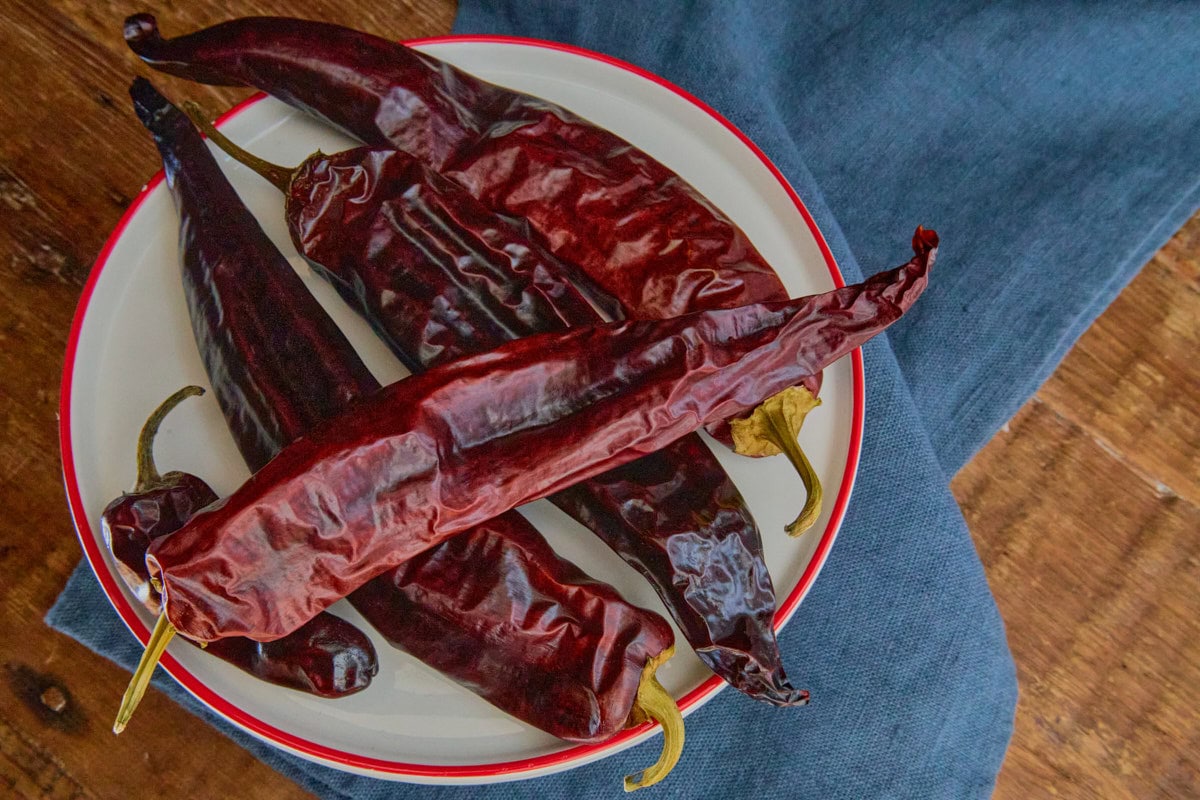
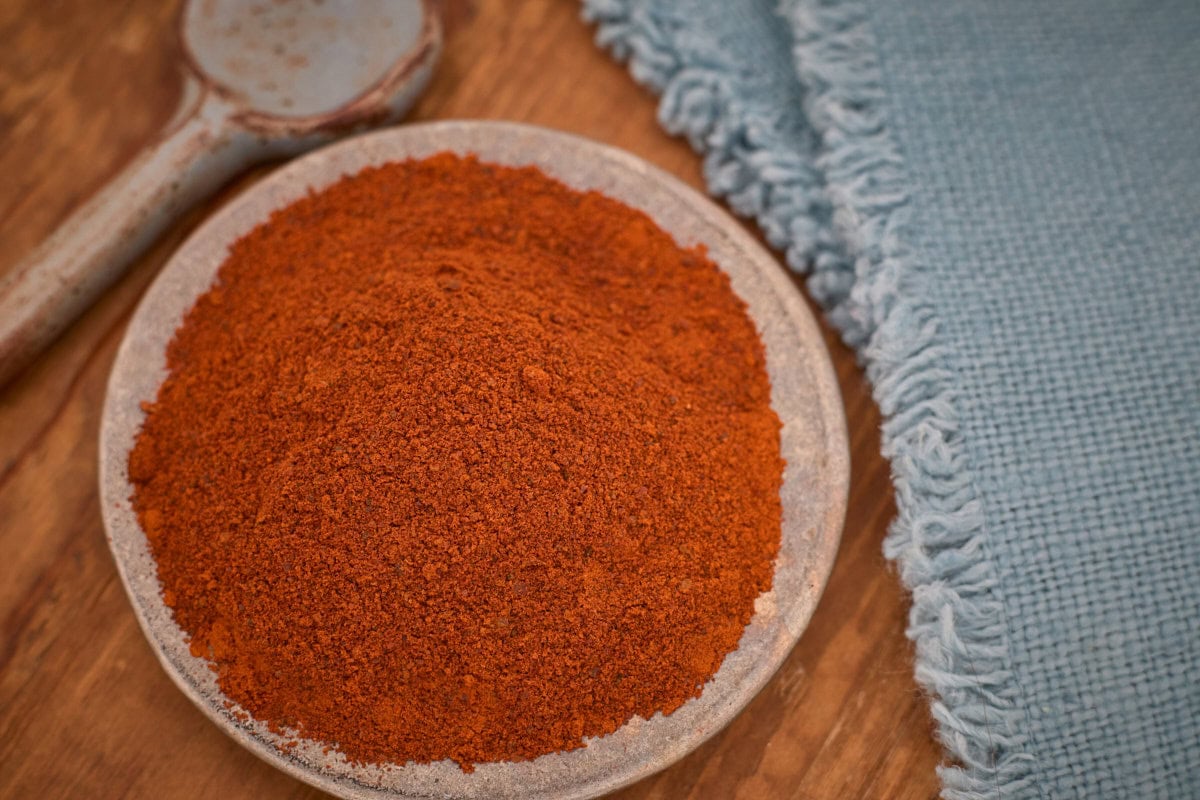
Botanical name
Capsicum annuum
Origin
New Mexico
Description
Long, tapered, thick-walled fruits that ripen from green to deep red, up to 12 inches (30 cm) in length.
Scoville heat unit rating
2,500-3,000 SHU
Traditional usage
Often used fresh in stuffed, in sauces, soups, and salads, or hung by strands called ristras in New Mexico as a symbol of welcome.
Our tasters' flavor notes
Dried homegrown
Slow, low heat, bright, tangy, sweet, lively, perky, warm, fruity, barbecue
Dried store-bought
Flavorful, low heat, tangy, no spice, woody, lemon, old books, antique store, good bitter note
20. Orange marmalade
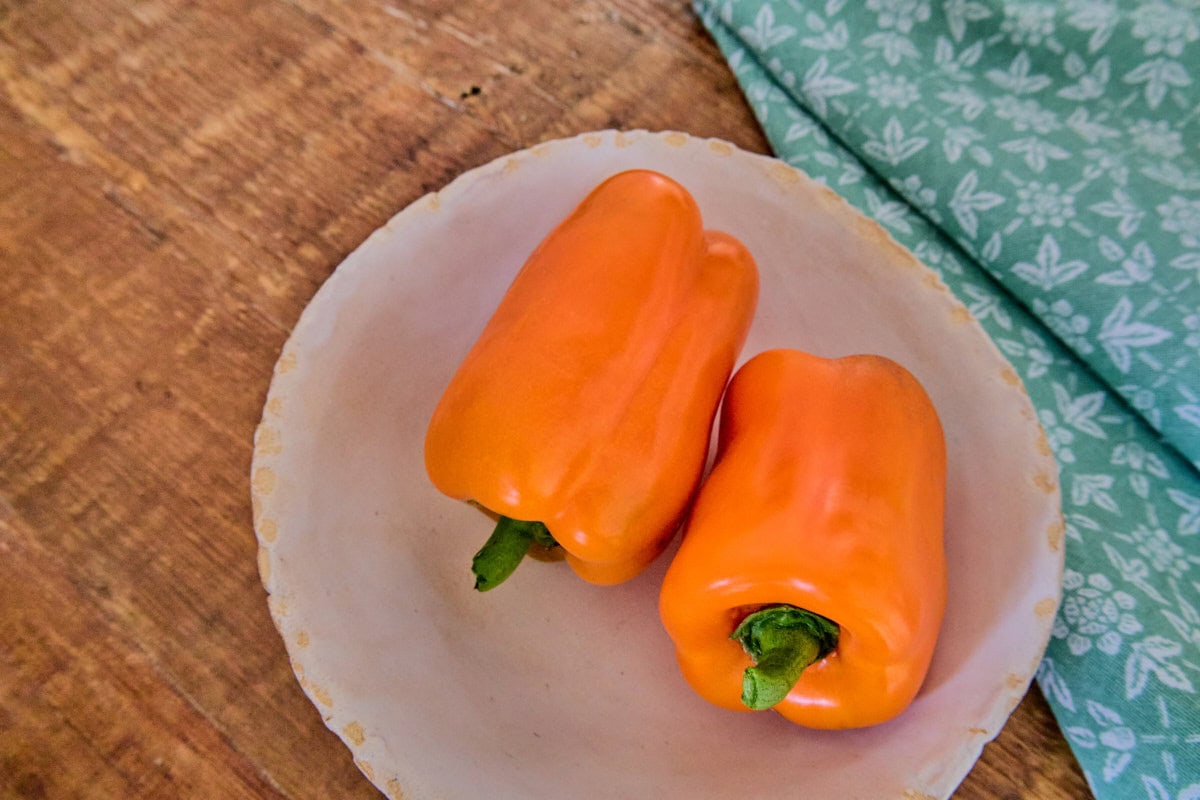
Botanical name
Capsicum annuum
Origin
Mexico, South America, or New Mexico
Description
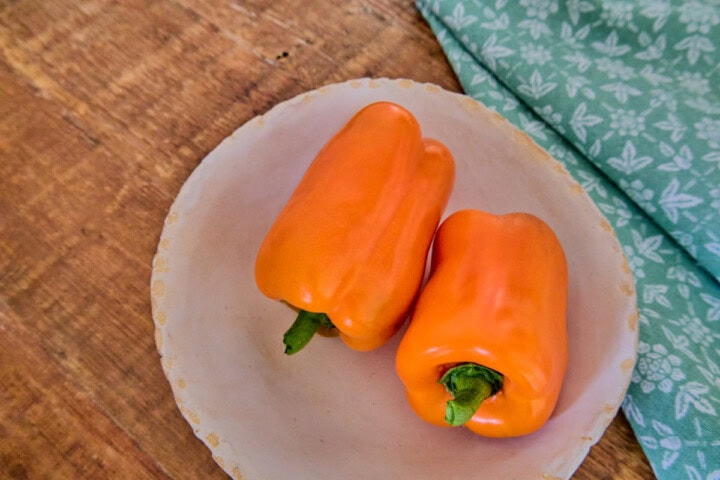
Thick-walled bell peppers that ripen from green to bright orange; 3.5-4 inch (9-10 cm) in length.
Scoville heat unit rating
0 SHU
Traditional usage
Often eaten fresh, in salads, grilled, or stuffed
Our tasters' flavor notes
Homegrown fresh
Juicy, salty, savory, good nice crunch, good burst of flavor, no heat, bell peppery
21. Padrón


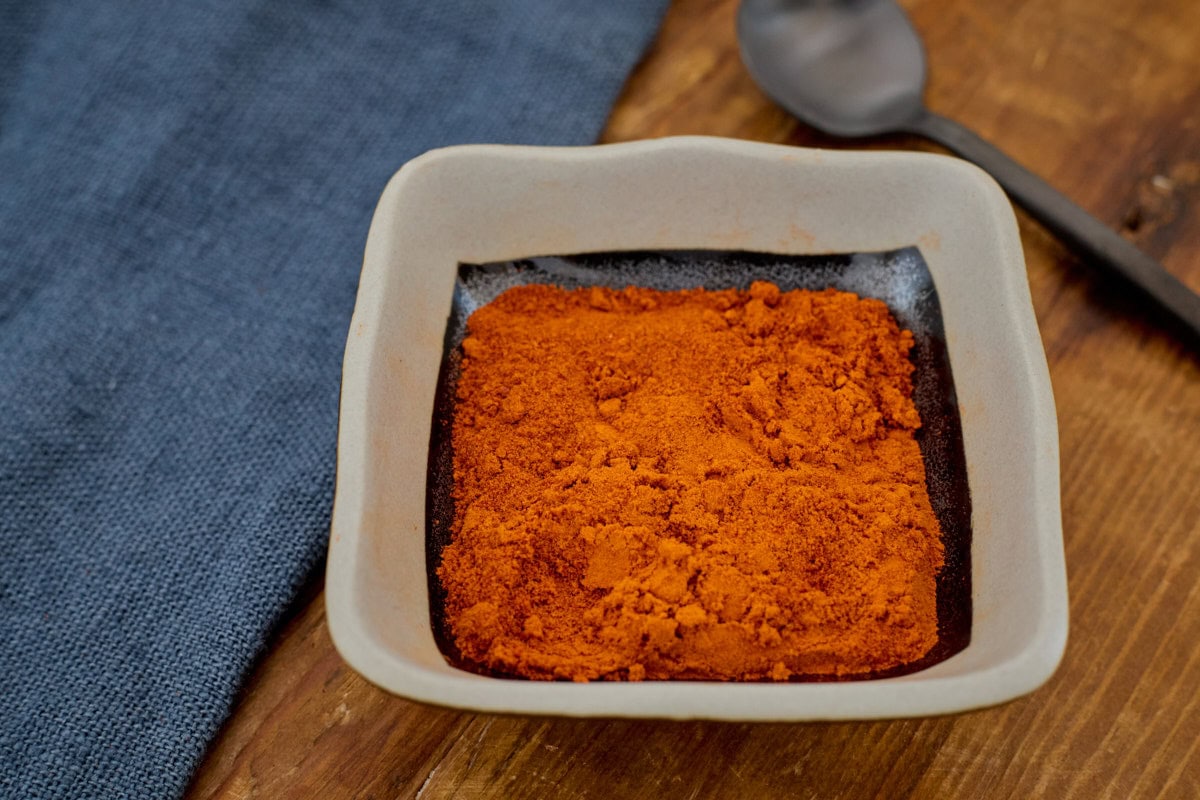
Botanical name
Capsicum annuum
Origin
Padrón, Spain, in the region of Galicia
Description
Fruits ripen from green to bright red; lobed and irregular in appearance, and 1-4 inches (2.5-10 cm) in length.
Scoville heat unit rating
500-2,500 SHU
Traditional usage
Often fried until blistered and served with salt as tapas; also added to soups and rice dishes
Our tasters' flavor notes
Homegrown dried
Mild, sweet, slight kick, tangy, very neutral, slow burn, long-lasting, deep, smoky, biting, tomatoey, metallic tang
22. Pasilla bajio (when dry; chilaca when fresh)
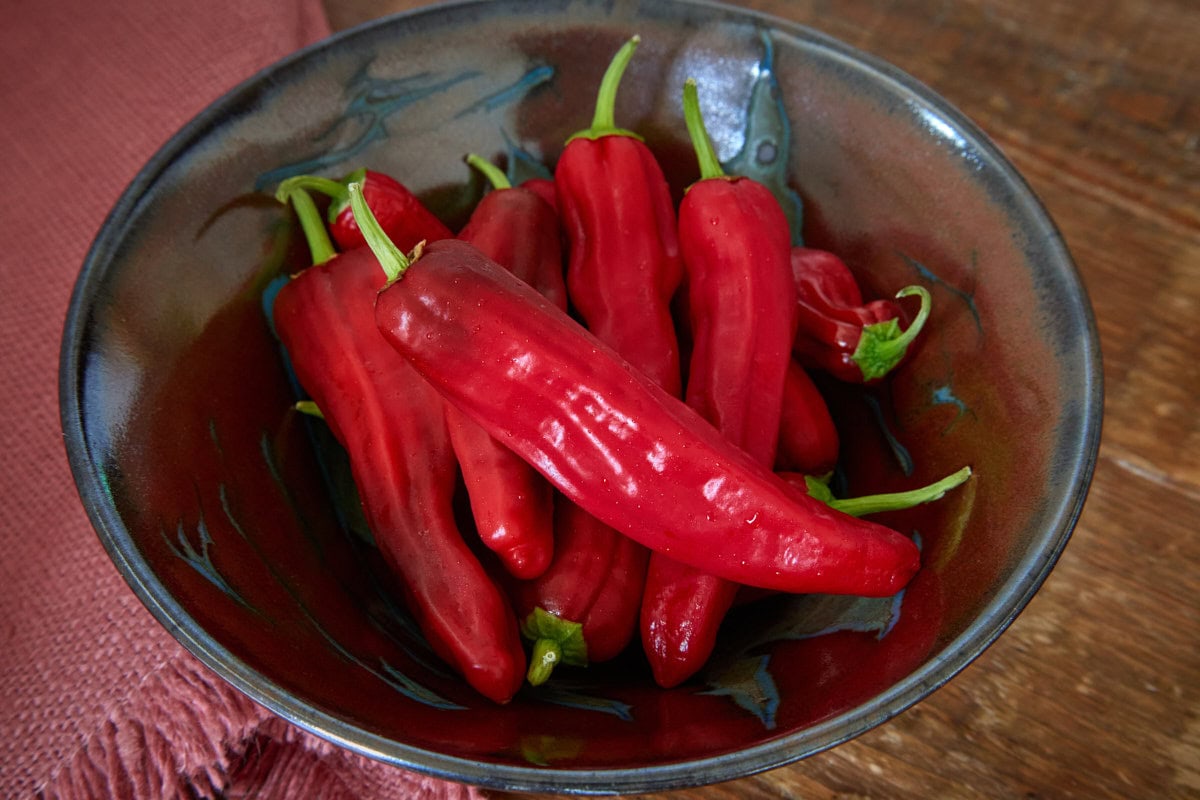


Botanical name
Capsicum annuum
Origin
Mexico
Description
Sweet when fresh (chilaca), and smoky and complex when dried (pasilla bajio); fruits ripen from dark green to red to brown; slightly curved and 6-8 inch (15-20 cm) long
Scoville heat unit rating
1,000-4,000 SHU
Traditional usage
Used both fresh and dried, in sauces, stews, and bean dishes
Our tasters' flavor notes
Homemade dried
Not spicy, less sweet, immediate spice, mild, orangey, bright citrus, tannic, grape must, cherry IPA (India pale ale)
23. Petit marseillais
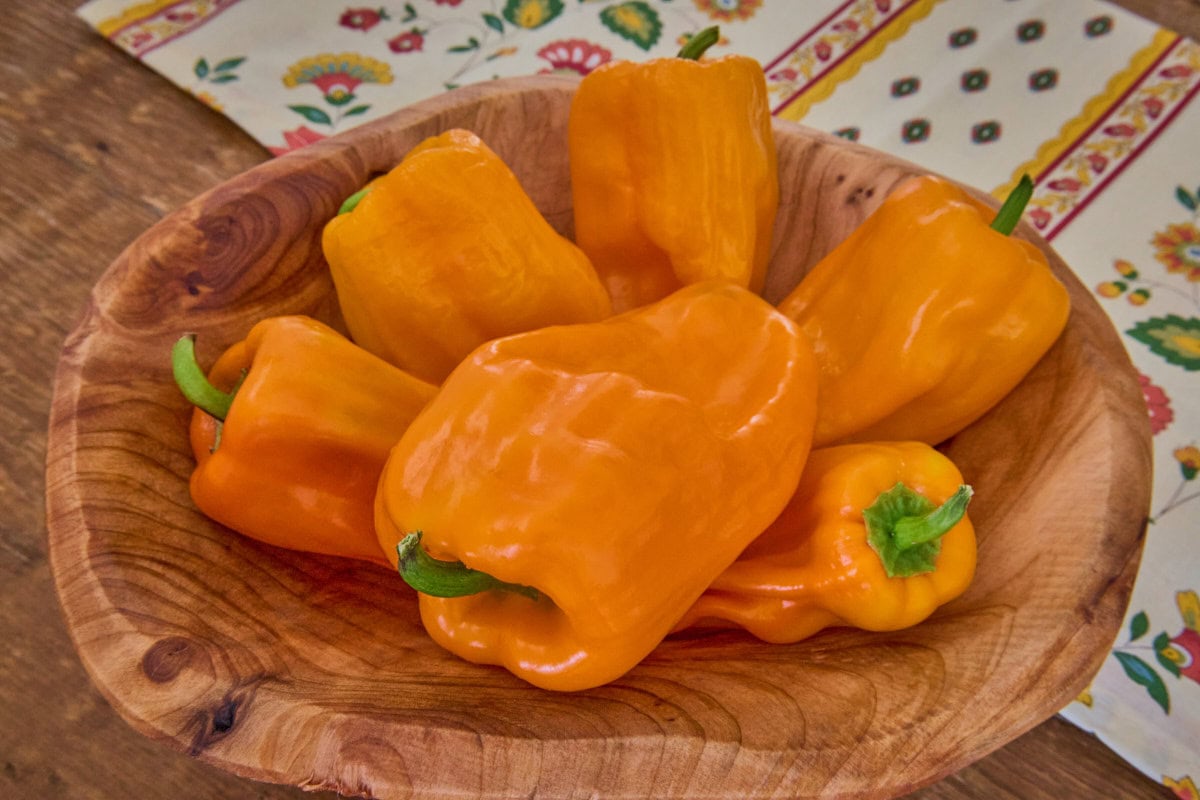
Botanical name
Capsicum annuum
Origin
South of France, particularly around Marseille
Description
Lobed, thick, elongated, misshapen fruits that ripen from green to bright orange; 4-5 inch (10-13 cm) long
Scoville heat unit rating
0-500 SHU
Traditional usage
Homegrown fresh
Primarily used fresh in salads, grilled vegetables, or in ratatouille
Our tasters' flavor notes
Complex, sweet, rich, citrusy, good bitter note, deep
24. Piment de Bresse


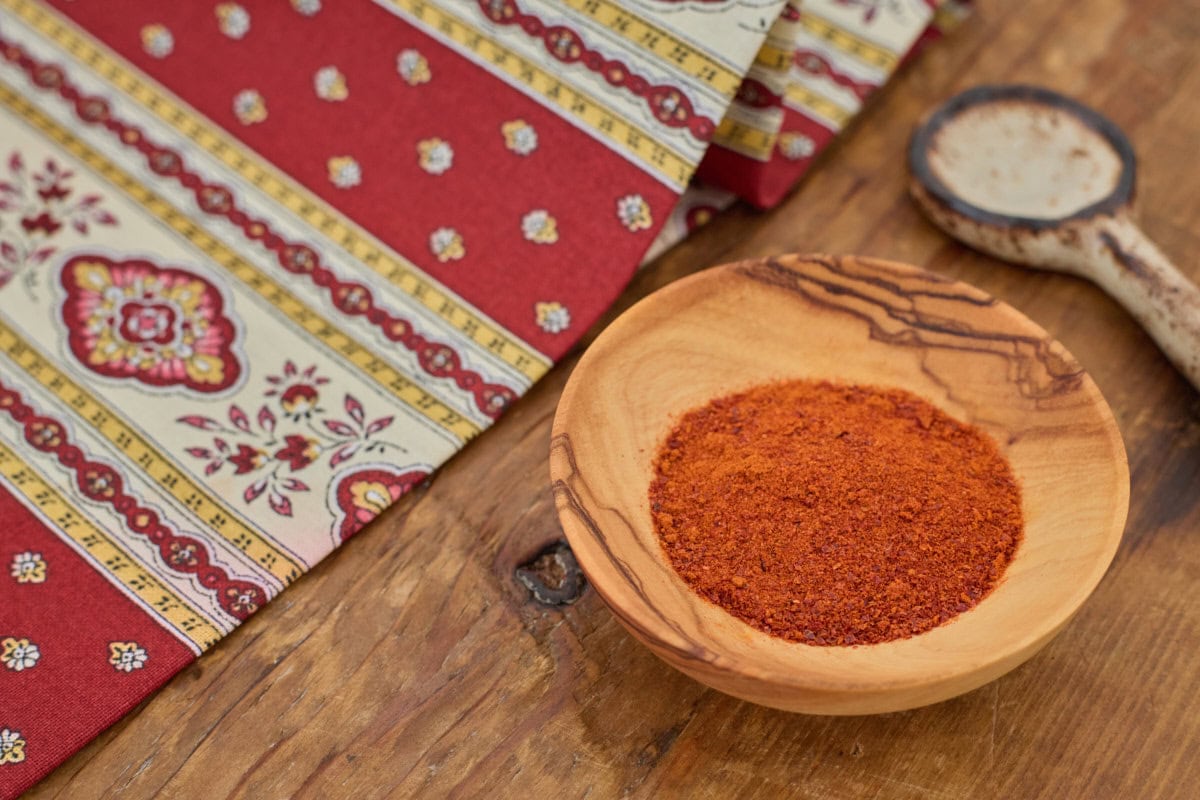
Botanical name
Capsicum annuum
Origin
Bresse region in eastern France
Description
Narrow and tapered, slightly curved; ripens from green to light red; about 1.5-2.5 inches (4-7 cm) in length
Scoville heat unit rating
1,500-2,500 SHU
Traditional usage
Often roasted or added to soups or salads, and served with grilled vegetables
Our tasters' flavor notes
Homegrown fresh
Mild, very nice kick, robust, a little sweet, tastes good, best one, like spices, good flavor, nice one
Homegrown dried
Mild, less sweet, earthy, smoky, mild and immediate spice, eggplant, red wine, damp wood, twine, roasted oranges, dried fruit
25. Piment d'Espelette

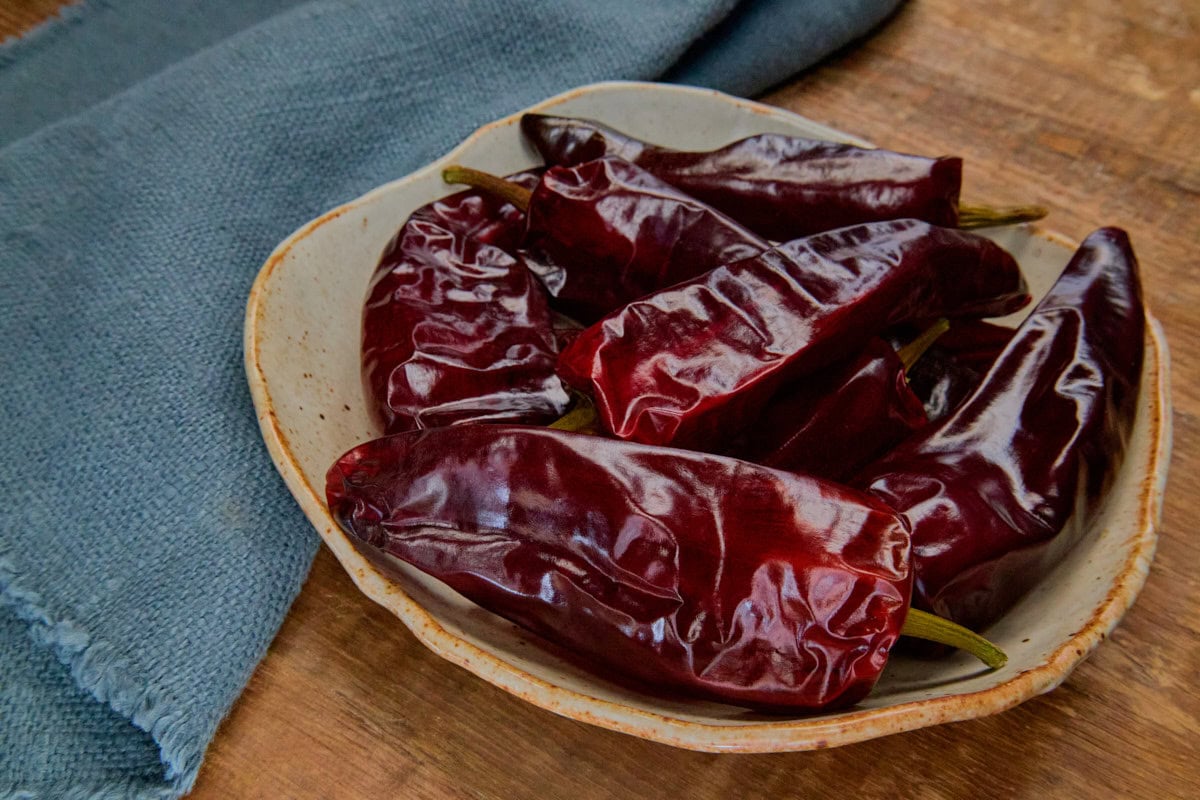
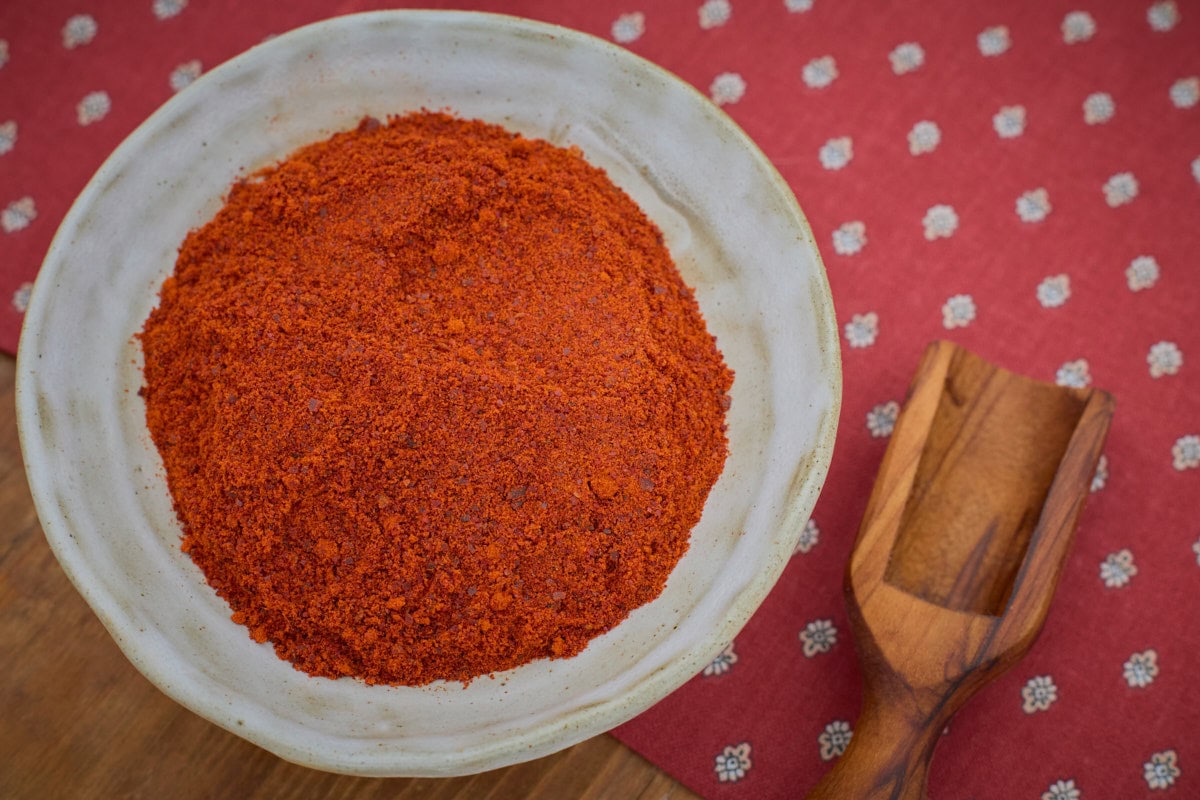
Botanical name
Capsicum annuum
Origin
The Basque region in southwest France
Description
In the Slow Food Foundation's Ark of Taste; celebrated in an annual festival in the village of Espelette. The fruits ripen from green to a bright red, with a tapering length of 3-6 inch (7-14 cm).
Scoville heat unit rating:
Maximum of 4,000 SHU
Traditional usage
A significant contribution to Basque cuisine, these peppers are often eaten dried as a seasoning, fresh, puréed, or pickled.
Our tasters' flavor notes
Homegrown dried
Very sweet, has some kick, love this one! earthy, good soil, petrichor, deep caramelized sugar, lingering heat, so lively
26. Piri piri (also known as peri peri)


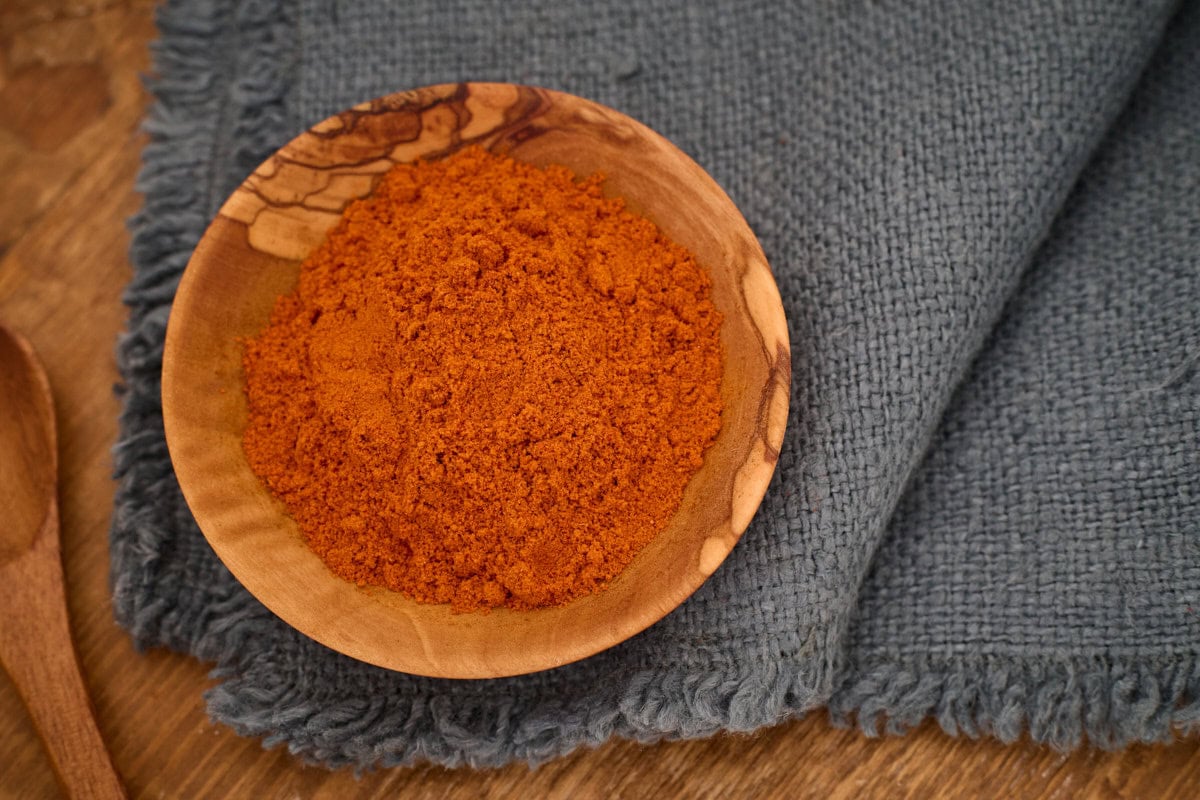
Botanical name
Capsicum frutescens
Origin
Southern Africa, especially Mozambique and Angola
Description
Small spicy peppers ripening from green to red, narrow and tapering to a length around ½-2 inches (1-5 cm).
Scoville heat unit rating
50,000-175,000 SHU
Traditional usage
Often used fresh or dried to create piri piri sauce and marinades
Our tasters' flavor notes
Homegrown dried
Sweet, dry, back-of-the-mouth spice, bright citrus tang, lively sweetness, soft hug, warm summer breeze, root vegetable notes
27. Scotch bonnet
Botanical name
Capsicum chinense
Origin
Believed to have originated in the Amazon basin of South America and brought to Jamaica
Description
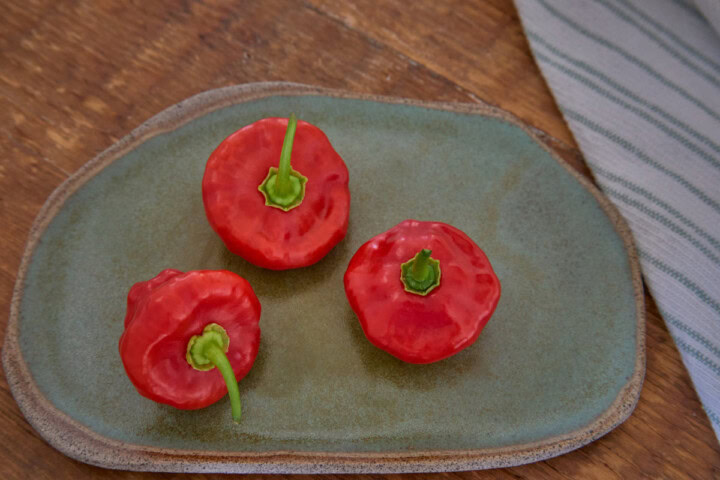
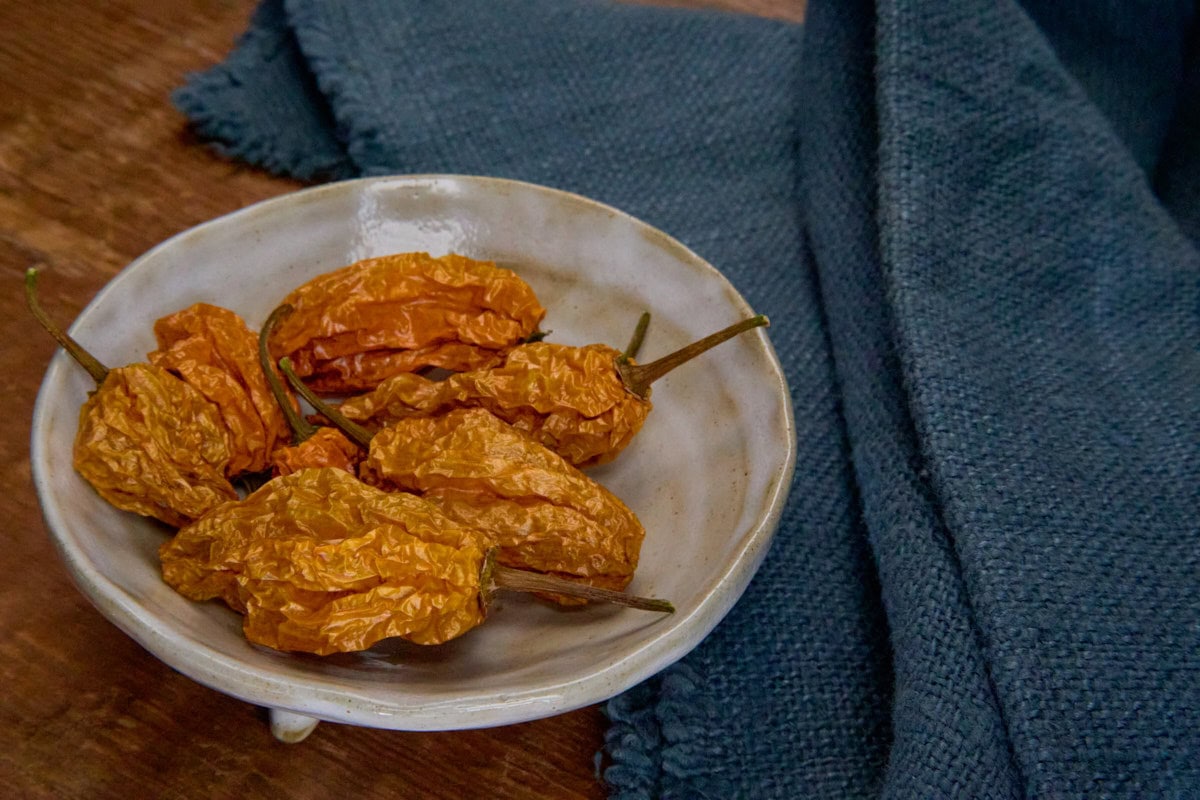
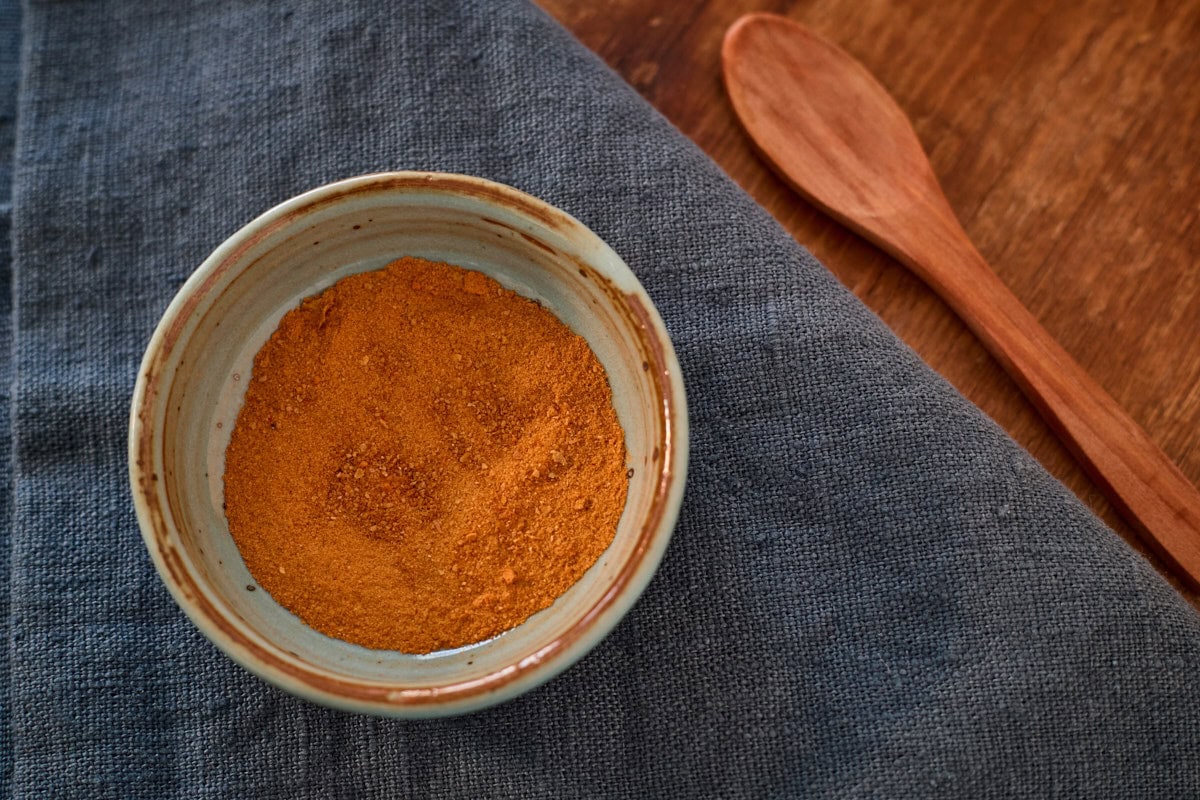
Very spicy, ripening from green to yellow; generally about 1.5-2 inches (4-5 cm) long with irregular lobes that can be flattened to resembling a Scottish tam o' shanter bonnet.
Scoville heat unit rating
100,000-350,000 SHU
Traditional usage
This pepper has a wide range of culinary traditions, including the Caribbean, West Africa, and Latin America. Often used fresh or dried in sauces and condiments.
Our tasters' flavor notes
Homegrown dried
HOT, citrus twang, bitter lemon, blond wood, crisp dry breeze
28. Shisito
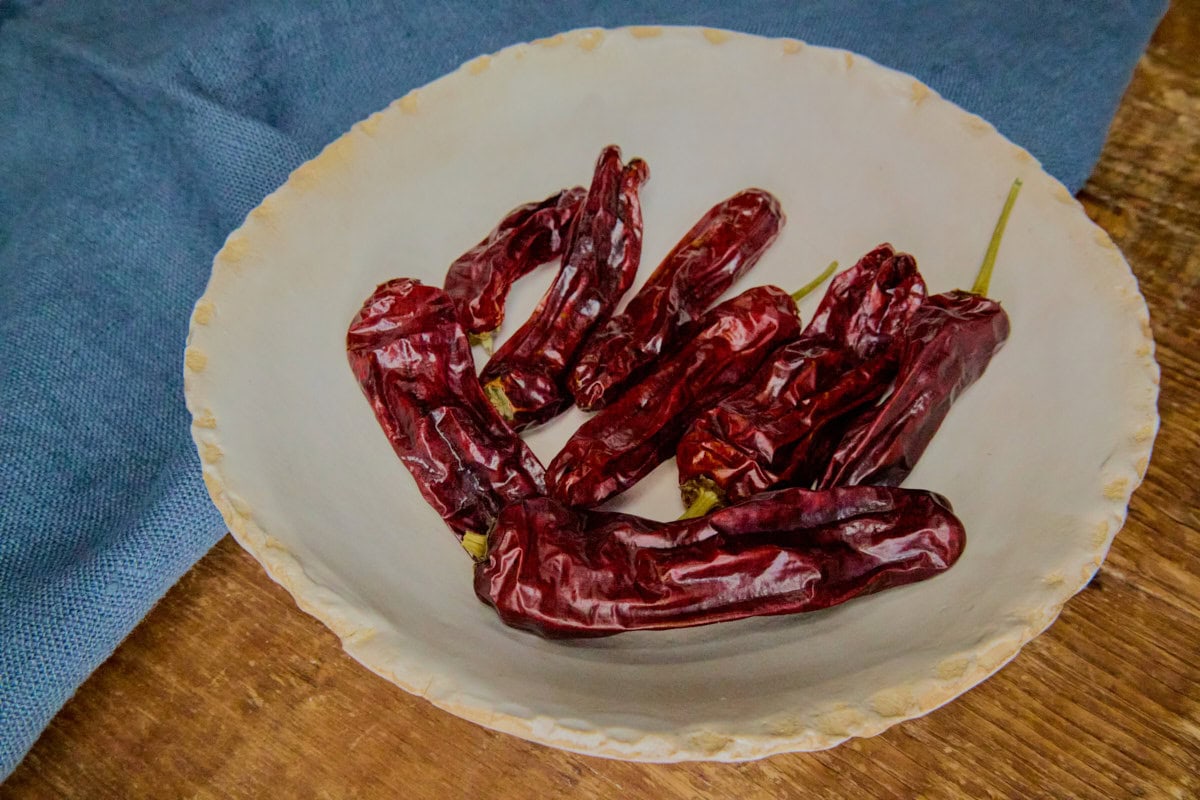

Botanical name
Capsicum annuum
Origin
Japan
Description
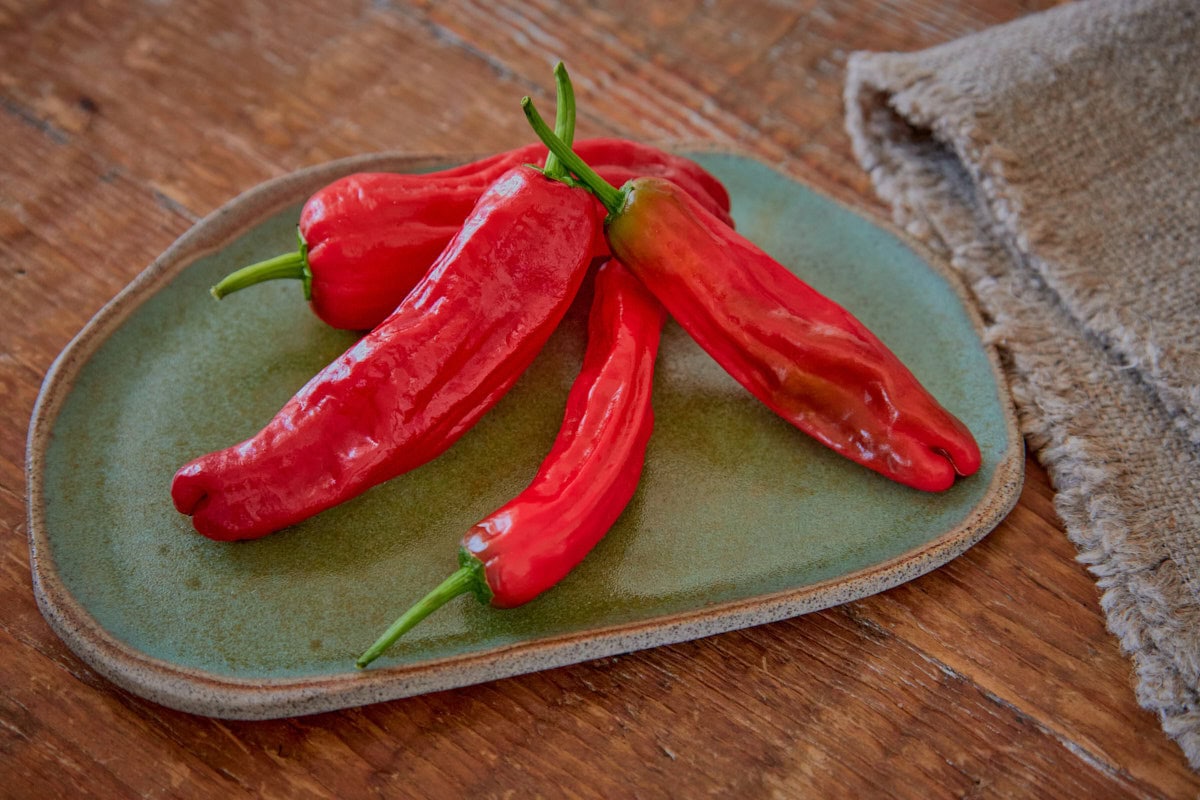
Fruits ripen from green to red, with a narrow, thin-walled, slightly wrinkled shape, and about 2-7 inches (5-18 cm) in length.
Scoville heat unit rating
Typically from 50-200 SHU, but can sometimes have a higher level up to 2,500 SHU
Traditional usage
Often served fresh and while still green and blistered as an appetizer; also in sauces and vegetable mixed dishes.
Our tasters' flavor notes
Homegrown dried
Mild, bright, fruity, roasty, earthy, low-key, tiny bite, sort of woody, grainy, raisins, sweet rust
29. Sugar rush peach

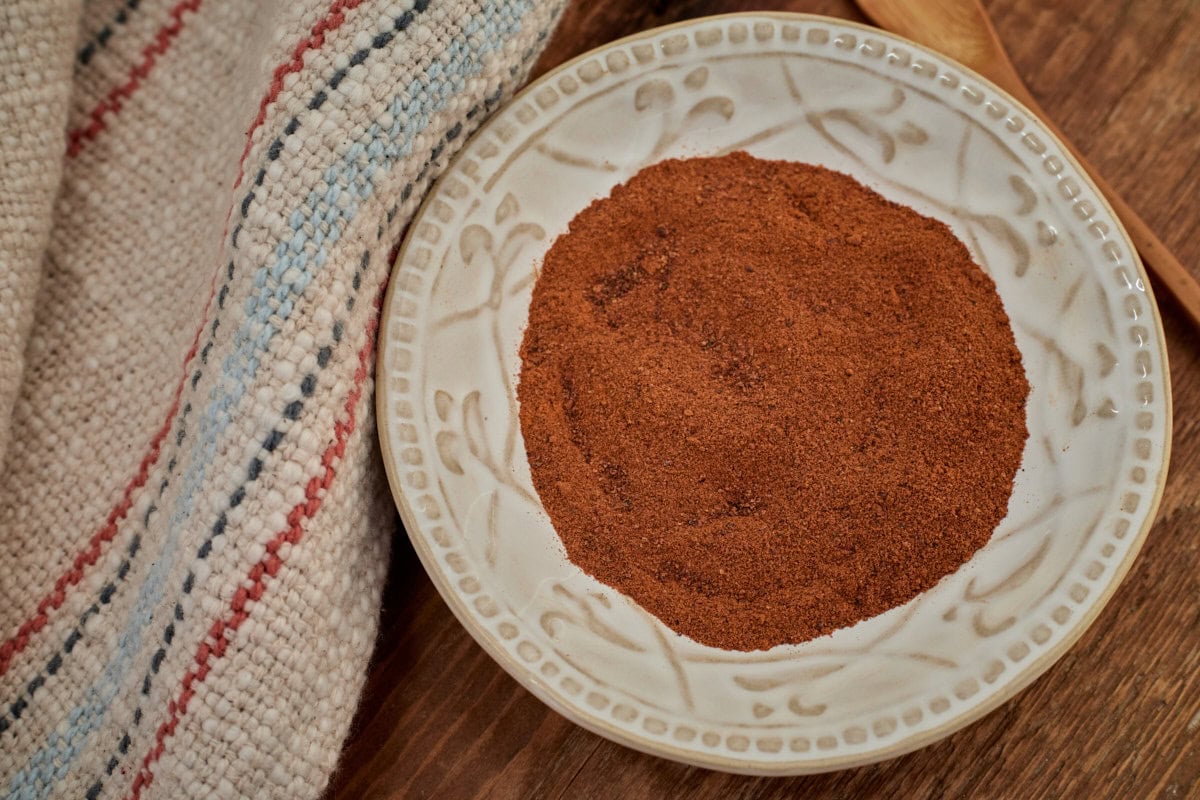
Botanical name
Capsicum baccatum
Origin
Wales
Description
Ripens from light green or yellow to a deep peach or orange color. The smooth and narrow 3-6 inch (8-15 cm) fruits taper to a point at the ends.
Scoville heat unit rating
50,000-100,000SHU
Traditional usage
Used both raw and cooked, and work well in salads or salsas as well as sautéed, grilled, or roasted.
Our tasters' flavor notes
Homegrown dried
Good flavor, very sweet, but also bitter, almost fruity, slow heat, burnt caramel, crème brûlée, vanilla, woodshop, old pewter, summer berries
30. Szeged paprika


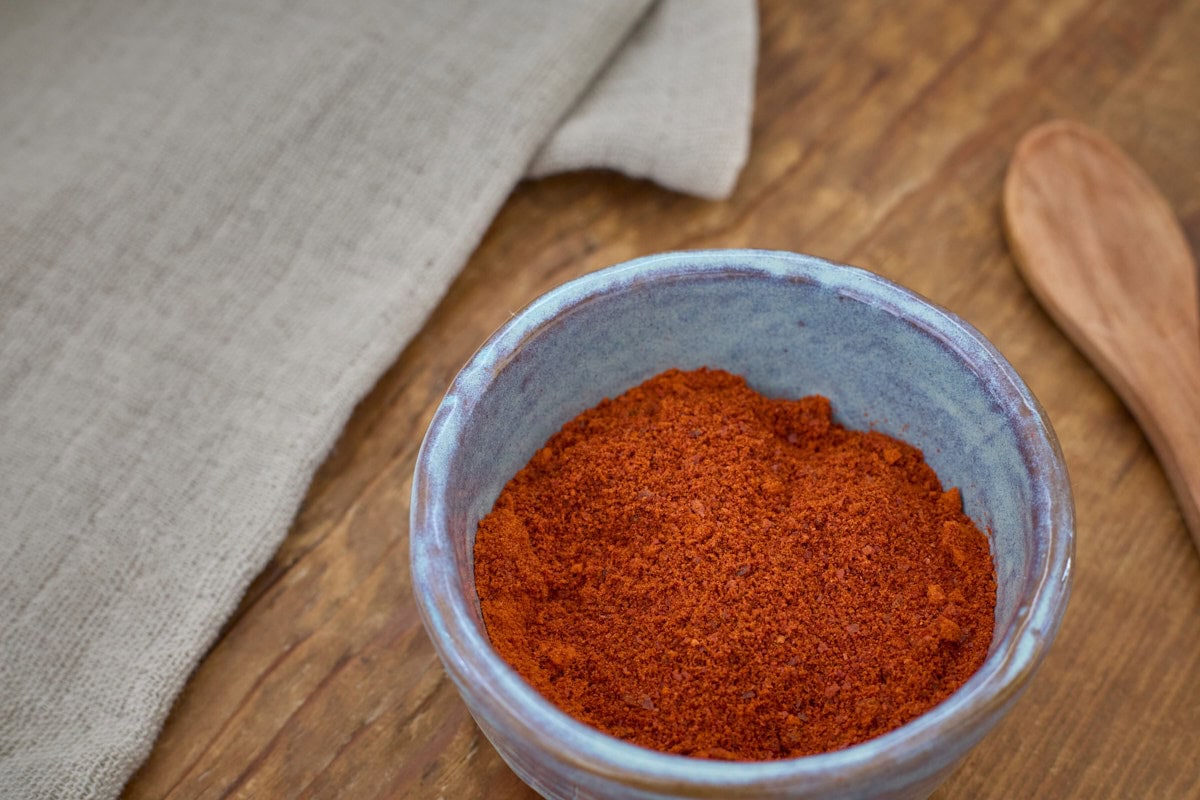
Botanical name
Capsicum annuum
Origin
Szeged, Hungary
Description
Long, smooth, and tapered fruits may be straight or curved. Ripening from green to deep red; about 4-7 inches (10-18 cm) long.
Scoville heat unit rating
0-500 SHU
Traditional usage
This sweet and mild pepper is an important part of Hungarian cuisine. It can be used dry or fresh, and is often added to soups, stews, rubs, marinades, and pickles.
Our tasters' flavor notes
Homegrown dried
Deep, sweet, nutty, nice taste, earthy, mild, pleasant, slightly garlicky, sweet hot sauce, red grapes, mangoes, orange marmalade
31. Txorixero
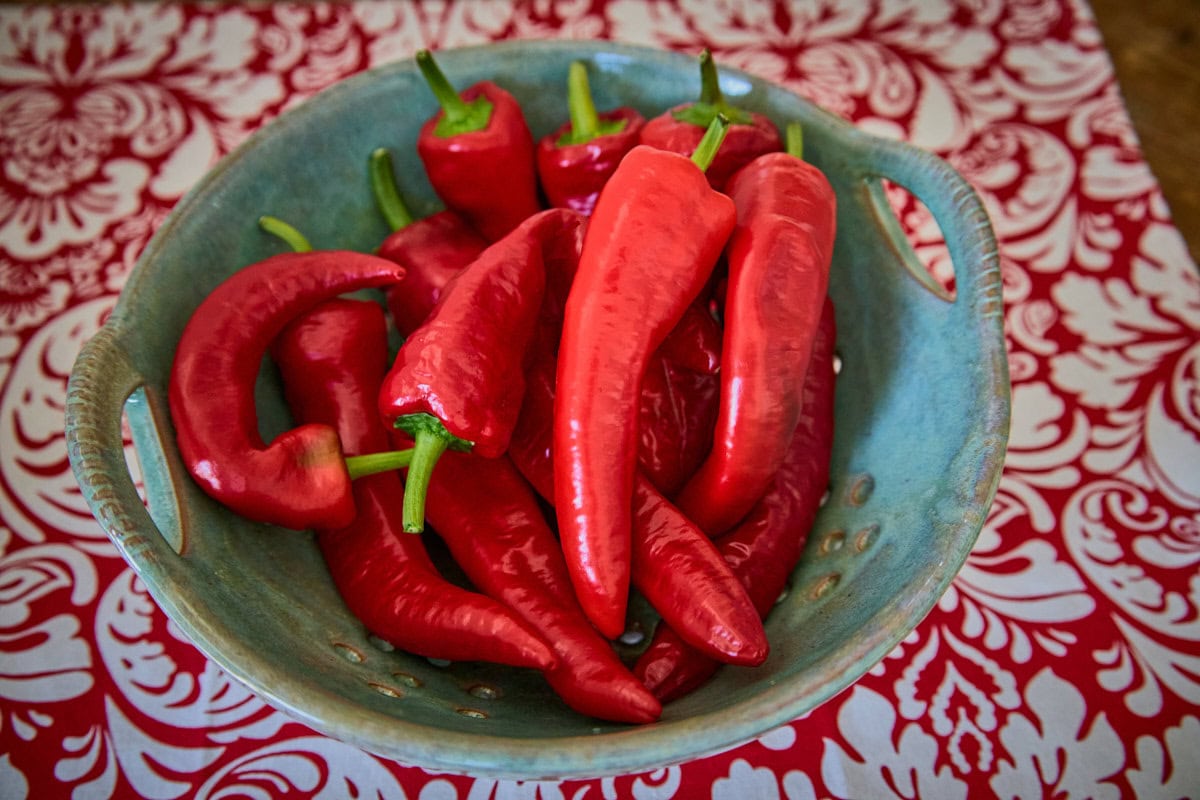


Botanical name
Capsicum annuum
Origin
The Basque region of Spain and France
Description
Pronounced (cho-dee-share-dow); beautiful smooth and slim fruits that may be straight or curved, and up to 12 inches (30 cm) long; ripening from green to deep red
Scoville heat unit rating
0-100 SHU
Traditional usage
Known for its use in biscayne (vizcaina) sauce; these peppers may also be eaten dried or fresh, in salads, stews, pickles, grilled, fried, or roasted.
Our tasters' flavor notes
Homegrown dried
Earthy, very sweet, fruity, not spicy, tangy, sweet syrup, melon, really enjoyable
How to dry, smoke, and grind your own (chile, chili, chilli) peppers, step by step
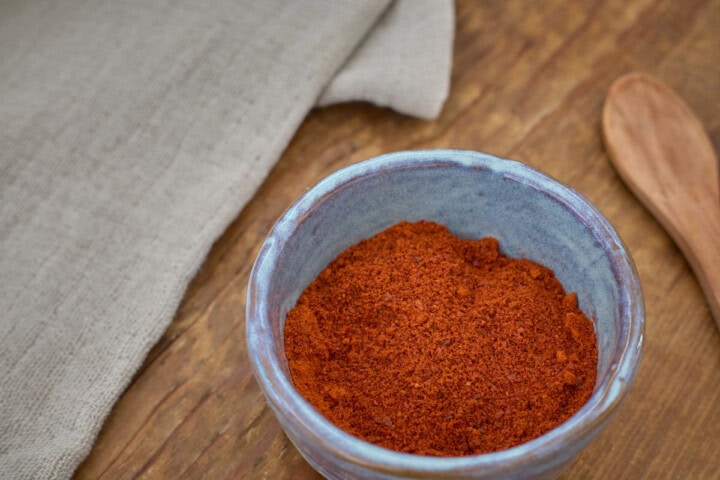
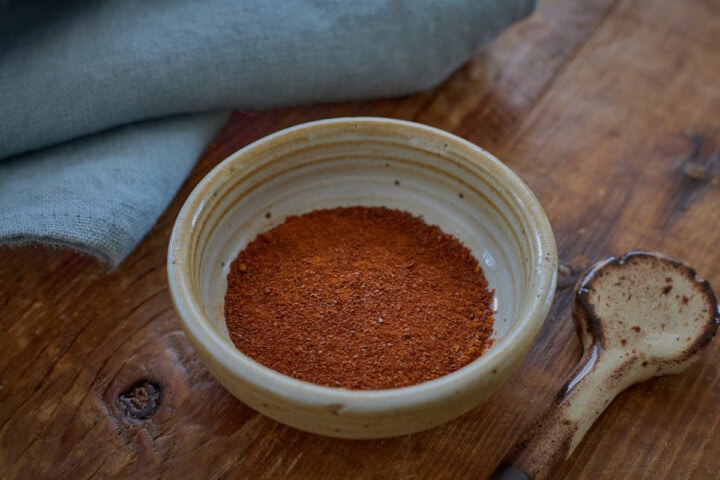
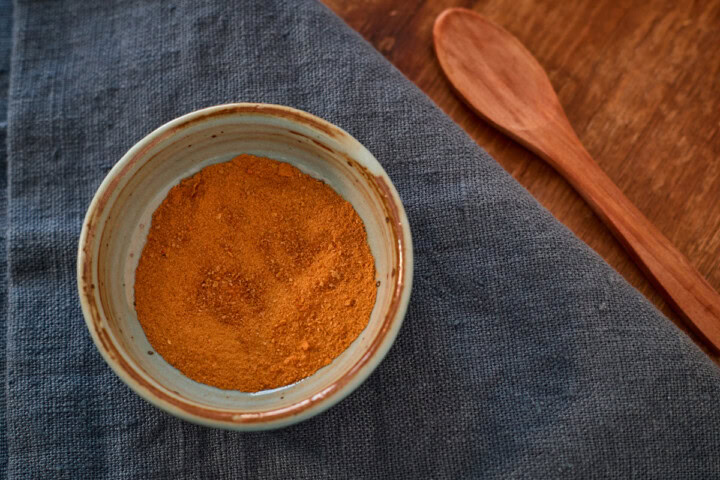
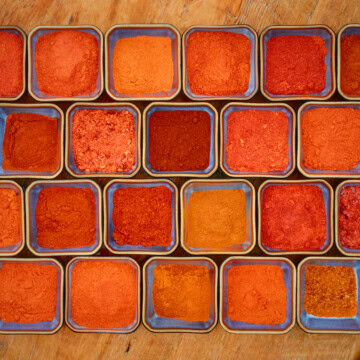
Below are all of the pepper varieties I've dried and ground this year. It's so easy to do! There are a couple of duplicates here, as I've ground the Korean hong gochu peppers both finely and coarsely, and the Leutschauer paprika pepper is included here both unsmoked and smoked. This is the variety I'll show you how to dry, smoke, and grind below. We'll be using oak chips to roast them in a stovetop smoker. The one I have is a Cameron's Original Stovetop Smoker. (I like this type since I can use it indoors any time of year. But a barbecue/grill smoker is also so much fun to use in the warmer months.)
Pepper Drying Methods
There are 2 main ways to dry your peppers. I dry mine whole and then remove the tops, seeds, and membranes after they're dry. But you can do this prep first if you'd like. For thick peppers, you can dry them until they're still somewhat pliable. For the thinner ones, you can dry them until they're more brittle.
- Oven: Use the lowest temperature setting (below 200°F/95°C if possible), and dry them in a single layer on a baking sheet. Check on them every 2-4 hours and flip them over every few hours until dry.
- Dehydrator: This is the method I'll be showing you here. I ran my dehydrator at 125°F/52°C, but some of my thick-walled peppers took 48 hours to dry completely. So if you'd like this to take less time, you can set your dehydrator up to about 140°F/60°C. Check on your peppers every 2-4 hours until done.
📓Ingredient notes
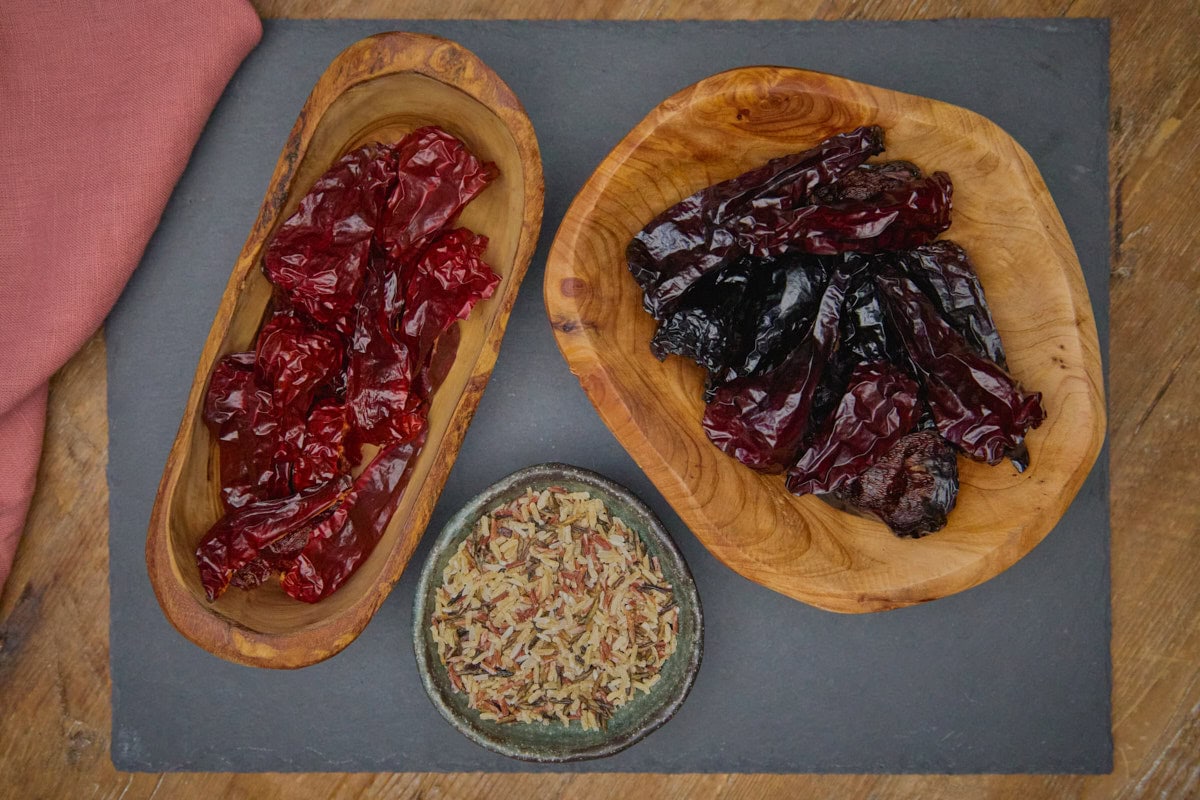
Above are the unsmoked and smoked Leutschauer paprika peppers, ready to be ground. And I have a bowl of uncooked rice here, which could be a small amount of any kind you already have in your pantry. (I just chose the one I had that had been in my pantry the longest.) You'll only need to use rice if you'll be grinding multiple types of peppers in batches. It's an easy way to clean out the blender in between different varieties without having to wash it and wait for it to dry completely.

You'll also need wood chips or chunks for smoking the peppers. I'm using oak here, which is one that is commonly used for smoking paprika peppers. Please make sure to prepare your wood pieces in whichever way is indicated for your type of smoker. This may or may not include adding water and soaking to dampen them.
📒Step by step instructions & photos
Please use this guide as a stepping stone for wherever you'd like to be in this process. You can use your peppers fresh, dried whole, smoked, and/or ground into powder. I'll show you how to get to each step, and you can decide which works best for you. This step-by-step example uses Leutschauer paprika peppers, which are included as number 17 in the above list. This is a Hungarian pepper that is traditionally enjoyed fresh dried, smoked and unsmoked. You can do these steps with any of the peppers from your own garden.
- Step 1: Gather your peppers, and wash and pat them dry. If any have discoloration or soft spots, remove these areas with a knife.

- Step 2: Dry your peppers with a dehydrator or oven. (See the recipe card for details.)
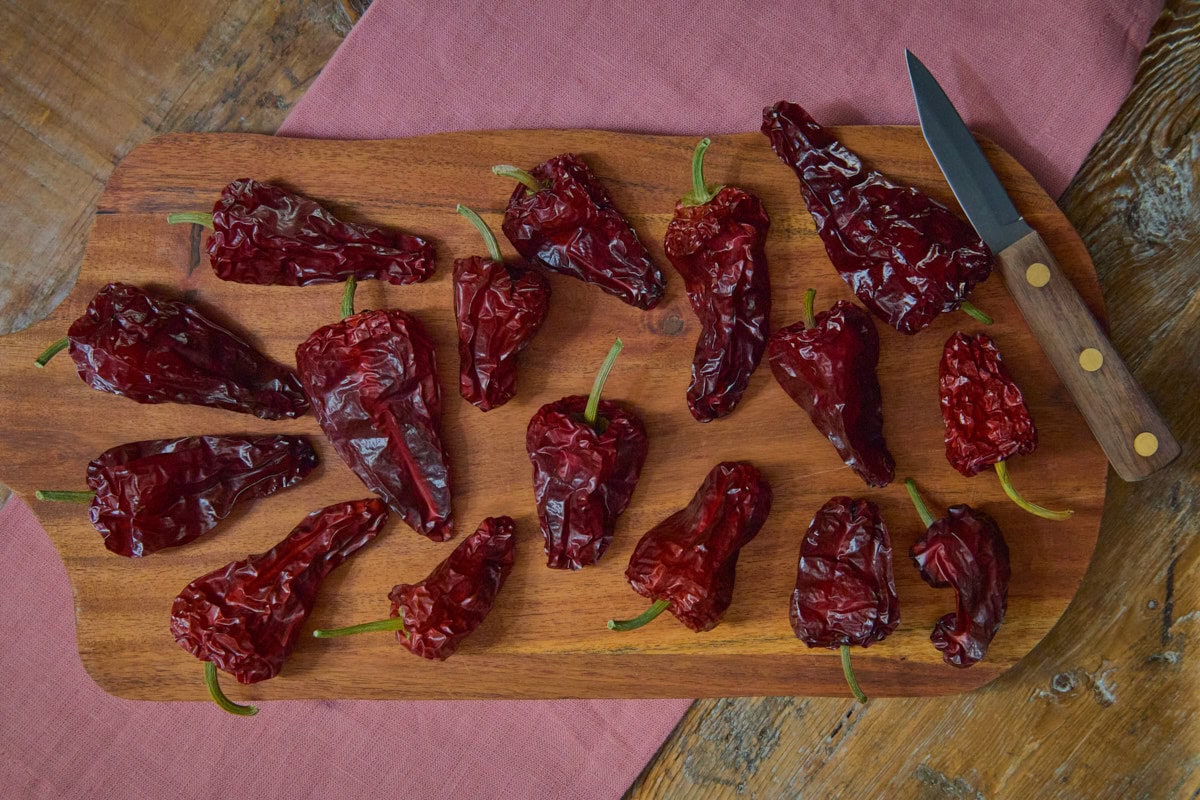
- Step 3: Make sure the peppers are dry and pliable if thick-walled, or brittle if thin-walled. If not dry enough, continue the process until ready.
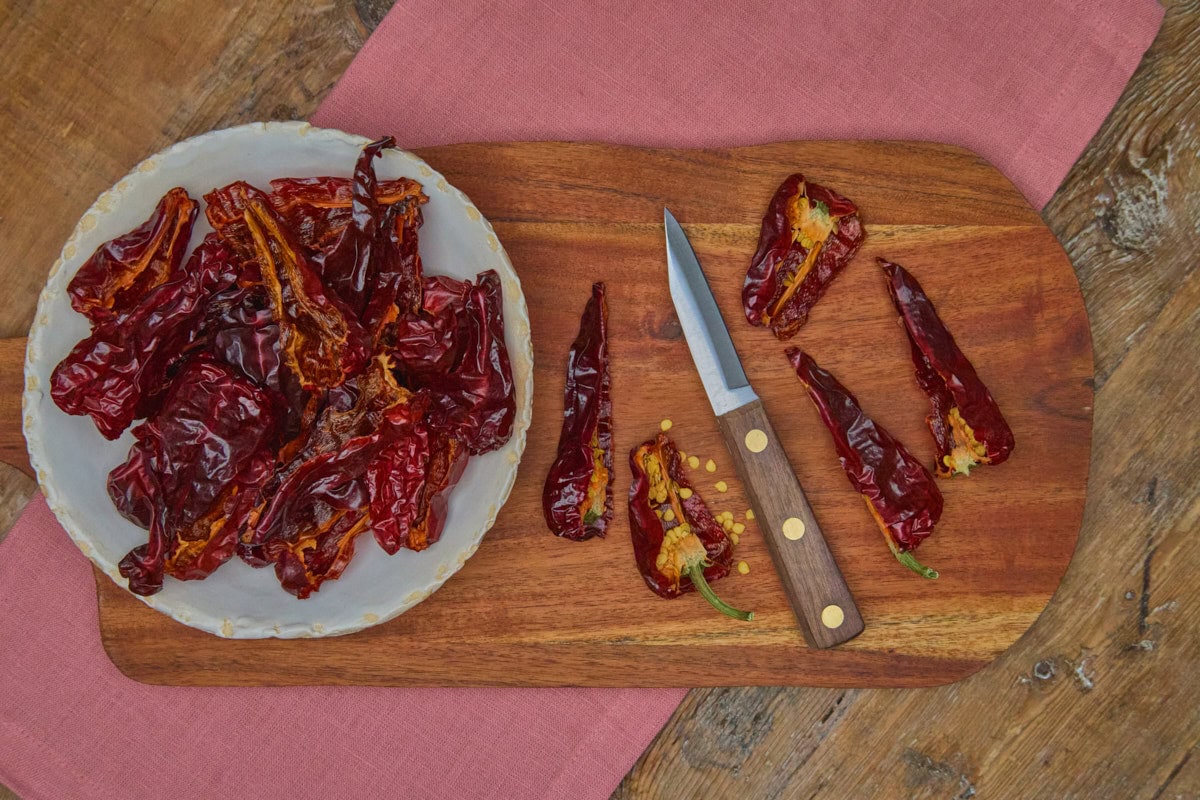
- Step 4: Remove the tops, seeds, and membranes from the peppers. Cut the peppers in half or into manageable pieces for your smoker. This is when you really need a mask and gloves if they're spicy ones!
- Step 5: Prepare your smoker (whether using your barbecue or stovetop smoker) with wood chips or chunks. I'm using oak chips here to smoke these Leutschauer paprika peppers.
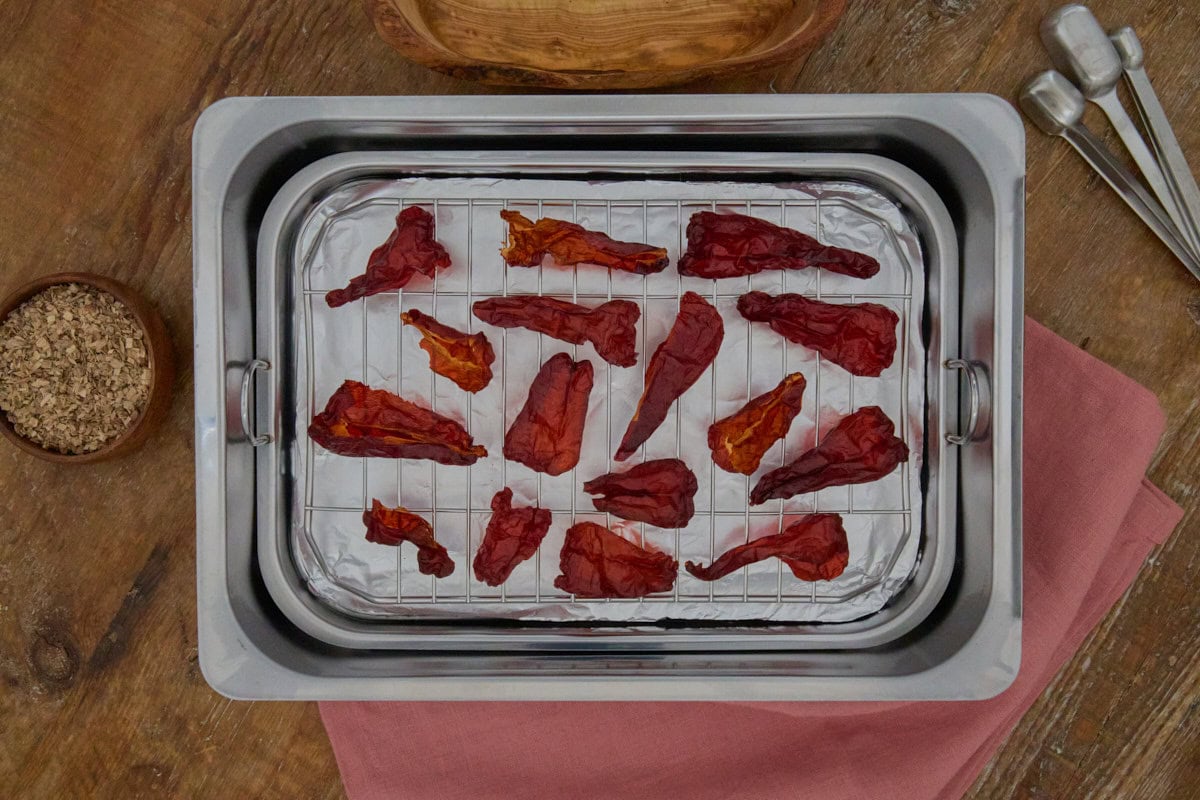
- Step 6: Add your pieces of peppers to the smoker and smoke to your desired level.

- Step 7: Open your smoker and reveal your beautiful and tasty smoked peppers!
- Step 8: Taste and decide if you're happy with the intensity of smoked flavor. If not, smoke them longer.
- Step 9: If you'll be grinding more than one type of pepper, set out a small amount of uncooked rice (of any type) to clean out your blender or food processor in between types of peppers. I used about 1.5 cups (90 g) of rice.

- Step 10: Place your dried pepper pieces in your blender (with a dry blade container if you have one) or food processor.

- Step 11: Blend or process to your desired level of fineness.
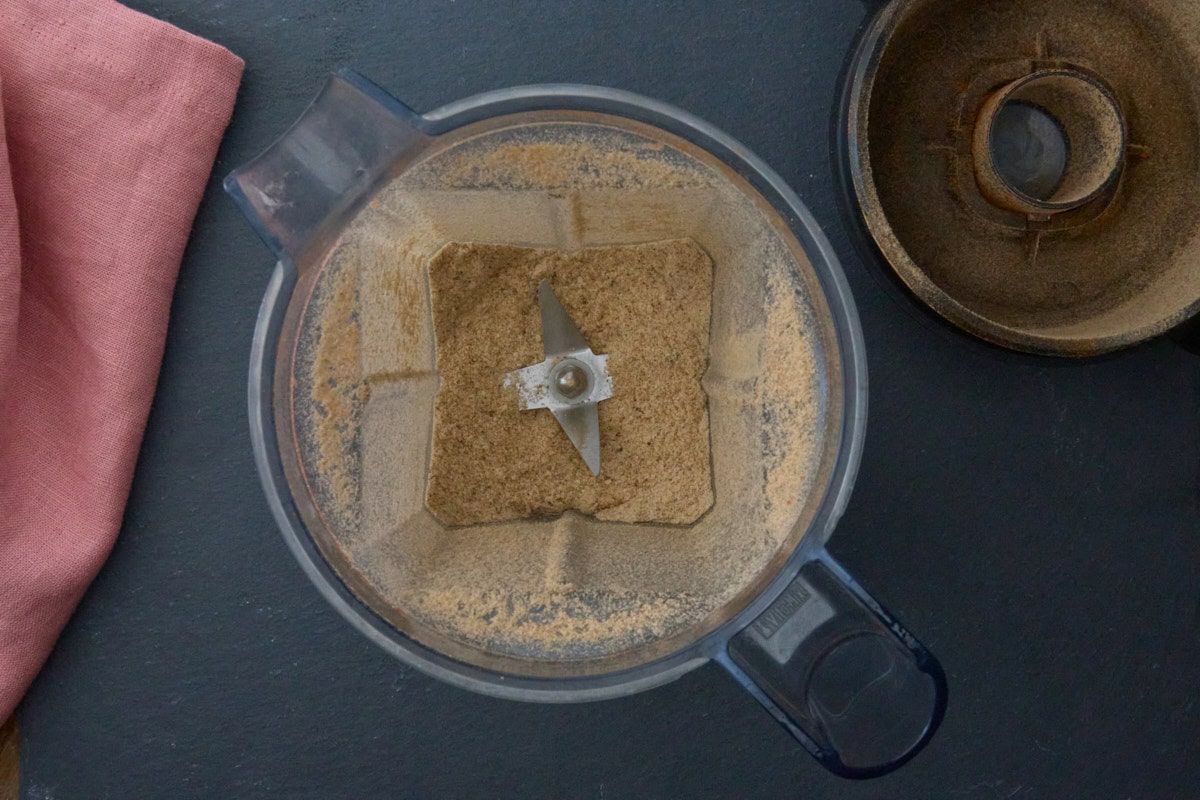
- Step 12: If you need to blend more than one variety, add your uncooked rice and blend or process to clean out any powder remnants before the next batch of peppers.
And then enjoy your gorgeous, mouthwatering freshly-ground and/or smoked pepper powders!!! There's nothing like the intense and vibrant flavor of homegrown varieties.
💡Pepper preparation tip for success
Make sure to wear gloves and a mask if you'll be cutting, seeding, removing the membranes, and/or grinding spicy chiles/chilis/chillis/peppers. I thought it would be fun and useful to go without this step so I could give you firsthand knowledge about whether this is necessary.
I can now say from experience that you need to do this! My hands, eyes, nose, and lungs were burning so much after my really shortsighted experiment that I couldn't sleep that night. Believe me, if your peppers are spicy, the gloves and mask will really help!
🔀Substitutions
If you do some reading into traditional ways of using peppers, you may see that many types are used in specific ways. For example, in Mexico, a guajillo pepper is generally dried whole and often used by rehydrating to become the base of a sauce or paste. However, you can experiment and try peppers in different ways.
A mirasol is the name of the same pepper when it's fresh. (Guajillo refers to the dried version.) Although this pepper is less-commonly eaten fresh, you can certainly try it this way. I'm sure it would be delicious roasted, grilled, or added fresh to salsas, among other delicious ways.
Another example of an unconventional use that would be exciting to try would be tasting Hungarian paprika peppers fresh instead of the traditional dried and powdered way. (The Lautschauer paprika pepper is listed in this post as #17 and the the Szeged paprika pepper is included as #30.) For example, you could try using them fresh in salads, stuffed, roasted, or grilled.
🍶Variations
The drying, smoking, and grinding methods in this post will work for just about any heirloom pepper. If you have varieties that at the ends of the spectrum in terms of size, thickness, or heat levels, please adjust drying, smoking, and grinding times that you feel will work best for you and your taste preferences. And please let me know in the comments which method(s) you've used, and how you've enjoyed the results!
🥣Equipment
Drying and smoking peppers
- Gloves and a mask if your peppers are spicy. Please see the above tip for success about my painful experience without doing this.
- A cutting board and sharp knife for removing tops, seeds, and membranes
- A dehydrator or oven for drying your peppers
- a stovetop or barbecue grill smoker for smoking your peppers
- Wood chips or chunks to use with your smoker
Grinding peppers to powder
- A blender with a dry blade if you have one, otherwise a normal blade or food processor will work
- Uncooked rice in small quantities (I used ½ cup or 90 g at a time) to clean out the blender between batches of different types of peppers
- Airtight containers (preferably dark or opaque glass jars if there will be light exposure) to store your pepper powders
- Food-grade desiccant packets (optional) to store your pepper powders; this will help keep out moisture and prevent caking
⏲Storage
The optimal storage methods depend upon whether your chilis are fresh, dried whole, or ground into a powder. Here are some recommendations for each type:
Fresh peppers
Refrigerated: The optimal way to store fresh peppers is in a vented plastic bag or container in the vegetable and fruit drawer of your fridge. The viable storage time can vary, based on the thickness of the peppers. But in general, they should last for at least 5-7 days when stored this way.
Dried (smoked or unsmoked) whole or powdered peppers
Room temperature: A great way to extend the life of either whole or freshly-ground peppers at room temperature is to keep them in a cool, dark place in an airtight container. If they'll be exposed to light, it helps to keep them in containers that are dark or opaque. It also helps to add food-grade desiccant packets to the containers to keep the powders dry and prevent caking.
Frozen: If you use food-grade desiccant packets, you may have good success freezing your pepper powders. A problem that can arise when freezing them is the possible introduction of moisture condensation when thawing. But the desiccant packs should prevent this from happening.
❓FAQ
Chili powder that you commonly find in the spice aisle of the grocery store does contain peppers. And while it may or may not include cayenne or paprika peppers, this spice is a blend that most commonly includes several varieties of peppers from all over the world. And it typically includes other spice as well, such as cumin, garlic powder, onion powder, oregano, and sometimes also salt.
Cayenne pepper is well-known not only for its heat level, but it has also been associated with possible health benefits such as: metabolic system boosting, digestive stimulation, natural pain relief, improved circulation, reduction of inflammation, and as a source of vitamins and phytonutrients.
Capsaicin is an alkaloid that is the natural source of heat in peppers. It stimulates the pain receptors in your mouth and throat, causing a burning sensation when eating spicy peppers. The higher the capsaicin content, the more heat you'll experience.
The Scoville Heat Scale is used to calculate the level of spiciness in hot peppers. In the early 1900s, this level was calculated by a panel of tasters using a series of dilutions of each pepper. Today's method is to use High-Performance Liquid Chromatography (HPLC) to determine a pepper's concentration of capsaicin. A pepper with no spice will have a SHU quantity of 0. On the other end of the scale, the hottest pepper in the world, Pepper X (developed by Puckerbutt Pepper Company), contains a scorching 2,693,000 SHU.
Some of the most traditional woods that are used to smoke peppers include: oak, hickory, pecan, apple, and cherry. You can also use a blend of these or others types of wood. I encourage you to experiment with this and find the variety of wood or blend that works best for you!
You can do either texture, depending on your tastes and needs. A fine grind will give you more uniform distribution, faster level of dissolving into sauces, and a more aromatic experience. A coarse grind, on the other hand, can give you a beautifully rustic visual texture, and a slower release of heat into your dish. Some peppers are traditionally ground finely, such as paprika peppers. Others, such as Aleppo peppers, are more commonly ground more coarsely. And others, such as Korean hong gochu powder, can commonly be found ground into either texture. Please feel free to experiment with the grinding level that you enjoy in your dishes!
✨More gardening tips and recipes you'll love
✏️Did you grow, dry, smoke, or grind any of these peppers?
Please let me know in the reviews and comments below!
How to Dry, Smoke, and Grind Your Own Peppers
Ingredients
- fresh sweet or spicy peppers, variable quantity
- uncooked rice, optional, variable quantity to clean out your blender or food processor between batches of peppers
Instructions
Prepare fresh peppers
- Gather your peppers, and wash and pat them dry. If any have discoloration or soft spots, remove these areas with a knife.
Dry peppers with a dehydrator or oven
- Using your oven at the lowest setting (below 200°F/95°C if possible) or your dehydrator between 125°F/52°C and 140°F/60°C degrees, dry your peppers while checking them every 2-4 hours. Flip them if the sides are drying unevenly. Drying may take as long as 24-48 hours.
- If your peppers are thick-walled, dry until still pliable. Thinner-walled peppers will be more brittle when done. You can stop here if you'd like to use your dried peppers whole. Or if you'd like to smoke and/or dry them, proceed to the next step(s).
Smoke your peppers
- If your peppers are spicy, you'll want to wear a mask and gloves for this part. Remove the tops, seeds, and membranes from the peppers, and cut them in half or into manageable chunks to fit your smoker.
- Using your stovetop or barbecue/grill smoker, prepare your wood chips or chunks per the instructions (as they may need to be dampened). Add the wood and peppers to the smoker, and set the heat level and smoking time per the instructions and your preferred level of smokiness. I recommend smoking at a lower temperature and time at first, and then checking the flavor for your preferences before proceeding to a higher level of heat or longer smoking time.
- Open your smoker and reveal your beautiful and tasty smoked peppers! Taste and decide if you're happy with the intensity of smoked flavor. If not, smoke them longer. Repeat until you have your desired level of smokiness. You can stop here if you'd like to use your peppers whole and smoked. Or, if you'd like to grind them to a powder, proceed with the next steps.
Grind your peppers
- If you'll be grinding more than one type of pepper, set out a small amount of uncooked rice (any type) to clean out your blender or food processor in between types of peppers. I used about 1.5 cup (90 g) of rice.
- Place thedried pepper pieces in your blender (with a dry blade container if you have one) or food processor. Blend or process to your desired level of coarse or fine texture.
- If you need to blend more than one variety, add your uncooked rice and blend or process to clean out any powder remnants before the next batch.
Notes
- If your chili/chilli/chile peppers are spicy, please wear a mask and gloves when you remove the tops, seeds, and membranes. I experimented with not doing this so I could give you an accurate recommendation, and I can heartily advise you that it's very worth your while to wear both!
- If you're lucky to have huge quantities of peppers to dry, smoke, and/or grind, you can do these steps in batches to have the best outcome. Please make sure not to crowd your baking sheets, dehydrator trays, barbecue grill, blender, or food processor. It'll be well worth your time to give your peppers space to give you the most flavorful results!
- I hope you'll have fun experimenting here. I'm really glad I left some of my Leutschauer paprika peppers unsmoked so I could compare them to the smoked ones. And if you have a huge yield and don't have the time or fridge space to enjoy all of your peppers fresh, drying them (whether whole or ground, smoked or unsmoked) is a great way to keep your harvest fresh longer.
- If storing dried peppers at room temperature, please consider using air-tight glass jars of a dark color and food-grade dessicant packs to keep your whole or ground pepper color and flavor as fresh as possible.
- You can also store your dried peppers in the freezer in an airtight container or plastic bag. And in this case as well, using food-grade dessicant packs can help keep your peppers and/or powders dry and help prevent them from caking.
- A serving size for peppers can be highly variable, depending upon how they're eaten. The nutrition facts calculation for this recipe is based upon 1 teaspoon (about 2 g) of ground pepper powder per person, just to have a reference point.
J J Savalle says
Great comprehensive article on spicy (bold) peppers! And everyone should try a pepper powder at least once. So great to cook with or simply to sprinkle on and spice up a dish (pizza, eggs, chilli, etc.) and to utilize all the extra peppers from the garden.
Shelly Benitah says
Thanks so much, J! I really appreciate you reaching out with your thoughtful support.