
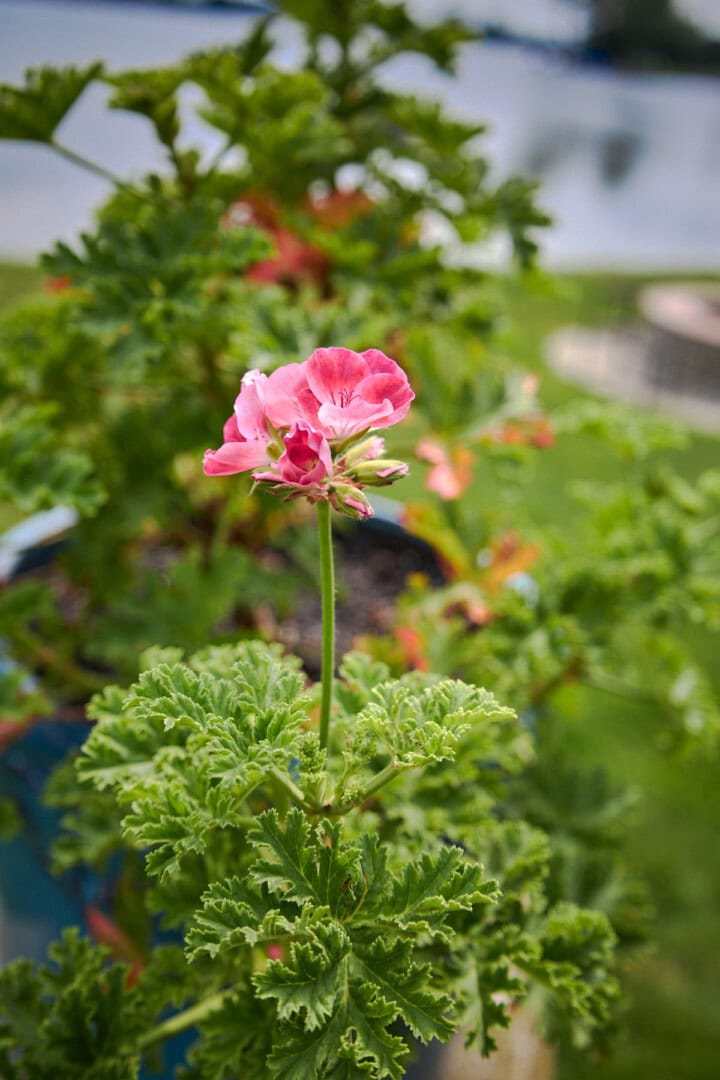
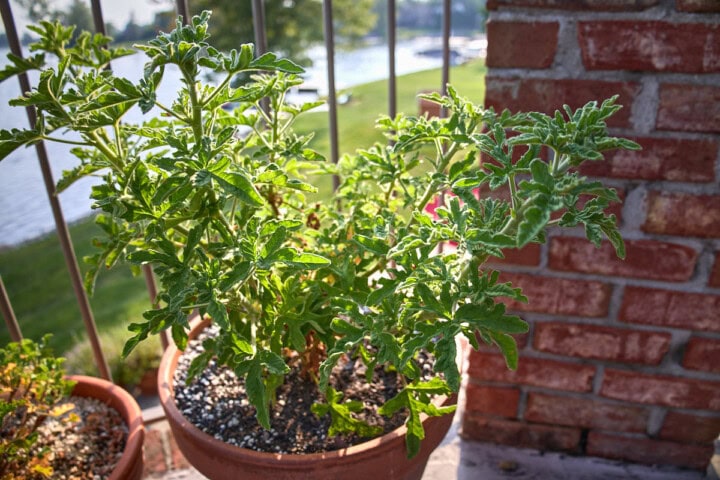
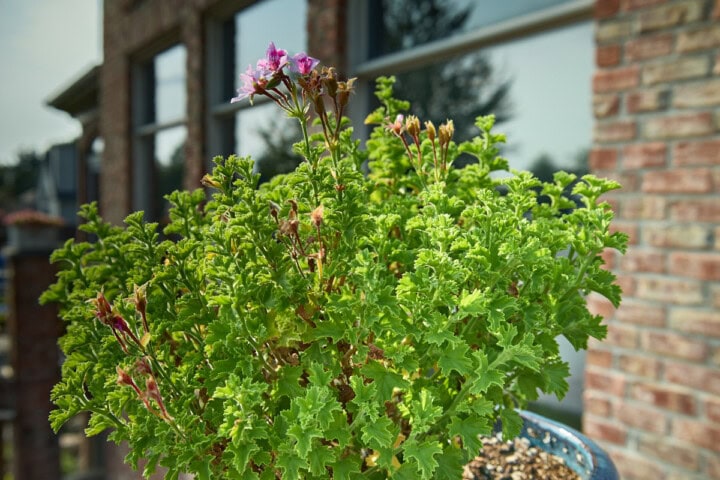

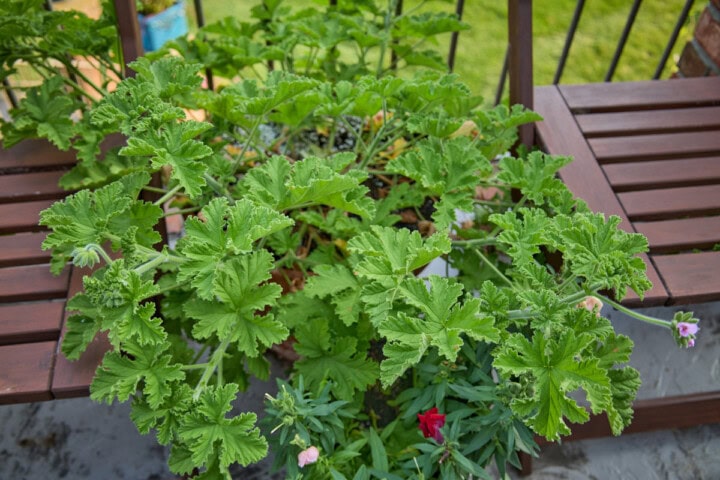
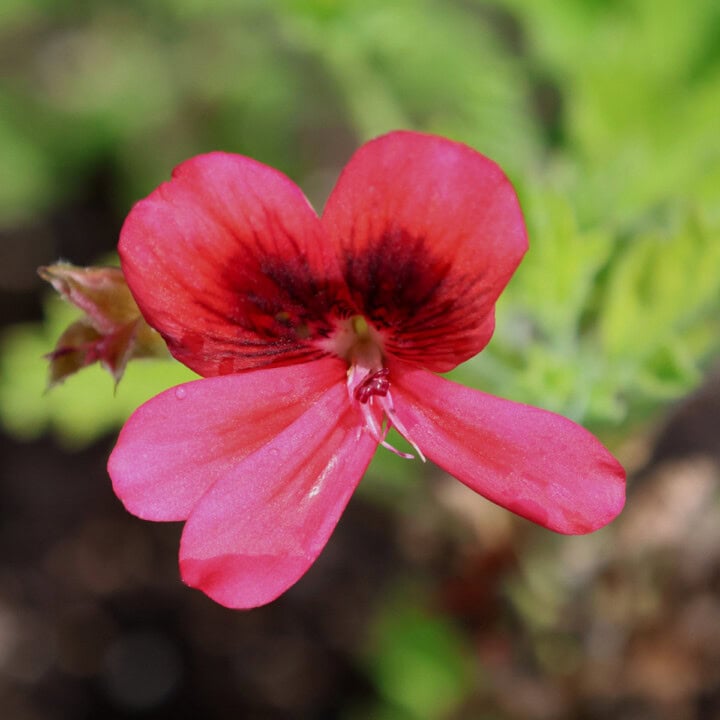
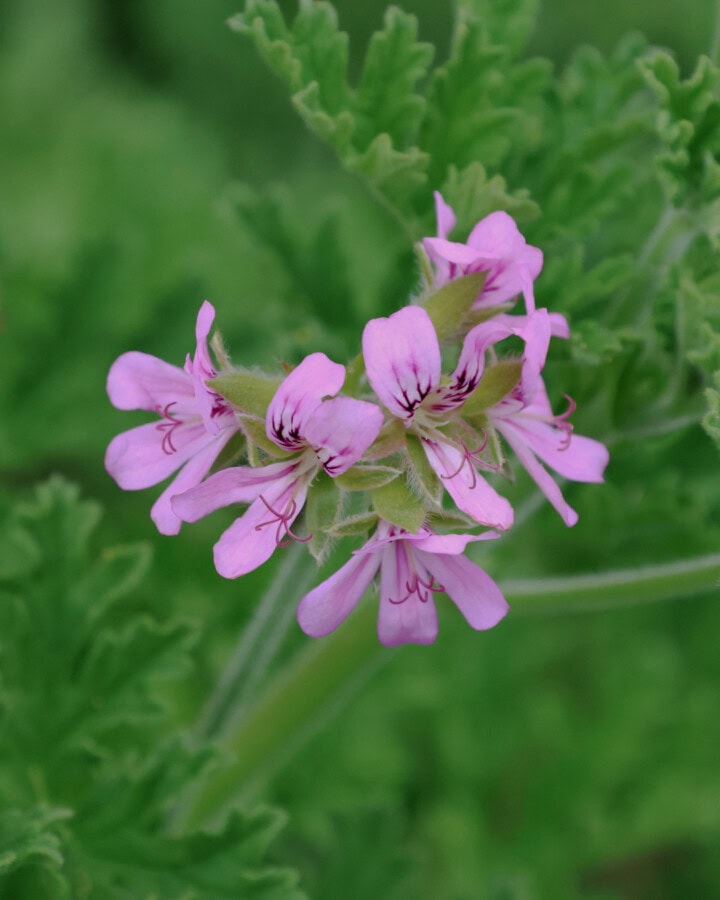
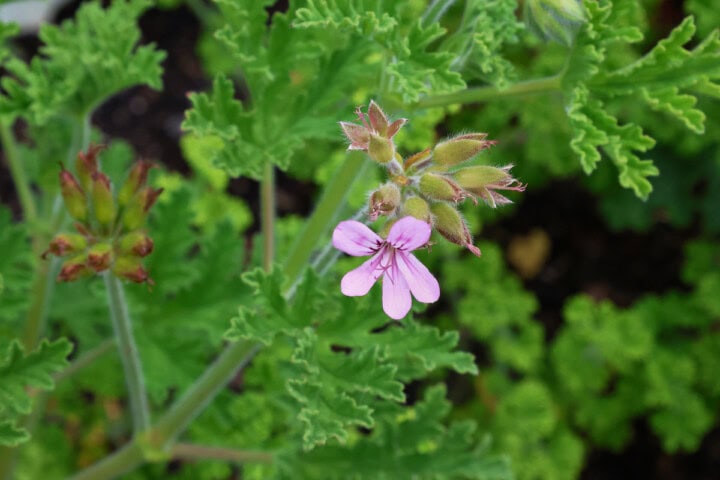
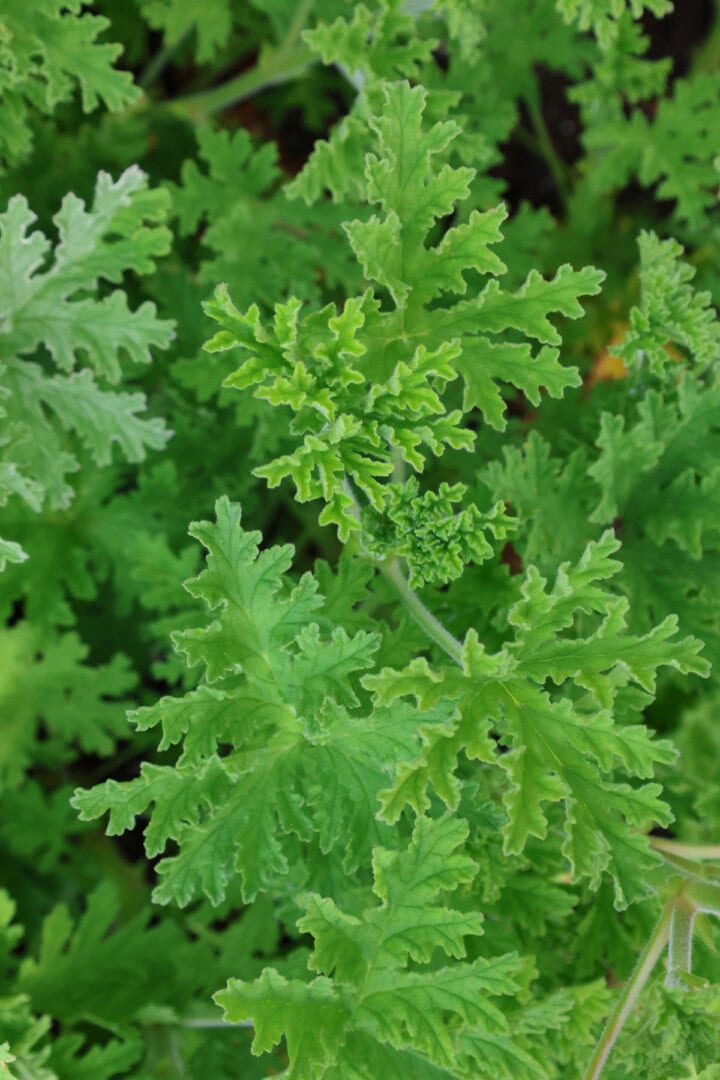


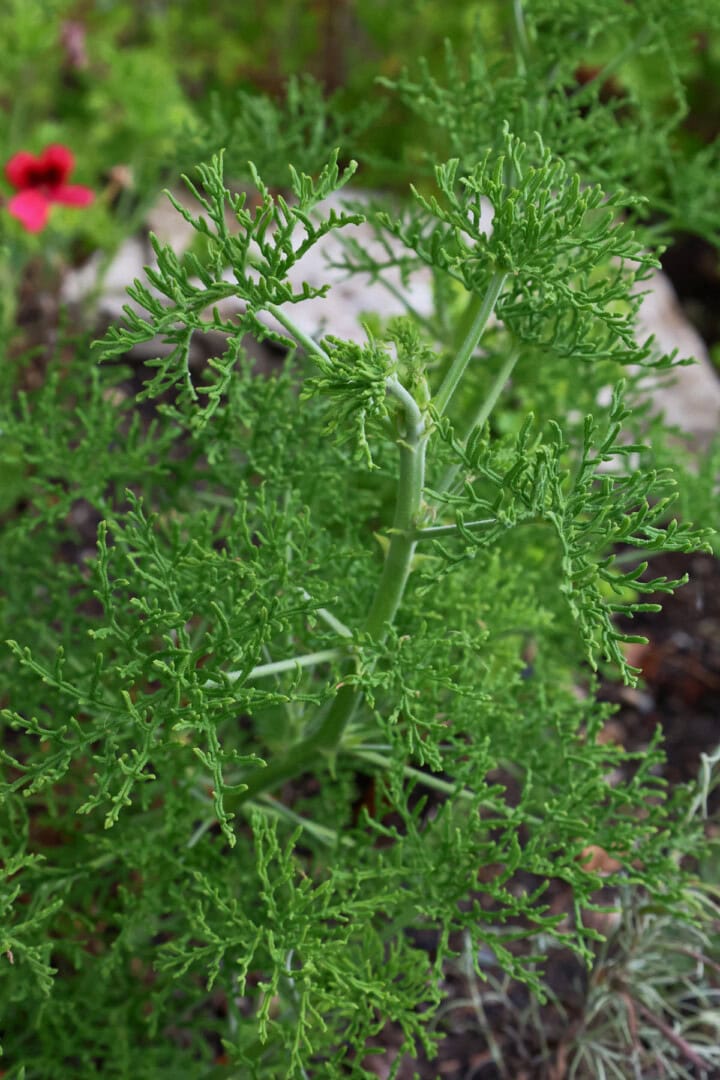


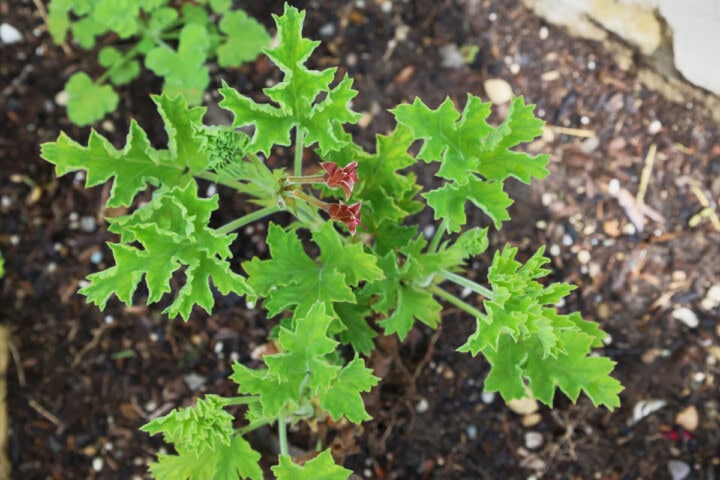
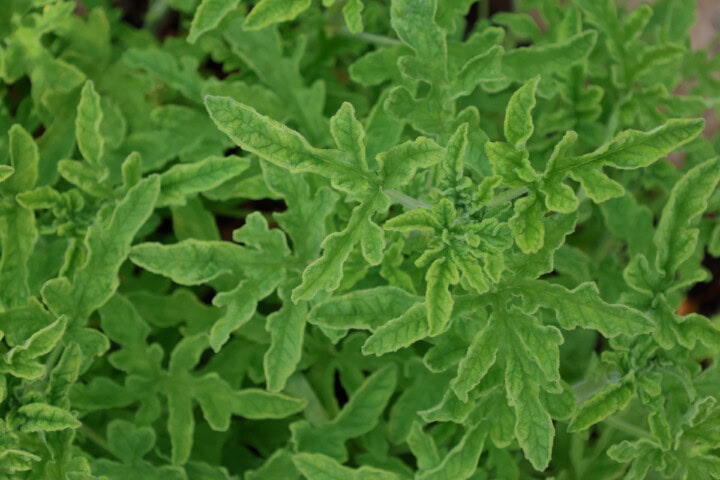
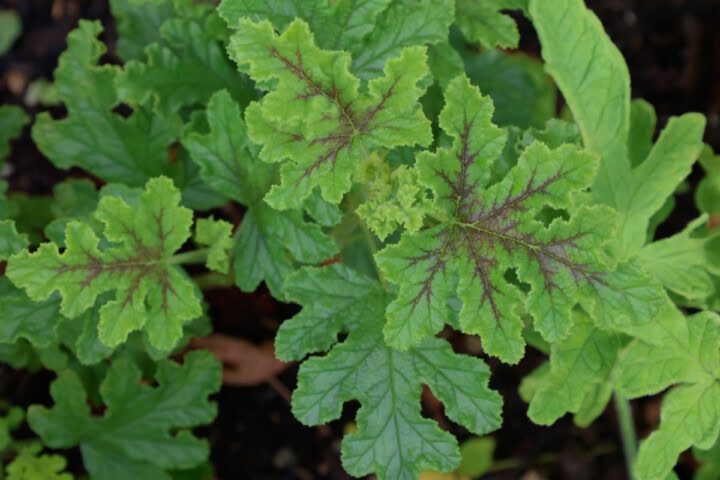
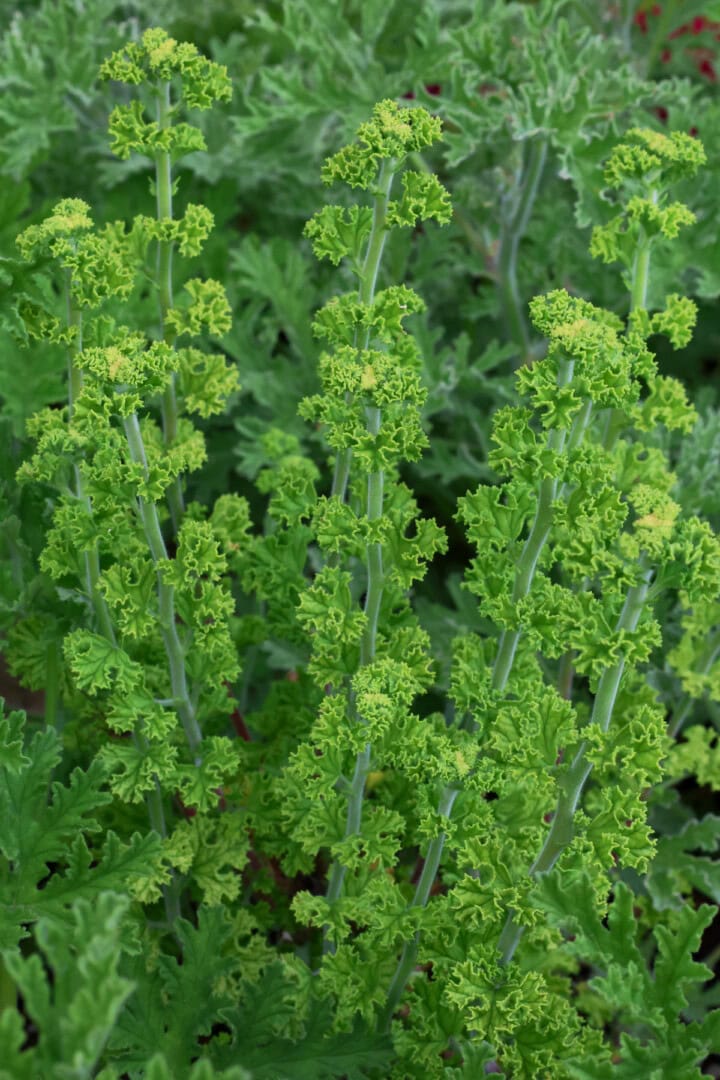
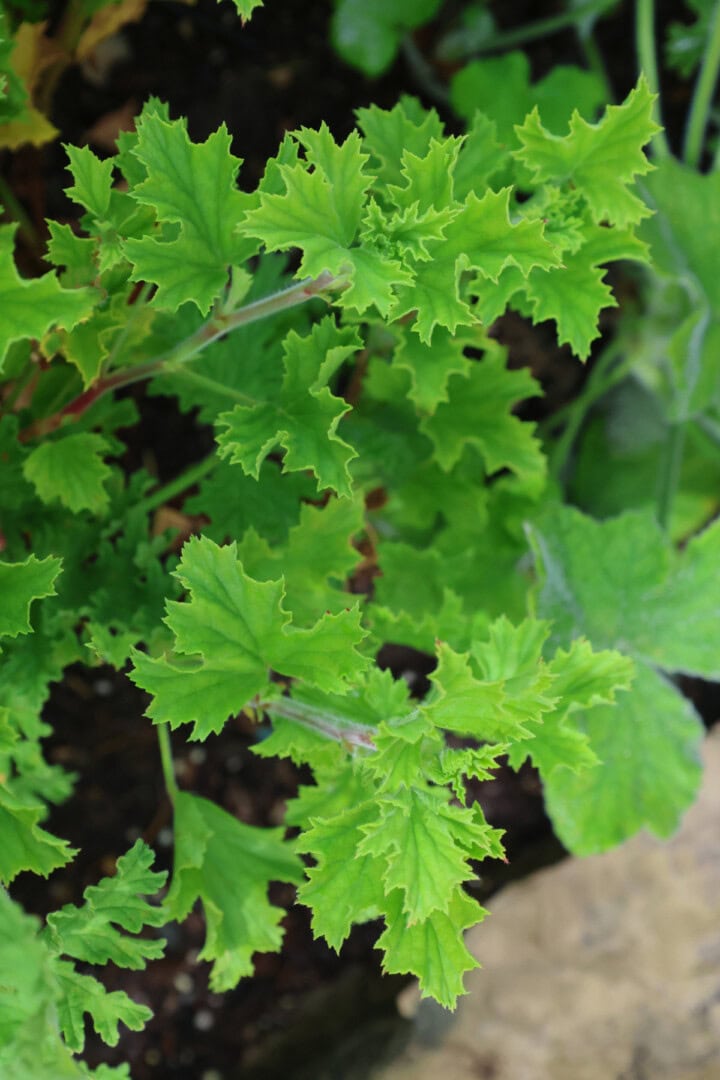

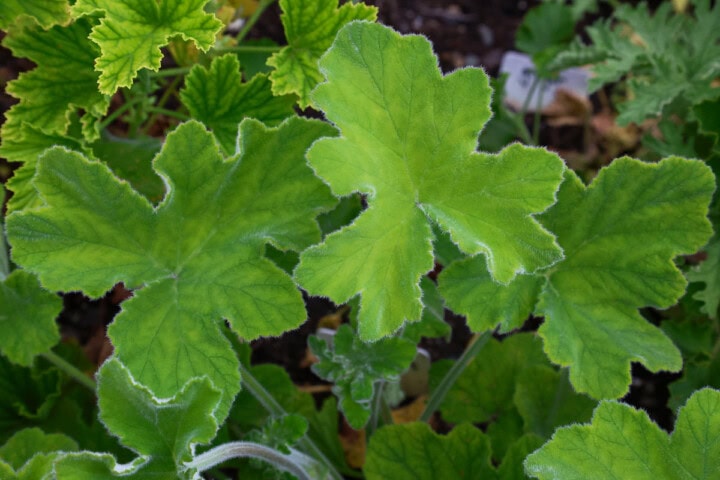
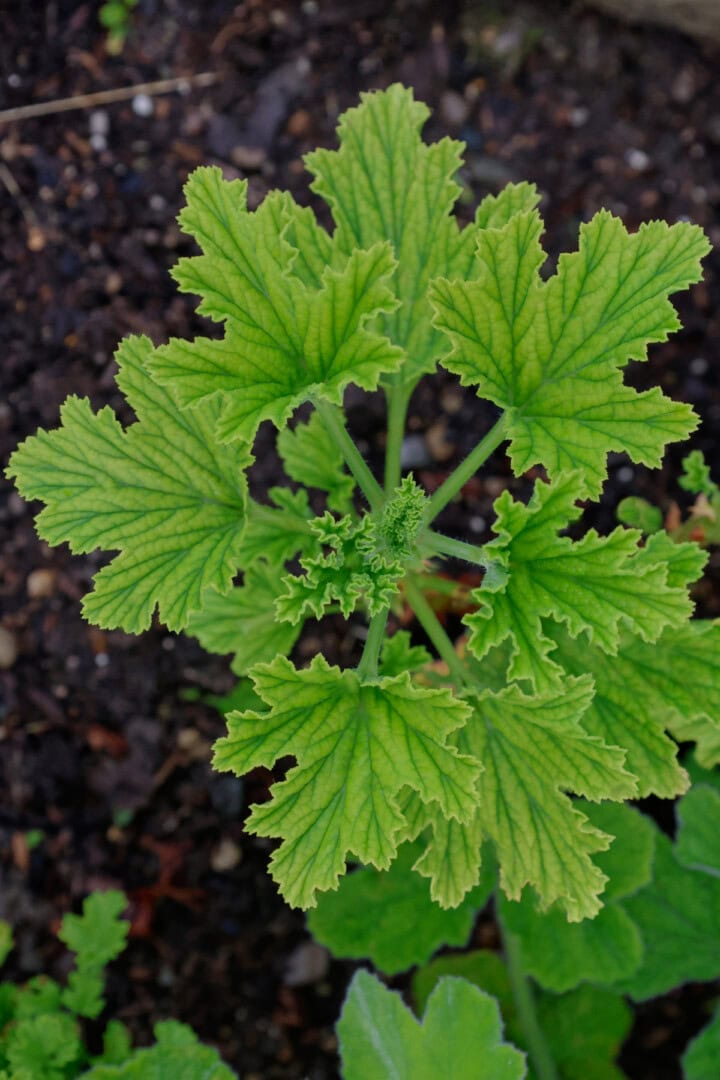
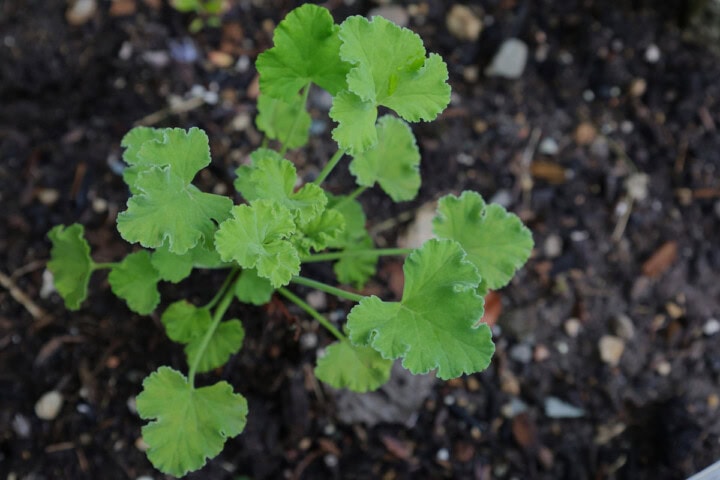


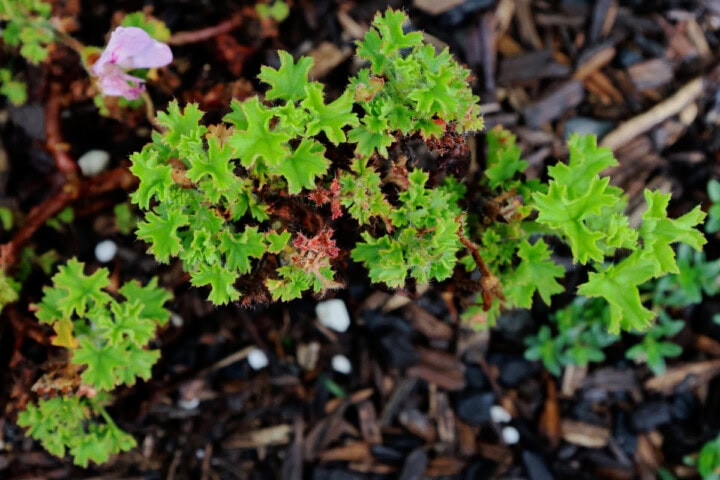
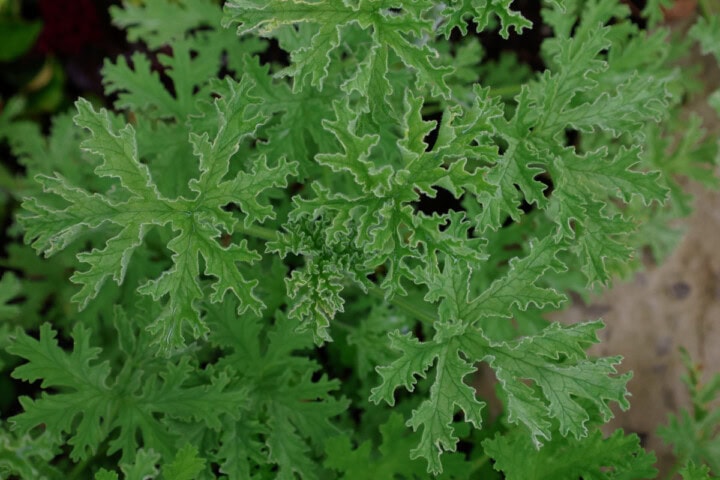


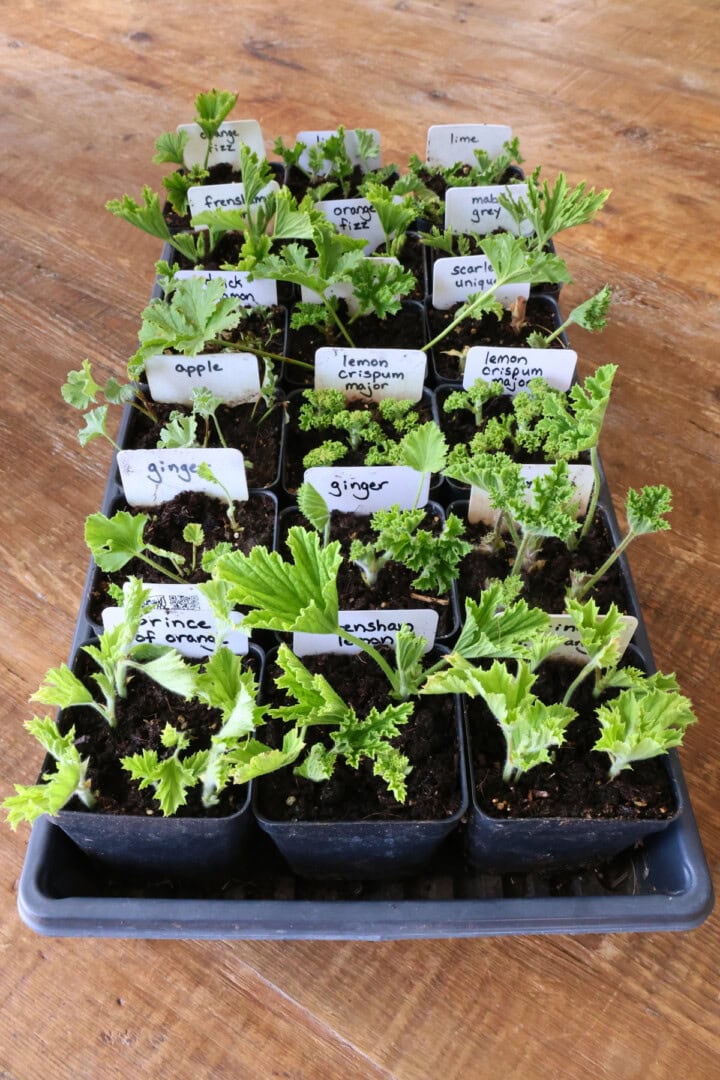
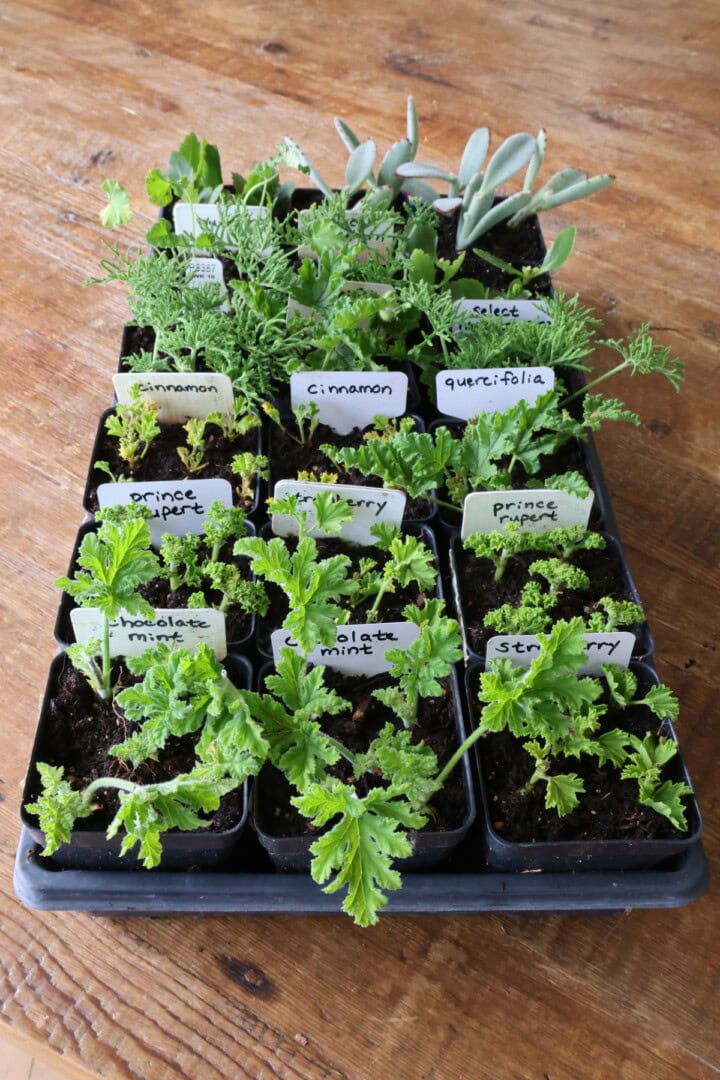
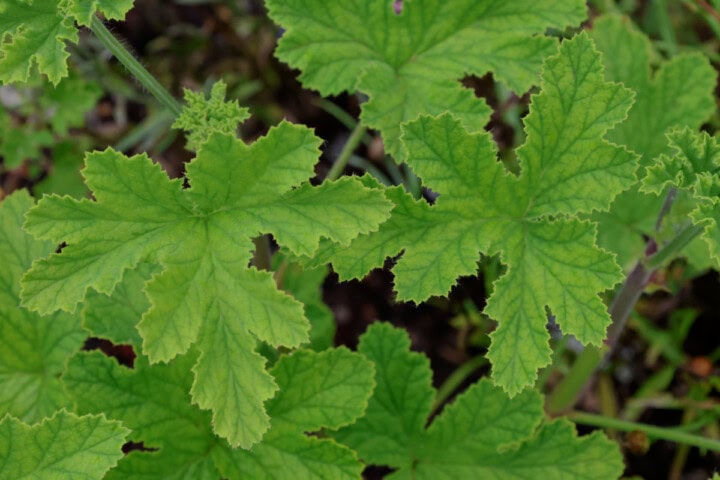

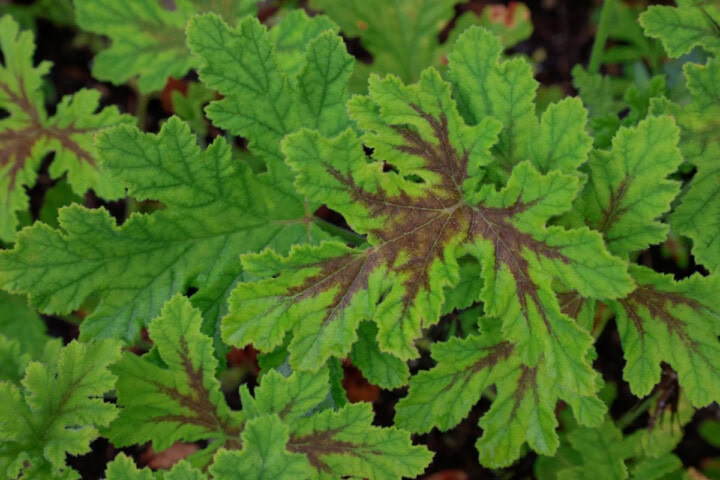
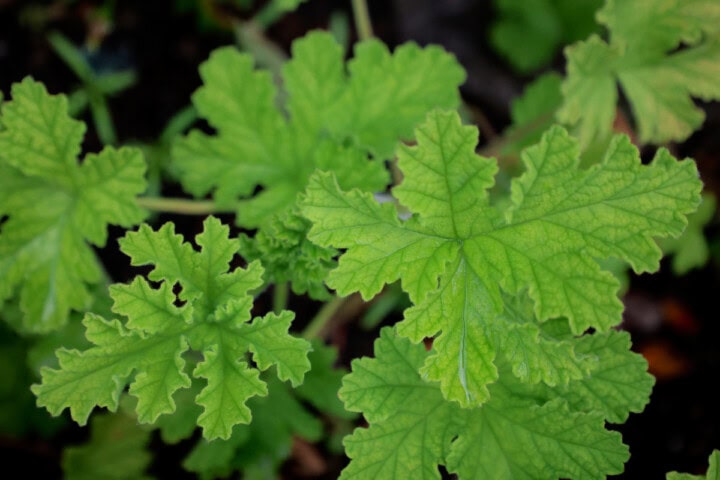

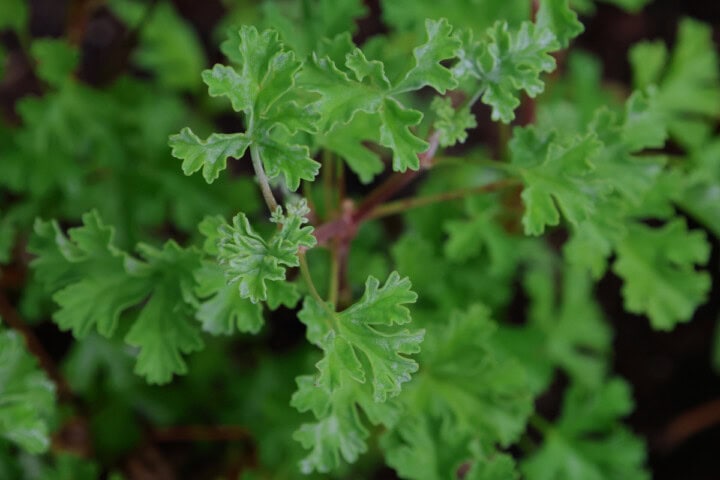
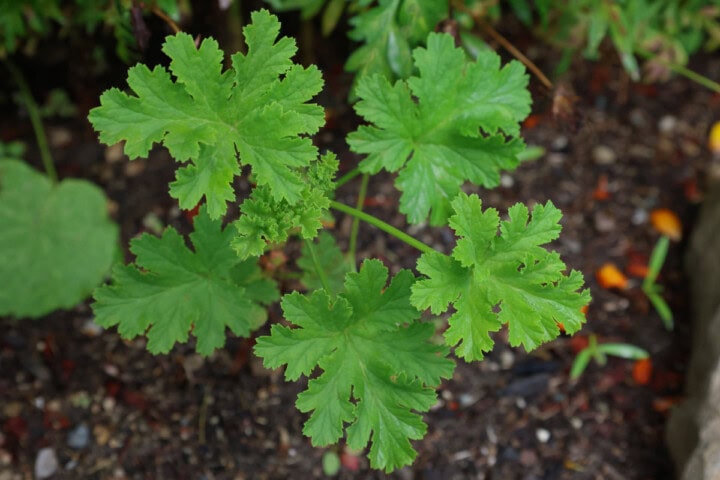
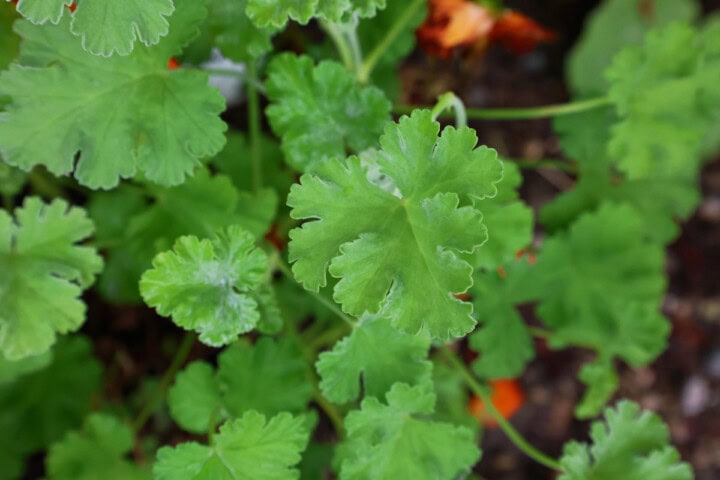
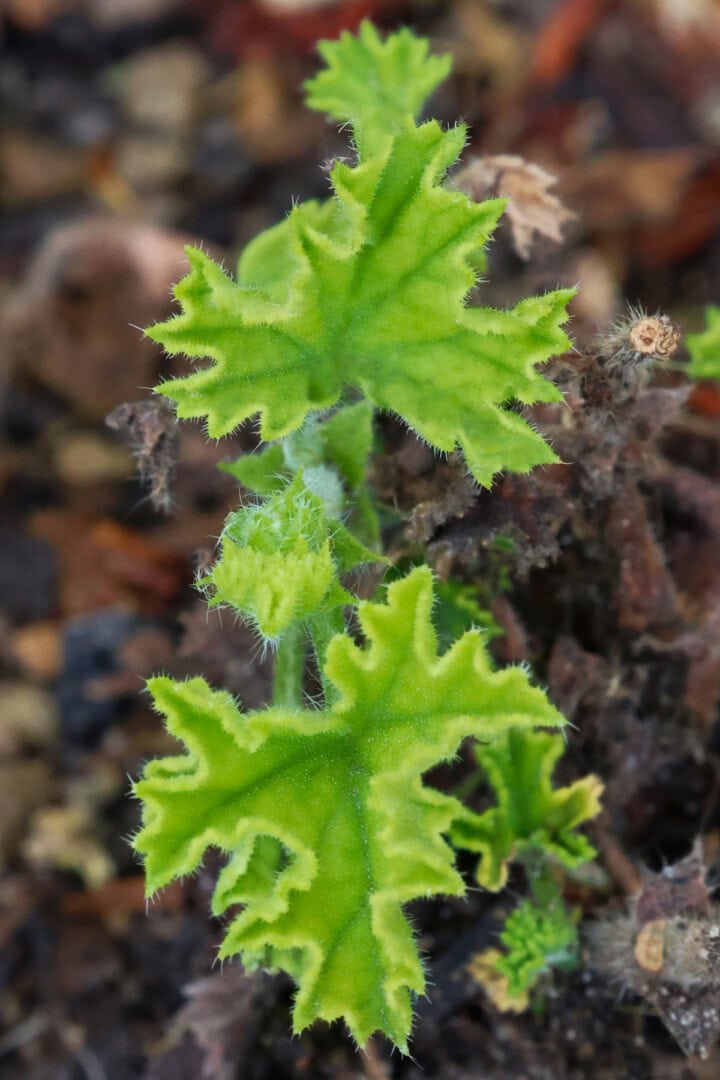
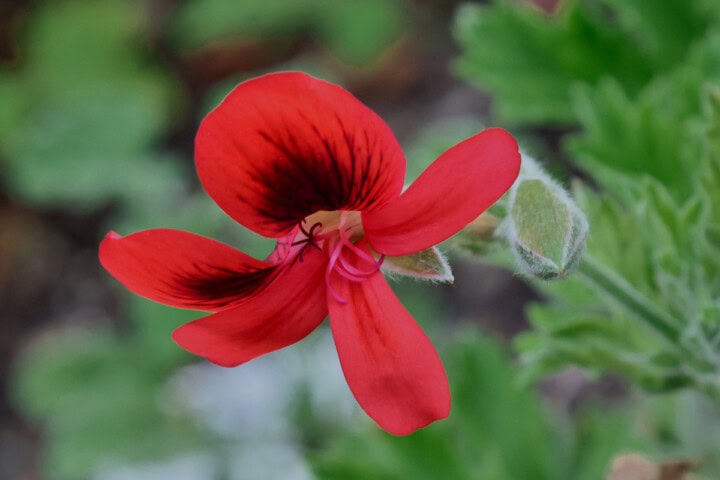





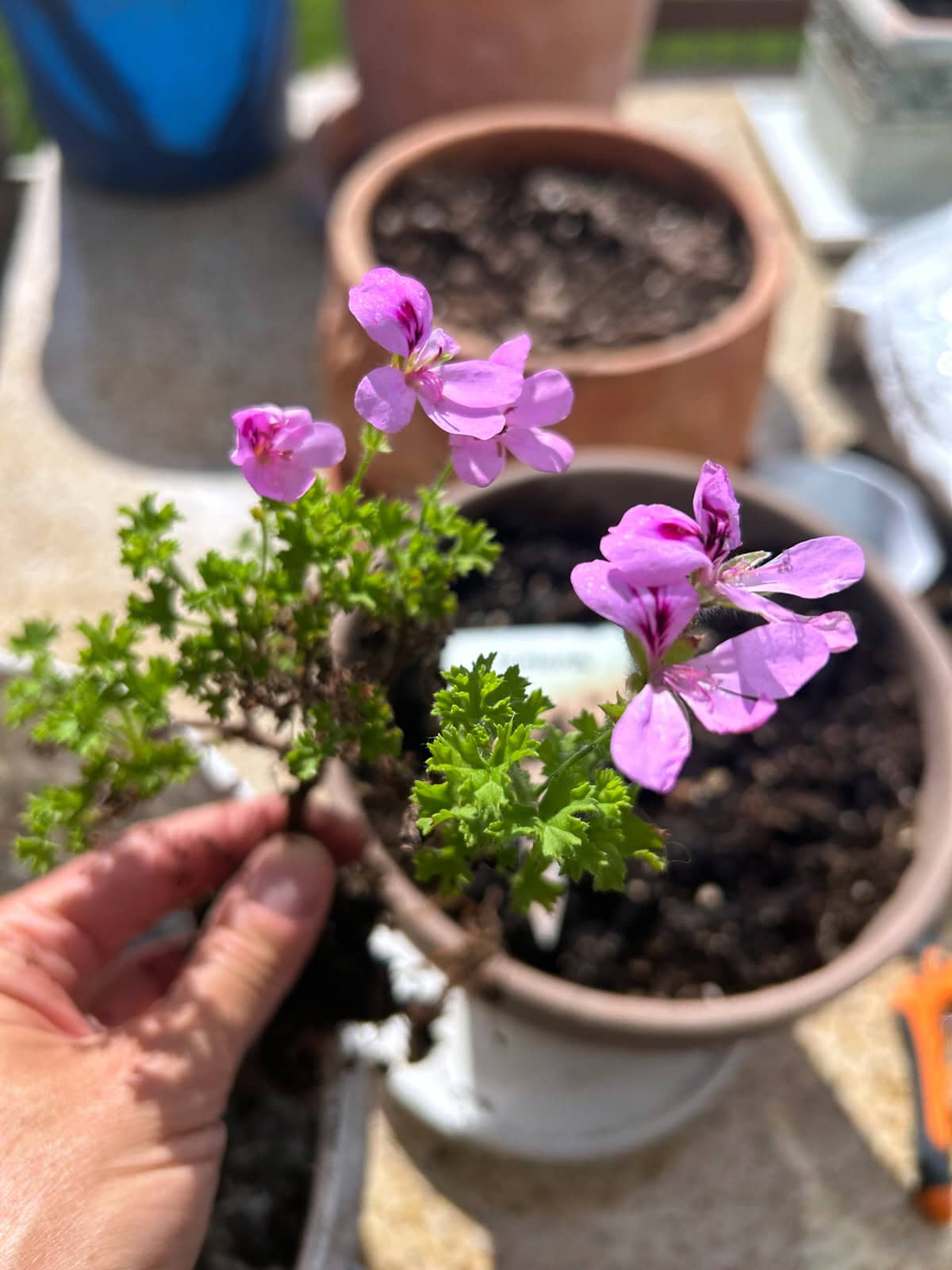
🌱 Scented geraniums, also known as pelargoniums, are enchantingly-scented herb plants with amazing culinary potential. They often sport beautiful flowers as well. And they're easy to grow!
I'm including here the 26 varieties I've grown this year, choosing all of them for their fragrance and viability in the kitchen. I've added photos and scent notes for each variety, so you can see some of the range of types available.
Also, I'll show you how to take really quick cuttings of your scented geranium plants before the cold late fall temperatures take them down. They're easy to care for over the winter, and then you'll have them ready to plant again in the spring!
All of the photos in this post are from my own garden. And you can easily grow them too! I hope you enjoy this guide to 26 Scented Geranium Varieties to Grow: Culinary Scents and Cuttings.
Jump to:
- 🌸Why and how to grow scented geraniums (pelargoniums)?
- Top Tip
- 🌿How to grow them
- 🌱More edible gardening ideas
- 📷26 Varieties with photos and scent notes (A-Z)
- 1. Angel's perfume
- 2. Apple
- 3. Apricot
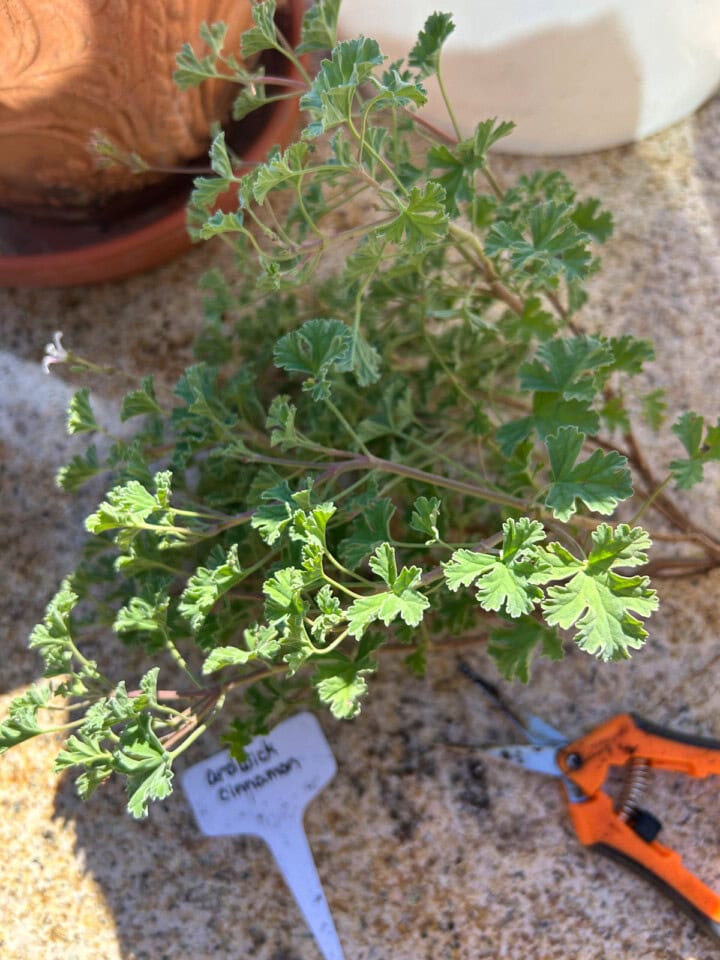
- 4. Ardwick cinnamon
- 5. Attar of roses
- 6. Chocolate mint
- 7. Cinnamon
- 8. Clorinda
- 9. Frensham lemon
- 10. Ginger
- 11. Grey lady plymouth
- 12. Lemona
- 13. Lemon crispum
- 14. Lime
- 15. Mabel grey
- 16. Nutmeg
- 17. Orange fizz
- 18. Peppermint
- 19. Prince of orange
- 20. Prince rupert
- 21. Quercifolia
- 22. Rober's lemon rose
- 23. Scarlet unique
- 24. Select northern pine
- 25. Strawberry
- 26. True rose
- ✂️How to take cuttings
- ❄️How to keep the plants dormant over the winter
- 🪴How to bring the plants in as houseplants
- ❓FAQs
- ✨Recipes and gardening posts you'll love
- ✏️Have you grown any of these scented geraniums?
🌸Why and how to grow scented geraniums (pelargoniums)?
Gorgeous plants
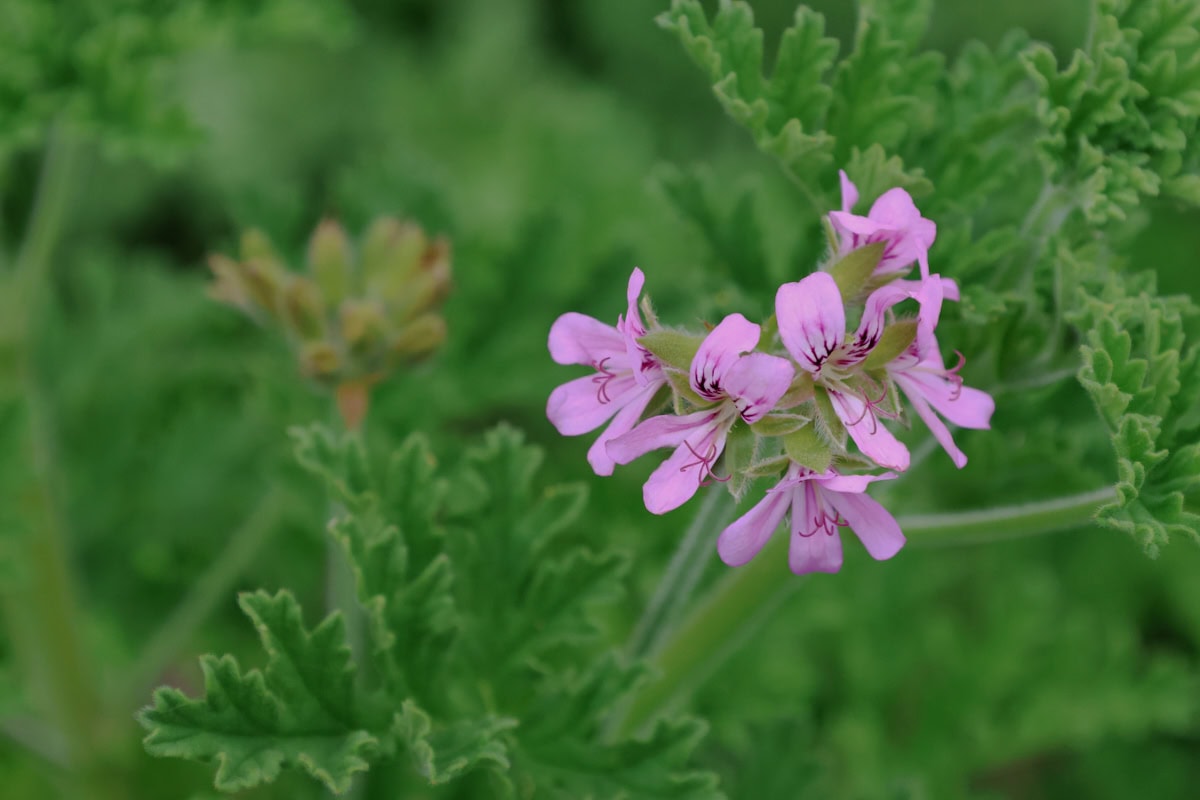
I'll use the terms scented geranium and pelargonium interchangeably throughout this post. I love scented geraniums for their ornamental value as well as their outrageous scents. They're beautiful either in-ground or in pots, and they often display beautiful flowers.
Irresistible scents
You'll see in my scent notes below for each variety that the leaves produce some really stunning and wonderful fragrances that you'll really enjoy smelling and using in the kitchen all summer long. Here are some of the fragrance categories you'll find in pelargoniums:
- Rose
- Citrus
- Non-citrus fruit
- Mint
- Spice
- Pine / woodsy
- Ornamental
Wonderful potential in the kitchen
Here are some of the many ways you can use scented geraniums (pelargoniums) in a culinary capacity:
- Scented sugar
- Simple syrup for drinks
- Infusion for tea
- Cake pan liner for baking
- Desserts with infusion into sauces or added to fruit dishes
Top Tip
Please make sure to keep the leaves whole, and bruise or infuse them gently when you use them in the kitchen. The pleasantly fragrant volatile compounds are mostly present in glands on the leaf surface.
If you bite or cut into the leaf tissues, you'll encounter some bitter and astringent polyphenols that are a whole different story. When I first bit into a leaf, I'd expected to taste as wonderful as it smelled. But this wasn't the case at all, and I was shocked! So please keep the leaves intact when using them in the kitchen.
🌿How to grow them
Climate
Most pelargoniums are hardy in USDA hardiness zones 9-11. If you live in a climate with frost (like mine in zone 6A, sigh), you won't be able to keep them outside year round. They prefer temperatures above 45°F (7°C).
But keep reading for how you can bring them in for the winter to get them ready again for spring! This is important, since they don't generally grow true from seed. It can get expensive to buy them again as plants every year. This is why it's a great idea to propagate them by cuttings, let them go dormant in the garage, or bring them in as houseplants. I'll explain how to do these methods below the photos of each of my varieties.
Water and soil
Scented geraniums don't like having too much moisture. Allow the top 1-2 inches (2.5-5 cm) of soil to dry out between waterings. They prefer soil that's well-drained, with a pH of 6.0-7.0. And they're light feeders. Too much nitrogen will cause more leaf growth, and can dilute their fragrance. I recommend a modest amount of fertilizer, and I like the several plant-based varieties available from Down to Earth.
Light
These plants love full outdoor sun, optimally about 6-8 hours per day. If you overwinter them as cuttings or houseplants, it's best to keep them in a south or west-facing window with 12-14 hours of sun. Or you could use grow lights if you don't have a spot with enough light.
Planting in-ground vs in pots
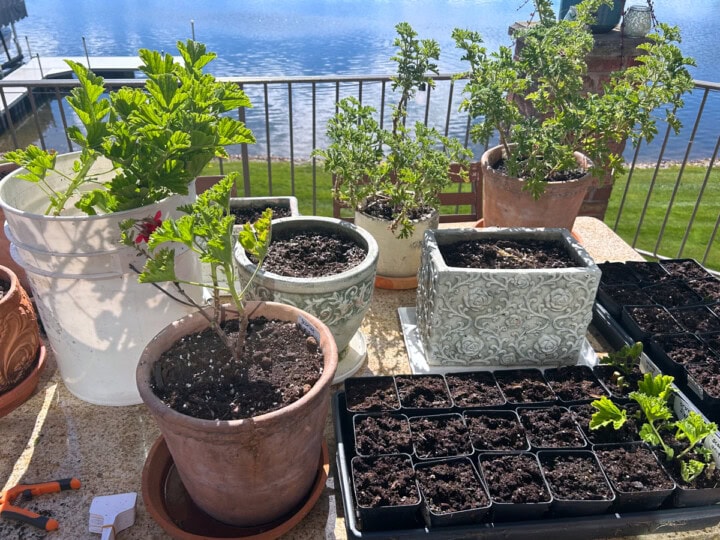
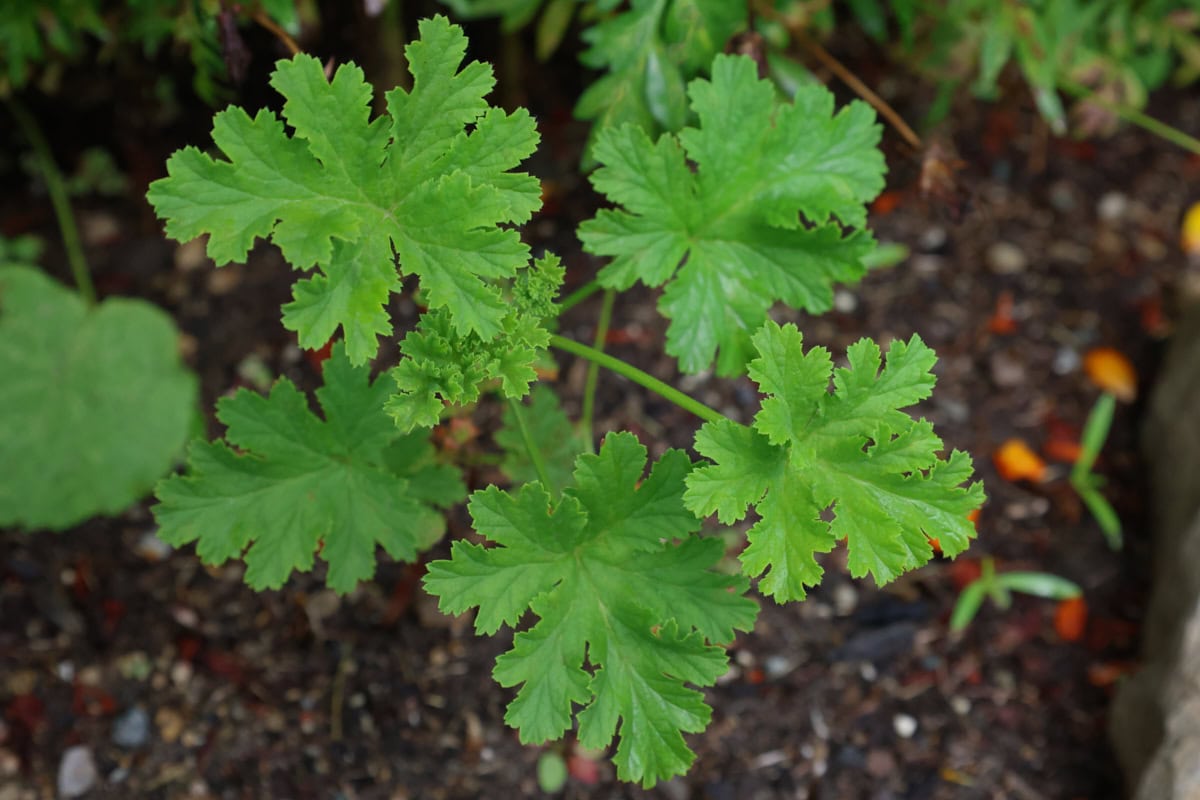
You can plant pelargoniums outdoors either in pots or in the ground. I've done both. In pots, you have total control of soil, drainage, and moving them inside to overwinter as houseplants if you'd like. But they'll need more frequent watering and can get rootbound at the end of the summer. A good rule of thumb is 1 plant per planter with a 14-inch (36 cm) diameter. Larger pots can hold more of them, but keep this spacing in mind.
If you plant them in-ground (with the same optimal spacing as above), you won't have to water them as much once they're established. They can get larger than in pots, as long as you don't crowd them like I did this year. Sigh, I'm still learning this lesson after decades!
I'm finding that these plants really don't love being transplanted at full (or even half) size from the garden into planters. Their in-ground roots have a large reach, and it can be challenging to dig them up intact. I've had far more success at taking cuttings. You can read how to do this below, after the list of my varieties this year.
🌱More edible gardening ideas
If you'd like to check out more posts of fantastic edible, global heirloom herbs and veggies you can grow yourself, please see this posts:
38 Types of Basil to Grow in Your Herb Garden, Part 1
45 Types of Basil to Grow in Your Herb Garden, Part 2
31 Peppers to Grow, Harvest, Dry, Smoke, Grind, and Enjoy!
🌱28 Heirloom Potatoes to Grow with Taste Tests
Best guide to 54 types of mint to grow with scent profiles
And many more of my recipe posts use herbs and veggies from my garden. You can do this too! It's so rewarding and enjoyable to grow your own food.
📷26 Varieties with photos and scent notes (A-Z)
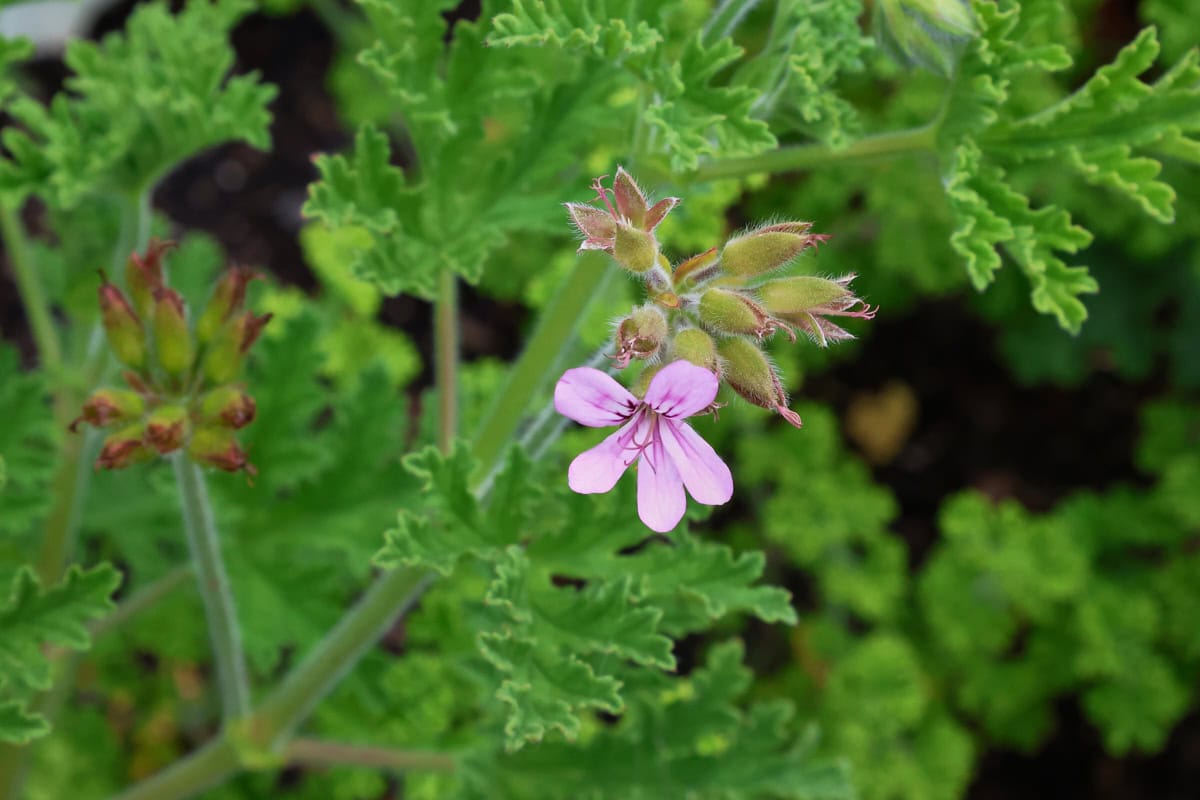
1. Angel's perfume
My scent notes: Clean lemon, citrus, light and delicate, fresh, clean, uplifting, lemon balm, bright limes.
2. Apple
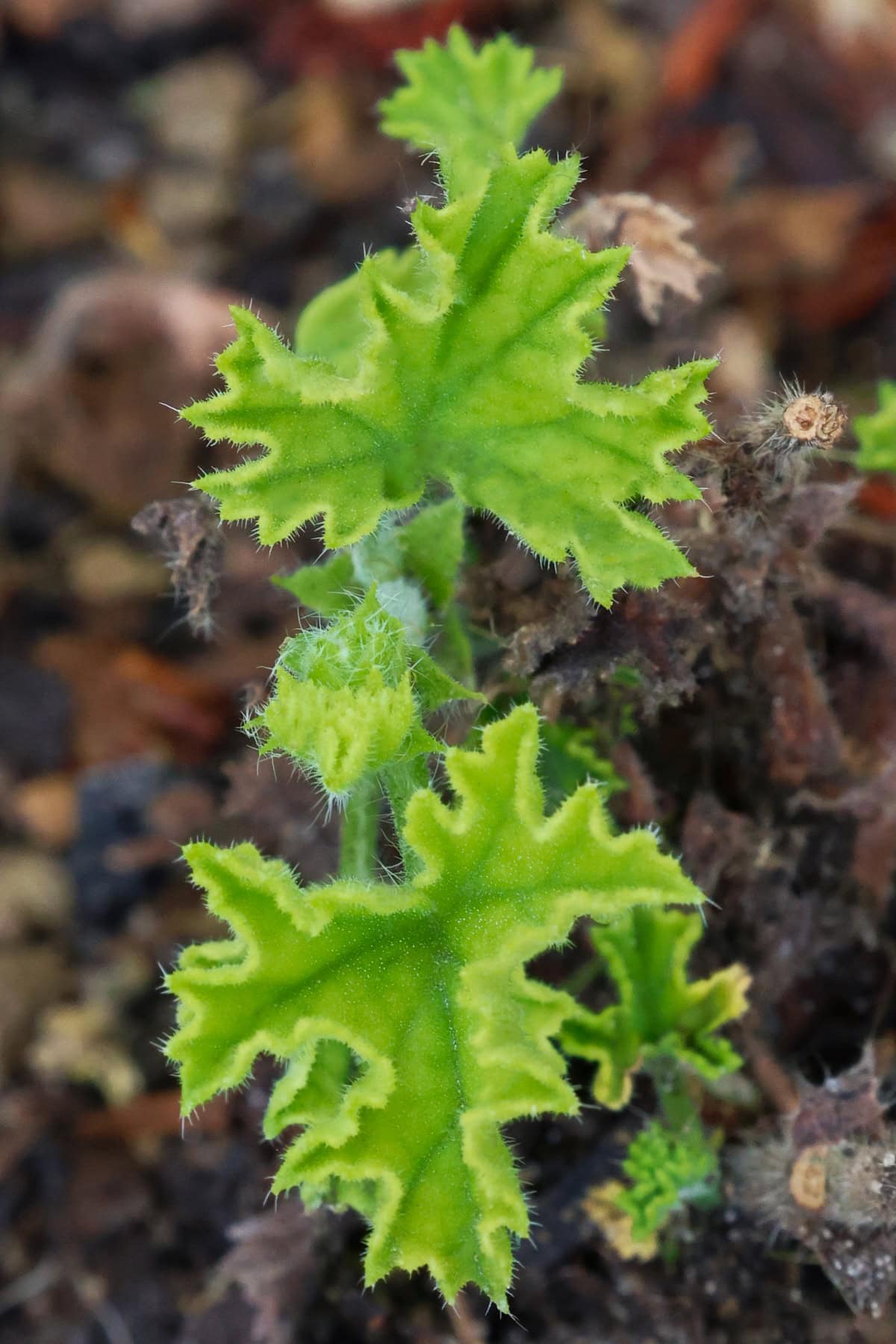
My scent notes: Sweet and strongly fragrant, so fresh, damp rocks, crisp green apple, lemon zest, air freshener, pine sap, fresh clean air.
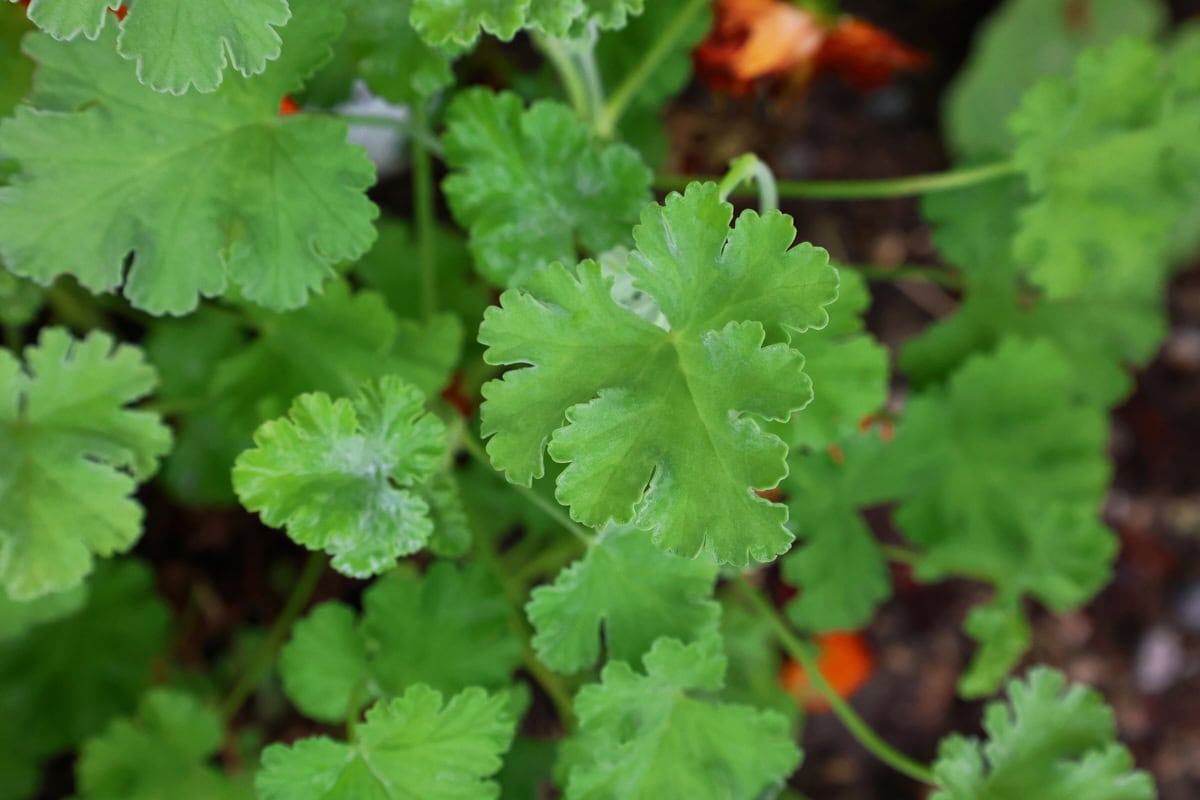
3. Apricot
My scent notes: Sweet fruit candy, very wonderfully fragrant, fruity, deep, apricot, plums, peaches, delightful, orange popsicle, so fresh and delicious.
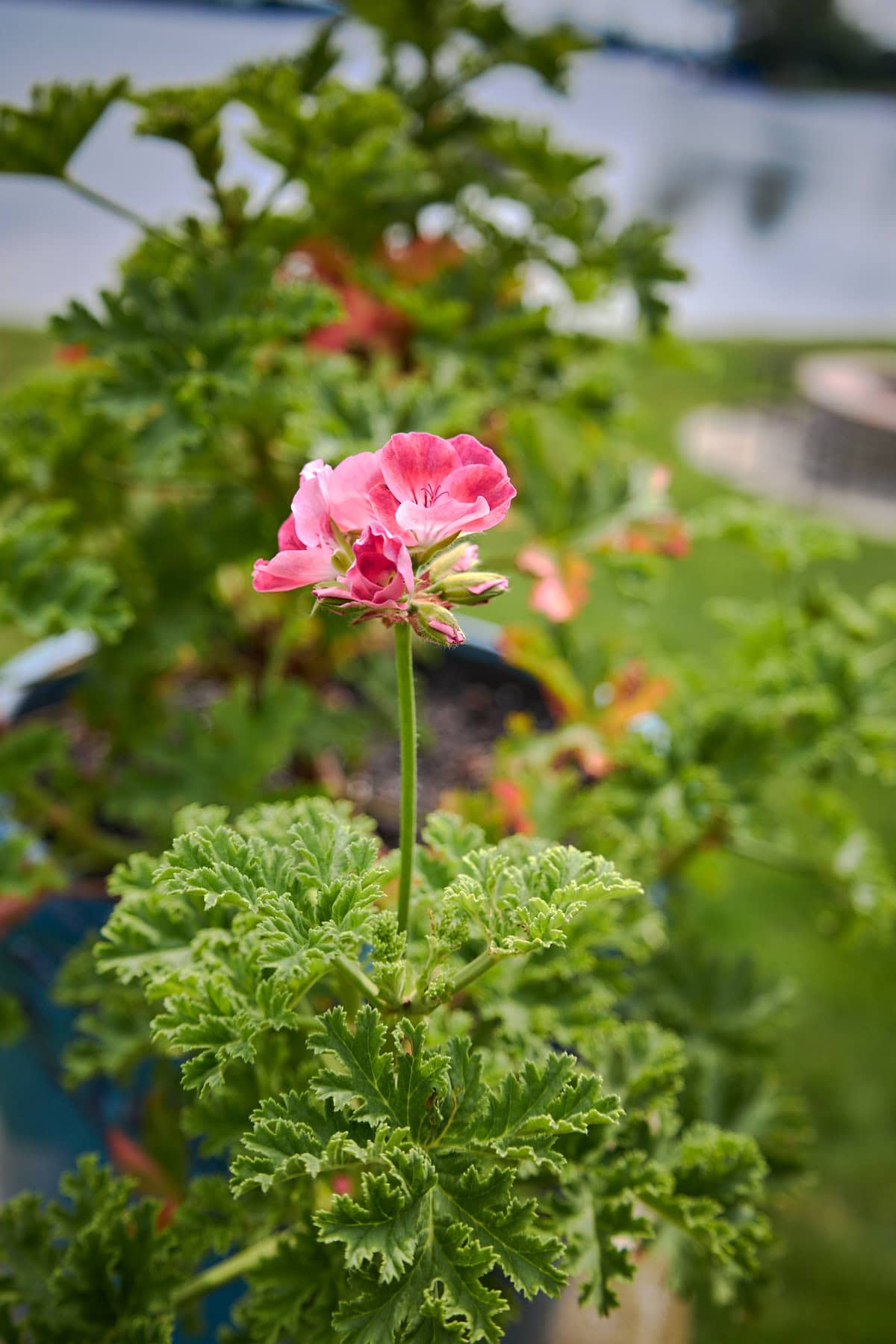
4. Ardwick cinnamon
My scent notes: Deep, true cinnamon, very sweet, licorice, black tea, brown sugar, pumpkin pie, crisp fall air, damp brown leaves, fall spices, so captivating.
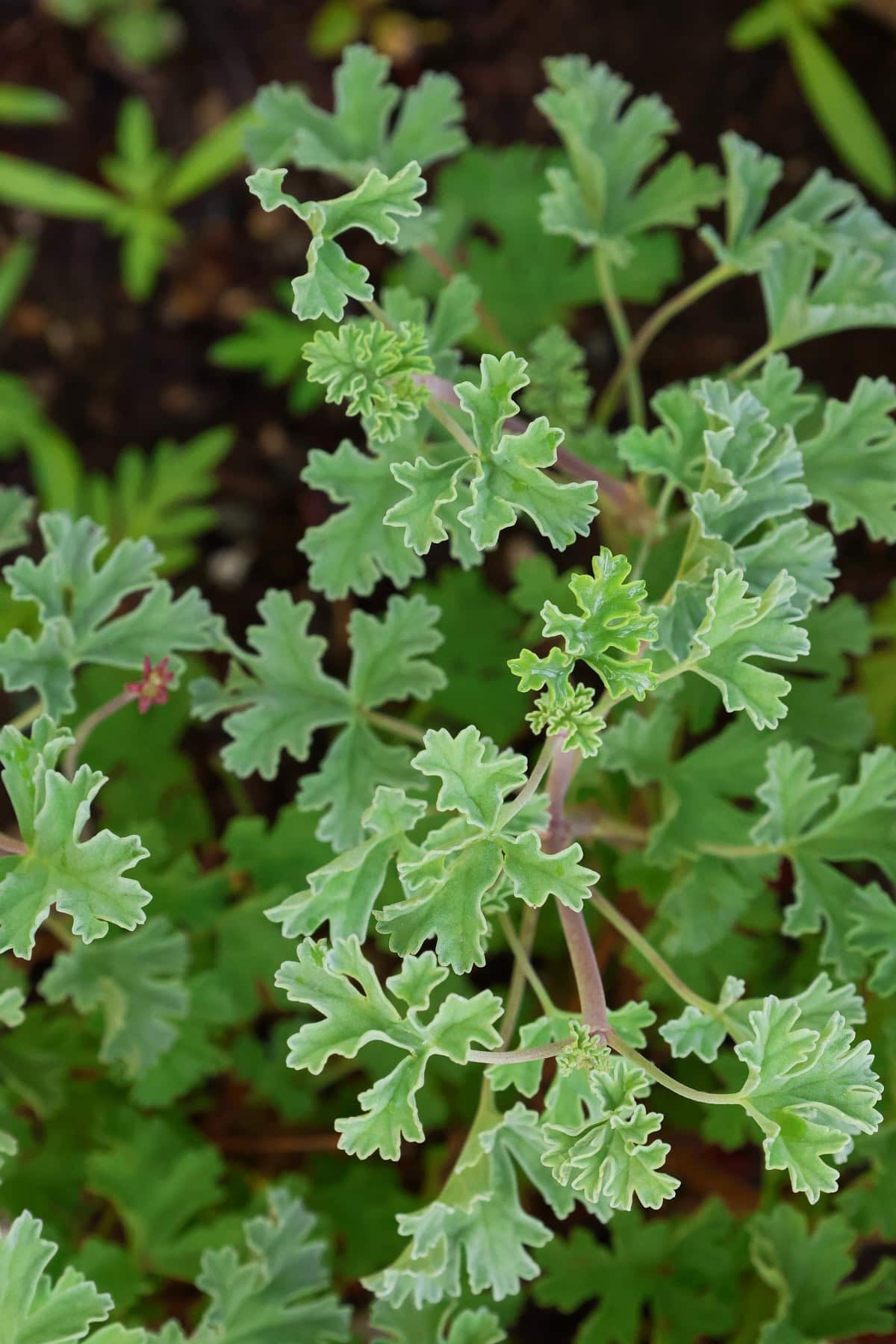
5. Attar of roses
My scent notes: Amazing, thrilling rose scent, deep and strong, so perfumed and fragrant, sophisticated and elegant, deeply enjoyable and transfixing to smell, just wonderful.
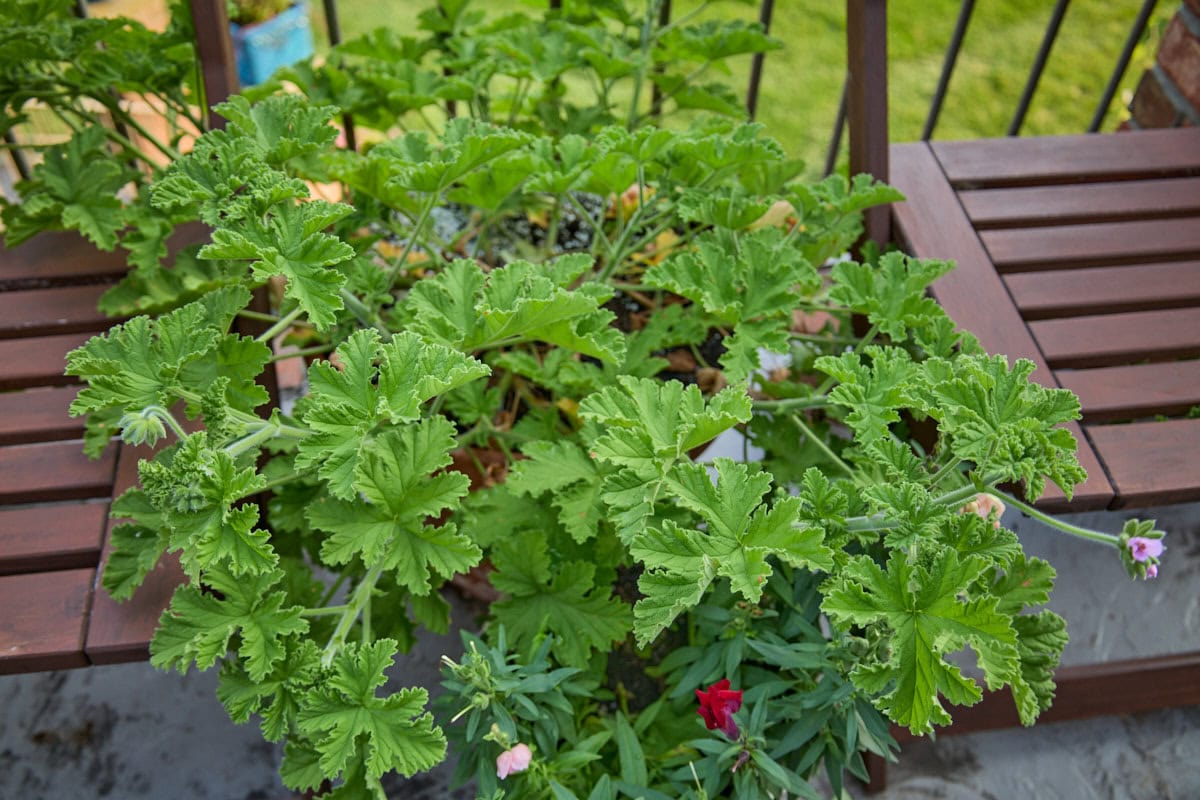
6. Chocolate mint
My scent notes: Fresh clean linens, pure mountain stream, crisp cool air, lush greens, freshly mowed lawn, slight hint of mint.
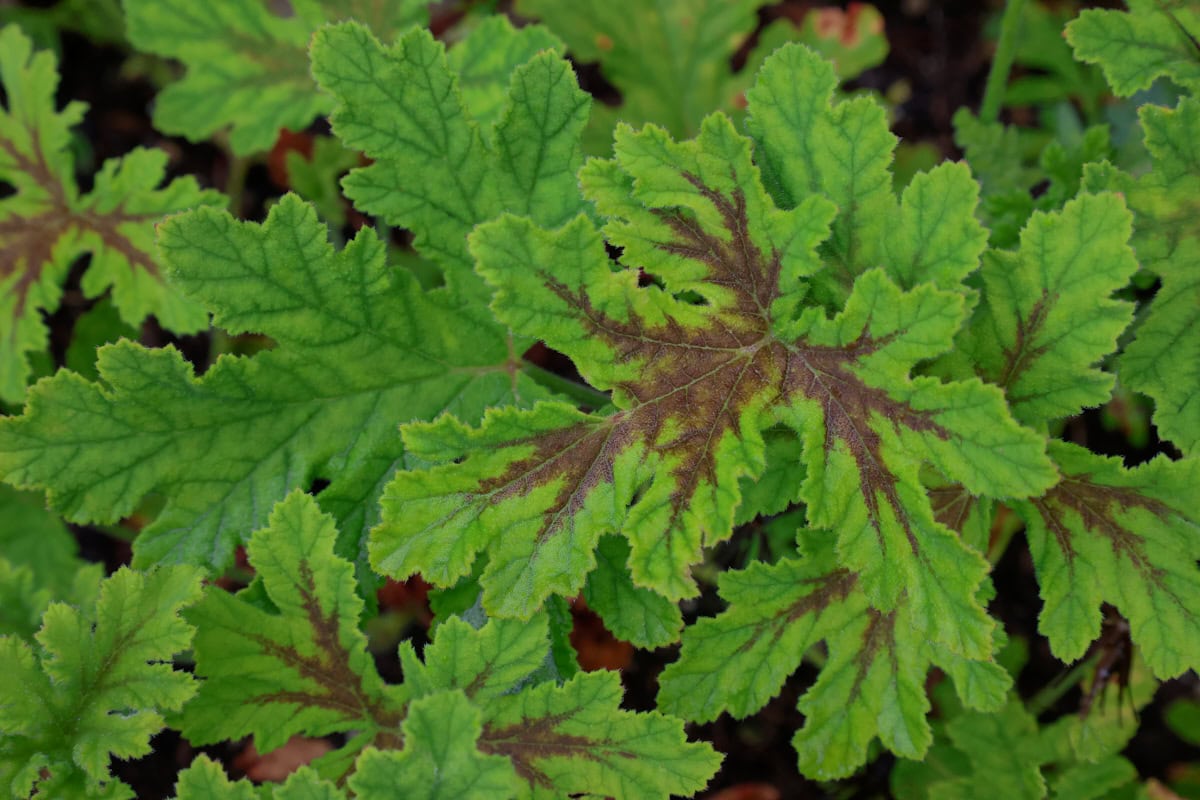
7. Cinnamon
My scent notes: Beautiful cinnamon scent, cardamom, richly-spiced pastries, fresh lemon, vanilla, sweet candy, earthy spices, almond poppyseed muffins, delightful.
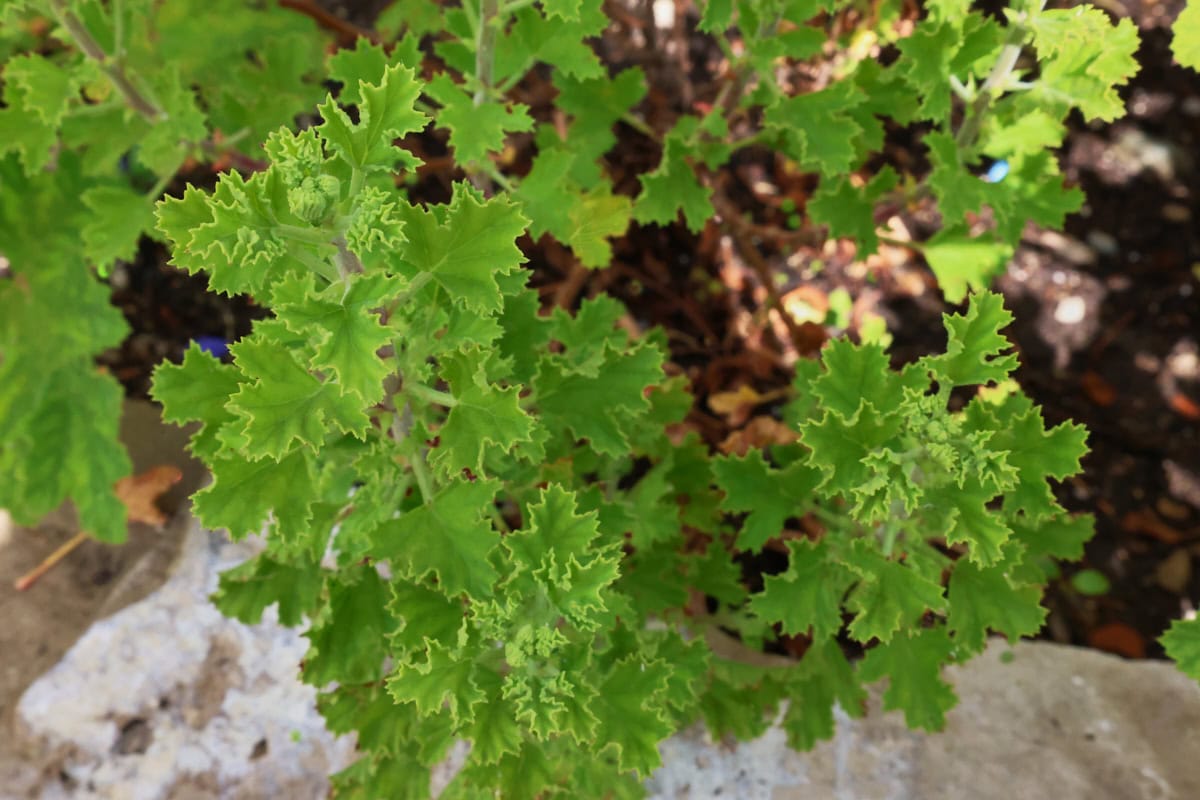
8. Clorinda
My scent notes: Lemonade, bright and vivacious, lemon candy, sweet and clean, fresh greens, deep lime, salt water taffy, candied ginger.
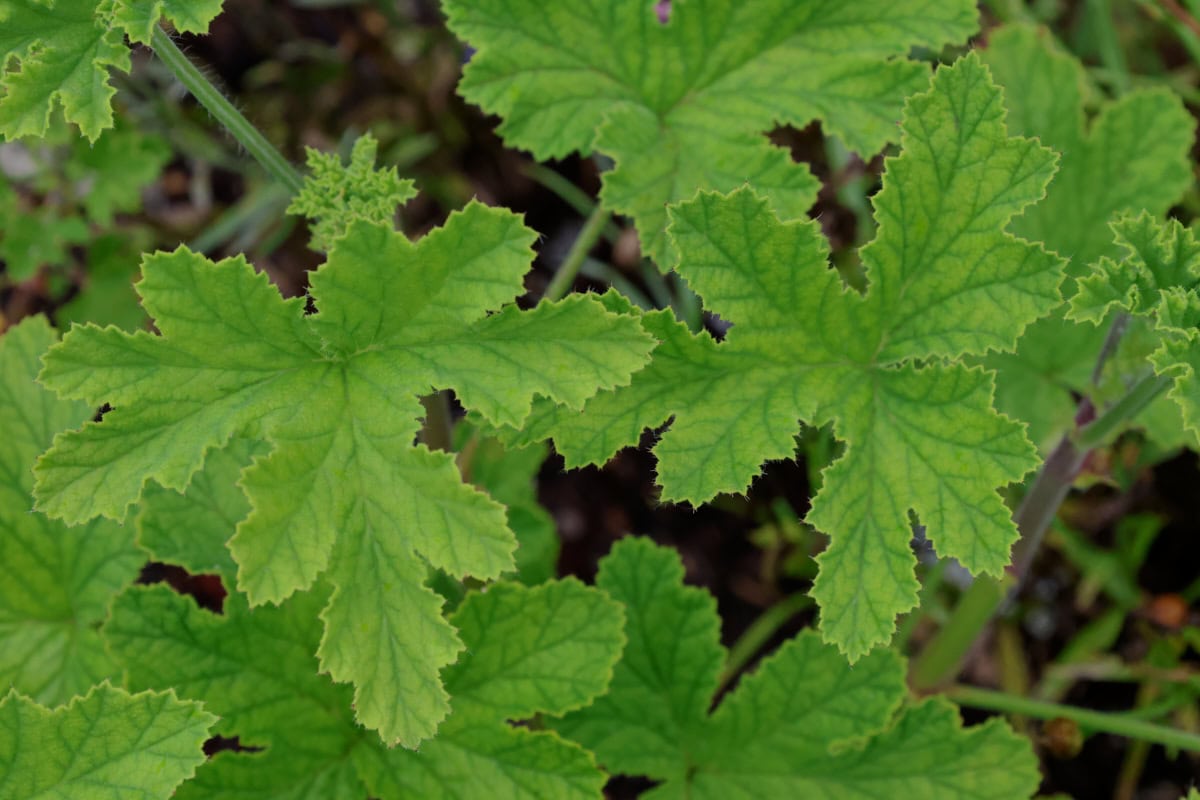
9. Frensham lemon
My scent notes: Deep vivid lemon, stunningly fragrant, delicious, heavy and intoxicating, bright citrus, mango, pineapple, lemongrass, enchanting, so enjoyable to smell.
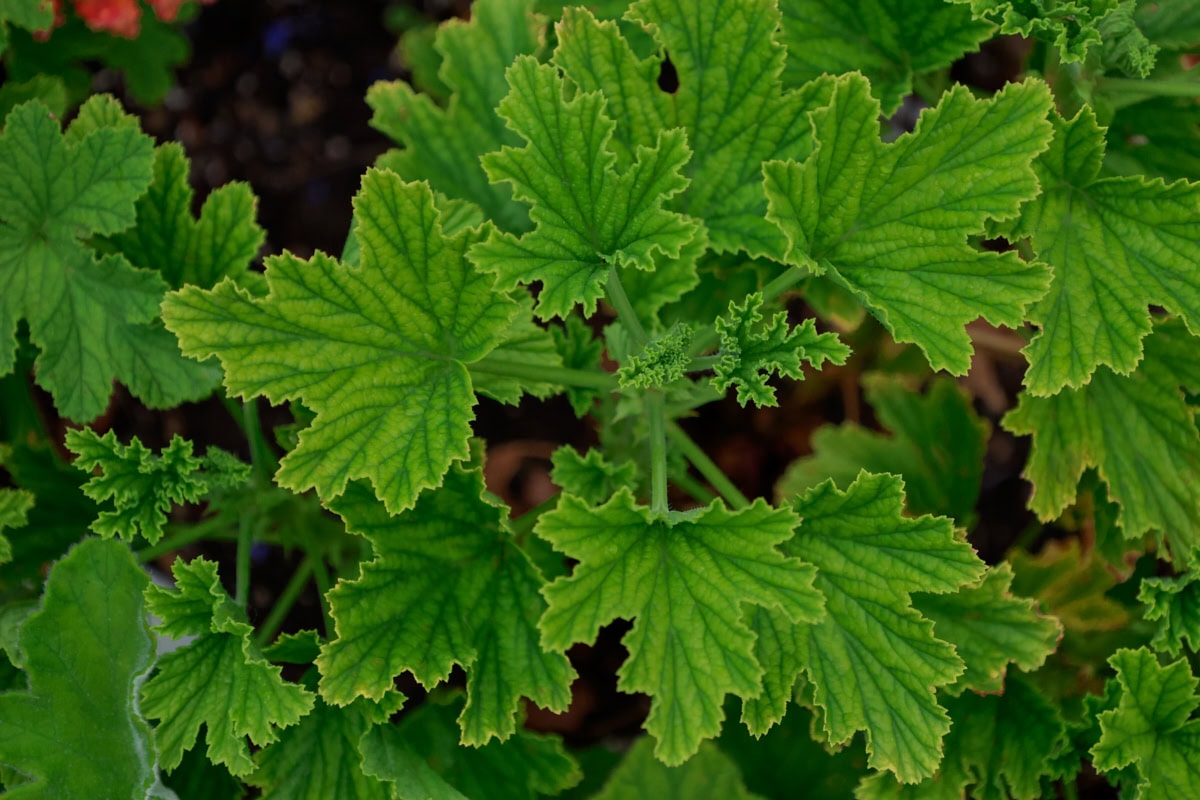
10. Ginger
My scent notes: Very light and mild, definite note of ginger, lemon, salt water, fresh spring greens, lime sorbet, citrus iced tea, refreshing and clean.
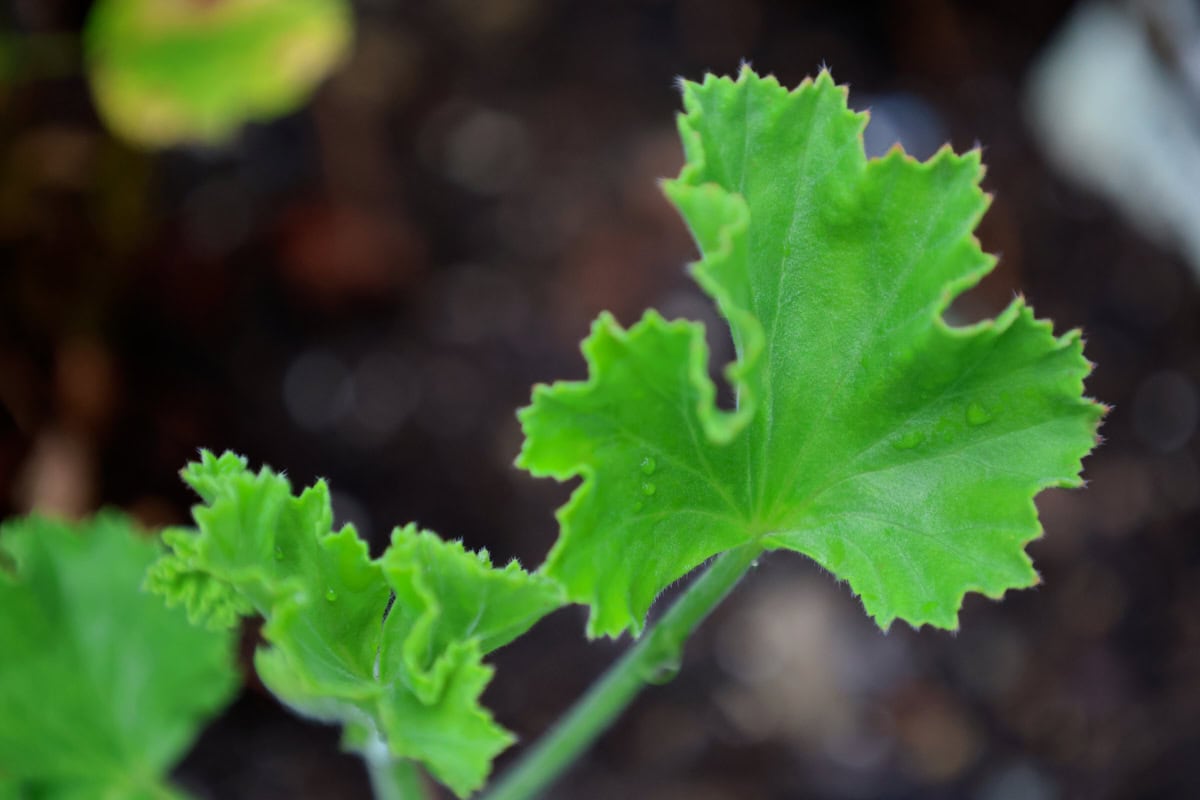
11. Grey lady plymouth
My scent notes: So sweet, bright lemon, deeply tangy, sweet and sour, fresh meadows, lemon pastries, sunny skies, light, clean breezes.
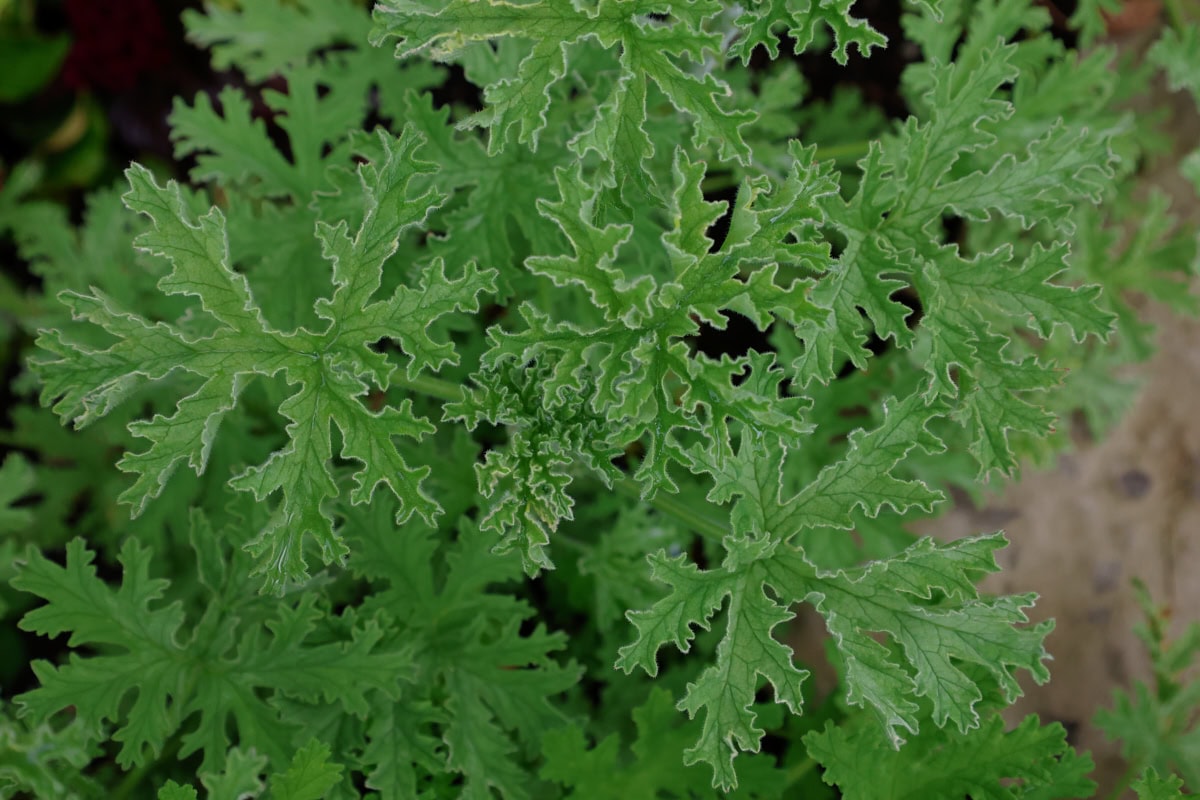
12. Lemona
My scent notes: Very fresh and lemony, mild and sweet, burst of citrus, clean and light.
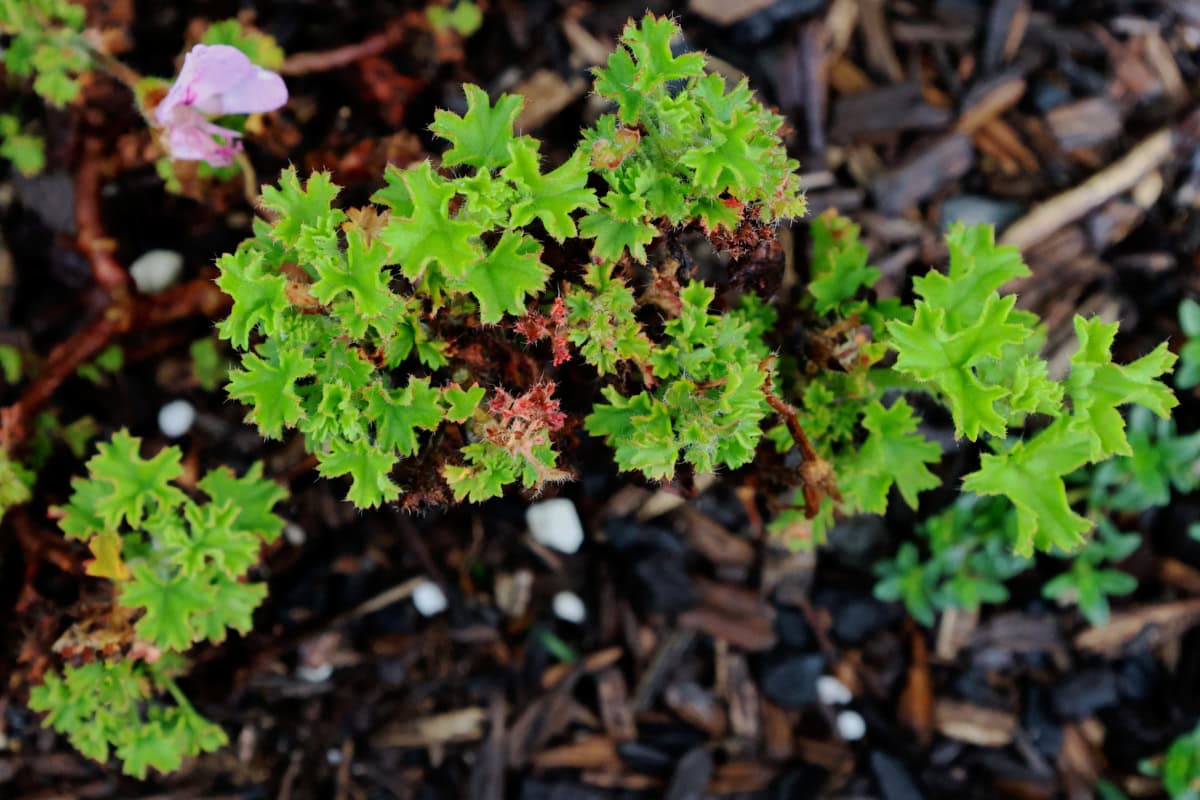
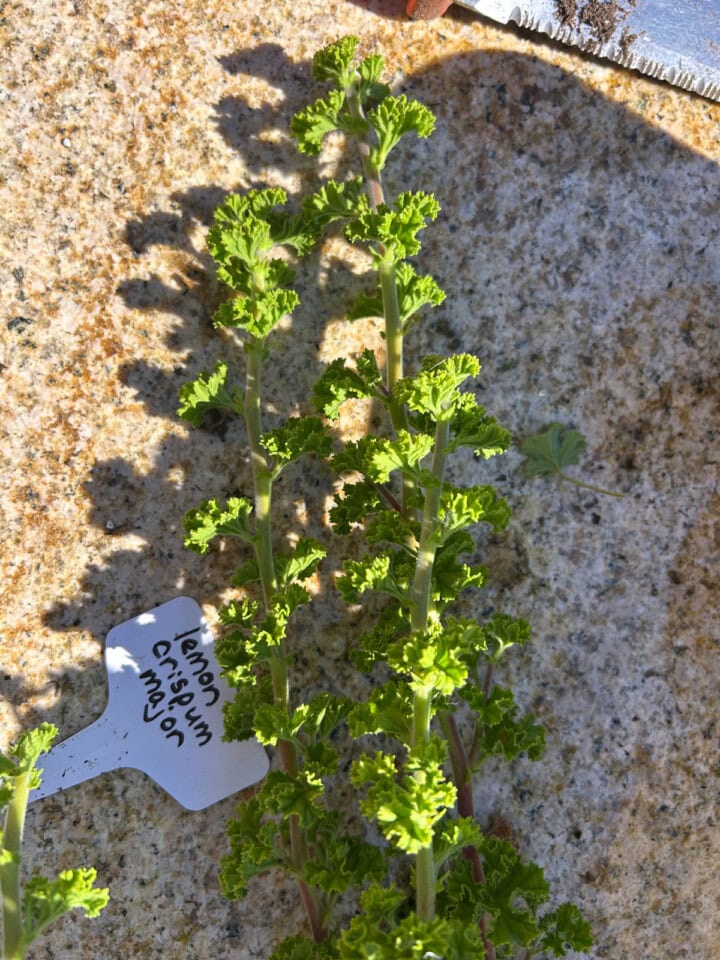
13. Lemon crispum
My scent notes: Fresh and lemony, young blond wood, lemongrass, lemon verbena, limoncello, ocean breezes, light, crisp, and sweet.
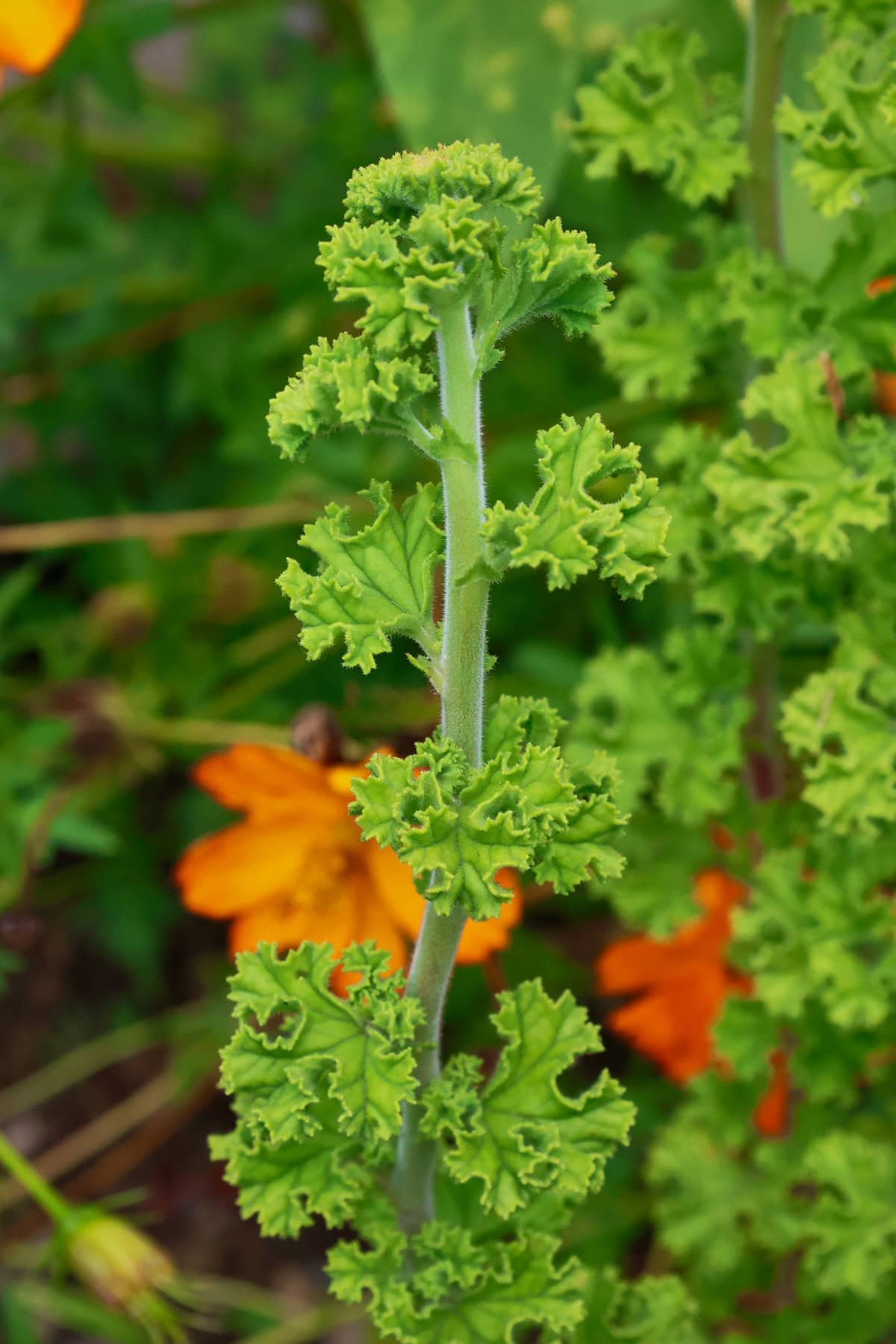
14. Lime
My scent notes: Very deep lime fragrance, limettacello, gin and tonic, fresh cucumber, clean linens, fresh spring skies, ginger ale, crisp, bright, and vibrant.
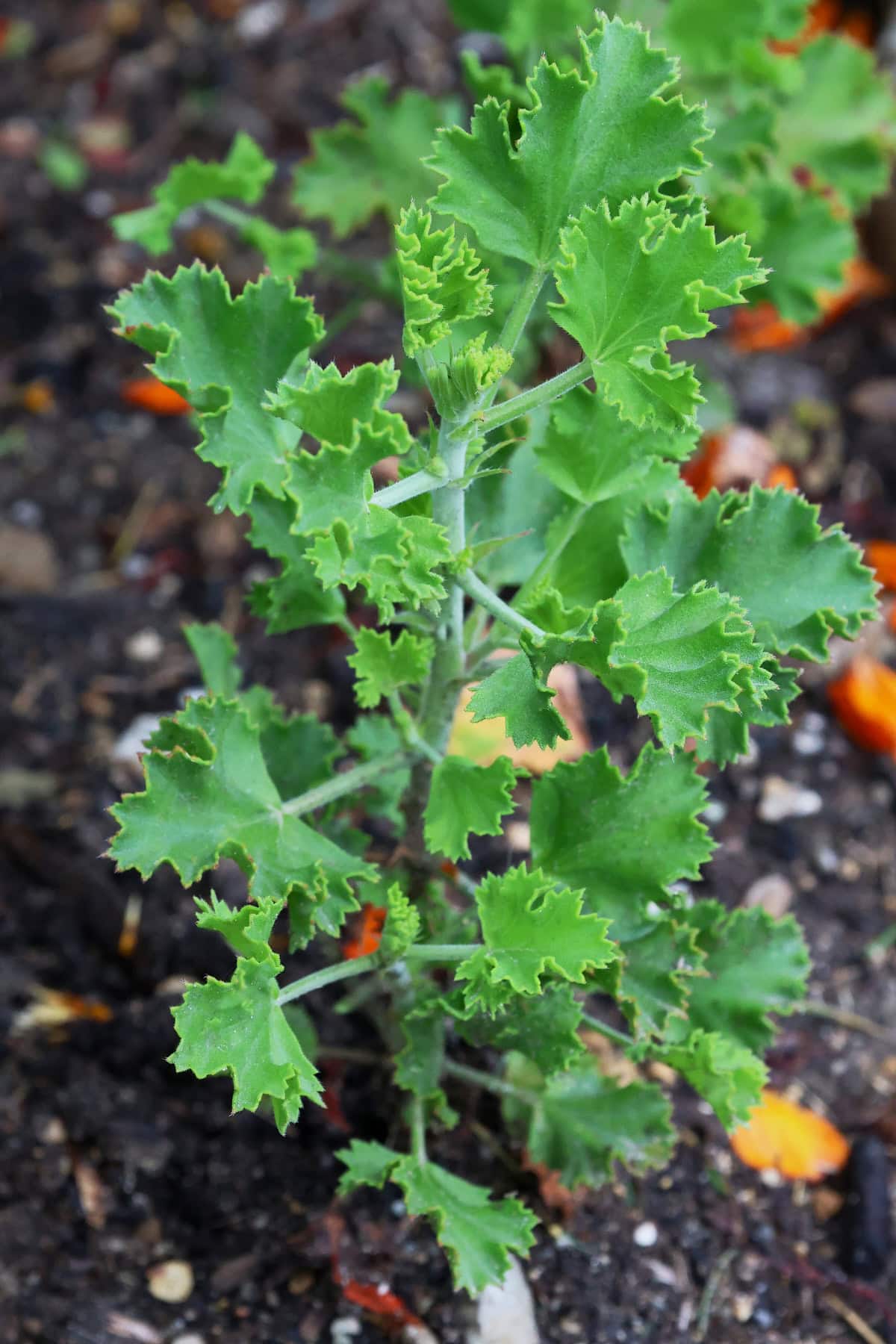
15. Mabel grey
My scent notes: Oh how I love this one; so deeply aromatic, lemons, roses, perfume, roasted citrus, bright, fresh lemonade, deeply tangy, sweet-and-sour, the best perfume, so difficult to describe how amazing this is, very, very special and sweet, so bright and enjoyable.
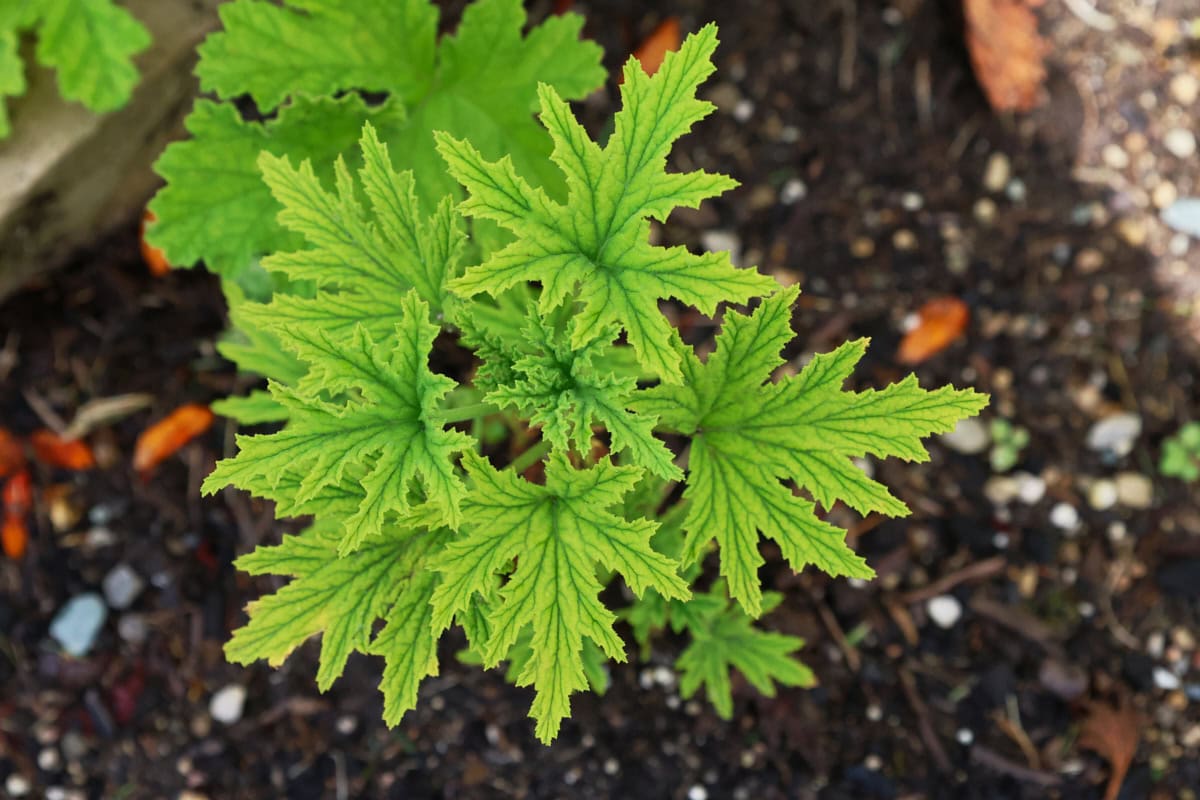
16. Nutmeg
My scent notes: Surprisingly bright and sweet, spiced citrus, nutmeg, clove, cinnamon, pumpkin spice, deeply tangy, oranges, very fresh and botanical, deeply enjoyable, invigorating, such a surprisingly strong scent for such a small and delicate leaf, lime sparkling water, fruit candy, spice shop, so fresh.
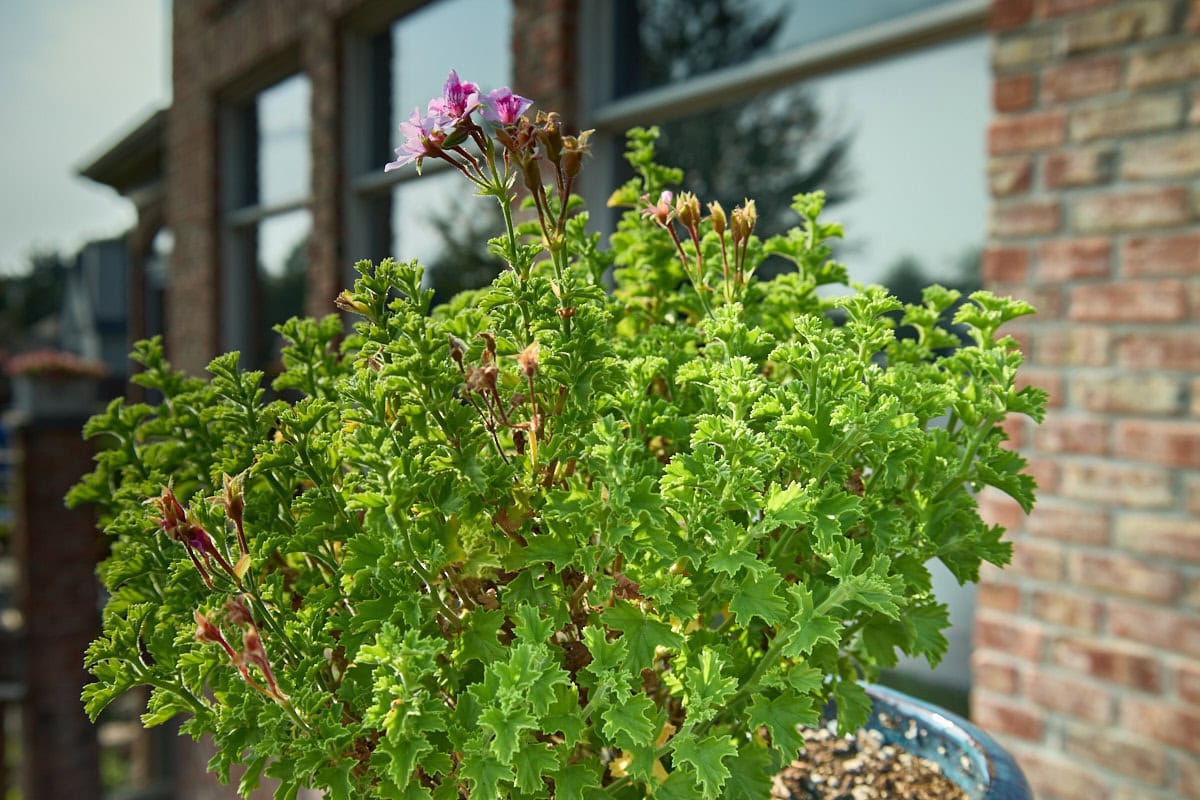
17. Orange fizz
My scent notes: Bright, clean, citrus, expensive perfume, very floral, rose, bejeweled oranges, pineapple, tropical fruit, ginger, lemongrass, lemon verbena, vibrant, memorable, very enjoyable, so fragrant.
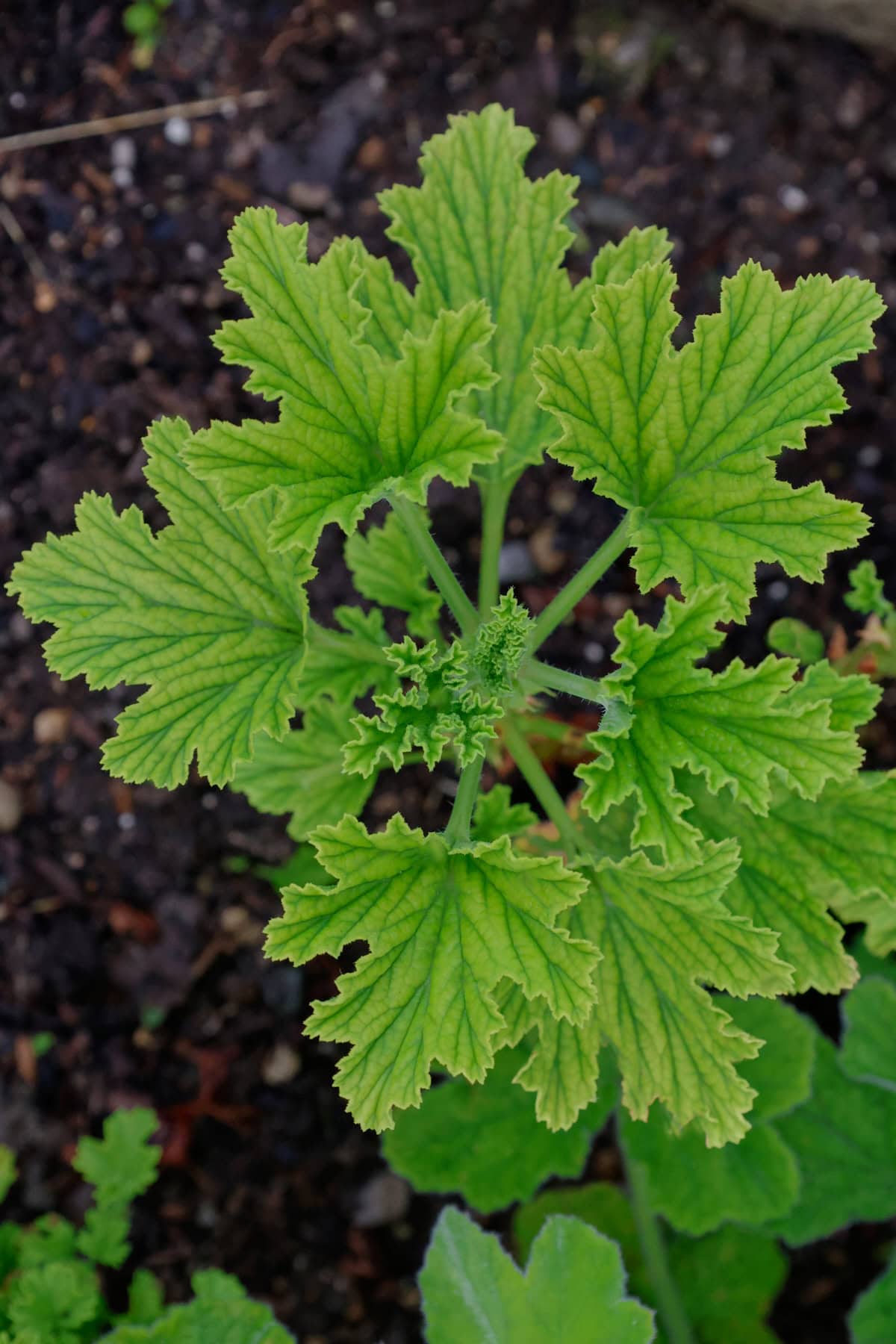
18. Peppermint
My scent notes: Fresh, bracing peppermint, spring greens, cool spring air, fresh laundry, clean bubbling streams, damp rocks, invigorating menthol.
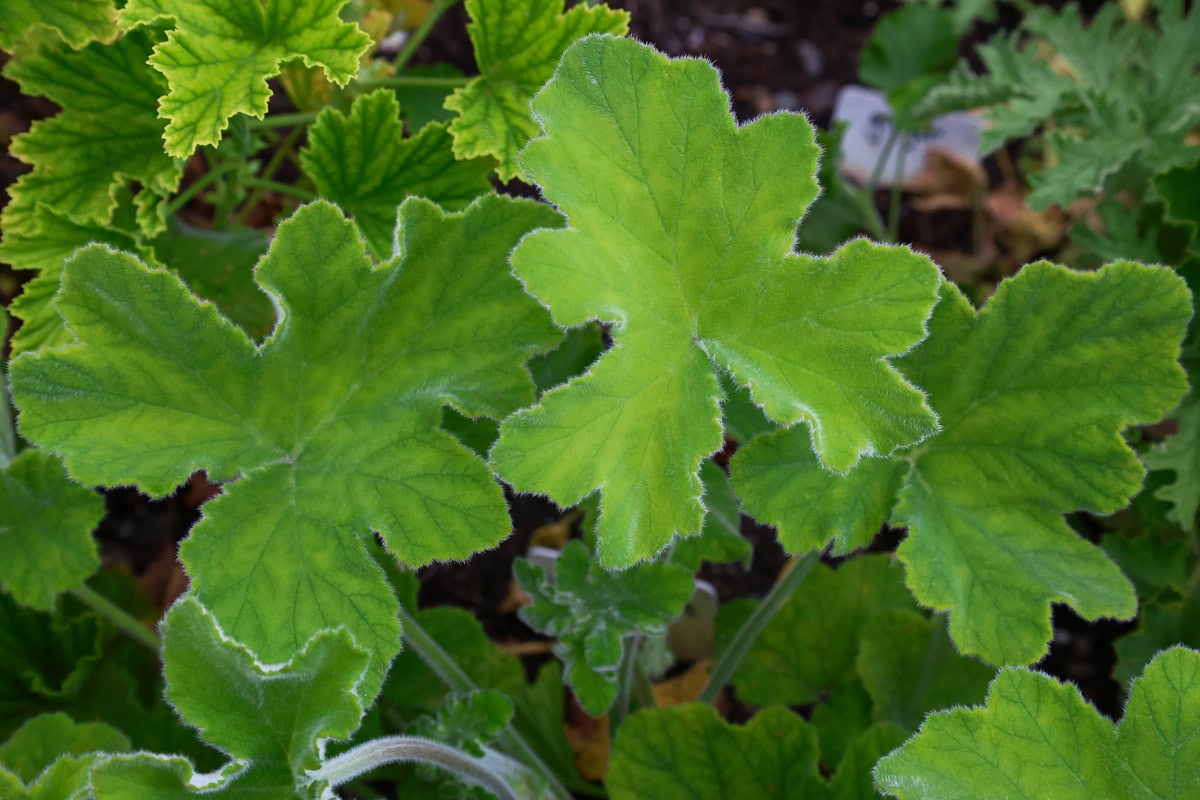
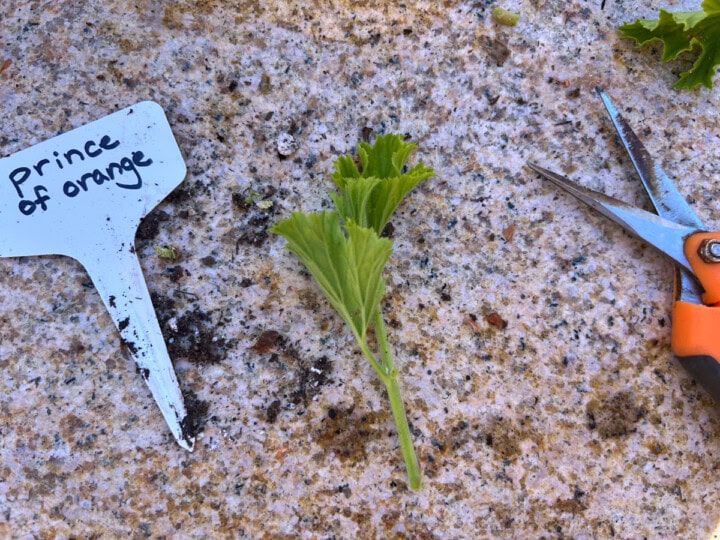
19. Prince of orange
My scent notes: Sweet lemon candy, fresh spring air, clean, vintage linens, bright sunny day, fabric softener, beautiful perfume, light and fresh, lemon-lime, tangerine, very pleasant, light and special.
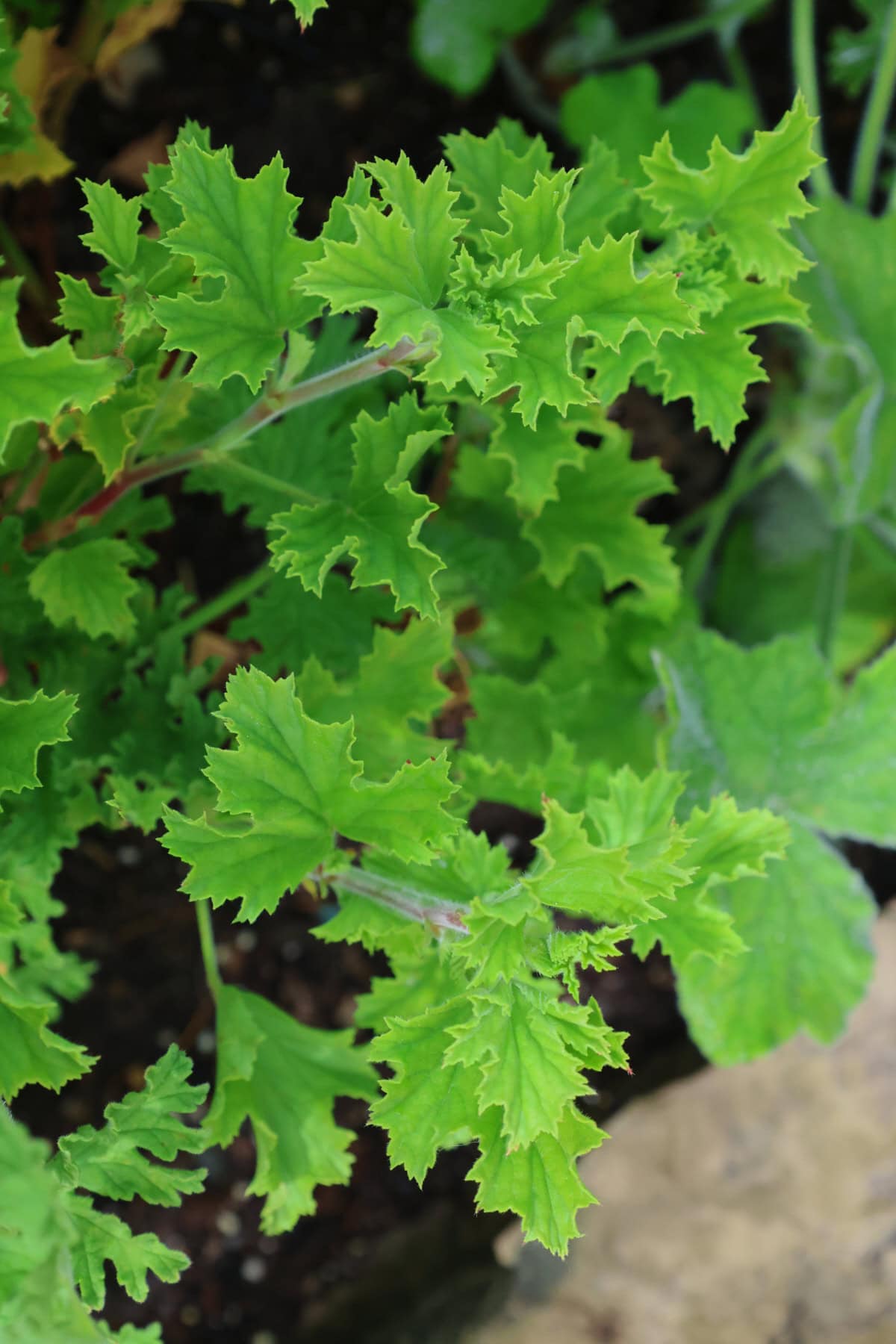
20. Prince rupert
My scent notes: Light, clean, fresh lemon, very uplifting and invigorating, fresh beautiful scent, burst of citrus, air freshener, fresh laundry, freshly mowed grass, spring rain, favorite shirt coziness, so vibrant.
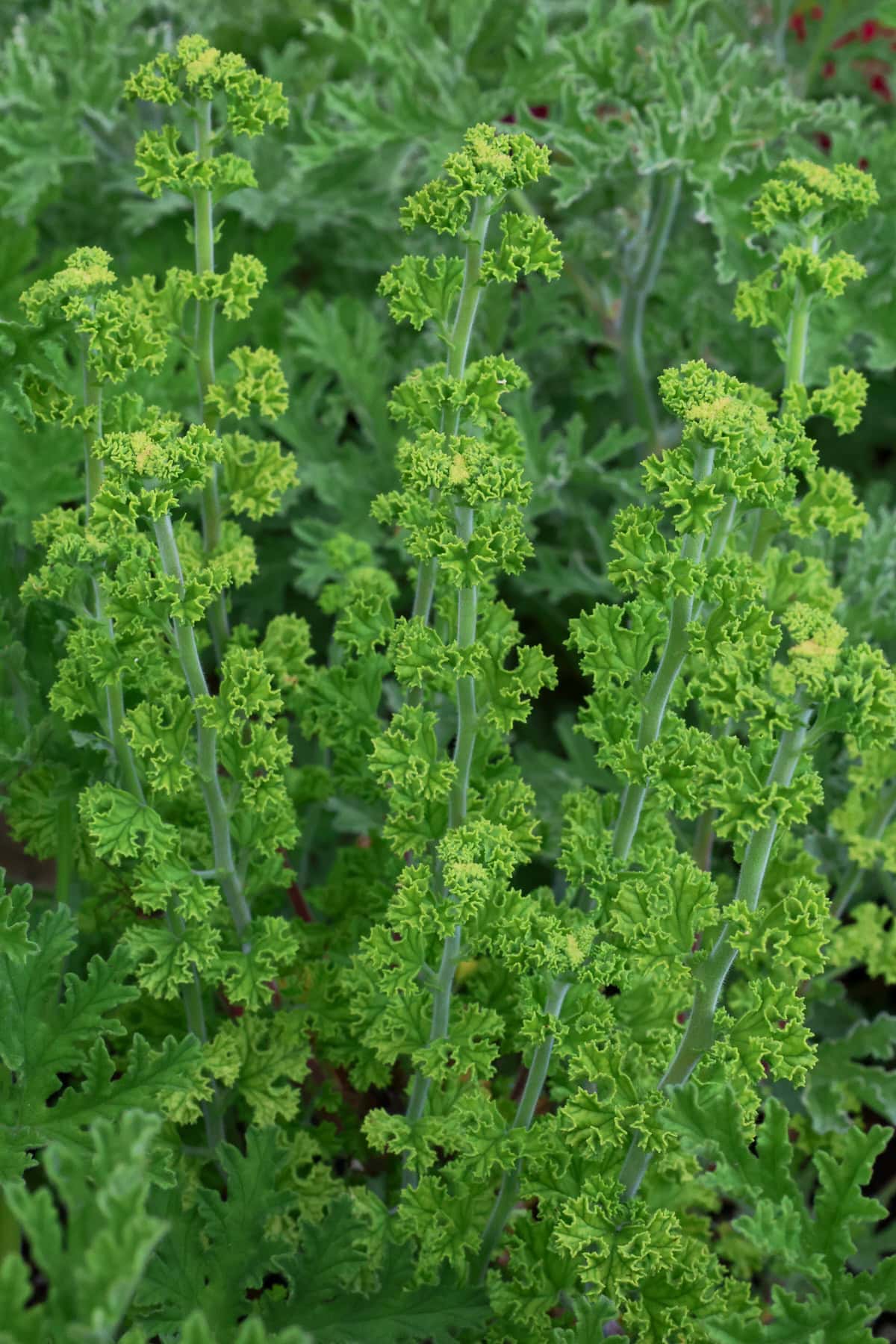
21. Quercifolia
My scent notes: Bracing and minty, pine forest, new clothes, crisp mountain air, bubbling stream, fresh arctic tundra, clean spring breezes, lime, so fresh and bright.
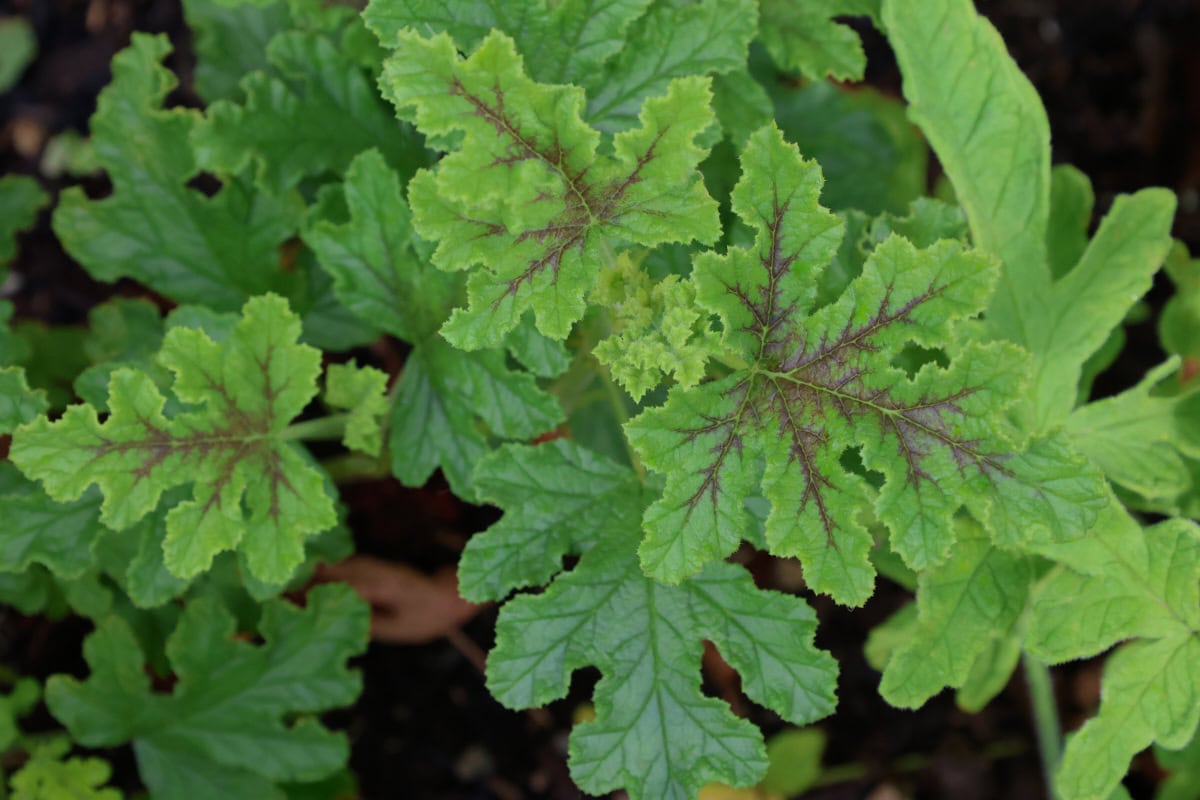
22. Rober's lemon rose
My scent notes: The deepest of lemon and rose, astoundingly accurate name, so enjoyable to smell, the best perfume ever, you have to smell this to believe how enjoyable this is, really one of my favorites, so special, so fresh, deeply fragrant, beautiful citrus, deep musky florals, richly spiced, so wonderful; I asked my son to smell this one and he exclaimed with surprise and profanity how delicious the fragrance is.
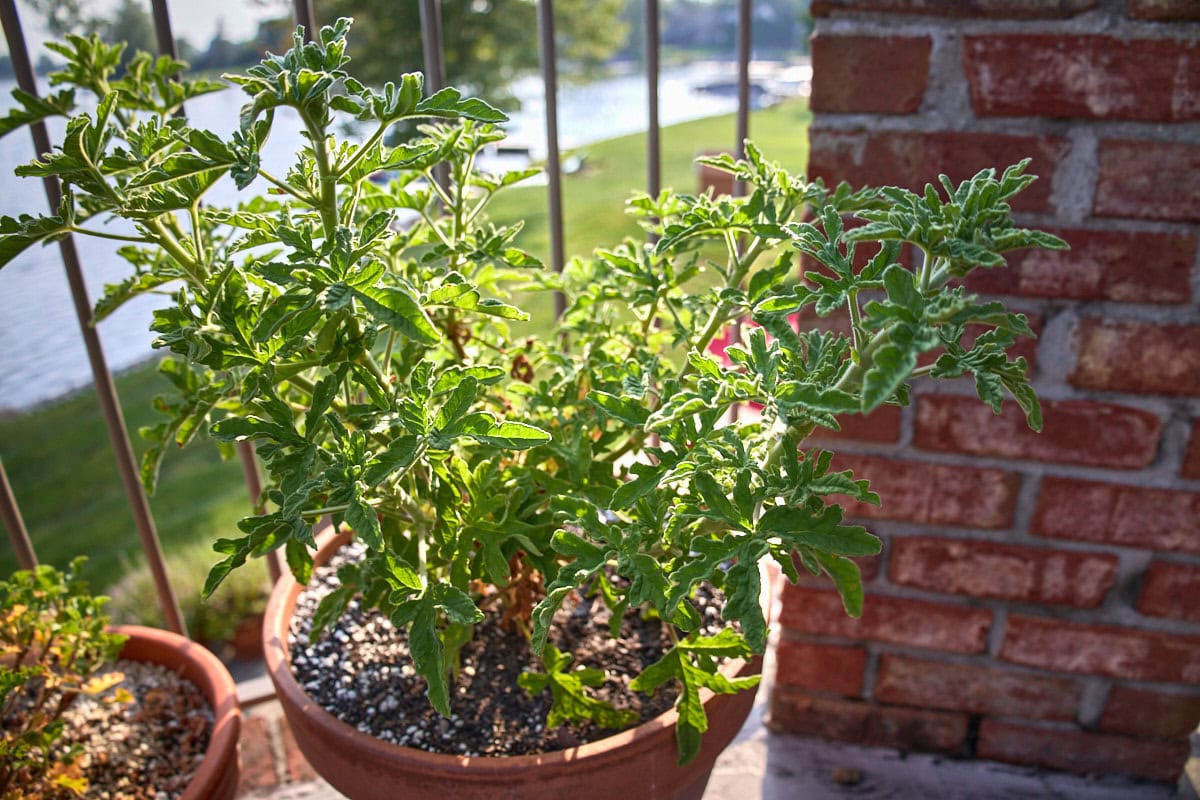
23. Scarlet unique
My scent notes: Lemonade, fresh laundry on the clothesline in the breeze, sweet perfume, fresh grass, lime zest, crisp, clean air.
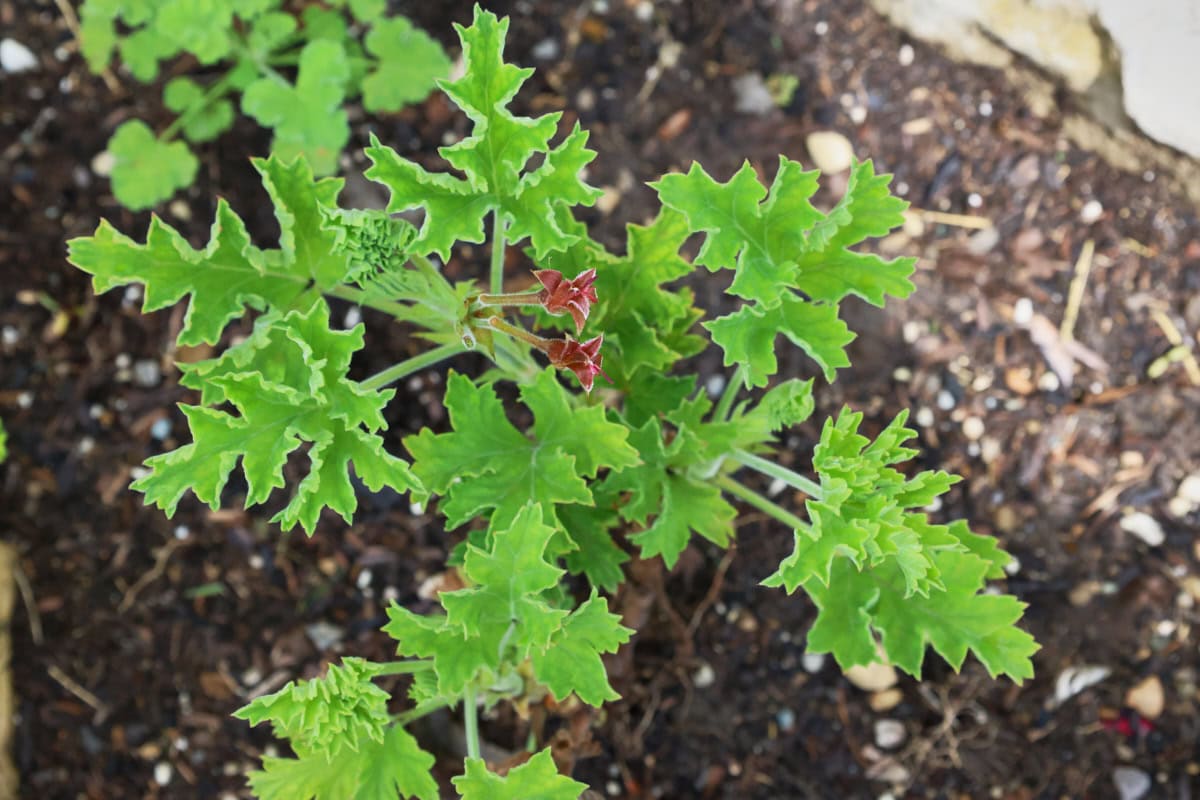
24. Select northern pine
My scent notes: Deep pine forest, walk through the woods in fall with rich, damp, brown leaves, aged wood, baked clay, balsam fir, cedar, chilled winter air, icy streams, hay ride, pumpkin spice.
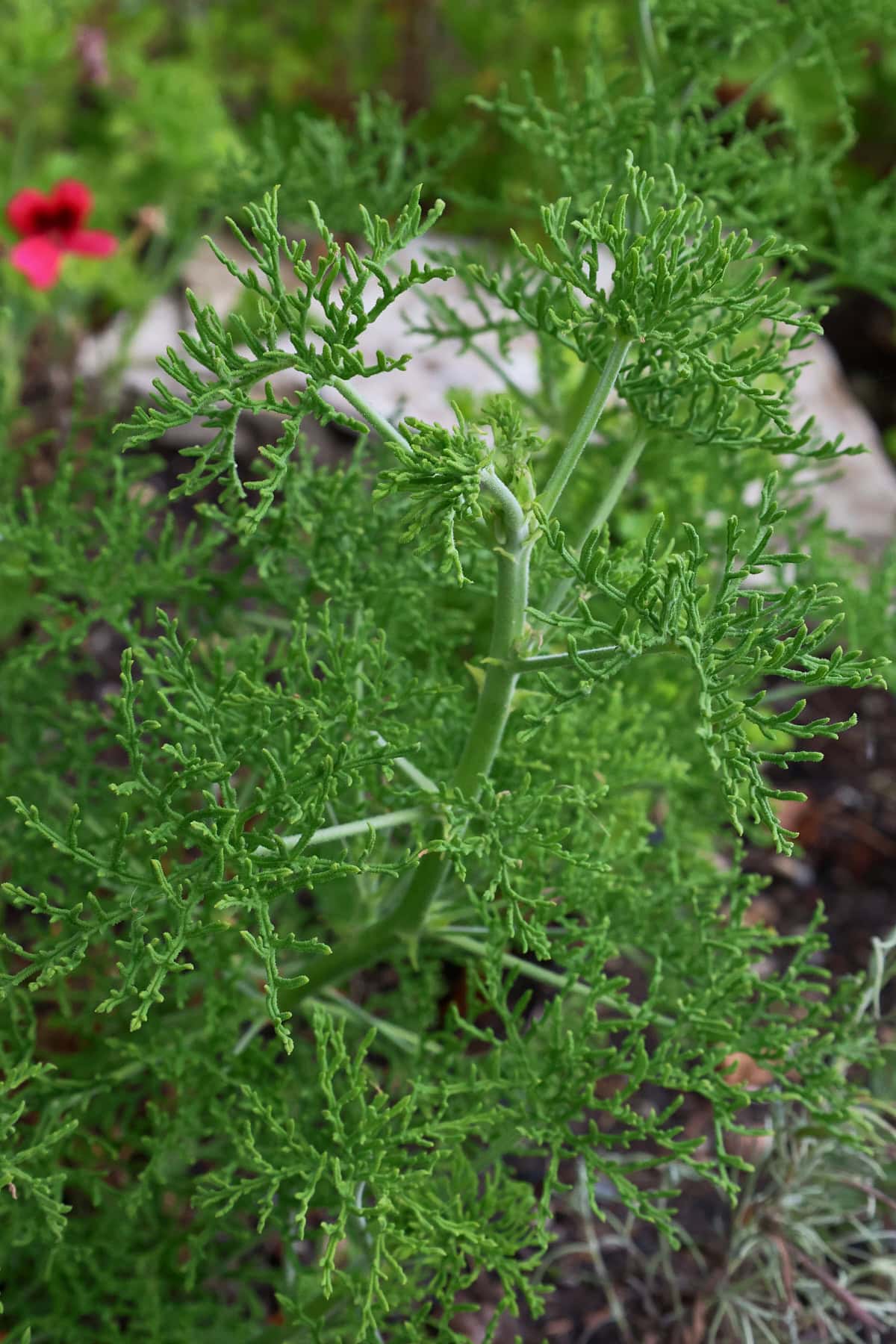
25. Strawberry
My scent notes: Light, sweet and fresh, lemony, tangy, sweet and bright, citrus, mandarin oranges, fruit candy, bright and fresh, strawberry smoothie.
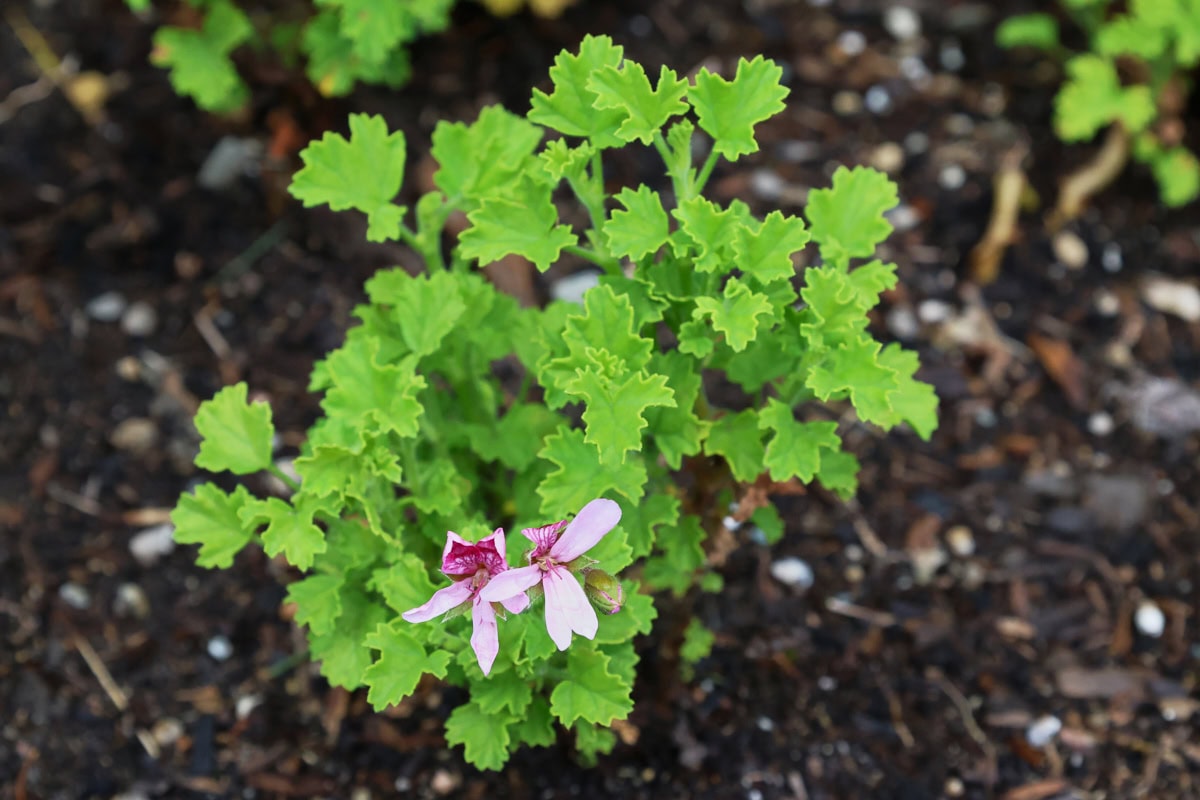
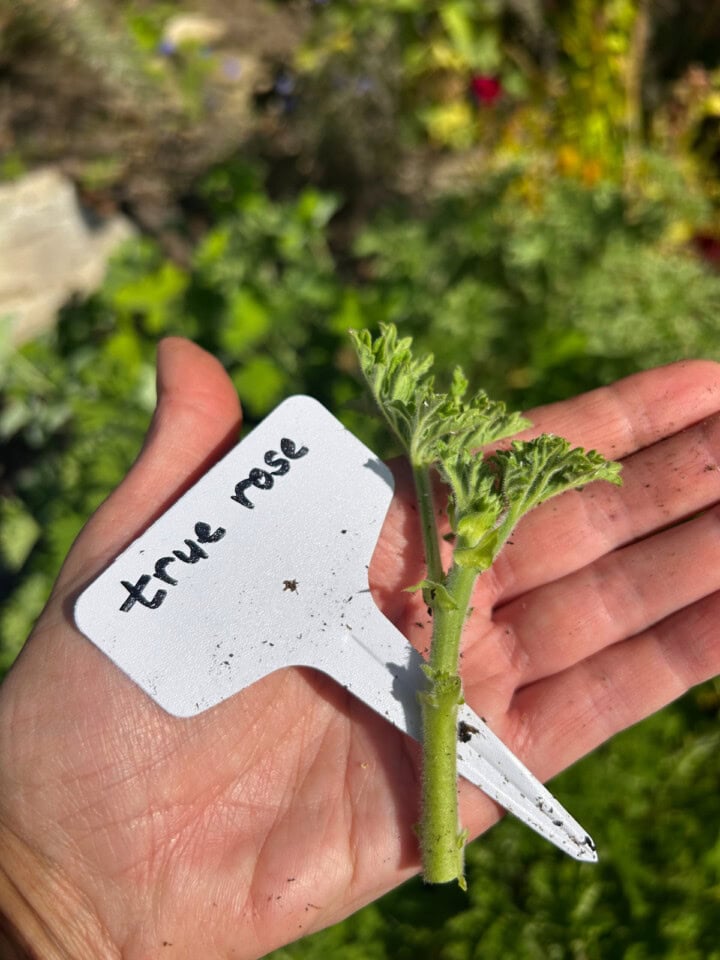
26. True rose
My scent notes: Deep, rich and delightful, damask rose, richly-perfumed fabrics, so floral, rich, and deep, truly enchanting rose fragrance, wonderful, aroma, clean and uplifting. You have to smell this to believe it. I just love this one, so stunningly floral and botanical, it would make an amazing perfume.
✂️How to take cuttings
Soil vs water method
A really quick and easy way to propagate your plants and store them over the winter is to take cuttings and place them directly into a pre-dampened potting mix.
Or you can add your cuttings to a shallow glass with water in the bottom instead. I've used both methods, and for me the soil method has had a higher success rate. And any cuttings rooting in water will need to be transferred to potting soil anyway before spring arrives, so I figure I'm saving time by adding them directly to soil from the beginning. But if you're short on time or space, or have a hard frost in the forecast and need to hurry, you can absolutely do cuttings in water instead until you need to pot them up.
For now, I'll focus on the soil method. Here's what you'll need.
Equipment
- Small pots with drainage, and saucers or trays to catch the water
- Potting medium with good drainage
- Labels, so you'll remember which cuttings are which
- Sharp scissors, pruning shears, or knife
- Cutting board if using a knife to make the cuts
- Water to irrigate the cuttings
- I've found that rooting hormone isn't really necessary with these cuttings; they do well without it in my experience.

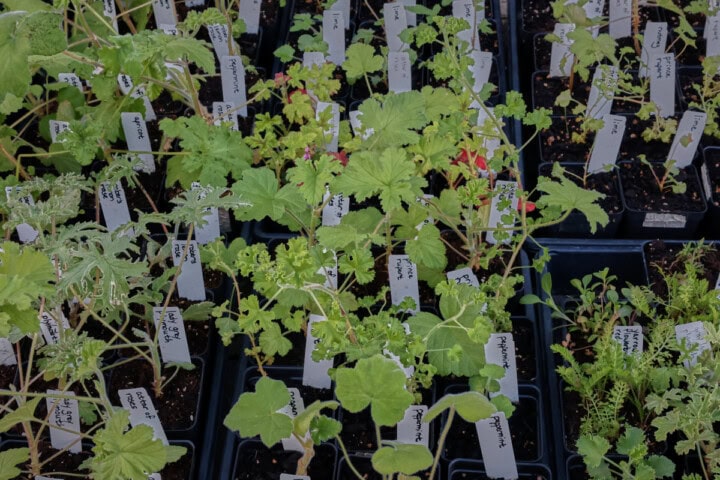
Here are some plants I've uprooted to prepare for taking cuttings:

Cutting steps
- Find some strong, healthy growing tips on your plant, at least the top 3-4 inches (7.5-10 cm).
- Cut straight across, just below a leaf node.
- Remove flower buds, all leaves except for the top 2-3 of them, and the stipules (small leaflike appendages along the stem). I find that you don't need rooting hormone for the cuttings to do well.
- Place your cutting in pre-dampened potting mix in your pot of choice. Bury the first 1 inch (2.5 cm) or so. Firm the soil around the cutting. You can fit several cuttings in a small nursery pot, since you'll be transplanting them out when they need more room.
- Water in your cuttings well.
- Place your pots in bright, indirect light while they recover.
- Water when the top ½ inch (1 cm) of the soil is dry.
- Roots should form in about 2-4 weeks. Once this happens, you can move the cuttings to brighter light and place in larger containers.
- These plants will be so great to have ready to go when spring comes around again before you know it!

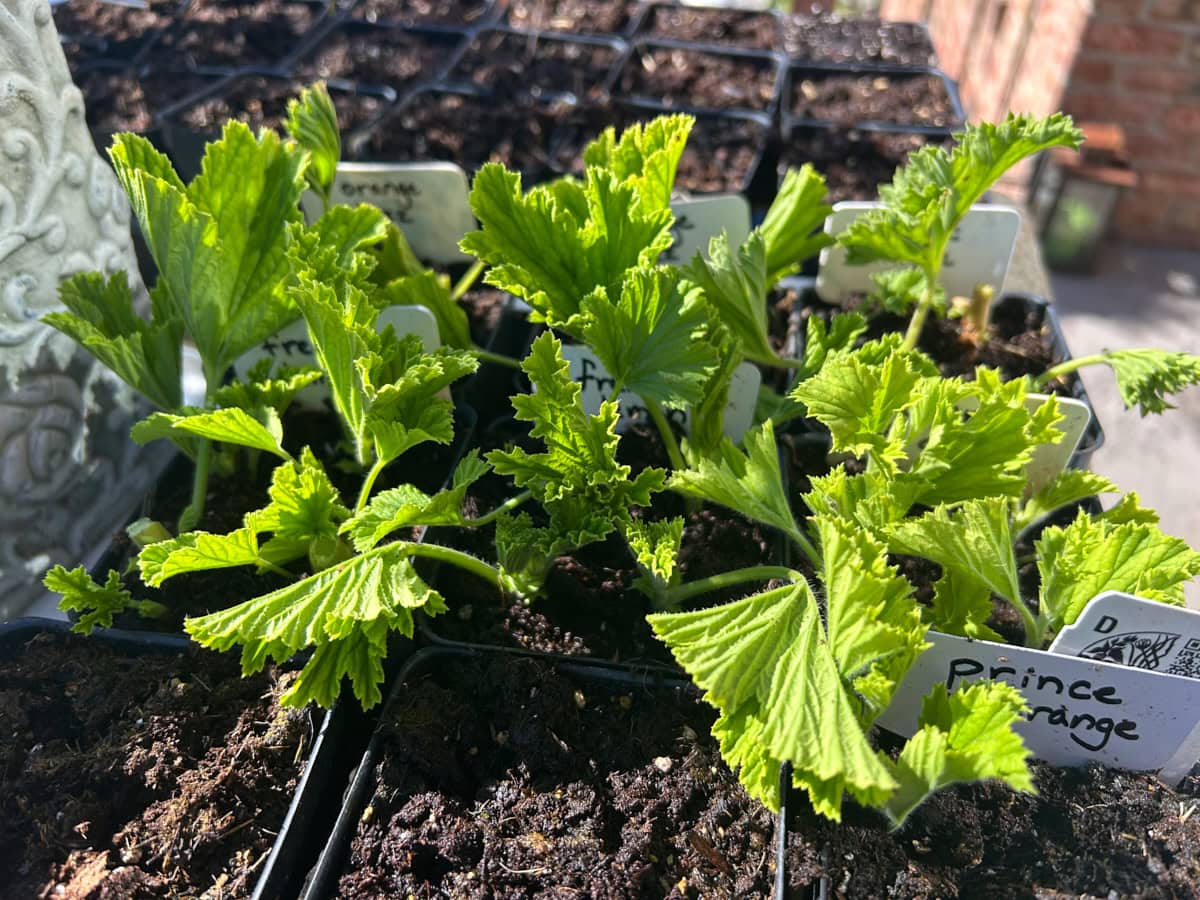
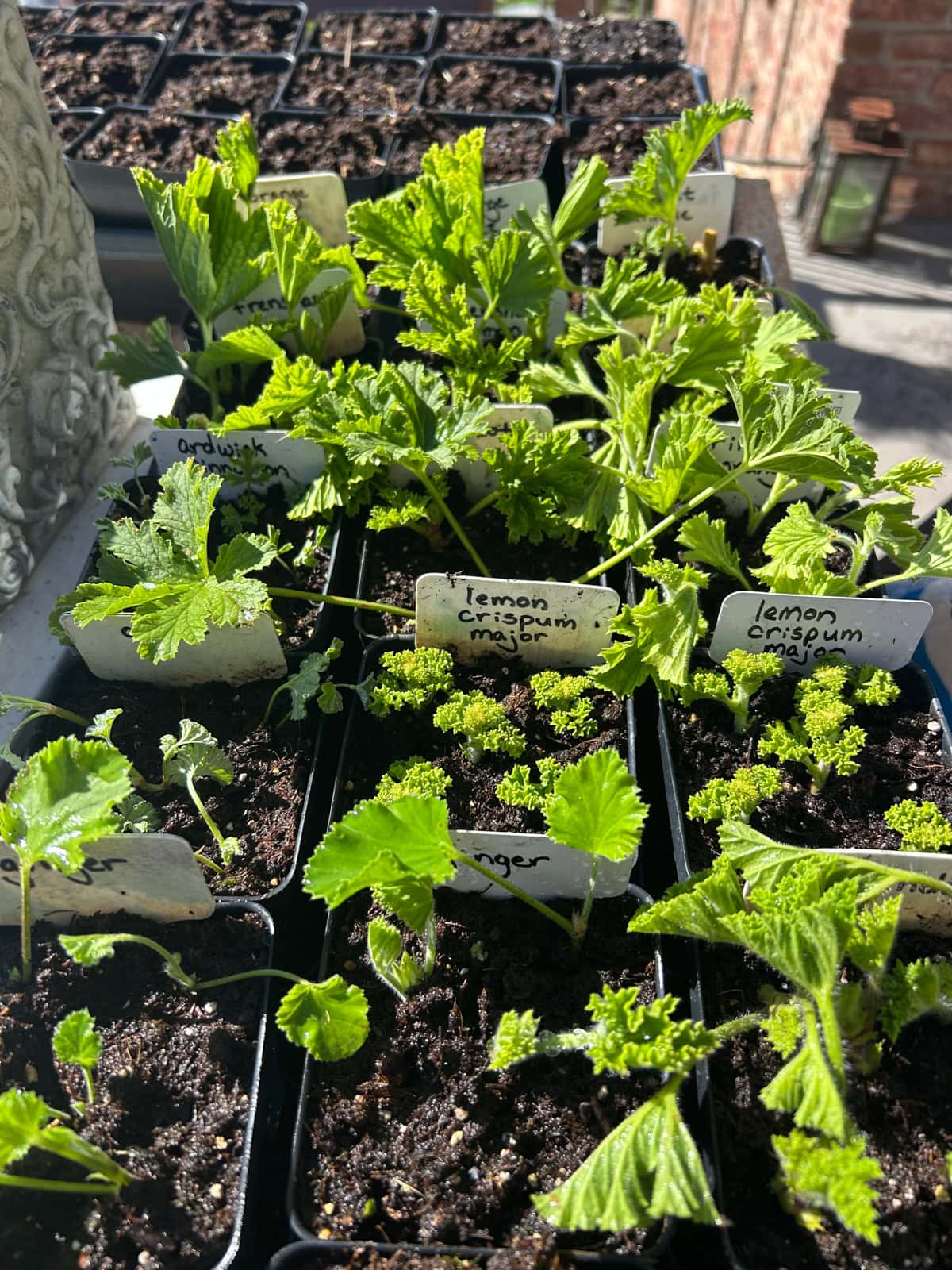
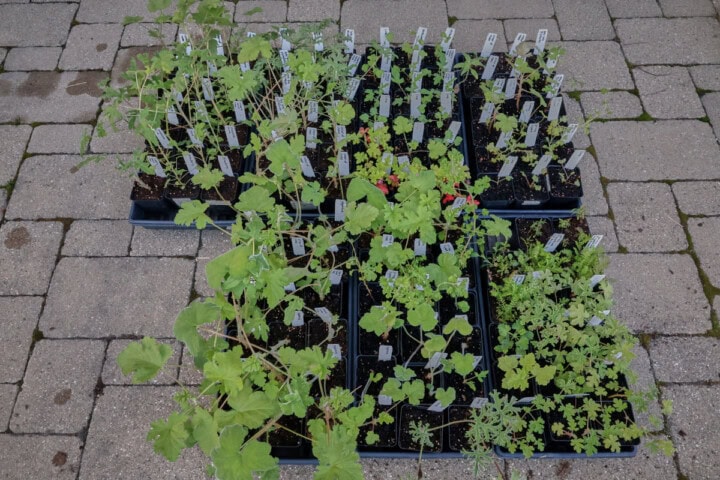
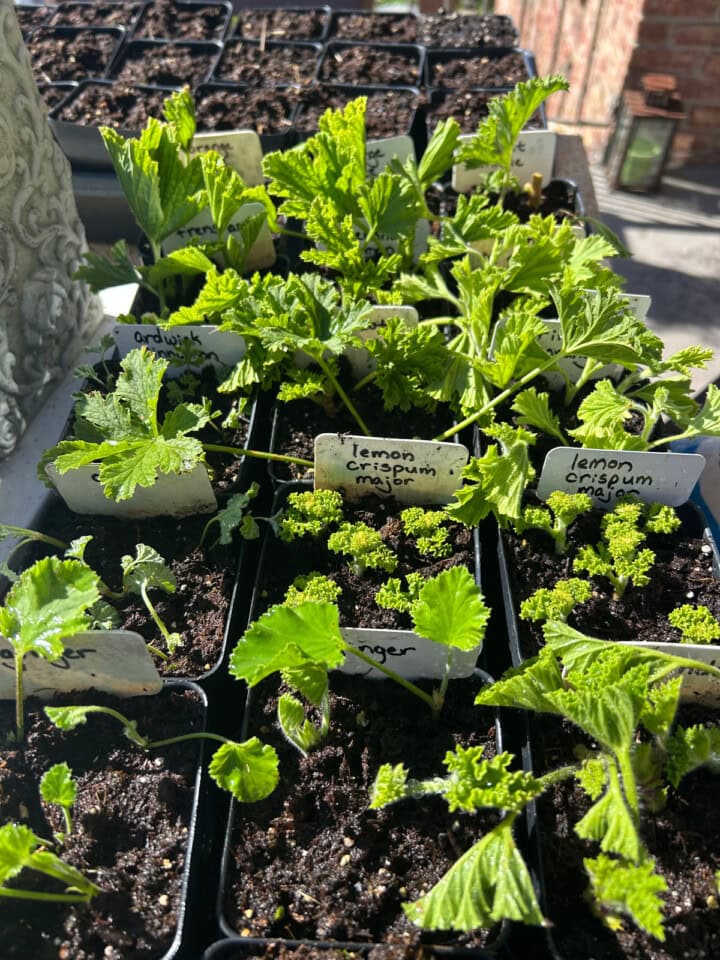
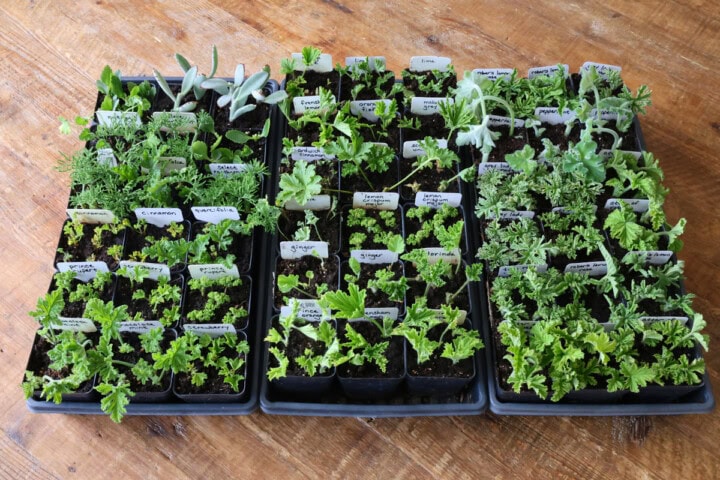
Here are my 3 trays of cuttings this year, as well as some leggy houseplant cuttings (in the back left) that I took to clear out of their pots to make room for these geraniums!

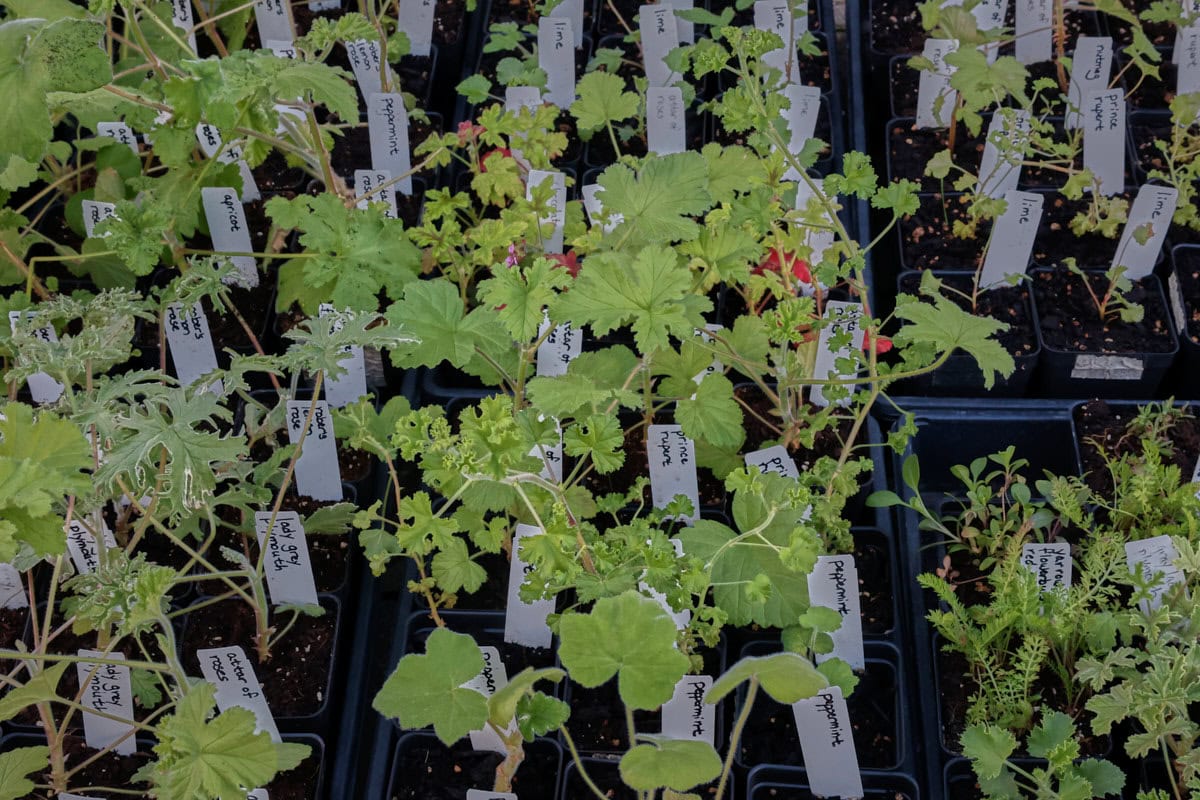
Here are some of my cuttings after last winter, when I had transplanted them to 1 cutting per pot after they had formed some roots. Then I moved them outside to gradually harden them off after the last spring frost to plant them outside.
❄️How to keep the plants dormant over the winter
You can do this if you have a storage place like a garage that stays between 35-50°F (1.5-10°C) with low to moderate humidity. If you're in a colder climate like mine, and your garage enters a hard freeze, this option won't work for you. And the same is true if your climate is too warm and humid, as the plants may never enter true dormancy.
But if your garage is in the optimal temperature range above, you can try this method of dormant overwintering:
- Carefully dig up your plants, leaving the roots intact.
- Shake the soil from the roots.
- Cut the stems down to 6-8 inches (15-20 cm) and remove all of the flowers and most of the leaves.
- You can hang them in bundles, or place them in a cardboard box or large paper bag with some layers of newspaper to absorb moisture.
- Keep your plants in a garage or cellar that will maintain a temperature between 35-50°F (1.5-10°C) with low to moderate humidity.
- Check them monthly. If shriveled and/or completely dry, lightly mist or soak the roots in water. Remove any dead plant material.
- Wake them up about 4-6 weeks before your last spring frost by planting them in a light potting mix and watering lightly.
- Place indoors in bright indirect light. Gradually increase the moisture level.
- New shoots should form in 1-3 weeks as the plants acclimate to the warmth and light.
- Harden them off gradually outdoors over the course of a week in sunny conditions, or 3 days in fully cloudy conditions before planting outside.
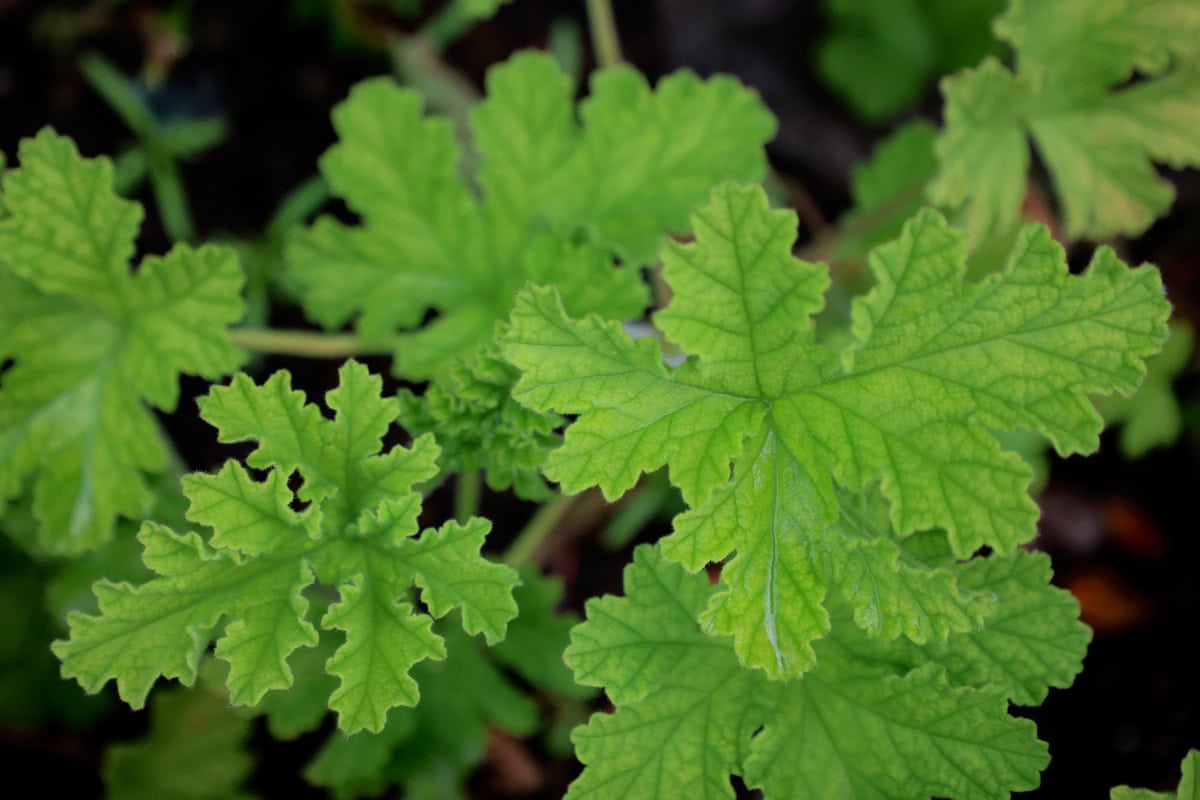
🪴How to bring the plants in as houseplants
If you don't want to deal with cuttings or garage dormancy, you can bring in your potted pelargoniums and keep them as houseplants in the winter. I find that this is easiest if you've already planted them in pots all summer, as they don't love being transplanted to pots at full size.
Keep the potted plants indoors in a south or west-facing window with ideally 4-6 hours of direct sun daily to avoid becoming leggy. If you'd like to use grow lights instead, you can position the lights 6-12 inches (15-30 cm) above the plants and keep them on for 12-14 hours per day.
However you overwinter your scented geraniums, you've just made your spring gardening planning and budget that much easier by not needing to reorder new ones. This is such a great way to keep your scented geraniums year-round!
❓FAQs
Scented geranium is the term for a group of plants in the genus Pelargonium that are grown for their fragrant leaves rather than for their flowers. They're not true geraniums, which are in the genus Geranium, but the names are often used interchangeably.
Many scented geraniums are hybrids that don't grow true from seed, so most are propagated by cuttings. So you'll need to buy them as plants. This is why I recommend taking cuttings yourself each year, so you only have to buy the plants once. I buy mine at trusted sellers like Richters Herbs, Ginger's Greenhouse, and Select Seeds.
Yes, scented geraniums are tender perennials, but only in USDA hardiness zones 9-11. In colder climates like mine, they're grown as annuals or overwintered as cuttings, dormant plants (in a cold but not freezing area like a garage), or brought in as houseplants. I explain how to do these methods above in this post.
No, only certain species and hybrids within the genus Pelargonium are known as scented geraniums. Plants within the genus Geranium are grown for their flowers, and most of them have little to no scent.
Yes, most scented geraniums flower, but their blooms are considered secondary to their fragrant leaves. The flowers may be small, and flower mainly in summer with full sunlight and optimal growing habits.
The leaves of scented geraniums are edible. However, the way you should consume them matters if you want them to taste good. As I explain in the post, the volatile oils on the surface of the leaves are the ones that lend the fabulous scent to these leaves. However, the oils within the leaf tissue itself are bitter and astringent. So when scented geraniums are used in a culinary capacity, it's best to use the whole leaves to maintain optimal flavor, rather than cutting them.
The main flavor categories for scented geranium typically include: rose,
citrus, non-citrus fruit, mint, spice, pine / woodsy, and ornamental (with showier blooms). There are so many wonderfully-fragrant varieties within these categories, as shown in the photos and scent notes above.
Yes, the plant often sold as a "citronella geranium" is indeed a scented geranium. It's known as Pelargonium citrosum, a variety with a lemon fragrance. Despite marketing claims of this plant keeping mosquitos away in an outdoor setting, research shows that the compounds in the live plant aren't reliable enough to do this. However, the stronger, more concentrated essential oils from this plant (citronellol, geraniol) may be more successful at repelling insects.
Yes, scented geraniums, which are in the Pelargonium genus, are toxic to dogs, cats, and horses if ingested. The symptoms can include vomiting and depression. Please keep these plants out of reach of pets.
✨Recipes and gardening posts you'll love


✏️Have you grown any of these scented geraniums?
Please let me know in the reviews and comments below!


Leah G says
I was really excited to find this page today. Currently looking for cuttings so we can grow them at the farm for our event bar - we create cocktails inspired by individual palate profiles and develop personalized menus for events. We contract with my sister who has been growing edible flowers, herbs and even some fruit and spicy peppers for us on her farm. This ensures our plants our non-toxic and safe for culinary purposes. We would love to add these geraniums to our repertoire for 2026 and thought I would check in with you to see if you have a reliable source for cuttings and/or a culinary safe resource for purchasing starters.
Thank you for your thoughts and time!
Leah
The Go Bar
Shelly Benitah says
Leah, Thanks so much for reaching out! I love using scented geraniums for cocktails. At the moment, I have simple syrups that I've made from them and vodka-based liqueurs from them that are steeping. The flavors of these leaves are absolutely stunning! I'm excited for you to have some for your event bar.
My favorite vendors for scented geraniums are:
Richters Herbs, at https://www.richters.com/product-catalog?query=pelargonium
Ginger's Greenhouse, at https://gingers-greenhouse.com/search?type=article%2Cpage%2Cproduct&q=scented*+geranium*
And in case you're interested for your event bar, I have additional posts on the blog with botanical liqueurs and cocktails that I've made from my herb garden. Thanks so much for writing, and have a great week!
Shelly
Leslie says
So excited to find you very informative web site.
Thank you for the pictures and descriptions
I will be ordering some
Shelly Benitah says
Thanks so much, Leslie! I'm so glad you like the site. I know you'll love your scented geranium plants. I'd love to hear how they work out for you!❤️
Lori says
I just bought six different ones at a local nursery. I’m excited to try them this year. Thanks for the tips, I think I’ll try and save them this fall!
Shelly Benitah says
Lori, I'm so excited for you! Thanks for letting me know, and I'd love to know how this goes! I love it. ❤️