
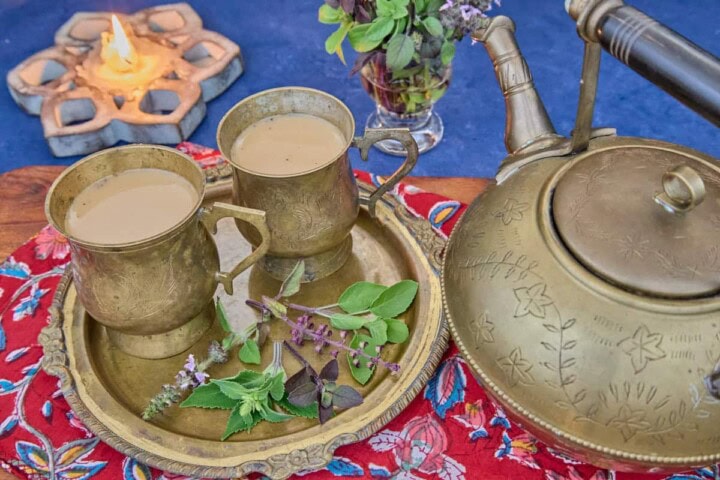

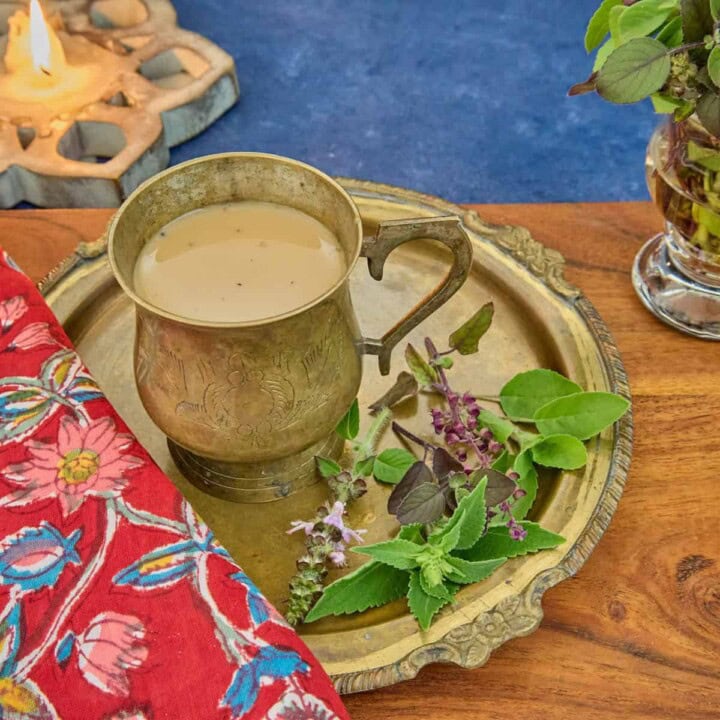

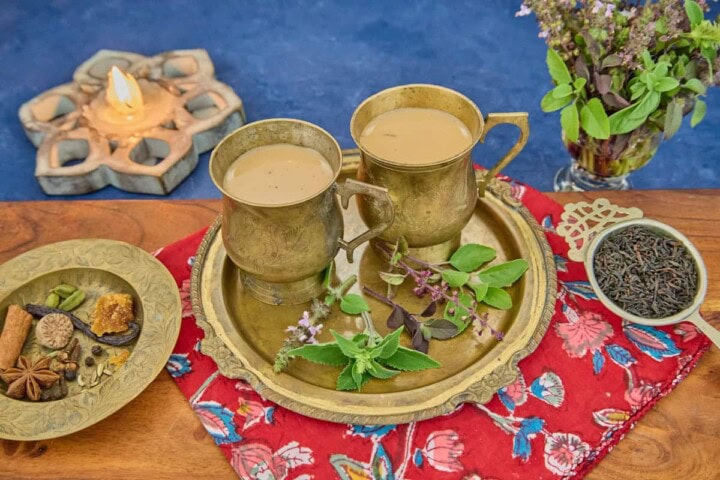


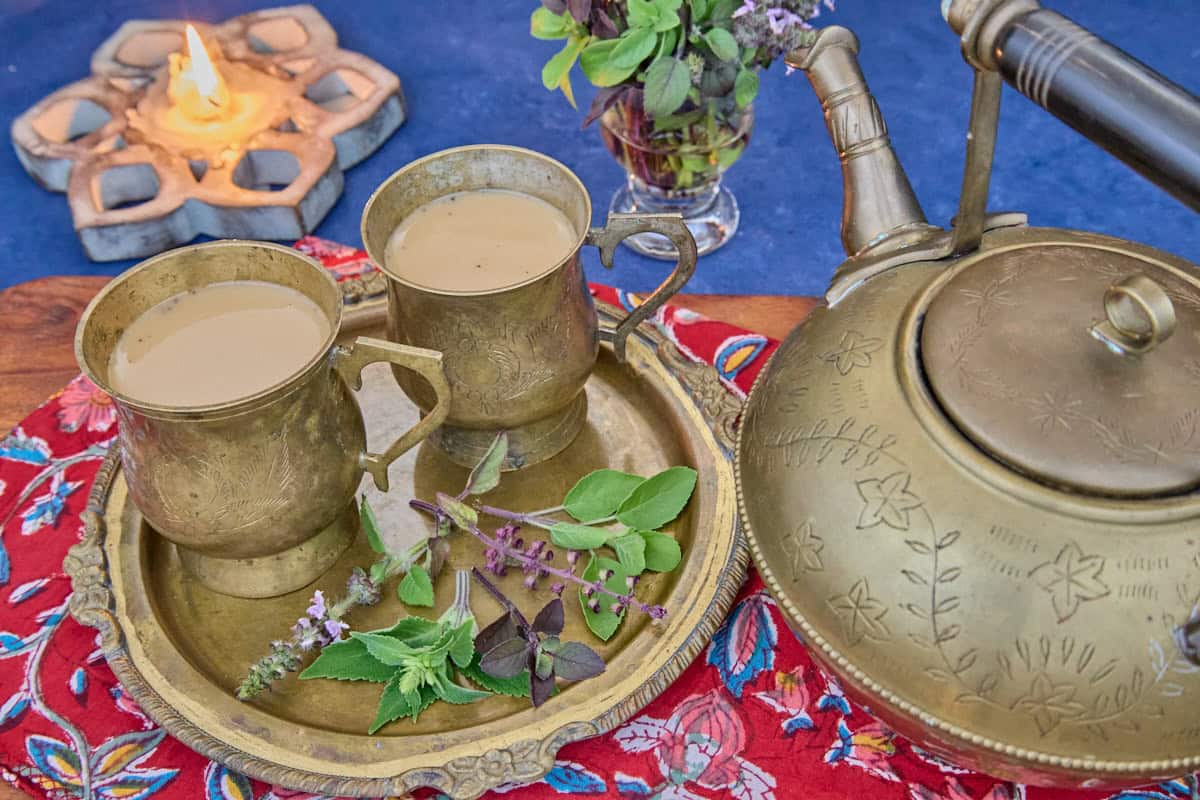
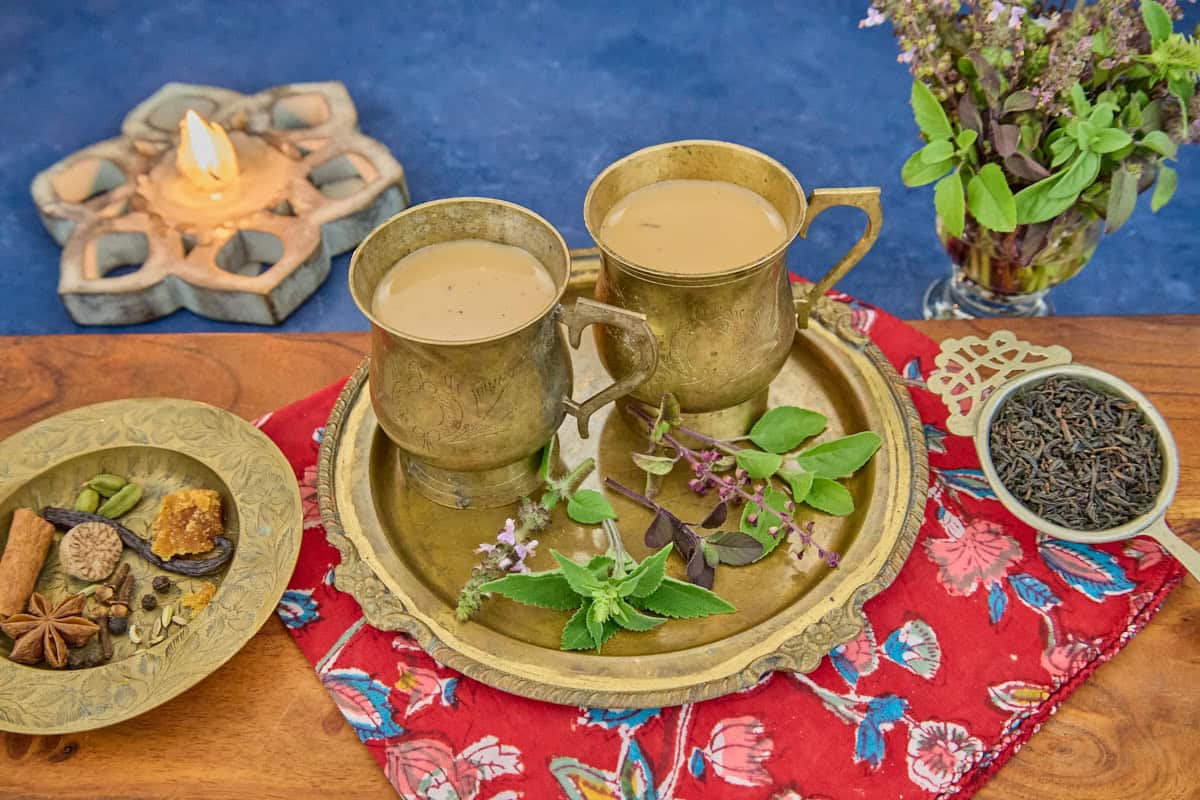
Imagine a hot, smooth and creamy, enticingly-spiced cup of tea with the revered, stress-relieving and immune-boosting properties of holy basil. And from your own garden! This Vegan Tulsi Masala Chai with Garden Holy Basil is that tea. It's truly special. Let's grow and make it together!

Tulsi is the name for holy basil in India, where it's considered sacred in Hindu culture. Ayurvedic medicine includes tulsi in its practices to promote a strong immune system, improve digestion, and alleviate respiratory conditions.
In India, Tulsi is often grown in homes for both worship and protection. It's known as the "queen of herbs," helping to purify the environment and the mind. People often serve it as an herbal tea there, helping to bring about health and well-being.
Masala chai, means "spiced tea," and often includes tulsi leaves. It's not only a delicious drink in India; it's also a social experience. Each chaiwallah (street tea vendor) has a unique blend, and people also often serve chai in homes and to guests. It's common to enjoy this drink during any time of the day. The robust flavors of assam black tea are the perfect backdrop for the creamy (non-dairy, in our version) milk, with an enchanting blend of spices including cardamom, cinnamon, ginger, cloves, black peppercorns, and fennel seeds. And jaggery, an unrefined natural sweetener, is often included, and alternatively, so is sugar.
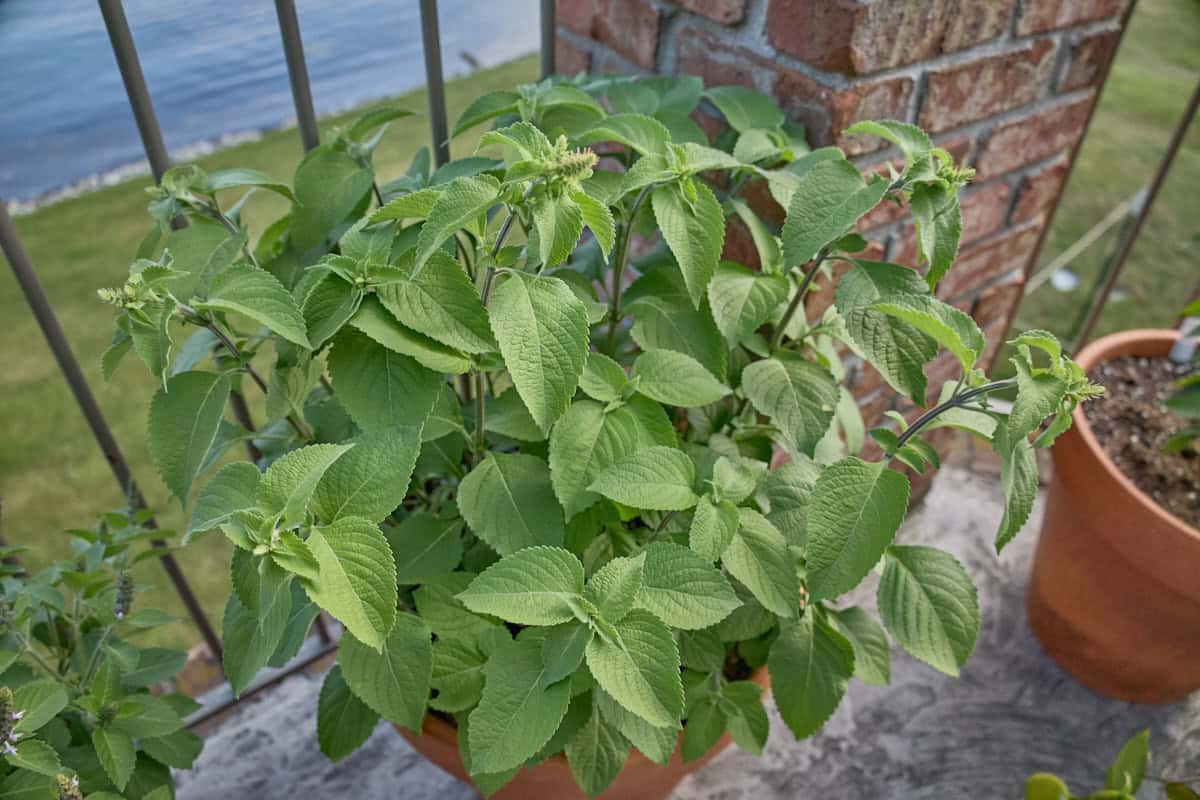
Here are some photos of my 5 organically-grown tulsi varieties in my herb garden and in pots on my balcony:
Tulsi camphor kapoor:

Tulsi krishna (purple sacred):

Tulsi rama (green sacred):
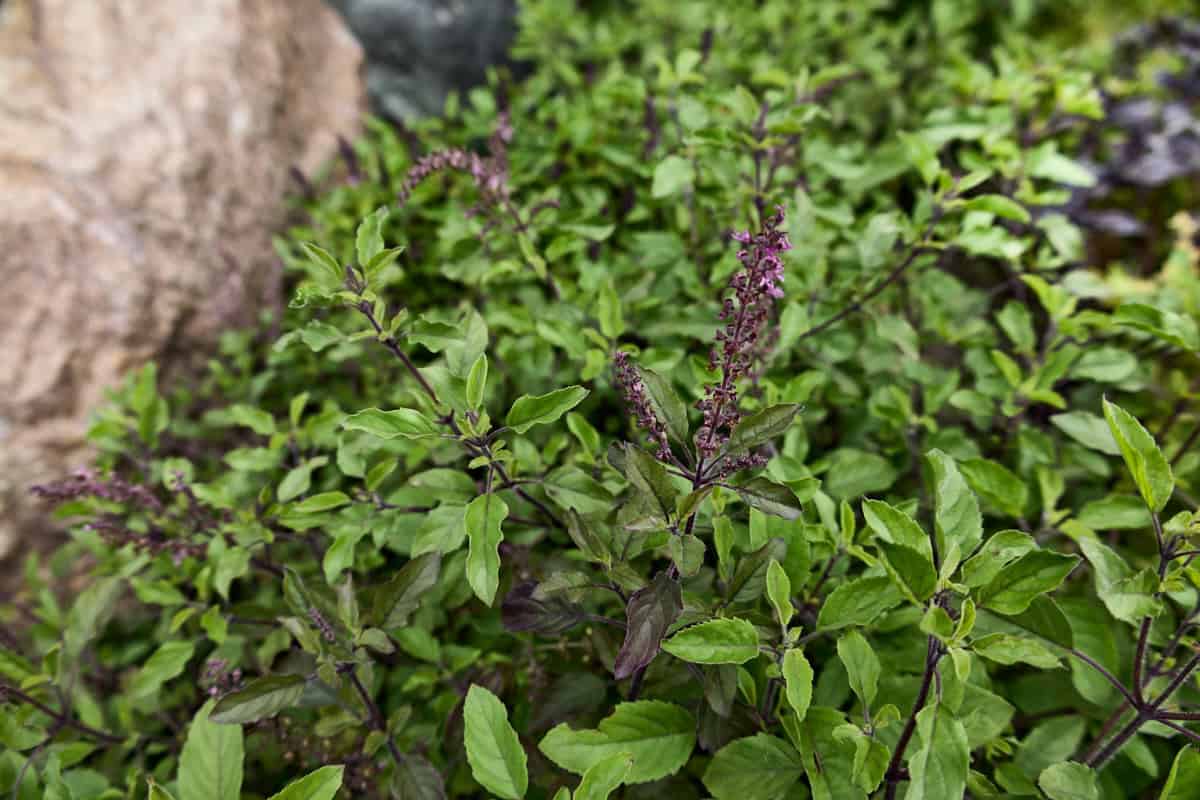
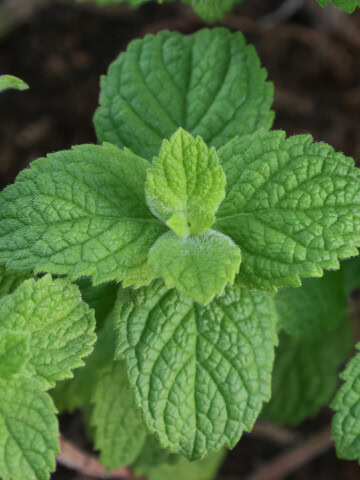
Tulsi temperate:
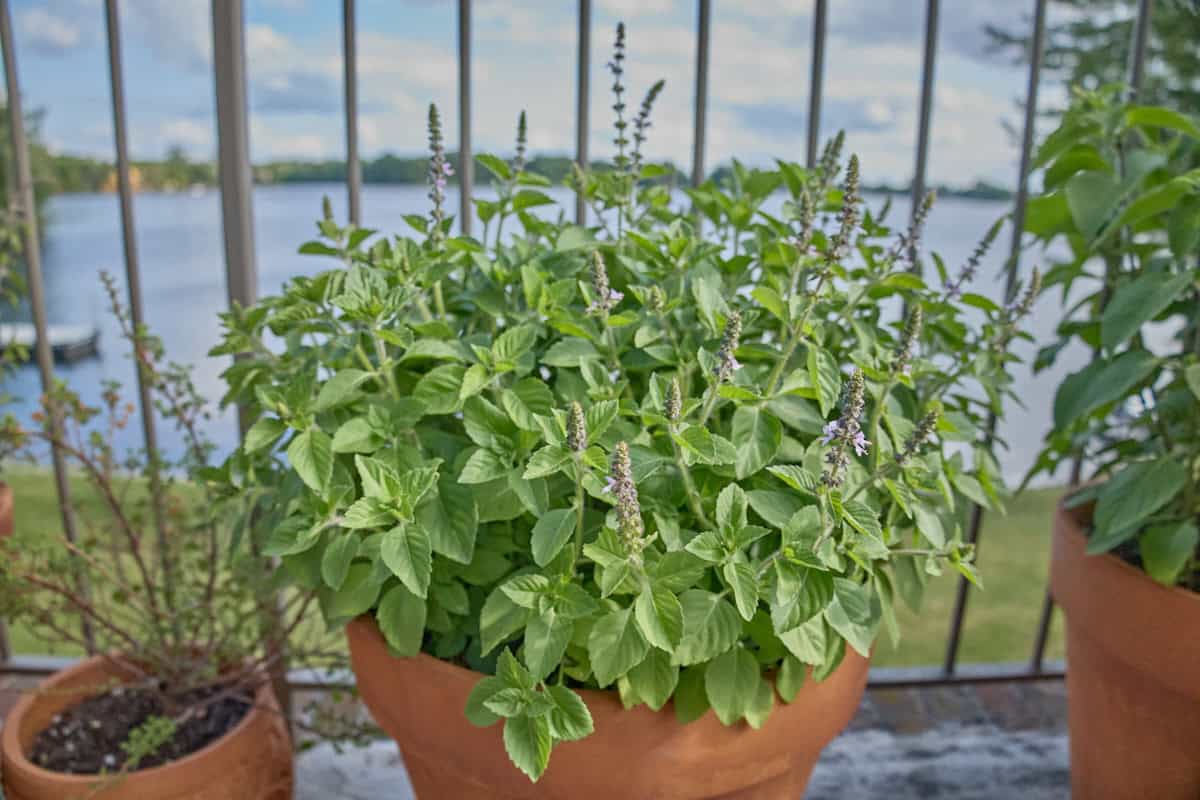
Tulsi vana:
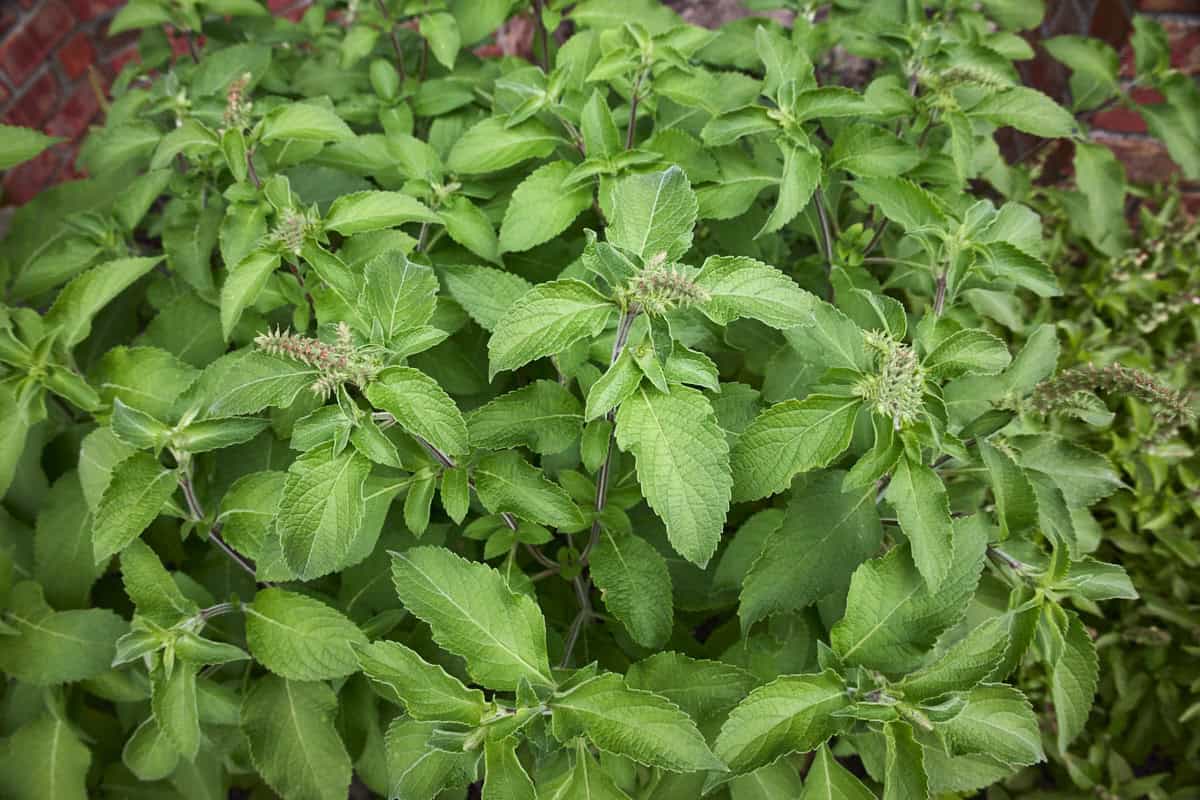
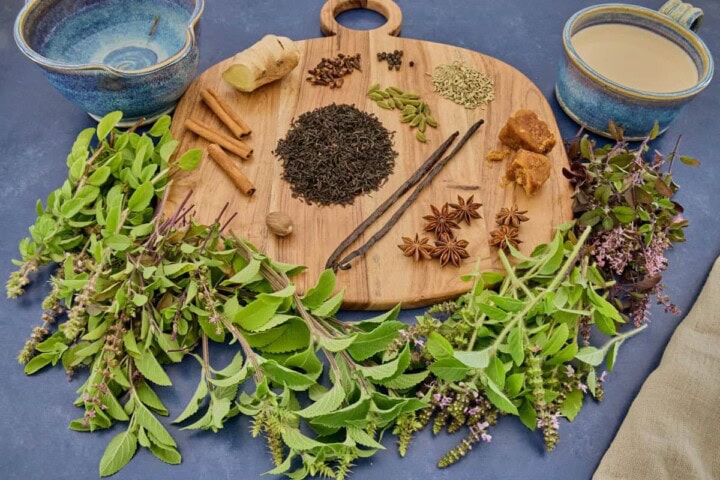
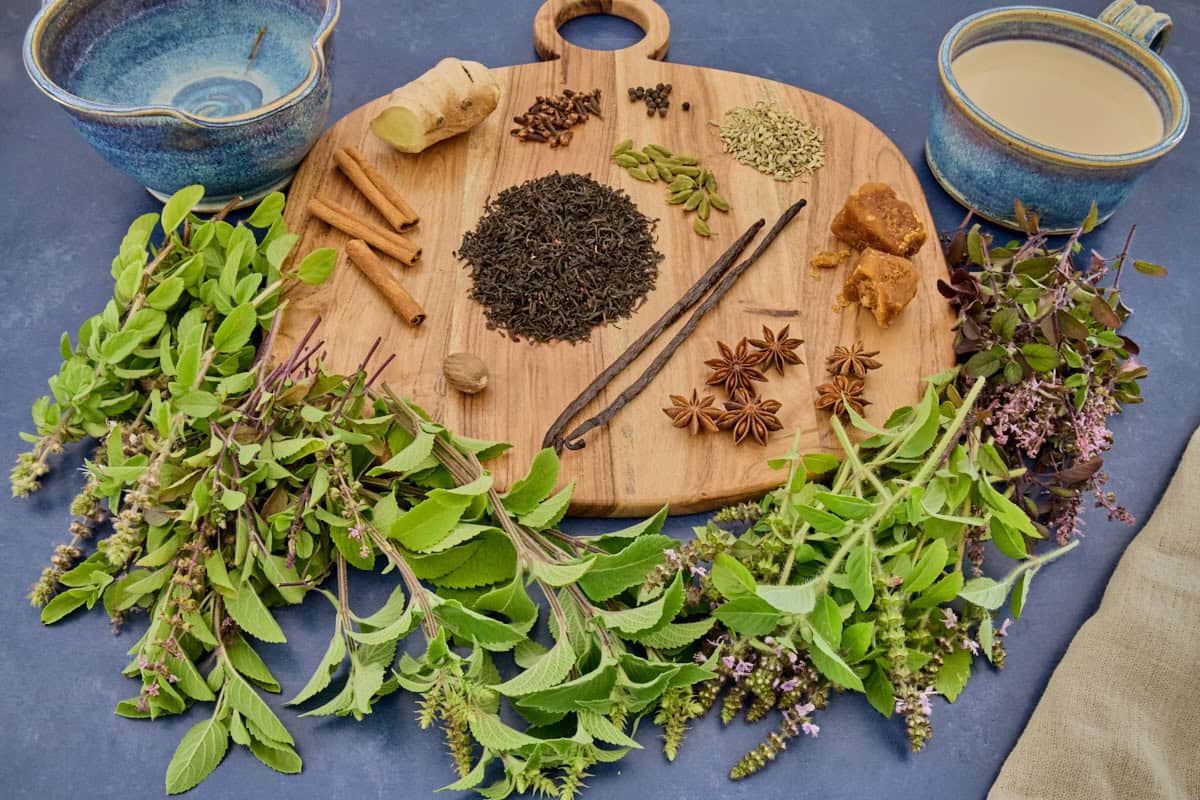
And here they are together, ready to add to our tulsi masala chai:

Jump to:
💕Why this recipe is special
Today we'll be making some vegan tulsi masala chai with 5 different types of tulsi that I've grown in my garden. These types are camphor kapoor, krishna (purple sacred), rama (green sacred), temperate, and vana. You can read about these varieties and 33 others from my garden in my post: 38 Types of Basil You Need to Grow in Your Herb Garden, Part 1. This post includes scent and flavor notes of each variety from a multitude of our testers. And I have another post with even more basil varieties for you to check out: 45 Types of Basil to Grow in Your Herb Garden, Part 2. I hope you'll find some basil varieties in these posts that you'd like to grow!
I've grown tulsi holy basil for years as part of my basil garden:

And then this year, I grew tulsi in pots on my bedroom balcony, separate from the other varieties. It felt really peaceful to go and sit quietly with these special plants that play such a meaningful part in so many lives. I'm grateful to have had this space with them, and I look forward to growing them again next year.
📓Ingredient notes

- Green cardamom: Make sure your cardamom is fresh. You can either bruise the green pods with a mortar and pestle to give more toasting access, or you can peel off the green pod and use the seeds directly.
- Cinnamon sticks: If you can, use organic Ceylon cinnamon sticks, which are more authentic. But any type you have on hand will work fine.
- Whole cloves: These are large and easy to weigh and add.
- Fennel seeds: These seeds have a mild, sweet anise scent. I love their fragrance and flavor.
- Black peppercorns: These add a spicy warm note to the masala chai.
- Star anise: This spice is beautiful, and has a sweet, woody licorice aroma.
- Fresh ginger: I use a large quantity of fresh ginger in this recipe. And I usually go to the Indian grocery store to get the huge, firm and juicy type with fewer lobes to have to peel around. But you can just use the freshest ginger you can find.
- Tulsi leaves: In this recipe, I use 5 types of tulsi (Indian holy basil) that I've grown in my garden: camphor kapoor, krishna, rama, temperate, and vana. They all contribute their own unique flavor to the tea. You can use just one or any combination of these. Or if you can only find it dried (or if you dry your own before the cold weather hits like I do), just reduce the amount called for in this recipe by ⅓.
- Assam tea leaves: This black tea is the most traditional type in making masala chai, due to its bold robust flavor and historical use in masala chai culture. However, you can also use Darjeeling, which is more delicate and floral, or Nilgiri, which is between the former two in assertiveness. It has a smoother and fruitier flavor than the other two. In my version, I'm using loose Assam leaves.
- Vanilla beans: This is another spice that it's important to make sure is fresh for the best tasting chai. Vanilla lends such a sweet and creamy note to the tea. Also, please consider whether you enjoy the subtle crunch of tiny vanilla beans in your chai. Most of my testers (and I) loved this, and just one preferred to strain these seeds out before drinking. Just do whichever works best for you.
- Whole or ground nutmeg: I love to grate whole nutmeg into this dish for optimal freshness, using a fine grater. But ground nutmeg works well too.
- Jaggery or sugar: I really enjoy using jaggery (an Indian type of unrefined brown sugar) in this chai. It has deep, caramel and earthy notes. But you can use granulated sugar or brown sugar if this is what you have on hand.
- Non-dairy milk: I like to use full-fat oat milk in this chai, as it's thicker and creamier than the versions with reduced fat. But you can use any non-dairy milk in this recipe. Enjoy!
See recipe card for quantities.
📒Step by step instructions & photos
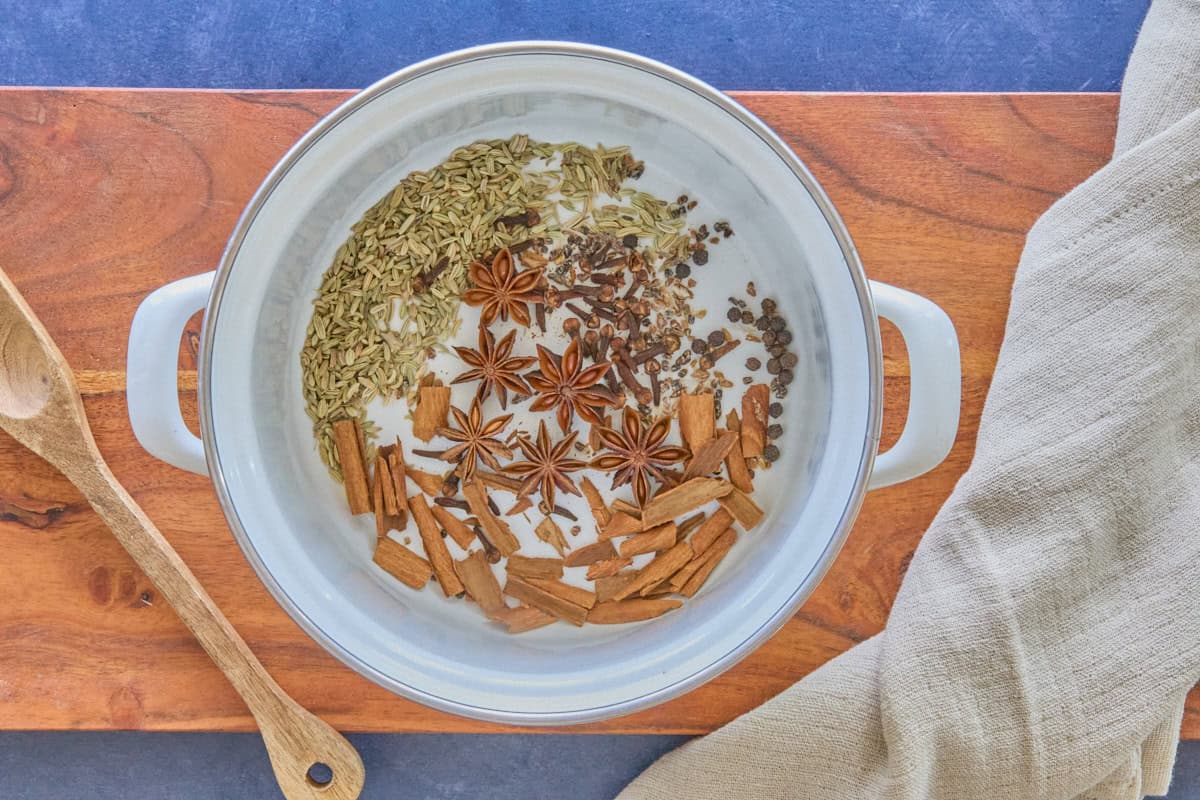
- Toast the spices: This includes the cardamom, cinnamon sticks, cloves, fennel seeds, black peppercorns, and star anise. Toast for 5 to 10 minutes until darkened and fragrant.
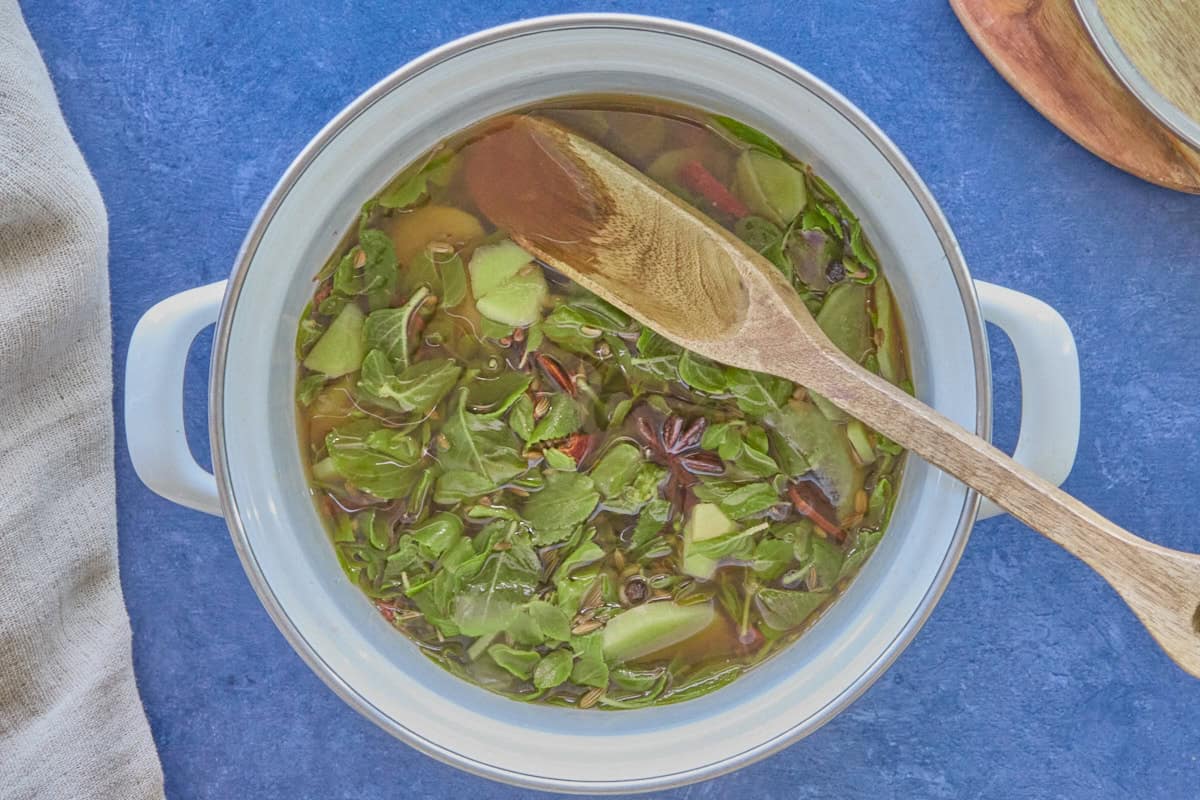
- Add ginger, tulsi, and water: Stir in the sliced ginger, lightly crushed tulsi leaves, and water. Bring to a boil and steep for 30 minutes.
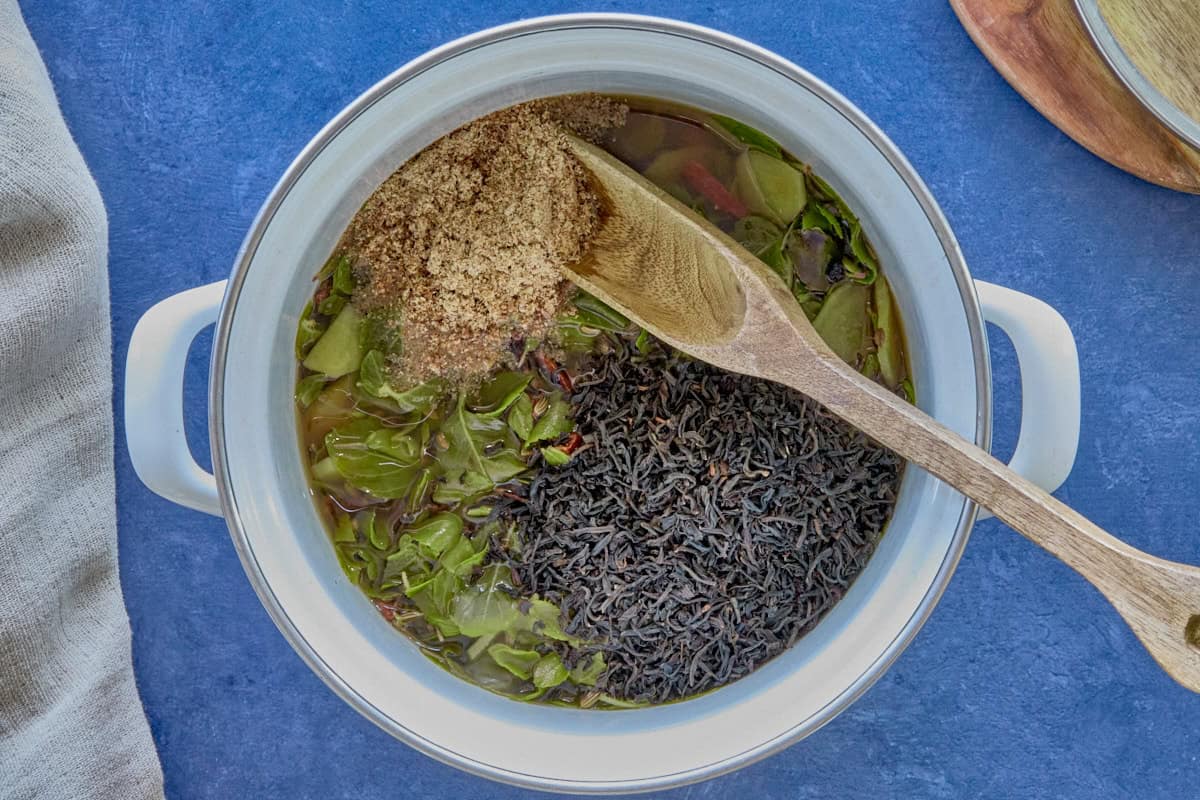
- Add tea and nutmeg: After steeping, bring to a simmer. Stir in the tea leaves and freshly-grated (or ground) nutmeg. Simmer for 3 to 4 more minutes.
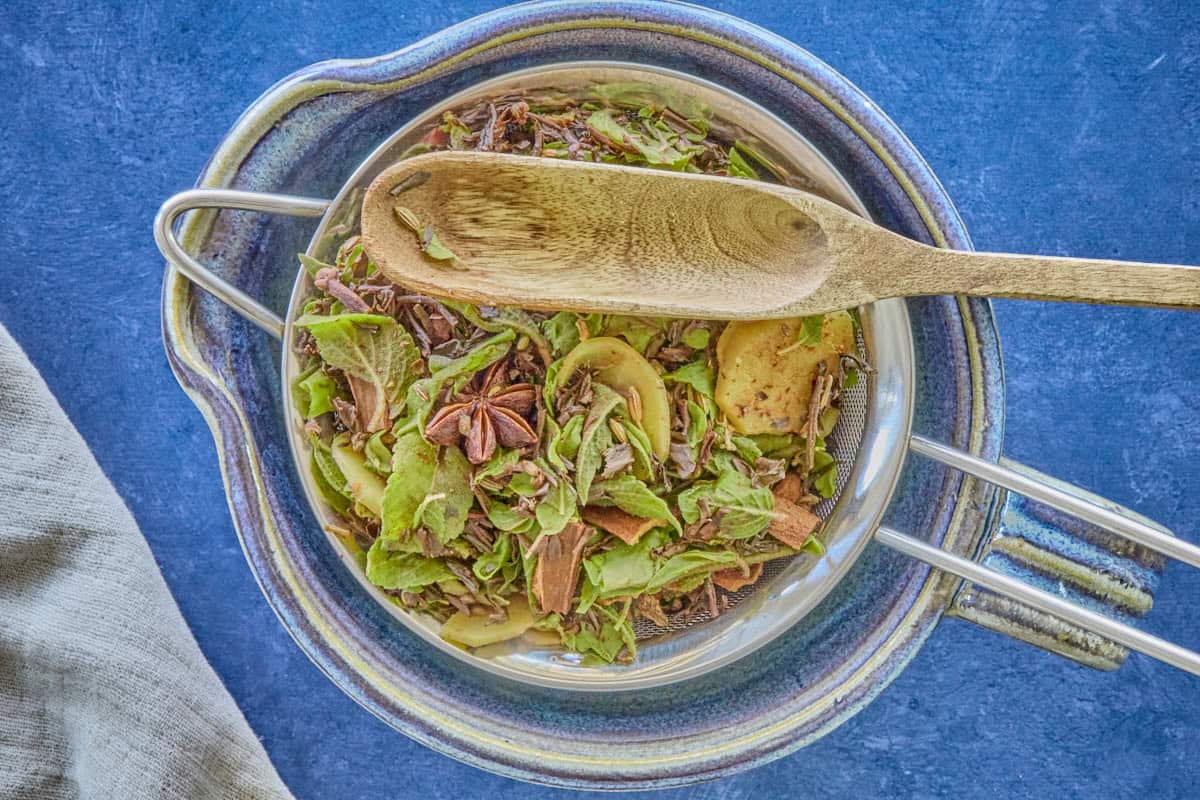
- Strain the tea: Using a fine-mesh sieve or cheesecloth, strain the solids. Press to extract as much liquid as possible. Discard the solids.
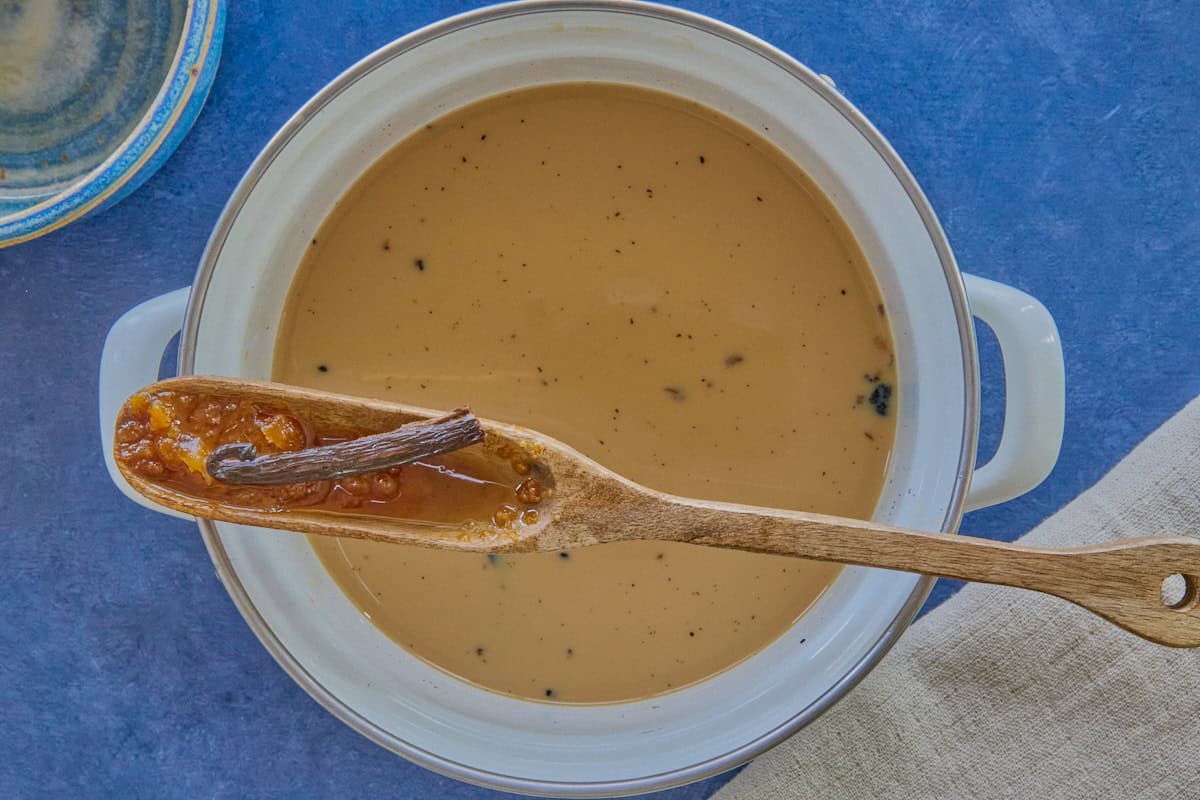
- Sweeten and add vanilla and non-dairy milk: Add jaggery or sugar and the scraped vanilla bean seeds and pods. Heat until the sweetener is dissolved, but do not boil.
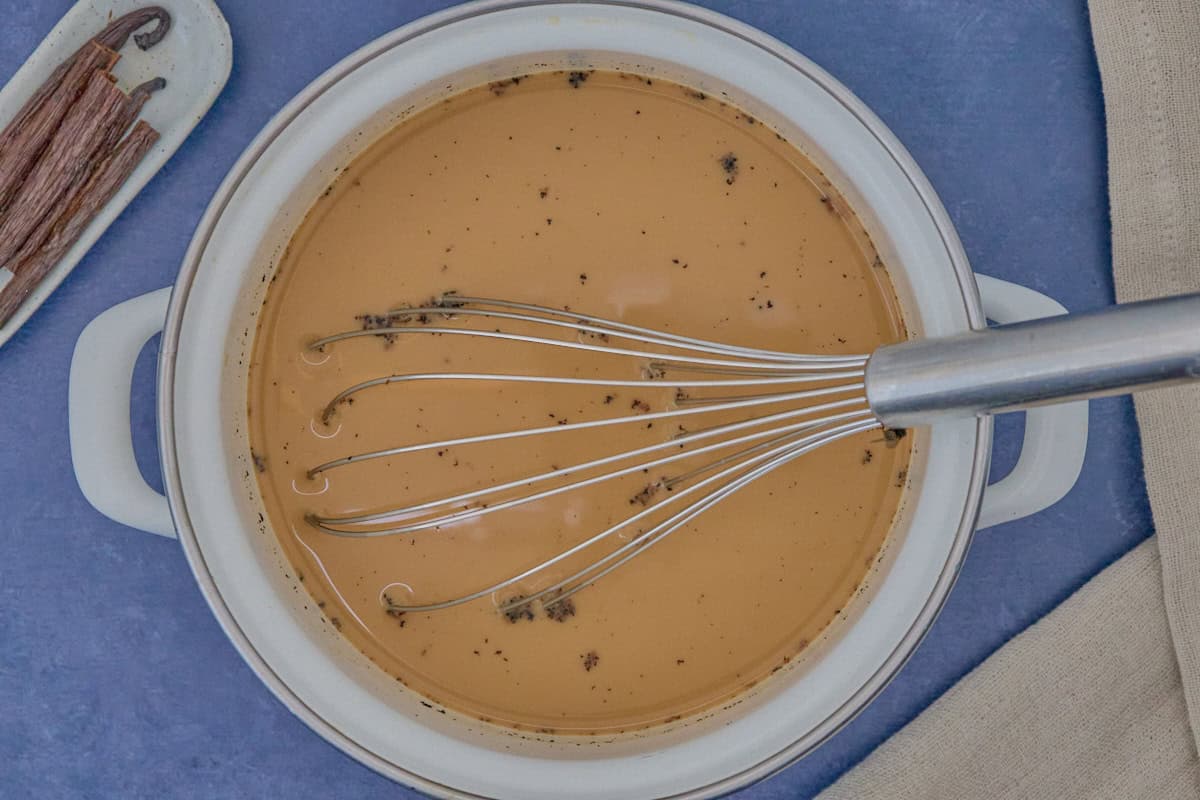
- Finish and serve: Remove vanilla bean pods. Whisk, serve, and enjoy!
💡Tips for success
- Toast the spices with care: Make sure when toasting to keep the heat low and stir frequently. You want to keep them from burning. When they're slightly darker and fragrant after a few minutes, they should be ready.
- Steeping: Make sure to steep the chai for the recommended 30 minutes. This will allow the tulsi and spices to thoroughly lend their flavor and character to this exceptional drink.
- Use fresh spices: This will really make a difference in making your chai more vibrant and flavorful.
- Kitchen scales: Use a regular digital scale for larger quantities, and I also recommend a smaller, more sensitive one for lower quantities. I use this latter one all the time to weigh tea leaves, small quantities of spices, herbs, etc. Both of my kitchen scales were inexpensive, are more accurate than weighing by volume, and are so helpful for cooking and reducing the amount of dishes I need to do!
- Adjust quantities to taste: I use a large quantity of spices in this recipe. For me, when everything comes together, it ends up being in perfect balance. But if you're hesitant, or even if you like your flavors bolder than I do, by all means, experiment with a taste level that works well for you.
- Don't boil the non-dairy milk: After you add it, warm the chai gently without boiling to prevent possible curdling.
- Strain the solids well: Make sure your sieve has a fine mesh, or that you filter your chai through cheesecloth to get out all of the bits of spices. And I intentionally leave in the vanilla bean seeds with their satisfying micro-crunch. But if you don't like them in your drinks, feel free to strain these out too.
- Use fresh tulsi: If you have access to your own homegrown tulsi, or can find some at a farmer's market or Indian grocery store, this will help to give you the most vivid flavor. But if you only have dried tulsi on hand, no worries! Just reduce the amount you use by ⅓ of what's in the recipe. (See the recipe for quantities.)
🔀Substitutions
- Assam tea: If you'd like, you can use Darjeeling or Nilgiri tea instead. Or for a caffeine-free option, you can use Rooibos.
- Jaggery: If you don't have access to this sweetener, you can use granulated sugar, brown sugar, muscovado, or coconut sugar.
- Non-dairy milk: I use full-fat oat milk for creaminess, but any non-dairy milk will work.
- Tulsi: If you don't have fresh tulsi leaves, you can use dried leaves at ⅓ the recipe quantity (see recipe for this.)
- Vanilla beans: If you don't have these, you can use vanilla extract instead. Use 1 tablespoon of extract to substitute for the quantity of beans in the recipe.
🍶Variations
- Iced chai: While this drink is heartwarming when hot, it's also a creamy and refreshing drink when cold as well. Once it's cooled down, you can enjoy it poured over ice.
- Spicy chai: If you'd like your tulsi masala chai to have a spicy kick, add more black peppercorns or some red chili flakes to taste.
- Citrus twist: If you'd enjoy a citrus note, you can try using some orange peel during the steeping time to add some brightness to your drink.
🥣Equipment
- Mortar and pestle: For crushing spices and leaves
- Medium saucepan: (2-3 quarts / 1.9-2.8 liters) and lid
- Fine grater: If you'll be grating your own nutmeg
- Fine-mesh sieve or colander lined with a few layers of cheesecloth: For straining out the solids
- Wooden spoon: For stirring
- Digital scale: Or measuring cups and measuring spoons for weighing ingredients
- Smaller digital scale: This is more sensitive to weigh small quantities of spices
- Whisk: For stirring and breaking up any vanilla seed clumps
⏲Make ahead and storage
- Make ahead: This plant-based tulsi masala chai can be made up to 3 days ahead and kept in the refrigerator. Just stir it prior to drinking cold or reheating. Avoid letting it boil.
- Freezing: You can freeze the strained concentrate (before you add the milk) in the freezer in an airtight container for up to 3 months. To defrost, you can leave the container in the fridge overnight. Add the non-dairy milk and heat without boiling.
🍲Serving suggestions
- Roasted nuts: These provide a simple salty counterpoint to the sweet creaminess of the chai.
- Dried fruits: Examples such as apricots, figs, dates, or mango are naturally-sweet snacks that would work well.
- Fresh fruit: Here's another natural and healthy snack that would pair well with the spices in the tea. Apple, pear, or orange slices would work, as would any fruit that you'd like to use.
- Samosas or pakoras: These hearty snacks that can be easily made vegan would be a hearty and satisfying accompaniment to some tulsi masala chai on a cold day.

❓Frequently asked questions
In India, there are several varieties of tulsi, and I've grown and I've included 5 of them here: camphor kapoor, krishna, rama, temperate, and vana. In India, tulsi basil is considered sacred in Hindu traditions. It's commonly grown in both temples and homes, and is believed to protect the environment and nurture the spirit. This revered herb is an important part of several ceremonies and rituals.
This fragrant herb is highly regarded in Ayurvedic medicine. Among other benefits, it's considered to be an immune booster and stress reliever. And tulsi is also regarded to have antimicrobial properties and metabolic benefits.
Yes, you can make this recipe using a non-caffeinated tea such as rooibos instead of black tea.
Yes, you can use granulated or brown sugar, muscovado sugar, coconut sugar, or whatever sweetener you have on hand.

✨More recipes you'll love
Looking for more herbs and recipes? Try these:

✏️Did you grow your own tulsi and/or make this vegan tulsi masala chai recipe?
I'd love to hear how this goes! Please let me know in the reviews and comments below.

Vegan Tulsi Masala Chai Recipe with Garden Holy Basil Plants
Ingredients
- 20 pods (4 g) green cardamom, crushed, or seeds removed from pod
- 8 inches (8 g) cinnamon sticks, 20 cm
- 30 whole (4 g) cloves
- 3 teaspoons (6 g) fennel seeds
- ¼ teaspoon (2 g) black peppercorns, about 20 whole peppercorns
- 6 whole (8 g) star anise
- 3 2-inch pieces (80 g) fresh ginger, (7.6 cm x 5 cm) peeled and thinly-sliced
- 4 cups (40 to 50 g) fresh tulsi leaves, loosely-packed and lightly crushed, or 1 ⅓ to 1 ½ cups (13 to 17 g) dried tulsi leaves
- 2 ½ cups (600 ml) water
- 4 tablespoons (15 g) loose Assam tea leaves, or Darjeeling or Nilgiri, or Rooibos for caffeine-free
- 3 5-inch vanilla beans, or 2 8-inch (20 cm) vanilla beans, seeds scraped and pods reserved, or 1 tablespoon vanilla extract
- 2 teaspoons (4 g) nutmeg, freshly-grated or ground
- ¼ cup (60 g) jaggery, packed, or use granulated, brown, muscovado, or coconut sugar
- 2 cups (480 ml) non-dairy milk, I use full-fat oat milk, but any non-dairy milk will work
Instructions
Toast the spices:
- To a medium saucepan, add the cardamom pods or seeds, cinnamon sticks, cloves, fennel seeds, black peppercorns, and star anise.
- Over low heat, toast the spices for about 5 to 10 minutes, stirring frequently, until they become fragrant and begin to slightly darken.
Add ginger, tulsi, and water:
- To the pan with the toasted spices, add the sliced ginger and the lightly crushed tulsi leaves.
- Add the water and bring to a gentle boil. Once the water is boiling, turn off the heat, put the lid on the saucepan, and steep the tulsi and spice mixture for at least 30 minutes.
Add tea and nutmeg:
- After steeping, return the mixture to a gentle simmer. Stir in the tea leaves and freshly-grated or ground nutmeg. Allow to simmer for 3 to 4 more minutes.
Strain the tea:
- Using a fine-mesh sieve or a colander lined with a few layers of cheesecloth, Strain the chai. Press on the solids to extract as much liquid as you can. Discard the solids.
Sweeten and add milk:
- Wash the saucepan to remove any clinging bits of spices, and return the strained tea to it.
- Stir in the jaggery or other sweetener, and add the non-dairy milk. Stir in both the scraped vanilla bean seeds and pods. Making sure not to boil, warm the chai gently over low heat until the jaggery is dissolved and the chai is heated through.
Serve:
- Remove the vanilla bean pods and discard. Whisk the mixture until the vanilla beans are evenly spread throughout. Pour the tulsi masala chai into cups. Serve and enjoy!
Leave a Reply