


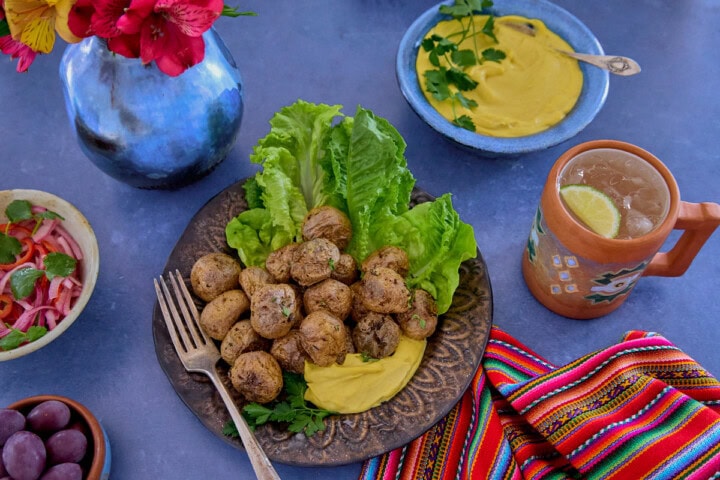
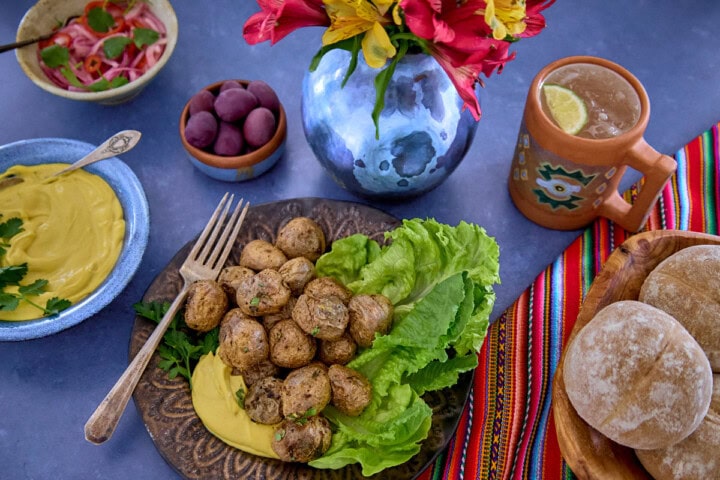
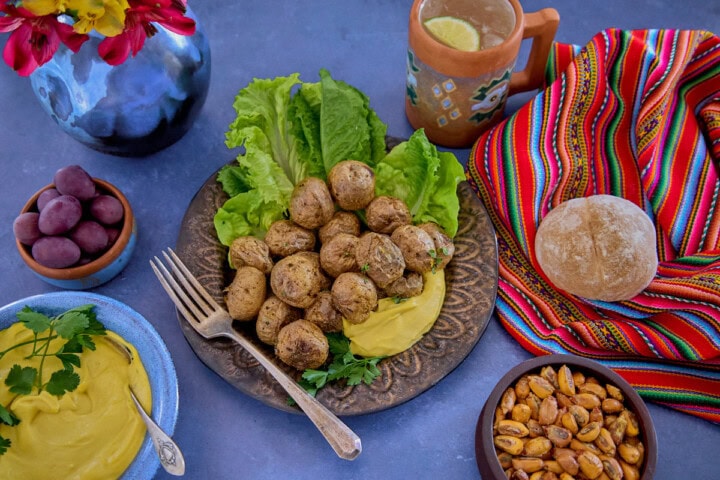
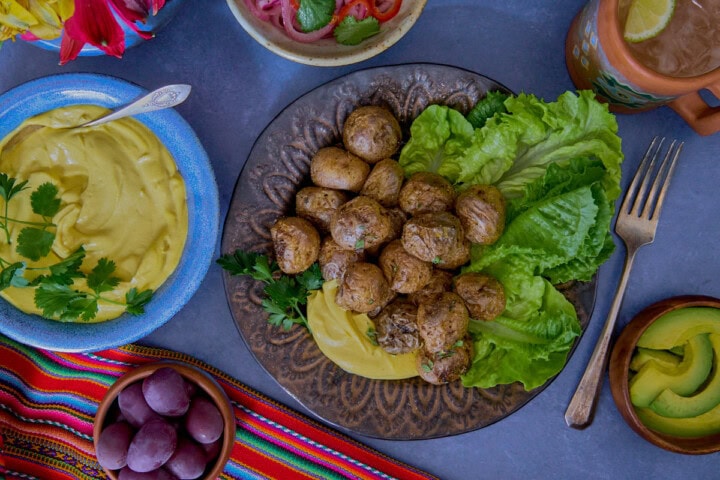
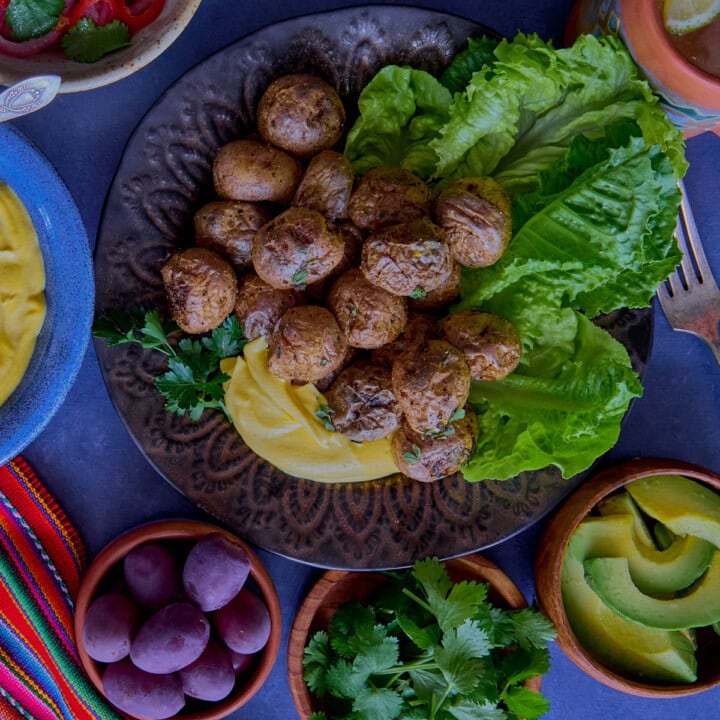

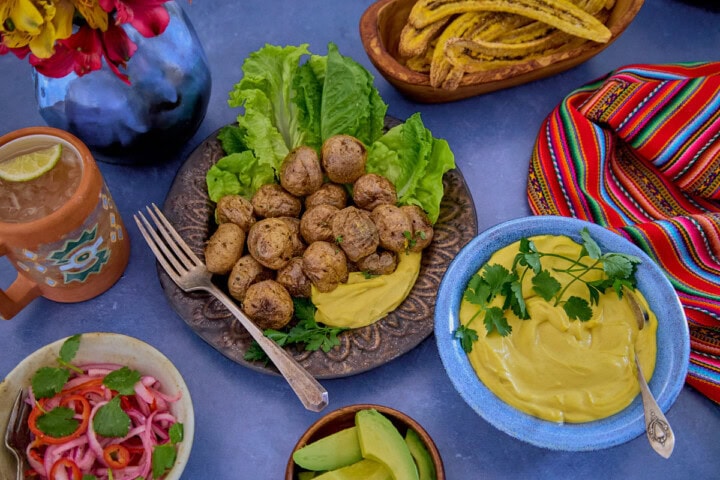

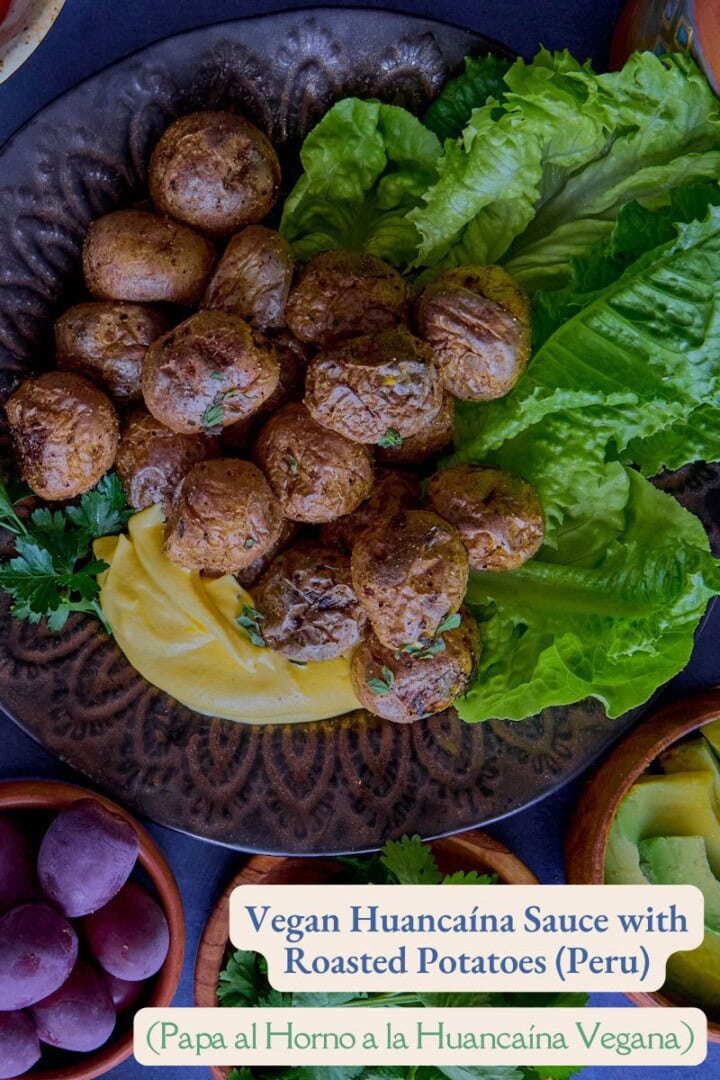
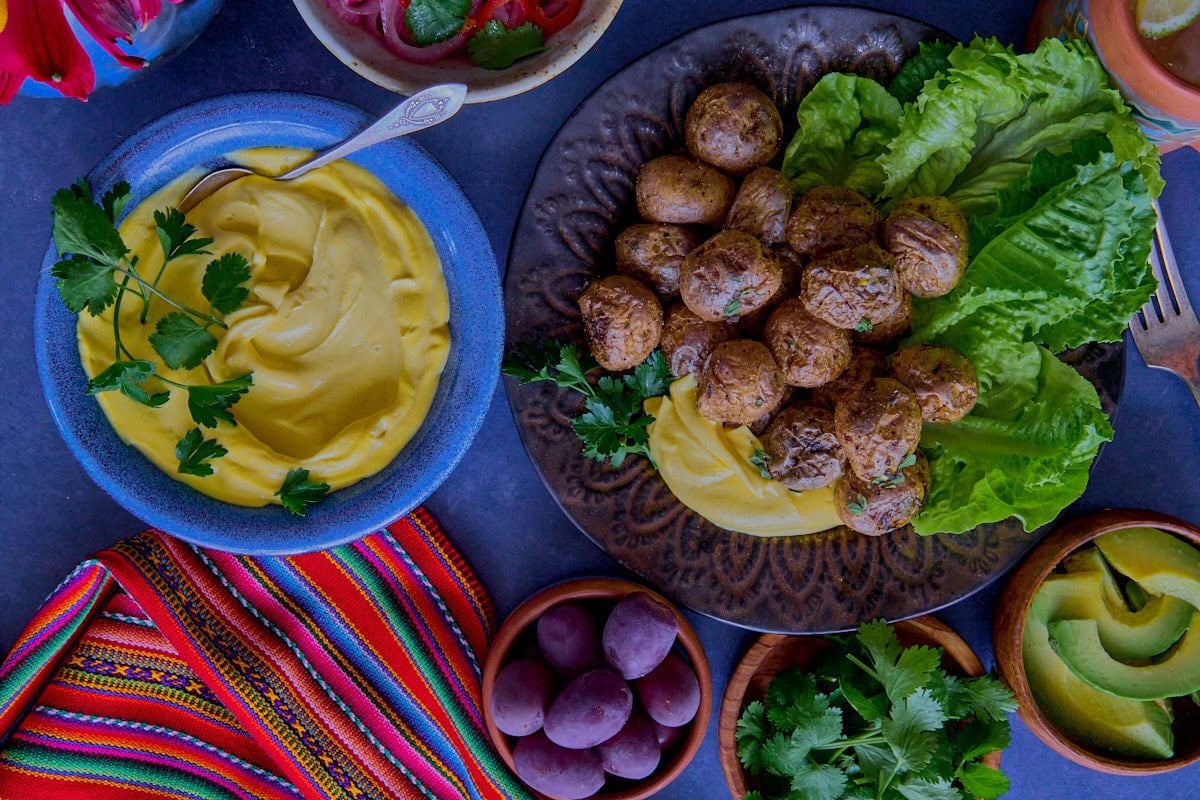
Savor the enchanting flavors of Peru in this vibrant traditional and vegan papa al horno a la Huancaína. This includes a thick, warmly-spiced, tangy sauce made of ají amarillo peppers and rich queso fresco. The sauce is paired with rustic roasted baby potatoes spiced with cumin and oregano. Enjoy these mouthwatering potatoes and sauce on a bed of crisp lettuce, accompanied by olives and rich avocado slices. You'll be so glad you've tried this heartwarming Vegan Huancaína Sauce with Roasted Potatoes (Peru)!

The name of this dish originates in Huancayo, in the highlands of central Peru. It's an iconic dish that's served at both everyday and holiday gatherings. It features the warm spice of the ají amarillo pepper, which has special significance in Peruvian cuisine. The sauce also includes the tangy, irresistible blend of queso fresco, garlic, and lime.
Traditionally, Huancaína sauce is served over slices of boiled potatoes, along with olives and hard boiled eggs. In my plant-based version, I serve this delectable sauce over baby potatoes that have been roasted and tossed with cumin and oregano for a crispy texture and deep, earthy flavor. And alongside this, I include flavorful briny black olives (especially the giant, deeply satisfying Peruvian botija variety). And instead of the hard-boiled eggs, I like to serve this dish with rich, buttery slices of avocado. This combination of textures and flavors is indulgent and mouthwatering!
Jump to:
- 💕Why this recipe is special
- 📓Ingredient notes: roasted baby potatoes
- 📓Ingredient notes: Huancaína sauce and serving
- 📒Step by step instructions & photos
- 📝Ají amarillo paste taste testing: 13 testers with 1 homegrown paste, 2 jarred brands
- 💡Tips for success
- 🔀Substitutions
- 🍶Variations
- 🥣Equipment
- ⏲Make ahead and storage
- 🍲Serving suggestions
- ❓FAQ
- ✨More recipes you'll love
- Vegan Huancaína Sauce with Roasted Potatoes (Peru)

💕Why this recipe is special
Authentic, hearty flavor while plant-based:
There's no compromise in flavor in this plant-based rendition of this gorgeous papa a la Huancaína. The "warm hug" of the ají amarillo pepper plays a central role, while the vibrant, creamy queso fresco, garlic, and lime round out the sauce in a way that's supremely satisfying. And the earthy, wonderfully-seasoned roasted potatoes, lettuce, olives, and avocados are perfect accompaniments.
Deeply seasoned cumin and oregano-roasted baby potatoes instead of boiled:
Instead of the traditional boiled and sliced potatoes that normally accompany a papa a la Huancaína, I've decided to roast them. And to use baby potatoes in their skins that are so enjoyable to eat. I've chosen to season them with both cumin and oregano (fresh, if possible) to give them a warm, rustic and savory flavor that can both stand on its own and also pair fabulously with the sauce.
Creamy and tangy, warm with a hint of spice, and indulgent:
The sauce includes cashews, almonds, and coconut cream as a thick and velvety base for the ají amarillo peppers, garlic, and lime. This is comfort food at its best!
Crowd-pleasing:
I took this sauce to a party in appetizer form, with the roasted baby potatoes used to dip into the sauce. My friends told me they loved this, with one saying she could just drink it! And several of them pointed out that while they don't normally venture into eating spicy food, the warmth of this sauce was really enjoyable. I was thrilled to receive such rave reviews. If you make this, I know your friends and family will love it too!
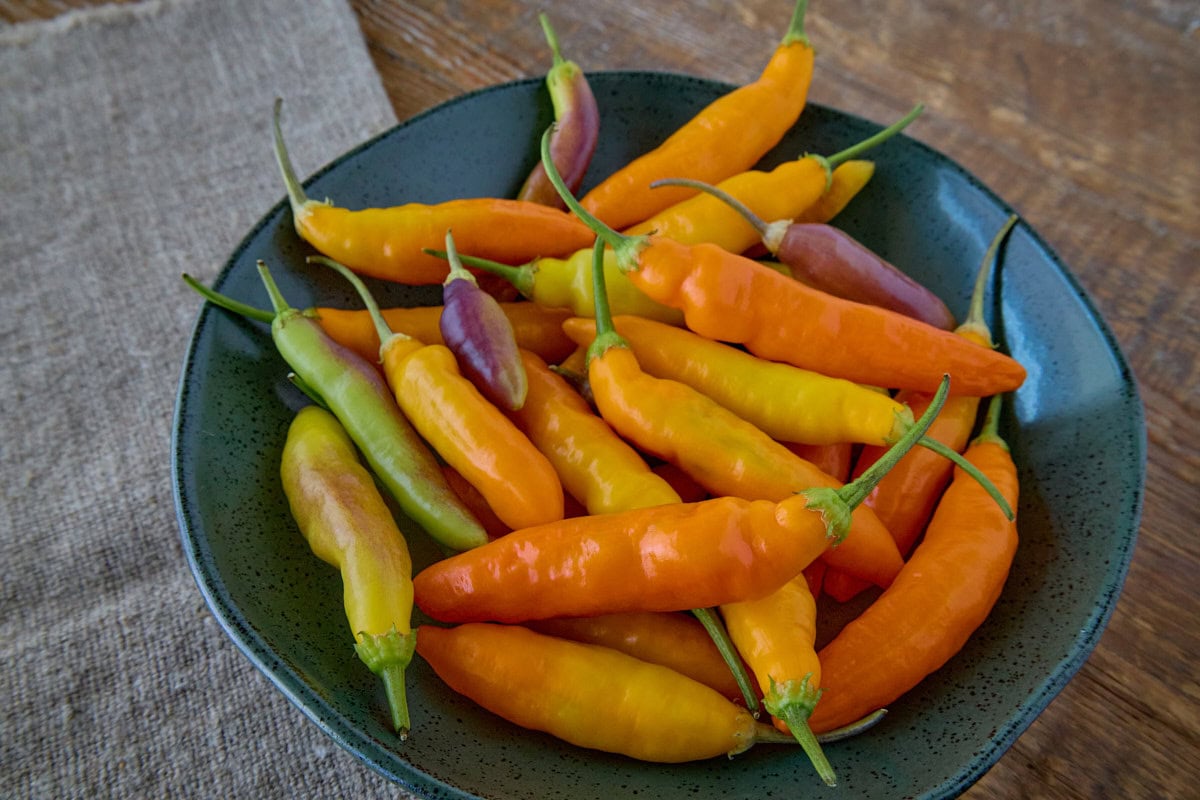
Below are some ají amarillo peppers that I've grown in my garden. It's so wonderfully fulfilling to grow them yourself! You can learn more about this pepper and 30 additional important global heirloom varieties in my post 31 Peppers to Grow, Harvest, Dry, Smoke, Grind, and Enjoy! Please give it a try and let me know in the comments below.
📓Ingredient notes: roasted baby potatoes
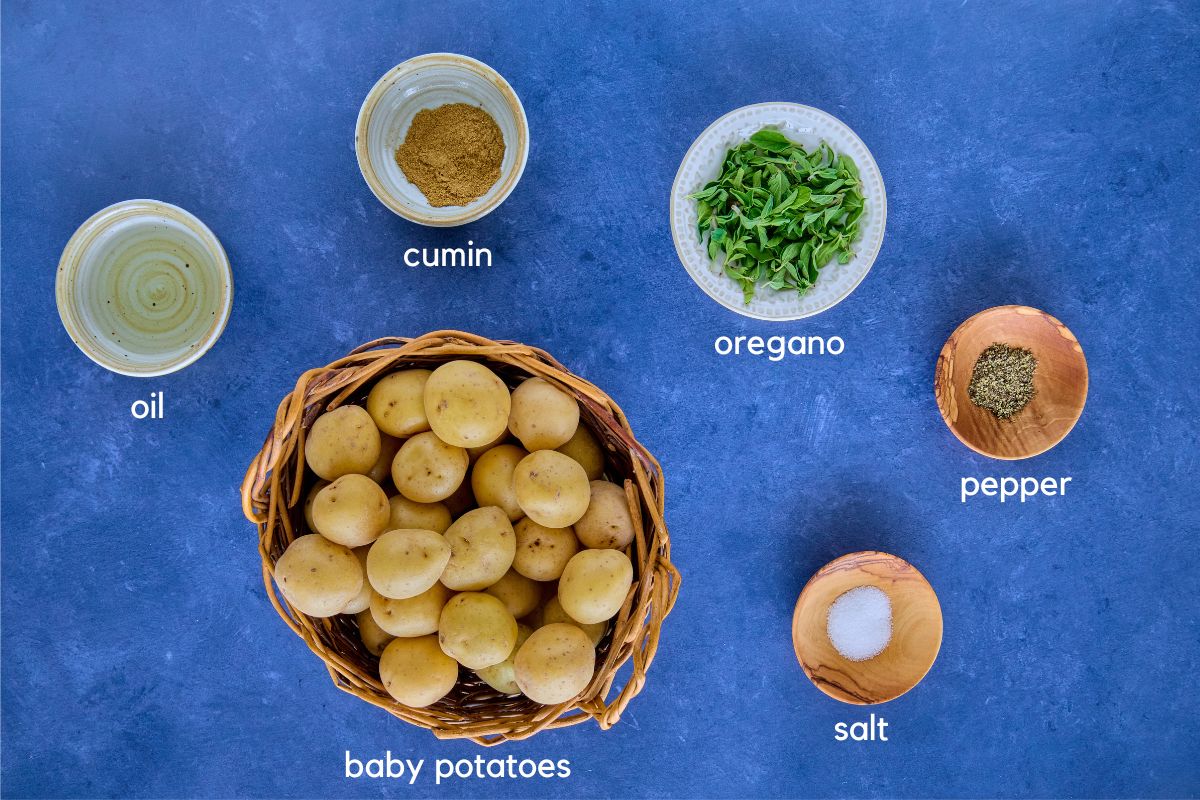
- Baby potatoes: I'm using yellow baby potatoes here. Red varieties will also work well, as will fingerlings, and others with a creamy, waxy texture. Potatoes are such a special part of Peruvian cuisine, and you can even grow your own. Please leave the skins on for a wonderful crispy texture. I love the way these potatoes "sing" as I take them out of the oven!
- Oil: I use a minimal amount of oil to coat the potatoes to enhance the roasted texture and allow the spices to adhere. You can use any good neutral oil here. I'm using sunflower oil, which is a traditional one in this dish.
- Salt: I use fine salt here to really distribute well over the potatoes, and I add it before roasting along with the pepper.
- Pepper: Please use freshly-ground black pepper here; this will really make the flavor shine.
- Cumin: I use ground cumin, and I wait to toss this and the oregano into the potatoes until after they've roasted. In testing this recipe, I found that if these seasonings are added before roasting, the flavor is no longer detectable when they're done. Tossing them into the potatoes after they come out of the oven allows the cumin and oregano to bloom and really keep their flavors fresh.
- Oregano: Please use fresh oregano here; it makes all the difference! And make sure to toss it (along with the cumin) into the potatoes right after they come out of the oven. This really preserves the fresh flavor of the seasonings and uses the heat of the potatoes to allow the flavors to meld perfectly.
See recipe card for quantities.
📓Ingredient notes: Huancaína sauce and serving
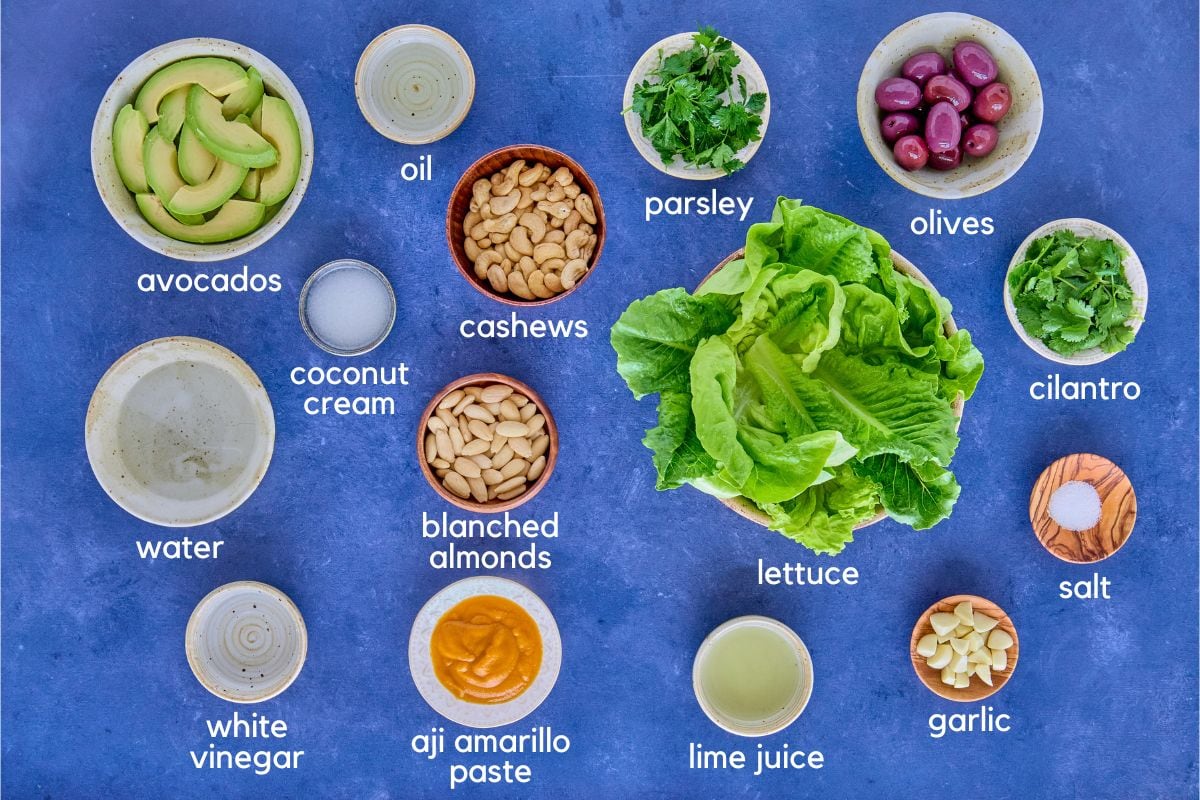
- Raw cashews: These nuts form the smooth, buttery body of the sauce, in creating a plant-based queso fresco. A high-speed blender is helpful here, as it will allow you to use the nuts without soaking. If you don't have a strong blender, just soak the cashews and almonds in boiling water for 10 minutes and drain before blending.
- Blanched raw almonds: The almonds work in tandem with the cashews in forming a base, giving the sauce body and thickness. The light flavor of both nuts, along with their slight sweetness, really helps the flavors of the other ingredients to shine.
- Coconut cream: This contributes a silky creaminess to the sauce. You can find it collected at the top of a can of coconut milk, or buy it in a can by itself. I generally do the latter, so I can be sure of the quantity. This will still have both liquids and solids in the can. I like to add all of the contents to a glass and heat them slightly in the microwave so it's all thoroughly mixed before using in a recipe.
- White vinegar: This helps to give the sauce its characteristic delicious tang.
- Salt: I use fine salt, and since you're using the blender, any texture will work.
- Garlic: Please use fresh garlic cloves in this recipe. You don't need to chop or mince them in advance, since you'll add them directly to the blender.
- Lime juice: Please make sure to use freshly-squeezed lime juice here! This zesty burst of citrus really makes the sauce extra flavorful.
- Ají amarillo paste: This is the star of the sauce! Ají amarillo peppers are so special in Peruvian cuisine. You can grow and puree them yourself, or buy them frozen at a Peruvian grocery store, or use a jarred version. For sources and taste-test results of the homegrown and jarred varieties, check out the taste test section below. Add a quantity according to your spice enjoyment and tolerance. I encourage you to branch out here and enjoy the warmth of this sauce!
- Water: This ensures that the sauce is not too thick, and helps to spread out the flavor.
- Oil: You can use any neutral oil here. I use sunflower oil, which is traditional. It helps to keep the sauce smooth and to add a creamy mouthfeel to the texture.
- Lettuce: Romaine lettuce is the type most traditionally used in Peru for this dish. It has a sturdy structure and enjoyable crunch that nicely complements the crispy potatoes and creamy sauce.
- Olives: I'm using Peruvian botija olives in this dish. They're large, beautiful, and they have a gorgeous briny taste that adds great depth to the flavors in this dish.
- Avocado slices: I'm using these rich, buttery slices in place of the hard-boiled eggs that are traditionally used in papa a la Huancaína.
- Cilantro (coriander): This herb, along with the parsley, adds a fresh vegetal note to this dish.
- Parsley: I'm using flat-leaf parsley, but you can use any variety. If you're not a fan of cilantro (coriander), you can omit it and add more parsley according to taste.
See recipe card for quantities.
📒Step by step instructions & photos
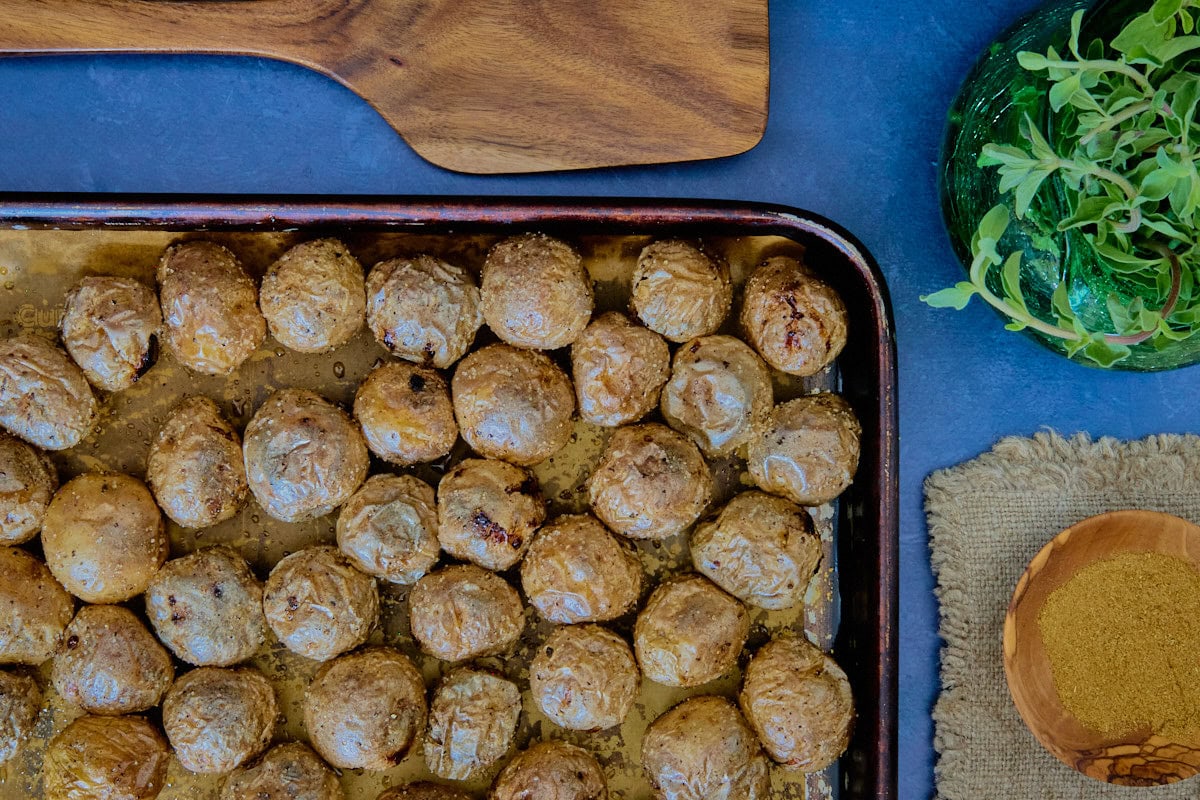
- Step 1: Preheat the oven to 425°F (220°C). Toss the baby potatoes with oil, salt, and pepper. Roast until golden, crisp, and tender, about 25-30 minutes.
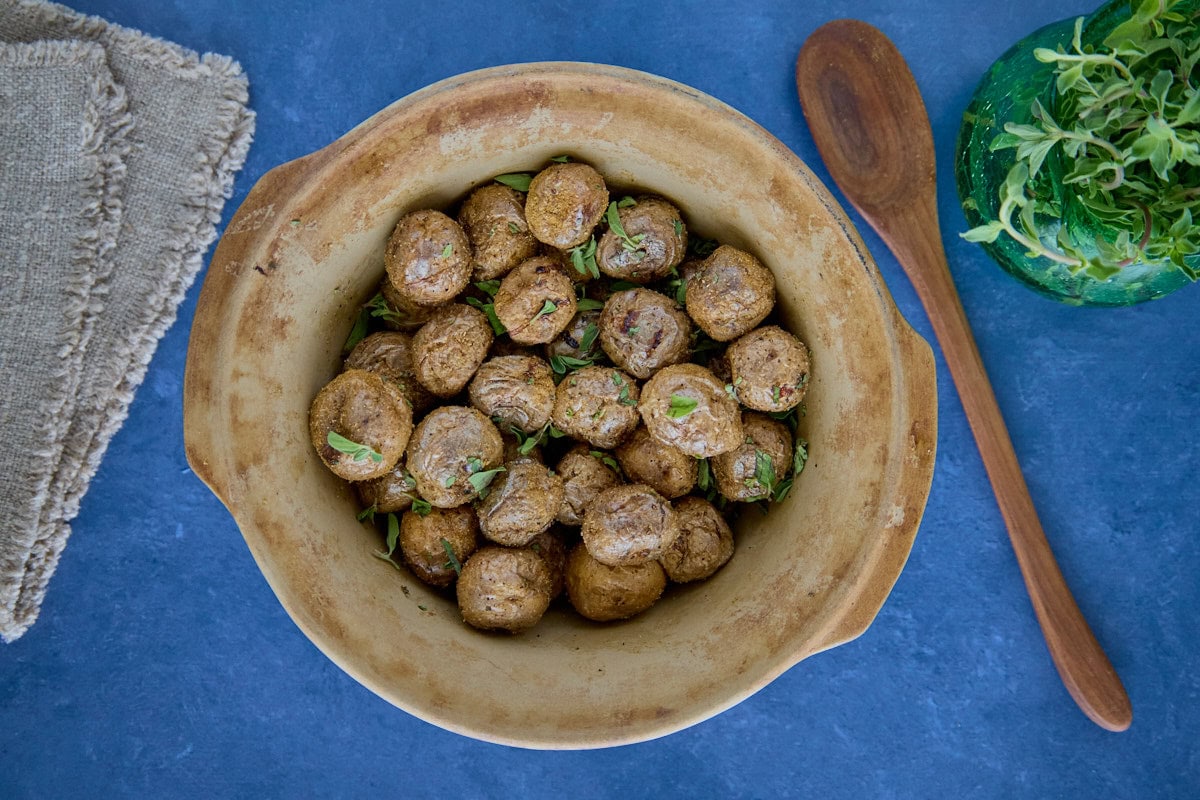
- Step 2: Toss the hot potatoes with the fresh oregano and cumin.
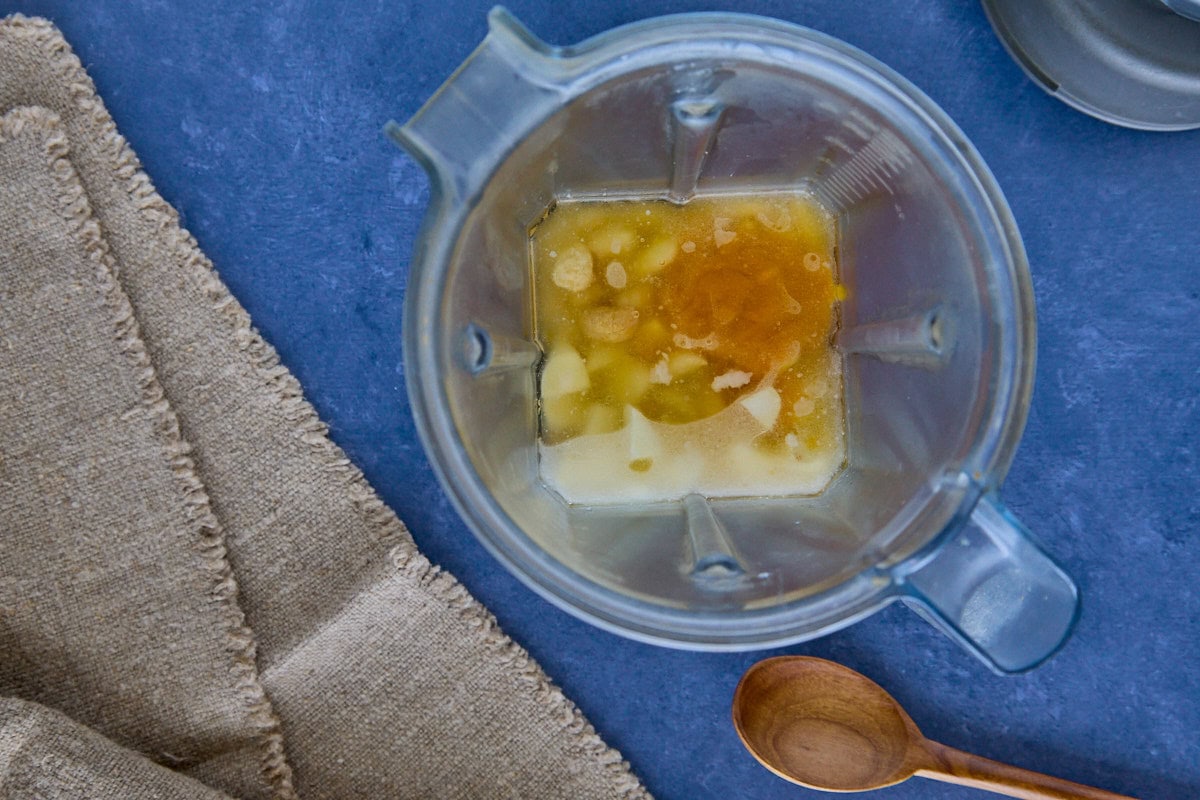
- Step 3: If you don't have a high-speed blender, soak the nuts for 10 minutes in boiling water and drain. Add the sauce ingredients to the blender.
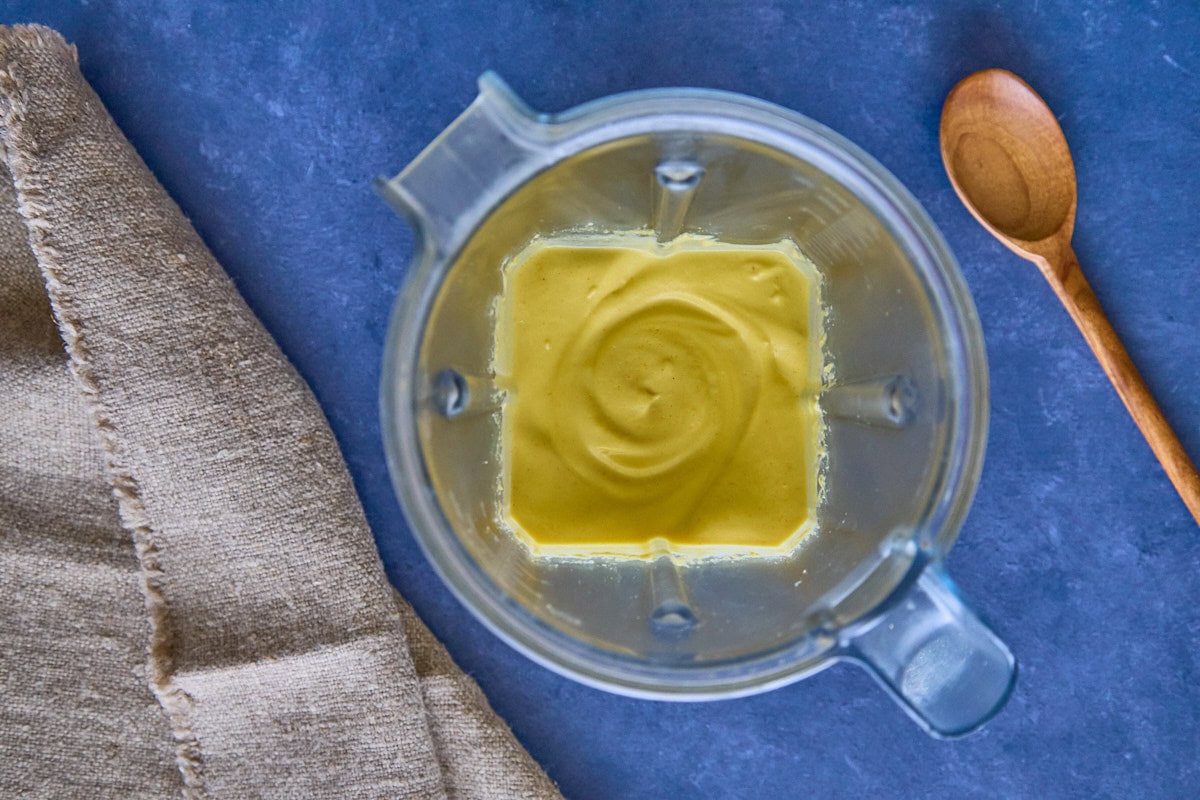
- Step 4: Blend the sauce until thoroughly combined and smooth.
- Step 5: Serve the potatoes on a bed of lettuce. Spoon your sauce alongside or over the potatoes, or use as a dip for the potatoes! Serve olives and avocado slices as accompaniments, as well as chopped parsley and/or cilantro (coriander) to taste. Enjoy!
Hint
Add the level of ají amarillo paste that works best for you. If you don't enjoy spicy heat, start with 1 tablespoon of paste. Blend it into the sauce and taste. And since the paste is already smooth, you can either continue to blend or just stir in more to taste following blending until it's just right for you. You want it to taste like a warm hug!
I like to add 3 or more tablespoons of the paste to give the sauce a comforting warmth. If you don't add a lot of paste, and you'd like your sauce to be a more vibrant yellow, you can try adding ½ teaspoon of turmeric. This isn't traditional with the sauce, but it'll brighten the yellow color.

📝Ají amarillo paste taste testing: 13 testers with 1 homegrown paste, 2 jarred brands
13 taste testers compared the flavor of these 3 ají amarillo pastes in Huancaína sauce with roasted baby potatoes, and here are the results:
Shell's homemade paste from homegrown ají amarillo peppers:
Rating:
8.1
Comments:
Spicy, held heat the longest, thick, my favorite, perfect, nice balance of taste and spice, mustardy with sweet & spice, more subtle, buttery, smooth, smoky
Inca's Food ají amarillo paste:
Rating:
7.8
Comments:
Spicy aftertaste, long lasting, smoky, thin consistency, not as flavorful, more acidic, mouth on fire, best flavor, floral, peppery, mild
Goya ají amarillo paste:
Rating:
6.9
Comments:
Super hot bite, tastes awesome, my favorite, thin, peppery, mild, sweet before the spice comes, mildest, subtle, "my burp was hot!!!"
Summary:
You can see that our 13 tasters enjoyed all 3 ají amarillo pastes. Each type varied in taste perception from mild to spicy. And the homemade version was awarded the highest rating for overall taste.
Note on homegrown ají amarillo paste:
I made the paste for this taste testing the traditional way. I sliced each homegrown ají amarillo pepper in half, removed the seeds and membranes, boiled them, and then peeled them. This was ridiculously tedious, but I'd felt that since I'd grown the peppers myself, they deserved the most traditional preparation!
Boiling is supposed to temper the heat, soften the flesh, and remove harshness. But I've also tested this sauce with raw habaneros, which are easily available in stores year-round. And they still made a fantastic sauce.
So when I grow my own ají amarillos again, I'm going to do this the easier way that I now know will yield a sauce that's just as delicious without all the work. I'll just slice off the tops, maybe remove the seeds if I have guests with a low spice tolerance, and just throw them in the blender raw along with the other sauce ingredients!
💡Tips for success
Please consider growing your own ají amarillo peppers! They're easy to start as seeds and grow, and this special heirloom variety is beloved in many cultures. Please check the taste test results from our 13 testers above, which found that homemade ají amarillo paste makes the tastiest Huancaína sauce!
You can learn more about this pepper and 30 additional important global heirloom varieties in my post 31 Peppers to Grow, Harvest, Dry, Smoke, Grind, and Enjoy!
If you haven't grown your own ají amarillos, and would rather not substitute another pepper like a habanero or use jarred paste, you can find frozen ají amarillo peppers at Peruvian grocery stores. Hopefully you can find one near you that carries them.
If you don't have a high-speed blender, you can soak the cashews and almonds for 10 mintues in boiling water to soften them enough to make the sauce creamy and smooth.
If you're not sure about your preferred spice level for the sauce, start with 1 tablespoon of the ají amarillo paste and add more to taste. You want the sauce to have a comfortable warmth which makes the flavor all the more enjoyable. If your sauce is pale from only adding a little paste, you can add ½ teaspoon of turmeric to brighten it up. Please know that this isn't a traditional addition to the sauce, as it's normally served spicy enough to be a vibrant yellow.
🔀Substitutions
Ají amarillo paste: There's a lot of flexibility in adding the peppers to give the sauce a "warm hug" of spice. You can grow your own and add them fresh, add a fresh orange habanero (starting with a small one and adjusting for spice), jarred ají amarillo paste (please see the taste testing results for sources and ratings), or frozen ají amarillo peppers from a Peruvian grocery store.
You can learn more about this pepper and 30 additional important global heirloom varieties in my post 31 Peppers to Grow, Harvest, Dry, Smoke, Grind, and Enjoy.
Coconut cream: If you aren't able to find cans of this cream, you can use the coconut cream that collects at the top of a can of full-fat coconut milk.
Cashews and almonds: I've made this sauce to rave reviews with a base of vegan mayonnaise instead of the almonds and cashews. It wasn't as thick, and this isn't a traditional flavor base, but my friends loved the flavor. This is a great option if you're serving this to a group with nut allergies. If you do this, you can add the traditional thickener of some saltine crackers to the sauce to give it more body. If you do this, please let me know how it goes in the comments!
Freshly-squeezed lime juice: If you don't have limes, you can use lemons instead. It may alter the flavor, but only slightly.
Oil: If you'd rather not use oil, you can omit it. The sauce may be slightly less creamy, but the flavor will still be great.
🍶Variations
Grilled, boiled, or baked potatoes: This sauce is flexible over potatoes of any preparation. It would be really fun to grill skewered baby potatoes, with the sauce drizzed on top or served on the side. Use your favorite potato cooking method!
Appetizer dip: This sauce is fabulous as a dip for baby potatoes. This was a huge hit at a party with friends. They really enjoyed dipping individual little potatoes into the sauce. It's a really fun, flavorful, and special dish to serve at a gathering.
Pasta: You can serve this sauce over pasta instead of potatoes. In Peru, this is known as tallarines a la Huancaína.
Quinoa: This is a classic Andean seed, eaten as a grain. You can serve this on the side with the sauce, or use the sauce as a dressing over a bowl of quinoa and vegetables. This would be so flavorful and satisfying!
🥣Equipment
- Knife and cutting board: For chopping your herbs
- Digital scale: I highly recommend this for more accurate measuring and fewer dishes to clean!
- Measuring cups and spoons: For liquid and small quantity measurements
- Baking sheet (with optional parchment paper for easier cleanup): For roasting the potatoes
- Citrus squeezer or juicer To collect the lime juice
- Blender: Use a high-speed blender if you have one, but any blender will work well.
- Mixing spoon and spatula: For tossing the potatoes and transferring the sauce from the blender to a serving bowl
- Bowl, platter and/or plates: You can add the potato-topped lettuce leaves to a larger platter or individual plates with the sauce in a bowl on the side
⏲Make ahead and storage
Make ahead
You can make the sauce ahead and keep it in the fridge until serving. The potatoes are best fresh out of the oven. But you can warm them up again in the oven or microwave to serve as leftovers.
Refrigerate
The sauce is great fresh, and also keeps well in the fridge. It'll keep well in an airtight container for about 3 to 5 days. The sauce will thicken when chilled. You can add a little water if needed to thin it and stir it in.
Freeze
The sauce will keep well in the freezer in an airtight container for about 1 to 2 months. You can thaw it overnight in the fridge or heat it in the microwave. Add a little water to taste as the sauce will thicken from chilling.
🍲Serving suggestions
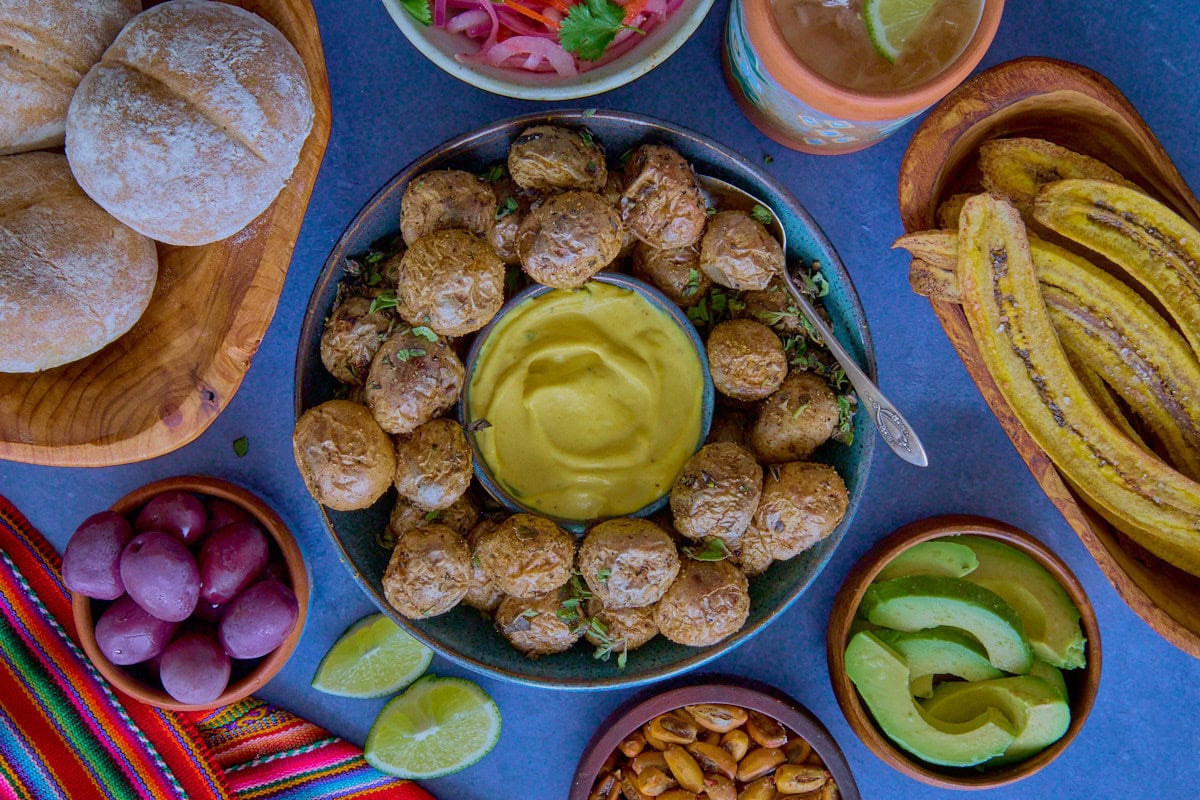
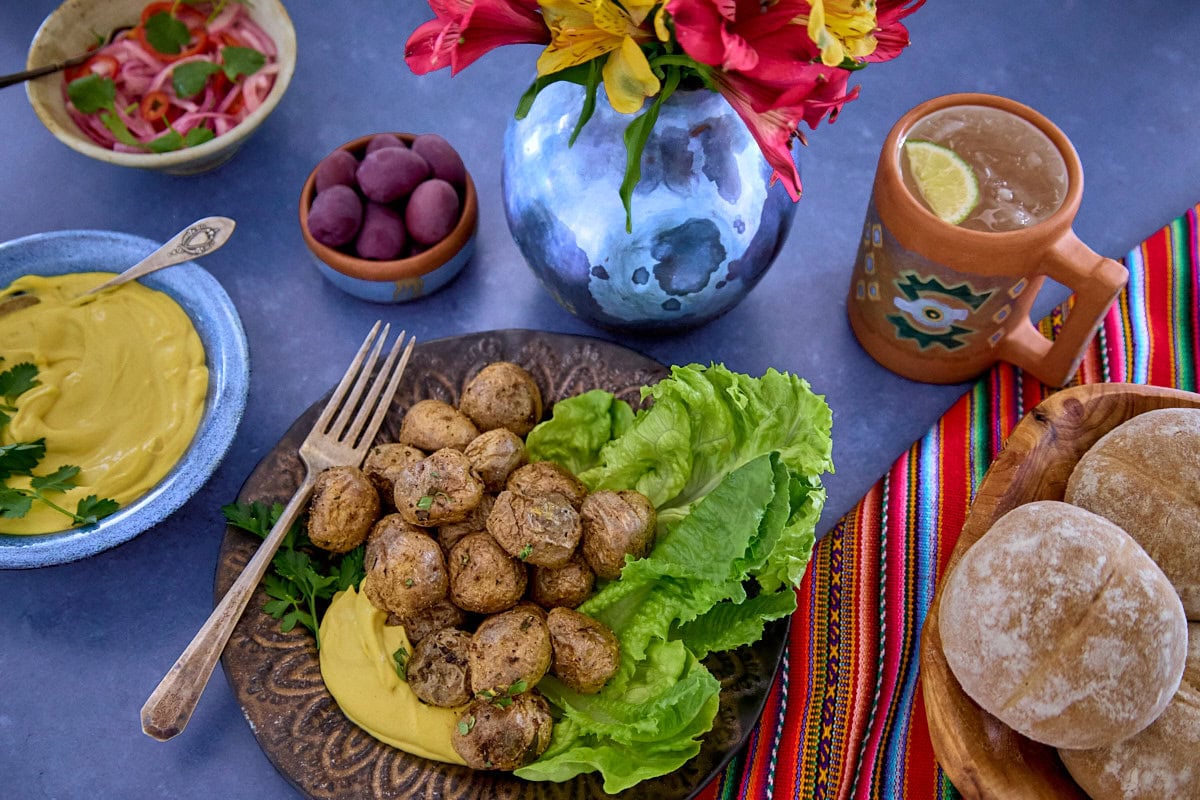
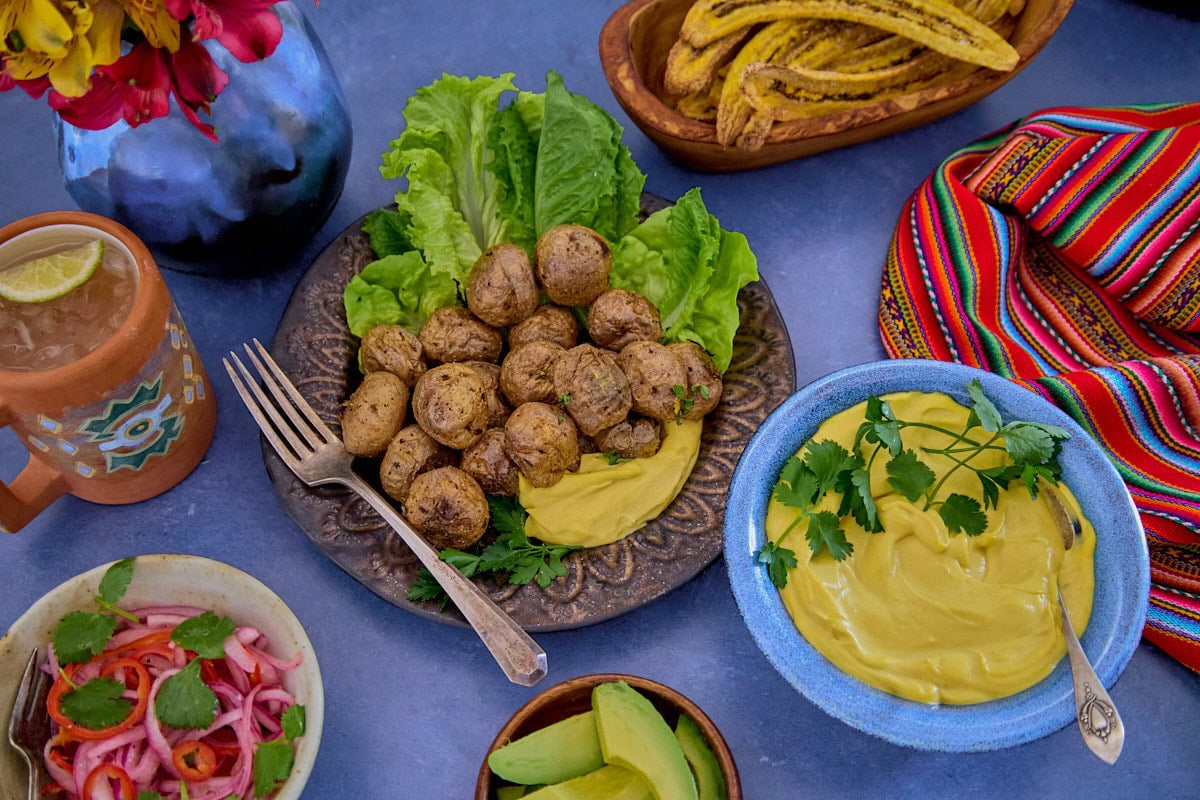
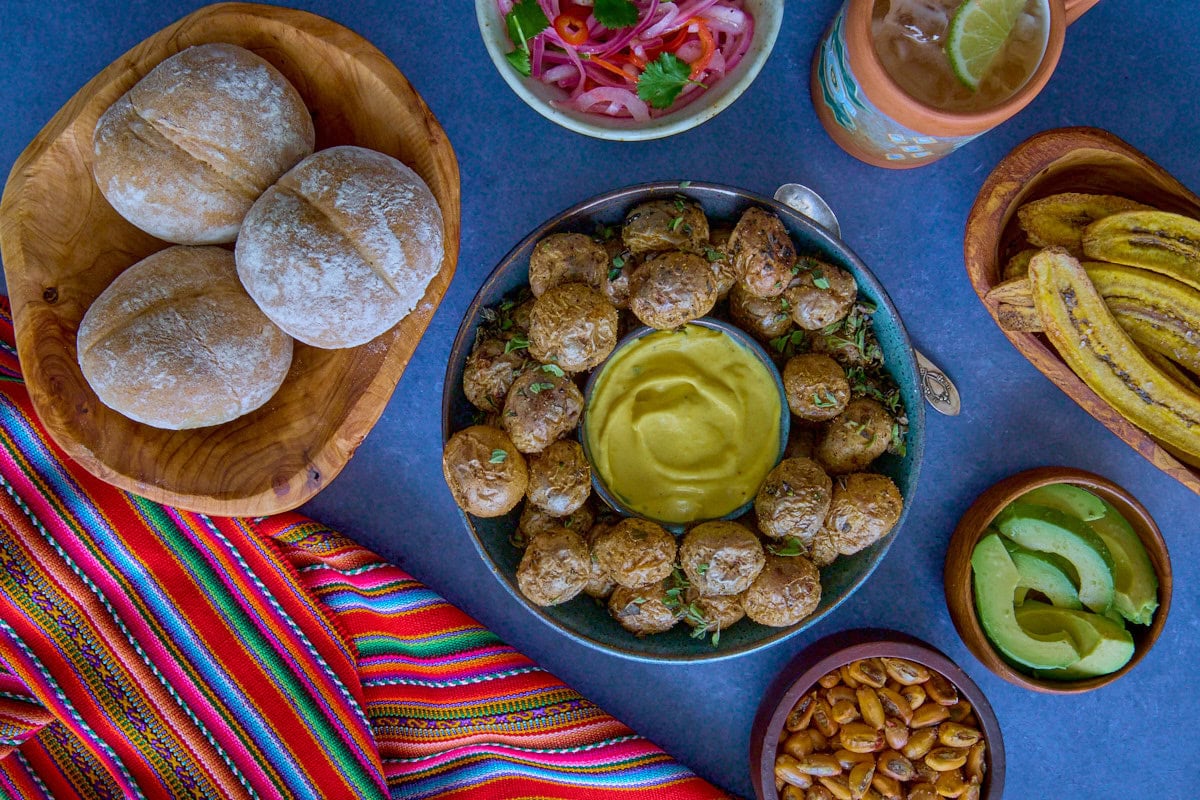
I like to serve this papa al horno a la Huancaína with other traditional Peruvian sides, like chifles (plantain chips), maíz chulpe (toasted corn), salsa criolla (red onion and chili salsa), pan francés (Peruvian French bread rolls), and a refreshing chirulín spritz (the spritz part being my own sparkling twist) cocktail. I really enjoy these authentic sides! You can see them in the photos throughout this post.
❓FAQ
Huancaína sauce is a traditional and beloved sauce from Peru that's served in both everyday and holiday settings. It typically consists of ají amarillo peppers, queso fresco, garlic, lime juice, and oil. And it's traditionally served over boiled, sliced potatoes over a bed of lettuce, along with olives and hard-boiled eggs. This vegan version maintains the delightful and tangy flavor of this sauce while using plant-based ingredients. And I'm using seasoned, roasted baby potatoes in place of the boiled version.
It's pronounced wan-ka-EE-na, and is derived from the city of Huancayo, the capital of the Junín region in central Peru. It means "a woman from Huancayo."
It's moderately spicy, and can be adjusted to taste with the quantity of ají amarillo peppers or paste added to the sauce. If you're unsure of your (or your guests') spice tolerance, you can start with adding just 1 tablespoon of the paste to the recipe. This spice quantity should be very mild. You can add more from there until it has the level of warmth that works well for you.
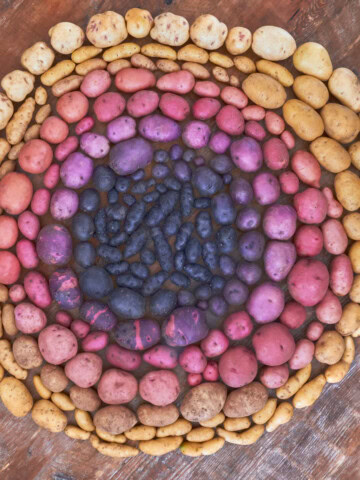
Yellow baby potatoes, like Yukon gold, work really well because of their creamy texture and thin skin. Red bliss or fingerling potatoes would also work well. It's preferable to use a waxy rather than a mealy potato so they'll hold together nicely and have a buttery flavor. Potatoes are a treasured vegetable in Peru, so if you can find (or grow) some Peruvian heirloom varieties, this would be all the better!
✨More recipes you'll love
Looking for other recipes like this? Try these:


✏️Did you make this recipe?
Please let me know in the reviews and comments below!
Vegan Huancaína Sauce with Roasted Potatoes (Peru)
Ingredients
For the roasted baby potatoes:
- 2 pounds (900 g) baby potatoes, unpeeled
- 1 tablespoon sunflower oil
- ½ teaspoon fine salt, or to taste
- ½ teaspoon freshly-ground black pepper
- 1 teaspoon ground cumin
- 1 tablespoon finely-chopped fresh oregano, or 1½ teaspoons dried
For the vegan Huancaína sauce:
- ¾ cup (100 g) raw cashews
- ⅓ cup (50 g) blanched almonds
- 1½ tablespoons coconut cream
- 1½ tablespoons white vinegar
- ½ teaspoon fine salt, adjusted to taste
- 4 large (24 g) garlic cloves
- 2 tablespoons freshly-squeezed lime juice
- 1-3 tablespoons ají amarillo paste, fresh or frozen ají amarillo peppers, or 1 small habanero pepper, membranes and seeds removed and chopped
- ½ cup (125 ml) water, adjusting if needed
- 1 tablespoon neutral oil, such as sunflower
For serving:
- 1 head romaine or other fresh lettuce leaves, adjust quantity to taste
- 1 bowl black olives, adjust quantity to taste
- 1 bowl avocado slices, adjust quantity to taste
- 1 tablespoon fresh cilantro (coriander), roughly chopped
- 1 tablespoon fresh parsley, roughly chopped
Instructions
Prepare the cashews and almonds (optional):
- If you don't have a high-speed blender, you can soak the nuts in boiling water for 10 minutes and then drain them before adding them to the blender.
Roast the potatoes:
- Preheat the oven to 425°F (220°C). line a baking sheet with a piece of parchment paper.
- Add the potatoes to a large bowl with the 1 tablespoon of oil, ½ teaspoon of salt, and ½ teaspoon of freshly-ground pepper. Toss until evenly coated. Reserve the bowl for after roasting.
- Add the potatoes to the baking sheet in a single layer.
- Roast until the potatoes are golden, crisp on the outside, and fork-tender, about 25-30 minutes.
- Add the potatoes back to the bowl along with the cumin and fresh oregano. Toss until thoroughly combined.
Blend the Huancaína sauce:
- Add the following ingredients to the blender: cashews and almonds, coconut cream, white vinegar, salt, garlic, lime juice, ají amarillo paste (or habanero), water, and oil.
- Blend until smooth and creamy. Adjust with water if needed for a thick and pourable texture.
- Taste the sauce and adjust. If desired, add more ají amarillo paste, lime juice, and/or salt.
Assemble and serve:
- Add the lettuce leaves to a serving platter or to individual plates.
- Place the roasted potatoes on the arranged lettuce.
- Add the Huancaína sauce to a serving bowl to pass around, spoon over the potatoes, or add it alongside the potatoes.
- Add sliced avocados and olives to serving bowls or alongside or atop the potatoes and sauce. Feel free to serve this dish as you like!
- Garnish the serving platter or plates with the cilantro (coriander) and parsley. Serve and enjoy!
Notes
- If you don't have a can of coconut cream, you can collect it as the solid layer at the top of a can of full-fat coconut milk. The sauce won't have a detectable taste of coconut.
- If you're not sure of your (or your guests') spice tolerance, you can start with 1 tablespoon of the ají amarillo paste and add more from there. If you only use a small amount, and you'd like to have your sauce be a brighter yellow, you can add ½ teaspoon of turmeric. This isn't a traditional addition, as the sauce is typically served with a moderate amount of spice from the paste. But it'll brighten the yellow color of your sauce.
- You can make this sauce 3-5 days ahead and store it in the fridge in an airtight container. It will be thicker after chilling, so you can stir in a small amount of water before serving.

Leave a Reply