


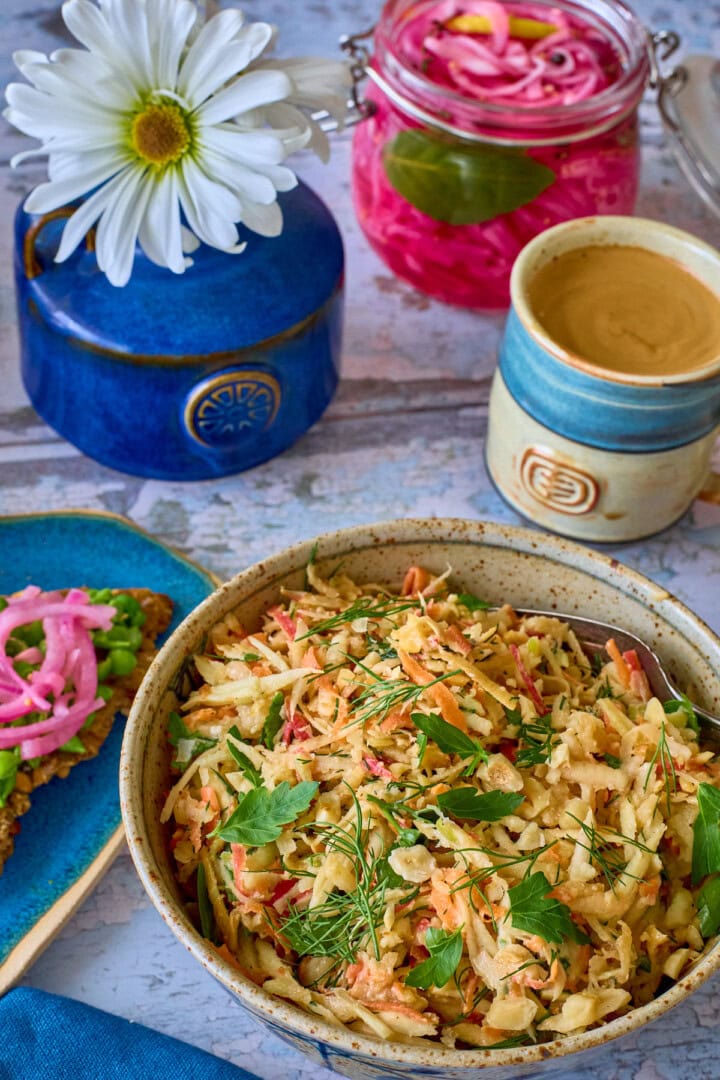
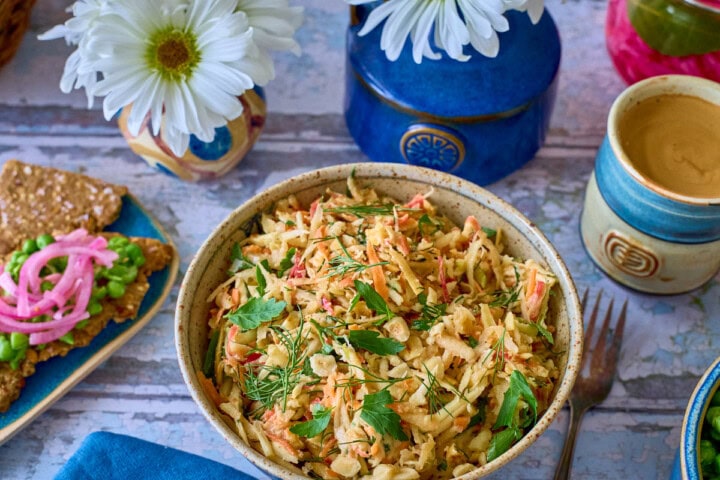
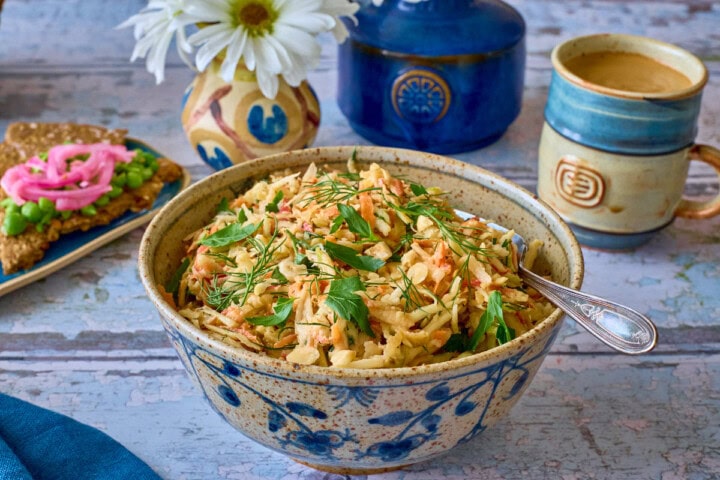

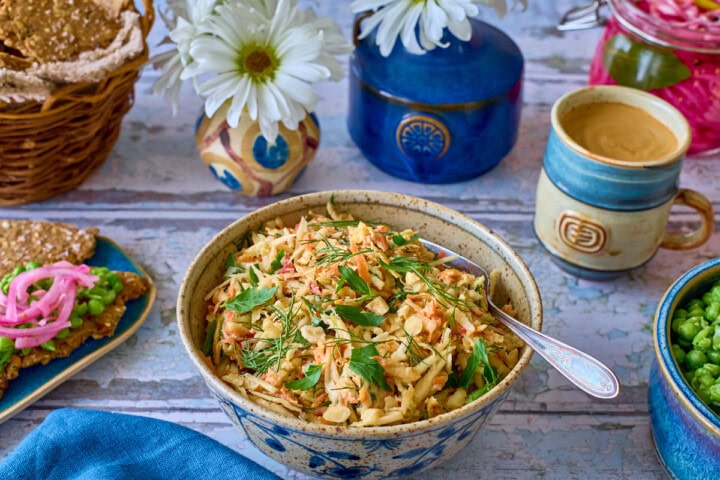


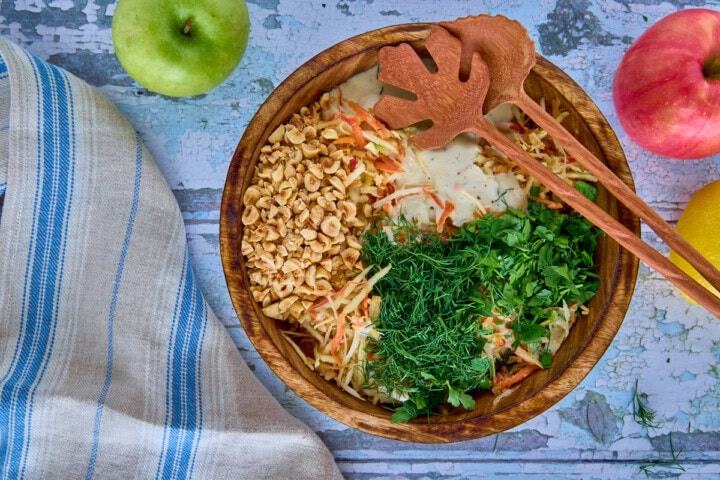
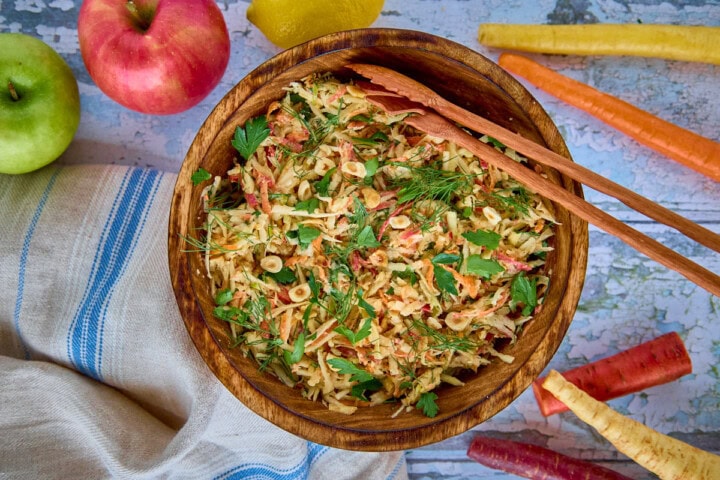


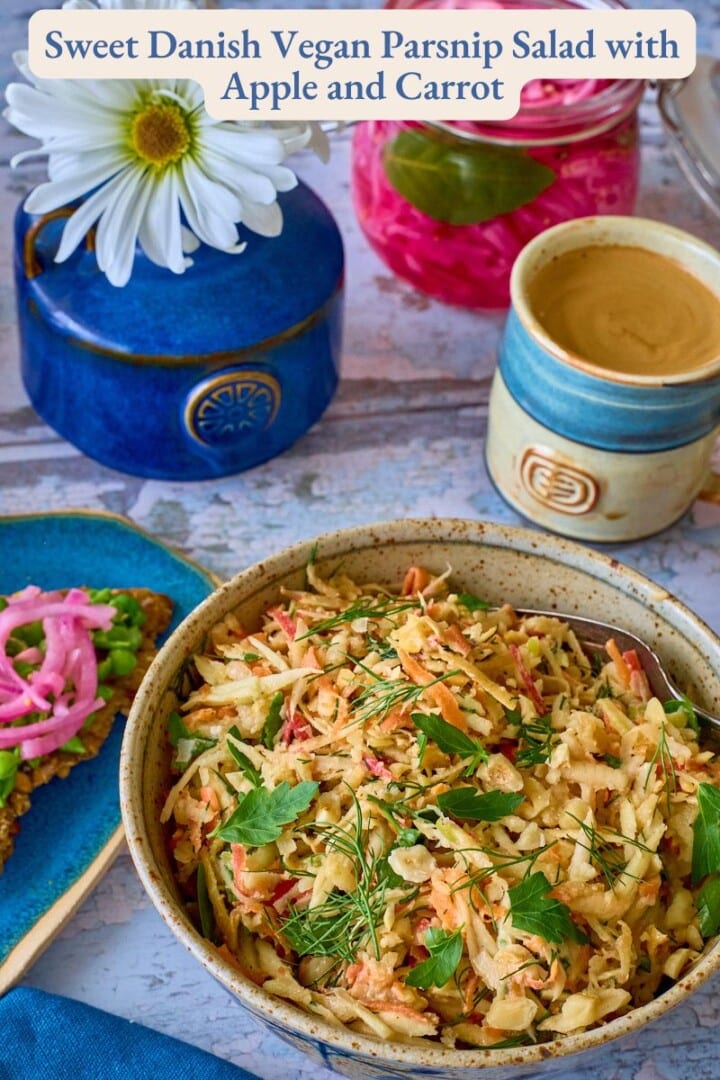
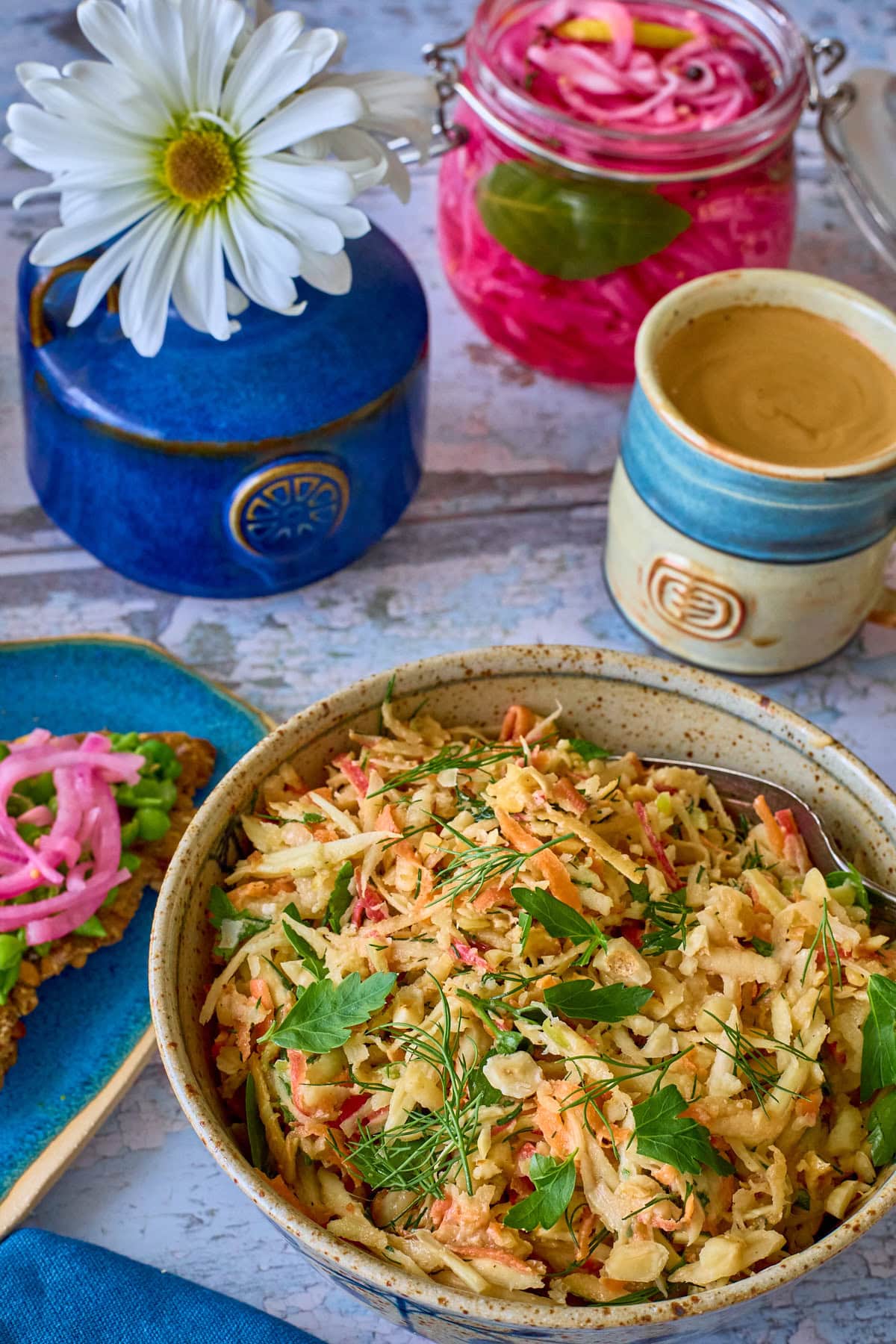
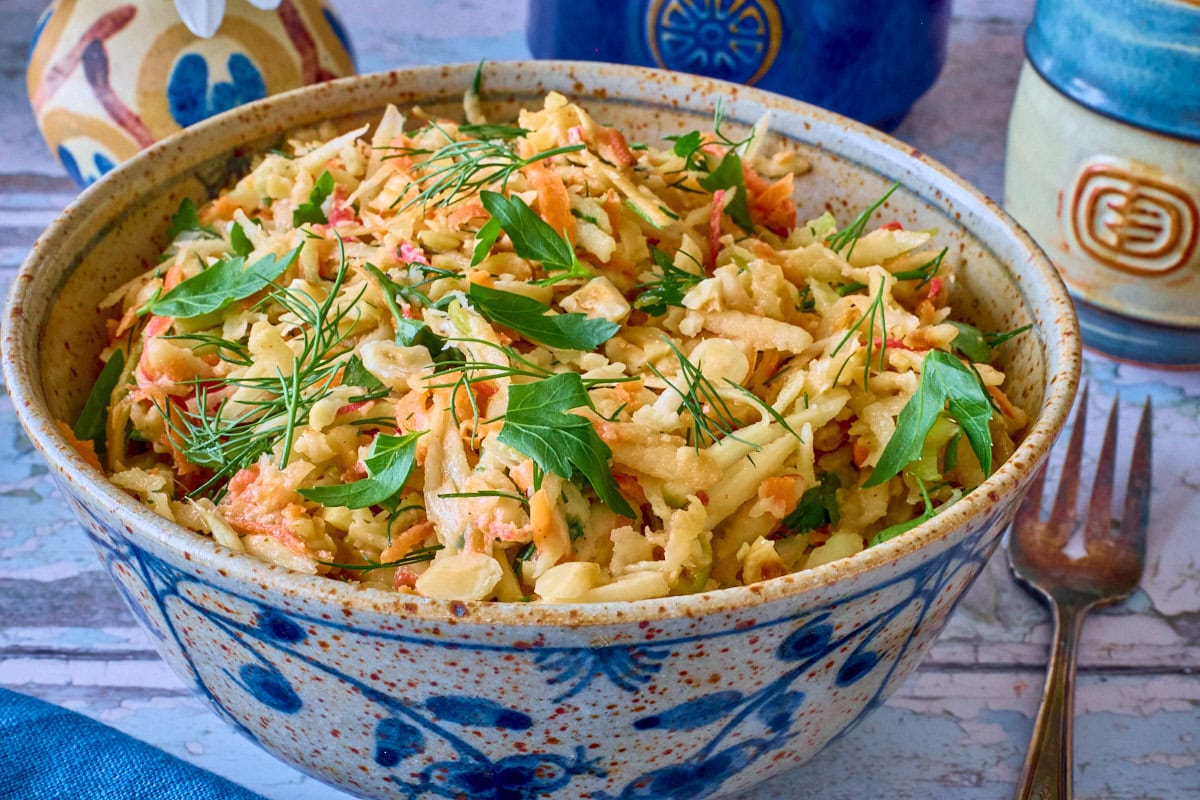
This traditional Danish pastinaksalat is delightfully sweet and tangy with a fresh, crisp texture. It has nutty parsnips, sweet and tart apples, vibrantly-colored carrots, fresh dill and parsley, and a zesty vegan maple-mustard-horseradish dressing. And it has the satisfying buttery crunch of toasted hazelnuts. It celebrates the heirloom garden harvest and honors Nordic culinary traditions. Each bite of this Sweet Danish Vegan Parsnip Salad with Apple and Carrot is bursting with vibrant flavor that you, your friends, and family will love!

🌿What is pastinaksalat?
In Denmark, pastinaksalat (pronounced "PAS-ti-nak-sah-laht") literally means parsnip salad. This dish has historically used hearty garden root vegetables to yield refreshing salads, even in colder times of the year. Traditionally, Danish parsnip salad is prepared with a hint of sweetness and a creamy dressing, often tossed with apples or other parts of the garden harvest. Parsnips have had a cherished history in Scandinavian cuisine for centuries. They were even used as a natural sweetener in Europe before cane sugar became available. This version keeps the authentic spirit of pastinaksalat with the parsnip's natural sweet and nutty flavor, with the added enchanting flavors of carrots, apples, fresh herbs, toasted hazelnuts, and an irresistible and creamy vegan maple mustard-horseradish dressing. This comforting salad feels both traditional and excitingly refreshing.
Jump to:

💕Why this parsnip salad is special
A plant-based version of a Danish classic
This recipe pays tribute to a classic Danish pastinaksalat, keeping its flavorful and fresh character in this plant-based version. By using maple syrup instead of honey, and plant-based rather than dairy yogurt, this vegan recipe maintains the classic sweet and zesty flavors of this dish. Everyone can enjoy this delicious Danish salad!
Heirloom vegetable ingredients from your garden
This salad features heirloom, parsnips, carrots, and herbs straight from the garden. Or if you have a local farmers' market nearby, you can take advantage of these homegrown roots. They're sweeter and more colorful with a more vibrant flavor than store-bought varieties. And using organic produce that's in-season makes this salad even more special.
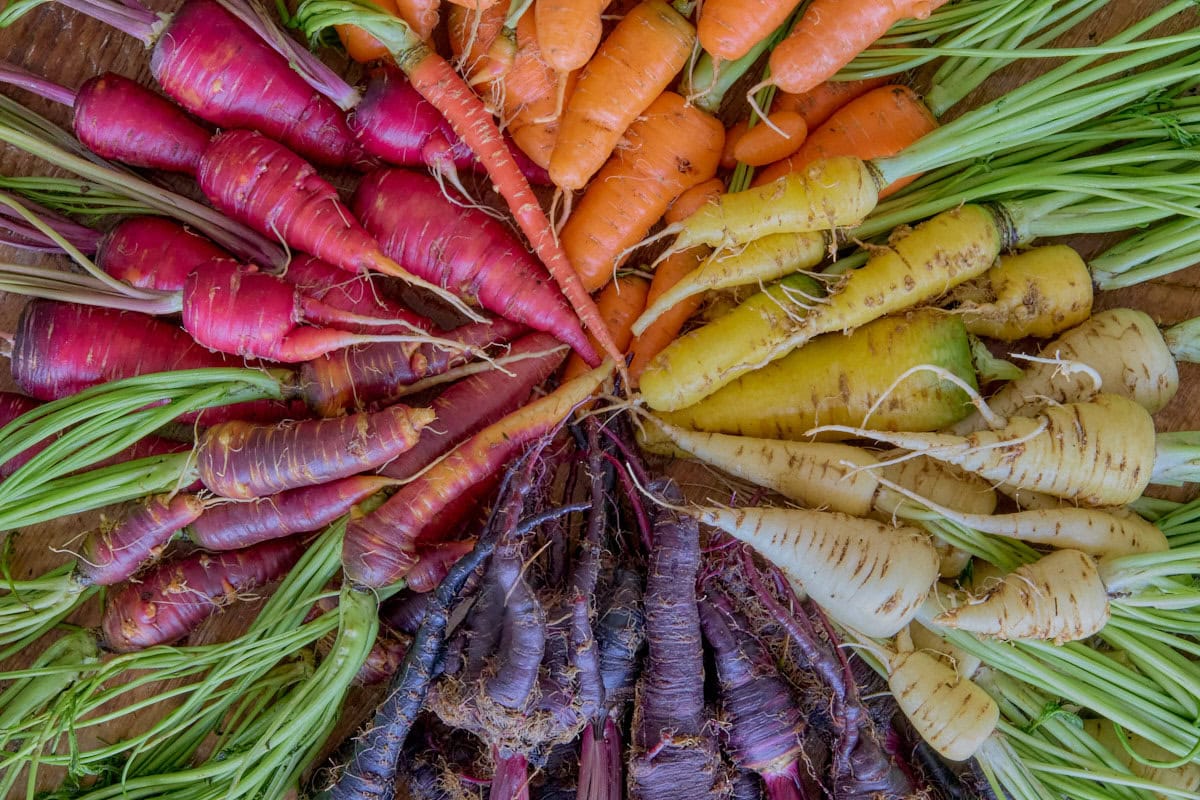
Here's a photo of some vegetables from my recent garden harvest, including a parsnip and some carrots:

Sweet and tangy maple mustard horseradish dressing
The vegan maple mustard-horseradish dressing truly makes this salad stand out. It's creamy yet dairy-free, with just a hint of sweetness from the maple syrup, the tang of Dijon mustard, and the vegetal sharpness of horseradish. This dressing uses familiar Nordic elements to create a dressing you'll want to use on any type of salad!
Fresh and crisp with a sweet and tangy crunch
There are wonderful contrasts in every bite. The grated parsnips, carrots, and apples are hearty and comforting. The dressing is creamy and bright, coating each piece with flavor. The addition of fresh dill and parsley add herbaceous freshness. And the buttery toasted hazelnuts give a comforting note and crunch. The sweet, savory, and tangy flavor combination makes this easy salad refreshing and very satisfying.
Perfect salad for a get-together of friends and family
Our family loves this pastinaksalat. The familiar sweet-and-tangy profile is very approachable and crowd-friendly. It's also simple to make and multiply the quantity for gatherings. Whether it's a holiday meal, picnic, potluck, or a weeknight meal, this parsnip salad brings something new and memorable to the table that people really enjoy.
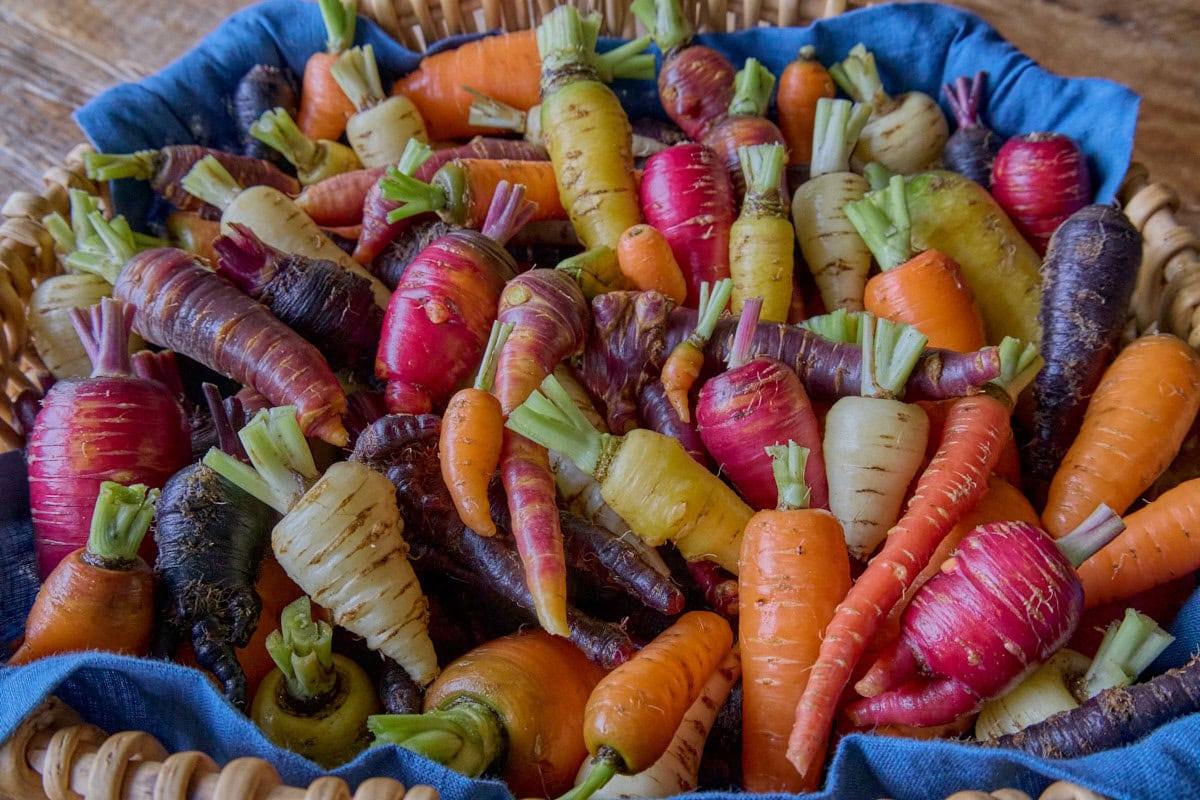
Here are some gorgeous heirloom carrots from my garden to show you the beautiful colors you can add to this salad! Their homegrown flavors are so fresh, earthy, and sweet. For another delicious salad recipe you can make with your homegrown (or market) carrots, please check out my post on Heirloom Carrots with Chermoula (Carottes à la Chermoula).
📓Ingredient notes

- Parsnips: Try to find medium ones, as the larger ones can be a bit fibrous. I leave them unpeeled, but you can peel them if you'd like.
- Carrots: I like to use a few small carrots of different colors and flavor profiles to really make this a bright and beautiful salad.
- Tart apple: Granny smith apples work well here. I leave them unpeeled to lend the beautiful green color to the salad.
- Sweet apple: Crisp and sweet red apples like honeycrisp or cosmic crisp lend a wonderful fresh texture to the salad, and the red skins add their gorgeous color.
- Hazelnuts: These toasted nuts add a nutty, buttery crunch to the salad. Make sure to use nuts without their skins on them.
- Dill: Fresh dill is so refreshing in this salad! It really makes this dish special.
- Parsley: I like to use flat-leaf parsley here, but curly would work well too.
- Non-dairy yogurt: Please use a really creamy and tangy plain yogurt here to really make the sauce smooth.
- White wine vinegar: This vinegar is delicate, bright, and fruity, and helps to make the dressing vibrant.
- Lemon juice: Please use freshly-squeezed lemon juice here to add even more shine to the dressing.
- Oil: I'm using canola (rapeseed) oil, as it's more traditional in this salad. But free free to use another neutral oil if you'd like.
- Maple syrup: This lends just a hint of depth and sweetness to the dressing.
- Salt: I'm using fine salt to distribute its flavor well throughout the dressing.
- Pepper: Freshly-ground black pepper makes a big difference here.
- Dijon mustard: Mustard is a modern but common flavor base for this dressing. I love combining it with the more classic Nordic horseradish flavor below. I think they complement each other really well in this salad.
- Prepared horseradish: This ready-to-use type in a jar is easy, fast, and still full of fresh flavor. It brings such a delightful sharpness to the dressing. Some versions contain non-vegan ingredients, but there are also plant-based versions readily available.
See recipe card for quantities.
📒Step by step instructions & photos
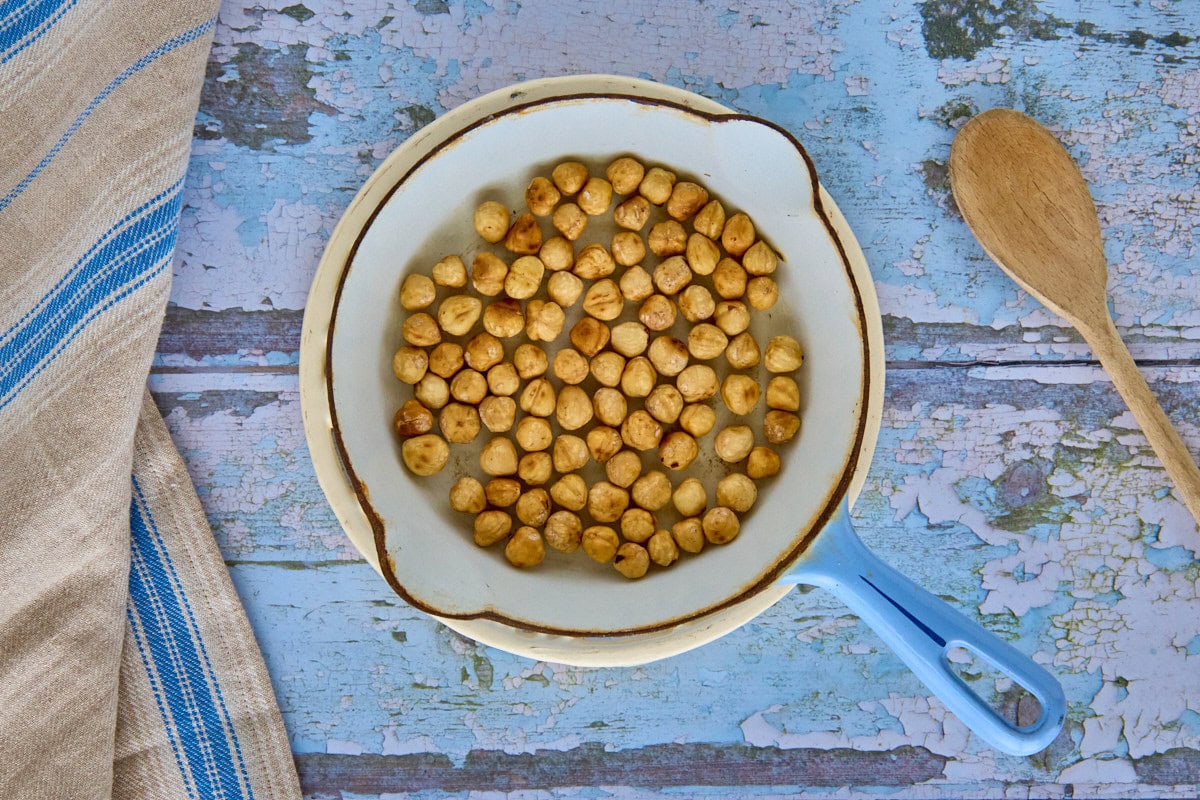
- Step 1: Add hazelnuts to a dry skillet over medium heat. Toast, stirring frequently, until aromatic and lightly browned (about 3-4 minutes). Let them cool, chop them, and set aside.
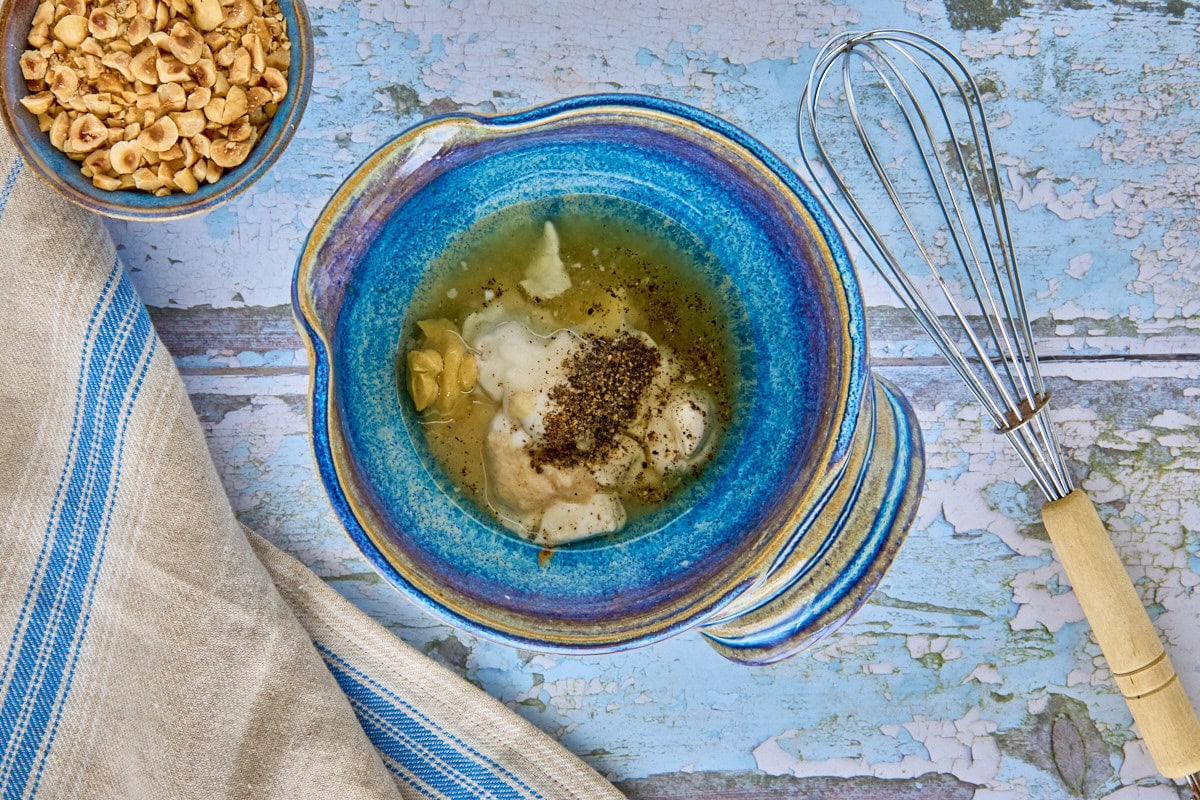
- Step 2: In a small bowl, add non-dairy yogurt, vinegar, lemon juice, canola oil, maple syrup, salt, pepper, Dijon mustard, and prepared horseradish.

- Step 3: Whisk the dressing to blend.
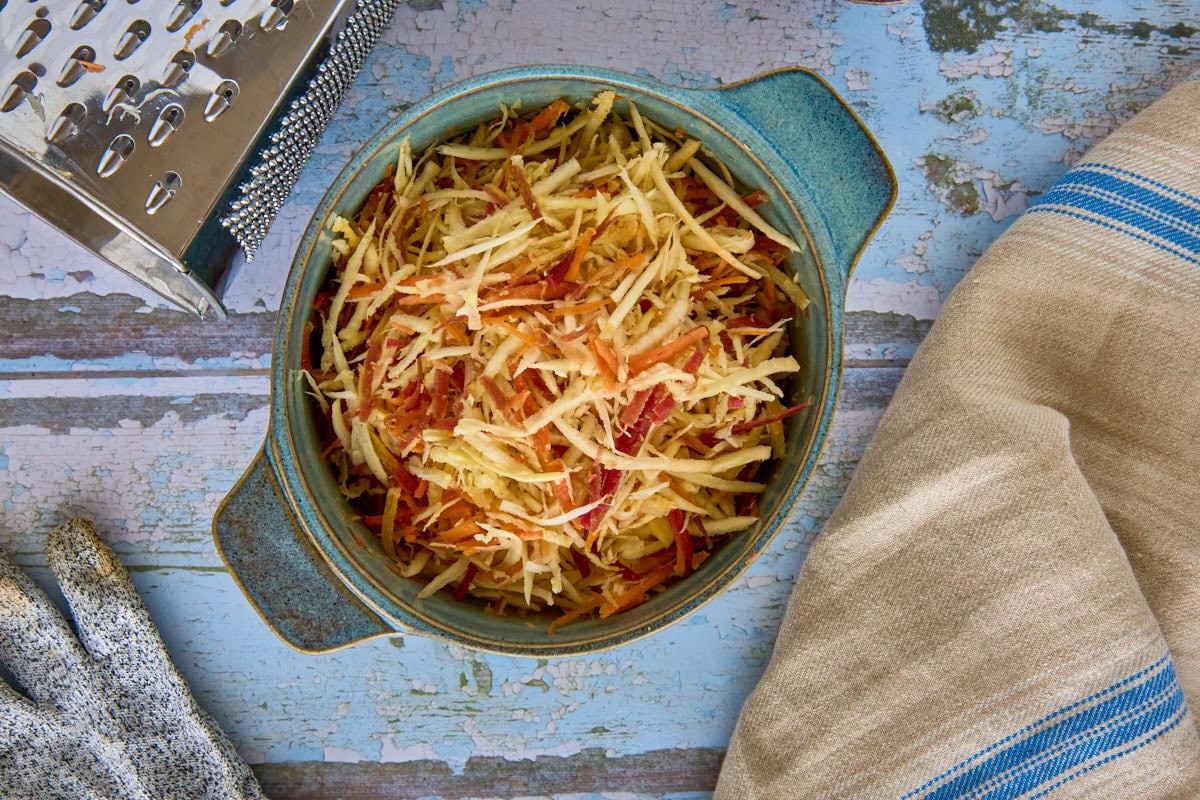
- Step 4: Grate the parsnips and carrots using the large holes on a box grater or food processor grating disk. Add to a large bowl.
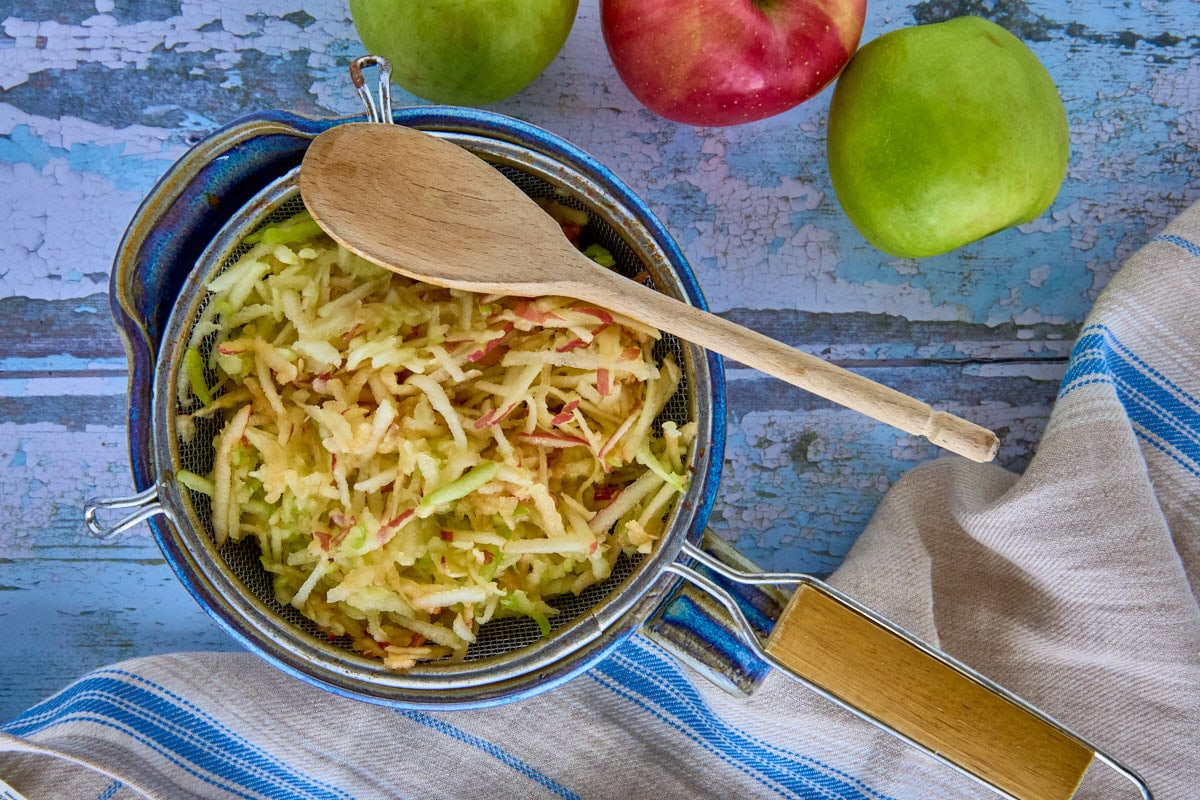
- Step 5: Grate the apples the same size and gently squeeze out the excess juice.
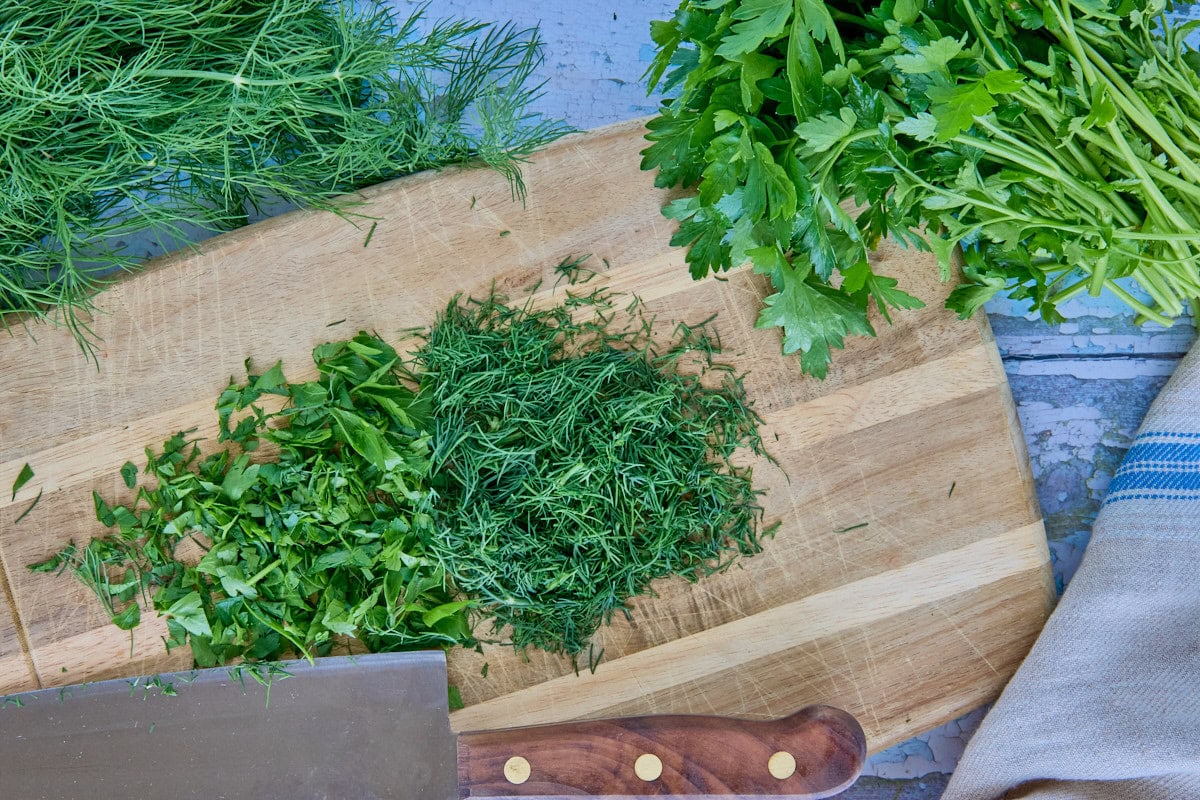
- Step 6: Finely chop the dill and parsley.
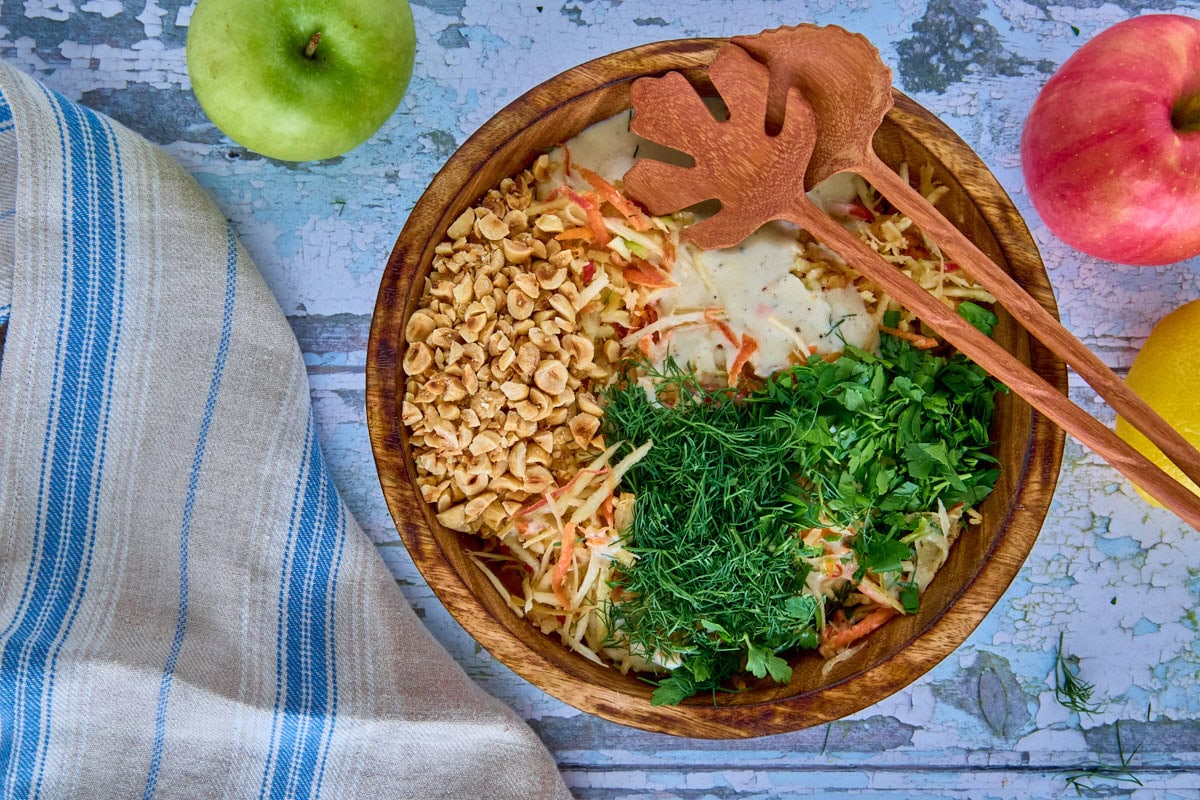
- Step 7: In a large bowl, combine the grated parsnips, carrots, apples, toasted hazelnuts, dill, and parsley. Add the dressing.
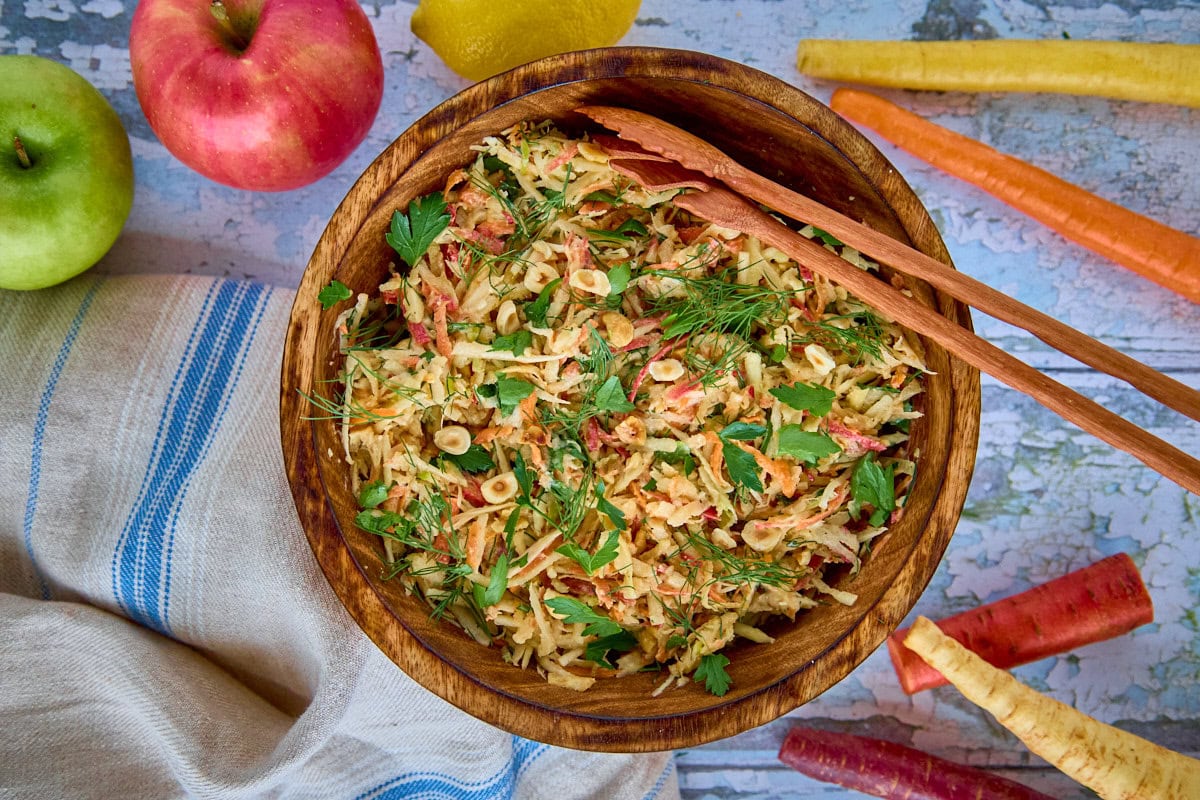
- Step 8: Toss gently until combined. Serve immediately for the best flavor and texture. Enjoy!
Hint: I like to use the most colorful carrots from my garden, or from the grocery store, to really make this salad bright. And the same goes for the tart and sweet apples. I don't peel any of these (or even the parsnips) before adding them to the salad. I really like to keep the salad rustic with a homemade feel, so this works really well.
💡Tips for success
Choose uniform, not-too-large parsnips
Since parsnips vary in size, try to use some that are medium and fairly uniform in shape. Large parsnips can have a tough, woody core. If yours are large, consider slicing out the thick fibrous core before grating; the outer part is more tender and sweet. Smaller parsnips are more tender throughout, and work really well in this salad.
Use crisp apples
Crisp apples are a key part of this salad. Make sure to press out most of the juice, so the salad won't be watery. And drink your few sips of leftover fresh-pressed cider. it's delicious!
Adjust the salad to your taste
The interplay of horseradish and mustard in this salad is bright and zesty, but not too sharp. Make sure to taste your dressing after mixing. If it's too strong, add a bit more oil or a bit more maple to even out the flavor. If it's too sweet, you can add a little more vinegar or mustard to offset this. This dressing is so easy and flexible, and works really well to adjust it to your taste.
Serving temperature
This salad can be served at room temperature or cold from the fridge. However, for the best texture and flavor, I recommend room temperature. Cold tends to dull the flavors a bit, (plus the vegetables will absorb more of the dressing if added before refrigerating). If you've chilled it, you can serve it cold, or let it sit out for a short time before serving.
🔀Substitutions
Hazelnuts:
If you don't have these on hand, you can use walnuts, pecans, pine nuts, or another nut that you enjoy. Pepitas or sunflower seeds also work well.
Non-dairy yogurt:
You can also use vegan sour cream or crème fraîche here.
Horseradish:
If you don't have prepared horseradish, you can increase the Dijon mustard content and/or add some ground mustard as well.
Oil:
If you don't have canola oil, you can use another neutral oil like sunflower, avocado, or olive oil.
🍶Variations
Add more fruit:
If you'd like more sweetness, try adding more grated apples, and even some grated pears as well. They'd blend beautifully with the tangy dressing.
Make it creamier:
If you'd like your pastinaksalat to be more like a creamy coleslaw, you can stir in more plant-based yogurt into the dressing and adjust the other flavors as needed.
Add more spice:
To add more zesty flavor from the horseradish, you're welcome to add more. Or you can add some spicy mustard as well for enhanced flavor.
Use different vegetables:
Please feel free to add whichever vegetables you have on hand that are delicious raw, such as tender baby pea pods, asparagus, or filet beans. Adjust the quantity and flavor of your dressing accordingly as needed.
🥣Equipment
- Digital scale: For measuring your ingredients accurately by weight. I highly recommend using this! It's inexpensive, and reduces the amount of dishes you'll need to clean up. I use both a regular-sized one and also this great mini one for measuring smaller quantities like the fresh dill and parsley in this recipe. I also use it to weigh tea leaves for loose tea. Both sizes are really useful!
- Measuring cups and spoons: For measuring liquids and small quantities
- Skillet: For toasting the hazelnuts
- Knife and cutting board: To trim your ingredients and chop the nuts and herbs
- Grater: To grate the parsnips, carrots, and apples, you can use the large holes on the side of a box grater or a grating disk on a food processor.
- Small and large bowls: For making the dressing and tossing and serving the salad
- Whisk and mixing spoon or spatula: To mix the dressing and toss the salad
- Sieve: You can add the grated apple to a sieve set over a bowl and press gently to release most of the juices. And make sure to drink this extra few sips of fresh-pressed cider. It's delicious!
- Salad serving spoons: For tossing and serving the salad
⏲Make ahead and storage
Make ahead
While this salad tastes best served fresh, you can make the dressing up to 3-4 days in advance and keep it in the fridge. If you'll be serving it cold, you may want to make the flavor of the dressing stronger, as chilling will reduce the flavor levels. And whisk the dressing before serving to incorporate any separation and restore creaminess. You can also prep the vegetables and herbs up to 12 hours in advance and store them separately in airtight containers in the fridge.
Refrigerate
If you have leftovers, you can store the dressed salad in the fridge in an airtight container for about 3 days. The grated parsnips, carrots, and apples will absorb more of the dressing, so it may become softer and more flavorful. And the herbs may wilt, so you can always add more fresh ones if you'll be serving the salad again. I don't recommend freezing this salad, as it would compromise the fresh flavors and textures.
🍲Serving suggestions
As part of a Danish spread
For authentic Danish dishes, you can serve this salad with traditional foods such as:
- Ærtemos: Mashed peas
- Knækbrød: Seeded crispbread
- Syltede Rødløg: Pickled red onions
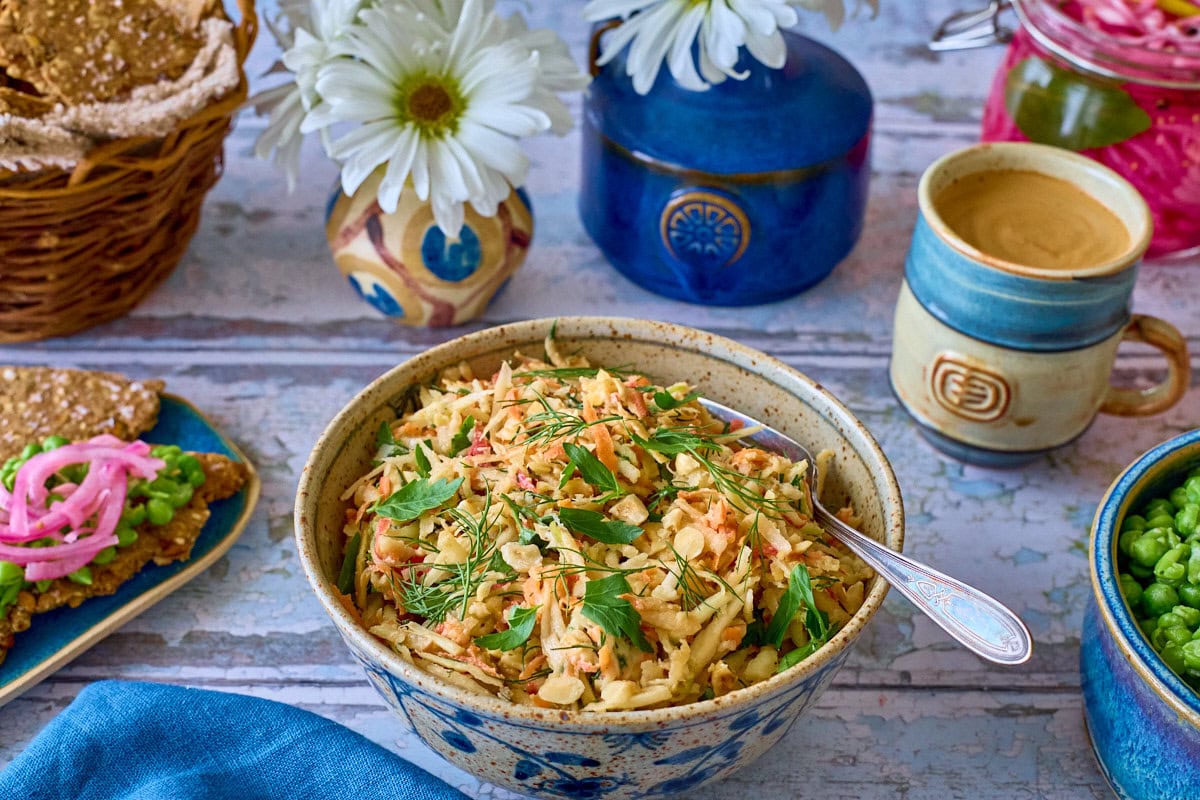
You can spot these three sides in the background of the photos throughout this post. They pair wonderfully with the pastinaksalat.
Side dish for potluck, family, or holiday gathering
This is such a unique and special Danish twist on a classic coleslaw for a get-together! You, your friends, and family will love it.
On a bed of greens
If you'd like to extend this salad, you can serve it on a plate or in a bowl lined with beautiful lettuces from your garden or market. This would be a gorgeous and fresh presentation for your parsnip salad.
❓FAQ
I don't peel them, as I like to keep the salad rustic. And the apple peels especially help to provide color. If your parsnips are large and tough, you can peel these if you'd like. But if you look for medium ones, I find that the peel is totally fine to use.
Yes, absolutely. They have a sweet, nutty, earthy flavor that really blends well with the sweetness of the carrots and apples. If you're unfamiliar with parsnips, I encourage you to try them here in this flavorful, fresh, and satisfying salad.
No, it just has a nice sharp flavor. I just use enough to lend its beautiful boldness to complement the tang from the Dijon mustard.
If you don't have horseradish on hand, you're welcome to just add a bit more mustard to taste.
And if you do like your horseradish flavor to be stronger, please feel free to add more!

✨More recipes you'll love
Looking for other recipes like this? Try these:
✏️Did you make this recipe?
Please let me know in the reviews and comments below!

Sweet Danish Vegan Parsnip Salad with Apple and Carrot
Ingredients
For the salad:
- ½ cup (80 grams) raw hazelnuts, with no skin
- 200 grams parsnips, unpeeled, about 2 medium
- 150 grams carrots, unpeeled, about 1 medium or a few small of various colors
- 200 grams tart green apple, cored, unpeeled, about 1 small
- 200 grams sweet red apple, cored, unpeeled, about 1 small
- 2 tablespoons (7 g) fresh dill, chopped
- 3 tablespoons (5 g) fresh parsley, chopped
For the dressing:
- ⅜ cup (90 grams) plant-based yogurt, plain, unsweetened
- 1 tablespoon white wine vinegar
- 1 tablespoon freshly-squeezed lemon juice
- 2 tablespoons canola (rapeseed) oil, or other neutral oil
- ½ teaspoon maple syrup
- ½ teaspoon fine salt
- ¼ teaspoon freshly-ground black pepper
- 1½ teaspoons Dijon mustard
- 1 teaspoon prepared horseradish
Instructions
Toast the hazelnuts:
- Add hazelnuts to a dry skillet over medium heat. Toast, stirring frequently, until aromatic and lightly browned (about 3-4 minutes). Let cool and chop.
Make the dressing:
- In a small bowl, add yogurt, vinegar, lemon juice, canola oil, maple syrup, salt, pepper, Dijon mustard, and prepared horseradish. Whisk to blend.
- Taste and adjust seasoning - if refrigerating before serving, the dressing should be strong since chilling reduces flavor.
Prepare the salad:
- Grate the parsnips and carrots using the large holes on a box grater, food processor, or mandoline grating blade. Add to a large bowl.
- Grate the apples the same size and gently squeeze out the excess juice. (Each 200 g apple should weigh about 150 g after gently pressing out most of the juice.)
- Chop the fresh dill and parsley.
Assemble the salad and dressing:
- In a large bowl, combine the grated parsnips, carrots, apples, toasted hazelnuts, dill, and parsley. Add the dressing, and toss gently until combined. Serve immediately for the best flavor and texture. Enjoy!
Karen Kerns says
What a delightful wonderful change in my salad menu! This Vegan parsnip salad with carrots and apples is tasty, light, and satisfying. I used roasted pecans in place of the filberts/hazel nuts. Love this!!