
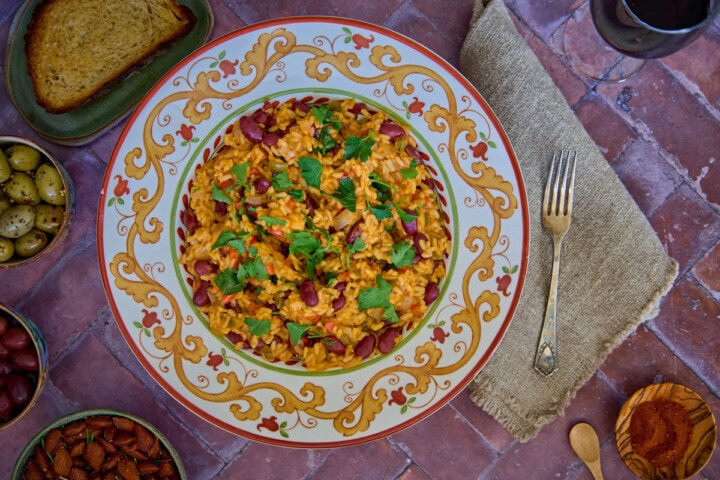
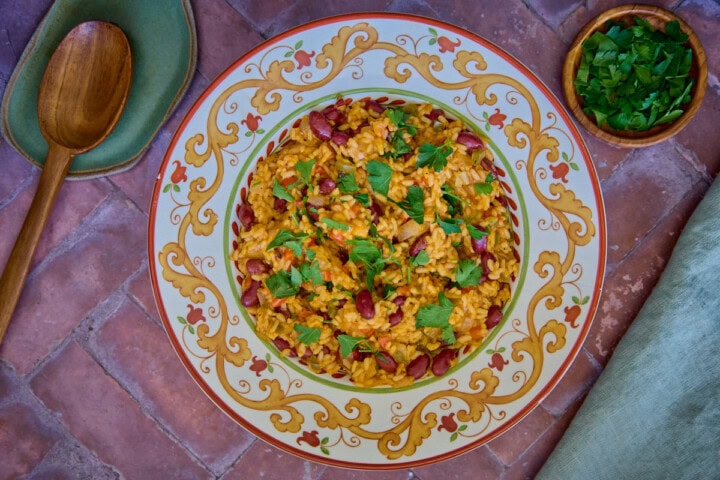
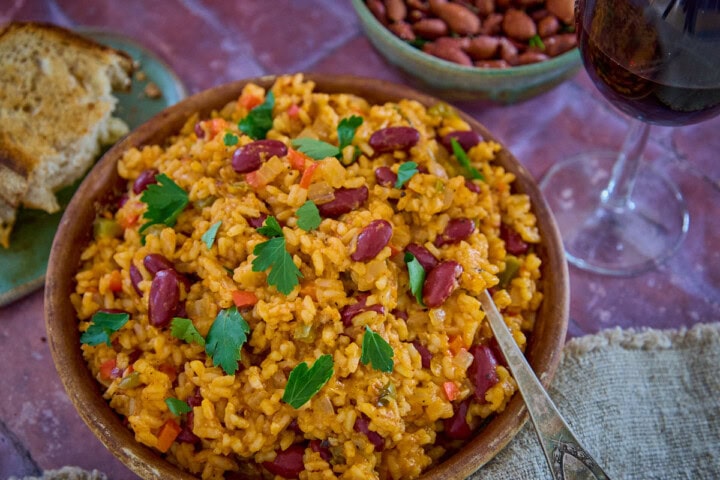


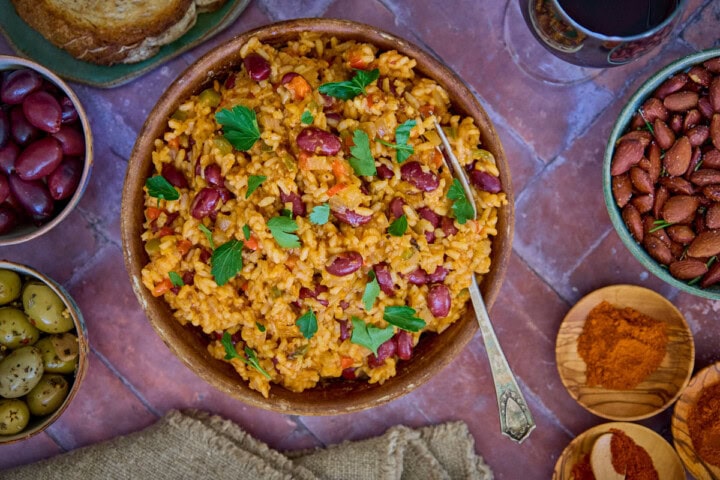
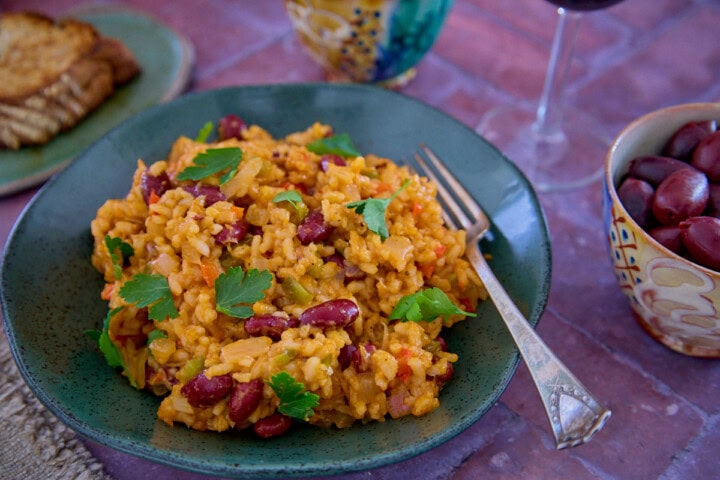
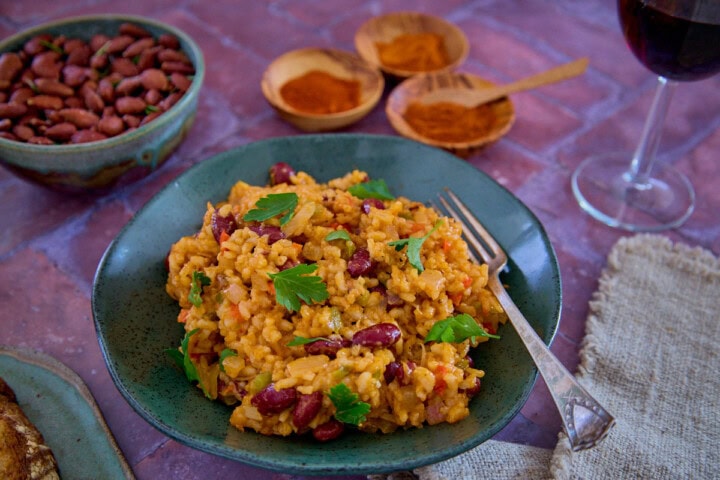
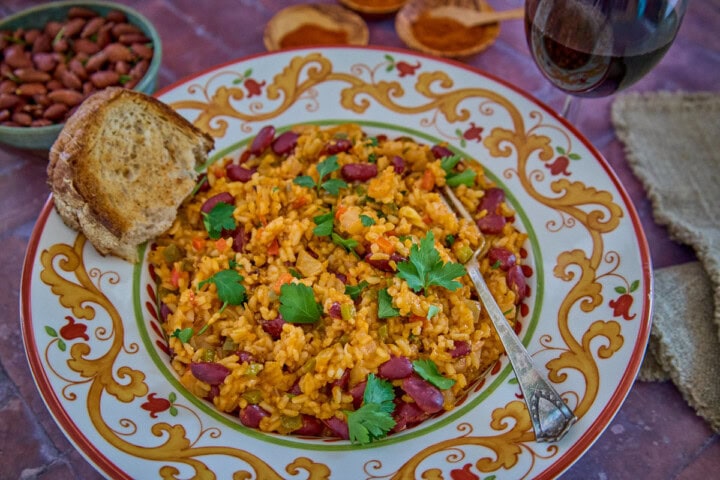
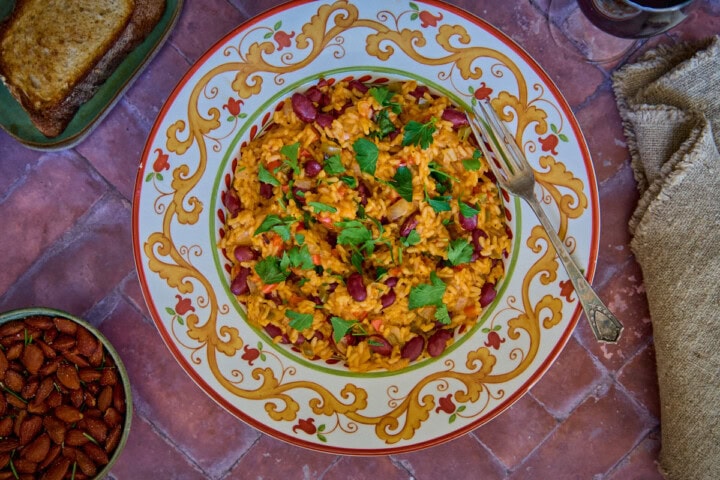


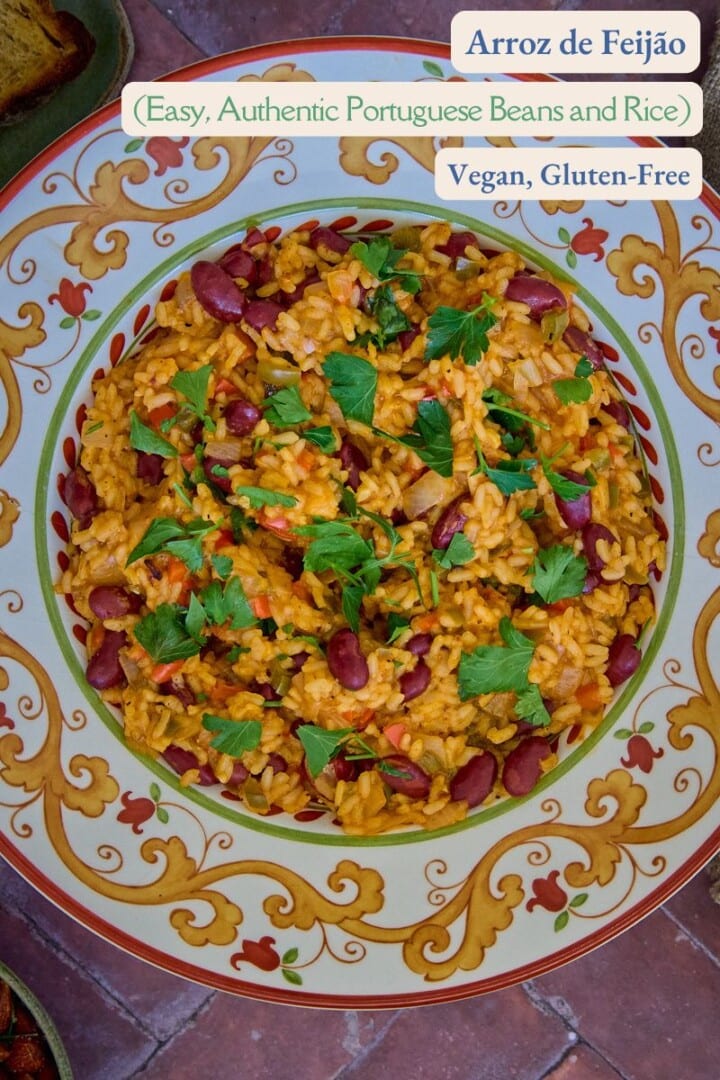
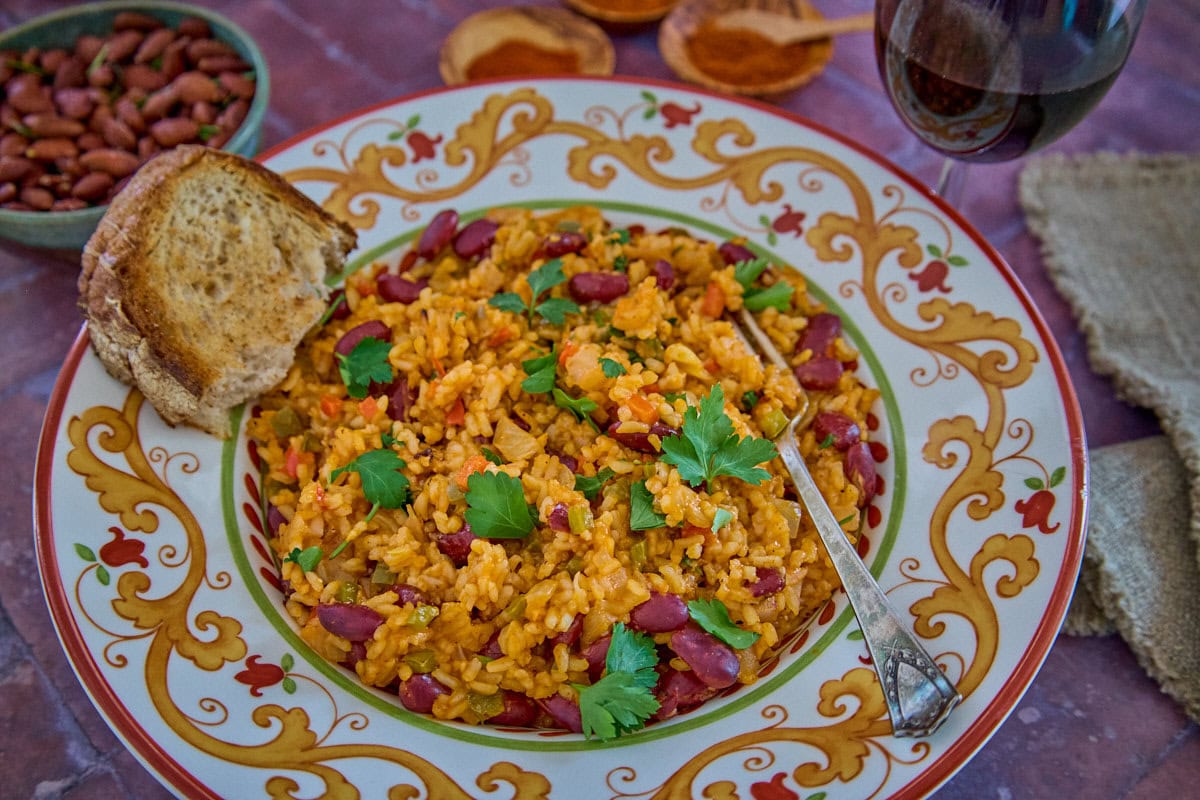
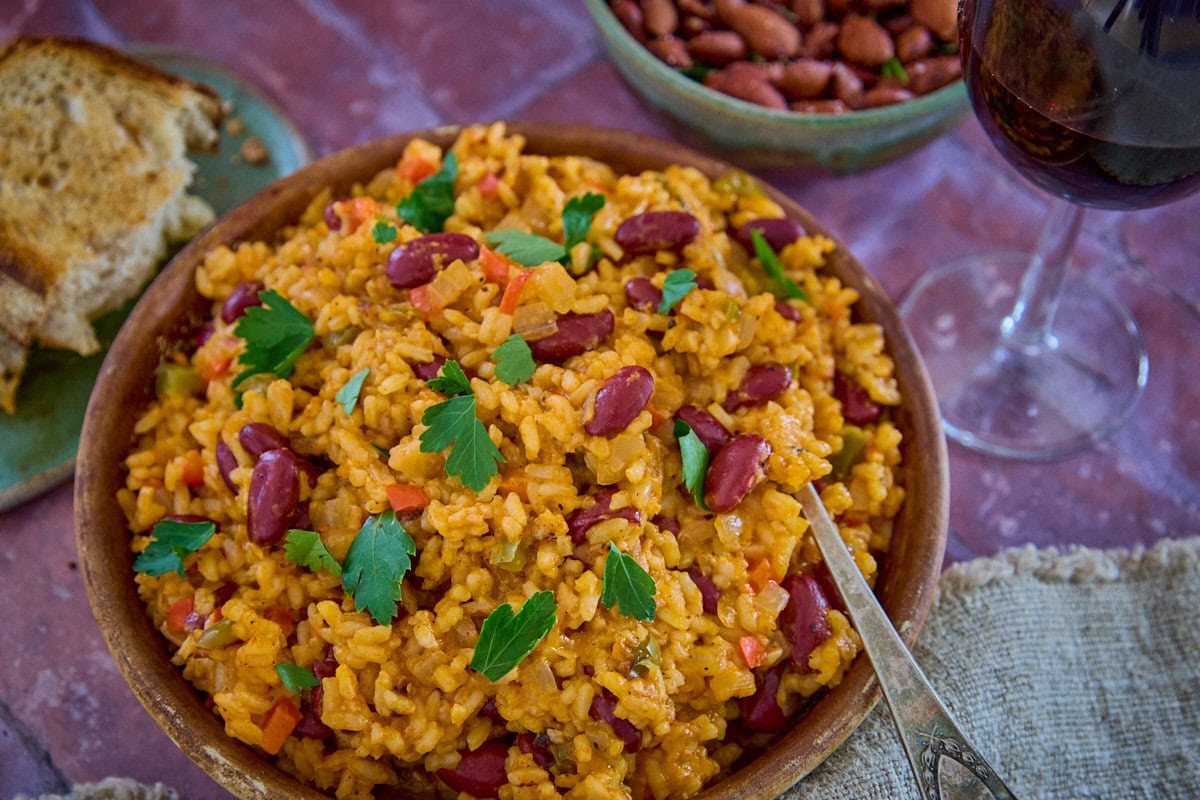
Have you ever felt a nostalgic longing for the most comforting, rustic and warming dishes from your childhood? The kind of food you crave after a long time away from home? This irresistibly cozy Arroz de Feijão (Easy, Authentic Portuguese Beans and Rice) embodies these quantities. It has a savory, velvety sauce of tomatoes and stock, rice, hearty beans, and a refogado of sautéed garlic, onions, and bell peppers with seasonings. It's indulgently flavorful and satisfying while being healthy, vegan, and gluten-free.
This dish doesn't need glamor or formality. It belongs as part of a dinner full of friends, family, laughter, and reminiscing about the good times. Please enjoy a big bowl of this heartwarming and flavorful rice as a new dinner tradition with your friends and family!

Among European countries, Portugal is the leading consumer of rice. Arroz de feijão (translated as "rice with beans") is a traditional rice and bean dish with deep roots in Portuguese cuisine. This dish has a texture referred to as malandrinho (translating as "rascal"), which, in terms of rice, indicates a creamy and saucy consistency. This texture is the hallmark of an intensely satisfying arroz de feijão.
The most traditional type of rice to use in this dish is Portuguese carolino, not to be confused with carolina rice from the southern U.S. You can substitute arborio rice and have great results as well. Please see the tips for success section below for a source to buy carolino rice and more details about how to make this dish extra flavorful.
Jump to:

💕Why this recipe is special
Arroz de Feijão is a dish deeply rooted in Portuguese culinary tradition, social connection, and comfort. It's an integral part of the agricultural history there. This hearty side main dish celebrates a cherished way of marrying simple, nutritious ingredients such as beans and rice into something transcendent. And it honors the tradition of community and sharing at family meals.
The malandrinho style of the rice in this dish consists of a sumptuous, creamy texture. Arroz de Feijão has a long history in Portugal, and is enjoyed there with family, in small, authentic eateries called tascas, and at gatherings in the countryside. This really is a special dish.
📓Ingredient notes
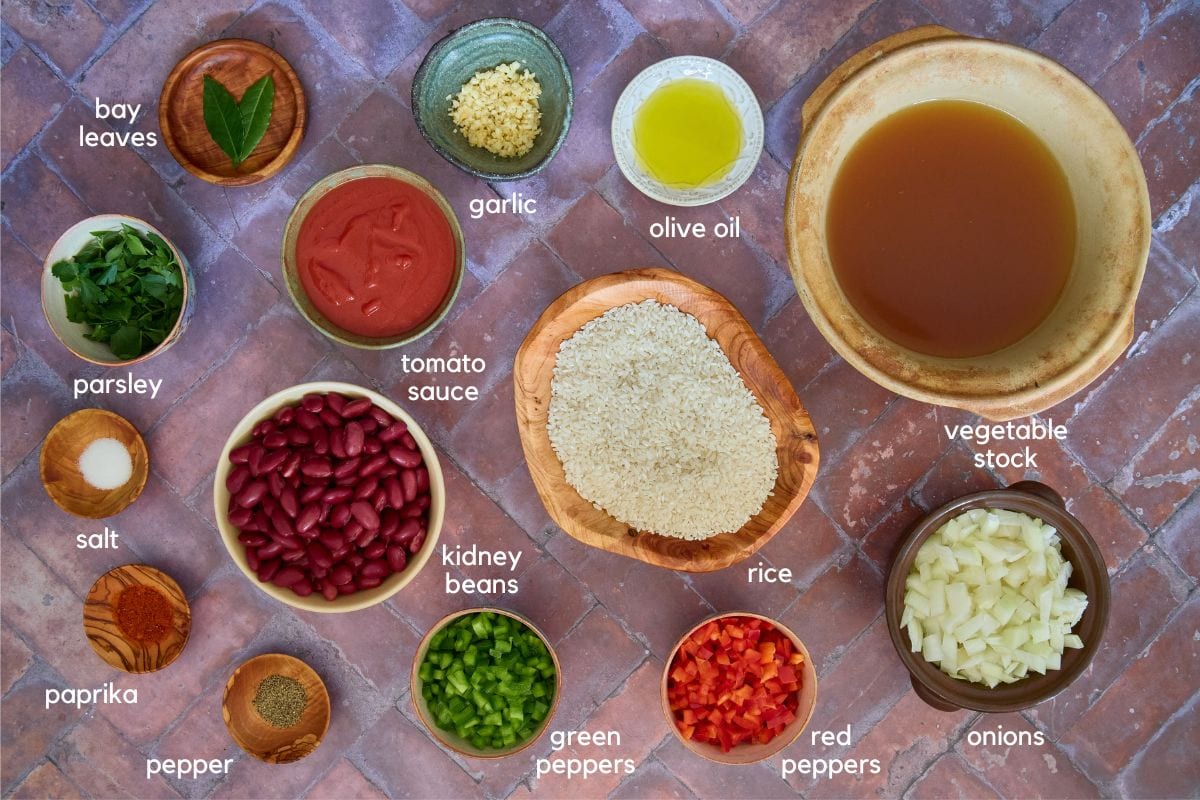
- Olive oil: Please use a good quality extra-virgin olive oil in this dish to really let the flavors shine.
- Onion: The best types to use here are white or yellow onions to give the dish a good depth.
- Garlic: We need garlic here for hearty flavor. You can add more if you want to boost the savory notes in this dish.
- Green and red bell pepper: Along with the onions and garlic, these bright vegetables form the refogado base of sautéed aromatics in this dish.
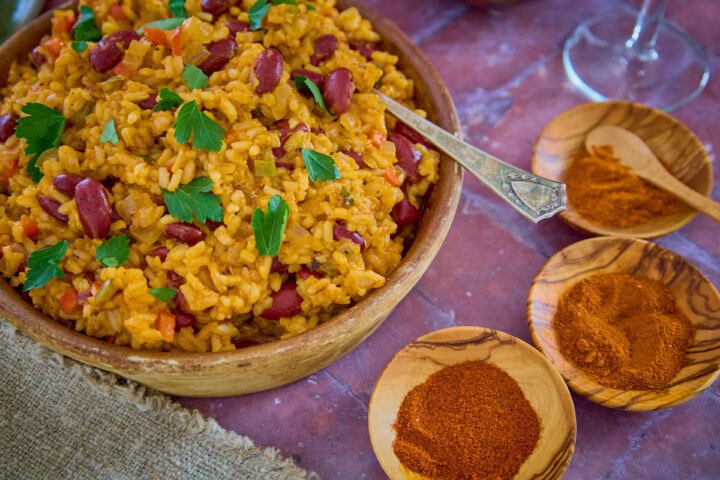
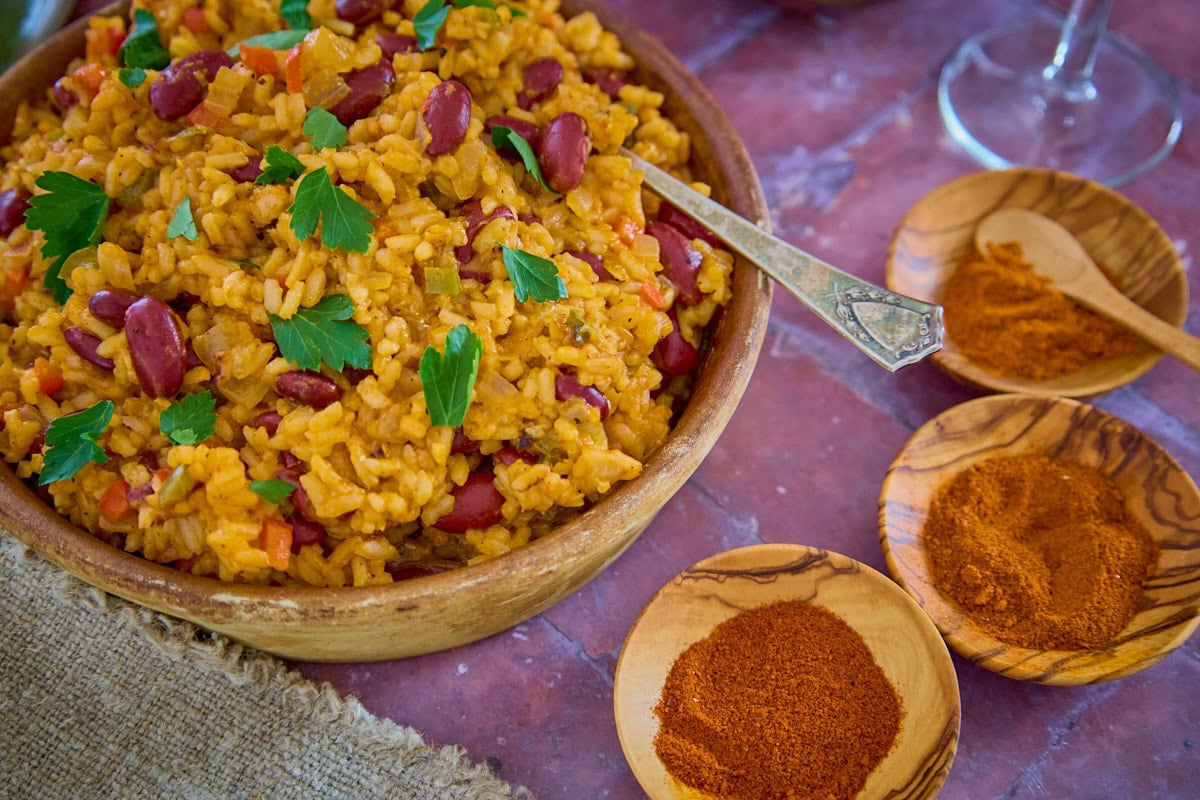
- Paprika: Sweet paprika is the most traditional here, but you can also use the smoked type. Please see my photos below of the paprika and piri piri pepper powders I've used in this dish from my garden. You can do grow your own too!
- Salt: I'm starting with 1 teaspoon of fine salt and adjusting from there as needed.
- Pepper: Freshly-ground black pepper makes a big difference here. I start with ½ teaspoon and work my way up as needed.
- Rice: The traditional rice used in arroz de feijão is a medium-grain Portuguese type called carolino (not to be confused with carolina from the southern U.S.!) A good substitute that may be easier to find is arborio. Please see the tips for success section below for a source of carolino rice. And remember not to rinse your rice for this recipe, as you need the starches to make the sauce creamy.
- Bay leaves: Use 1 dried or 2 fresh leaves.
- Vegetable stock: You can use premade stock, or a combination of water and vegetable bouillon paste. I like to use the latter, as this allows me to control the strength of flavor and sodium in a dish. I like to use the Better than Bouillon brand. I generally add 1 teaspoon of bouillon paste per cup of water to create my stock.
- Tomato sauce: This is essential to create the tangy flavor in the sauce. I use a smooth canned purée here.
- Beans: The most traditional bean in Portugal for this dish is the kidney bean. They have a soft, satisfying chew to them that really add to the comfort in this dish. You can cook your own dried beans after soaking them overnight. I just use rinsed and drained canned kidney beans to keep the recipe quick and simple.
- Parsley: I prefer to use flat leaf parsley in this dish. It has a stronger flavor than the curly type, and it's easier to work with.
See recipe card for quantities.
📒Step by step instructions & photos
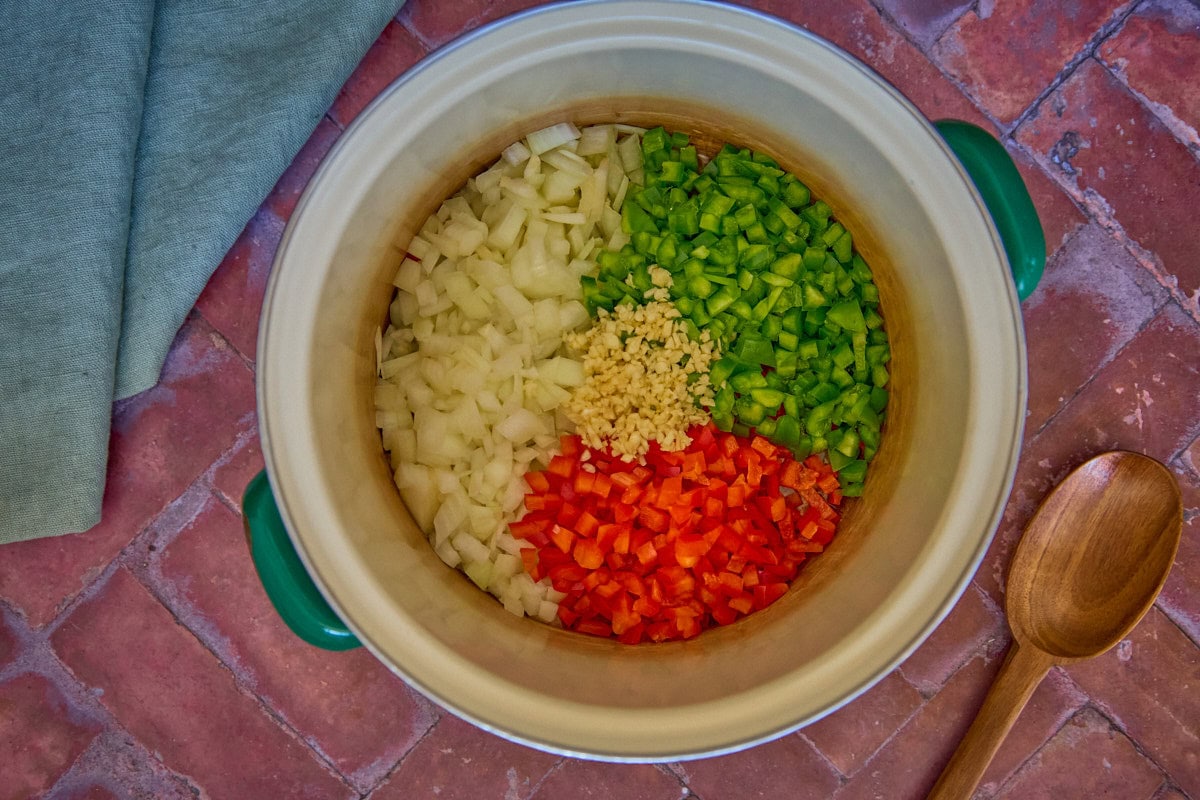
- Step 1: Heat some olive oil, and add the chopped red and green bell peppers, onions, and minced garlic.

- Step 2: Add the paprika, salt, and pepper to the pot.
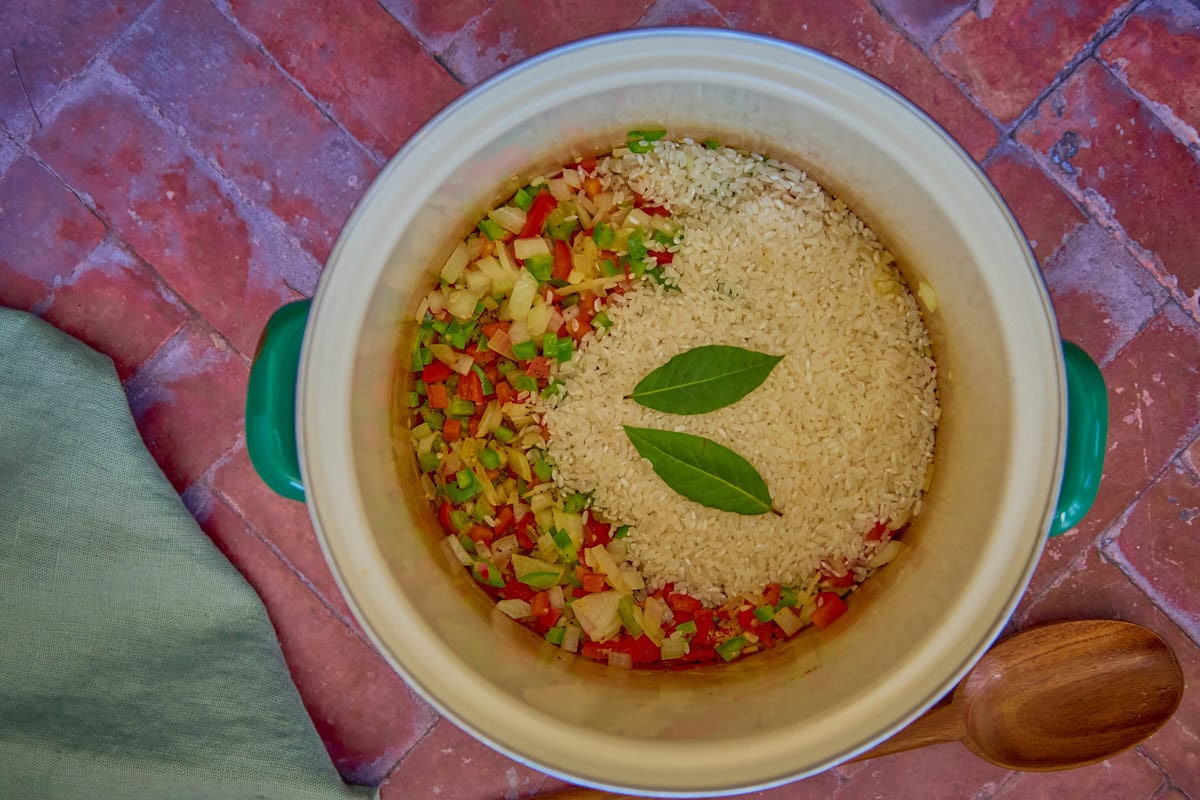
- Step 3: Stir in the rice and bay leaves.

- Step 4: Add the vegetable stock and tomato sauce. Bring to a boil and simmer. Stir occasionally to prevent the rice from sticking to the bottom of the pot.
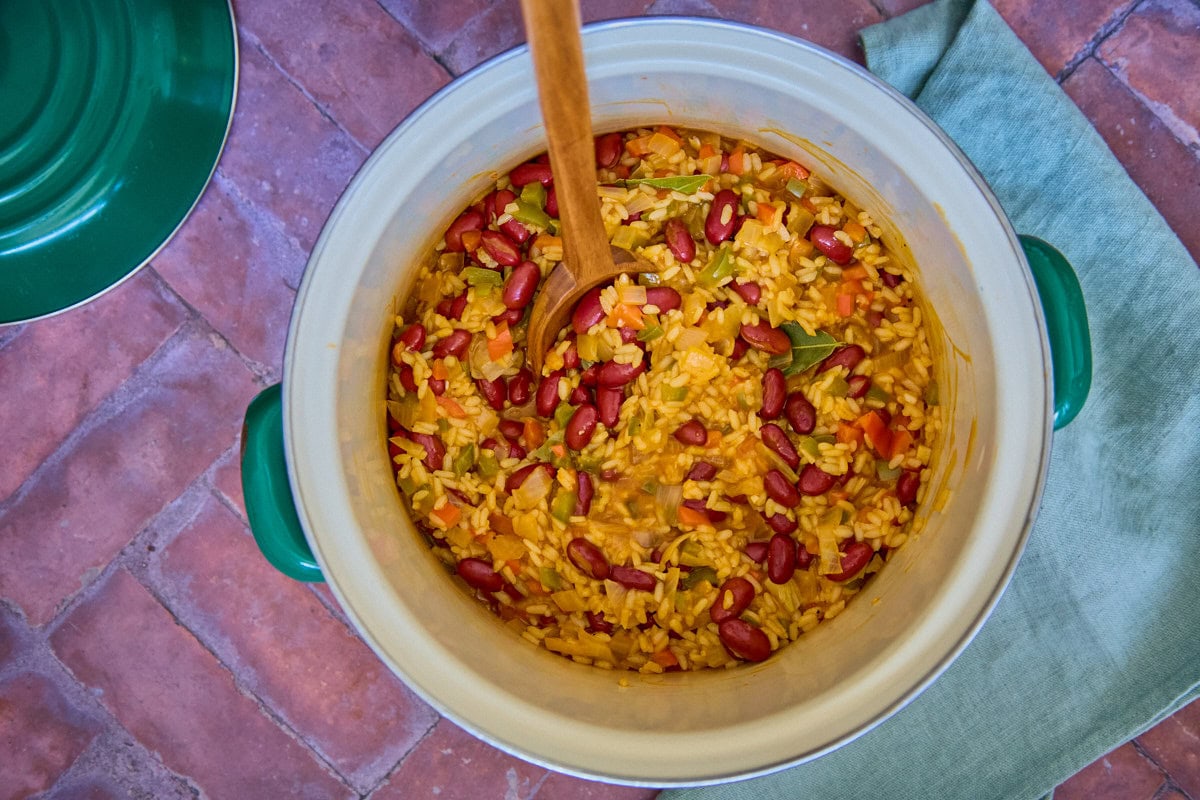
- Step 5: Before the rice is finished cooking, stir in the cooked kidney beans.
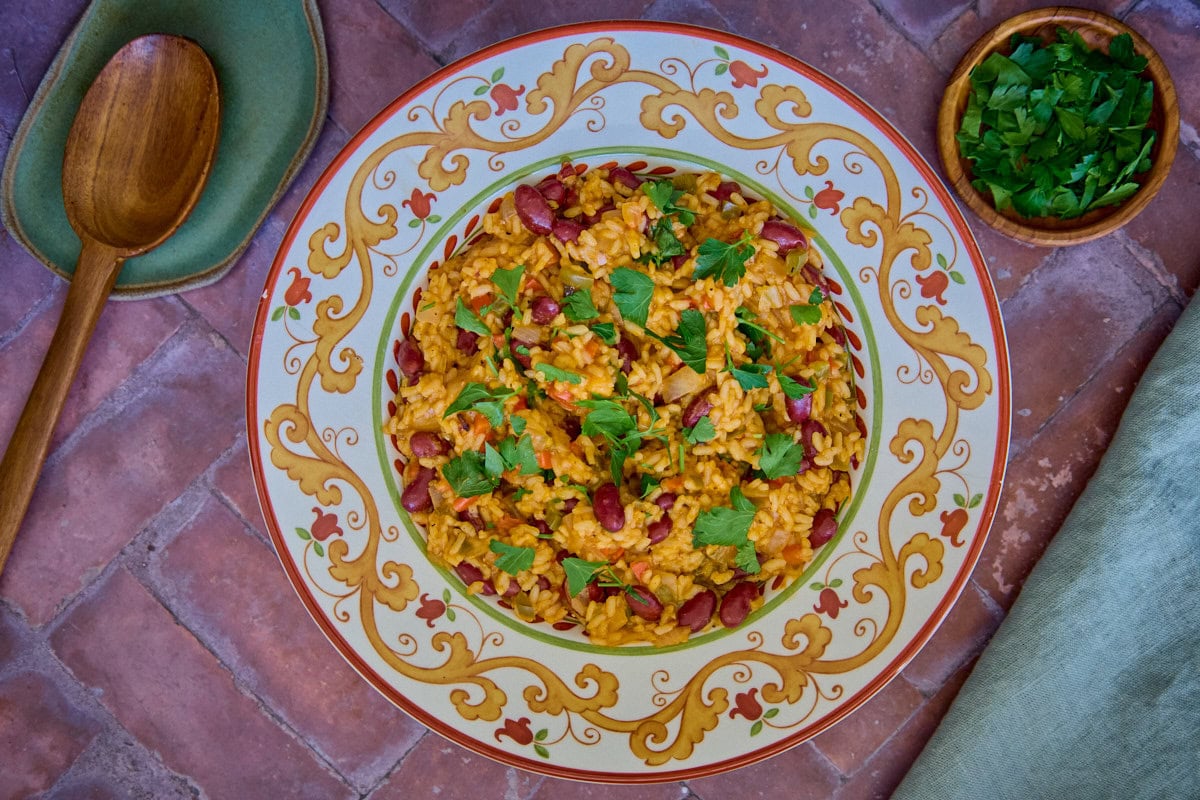
- Step 6: Add some fresh parsley, adjust seasonings as needed, and enjoy!
💡Tips for success
Use the correct type of rice
Carolino is the type of rice used in Portugal in making a traditional Arroz de Feijão. It's a medium-grain rice with low amylose content, allowing it to absorb liquid while maintaining a creamy texture. Please don't confuse this with carolina rice from the southern U.S. They're different varieties, and the latter isn't traditionally used in this dish.
I've found my carolino rice at Portugalia Marketplace. Both the Caçarola (currently not in stock) and Bom Sucesso brands have worked beautifully for me in making arroz de feijão. If you don't have carolino rice, arborio rice may be easier to find and also works well in this dish. Please see the notes in the recipe card for the variations in cooking times in the two types. Please note that if you buy carolino rice, the package may refer to it as long-grain rice. This was confusing to me when I bought it. This may be due to differences in classification of rice in various markets, or a marketing term to compare with other varieties.
Don't rinse your rice
You need the starches on the surface of your rice to create the creamy malandrinho texture in the sauce. And the chewy bite of the rice itself is a step past the al dente texture of risotto. But not to the point of being mushy. Please make sure not to rinse the rice before using it in this recipe! Also, make sure to use the correct amount of liquid for the rice you're using, as this can differ between arborio and carolino. Please see the recipe for details. Stir the rice minimally to make sure the it doesn't stick to the bottom of the pot, and let the rice rest for a few minutes before eating. If you follow these tips, your rice should be wonderful!
Grow your own seasonings
For an extra flavor boost that's authentic with a traditional arroz de feijão, you can use paprika and piri piri peppers from your garden! (My recipe calls for paprika, and you can of course use the store-bought version instead.) For tips on growing, drying, smoking, and grinding your own peppers from your garden, please check out my post 31 Peppers to Grow, Harvest, Dry, Smoke, Grind, and Enjoy!
And of course, you can also grow your own parsley and bay leaves for this dish too. I always grow both of these. The parsley is a biennial I grow in my herb garden which I replant every other year. I have a few different varieties. And I grow the bay leaves in a pot that I bring indoors during winter since I live in a cold climate.
In the photo below, you can see the pepper powders I'm using to season this dish from my garden. From the front to back in the photo below, these are leutschauer paprika, szeged paprika, and piri piri peppers.
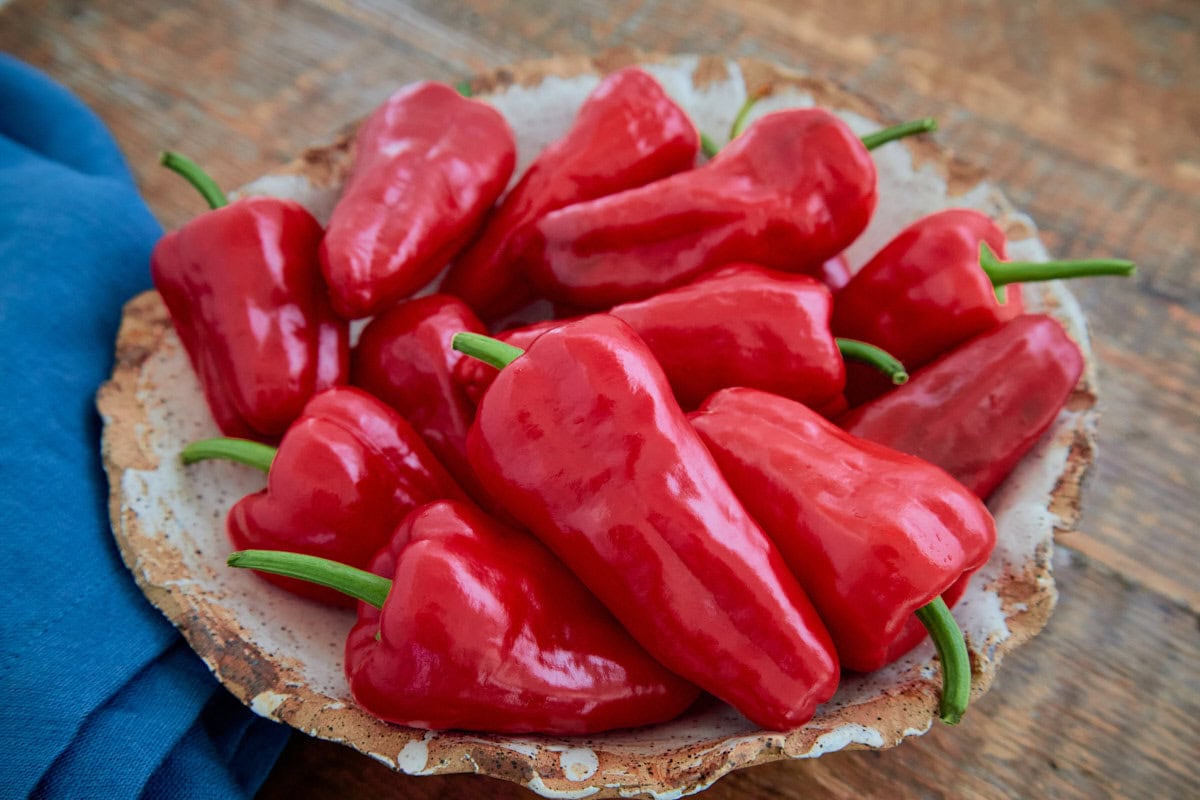
And here are the same 3 peppers from my garden before I dried and ground them into powders. First are the szeged paprikas:

Next are the leutschauer paprikas:
And next are the piri piri peppers:
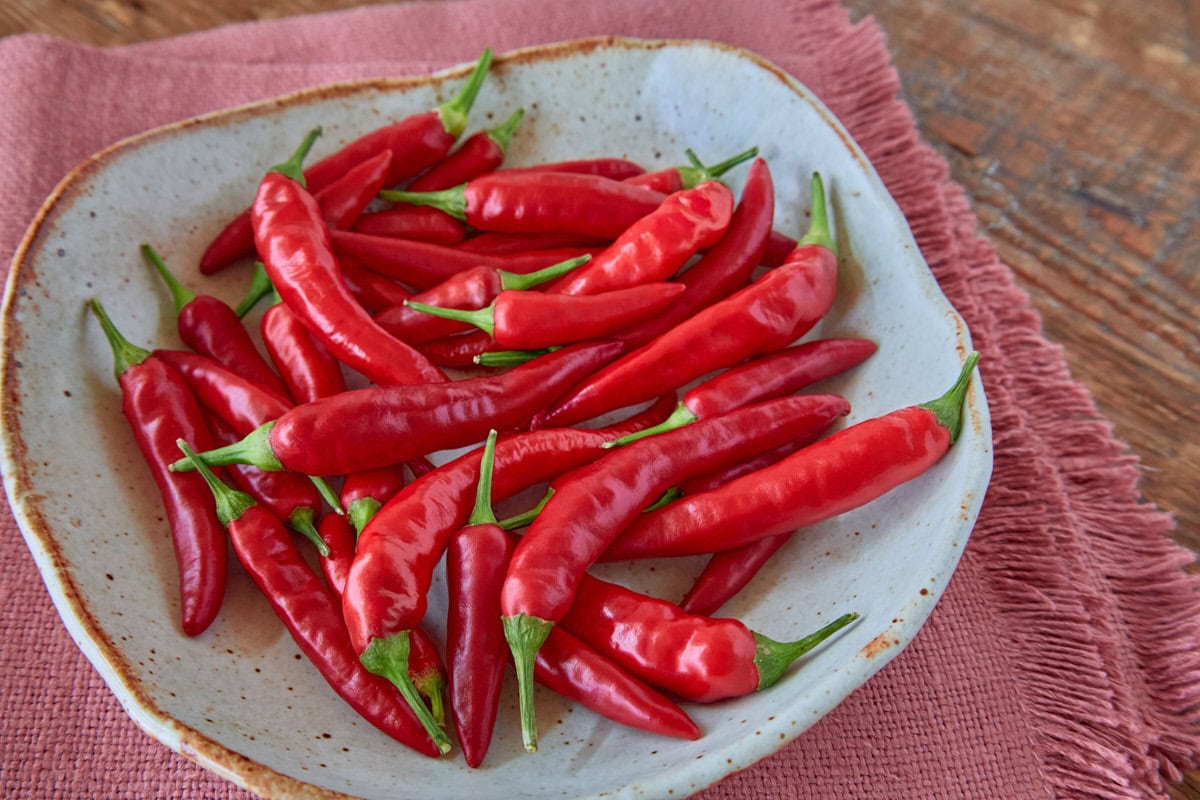
In Portugal, piri piri peppers are also commonly made into a sauce called molhi piri piri, which would also add some delicious warmth when added to your arroz de feijão.
🔀Substitutions
Rice: The traditional rice for this dish in Portugal is the medium-grained carolino (not to be confused with carolina from the southern U.S., which is a totally different variety!) But arborio rice works well as a substitute. The cooking times will differ. Arborio rice cooks slightly faster (in 12-18 minutes) than the carolino (20-25 minutes), so please plan accordingly. And see the tips for success section above for a source if you'd like to buy and use carolino rice.
Beans: The traditional bean used in arroz de feijão is the kidney bean. You can use dried beans if you'd like to soak them the night before and cook them before adding to this dish. Use 1¼ cups of dried beans to yield about 3 cups (800 g) of cooked beans. Or you can simplify the recipe like I do and use canned beans. If you don't have kidney beans, you can use black or white beans. Both would work well in this dish.
🍶Variations
Creamier texture: If you'd like your rice to be even looser (more "malandrinho"), you can add the remaining tomato sauce left over in your can, or add some extra vegetable stock, about ½ to ¾ cups (120-10 mL).
Paprika: The traditional paprika used in this dish is sweet paprika. But you can use smoked paprika instead if you'd like. (Please see the tips for success section above about how to grow, dry, smoke, and grind your own peppers!) For added warmth, you can also add piri piri powder or sauce. The latter is known as molhi piri piri in Portugal.

🥣Equipment
Digital scale: I use this whenever possible to be more accurate by measuring the weight of the ingredients rather than the volume. I also use a really small and sensitive one for weighing herbs and spices. This makes things so much easier, and also reduces the amount of dishes you'll need to use!
Measuring cups and spoons: For measuring liquids and small quantities of ingredients.
Knife and cutting board: for chopping and mincing your ingredients.
Large pot or dutch oven with lid: You'll need a pot with a minimum of 5 quarts (4.7L) for this dish.
Wooden spoon or spatula: for stirring the ingredients.
Ladle: for serving the arroz de feijão.
⏲Make ahead and storage
Make ahead: Arroz de feijão tastes even better the next day! This gives you helpful flexibility if you'd like to make it the day prior to serving it. And it makes this dish wonderful for enjoying leftovers!
Fridge storage: You can store this dish in an airtight container in the fridge for up to 3 days.
Freezer storage: Rice doesn't freeze particularly well because of its starchy qualities. I recommend refrigerating this dish rather than freezing it.
Reheating: You can reheat this dish slowly on the stove or in the microwave, and you can add a small amount of water or stock to help loosen the rice.
🍲Serving suggestions
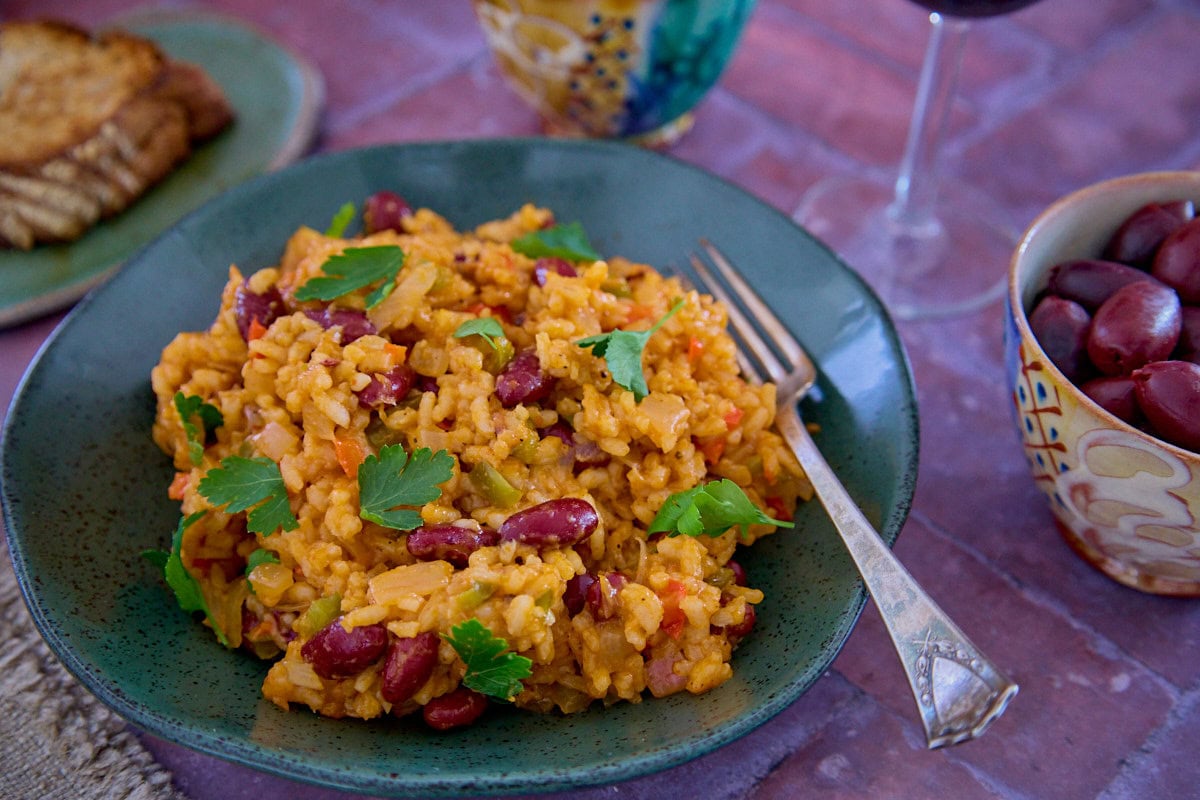
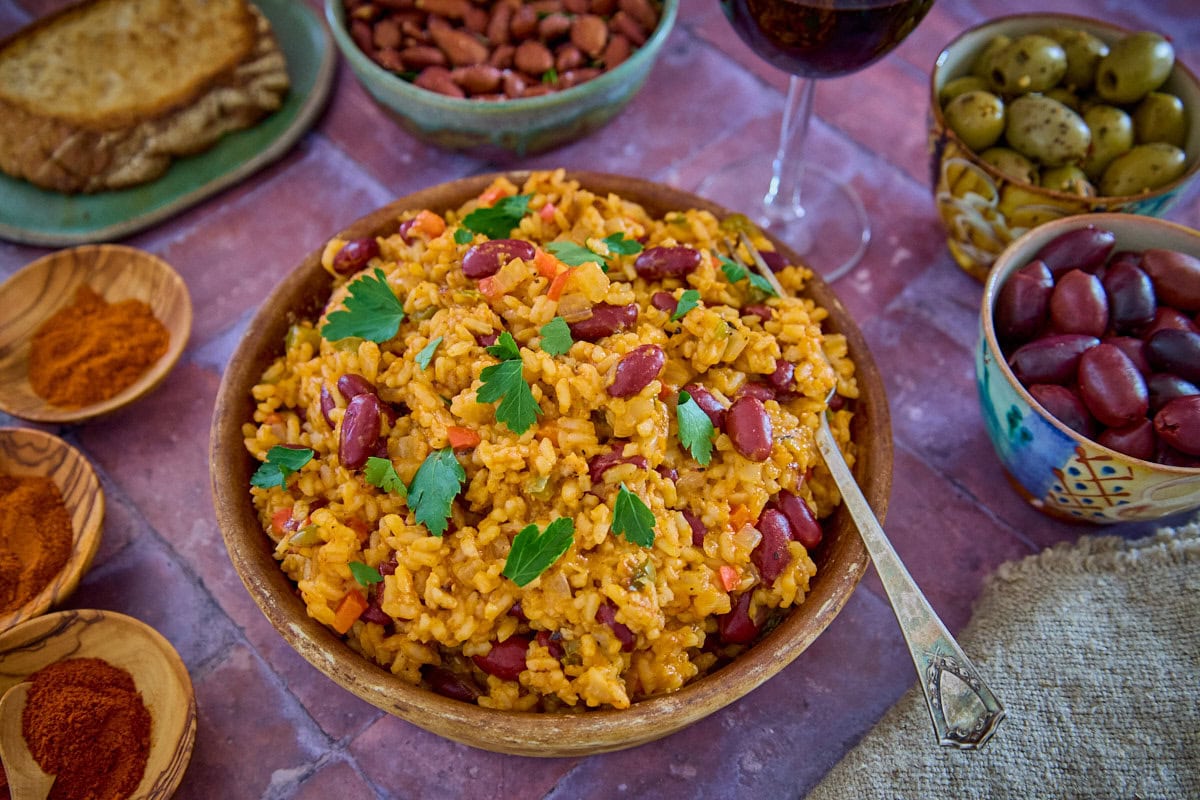
You can serve this dish with a loaf of crusty bead, black or green olives, roasted nuts, and a drizzle of olive oil if you'd like. Or traditional accompaniments like broa (Portuguese cornbread) and cebolas cortidas (Portuguese pickled onions).
You can serve the arroz de feijão as a main dish, or as a side dish accompanied by a salad, grilled or roasted vegetables, or sautéed greens.
❓FAQ
In Portugal, this dish (literally "rice with beans") is a traditional comfort food staple in one pot. It's simple to make, hearty, cozy, and filling, and goes perfectly in informal gatherings of family and friends. This dish is vegan and gluten-free as well. It celebrates the Portuguese love for rice dishes and comfortable social gatherings.
The traditional rice for this dish in Portugal is the medium-grained carolino (not to be confused with carolina from the U.S.!) But arborio rice works well as a substitute. The cooking times will differ. Arborio rice cooks slightly more quickly (in 12-18 minutes) than the carolino (20-25 minutes), so please plan accordingly. Please see the tips for success section above for a source if you'd like to use carolino rice. The rice used in arroz de feijão is the kidney bean. If you don't have kidney beans, you can use black or white beans. Both would work well in this dish.
You can use dried beans if you'd like to soak them the night before and cook them before adding to this dish. Use 1¼ cups of dried beans to yield about 3 cups (800 g) of cooked beans. Or you can simplify the recipe like I do and use canned beans.
The rice in this dish has a loose, creamy texture referred to in Portugal as malandrinho. And the starches on the surface of your carolino (or arborio as a substitute) rice help to create this creamy texture of the rice and sauce. The rice itself should be chewy in texture, just a step being past the al dente texture of risotto. But not to the point of being mushy. Please use your rice in this recipe without rinsing it to achieve the velvety consistency of the sauce.
In Brazil, rice and beans are also important culinary staples. But there, the dish known as arroz com feijão is generally made as two separate components, rather than mixed together as in the Portuguese arroz de feijão. In Brazil, white rice and seasoned black, pinto, or carioca beans are served alongside each other and enjoyed at most meals.

✨More recipes you'll love
Looking for other recipes like this? Try these:




✏️Did you make this recipe?
Please let me know in the reviews and comments below!

Arroz de Feijão (Easy, Authentic Portuguese Beans and Rice)
Ingredients
- 2 tablespoons (30 ml) olive oil, extra virgin
- 1 large (200 g) onion
- 3 large (15 g) cloves of garlic
- 1 medium (150 g) green bell pepper, chopped
- 1 medium (150 g) red bell pepper, chopped
- 1 teaspoon (5 g) paprika
- 1 teaspoon salt, adjust to taste
- ½ teaspoon freshly-ground black pepper, adjust to taste
- 2 cups (400 g) carolino or arborio rice, see cooking notes below
- 1 dried bay leaf, or 2 fresh bay leaves
- 3½ cups (840 ml) vegetable stock for carolino rice or 3½-4 cups (840-960 mL) for arborio rice, (or 1 teaspoon vegetable bouillon paste per each cup of water)
- 1 cup (240 ml) tomato sauce
- 3⅓ to 3½ cups (800 g) kidney beans, drained and rinsed (two 15.5 oz/439 g cans)
- 2 tablespoons (8 g) fresh parsley, chopped
Instructions
Sauté the refogado (aromatics):
- In a large pot at medium heat, add the olive oil.
- Add the chopped onion, minced garlic, and chopped green and red bell peppers. Sauté until the onions are translucent and the peppers are softened and fragrant, about 5-7 minutes.
- Add the paprika, salt, and black pepper and stir in until thoroughly mixed.
Toast the rice and add the bay leaf/leaves:
- Stir in the rice, mixing well to combine with the oil and aromatics.
- Add the bay leaf/leaves, and stir for 2-3 minutes to lightly toast the rice.
Add the liquids, bring to a boil, and simmer:
- Stir in the vegetable stock and tomato sauce until well combined. Bring the mixture to a gentle boil, then reduce the heat to low.
- Cover and simmer for about 12-18 minutes for arborio rice, or 20-25 minutes for carolino rice. Stir minimally, only as needed to prevent the rice from sticking to the bottom of the pot. If the mixture becomes too dry, add another ½ cup (120 mL) of water or stock as needed.
Add the beans:
- About 5 minutes before simmering is done, add the cooked kidney beans.
Allow to rest, add parsley, and serve:
- When the rice is slightly chewy (just past al dente), and the sauce is malandrinho (slightly loose), turn off the heat. Let rest, covered, for 5 minutes.
- Remove the bay leaf/leaves, add the chopped fresh parsley, and stir through. Serve and enjoy!


Karen Kerns says
This dish is a wonderful and tasteful way to experience kidney beans!! The depth of flavor and texture is amazing!!
Shelly Benitah says
Thanks, Ma!!!