



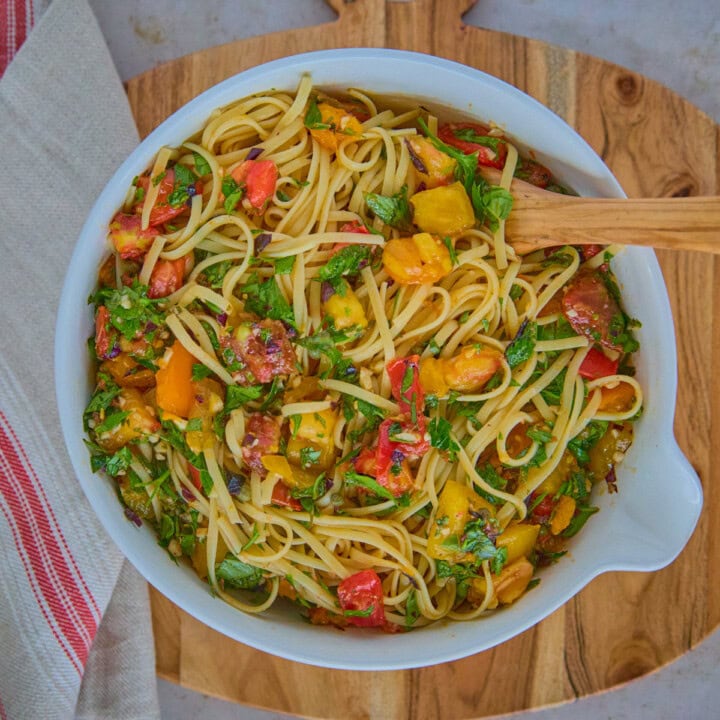

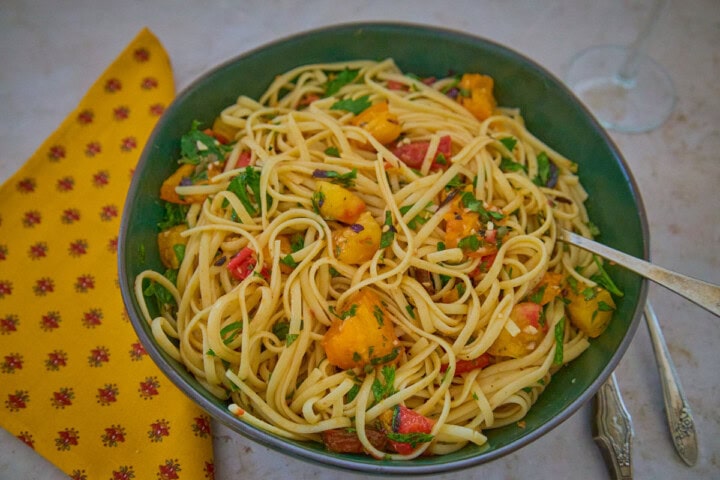

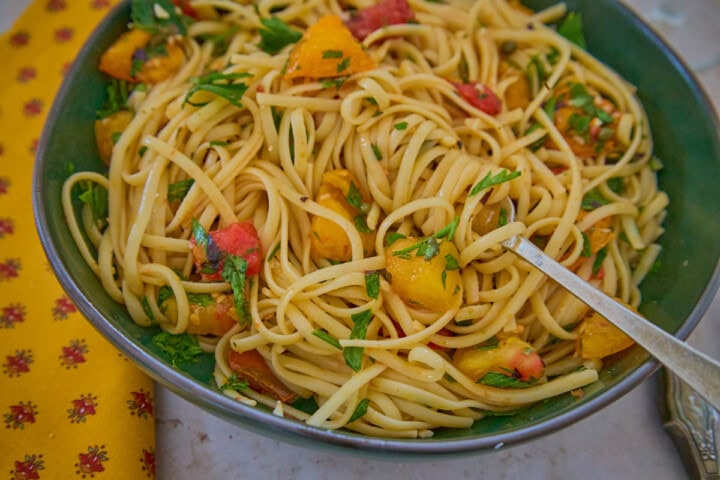


Heirloom tomatoes, basil, and parsley shine in this mouthwatering Provençal sauce, with the vibrant combination of garlic, lemon, and the bright zip of capers. And you don't even need to cook it! All lovingly tossed into a fresh bowl cozy pasta. You can serve this dish either warm or cold. It's a ridiculously flavorful combination that'll be ready in minutes! You'll just love this tantalizing Easy Vegan Pasta with Garden Heirloom Tomato Sauce Vierge!
My daughter Sophie says that you will never tire of this pasta. She has absolutely adored each of my many trials of this recipe, even the earlier ones when the sauce was so juicy that we had to slurp bowls of it over the sink! She urges you to please try out this recipe. You'll be so glad you did!

Why Grow and Cook with Heirloom Tomatoes?
Before we get into the recipe specifics, there's something we need to discuss about the star ingredient:
There's nothing better on a warm day than meltingly juicy, luscious heirloom tomatoes. They have captivating flavor profiles that are sweet, savory, tangy, smoky, earthy, and more. But what is an heirloom tomato, and why should you care about growing and eating them? Heirloom crops are very unique and special.
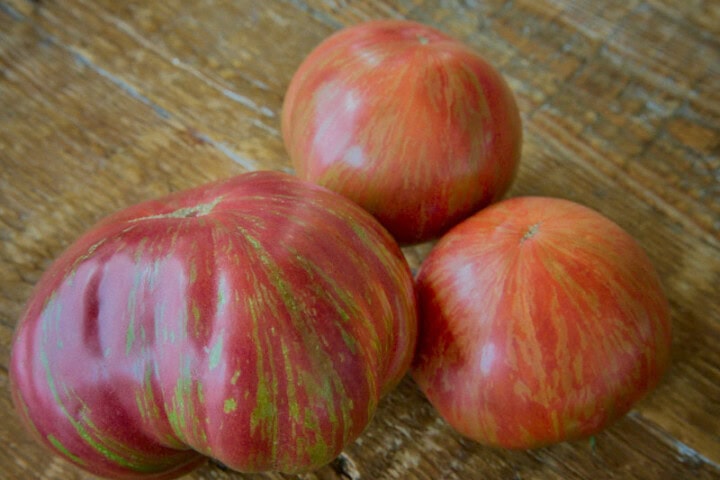
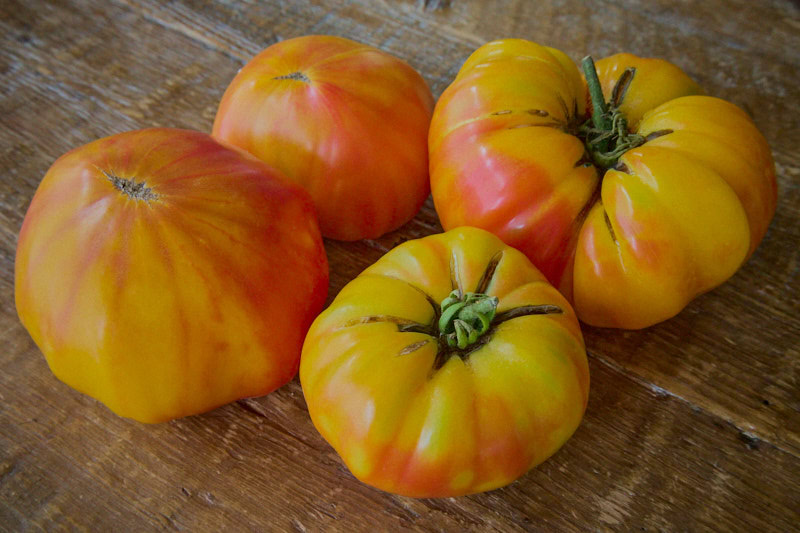
These are open-pollinated varieties that have their own historical and flavor significance. They've been grown, eaten, and had their seeds saved and replanted by families and world regions for generations. They're renowned for their vigor and incomparable color, flavor, and texture compared to hybrid or commercial varieties. Just check out this gorgeous Virginia sweets heirloom variety!
Seed librairies and banks have been established around the world to preserve these precious food crop varieties from dying out. The Svalbard Global Seed Vault in Norway is a long-term seed repository in the arctic permafrost that holds over 1.3 million seed varieties that are critical to saving world agricultural and food history.
When we plant and enjoy heirlooms, we contribute to preserving bio-diversity while eating the most delicious and historic food possible. For me, it's an honor to continue these historical food-saving traditions and to partake the legendary flavors of generations of seed stewards. I enthusiastically encourage you to consider planting heirloom varieties whenever you can. You'll be so happy you did!
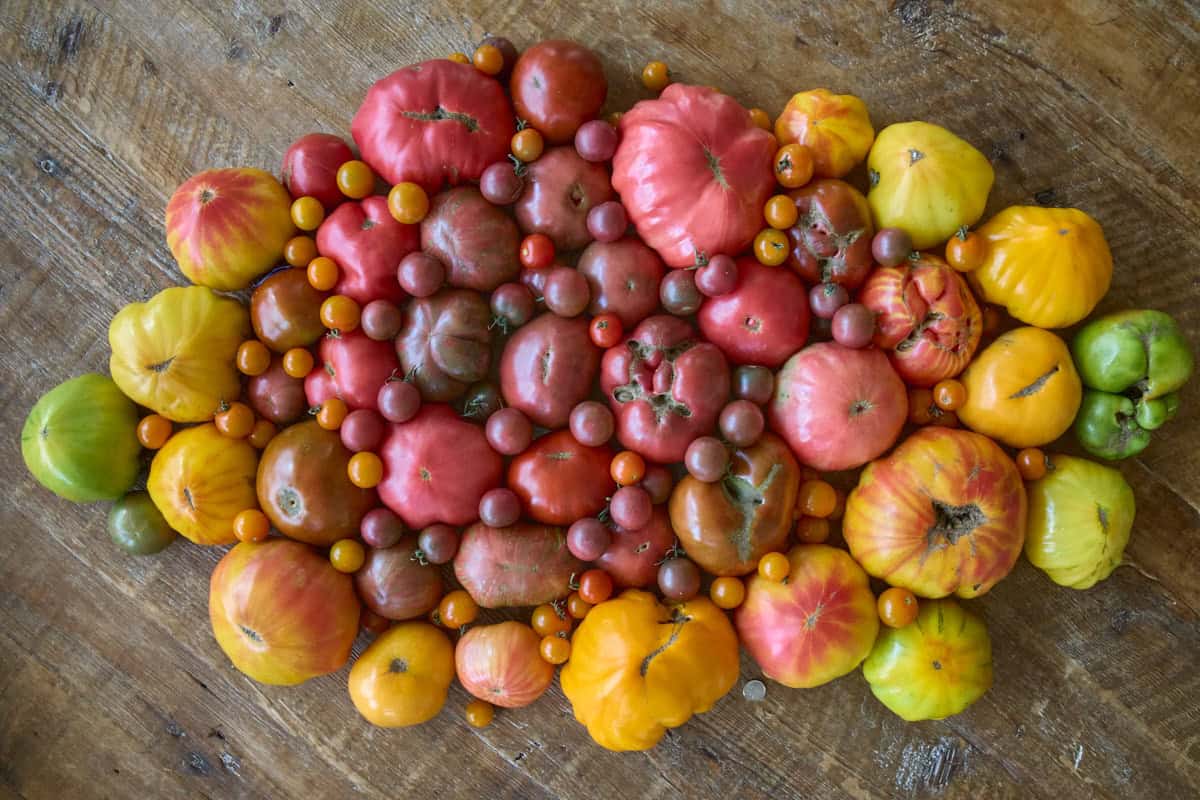
All of the heirloom tomato photos in this post are from my garden. And if I can grow them, you can grow them too! But what if you're seeing this post in winter, or fall, or spring, and it's not the right time of year? I'm here to tell you it's ALWAYS time for heirloom tomatoes! Here's why:
Winter:
Now is when you carefully narrow down your varieties to grow in the spring. This is like picking a favorite child, and when you have limited growing space, it's actually painful to choose just a few. If you don't have the means to start them from seed (which is the most exciting option, since you can choose from thousands of amazing varieties), you can decide which ones you'd like to look for at your local farmer's market or farm that sells heirloom seedlings.
Spring:
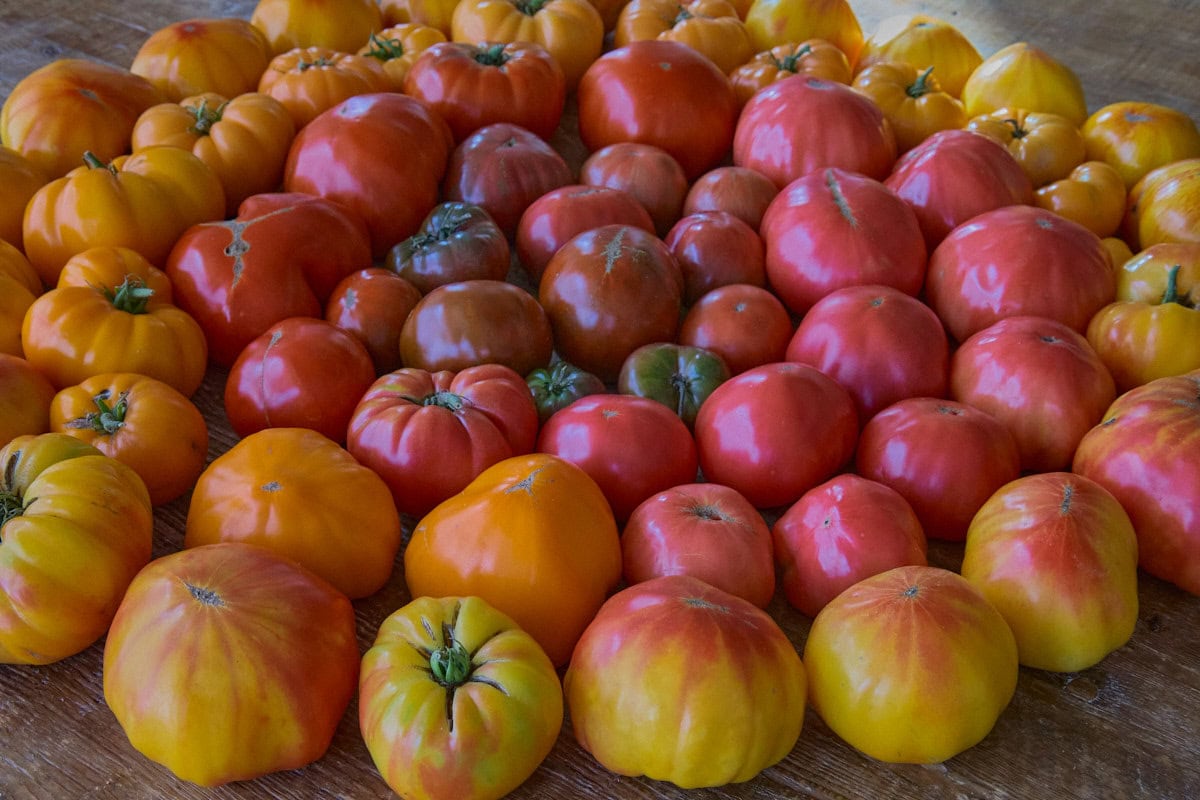
Now you either start the seeds under your grow lights that you've joyfully ordered from catalogs, or you're armed with your list of which plants you'd like to buy from the farmer's market or local farm.
Since heirlooms are a bit more fiddly than growing tasteless hybrids, you'll pass your time this spring while waiting to plant them by learning how to tend them over the summer.
There are so many great resources for this, both online and in books. You'll need strong supports for heirlooms, which are indeterminate and will grow to about 6 to 14 feet (183 to 427 cm) tall until the frost kills them. That is, assuming you provide them lots of sun, amazing soil, compost, and organic amendments. Hybrids, on the other hand, have a determinate growth pattern, and will generally stop growing at a much shorter 5 to 6 feet (152 to 183 cm) tall.
Why on earth would you even bother with these gargantuan tomato plants that need your time and attention? You'll need to wrangle with posts, cages, Florida weaves, or French trellises. Oh, and that's not even all. You'll likely deal with pests, fungal diseases, and will need to secure your plants to the supports every few days as they grow. Why would you put in all of this effort, for example, to grow this exquisitely marbled and sweet, richly-flavored beauty king heirloom???

It's because of the impossibly gorgeous colors and stunningly complex, earth-shattering flavors, that's why! They're absolutely unparalleled. You will find joy like you never even knew you could experience when you eat that first sun-warmed, juicy tomato with just a sprinkling of salt right over the kitchen sink. And then, oh yes, you'll understand. You're made of tougher stuff than the average tasteless tomato consumer, and you can do this!
Summer:
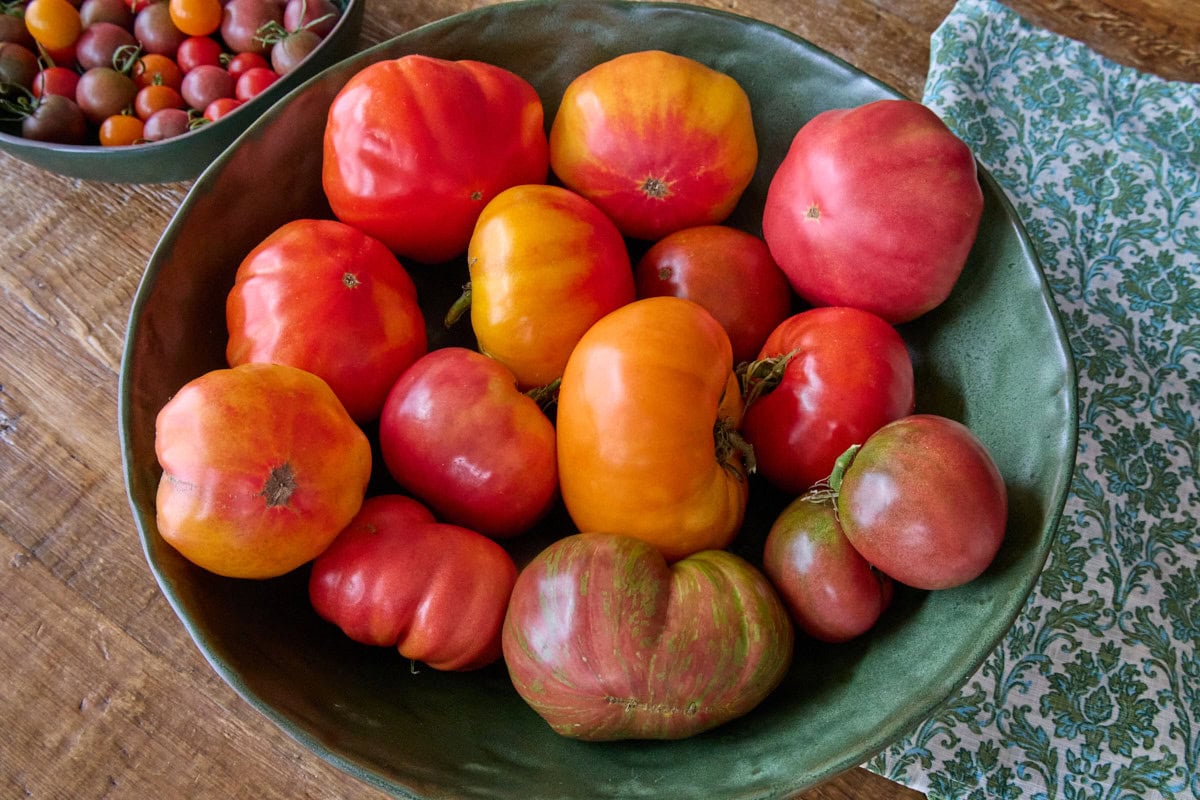
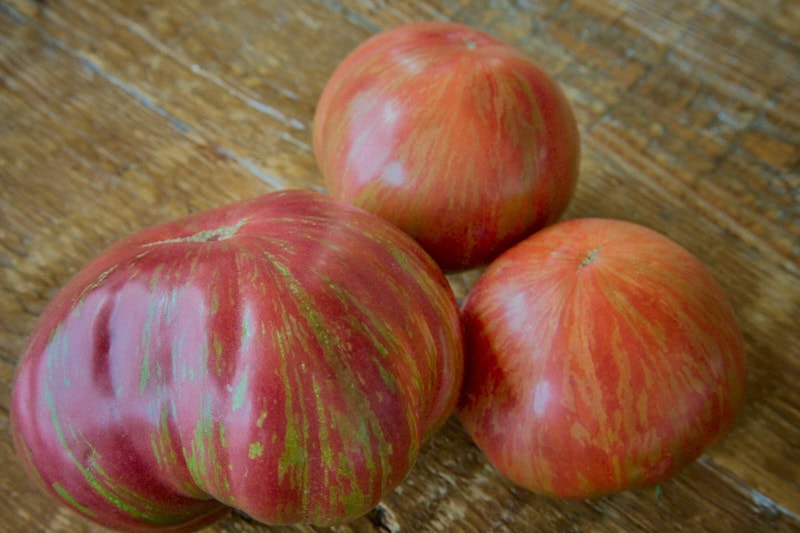
It's payoff time! But not for a while. Heirloom tomatoes take a long time to ripen. Never mind the hybrid varieties (like the grocery store ones) that ripen in 55 days but taste like cardboard. You've done all of this prep work for a reason. And now you have to wait it out! Most of the best heirloom varieties will take at least 70 days to mature, and can take over 100 days. If it's worth it for me to grow them in my (way too cold) northern climate, I know you'll find it just as rewarding too. Hang in there, they'll be ripe before you know it. Just look at this beautiful pink berkeley tie-dye heirloom tomato!
Fall:
Now is when you bring in the last few tomatoes before the first frost takes them down. This is a great time to make fried green tomatoes. And when cleaning up my tomato bed, I like to leave a lot of the tomato plant refuse in place to help feed and build the biomass of the soil for next year. And this makes for easier fall garden cleanup too.
With all of this being said, sometimes you'll want to make this pasta when it's not heirloom tomato harvest time. What should you do then? You could make it with cherry tomatoes, or vine-ripened tomatoes, which are generally flavorful, or regular grocery store tomatoes with some sprucing up of the sauce ingredients. Or your nearby well-stocked grocery store may have locally greenhouse-grown heirlooms that may be ripe before or after the main growing season. This Easy Vegan Pasta with Garden Heirloom Tomato Sauce Vierge will still be luscious and captivating even when it's not the height of the harvest.

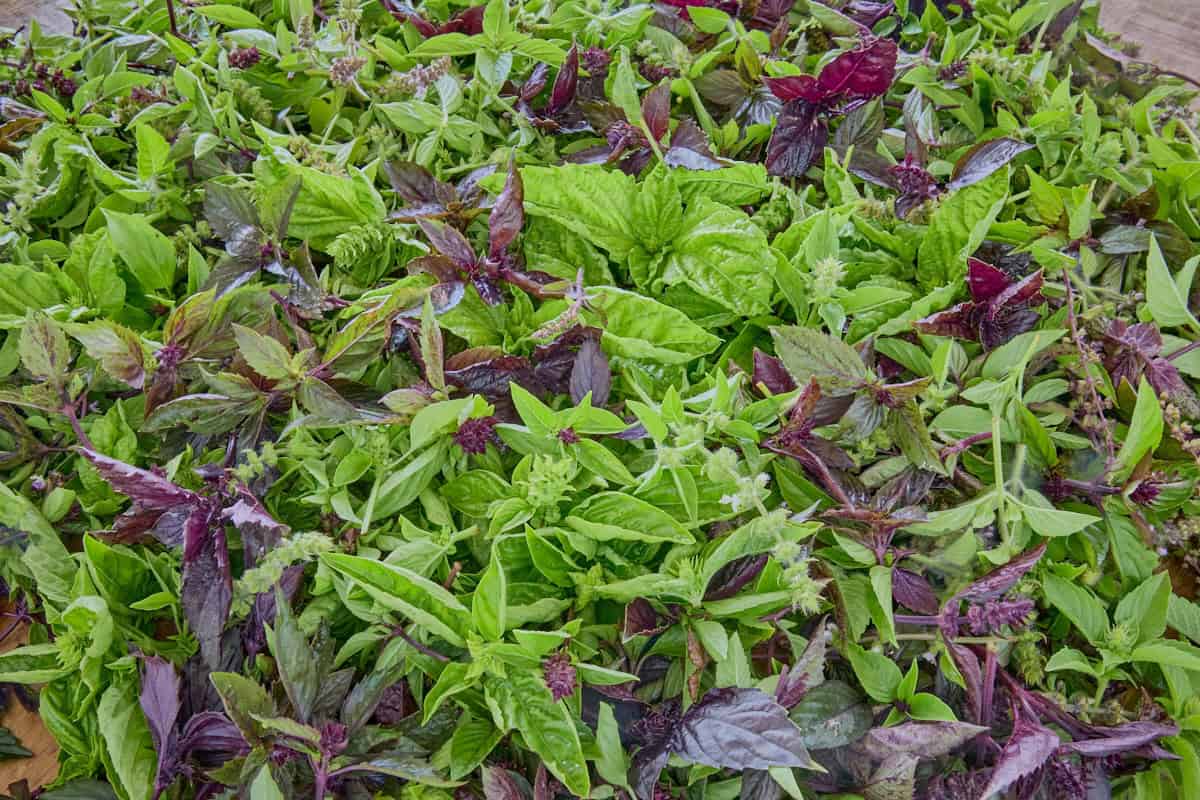
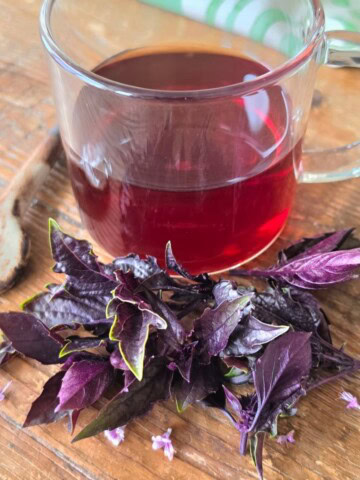
And you can easily grow your own basil and parsley for this dish as well! In this recipe photos on this page, I've used the following basil varieties from my garden: osmin, zanzico, mrihani, and red crimson. It's thrilling to try out new scents and flavors of the different types in your cooking.
You can check out these varieties and many more in my post 38 Types of Basil You Need to Grow in Your Herb Garden. Here's a photo of some of these distinctively-fragrant and uniquely flavorful basil varieties from my garden:
Jump to:
- Why Grow and Cook with Heirloom Tomatoes?
- 💕Why this recipe is special
- 📓Ingredient notes
- 📒Step by step instructions & photos
- 💡Tips for success
- 🔀Substitutions
- 🍶Variations
- 🥣Equipment
- ⏲Make ahead and storage
- 🍲Serving suggestions
- ❓FAQ
- ✨More recipes you'll love
- Easy Vegan Pasta with Garden Heirloom Tomato Sauce Vierge
💕Why this recipe is special

Sauce vierge (pronounced "sohs vee-AIRZH") translates to virgin sauce, and it originated in the south of France. The name refers to the simplicity of the sauce using fresh, natural ingredients that are uncooked or just slightly warmed when serving. My Larousse Gastronomique tells me that the original version contained just butter, lemon juice, salt, and pepper.
This sauce became more well-known in the 1980s when French chef Michel Guérard brought it to attention with the nouvelle cuisine movement. With this resurgence, sauce vierge celebrates simple Mediterranean food while eating locally and in-season. It's commonly served over fish. We're doing a gloriously delicious vegan version here by tossing it with pasta. This simple base really allows the tangy, sun-warmed flavors of the sauce to shine.
Sauce vierge generally includes olive oil, garlic or shallots, tomatoes, lemon juice, and fresh herbs such as parsley, basil, chervil, and/or tarragon. Additional ingredients may include capers, olives, coriander, pepper flakes. It's so fun to customize this sauce to your own tastes!
📓Ingredient notes
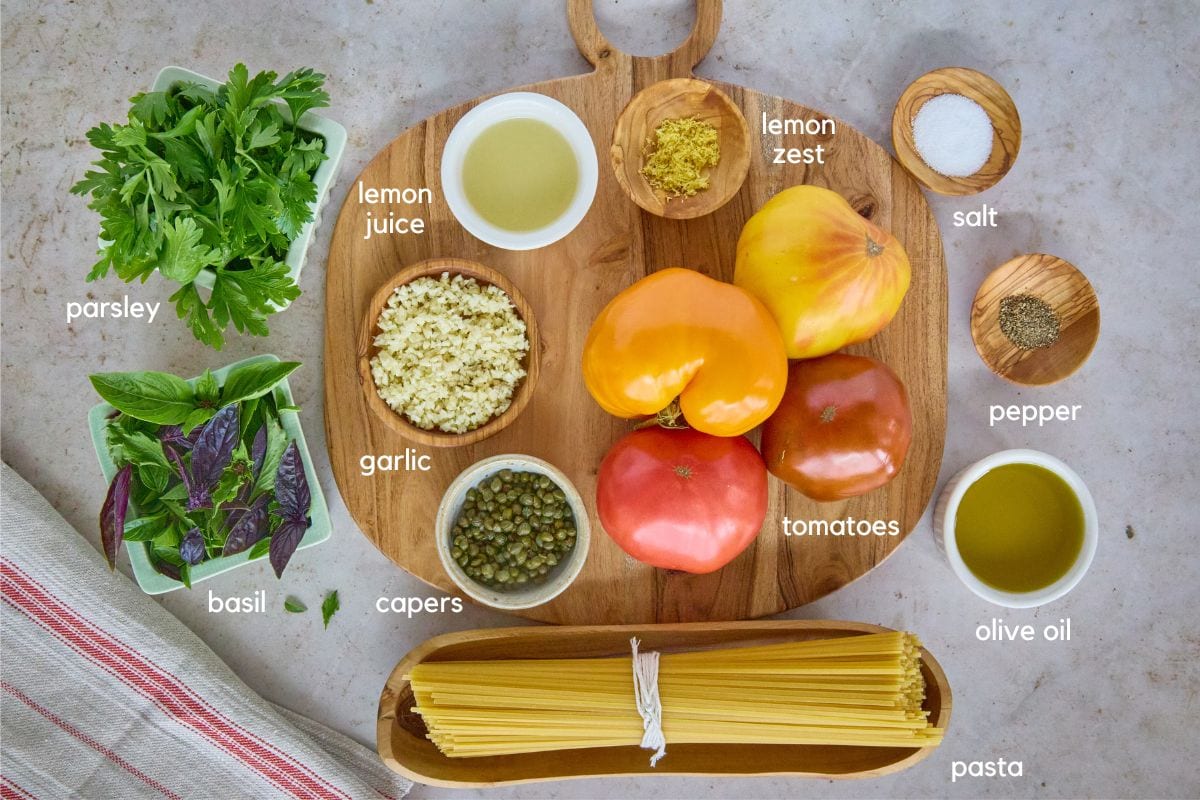
- Olive oil: Use a good quality extra-virgin oil here to help carry the flavors and allow them to shine.
- Garlic: I like to use a good amount of garlic as a backbone to the sumptuous flavors in this Provençal sauce.
- Lemon zest: This may seem like an unexpected addition here, but it lends the sauce a wonderful brightness that you don't want to miss.
- Lemon juice: This contributes the delectable tang that we need to help blend with the sweetness of the heirloom tomatoes.
- Parsley: I love the green herbaceous base that parsley contributes to the sauce. I use flat-leaf parsley, but you can use any type. I like to rotate through the parsley varieties in my garden.
- Basil: Of course we need basil for unparalelled Mediterranean flavor! The varieties from my garden that I've used in these post photos are osmin, zanzico, mrihani, and red crimson. But I love to experiment and change it up. Feel free to use your favorite type(s) here.
- Capers: These are briny, piquant, and zesty. They're an essential part of making this sauce sing.
- Salt: I like to use salt with a fine texture here to help the flavors to blend more thoroughly. But any salt will work well.
- Pepper: Freshly-ground pepper adds some nice earthy depth.
- Tomatoes: Please use heirlooms if you can! They really make this sauce the most irresistible and mouthwatering. But any tomatoes will be delicious here.
- Pasta: I'm using long-shaped linguini here. You can experiment with any size and shape. If you'd like to serve this dish as a pasta salad, you can use a short shape like rotini that will both hold the sauce well and make individual forkfuls easier.
See recipe card for quantities.
📒Step by step instructions & photos
This sauce vierge is so quick and easy. And the great thing is, you can let the flavors rest and build flavor while you cook the pasta. So this saves you even more time! And you can serve it warm or cold. I'm so excited for you to try this amazing dish.
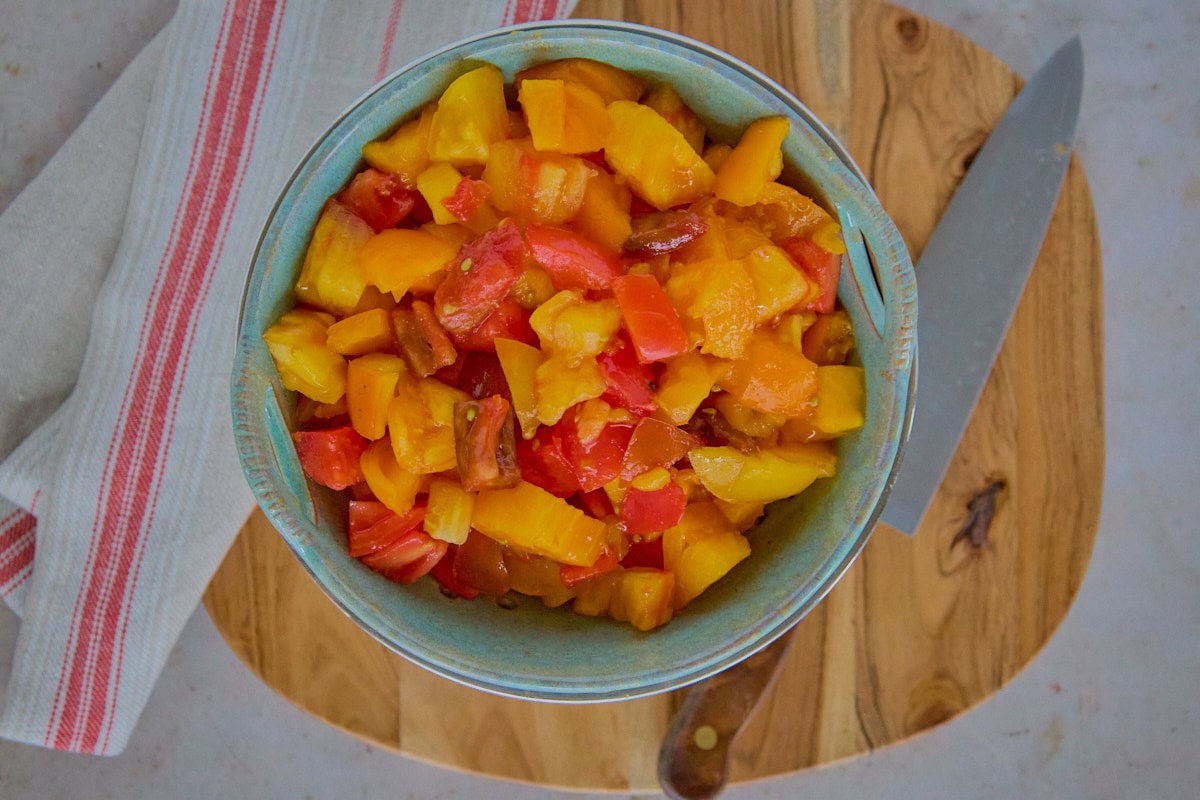
- Step 1: Dice the tomatoes into large chunks. Place in a colander to drain while you continue with the sauce ingredients.

- Step 2: To a large mixing bowl, add the olive oil, minced garlic, lemon zest, and lemon juice. Stir to combine.

- Step 3: Add in the parsley, basil, capers, and black pepper and stir.

- Step 4: Add the drained tomatoes to the sauce. Stir and allow it to rest at room temperature for 10-15 minutes for the flavors to blend.
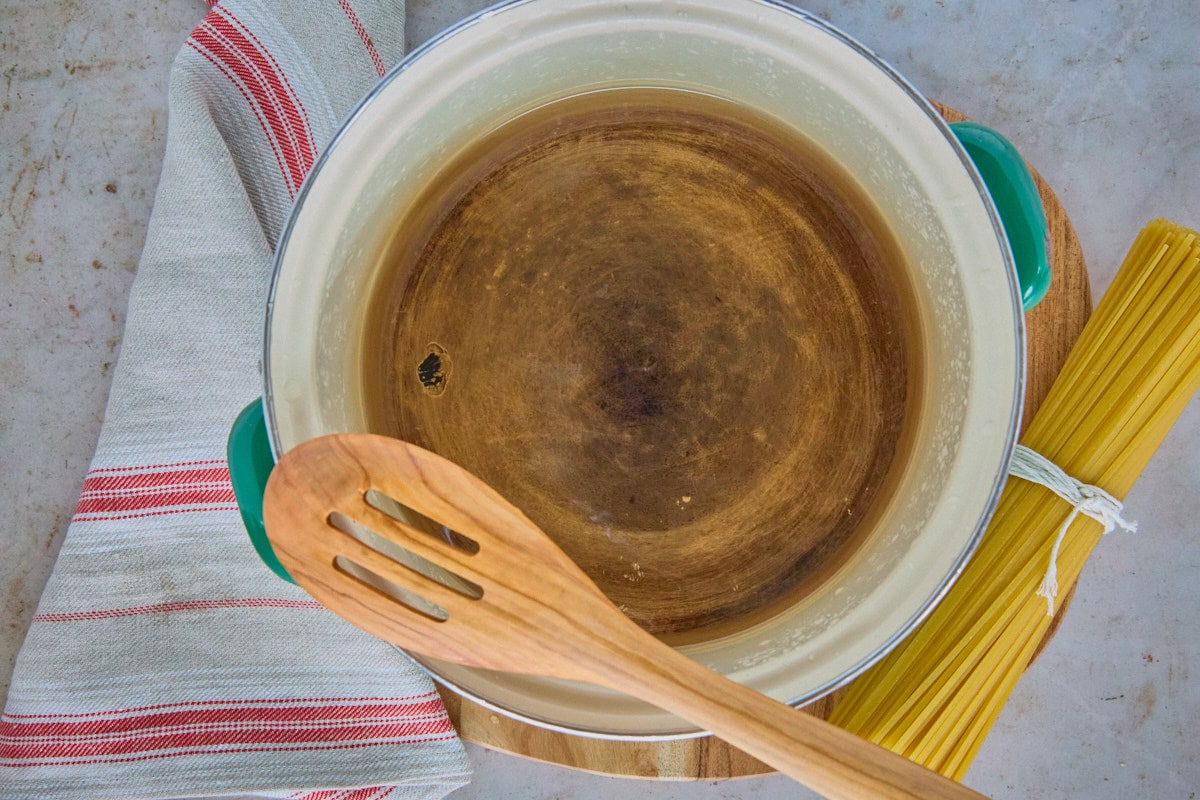
- Step 5: In a large pot, bring salted water to a boil. Add the pasta and cook until al dente.

- Step 6: Drain the pasta.

- Step 7: Add salt to the sauce and stir. Toss the sauce gently with the finished pasta to coat.
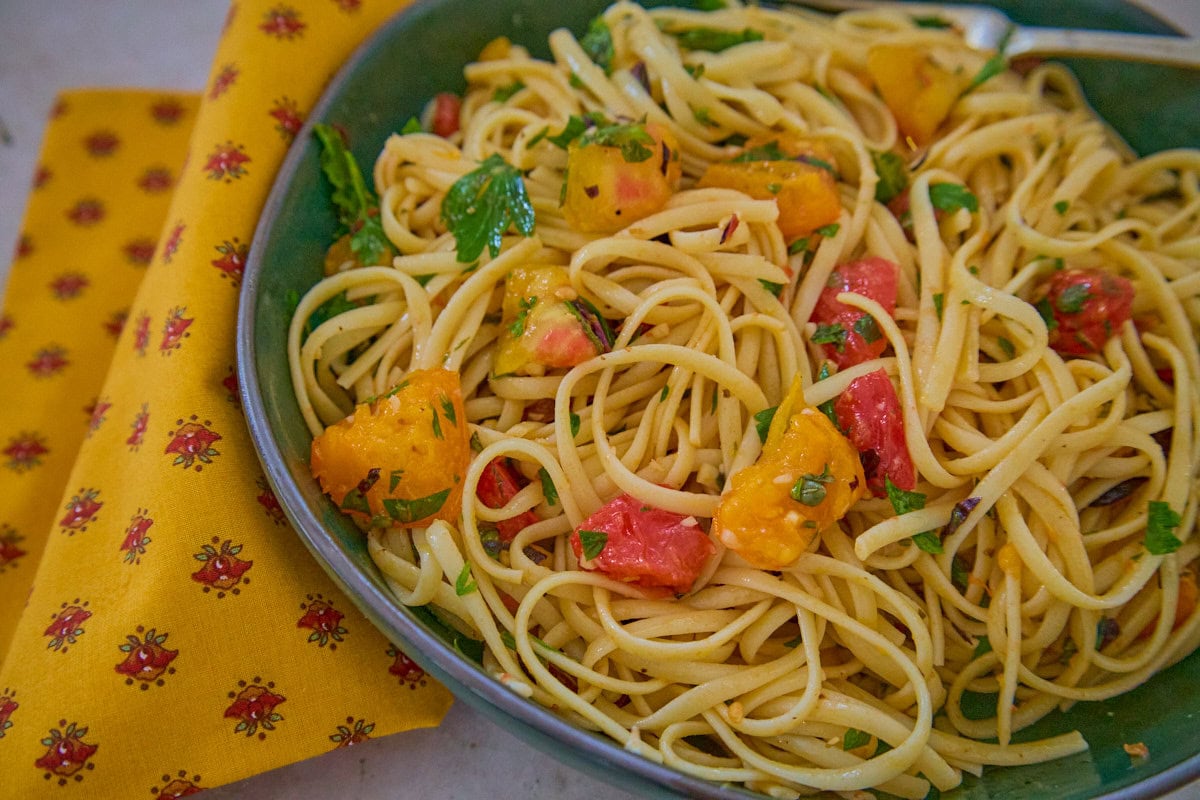
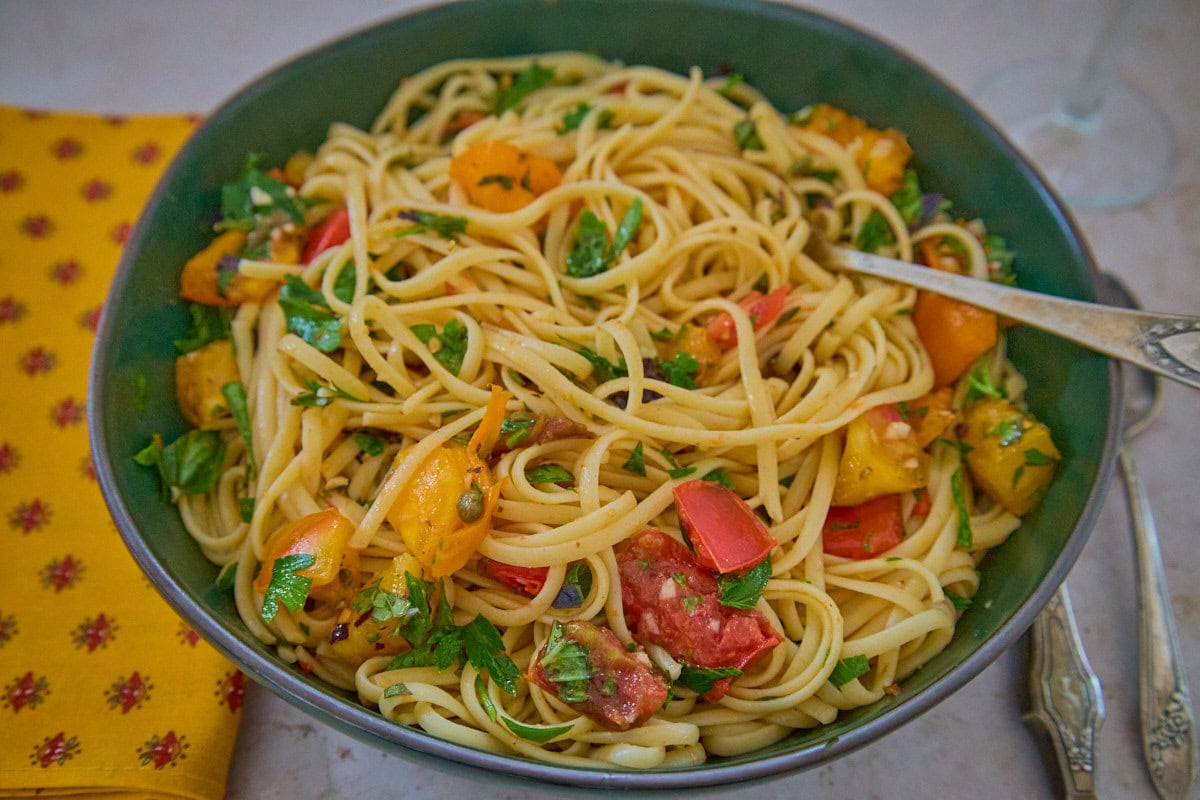
- Step 8: Serve the pasta immediately if you'd like to eat it warm, or refrigerate if you'd like to serve as a chilled pasta salad.
💡Tips for success
- Use fresh ingredients: Choose the most-flavorful tomatoes you can find. If you don't have access to heirlooms, try using cherry tomatoes or vine-ripened tomatoes. Also make sure you use a good-quality olive oil and fresh herbs if possible.
- Drain the diced tomatoes well: This removes the excess liquid to prevent your sauce from being too watery when tossed with the pasta.
- Let the sauce rest while cooking the pasta: This is crucial to allow the flavors in the sauce to blend harmoniously before adding to the pasta.
🔀Substitutions
Tomatoes: If heirloom tomatoes are not available, consider using other flavorful types such as cherry or vine-ripened tomatoes.
Herbs: Use fresh herbs if available. This is critical for the best flavor in your sauce vierge. You can always try out new herb combinations for this sauce. Chervil and tarragon are herbs that are also commonly included in this traditional sauce. If you only have dry herbs, use 1 teaspoon dried for every 1 tablespoon indicated for the fresh ones.
Capers: If you don't have these, you can use chopped green olives to preserve the tangy and briny punch in this sauce.
Pasta: If you'd like to make this dish gluten-free, use good quality gluten-free pasta in place of regular.
🍶Variations
- Spicy: If you'd like to add a kick to your sauce, add some crushed red pepper flakes or chopped fresh chili peppers.
- Mediterranean boost: To enhance the flavors of this region even more, you can add black and/or green olives, roasted red peppers, or sun-dried tomatoes.
- Veggies: To add even even more hearty and savory veggie flavor, you can add some zucchini, summer squash, eggplant, and/or bell peppers. Especially if they're your own home-grown heirloom varieties! These veggies are also ingredients that are commonly used the south of France.

🥣Equipment
- Colander: For draining the tomatoes and the pasta.
- Knife and cutting board: For preparing the ingredients.
- Citrus zester: Use a good-quality shallow one that will remove only the lemon zest but not any of the bitter pith behind it.
- Digital scale: These are so helpful in all of your cooking! Plus, they're inexpensive and result in fewer dishes for you to clean up afterward. I use 2 sizes: a small sensitive one for accurately measuring small quantities of ingredients, like the fresh herbs here. And a larger one for the ingredients in regular quantities.
- Mixing bowl: For mixing the sauce and tossing in the pasta.
- Large pot: For cooking the pasta.
⏲Make ahead and storage
Make ahead:
- Room temperature: You can prepare this sauce up to 4 hours in advance and store it at room temperature if using the same day.
Storage:
- Refrigeration: You can store leftovers in an airtight container in the fridge for up to 3 days.
- Freezing: You can freeze the sauce by itself for up to a month. But the texture of the tomatoes may not be the same. If you thaw some sauce from the freezer, make a fresh batch of pasta to go with it.
🍲Serving suggestions
Serve warm:
Serve the pasta immediately after tossing with the sauce. The pasta will warm the sauce and make a hearty and comforting meal that would pair well with a side salad and a loaf of crusty bread.
Serve cold:
Chill the combined pasta and sauce and serve as a pasta salad. This is especially refreshing on a warm day.
Pairings:
This dish would pair especially well with a crisp white wine or sparkling water with a citrus wedge.
❓FAQ
Sauce vierge (pronounced "sohs vee-AIRZH") translates to virgin sauce, and it originated in the south of France. The name refers to the simplicity of the sauce using fresh, natural ingredients that are uncooked or just slightly warmed when serving.
Sure you can! Store-bought tomatoes won't duplicate the luscious heights of heirloom flavor, but they'll still taste irresistible. If heirlooms aren't available, look for cherry or vine-ripened tomatoes.
Yes. The flavor and texture will differ, but will still contribute well to the flavor. If fresh herbs aren't available, you can use the more concentrated dried ones at 1 teaspoon dried for every 1 tablespoon fresh.
In my trials, I found that adding the salt in the beginning drew out too much moisture from the tomatoes. We want them to retain their lush juiciness for the sauce. So we'll add it just before tossing with the pasta to retain the best texture and flavor.
✨More recipes you'll love
Looking for other recipes like this? Try these:



✏️Did you make this recipe?
Please let me know in the reviews and comments below!

Easy Vegan Pasta with Garden Heirloom Tomato Sauce Vierge
Ingredients
- 2.6 pounds (1.2 kg) fresh tomatoes, preferably heirlooms, but any tomatoes will do
- ½ cup (120 ml) extra virgin olive oil
- 6 large cloves (40 g) garlic, finely minced
- 1 ½ teaspoons (1 g) lemon zest, finely-grated
- 3 tablespoons (45 ml) lemon juice, freshly-squeezed
- ½ cup (30 g) fresh flat-leaf parsley, roughly chopped
- ½ cup (30 g) fresh basil leaves, roughly chopped
- 2 tablespoons (30 g) capers, drained
- ½ teaspoon (2 g) freshly-ground black pepper
- 1 pound (454 g) uncooked pasta, in preferred size or shape
- 1 ½ teaspoons (7.5 g) fine salt, or to taste
Instructions
Dice the tomatoes:
- Cut tomatoes into large chunks and place them in a colander. Stir and shake to drain excess liquid while preparing the remaining ingredients. Your yield should be about 4 cups (800g) after draining.
Make the sauce vierge:
- To a large mixing bowl, add the olive oil, minced garlic, lemon zest, and lemon juice. Stir to combine.
- Add in the parsley, basil, capers, and black pepper.
- Add the drained tomatoes to the sauce. Stir and allow it to rest at room temperature for 10-15 minutes for the flavors to blend while cooking the pasta.
Cook the pasta:
- In a large pot, bring a large pot of salted water to a boil. Add the pasta and cook until al dente.
- Drain the pasta.
Combine the sauce and pasta:
- Once the sauce has rested, add salt to taste and stir to blend. It should have enough flavor to blend with the pasta.
- Add the cooked pasta to the bowl with the sauce and toss gently to coat.
Serve:
- Serve the pasta immediately if you'd like to eat it warm, or refrigerate if you'd like to serve as a chilled pasta salad. Enjoy!
Notes
- Use fresh ingredients: Choose the most-flavorful tomatoes you can find. If you don't have access to heirlooms, try using cherry tomatoes or vine-ripened tomatoes. Also make sure you use a good-quality olive oil and fresh herbs if possible.
- Drain the diced tomatoes well: This removes the excess liquid to prevent your sauce from being too watery when tossed with the pasta.
- Let the sauce rest while cooking the pasta: This is crucial to allow the flavors in the sauce to blend harmoniously before adding to the pasta.
- Add the salt after resting: In my trials, I found that adding the salt in the beginning drew out too much moisture from the tomatoes. We want them to retain their lush juiciness for the sauce. So we'll add it just before tossing with the pasta to retain the best texture and flavor.

Karen Kerns says
The Vegan Pasta with Garden Heirloom Tomato Sauce Vierge was my dinner tonight, warm! The lemony zest really crisped the flavors! Tomorrow I'll have it cold. Looking forward to it! Thanks Shelly!!
Shelly Benitah says
Thanks so much, Ma!!! This makes my day. : )