

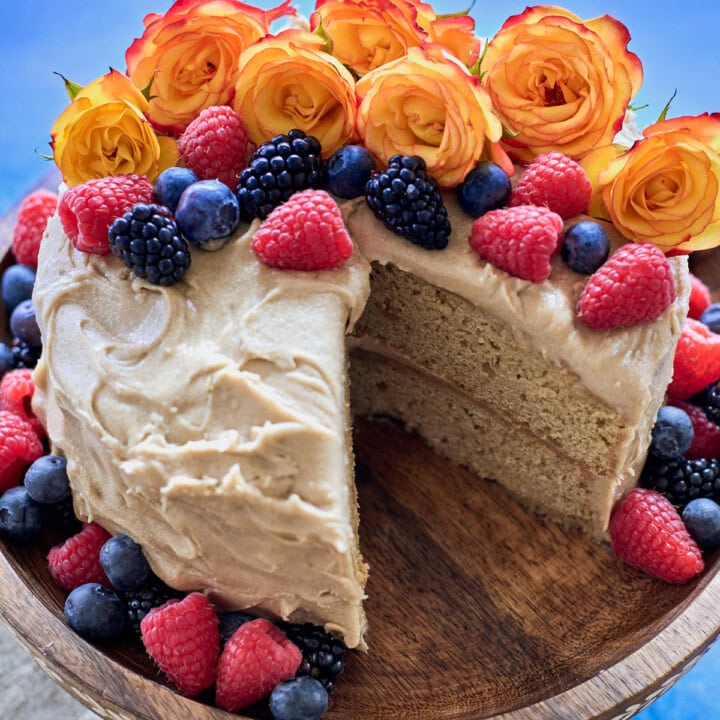

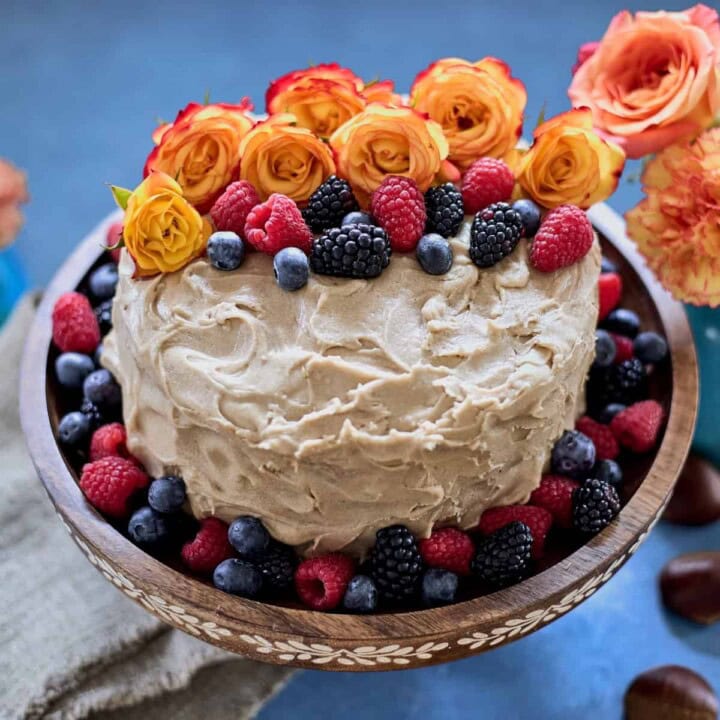
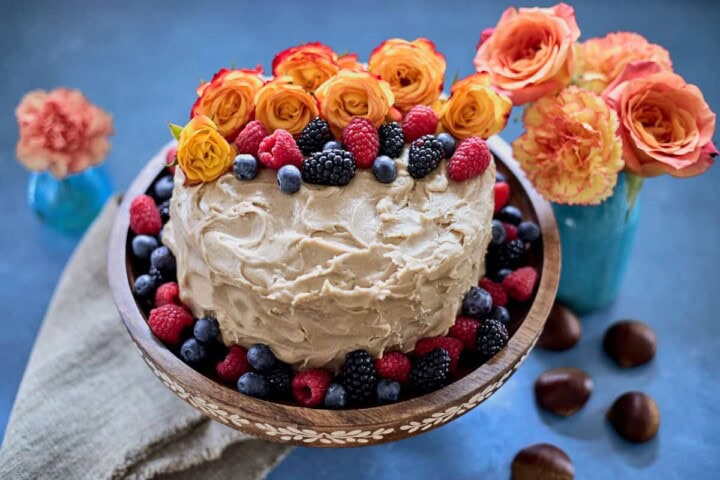
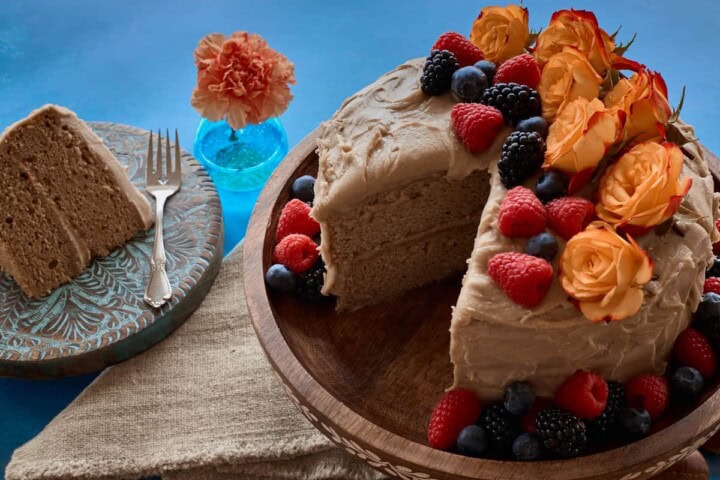


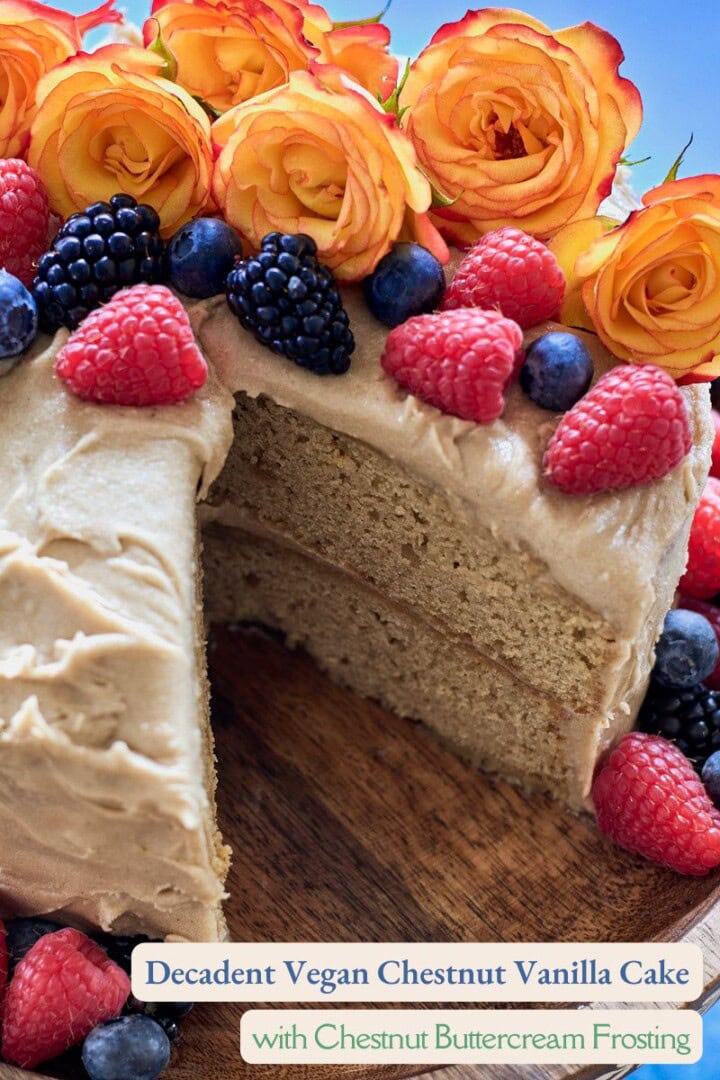
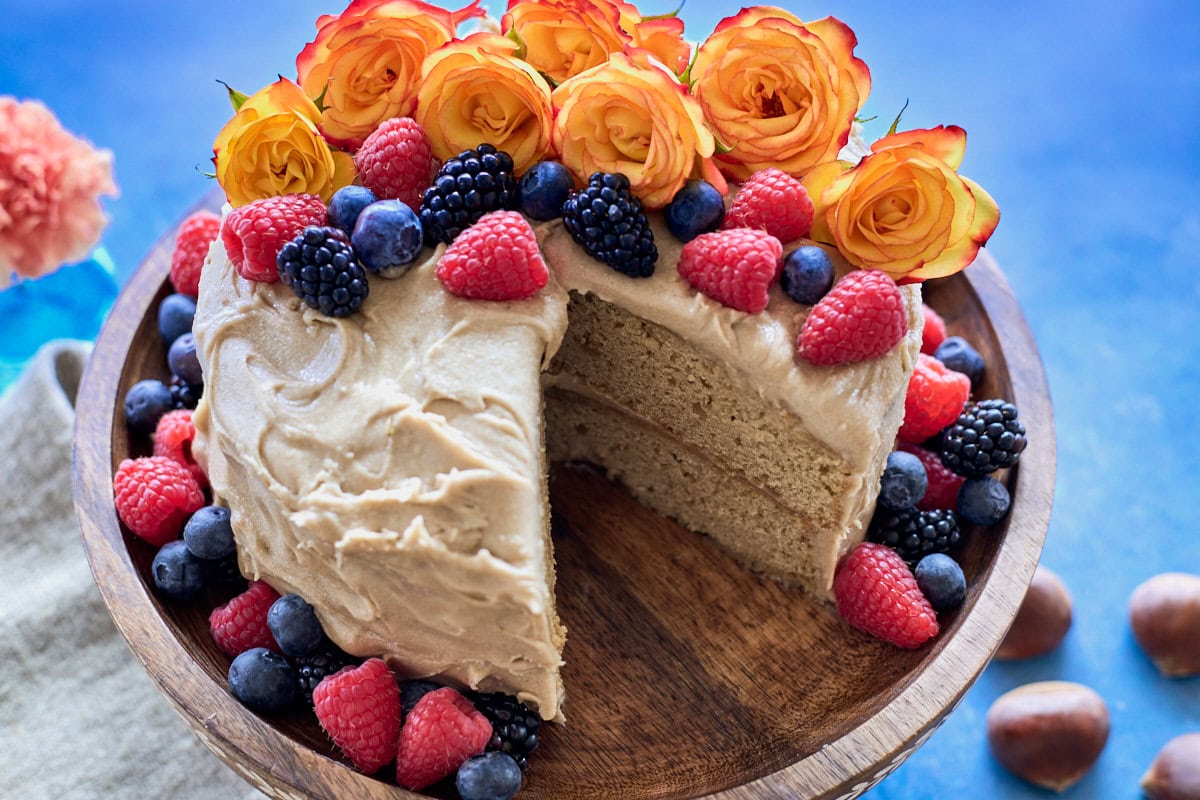
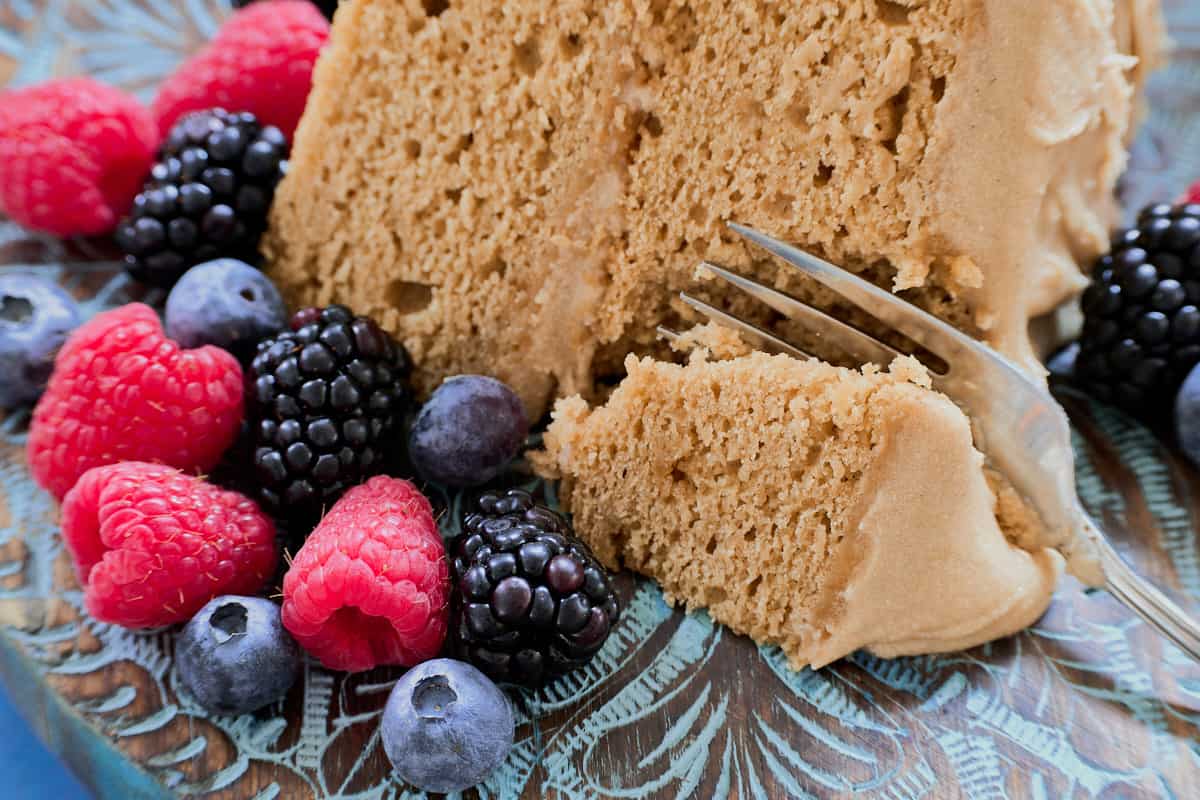
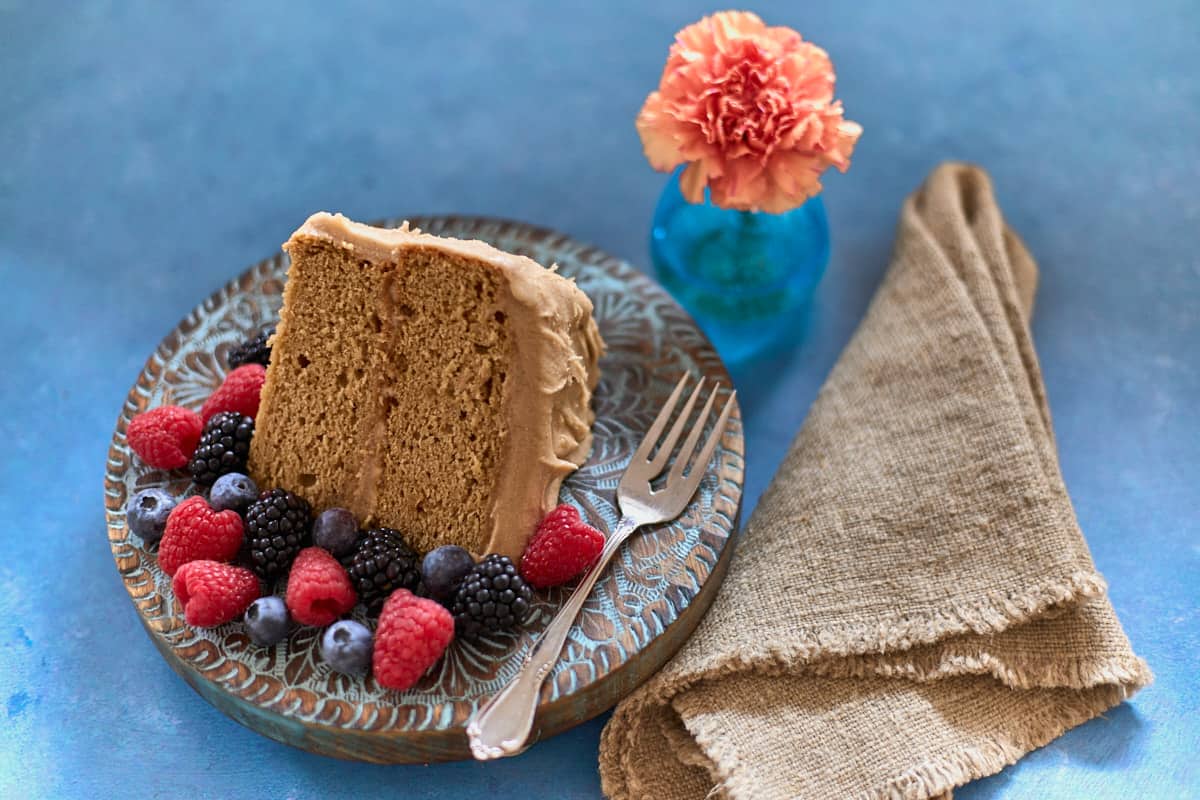
This is the most elegant, luxurious homemade cake to share with your family and friends. There's no better way to show them your love than with this sultry blend of chestnut and vanilla indulgence. This cake is smooth and fluffy, with decadence you just can't find in a store. Plus it's vegan, showstopping, and rich with understated sophistication. You just have to make this Vegan Chestnut Vanilla Cake with Chestnut Buttercream!
Jump to:
💕Why you'll love this cake
It's special year-round
The cozy, down-to-earth chestnut flavor reminds me of a sun-filled autumn forest with colorful leaves all around. And yet, I know you'll agree that this dessert tastes perfectly fulfilling in any season!
The chestnut vanilla flavor is unique and decadent
Both the cake batter and the frosting are infused with vanilla and sweetened chestnut purée. This is a flavor profile that shows care and attention, and is much more tastefully elevated than a generic cake you can buy or make from a mix.
📓Ingredient notes
Chestnut purée ingredients
In the interest of possibly offering a time-saving alternative, I've tested the Clément Faugier brand of sweetened chestnut purée, which is from the Ardèche department in the Auvergne-Rhône-Alpes region of France. This version has a base of water, whereas the homemade recipe in this post has a base of non-dairy milk. Both are creamy and decadent. But due the differences in thickness and texture, I wasn't able to replicate the optimal texture in the cake or frosting with the store-bought purée. I recommend following this recipe fully, using the cooked chestnuts to make the purée. I think it makes all the difference in having the most luxurious cake and frosting possible.
Here are the ingredients for the purée:
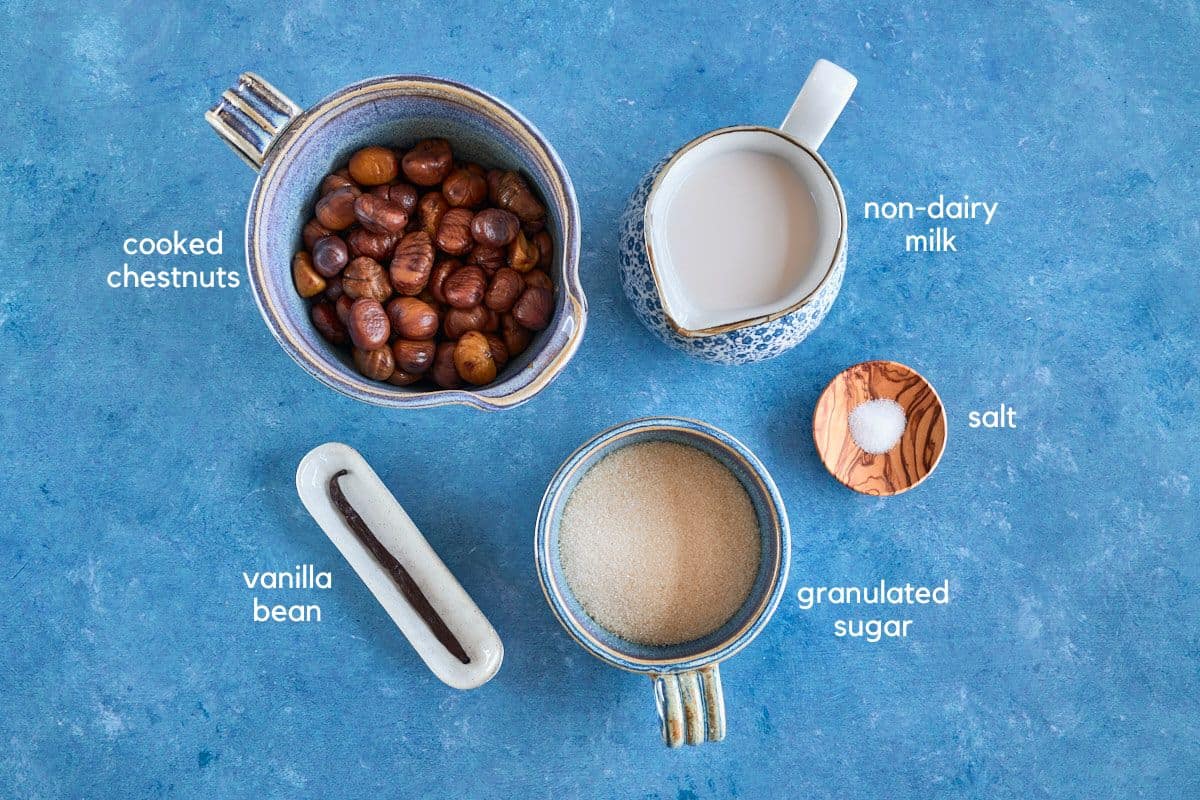
- Non-dairy milk: I've used unsweetened almond milk, but any vegan milk should do.
- Granulated sugar: I use either organic cane sugar or sugar derived from sugar beets.
- Salt: Kosher salt works well here. Salt is an important counterpoint in sweet recipes to add more dimension so the flavor doesn't taste flat.
- Vanilla bean: The purée contains a whole bean, whose seeds gently infuse it with a sweet vanilla aroma.
- Cooked chestnuts: The pre-cooked chestnuts shown in the photo above are available online year-round. I also find them to be available and economically-priced at Asian markets.
I've also tried starting with raw chestnuts in the shell and roasting them myself. However, despite trying several batches and trials of soaking, roasting, and steaming, I've been consistently unsuccessful at removing the inner papery layer that surrounds each chestnut. If you have a good method of doing this, please let me know in the comments!
See recipe card for ingredient quantities.
Chestnut vanilla cake ingredients

- Non-dairy milk: Almond milk works well here. Other non-dairy milks should work well too.
- Apple cider vinegar: The vinegar acts as an acid to react with the baking soda to help with leavening (or rising) of the cake.
- All-purpose flour: Sifting the flour in advance really helps to keep the cake texture evenly moist.
- Baking powder and baking soda: It's best if you use these within 6 months of opening. Despite decades of baking experience, I didn't believe this until my first two trials of this cake were ridiculously dense. When I tried them with new and fresh baking powder and baking soda, it made all the difference in helping the cakes to rise well with a great texture!
- Salt: As in the purée recipe, I've just used regular fine kosher salt.
- Granulated sugar: I recommend using either organic cane sugar or one that's derived from sugar beets.
- Light brown sugar: The lighter version will give the cake sweetness without overpowering the vanilla and chestnut flavors.
- Salted vegan butter: This recipe works well with both Earth Balance sticks and Miyoko's, and other brands should work well too. As with the frosting, you're welcome to omit the remaining salt in the cake if you're already using salted butter. I like the heightened flavor of using both.
- Non-dairy yogurt: I really like Forager Project. It's thick and creamy. But any plain non-dairy yogurt should work.
- Vanilla extract: I recommend using the pure version, rather than the imitation type for the best flavor.
- Sweetened chestnut purée: I recommend using the version in this recipe, rather than store-bought for the best results. (Please see the purée ingredient notes above for more detail about why.) Please make sure your purée is at room temperature before using in this recipe.
See recipe card for ingredient quantities.
Chestnut buttercream frosting ingredients
- Salted vegan butter: I use both salted vegan butter and additional salt in the frosting recipe. But you're welcome to use salt in just one or the other. Also, please make sure your butter is completely at room temperature before you begin making the frosting. I've had so many ruined trials of this identical recipe because my butter was still slightly cold. Butter is fully at room temperature is absolutely critical to yield delicious frosting that is smooth, creamy, and fluffy.
- Vegan heavy whipping cream: Please make sure this is cold when you make the frosting.
- Vanilla extract: I think it's worth using a good quality pure extract here, so the flavor will really shine.
- Salt: I just use fine table salt here.
- Powdered sugar: Your frosting will be lighter and fluffier if you sift your powdered sugar first.
- Sweetened chestnut purée: It's important for this to be at room temperature before you make the frosting. If you don't have time to wait for this cooldown, you can either make the purée a day in advance, or use store-bought purée.
See recipe card for ingredient quantities.
📒Step-by-step instructions
Chestnut purée steps

1. Stir together the non-dairy milk, sugar, and salt on low heat until dissolved.

2. Remove the seeds from a vanilla bean.
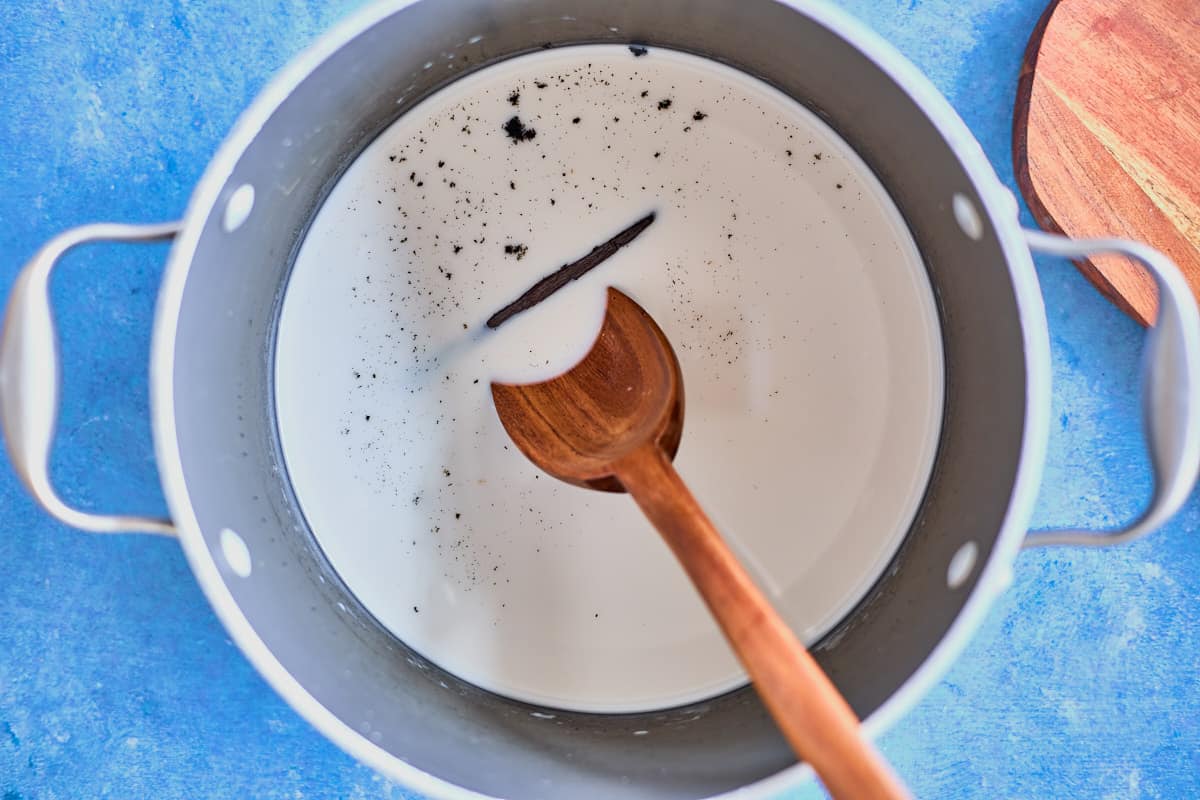
3. Add both the vanilla bean and seeds to the pot.

4. Add the chestnuts and simmer.

5. Simmer until the liquid has been reduced by half. Test a chestnut with a fork until it can be pierced with gentle pressure.
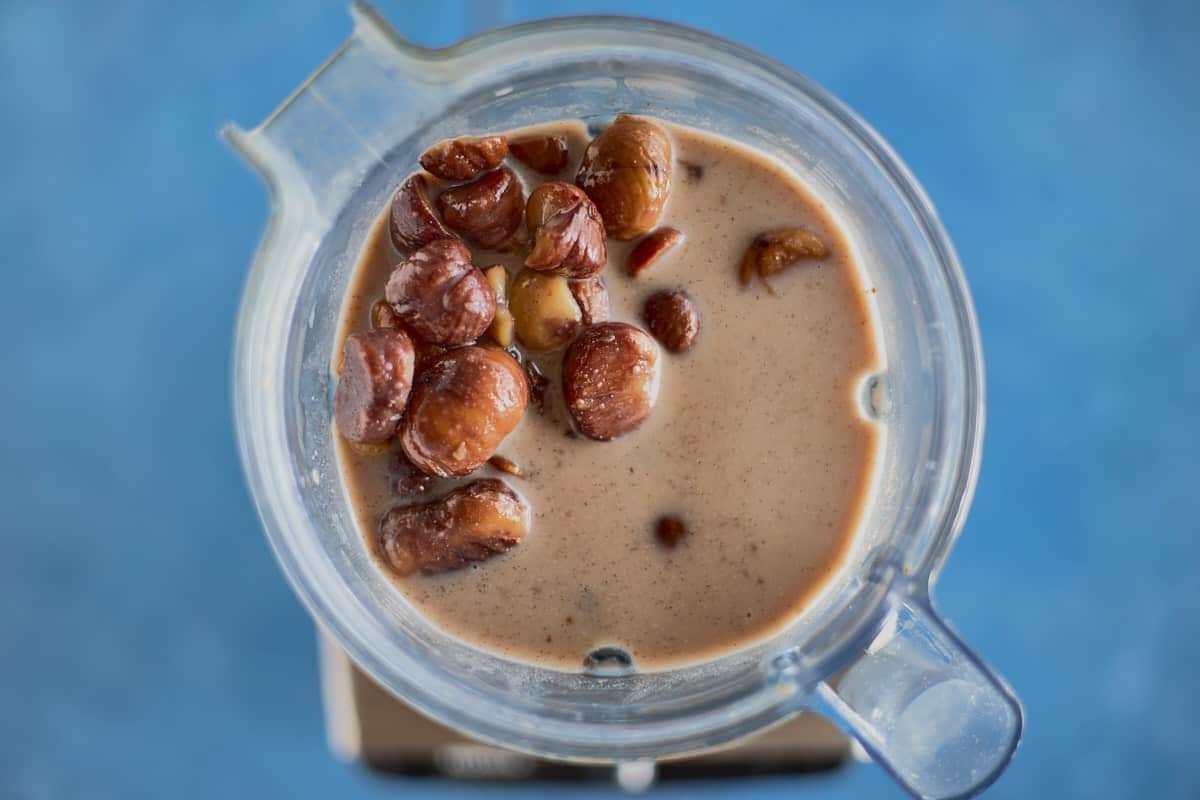
6. Add the cooked ingredients to a high-speed blender.
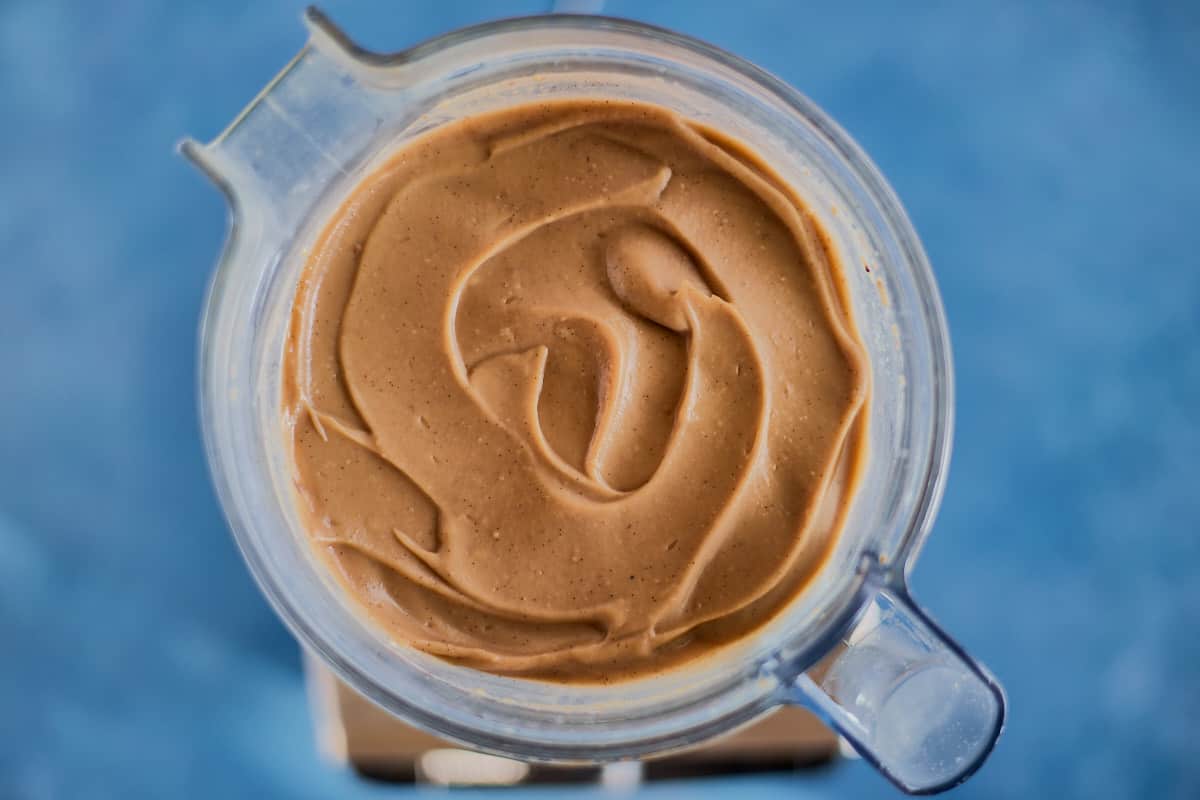
7. Blend until smooth and creamy.

Frosting steps
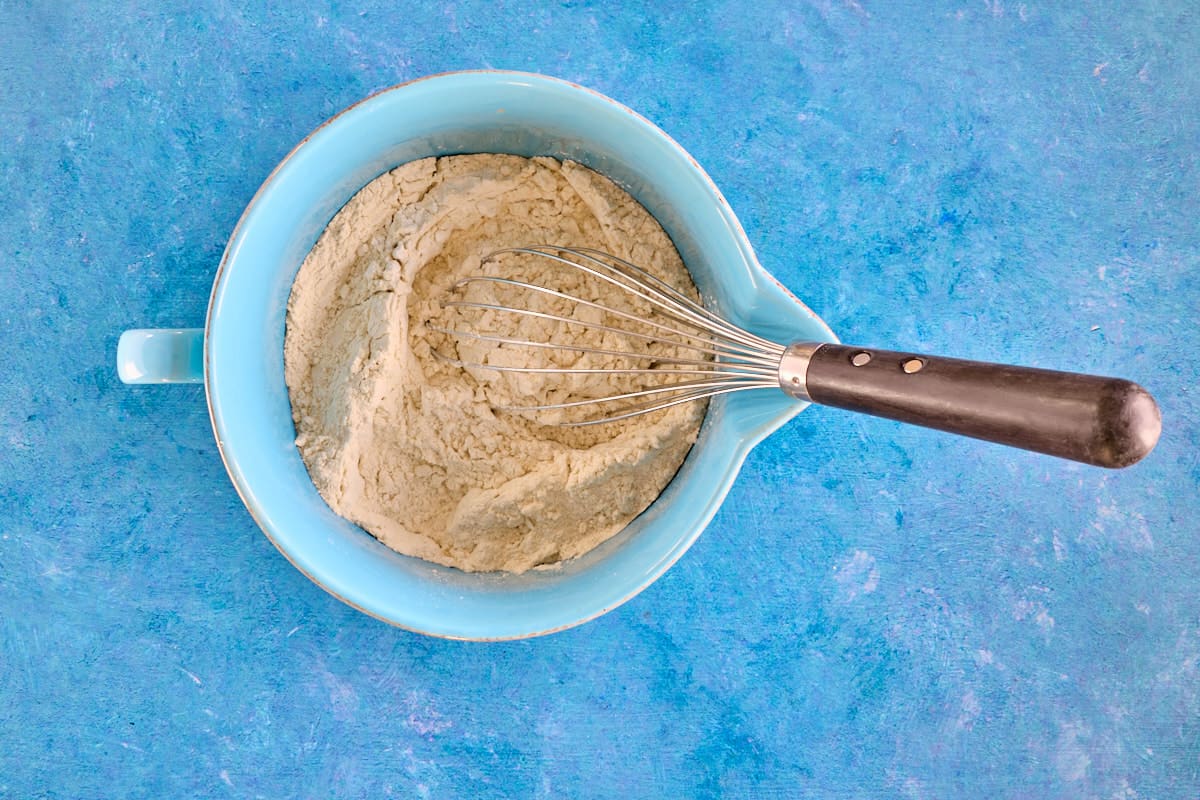
Prepare the cake pans, preheat the oven, and prepare the buttermilk by adding vinegar to the non-dairy milk. Combine the dry ingredients (except for the sugars) with a whisk.
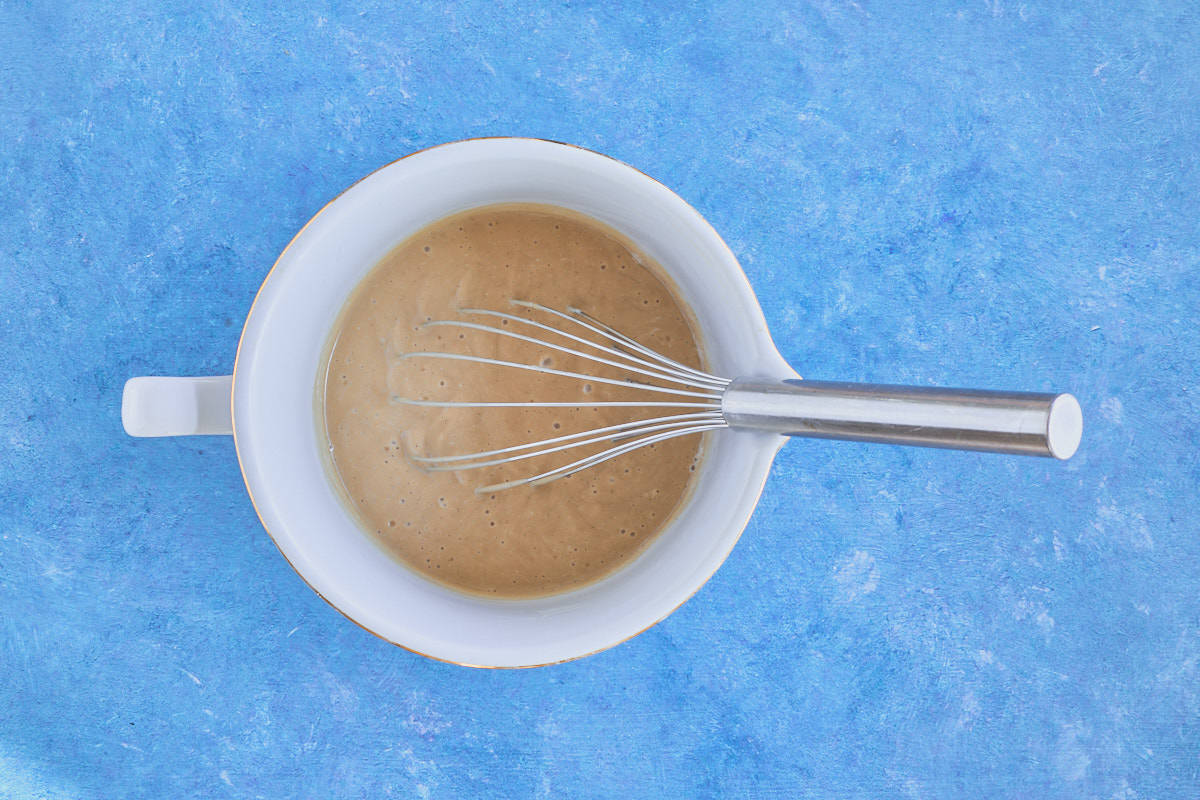
Mix the wet ingredients gently with a whisk.

In the bowl of a stand mixer or with a hand mixer, cream together the room-temperature butter and sugars.

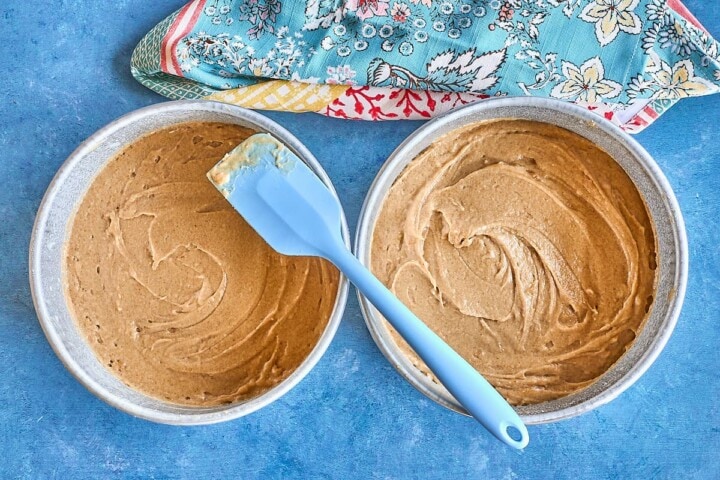
Add the remaining ingredients to the mixer on low, until just combined. Divide the batter evenly into the cake pans.
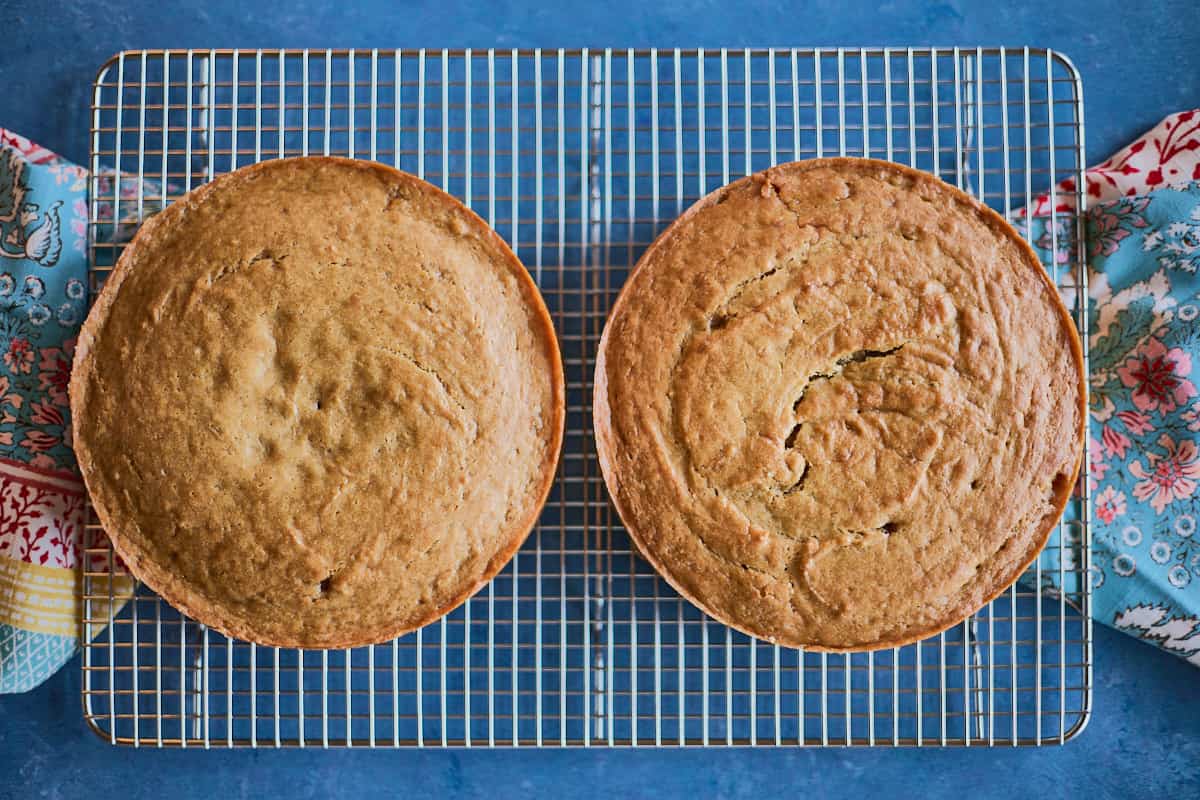
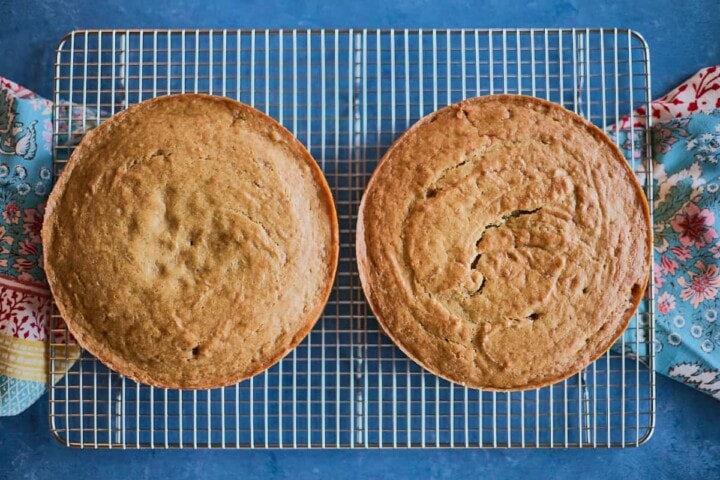
Remove the cakes from the oven when golden, spring back when gently pressed in the middle, and a toothpick in the center comes out clean. Let the cakes cool completely before frosting.
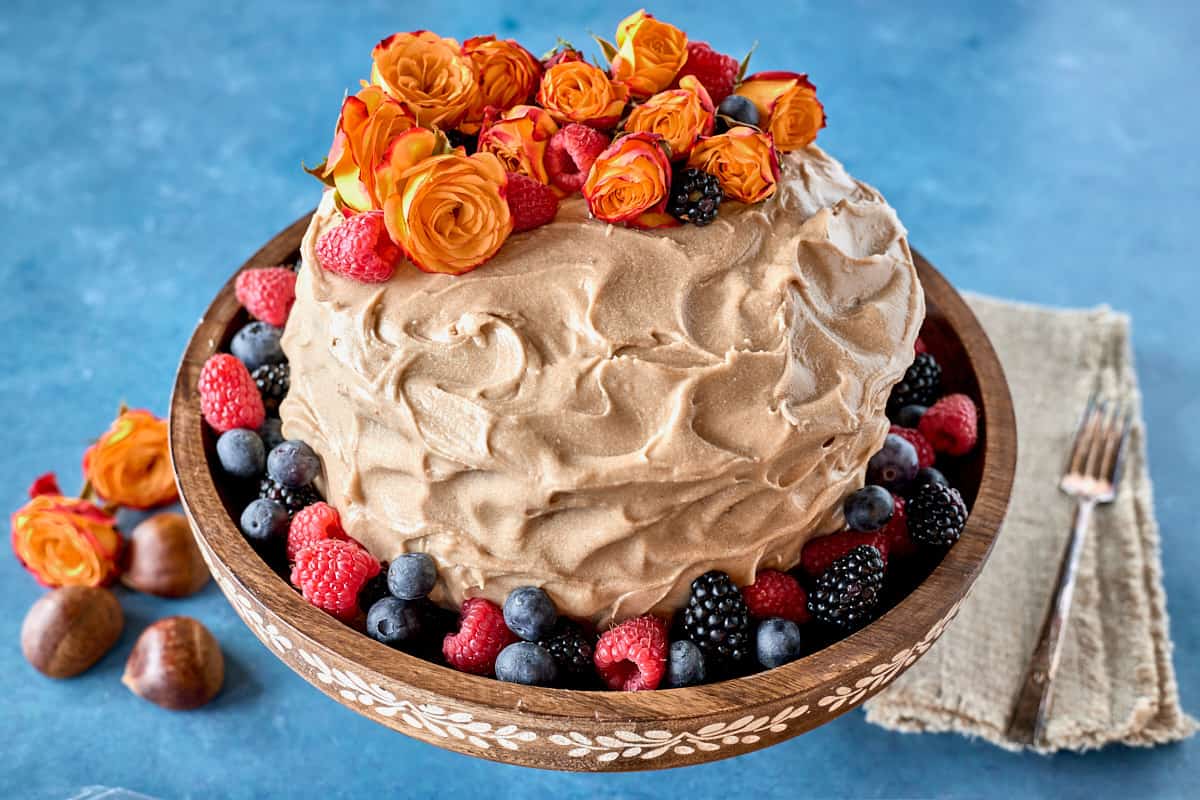
For the frosting, cream together the room temperature, butter, cold non-dairy heavy cream, and salt. Beat, then add the sifted powdered sugar and then room temperature chestnut purée slowly in small batches. Then frost the cake and enjoy!
💡Tips for success
- Make sure your vegan butter is at room temperature before using in the cake and frosting! The ideal butter temperature is 65 degrees Fahrenheit, or 18 degrees Celsius. It should reach this temperature in about an hour outside of the fridge. It helps to warm it up faster by removing it from the box and leave it in its paper wrapper on the counter.
- Another way to warm up your butter more quickly is to first microwave a bowl of water until hot, remove the bowl of water, and then place a bowl with the butter in the warm microwave for about 10 minutes.
- If you'd like your frosting to be thicker, you can add small increments of (preferably sifted) corn starch to your mixer and mix for a minute or two until thickened. You can add up to 1 tablespoon total as needed.
🍶Substitutions & variations
- Vanilla: If you don't have a vanilla bean to make the purée, you can use 1 tablespoon of vanilla extract instead.
- Sweet chestnut purée: Based on my testing trials, I recommend following the recipe in this post rather than using store-bought chestnut purée for the best results. The thickness and richness in this homemade version will make all the difference.
- Gluten-free: My testing has not yielded the most optimal density and texture in this cake with the gluten-free blends that I've tried. If you make this cake with a gluten-free flour blend and have great results, please let me know in the comments!
🥣Equipment
- Cake pans: This recipe will work for two 8-inch cake pans or three 6-inch cake pans. I've used cake pans from Parrish/Magic Line. They're 3 inches high, smooth, and fully vertical. This allows the space for great rising of your cakes.
- Digital scale: This will make your ingredient measuring much easier. You can use the tare function to eliminate the weight of the container, so the scale will evaluate the weight of your ingredients alone. Plus, using a scale will really reduce the amount of dishes you'll need to do afterward.
- Circular parchment paper: I've found that it saves so much time to buy parchment papers already in the circular dimensions of your cake pans. No more need to trace and cut your parchment paper to fit!
- Coconut oil spray: This is what I use to grease the pans and parchment paper, but you could use vegan butter instead.
- Sifter: Sifting your flour and powdered sugar will help make your cake and frosting texture lighter and more evenly distributed.
- Whisk: This tool is great for breaking up lumps in your dry or wet ingredients without agitating the whole mixture at once.
⏲Make ahead and storage
- Room temperature: You can keep the finished cake in an airtight container at room temperature for about 2-3 days.
- Refrigerator: You can refrigerate it for up to a week.
- Freezer: Once the (unfrosted) cakes are baked and thoroughly cooled down, you can wrap them well in plastic wrap and store them in the freezer for up to 3 months.
❓Frequently asked questions
Whenever possible, I love to measure my baking ingredients by weight with a digital scale rather than by volume with measuring cups. It's a more accurate method, and it also allows you to reduce the amount of dishes you'll use!
The weights are included as an option in this recipe, and as an additional option for future use, I recommend this ingredient weight chart by King Arthur Flour.
The butter will combine best with the sugars in the mixer if it's at a temperature of 65° F (18° C). Please see the Best Tip section above for ways to get the butter to this temperature.
Yes! Otherwise, the frosting will loosen and/or melt into the cake.
My testing has not yielded the most optimal density and texture in this cake with the gluten-free blends that I've tried. If you make this cake with a gluten-free flour blend and have great results, please let me know in the comments!
✏️Did you make this recipe?
Please let me know your thoughts in the comments and reviews below!
Sweet Chestnut Puree
Ingredients
- 4 cups (946 ml) non-dairy milk (I've used unsweetened almond milk)
- 1 cup (200 g) granulated sugar
- ½ teaspoon kosher salt
- 1 vanilla bean
- 4 cups (700 grams) cooked chestnuts
Instructions
Simmer the ingredients:
- Place the almond milk, sugar, and salt in a heavy-bottomed pot. Turn the heat to low and stir occasionally until the sugar and salt are dissolved. Cut the vanilla bean lengthwise through the top layer. Scrape out the seeds with a knife, and add the seeds and vanilla bean to the pot.
- Add the chestnuts to the pot. Increase the heat to medium and bring to a low simmer. Stir occasionally until the liquid has reduced by about half. This should take around 40 minutes. Chestnuts should be plump and fork-tender when done.
Blend the purée and allow to cool:
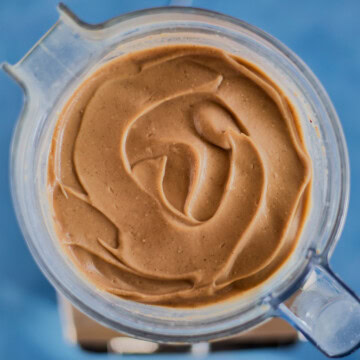
- Remove the vanilla bean from the pot. Place the chestnuts and liquid into a high-speed blender. Blend until smooth. The consistency should be similar to that of peanut butter. Cool to room temperature before adding to the cake batter and frosting. Yields about 5 cups (1400 g) of puree. Place the purée in a covered container, and set aside to cool.
Notes
- If you'd like, you can make this puree a day ahead of the cake and frosting. Then you won't have to wait for the purée to cool down to room temperature first. If you're not using the chestnut purée immediately, put a lid on the container or cover the top with plastic wrap. This will prevent a skin from forming on the top surface.
- I've used almond milk as the nondairy milk in this recipe. But any non-dairy milk should work well.
- You can reserve your vanilla bean pod to flavor sugar. Just rinse it, leave it out to dry, and place in a container of sugar. Or if you'd like, you can blend the bean into a powder along with a bit of sugar to distribute the vanilla flavor even more.
- For the granulated sugar, I use either organic cane sugar or sugar derived from sugar beets to ensure that it's vegan.

Vegan Chestnut Vanilla Cake with Chestnut Buttercream Frosting
Ingredients
Chestnut Vanilla Cake:
- Coconut oil spray or vegan butter and parchment paper for greasing cake pans
- 1 cup (237 ml) non-dairy milk
- 1 tablespoon apple cider vinegar
- 3 ½ cups (420 g) all-purpose flour (sifting is optional, but yields a fluffier cake)
- 2 ¼ teaspoons baking powder
- ½ teaspoon baking soda
- ½ teaspoon kosher salt
- ¼ cup (78 g) plain non-dairy yogurt, room temperature
- 1 tablespoon vanilla extract
- 1 ½ cups (420 g) 420 g sweetened chestnut puree, room temperature
- 8 tablespoons (114 g) softened salted vegan butter, room temperature
- 1 cup (211 g) granulated sugar
- 1 cup (220 g) 220 g packed light brown sugar, firmly packed
Chestnut Buttercream Frosting:
- 1 cup (227 g) 227 g salted vegan butter, room temperature
- 5 tablespoons (74 ml) heavy vegan whipping cream, cold
- 1 tablespoon vanilla extract
- ½ teaspoon salt
- 3 cups (340 g) powdered sugar, sifted
- 3 cups (840 g) chestnut puree, room temperature
Instructions
For the cake:
- Prep ovens and cake pans:Preheat the oven to 350° F (175° C.) Position two racks, one just above and one just below the center of the oven. Spray or butter two 8-inch (20 cm) or three 6-inch (15 cm) cake pans, add a circle of parchment paper to cover the bottom of each pan. Spray or butter the parchment paper so that it won’t stick to the cake.
- Prepare the buttermilk: Pour the nondairy milk into a measuring cup. Add to this the apple cider vinegar. Stir and let this sit to curdle for at least 5 minutes while preparing the cake batter.
- Combine the dry ingredients, except for the sugars: In a medium mixing bowl, add the sifted flour, baking powder, baking soda, and salt. Whisk to combine.
- Combine the wet ingredients: In a separate bowl, add the buttermilk, yogurt, vanilla, and chestnut puree. Whisk gently until ingredients are combined.
- Cream together the butter and the sugars: In the bowl of a stand mixer or hand mixer, add the butter, granulated sugar, and brown sugar. Using the paddle attachment, cream them together at medium high speed for 3 minutes until combined. Scrape down the sides of the bowl with a spatula as necessary.
- Add remaining ingredients to mixer: Add the wet ingredients and mix on low speed on your mixer until just combined. Then add the dry ingredients and mix again on the lowest setting until just incorporated. Make sure not to overmix. A few small lumps are fine. The batter should be thick and spreadable.
- Bake the cake: Pour the batter evenly into the two prepared cake pans. Place pans in the oven on separate racks, each as close to the center as possible. Since the top rack can brown more quickly, switch the racks approximately halfway through baking, after around 20 minutes. Start checking for doneness at around 35 minutes, until either a toothpick comes out clean, or until the surface at the center of the cake springs back quickly when gently pressed. This generally takes about 43 to 55 minutes, as results may vary.
- Allow the cake to cool: Place the cake pans on trivets or a baking rack to cool. Invert cakes out of pans, and prepare the frosting.
For the Frosting:
- Make the buttercream frosting: Fit a paddle attachment to your stand or hand mixer. Add the softened butter, heavy cream, vanilla extract, and salt. Beat at medium high speed for about 3 minutes until fully incorporated and smooth. Scrape down the sides of the bowl as needed. Slowly add the sifted powdered sugar in small batches at low speed. Add chestnut puree in small batches and beat on medium high until smooth.
- Frost the cake: Once the cake has cooled completely, frost the top. Add the second layer and frost the top and sides. If making three 6-inch (15 cm) cakes, repeat with the third layer. Enjoy!
Notes
- For the granulated sugar, I use either organic cane sugar or sugar derived from sugar beets. Otherwise, white granulated sugar is generally not vegan.
- For the brown sugar, I use the light brown type here. Dark brown sugar has a stronger flavor, and it might overpower the flavor of the chestnuts.
- I use salted vegan butter for this recipe. If you'd like to use less, you can reduce the salt in the cake batter accordingly. Or you can use unsalted vegan butter instead.
- Try not to open the oven too many times to check on the cake. I switched the top and bottom pans after about 15 minutes, and then waited another 15 minutes to start checking for doneness.
- Make sure your baking powder and baking soda are fresh! They should both stay fresh within 6 months of opening the container.
- If you have leftover frosting, it would be delicious spooned into a bowl of oatmeal, used as a dip for apple slices, spread on toast, or used as a decadent pastry cream for another dessert.
I'm excited to hear what you think of this Vegan Chestnut Vanilla Cake with Chestnut Buttercream frosting. Please let me know your thoughts in the comments below!

Leave a Reply