Liqueur de Vanille Fait Maison (Vanilla Bean Liqueur)
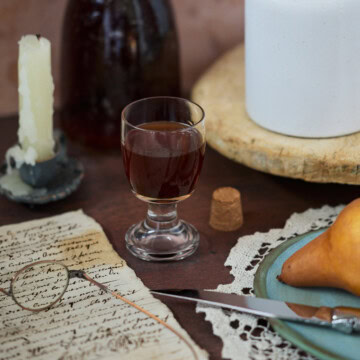
Vanilla is one of the most elegant and beloved botanical flavors in all the world. And I've captured it here in a bottle for you to savor and enjoy with friends and family. This "fait maison" (homemade) French vanilla bean liqueur is luscious, deeply-aromatic, and a pure joy to sip. It's simple to make, with only vanilla beans, sugar, and vodka, and develops its enchanting flavors all on its own during a long steep of at least 3 months. It's beyond worth the wait.
Ingredients
- 750 mL neutral vodka, 40% ABV (80-proof)
- 60-70 g whole vanilla beans, 60 g for plump beans, and 70 g for drier beans, about 10-14 large 6-8 inch / 15-20 cm beans
- 1 cup (200 g) granulated sugar
Instructions
Add vodka and sugar
- Pour the vodka into an airtight 2-liter jar. Add the granulated sugar.
Prepare the vanilla beans
- Split each vanilla bean lengthwise with a knife. Scrape out the seeds, and add them directly into the jar. Add the scraped pods to the jar as well. Both seeds and pods are essential for full flavor.
Dissolve the sugar
- Stir in the sugar and seal the jar. Shake gently for 20 to 30 seconds. Store the jar in a cool, dark place.
- For the first week, shake once daily. For weeks 2-4, shake 2-3 times per week. After 1 month, shake occasionally. If the sugar settles to the bottom, keep shaking the jar. It'll fully dissolve over time.
Steep
- Steep at about 60 to 70°F (16 to 21°C) for a minimum of about 3 months and up to a year, tasting occasionally until the liqueur has reached your preferred level of flavor and smoothness. The liquid will darken to a deep amber color over time. And the aroma will become intensely floral, with subtle woody and caramel notes.
Optional: remove surface oils for a cleaner flavor
- After steeping, you may notice a very thin layer of vanilla oils floating on the surface. This is completely normal, and removing this layer can improve clarity and reduce any slight bitterness. Remove the vanilla beans, squeezing out the excess liquid from each one. Set the beans aside.
- Using a clean lint-free cloth (such as a cotton handkerchief) or a folded paper towel, lightly dab the surface of the liquid and lift away the oil layer. Repeat with a fresh section of the cloth as needed. The desirable vanilla seeds will remain suspended in the liqueur. This step is optional but recommended for the cleanest flavor. Add the vanilla beans back to the jar until you’re ready to pour into a bottle.
- You can also optionally strain the liqueur if you'd like, through a fine-meshed fabric or cheesecloth. I don't do this, as I prefer to leave the vanilla seeds in the finished liqueur for full vanilla character.
Transfer to bottle
- Remove the vanilla beans and set aside. Using a funnel, transfer the finished liqueur into a bottle. Add your desired number of vanilla beans back into the bottle for appearance and continued aging. Save the remaining beans, allowing them to dry to flavor sugar or baked goods. Store tightly sealed.
Notes
- A digital scale is especially important for this recipe, so you'll be able to weigh your vanilla beans to ensure an accurate quantity. And you can weigh the sugar quantity this way as well.
- If possible, use grade A ("gourmet") organic vanilla beans that are soft, thick, and flexible from a high-quality producer. Grade B beans can be used, but may necessitate additional steeping time.
- Use an airtight steeping jar of at least 2 liters to hold all of the contents and allow for shaking. A 1-liter airtight bottle will hold the finished liqueur.
- The final alcohol content of this liqueur will be around 35% ABV, depending upon the vanilla bean absorption and final volume. Because of this, refrigeration isn't strictly necessary.
- For the smoothest and roundest flavor, serve chilled. Store the bottle at room temperature and pour over ice, or keep it in the fridge or freezer so it's ready to serve. The alcohol content will prevent the contents from freezing solid, and the texture will be luxuriously thick when very cold.
Tried this recipe?Let us know how it was!